Are Hoverboards Safe for Kids? What Age Is Appropriate?
This post contains affiliate links. As an Amazon Associate, we earn from qualifying purchases.
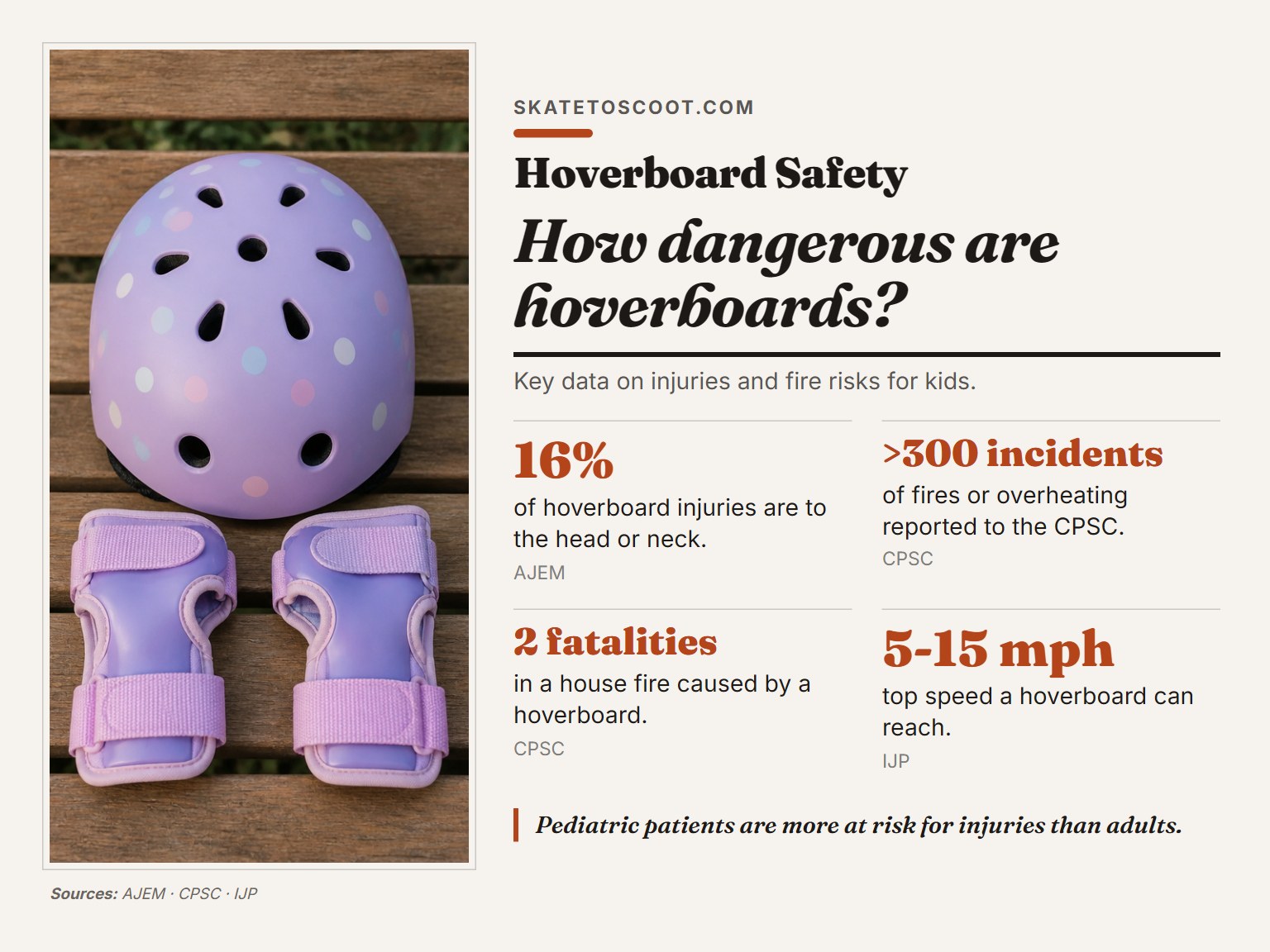
A hoverboard is safer for a child when three conditions are met: the board carries a genuine UL 2272 certification for the entire unit, the child wears a full set of protective gear (helmet, wrist guards, knee and elbow pads), and the rider’s age, coordination, and judgment are appropriate for a device that can suddenly accelerate. The CPSC has documented over 300 fire incidents and two child fatalities, while pediatric studies show children are at higher risk for hoverboard-related injuries.
That last point about age is where most guides stop. They give a range. The data from a 2022 pediatric emergency department study is more specific: it suggests a restriction from riding hoverboards at least in children younger than 14 years, which is central to the are hoverboards safe for kids question. The reasoning isn’t arbitrary, it ties to motor skill development and the legal framework for operating motorized vehicles in some regions. This shifts the question from “is it safe?” to “is my child’s coordination and judgment developed enough to handle a device that can suddenly accelerate to 5-15 miles per hour?”
What follows is a breakdown of the three distinct hazards, fire, falls, and legal/environmental risk, with the specific numbers and model warnings from federal regulators that inform the are hoverboards safe for kids debate. We’ll look at the conflicting advice on age, the critical difference between a certified component and a certified whole unit, and what a truly safe setup looks like if you decide to proceed.
Key Takeaways
- Verify the UL 2272 mark is on the unit itself, not just the battery or charger. The CPSC states that even this certification does not guarantee a hoverboard will not catch fire, but any board purchased before January 29, 2016, is definitively non-compliant.
- Pediatric injury data shows children are at higher risk. A national study found almost 6% of emergency visits involved critical injuries, and 16% were head/neck injuries. Another study explicitly recommends restricting use for children under 14.
- Safety gear is essential, not optional. A helmet is the bare minimum; a full set of wrist guards, knee pads, and elbow pads reduces fracture risk from the inevitable falls.
- Never charge a hoverboard unattended or overnight. The LayZ Board model was identified in a fatal 2017 house fire. The CPSC urges consumers to immediately stop using LayZ Board self-balancing scooters (hoverboards) and urges the public to stop charging and stop using their LayZ Board.
- Supervision and location matter as much as the gear. Riding indoors or near roads, pools, or traffic multiplies the risk. Stick to flat, smooth, private surfaces away from hazards.
The 3 Main Hazards Explained
Most parents worry about their child falling. That’s valid. But the hazard landscape for hoverboards splits into three distinct categories, each with its own mechanism and prevention strategy. Confusing them leads to the wrong safeguards.
Fire and Overheating is a product integrity hazard. It lives in the lithium-ion battery pack and its charging circuit. The U.S. Consumer Product Safety Commission (CPSC) is aware of more than 300 incidents related to fires or overheating. In March 2017, a house fire ignited by a hoverboard killed a 2-year-old girl and her 10-year-old sister in Harrisburg, Pennsylvania. The model was later identified as the LayZ Board, prompting a specific CPSC hoverboard recall notice.
The physics are simple: a faulty or overstressed battery cell goes into “thermal runaway,” generating its own heat in a feedback loop until it ignites. You’ll sometimes smell a sweet, chemical odor before seeing smoke. This hazard is managed before the ride even begins, through purchasing a certified board and adhering to strict charging protocols.
Falls and Orthopedic Injuries is a rider skill and biomechanics hazard. It’s the one your child is most likely to encounter. A hoverboard can reach 5-15 miles per hour, and a sudden loss of balance or an unexpected shutoff throws the rider forward or backward. The instinct is to put your hands out, leading to wrist fractures, or to land on an elbow or shoulder.
This hazard is managed with protective gear that converts a fracture into a bruise, and with foundational training on how to step off safely.
Environmental and Legal Risk is a context hazard. It asks: where is this happening? Many local municipalities ban hoverboards on public roads, sidewalks, and parks. Letting a child ride near a pool, in traffic, or indoors around hard furniture introduces catastrophic variables no helmet can fix. This hazard is managed by choosing the riding environment as carefully as you choose the board.
What Is the UL 2272 Safety Standard?
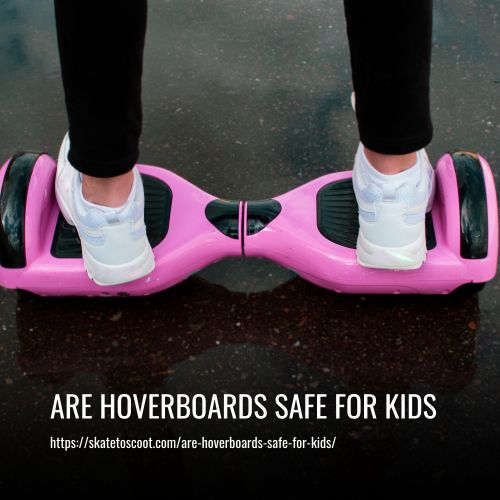
This is the single most important label on the box, and most people misunderstand what it covers. UL 2272 is the safety standard for the entire hoverboard unit, the battery, charger, electronics, and construction. Compliance should be indicated by a certification mark for “self-balancing scooters” or “personal e-Mobility” on the packaging or product itself.
Common mistake: Trusting a seller’s claim of “UL-certified batteries.” Many sellers claim UL-compliant battery packs or chargers, but this does not equate to UL 2272 compliance for the entire unit. A certified component in an uncertified shell is like putting a race-certified tire on a car with no brakes.
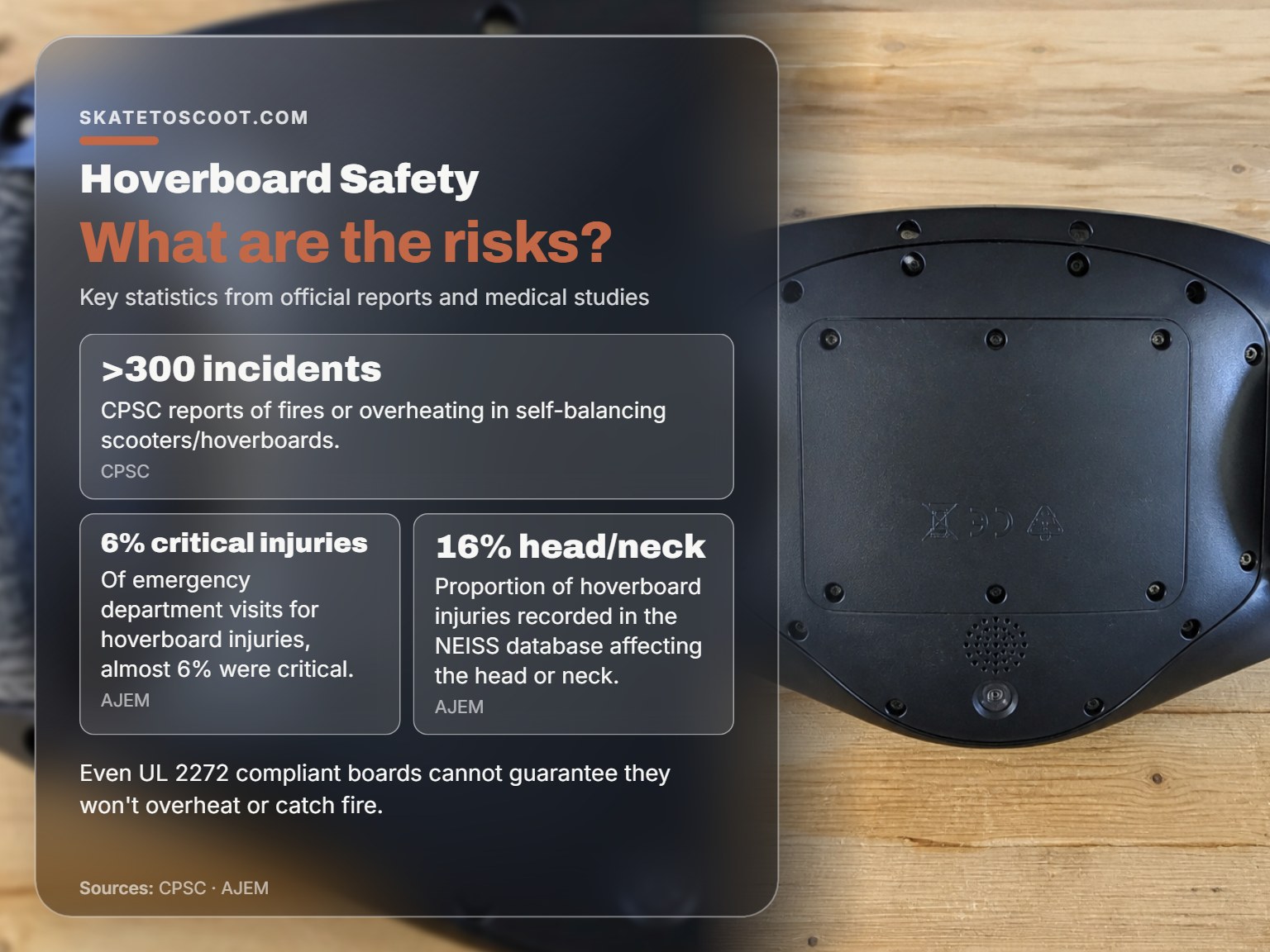
The CPSC recommends that hoverboards should be compliant with UL 2272. However, their safety alert includes a critical caveat: even UL 2272 compliance cannot guarantee that a hoverboard will not overheat or catch fire. It’s the best available benchmark, not a force field.
Here’s how to decode what you’re buying:
| Claim on Listing / Box | What It Actually Means | Risk If You Proceed |
|---|---|---|
| “UL 2272 Certified” (with mark on unit) | The entire product passed electrical and fire safety tests. | Lowest fire risk (but not zero per CPSC). |
| “Features UL-Certified Battery” | Only the battery pack is certified. The rest is untested. | High risk of faulty charging circuit or electronics causing a fire. |
| “Meets Safety Standards” (no UL mark) | Meaningless. No independent verification. | Unknowable. Could be fine; could be the next recall. |
| No safety mention, low price | Almost certainly non-compliant. | Maximum fire and failure risk. |
The CPSC adds a direct warning about source: Never purchase a hoverboard from a kiosk, a secondhand seller, or an online retailer without proof of UL 2272 compliance. If the price seems too good to be true, it probably is. The unit may not be compliant.
What Age Is Appropriate for a Hoverboard?
This is where sources and lived experience clash. Forum parents ask about boards for young children. A pediatric journal suggests a floor of 14. Who’s right? Mechanically speaking, both are observing different parts of the same problem.
The Italian Journal of Pediatrics study from 2022 analyzed emergency department trends and suggested “a restriction from riding hoverboards at least in children younger than 14 years.” Their rationale hinges on motor skill development: “The acquisition of fundamental motor, cognitive, and perceptual skills are the basis in developing the ability of engaging in driving a HB that requires balance, coordination, and perception of the risk conditions.”
Simply put, most children under 14 lack the fine weight-shift control and risk assessment to reliably operate a device that translates subtle leans into sudden acceleration. Their higher center of gravity also makes falls more severe.
Conversely, on forums, some parents of younger children report success with heavy supervision and strict safety measures. The child’s individual coordination and temperament matter enormously. A cautious child on a locked beginner mode in a safe area is in a different risk category than an impulsive rider trying tricks in a hazardous environment.
Where this goes sideways: Assuming age is the only factor. A mature 12-year-old with proper gear and a safe space is likely at lower risk than an overconfident 15-year-old riding near traffic without a helmet. Age is a proxy for judgment and coordination, not a guarantee.
So what’s the answer? If you’re looking for a rule backed by published research, 14 is the number. If you’re considering a younger child, you must accept that you are operating outside the studied safety parameters and compensate with extreme levels of supervision, training, and environment control. Your margin for error vanishes.
How Do Hoverboard Injuries Compare to Skateboards or Scooters?
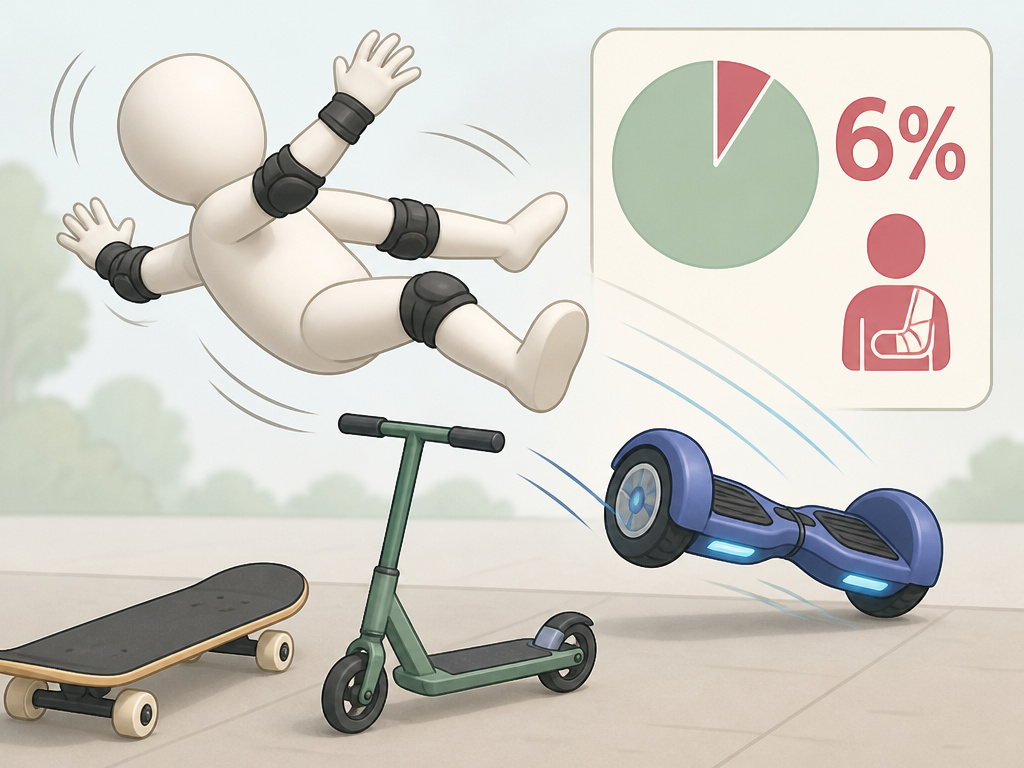
It’s natural to compare. Kids fall from everything. The data from a national surveillance system (NEISS) study, published in the American Journal of Emergency Medicine, offers a direct comparison. It found that almost 6% of emergency department visits for hoverboard injuries involved critical injuries, and 16% of the injuries were to the head or neck.
The study’s authors highlight that “pediatric patients are more at risk for hoverboard related injuries than adults.” This aligns with the general understanding that children suffer more severe consequences from falls.
How does that stack up against a skateboard? The mechanics differ. A skateboarder can run off the board or kick it away. A hoverboard failure, a sudden shutoff or a misinterpreted lean, can eject the rider backward with no chance to recover. The board itself can also spin violently, hitting the rider. The result is often a more unpredictable and rotational fall, leading to unique fracture patterns noted in orthopedic studies.
The bottom line: hoverboards present a novel combination of mechanical failure and balance challenge that can produce injury patterns distinct from traditional wheeled toys. You can’t assume experience on one translates to safety on the other.
How to Choose a Safer Hoverboard
You’ve decided the risk is manageable for your family. Now you need to pick the least risky tool for the job. This isn’t about features like Bluetooth speakers; it’s about verifying safety claims that are easy to fake.
First, abandon Amazon as a truth-teller. Sellers can list anything. Your verification must happen off-platform.
- Find the UL 2272 mark on the physical unit. The certification mark is often embossed on the underside of the footpad or near the serial number. If the listing doesn’t show it, ask the seller for a photo before buying. No photo, no sale.
- Stick to known brands with a track record. Some brands have been in the market for years and may have more established reputations. They are far from perfect, but they are more likely to have consistent manufacturing and better customer service than a no-name brand that changes its name every six months.
- Check the CPSC recall list. Before you buy, search the model name on the CPSC.gov website. The LayZ Board incident shows that even specific models get flagged. This is a five-minute step that can literally save lives.
- Ignore gimmicks, focus on specs. Bluetooth, voice control, and app connectivity are additional points of electronic failure. A simpler board has fewer things that can go wrong. What you want is a clear wattage rating (helps with hill climbing), a stated weight limit your child won’t approach, and a warranty longer than 90 days.
Once you have a candidate board, your job isn’t done. You need to pair it with the right safety protocol.
The Non-Negotiable Safety Gear Checklist
A helmet is not enough. The injury data screams for full coverage. Here’s what to buy and why each piece matters:
- Helmet (Certified Bicycle/Skate): Protects against the 16% of injuries that are head/neck. Must be properly fitted, covering the forehead.
- Wrist Guards: The most important piece after the helmet. They prevent the most common hoverboard fracture by bracing the hyperextending wrist. Don’t skip these.
- Knee Pads & Elbow Pads: Convert abrasive road rash into a minor scuff. They also provide a padded point of contact if the rider goes down on a joint.
- Closed-Toe Shoes: Sneakers or skate shoes. No sandals, crocs, or bare feet. Feet can get caught in the wheels, and toes can be crushed if the board rolls over them.
Gear is useless if it’s not worn. Make suiting up as automatic as putting on a seatbelt. Store it all together in a bag with the board’s charger.
Safe Charging and Maintenance Practices
The board is certified. The gear is on. Now you must manage the battery, the component with the highest catastrophic potential. The CPSC’s warning for LayZ Board owners is unambiguous: “stop charging and stop using.”
Your charging routine should treat the battery like a potential flare-up.
- Charge on a hard, non-flammable surface. A tile floor, a stone countertop, a metal bench. Never on a bed, couch, or carpet.
- Never charge unattended or overnight. Plug it in when you are awake and in the vicinity, able to smell smoke or hear a hiss. Unplug as soon as the indicator shows full.
- Use only the manufacturer-provided charger. A mismatched charger can overvolt the battery, pushing it into thermal runaway.
- Inspect the board regularly. Look for cracks in the plastic casing, loose wires, or a battery pack that looks swollen or warped. A bulging battery is an immediate stop-use signal.
- Dispose of it properly. If you retire the board, don’t throw it in the trash. The CPSC recommends taking it “to a local recycling center for safe handling of the lithium-ion battery.”
Following these steps doesn’t eliminate the fire risk, but it contains the possible damage to property rather than life.
What Are the Alternatives for Younger Children?
If the age 14 recommendation gives you pause, but your child is desperate for a wheeled riding toy, there are safer, skill-building alternatives. These options offer progressive challenges with lower inherent risk.
Balance Bikes & Scooters: A standard kick scooter (like a Razor) teaches balance, steering, and braking without a motor. It’s a foundational skill. A balance bike prepares them for weight transfer and coordination.
Electric Scooters with Handlebars: For older children, an electric scooter with handlebars and a speed limiter may be a safer introduction to personal electric mobility. The rider has a stable control point and can step off easily.
Low-Speed, Large-Wheel Options: Some hoverboards have larger wheels and adjustable speed limits designed for greater stability. These are harder to find with true UL 2272 certification, but they exist.
The goal is to match the device to the child’s current ability, not their aspirational age. Building skill slowly on a less hazardous platform means they’ll be safer and more competent if they graduate to a hoverboard later.
What are hoverboard weight limits and specifications?
Check the manufacturer’s guidelines for your specific model, as weight limits vary. A rider under the minimum weight may struggle to activate the sensors properly, while exceeding the maximum capacity can strain the motors and battery, potentially leading to a loss of balance or increased fire risk. Beyond weight, key specifications to verify are the product’s compliance with the UL 2272 safety standard for the entire unit, not just its components. Verify the UL 2272 certification mark on the product itself. Always ensure the rider’s size and strength are appropriate for controlling a device that can reach considerable speeds.
Frequently Asked Questions
What age should a kid get a hoverboard?
Published pediatric research suggests a restriction for children under 14 years due to motor skill development and injury data. Some parents introduce hoverboards to children younger than 14 with extreme supervision and safety measures. The official, research-backed answer is 14.
Why did hoverboards get banned?
They were banned in some places (like New York City) and by retailers like Amazon in 2015/2016 due to the overwhelming number of fire hazards from uncertified lithium-ion batteries. Airlines also banned them due to fire risk in cargo holds. The bans were a reaction to an unregulated flood of dangerous products onto the market before the UL 2272 standard was widely adopted.
Are hoverboards safe for a 9 year old?
The data says no. A 9-year-old is well below the 14-year threshold suggested by pediatric studies and lacks the coordination, judgment, and reaction time to safely manage a device that can suddenly move at 10+ mph. If you choose to allow it, you are accepting a risk level outside the parameters suggested by research.
What is better than a hoverboard for a young child?
Traditional kick scooter or a balance bike is far better. They teach fundamental balance and control without the fire risk or unpredictable acceleration. An electric scooter with handlebars and a speed limiter is a safer next step for older children before considering a handle-free hoverboard.
Before You Go
The question isn’t really “are hoverboards safe for kids?” Nothing with wheels and a motor is perfectly safe. The real question is: “can I construct an environment where the known risks are reduced to an acceptable level for my specific child?”
That construction has three pillars: a verified product (UL 2272 mark on the unit), full protection (helmet, wrist guards, knee/elbow pads), and controlled context (age-appropriate rider, flat private pavement, constant supervision). Remove any one pillar, and the whole structure leans toward the injury statistics.
Most guides will tell you it’s about the gear. It’s deeper than that. It’s about recognizing that the LayZ Board fatal fire and the pediatric ER fracture studies are two sides of the same coin, a product that demands more respect than a toy usually gets. If you wouldn’t let your child charge a smartphone on their bed overnight, don’t do it with a hoverboard. If you wouldn’t let them skateboard in the street without a helmet, don’t let them hoverboard without wrist guards.
The math is in the manuals and the medical journals. Your job is to apply it without blinking.
