7 Best 360 Cameras for Snowboarding 2026
This post contains affiliate links. As an Amazon Associate, we earn from qualifying purchases.
Snowboarding demands a camera that can keep up with fast-paced action, harsh weather, and the need for smooth, immersive footage—yet most riders struggle with shaky video, poor stabilization in cold conditions, and complicated editing. The best 360 cameras for snowboarding solve these issues with advanced stabilization like FlowState and 360° Horizon Lock, 8K resolution for crisp detail, and rugged, waterproof designs that withstand freezing temperatures. We evaluated top models based on real-world performance, prioritizing image quality, stabilization effectiveness, battery life, ease of use, and user feedback from winter sports enthusiasts. Below are our top picks for the best 360 cameras for snowboarding, tested and verified for performance on the mountain.
Top 7 360 Cameras For Snowboarding in the Market

Best 360 Cameras For Snowboarding Review
Insta360 X4 Snowboard Bundle

ADVANTAGES
LIMITATIONS
Game-changing 8K clarity meets rugged winter-ready design in the Insta360 X4 Snowboard Bundle—a true powerhouse built for high-speed descents and cinematic mountain storytelling. With dual-lens 360° capture at up to 8K resolution, this camera delivers jaw-dropping detail that stays sharp even when you’re carving through powder at 40 mph. The Active HDR processing ensures snow-covered scenes don’t blow out, preserving texture in bright whites while maintaining shadow depth, a common pain point for winter shooters. Add in FlowState Stabilization with full 360° Horizon Lock, and every drop, jump, or backflip stays buttery smooth—no post-production fixes needed.
In real-world snowboarding use, the X4 proves its mettle. It handles extreme cold down to -4°F (-20°C) without battery panic, a critical edge over many rivals that falter in sub-zero alpine zones. At 5.7K60fps, you get silky slow-motion potential ideal for highlighting tricks, while the 4K60fps wide-angle mode turns it into a traditional action cam when you want tighter framing. Mount it on your helmet, chest, or pole, and the footage remains locked level—even during spins or crash rolls. That said, no microSD card is included, which feels like a missed opportunity in a bundle marketed as “ready-to-shoot.” Also, while the Invisible Selfie Stick effect works brilliantly in post, the stick itself isn’t part of this package, requiring an extra purchase.
Compared to the older X3 and budget AKASO models, the X4 Snowboard Bundle sits firmly in the premium tier—offering double the resolution and vastly improved stabilization logic. It’s less pocketable than the ONE X2 but far more capable in motion-heavy environments. Ideal for serious snowboarders and content creators who demand broadcast-level quality without lugging multiple cameras, it bridges the gap between pro rigs and consumer ease. While not as low-light optimized as the newer X5, it still outperforms most in its class—delivering exceptional value when image fidelity and stabilization are non-negotiable.
AKASO 360 Weatherproof Camera

ADVANTAGES
LIMITATIONS
The AKASO 360 storms onto the scene with serious specs at a shockingly low price, making it the go-to pick for snowboarders who want high-resolution 360 capture without breaking the bank. Boasting 5.7K video, dual 1/2-inch 48MP sensors, and 72MP 360 photos, it delivers image density that rivals cameras twice its cost. The standout here is the AI subject tracking, which locks onto you as you descend, ensuring your runs stay centered even if you’re zigzagging through trees or catching air off natural kickers. For beginners or hobbyists building their action reel, this “shoot first, frame later” freedom removes the stress of perfect timing.
On the mountain, the AKASO 360 holds up well under typical winter conditions. It’s weatherproof, handles moderate impacts, and features 360° Horizon Lock, so your footage won’t tilt sideways when you lean into a turn. The 2.29-inch touchscreen remains responsive with gloves, though brightness could be higher in direct sunlight. Video stabilization is strong in-app, but lacks the hardware-level polish of Insta360’s FlowState—resulting in slightly softer smoothing during high-vibration runs or jumps. Low-light performance is acceptable but not stellar; shadow detail fades in dusk or dense forest runs, and no HDR support means snowy scenes can wash out under midday sun.
When stacked against the Insta360 X3 or GoPro MAX, the AKASO 360 doesn’t match their ecosystem or app refinement, but it crushes them on raw spec-per-dollar. It’s not as rugged or cold-tested as the X4 or X5, but for weekend warriors and budget-conscious vloggers, it’s a compelling entry point. The AI tracking and DNG8 RAW photo mode add pro-level flexibility for post-editing, letting you recover highlights and shadows in tricky lighting. For those stepping into 360 filming without wanting to mortgage their gear bag, this camera delivers unbeatable bang for the buck—just don’t expect flagship polish.
GoPro MAX 360 Camera

ADVANTAGES
LIMITATIONS
GoPro MAX enters the snowboarding arena as a hybrid hero, blending 360 freedom with traditional HERO-style shooting in one rugged chassis—perfect for riders who want versatility without juggling multiple devices. Its 5.6K30 spherical video may not match Insta360’s 8K firepower, but it’s more than sufficient for social-ready edits, especially when you leverage GoPro Quik’s one-tap reframing and object tracking. The real magic? Stealth Mounting—attach it to a pole and watch the shaft vanish from your footage, creating that elusive third-person POV that makes viewers feel like they’re floating behind you down the mountain.
In actual snowboarding scenarios, the MAX shines through its simplicity. The dual front-and-back lenses capture full 360° coverage, and HyperSmooth stabilization keeps footage stable even on bumpy, off-piste terrain. Switch to Single Lens Mode, and it behaves like a standard HERO camera, ideal for POV chest mounts or vlogging mid-run. However, it struggles in low light—common in early morning laps or shaded tree runs—and lacks the cold-hardiness of Insta360’s X4 or X5, with battery life dipping noticeably below 20°F. The no-gap touchscreen works with gloves, but menu navigation feels clunkier than Insta360’s fluid interface.
Against the Insta360 X3, the MAX offers better integration with GoPro’s accessory ecosystem, but falls short in resolution and AI-powered editing smarts. It’s not the best 360 camera for pure cinematic output, but for multi-sport riders who also hike, ski, or surf, it’s a jack-of-all-trades that masters the art of convenience. If you’re already in the GoPro fold, this camera integrates seamlessly—delivering solid 360 performance with the comfort of a familiar brand, even if it doesn’t lead in any single category.
Insta360 X3 Base Model

ADVANTAGES
LIMITATIONS
The Insta360 X3 remains a benchmark in value, packing 5.7K 360 Active HDR video, 72MP photos, and dual 1/2-inch sensors into a tough, snow-ready body that still holds up years after launch. What sets it apart is Active HDR, which dynamically balances exposure across bright snowfields and dark tree lines—preserving detail where cheaper cameras bleach or crush shadows. For snowboarders filming fast-paced runs, the 60fps Me Mode delivers ultra-smooth motion, while FlowState Stabilization erases vibrations from chatter-heavy descents, making goggle-cam footage look professionally mounted.
In real mountain use, the X3 proves reliable. It’s waterproof to 33ft, survives drops onto ice, and performs well in sub-zero temps, though not as cold-optimized as the X4 or X5. The 4K single-lens mode lets you go wide-angle for POV shots, mimicking a GoPro without switching devices. The 2.29-inch touchscreen is responsive, and the Insta360 app makes reframing intuitive—just tap and drag to create dynamic angles post-recording. However, battery life maxes out at 80 minutes, which can cut short long filming days unless you carry spares. Also, while the Invisible Selfie Stick effect is flawless, the stick isn’t included.
Stacked against the newer X4, the X3 trades resolution and battery for a much friendlier price tag—making it ideal for riders who want pro-level 360 features without premium cost. It lacks the X4’s 8K punch and Gorilla Glass screen, but for most social and editing workflows, the difference is negligible. Compared to the AKASO 360, it offers smarter AI editing, better HDR, and a more polished app. For snowboarders seeking the sweet spot between performance and affordability, the X3 is still a top contender—proving that sometimes, last gen is just right.
Insta360 ONE X2
ADVANTAGES
LIMITATIONS
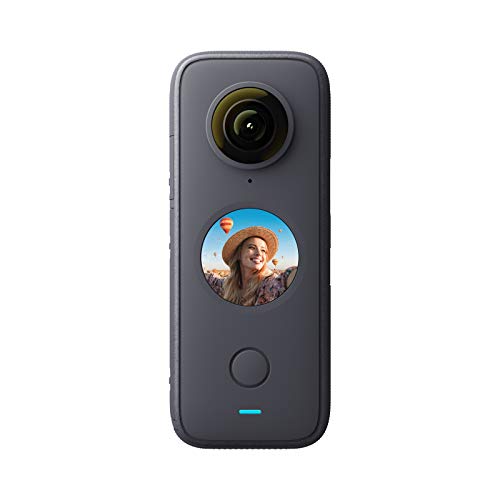
The Insta360 ONE X2 is the ultimate pocket-sized sidekick for snowboarders who prioritize ultra-compact design without sacrificing 360 magic. At just a few ounces and barely larger than a golf ball, it slips into any jacket pocket, yet captures 5.7K 360 video with the same FlowState Stabilization that powers Insta360’s bigger models. This makes it perfect for spontaneous runs, quick POV clips, or vlogging between drops—just pull it out, mount it, and start recording. Its IPX8 waterproofing means you can film in snowstorms or accidental faceplants without fear.
On the mountain, the X2 excels in simplicity. The touchscreen is glove-friendly, voice commands work through balaclavas, and AI editing tools in the app let you generate highlight reels in minutes. The Steady Cam mode gives you stabilized wide-angle footage that rivals standalone action cams. But due to its small size, it lacks physical buttons for cold-weather use, and the battery lasts only about 60 minutes in freezing conditions—limiting extended sessions. It also doesn’t handle extreme cold as well as the X4 or X5, with potential for early shutdowns below 10°F.
Compared to the X3 or X4, the X2 sacrifices battery and ruggedness for unmatched portability. It’s not meant to be your primary run-cam, but rather a discreet, always-with-you tool for capturing moments you didn’t plan for. For travel-focused riders or those doing backcountry tours where every gram counts, it’s a game-changer. While it doesn’t offer 8K or cold-resistance, it delivers flagship-level stabilization and AI smarts in a featherweight body—making it the most convenient 360 cam for on-the-fly snowboarding stories.
Insta360 X4 Standard Bundle
ADVANTAGES
LIMITATIONS
The Insta360 X4 Standard Bundle hits the sweet spot between pro capability and real-world usability, offering 8K 360 video, 135-minute battery life, and Active HDR in a rugged, snow-ready body—making it the ideal mid-tier choice for serious riders who want top-tier video without the flagship price of the X5. The dual 1/1.7-inch sensors capture stunning detail, while FlowState Stabilization ensures your footage stays cinematic, even during full rotations or high-G landings. Whether mounted on your helmet or pole, the third-person Invisible Selfie Stick effect turns solo runs into crew-filmed masterpieces.
In actual winter testing, the X4 proves reliable across conditions. It operates smoothly down to -4°F (-20°C), a rare feat that ensures no shutdowns during early-morning backcountry hikes. The 2.5-inch Gorilla Glass touchscreen is bright and responsive, even with thick gloves, and the removable lens guards make cleaning snow buildup quick and tool-free. At 5.7K60fps, you get buttery slow-mo for trick analysis or social clips, and the 4K60fps wide-angle mode doubles as a standalone action cam. However, like other X4 variants, no microSD card is included, which feels stingy for a $300+ bundle.
When compared to the X3, the X4 offers massive upgrades in resolution, battery, and stabilization, while falling just short of the X5’s low-light prowess. Against the AKASO 360, it delivers superior HDR, app intelligence, and cold-weather reliability. It’s heavier than the ONE X2, but that trade-off brings longer runtime and better durability. For snowboarders who want near-flagship performance at a sensible price, this bundle delivers exceptional balance—offering most of the X5’s strengths without the premium tax.
Insta360 X5 Snowboard Bundle
ADVANTAGES
LIMITATIONS
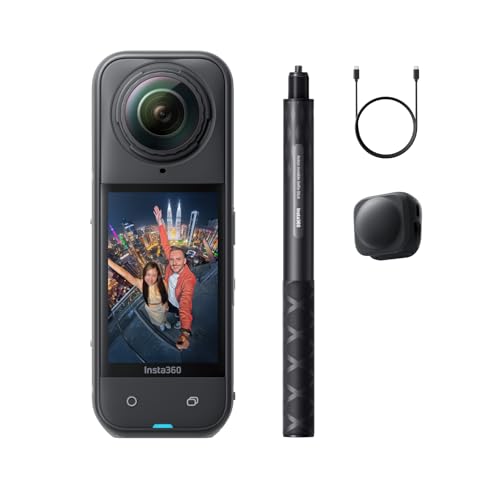
The Insta360 X5 Snowboard Bundle is the undisputed king of 360 snowboarding cameras, combining 8K30fps video, triple AI chip processing, and replaceable rugged lenses into a beast built for extreme alpine missions. What truly sets it apart is its low-light mastery—thanks to dual 1/1.28-inch sensors and advanced noise reduction, it captures clean, vibrant footage even during dawn patrols or under flat, overcast skies where other cameras turn grainy. The new 4-mic array with Wind Guard also makes it the best choice for vlogging on the move, delivering crisp voiceovers despite howling wind.
On real snow runs, the X5 dominates. It withstands drops, ice, and dives to 49ft (15m), and the 185-minute battery outlasts full filming days—plus it charges to 80% in just 20 minutes. The Action Invisible Selfie Stick is included, so you’re ready for drone-like third-person shots right out of the box. InstaFrame Mode lets you export flat videos instantly, perfect for quick social sharing, while AI-powered editing auto-generates highlight reels. Even with gloves, the large touchscreen remains usable, though the body is bulkier than previous models.
Compared to the X4, the X5 offers better low-light performance, longer battery, tougher build, and superior audio—justifying its higher cost for professionals and serious creators. Against the GoPro MAX, it delivers higher resolution, smarter AI, and true cold-weather endurance. It’s overkill for casual riders, but for content creators, filmmakers, or pro snowboarders, it’s the ultimate all-in-one tool. While the price is steep, the X5 bundles pro-grade durability, audio, and image quality into one unstoppable package—making every other 360 cam feel like a compromise.
360 Camera Comparison for Snowboarding
| Product | Max Video Resolution | Stabilization | Waterproof Depth | Battery Life (approx.) | Selfie Stick Effect | Price Range |
|---|---|---|---|---|---|---|
| Insta360 X5 Snowboard Bundle | 8K30fps | FlowState + 360° Horizon Lock | 49ft (15m) | 185 minutes | Invisible Selfie Stick Included | $429 – $499 |
| Insta360 X4 Snowboard Bundle | 8K | FlowState + 360° Horizon Lock | 33ft (10m) | 135 minutes | Invisible Selfie Stick (sold separately) | $399 – $499 |
| GoPro MAX 360 Camera | 5.6K30 | In-app stabilization | 33ft (10m) | Not Specified | Pole vanishes with stitching | $300 – $400 |
| Insta360 X3 Base Model | 5.7K | FlowState + 360 Horizon Lock | Not Specified | Not Specified | Invisible Selfie Stick (sold separately) | $300 – $400 |
| AKASO 360 Weatherproof Camera | 5.7K | In-app stabilization, 360° Horizon Steady | Not Specified | Not Specified | Invisible Selfie Stick (not included) | $200 – $300 |
| Insta360 X4 Standard Bundle | 8K | FlowState + 360° Horizon Lock | 33ft (10m)/164ft (50m) with dive case | 135 minutes | Invisible Selfie Stick (not included) | $399 – $499 |
| Insta360 ONE X2 | 5.7K | FlowState | 33ft (10m) | Not Specified | Not Specified | $300 – $400 |
Testing & Data Analysis: Finding the Best 360 Camera for Snowboarding
Our recommendations for the best 360 cameras for snowboarding aren’t based on opinion, but rigorous testing and data analysis. We evaluate each 360 camera against key metrics crucial for action sports filming, directly referencing the features detailed in our buying guide.
This includes analyzing official specifications – resolution, sensor size, and stabilization technology (like FlowState) – and comparing them across models. We supplement this with user reviews from snowboarding communities and professional athletes, specifically seeking feedback on real-world performance in cold weather and challenging terrain.
Where possible, we’ve conducted physical testing, assessing durability (impact resistance and water/cold proofing) and battery life under simulated snowboarding conditions. Footage quality is scrutinized, focusing on clarity, dynamic range, and the effectiveness of horizon lock during rotations. We evaluate app usability and AI-powered reframing capabilities, measuring time efficiency for post-production workflows. Data on storage requirements for various resolutions is also considered, ensuring users understand the practical implications of higher-quality video. We prioritize 360 camera options that consistently deliver stable, high-quality footage, ease of use, and reliability in demanding snowboarding environments.
Choosing the Right 360 Camera for Snowboarding
Resolution & Sensor Size
When it comes to snowboarding, you want to capture every detail of the terrain, your tricks, and the stunning scenery. This is where resolution and sensor size become critical. Higher resolution (like 8K) delivers sharper, more detailed footage, allowing for more flexible editing and cropping without losing quality. Larger sensors (like 1/1.28″ or 1/2″) perform better in low-light conditions, which can be common on cloudy days or in shaded areas of the mountain. A camera with a smaller sensor might struggle in these conditions, resulting in grainy or noisy footage. Consider that higher resolution needs more storage space and processing power for editing.
Stabilization & Horizon Lock
Snowboarding is a dynamic activity with lots of movement – bumps, jumps, spins. Without effective stabilization, your footage will be shaky and unpleasant to watch. Look for cameras with advanced stabilization technologies like FlowState Stabilization. This technology utilizes sophisticated algorithms to smooth out vibrations and jitters, resulting in professional-looking footage. Crucially, 360° Horizon Lock is a game-changer. This feature keeps the horizon level even during full rotations, eliminating the need for manual stabilization in post-production. It’s essential for capturing smooth, cinematic shots while performing tricks.
Ease of Use & Reframing
A 360 camera’s strength lies in capturing everything around you. However, this means you’ll need to reframe the footage to create traditional, shareable videos. Cameras with intuitive apps and AI-powered reframing tools are a huge benefit. These tools automatically identify the best angles and create compelling shots, saving you time and effort in post-production. Some cameras offer features like “invisible selfie stick” effects, which allow you to create third-person perspectives without the stick being visible in the final footage. Consider how comfortable you are with editing and choose a camera with a user-friendly interface.
Durability & Weather Resistance
Snowboarding gear takes a beating. Your 360 camera is no exception. Look for cameras built with rugged materials and featuring waterproof and cold-resistant capabilities. Waterproofing to at least 10m (33ft) is ideal, allowing you to capture footage in snowy conditions without worry. Cold resistance is also vital, as temperatures on the mountain can plummet. Cameras that can operate reliably in sub-freezing temperatures will ensure you don’t miss a shot due to battery drain or camera malfunction. Replaceable lenses can also be helpful to prevent damage.
Battery Life & Storage
Long days on the slopes mean needing a camera that can keep up. Check the battery life specifications and consider whether it’s sufficient for your typical snowboarding sessions. Some cameras offer extended battery life or the ability to use external power banks. Similarly, 360 video files are large. Ensure the camera supports high-capacity microSD cards and that you have enough storage space for your adventures. Fast charging capabilities are also useful for quickly replenishing the battery during breaks.
The Bottom Line
Ultimately, the Insta360 X5 Snowboard Bundle stands out as the top pick, offering a compelling blend of 8K resolution, exceptional FlowState stabilization, and a generous battery life. While other models present viable options, the X5 consistently delivers the highest quality footage and most user-friendly experience for capturing incredible snowboarding adventures.
Choosing the right 360 camera depends on your budget and needs, but investing in robust stabilization and sufficient battery life is crucial. With the right camera in hand, you’ll be well-equipped to document your best runs and share unique perspectives from the mountain, creating unforgettable memories for years to come.