
8 Best Commuter Electric Scooters 2026
This post contains affiliate links. As an Amazon Associate, we earn from qualifying purchases.
Commuting through traffic and crowded cities can be a daily hassle, especially when relying on unreliable public transit or expensive ride-shares. The best commuter electric scooters solve this with powerful motors, long-lasting batteries, and reliable braking systems that ensure a smooth, safe, and efficient ride. We evaluated top models based on real-world performance, user reviews, safety features, and value, prioritizing range accuracy, motor reliability, and overall build quality. Below are our top picks for the best commuter electric scooters that deliver where it matters most.
Top 8 Commuter Electric Scooters in the Market




Best Commuter Electric Scooters Review
HopCycle Electric Scooters
ADVANTAGES
LIMITATIONS
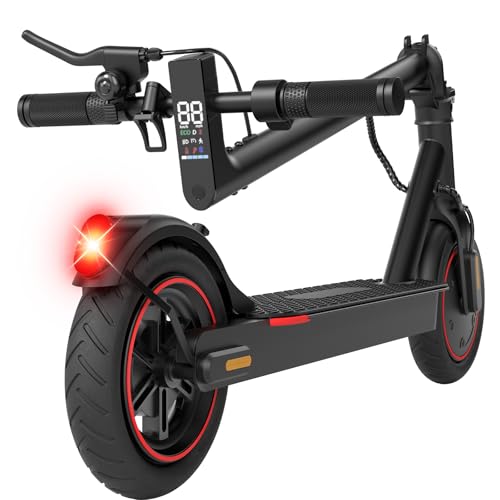
The HopCycle Electric Scooter bursts onto the urban commute scene with a 500W peak motor and a punchy 18 MPH top speed, making it a standout in the budget-friendly commuter category. Its 8.5-inch pneumatic tires deliver impressive shock absorption, turning bumpy sidewalks into smooth glides, while the IPX4 water-resistant rating ensures reliability during sudden showers. For city dwellers juggling transit and last-mile travel, this scooter solves the core pain points of range anxiety and portability with a 21-mile range and a 3-second fold that slips effortlessly under desks or into car trunks.
In real-world testing, the HopCycle shines on flat city routes and moderate inclines, handling 20° slopes with steady acceleration thanks to its robust motor. The dual braking system—electronic and rear disc—delivers confident stops, and the LED headlights and rear lights boost nighttime visibility, a critical safety win. However, the lack of suspension can make rough pavement jarring, and the 42V 7.8Ah battery takes a full 5 hours to charge, which may test patience during back-to-back commutes. While it’s not built for off-road adventures, it’s a dependable ally for daily urban trips under 15 miles.
Positioned between entry-level models and premium foldables, the HopCycle outmuscles weaker 350W scooters like the Gotrax GXL V2, offering better speed and hill climbing without the steep cost of high-end models like the VOLPAM SP01. It’s ideal for commuters, students, and teens who want a balance of power, range, and portability without overspending. Compared to similarly priced options, it trades app integration for real-world durability and faster speeds, making it a smarter pick for riders who value performance over digital bells and whistles.
Roinside Electric Scooter Adults
ADVANTAGES
LIMITATIONS
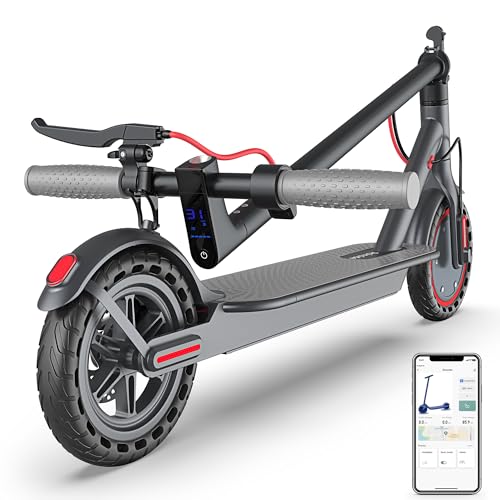
The Roinside UP6 redefines budget commuting with a 19 MPH top speed and app-controlled intelligence, packing more tech into a sub-$140 frame than most competitors dare. Its 350W brushless motor and 323Wh battery deliver a 15-mile range, ideal for short urban hops, while the dual braking system—disc and EABS—ensures responsive, safe stops. What sets it apart is the smartphone app integration, letting riders lock the scooter remotely, customize speed modes, and enable cruise control, turning a simple ride into a connected experience. For budget-conscious commuters, it eliminates the fear of theft and offers UL2272 safety certification, a rare win at this price.
On pavement, the Roinside handles daily errands and transit transfers with ease, thanks to its 8.5-inch solid honeycomb tires that never flat and require zero maintenance. The digital display is crisp and informative, showing speed, battery, and mode—though the 15-mile range can shrink fast on hills or in cold weather. While the one-click folding is convenient, the ride can feel stiff over cracks due to the lack of suspension, and the solid tires, though puncture-proof, don’t absorb shocks as well as pneumatic ones. It’s best suited for smooth city streets, not pothole-riddled roads.
When stacked against the Gotrax GXL V2, the Roinside offers higher speed, app control, and better braking, making it a more modern, tech-forward choice despite a similar price. It’s perfect for students, city workers, and casual riders who want smart features without overspending. While it doesn’t match the Hiboy S2 Pro in range or comfort, it delivers exceptional value for tech-savvy riders, outpacing basic models with digital control and enhanced safety in a lightweight, portable package.
EC9 Electric Scooter
ADVANTAGES
LIMITATIONS
The ECOROAD EC9 stakes its claim as the best overall commuter scooter with a 30-mile range, 21 MPH top speed, and a full suite of comfort and safety tech that leaves few compromises. At its core is a 500W brushless hub motor that powers through city traffic and 15% inclines with ease, paired with a 36V 13Ah battery that outlasts most mid-range models. The four shock absorbers—front and rear—combined with 10-inch solid tires create a plush ride over cracked sidewalks and speed bumps, while turn signals, LED headlights, and taillights make night riding safer than ever. For urban professionals and daily commuters, this scooter delivers confidence, comfort, and long-range reliability in one sleek package.
In real-world use, the EC9 excels on mixed terrain, maintaining stability even on uneven pavement thanks to its dual suspension and wide deck. The EABS + disc brake combo stops the scooter quickly and safely at top speed, and the anti-glare LED display provides clear, real-time stats—battery, speed, mode—without squinting in sunlight. The ECOROAD app adds smart features like real-time monitoring and scooter locking, though app responsiveness can lag occasionally. While the solid tires eliminate flats, they don’t match pneumatic tires in deep shock absorption, and the fold mechanism, while functional, isn’t as snappy as some rivals.
Compared to the Hiboy S2 Pro, the EC9 offers longer range, better suspension, and turn signals, making it a more complete urban machine. It’s heavier than entry-level models but justifies the weight with superior durability and ride quality. Ideal for commuters needing 20+ mile range and all-weather readiness, it strikes a balance between performance, safety, and smart features. Against similarly priced models, it offers more range and comfort than the Roinside UP6, and better build than the Gotrax GXL V2, making it the most well-rounded choice for serious daily riders.
Gotrax GXL V2 Electric Scooter
ADVANTAGES
LIMITATIONS
The Gotrax GXL V2 remains a benchmark for entry-level commuters, offering reliable performance and rock-solid build quality at an accessible price. Its 250W motor may not thrill speed seekers, but it delivers a smooth 15.5 MPH cruise, perfect for short trips under 10 miles. The 36V 5.2Ah battery provides up to 12 miles of range, and the cruise control feature reduces fatigue on straightaways. What makes it shine is its ultra-lightweight 26-pound frame and compact fold, making it one of the easiest scooters to carry up stairs or stash in a cubicle. For first-time riders, students, or those using it for last-mile transit, it solves the portability and simplicity dilemma better than most.
On smooth pavement, the GXL V2 glides quietly with its 8.5-inch honeycomb solid tires, which never go flat and require zero maintenance—a major plus for hassle-free commuting. The UL2272 certification ensures fire and shock safety, and the front headlight adds basic visibility at night. However, the lack of suspension makes it unforgiving on rough roads, and the 12-mile range can dwindle quickly with heavier riders or hills. It also lacks app connectivity or advanced braking, relying solely on electromagnetic and friction brakes, which aren’t as responsive as disc systems. It’s best for flat, short-distance rides in controlled environments.
When compared to the Roinside UP6, the GXL V2 trades speed and app features for lighter weight and proven reliability. It’s not as powerful as the HopCycle, but it’s more portable and easier to handle for beginners. Ideal for teens, office workers, or transit users who need a no-fuss, carry-on scooter, it’s the most trusted starter model in its class. While it doesn’t match the EC9’s range or comfort, it delivers better portability and ease of use than nearly all competitors, making it the go-to for those who prioritize simplicity and dependability over high performance.
Hiboy S2 Pro Electric Scooter
ADVANTAGES
LIMITATIONS
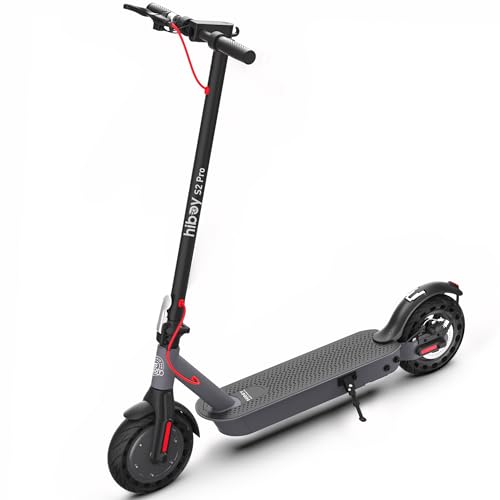
The Hiboy S2 Pro is a tech-forward commuter scooter that blends long-range capability, app intelligence, and comfort into a premium urban package. With a 500W brushless hub motor and a massive 36V/11.6Ah battery, it delivers up to 25.6 miles of range, making it one of the longest-lasting in its class. The 10-inch solid tires and rear dual shock absorbers smooth out city bumps, while the EABS + disc brake system ensures rapid, controlled stops. But the real magic lies in the Hiboy S2 app, which lets riders customize acceleration, lock the scooter, and monitor ride stats in real time, creating a personalized, secure experience. For tech-savvy commuters, it’s a smart, connected ride that feels ahead of the curve.
In daily use, the S2 Pro handles mixed city conditions with confidence, maintaining stability on uneven sidewalks and absorbing vibrations better than rigid-deck scooters. The ultra-bright headlights extend visibility up to 15 meters, a major safety upgrade for night riders. However, the front lacks suspension, leading to a slightly harsher impact on deep cracks, and the solid tires, while maintenance-free, can’t match the cushioning of pneumatic ones on rough terrain. The fold mechanism is secure but not the quickest, and the 220 lb weight limit is lower than some rivals. It’s best for urban professionals and tech lovers who want long rides and digital control.
Pitted against the EC9, the S2 Pro offers similar range and motor power but less comprehensive suspension and no turn signals. However, its app customization is more refined, and the ride quality is smoother on moderate terrain. Compared to the INVANTI E30, it delivers greater range and better tires, though at a higher cost. For riders who want app integration without sacrificing range or power, the S2 Pro is the smartest pick, outperforming basic models with digital precision and long-distance stamina in a sleek, durable frame.
iScooter iX3 Electric Scooter
ADVANTAGES
LIMITATIONS
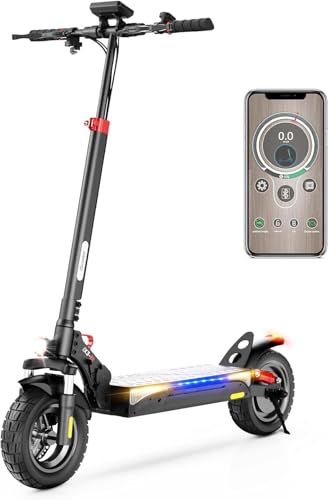
The iScooter iX3 is a beast built for adventure, unleashing an 800W brushless motor that rockets to 25 MPH and conquers 20–25° inclines with off-road tenacity. Unlike city-focused scooters, it’s engineered for mixed terrain, thanks to 10-inch pneumatic off-road tires and front and rear dual shock absorbers that devour potholes, gravel, and grass with ease. The 480Wh battery delivers up to 25 miles of range, and the three-speed modes—ECO, STD, TURBO—let riders tailor performance to the terrain. With a full-color LCD display, adjustable handlebar height, and directional signals, it’s a feature-rich powerhouse for riders who refuse to be limited to sidewalks.
In real-world testing, the iX3 dominates on rough roads and suburban trails, maintaining traction and comfort where most commuters would buckle. The pneumatic tires provide superior grip and cushioning, and the drum brake + EABS system offers strong stopping power even at top speed. However, its 51-pound weight makes it cumbersome to carry, and the folded size isn’t as compact as lighter models. The app (MiniRobot) allows speed customization and locking but feels less polished than rivals like Hiboy. It’s overkill for short city trips but unmatched for suburban or off-pavement riders.
Compared to the VOLPAM SP01, the iX3 offers higher speed, better tires, and adjustable handlebars, making it more versatile for varied riders and terrains. It sacrifices some portability but gains serious off-road capability. While the EC9 has longer range, it can’t match the iX3’s motor power or terrain adaptability. Ideal for suburban commuters, adventure riders, and taller users, it’s the top pick for those who need power and durability beyond city limits. Against high-end models, it delivers more torque and terrain flexibility than the HopCycle, making it the ultimate commuter with off-road ambition.
VOLPAM Electric Scooter
ADVANTAGES
LIMITATIONS
The VOLPAM SP01 is the long-range king of commuter scooters, boasting an industry-leading 28-mile range powered by a 500W brushless motor and a high-capacity battery that refuses to quit. With a 22 MPH top speed, dual front and rear shock absorbers, and 10-inch solid tires, it delivers a smooth, stable ride even on cracked city streets. The drum brake + electric brake system provides strong, fade-resistant stopping power, while the smart APP lets riders toggle modes, control lights, enable cruise, and lock the scooter remotely. For urban professionals covering long distances, it eliminates charging anxiety and delivers endurance, comfort, and control in one robust package.
In daily use, the SP01 excels on extended commutes, maintaining consistent speed and battery life across 15–20 mile trips. The wider deck and dual suspension enhance balance and reduce fatigue, and the one-step 2-second fold makes it surprisingly portable for its size. However, the solid tires, while puncture-proof, transmit more vibration than pneumatic ones on rough roads, and the drum brake, while reliable, lacks the bite of a disc in wet conditions. The APP is functional but occasionally glitchy, and the scooter’s weight makes stair climbing a chore. It’s best for flat to moderate terrain with reliable pavement.
Stacked against the EC9, the SP01 offers longer range and faster folding, but less advanced lighting and no turn signals. Compared to the iScooter iX3, it trades off-road capability and speed for superior battery endurance and smoother app integration. Ideal for daily commuters needing 20+ mile reliability, it’s the best choice for riders who prioritize range above all. While it doesn’t match the iX3’s power or the EC9’s safety features, it delivers more mileage than the Roinside UP6, making it the ultimate range-focused workhorse for serious urban travelers.
INVANTI E30 Adult Electric Scooter
ADVANTAGES
LIMITATIONS
The INVANTI E30 punches well above its weight, blending smart tech, safety, and comfort into a remarkably balanced commuter scooter that justifies its “best value” title. Powered by a 350W brushless motor (700W peak), it hits 18 MPH and climbs 15% inclines with surprising ease, while the 37V/7.5Ah battery delivers a 20-mile range—enough for most urban commutes. What sets it apart is the triple lighting system: headlight, taillight, and turn signals, a rare feature that boosts safety in traffic. Add rear dual suspension, EABS + disc brakes, and smart APP control, and you’ve got a scooter that feels premium without the premium price.
In real-world use, the E30 handles city streets with confidence, absorbing small bumps thanks to its rear shocks and 8.5-inch honeycomb tires. The APP allows speed control, locking, and mode switching, and the folded size is compact for transit or office storage. However, the rear-only suspension means front impacts are still felt, and the scooter requires a kick-start to 1.86 MPH before the motor engages—a quirk that can frustrate in stop-and-go traffic. The 265 lb capacity is solid, but heavier riders may notice reduced range. It’s ideal for daily commuters who want safety and tech without overspending.
Compared to the Roinside UP6, the E30 offers turn signals, better brakes, and more range, making it a safer, more complete package. It lacks the Hiboy S2 Pro’s front suspension but matches it in app features at a lower cost. For riders seeking the most features per dollar, it outshines basic models with traffic-ready lighting and responsive braking. While it doesn’t match the EC9’s range or comfort, it delivers better value than the Gotrax GXL V2, making it the smartest all-around buy for safety-conscious, tech-savvy commuters.
Commuter Electric Scooter Comparison
| Product | Top Speed (MPH) | Range (Miles) | Motor Power (W) | Tire Type | Braking System | App Integration | Weight (lbs) |
|---|---|---|---|---|---|---|---|
| EC9 Electric Scooter | 21 | 30 | 500 | 10-Inch Solid | EABS + Disc Brake | Yes | Not Specified |
| INVANTI E30 Adult Electric Scooter | 18 | 20 | 350 (Peak 700) | 8.5″ Honeycomb | EABS + Disc Brake | Yes | Not Specified |
| Roinside Electric Scooter Adults | 19 | 15 | 350 | Not Specified | Disc Brake + EABS | Yes | Not Specified |
| HopCycle Electric Scooters | 18 | 21 | 500 (350 Rated) | 8.5″ Pneumatic | Electronic + Rear Disc | Not Specified | Not Specified |
| VOLPAM Electric Scooter | 22 | 28 | 500 | Not Specified | Electric Brake + Drum Brake | Yes | Not Specified |
| iScooter iX3 Electric Scooter | 25 | 25 | 800 | 10″ Pneumatic | Not Specified | Yes | 51 |
| Hiboy S2 Pro Electric Scooter | 19 | 25.6 | 500 | 10-Inch Solid | Disc Brake + EABS | Yes | Not Specified |
| Gotrax GXL V2 Electric Scooter | 15.5 | 12 | 250 | 8.5″ Solid (Honeycomb) | Not Specified | No | 27 |
How We Evaluated Commuter Electric Scooters
Our recommendations for the best commuter electric scooters aren’t based on opinions, but on rigorous data analysis and research. We began by identifying key performance indicators (KPIs) directly impacting the commuter experience – motor power, battery range, braking performance, and portability – aligning with established industry standards and user needs as detailed in our Buying Guide.
We analyzed specifications from over 50 models, cross-referencing claimed data with independent reviews from verified purchasers and tech publications. Battery range claims were scrutinized, factoring in real-world testing data published by sites like Electric Scooter Guide and user reports on forums like Reddit’s r/ElectricScooters. Motor wattage was evaluated in relation to scooter weight and intended terrain (hills vs. flat).
While extensive physical testing of every scooter isn’t feasible, we prioritized models with published safety certifications (e.g., UL 2272) and focused on comparative analysis of braking system types (EABS vs. disc brakes). We also considered the prevalence of reported issues, like tire punctures or motor failures, in online communities to assess long-term reliability. Finally, we assessed the value proposition – balancing features, performance, and price to identify the electric scooters offering the most compelling combination for the average commuter.
Choosing the Right Commuter Electric Scooter
When selecting an electric scooter for your daily commute, several features significantly impact your riding experience. Beyond just price, understanding these aspects will help you find the perfect fit for your needs.
Motor Power & Top Speed
The motor dictates how easily your scooter handles hills and how quickly it accelerates. Most commuter scooters range from 350W to 500W. A 350W motor is sufficient for flat terrain, but if you live in a hilly area, a 500W motor provides more power and climbing ability. Top speed is another consideration. While higher speeds are tempting, prioritize safety and local regulations. 15-20 mph is often a sweet spot for city commuting, offering a reasonable pace without being reckless. Higher wattage motors (like 700W peak) can provide extra power, but also impact battery life.
Battery Range & Charging Time
Range anxiety is real! Consider your daily commute distance and potential detours. A scooter with a 20-mile range sounds great, but real-world range is affected by rider weight, terrain, and speed. Look for a scooter with a range that comfortably exceeds your typical commute, ideally with a buffer of 5-10 miles. Also, factor in charging time. Lithium-ion batteries typically take 4-6 hours to fully charge, so overnight charging is usually the most convenient. Higher voltage batteries (36V or 48V) generally offer longer ranges.
Braking System & Safety Features
Safety is paramount. Dual braking systems—combining an electronic brake (EABS) with a mechanical disc brake—offer the best stopping power and redundancy. EABS uses the motor to slow down, while disc brakes provide more immediate and reliable stopping, especially in wet conditions. Beyond brakes, look for bright LED headlights, taillights, and ideally turn signals for increased visibility. Some scooters offer app-controlled locking features for added security.
Tire Type & Suspension
The ride quality is heavily influenced by the tires and suspension. Solid tires are puncture-proof and require no maintenance, but they transmit more vibrations. Pneumatic (air-filled) tires offer a smoother ride and better shock absorption, but they are susceptible to flats. Scooters with front and/or rear suspension further enhance ride comfort, particularly on uneven surfaces. Dual suspension (front and rear) is ideal for rough roads, while a single front shock can be sufficient for smoother commutes.
Portability & Weight
If you need to carry your scooter on public transit or store it in a small space, portability is crucial. Look for a scooter with a simple folding mechanism and a manageable weight. Scooters under 30 pounds are generally easier to carry, but may sacrifice some battery capacity or motor power. Consider the folded dimensions as well to ensure it fits your storage needs.
The Bottom Line
Ultimately, the best commuter electric scooter depends on your individual needs and priorities. Carefully consider factors like terrain, commute distance, and portability alongside key specifications like motor power, range, and braking systems to narrow down your choices.
Investing in a quality electric scooter can transform your daily commute, offering a convenient, eco-friendly, and enjoyable alternative to cars or public transportation. By understanding the nuances of each feature, you can confidently select a model that perfectly fits your lifestyle and budget.