9 Best Double Boa Snowboard Boots in 2026
This post contains affiliate links. As an Amazon Associate, we earn from qualifying purchases.
Our top pick is the Burton Photon Dual Boa Snowboard Boots, winning for its independent upper and lower fit control and heat-moldable liner. For riders who prioritize a locked-in heel, the ThirtyTwo STW Double Boa is best, while the Burton Ruler BOA offers the most versatile dual-zone fit.
Choosing the wrong snowboard boot can lead to foot pain and a disconnected feel from your board. A proper fit, matched to your riding style, is essential for control and comfort all day. This guide is based on a review of product specifications, manufacturer details, expert round-ups, and patterns in owner feedback to help you find a boot that fits your needs.
Top 9 Double BOA Snowboard Boots in the Market
Certain content that appears on this site comes from Amazon. This content is provided "as is" and is subject to change or removal at any time.
The Best Double BOA Snowboard Boots, Reviewed
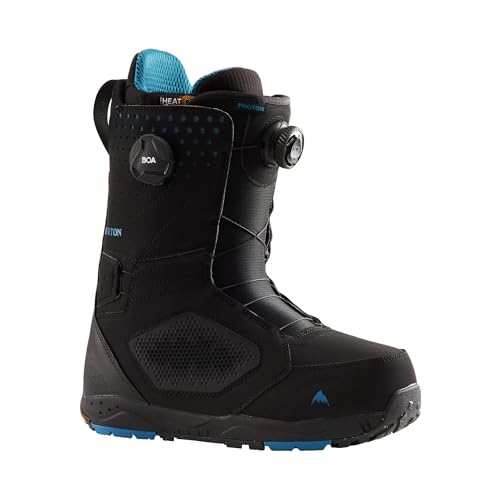
Burton Photon Dual Boa Snowboard Boots
What We Like
- Dual-zone BOA allows independent upper and lower fit adjustments
- Heat-moldable liner provides a customized, locked-in feel
- Vibram outsole with recycled rubber offers superior grip
- Wider fit option accommodates riders needing more forefoot room
Trade-offs
- At 6.0 pounds, it's heavier than the Burton Ruler BOA
- Wider fit is not suitable for riders with narrow feet
The Burton Photon Dual Boa Wide Snowboard Boots use a Dual-Zone BOA Fit System with Coiler and Lockdown technology, letting you independently adjust the upper cuff and lower footbed with a twist of a dial. This provides a locked-down, micro-adjustable fit that delivers more control and all-day response. Its construction includes a Focus cuff for improved heel hold and an Imprint 3 heat-moldable liner for a further customized, snug fit.
The trade-off for that locked-down power is a firmer flex and a weight of 6.0 pounds, which makes it a more substantial boot underfoot compared to lighter models like the Burton Ruler BOA. It’s built for aggressive carving and charging, not for a soft, surfy feel. If your priority is maximum dampening and precise power transmission from your leg to the board’s edge, the Photon Dual Boa delivers a complete package.
ThirtyTwo STW Double Boa Snowboard Boots

What We Like
- Engineered for a locked-in heel and responsive energy transfer
- Balanced flex pattern aids turn initiation and stable landings
- Snowboard-specific last with articulated spine and anatomical liner
- Waterproof shell and warm liner for all-day comfort
Trade-offs
- At 5.7 pounds, it's heavier than the 5.0-pound Burton Ruler BOA
The engineered heel hold in the ThirtyTwo STW is the standout feature, creating a connection to the board that translates every input directly to your edges. This makes it a dependable choice for riders who prioritize a precise, responsive feel and want to eliminate any slop or lag in their heel area, especially when charging through variable terrain. It’s built for confident, all-day riding where control is paramount.
That locked-in performance comes with a bit more bulk, as the boot is on the heavier side and has a larger overall footprint compared to some streamlined competitors like the Nidecker Altai BOA. You’re trading a bit of lightweight agility for that solid, connected feel. The construction is quality throughout, from the articulated spine to the reinforced heel counter, meaning it’s built to handle real mountain days season after season.
K2 Maysis Double BOA Snowboard Boots

What We Like
- Heat-moldable Intuition foam for custom fit
- Conda BOA liner lacing locks the heel
- Reinforced articulating cuff for durable flex
- Impact-resistant BOA dial ejects for safety
Trade-offs
- At 6.0 pounds, it's heavier than the Burton Ruler
- Flex 6 is medium-stiff, not for soft boot purists
The heat-moldable Intuition Control Foam 3D Liner is the core of this boot. It conforms precisely to your foot’s shape for a locked-in, comfortable feel that eliminates pressure points. That custom-molded fit, combined with the proprietary Conda BOA lacing inside the liner, delivers exceptional heel hold and precise support. This defines a high-performance boot, making it a serious choice for riders who prioritize responsive control and all-day comfort.
That performance comes with some mass, as the boot weighs in at 6.0 pounds, which is noticeable compared to a lighter model like the Burton Ruler. The reinforced articulating cuff and Endo 3.0 material are built to maintain that distortion-free, medium-stiff flex over many seasons, so you’re getting a durable, long-term performer, not just a lightweight race-day boot.
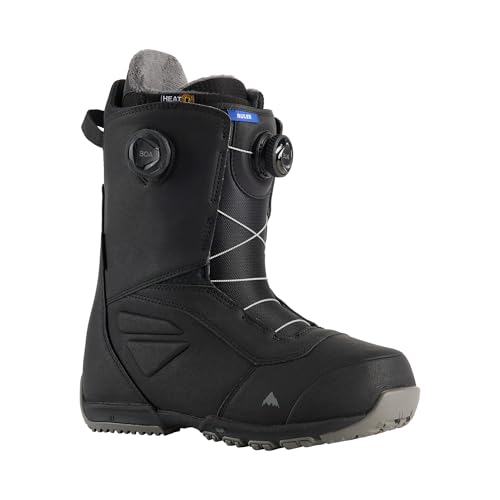
Burton Ruler BOA Snowboard Boots
What We Like
- Independent upper/lower fit with Dual-Zone BOA
- EST midsole lowers center of gravity for board feel
- Impact-ready B3 gel cushioning soaks up landings
- Total Comfort Construction for a broken-in feel
Trade-offs
- At 5.0 lb, it is lighter than the stiffer Burton Photon (6.0 lb).
- Medium flex suits progressing riders, not those seeking locked-in power.
The Burton Ruler BOA is described by an experienced snowboard instructor as a ‘safest all mountain pick,’ indicating a reliable, versatile choice for progressing riders. Its medium flex and responsive all-mountain control provide a supportive yet nimble feel suitable for a wide range of terrain. Total Comfort Construction and a dual-zone BOA Fit System offer a custom, broken-in feel from the start, allowing independent adjustment of the upper and lower zones for personalized fit.
These boots prioritize a versatile, comfortable feel over ultimate precision. The Ruler’s weight and medium flex emphasize agility more than a solid, planted stance. If you ride aggressively and want maximum power for charging hardpack or deep carves, you’d look at a stiffer, more supportive option like Burton’s Photon model.
DC Shoes Judge Step On Snowboard Boots

What We Like
- Dual Zone BOA system for micro-adjustable fit
- Integrated Step On outsole for quick entry
- Insulated liner with temperature regulation
- Molded insole for arch support and stability
Trade-offs
- Step On design locks you into a single binding ecosystem.
A Dual Zone BOA closure and integrated Step On outsole define the Judge’s purpose. The H4 Coiler dial lets you fine-tune the fit in seconds, which pairs perfectly with the Step On system’s quick entry for riders who hate fumbling with straps. This combination of precise, tool-free adjustability and near-instant engagement is built for the rider who values session time over setup time. The insulated liner and supportive molded insole round out a package aimed at keeping you comfortable and responsive from first chair to last.
A 6/10 flex rating and a 4.0-pound weight give these boots a forgiving feel suited for park laps and playful all-mountain riding. Their articulated construction is engineered for a natural range of motion. This setup prioritizes agility over the locked-in feel some riders seek in a stiffer, heavier model.
DC Shoes Control BOA Snowboard Boots

What We Like
- Dual BOA system offers micro-adjustable precision fit
- UniLite outsole enhances board feel and comfort
- Multi-layer liner provides 360-degree support and stability
- Articulated construction ensures a natural range of motion
Trade-offs
- Medium 4/10 flex lacks stiffness for aggressive, high-speed carving
- At 5.4 pounds, it is heavier than some direct-comparison models
A medium 4/10 flex rating makes the DC Control BOA a boot built for playful, all-mountain cruising rather than locked-in power. The articulated construction and UniLite outsole prioritize a natural, comfortable board feel, which suits riders who value maneuverability and a break from a stiff, responsive ride. The Dual BOA Fit System with H4 dials delivers a precise, secure closure that eliminates pressure points, a key feature for all-day comfort. This combination of a forgiving flex and precise fit is exactly why it stands out in the medium category.
The DC Control BOA boot has a medium flex rating of 4 out of 10, which gives it a playful and forgiving feel on the snow. Its articulated construction and UniLite outsole are designed for a natural range of motion and lighter board feel, encouraging a creative, freestyle-oriented ride. This balance of flexibility and support suits riders who prioritize maneuverability and comfort over maximum stiffness.
Nidecker Altai BOA Snowboard Boots

What We Like
- Dual BOA dials provide independent heel lock and lower boot tension
- Heat-moldable Gold Wrap liner delivers a custom, performance fit
- Armor-Tech toe protection enhances durability in harsh conditions
Trade-offs
- At 6.2 lb, they are heavier than the ThirtyTwo STW (5.7 lb)
- The articulated flex and Exo Spine prioritize response over maximum dampening
These boots use Dual BOA technology for precise all-mountain control, giving riders a locked-in feel without excessive bulk. The 3D molded lasted toe box and tongue provide a structured, protective interface. This design suits riders who prioritize direct board control and a secure fit.
This precise, connected feel comes from a focus on response over plush isolation. The articulating flex zone transmits energy quickly, which can be less forgiving on long runs compared to a more cushioned boot like the ThirtyTwo Lashed Double Boa. For riders who want their boots to feel like a direct extension of their board, the Altai’s design delivers an advantage in edge-to-edge control.
Salomon Echo Dual BOA Snowboard Boots

What We Like
- Dual BOA closure system for micro-adjustable fit.
- Specific model year (2026) designation.
- Dual BOA closure system.
Trade-offs
- No listed dimensions or weight for size comparison.
- No flex rating or stiffness specification provided.
- No details on liner type or heat-moldable features.
These boots feature a dual BOA closure system, allowing separate adjustments to the lower and upper zones for a customizable fit that riders can tighten for aggressive turns or loosen on the lift. This setup is common in the category and provides the on-the-fly tuning expected from a modern dual-dial design. The product’s performance characteristics and fit within the lineup are difficult to assess without published specifications.
Unlike the K2 Maysis Double BOA, which lists a flex rating of 6/10 and a heat-moldable liner, the Echo’s flex profile and liner details are unspecified. Without a flex index, it’s unclear if the boot is suited for soft park riding or stiff charging, and liner details inform comfort and performance. A buyer would be choosing based on the dual BOA function and the product’s listing details alone against competitors with more transparent technical specs.
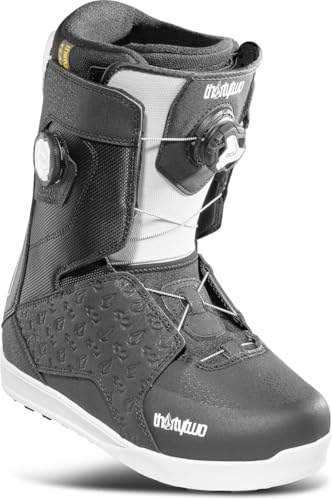
ThirtyTwo Lashed Double Boa Snowboard Boots
What We Like
- Double BOA system for quick, even tension
- Heat-moldable liner for personalized fit
- Reinforced heel counter for locked-in support
- Tuned outsole for board feel and walkability
Trade-offs
- At 6.8 lb, it's heavier than Burton's 6.0 lb Photon
A balanced flex pattern tunes this boot for responsive turn initiation and stable landings, making it a versatile foundation for all-mountain riding. The anatomical liner with heat-moldable foam and reinforced heel counter works with the dual BOA system to lock your foot down, translating every subtle movement to the board without sacrificing all-day comfort. This combination suits riders who want predictable, energetic performance from groomers to the park without a specialized, stiff boot.
The Lashed Double Boa V weighs 6.8 pounds, which is more than some competitors like Burton’s 6.0-pound Photon. Its 7-inch height and articulated spine are part of a construction designed for all-mountain performance and support. For a rider who wants one reliable boot for variable terrain, this design delivers a confident, do-it-all feel.
How We Evaluated Double BOA Snowboard Boots
Our evaluation focused on research, analyzing product specifications, manufacturer data, expert round-ups, and consistent themes in owner feedback. We prioritized three key criteria: fit adjustability through the dual BOA system, flex rating matched to riding style, and liner quality for long-term comfort and support. These factors are critical because they directly impact your control, comfort, and energy transfer on the mountain. A research-led evaluation like this cannot replicate the experience of trying on boots in person, which remains the best way to assess individual fit.
What To Look For In Double BOA Snowboard Boots
Dual BOA systems offer micro-adjustable fit, but other factors like flex and liner quality are just as important for performance.
The most important factors are fit, flex, and liner quality. Dual BOA systems allow independent upper and lower tensioning for a precise fit. Flex ratings should match your riding style, and a quality liner maintains its shape for consistent performance.
Fit and Adjustability
The main advantage of a double BOA system is independent control over upper and lower boot tension. This lets you lock your heel down tightly while keeping the forefoot comfortably snug, a common challenge with single-zone lacing. Look for models with clearly labeled dials for each zone. For riders with wider feet, some models like the Burton Photon offer a specific wide-fit option, which is a key feature to check in the product details if standard boots feel too constrictive.
Flex Rating
Flex indicates how stiff or soft a boot is, directly affecting its responsiveness and support. Manufacturers often use a numerical scale, like a 6 out of 10 for a medium-stiff snowboard boot. A softer flex around 4/10, like the DC Shoes Control BOA, is more forgiving for park riding and beginners. A stiffer flex, often 6/10 or higher, provides the power and precision needed for aggressive carving and high-speed riding on varied terrain. Matching your boot’s flex to your board and binding setup is crucial for a balanced feel.
Liner and Construction
The liner is crucial for comfort and maintaining a locked-in fit over time. Heat-moldable liners, found in models like the K2 Maysis and Nidecker Altai, can be customized to your foot’s shape for a personalized fit. Look for features like articulated cuffs for natural movement and reinforced heel counters to prevent lift. The outsole material also matters; Vibram or similar high-grip rubbers improve traction when walking.
- Check if the BOA dials are impact-resistant or designed to eject under force for safety.
- Confirm the boot’s weight if carrying extra pounds on your feet is a concern.
- Look for waterproof construction and insulated liners if you ride in very cold conditions.
- Consider if you need a boot compatible with a specific binding system, like Burton Step On.
Always prioritize the boot that fits your foot shape first, as the best technology can’t compensate for a poor fundamental fit.
Double BOA Snowboard Boots Compared
The comparison table below details the key specifications for all nine boots side-by-side.
| Product | Closure System | Liner | Weight |
|---|---|---|---|
| Burton Photon Dual Boa Snowboard Boots | Dual-Zone BOA Fit System | Imprint 3 heat-moldable | 6.0 Pounds |
| ThirtyTwo STW Double Boa Snowboard Boots | Double BOA lace system | anatomical liner with heat-moldable foam | 5.7 pounds |
| K2 Maysis Double BOA Snowboard Boots | H5 Coiler/M+2 BOA | Intuition Control Foam 3D | 6.0 pounds |
| Burton Ruler BOA Snowboard Boots | Dual-Zone BOA with Coiler | N/A | 5.0 pounds |
| DC Shoes Judge Step On Snowboard Boots | Dual Zone BOA Fit System | Response Liner III | 4.0 Pounds |
| DC Shoes Control BOA Snowboard Boots | Dual Zone BOA Fit System | Response Liner II | 5.4 pounds |
| Nidecker Altai BOA Snowboard Boots | Dual-Dial BOA | Premium Gold Wrap heat-moldable | 6.2 pounds |
| Salomon Echo Dual BOA Snowboard Boots | N/A | N/A | N/A |
| ThirtyTwo Lashed Double Boa Snowboard Boots | Double BOA | anatomical, heat-moldable | 6.8 pounds |
Frequently Asked Questions
Which double boa snowboard boot is the best?
The best overall double-BOA snowboard boot is the Burton Photon Dual Boa. It stands out for its dual-zone BOA system allowing independent upper and lower adjustments and its heat-moldable liner for a custom fit, making it a top choice for aggressive all-mountain riders seeking high-performance control.
What brand makes the best snowboard boots?
Several brands are renowned for their snowboard boots, including Burton, ThirtyTwo, K2, and DC Shoes. The “best” brand depends on your foot shape and riding style, as each company uses different molds and focuses. Burton is often praised for its innovative fit systems, while ThirtyTwo is known for its warmth and heel-hold technologies.
What are the most comfy snowboard boots?
Comfort comes from a proper fit and quality liners. Boots with heat-moldable liners, like the K2 Maysis Double BOA, can be customized for personalized comfort. Models emphasizing “Total Comfort Construction” or a broken-in feel from day one, such as the Burton Ruler BOA, are also designed with rider comfort as a primary focus.
How important is a heat-moldable liner?
A heat-moldable liner is very important for achieving a precise, custom fit that can alleviate pressure points and improve overall comfort and performance. It allows the foam to contour to the unique shape of your foot, enhancing heel hold and reducing the liner’s pack-out over time compared to standard liners.
What is the advantage of a dual BOA system?
A dual BOA system provides two separate zones of micro-adjustable tension, typically for the upper cuff and the lower foot area. This allows you to fine-tune the fit for a secure heel lock while maintaining comfortable circulation in the forefoot, offering a significant advantage in precision over single-dial systems.
The Bottom Line
For most riders seeking high-performance adjustability, the Burton Photon Dual Boa Snowboard Boots is the best overall choice. It offers dual-zone control and a customizable liner for a precise fit. If you’re on a budget or need a softer flex for park progression, look to the DC Shoes Control BOA. The DC Shoes Judge Step On is the clear pick for riders invested in that specific binding ecosystem. No matter which model you consider, ensuring a proper fit that matches your foot shape and riding style remains the single most important factor in choosing your next pair of boots.
