
8 Best Electronic Skateboards of 2026
This post contains affiliate links. As an Amazon Associate, we earn from qualifying purchases.
Riding an electronic skateboard can be thrilling, but choosing one that matches your skill level, terrain, and commuting needs is critical to both performance and safety. The best electric skateboards solve these challenges with powerful motors for hill climbing, long-range batteries for extended rides, and responsive braking systems for control at high speeds. Our top picks are based on deep analysis of specs, real-world user feedback, expert testing, and key factors like motor power, range, deck durability, and safety certifications like UL2272. Below are our recommended models for every type of rider.
Top 8 Electronic Skateboards in the Market



Best Electronic Skateboards Review
Dnaskate V4 28 MPH Electric Longboard
ADVANTAGES
LIMITATIONS
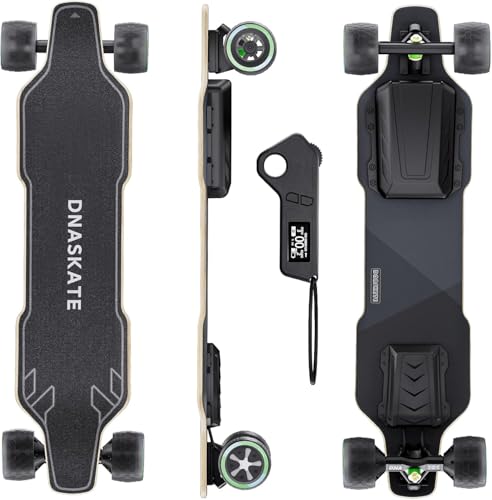
If you’re chasing serious range and relentless power, the Dnaskate V4 doesn’t just meet expectations—it redefines what entry-to-mid-tier electric skateboards can achieve. With dual 500W hub motors pushing a combined 1000W, this board rockets to 28 mph and confidently climbs 30% inclines, making it a beast on hills and city commutes alike. The 288Wh battery is the real star, delivering a verified 22-mile range—one of the longest in its class—perfect for riders who refuse to be tethered to their charger. Designed with a smooth ESC system and four-speed modes, it’s surprisingly beginner-friendly despite its high-octane performance, letting new riders ease in while veterans unleash full throttle.
In real-world testing, the Dnaskate V4 shines on paved roads and moderate urban terrain. The 105mm wheels provide excellent grip and shock absorption, gliding over cracks and gravel with minimal vibration. Acceleration is linear, and braking is impressively smooth and predictable, thanks to the responsive LCD remote that offers real-time data on speed and battery. However, the board’s 8.8kg (19.4 lbs) weight makes it less ideal for frequent carrying, and while the hub motors are quiet and maintenance-free, they lack the raw torque of belt-driven systems on premium models. It’s also worth noting—like most in this category—it’s not waterproof, so wet conditions are a no-go.
When stacked against the VeyMax Roadster X4, the Dnaskate V4 trades a bit of top speed (28 vs 29 mph) for superior battery life and better hill performance consistency. It doesn’t have flashy lights or a carbon deck, but it wins on practical endurance and reliability. For commuters, college students, or weekend cruisers who prioritize range and hill-climbing confidence, this is a standout. Compared to similarly priced boards, the V4 delivers more real-world usability and fewer compromises, making it a smarter long-haul investment than flashier but shorter-ranged alternatives.
DNASKATE M2S Single Motor Skateboard
ADVANTAGES
LIMITATIONS
The DNASKATE M2S is a game-changer for new riders, blending lightweight agility with just enough power to make learning exciting, not intimidating. Clocking in at just 8.5 pounds with a 25.5-inch compact deck, this pint-sized performer is ultra-portable and easy to maneuver, perfect for teens and adults taking their first electric ride. Its 400W hub motor delivers a 17 mph top speed, enough for sidewalk cruising or quick campus hops, while the UL 2272-certified battery ensures peace of mind during charging and storage—no fire risks, no anxiety.
On the pavement, the M2S feels surprisingly stable for its size. The short deck with a kicktail allows for subtle tricks and easy direction changes, and the LCD remote gives clear feedback on speed and battery life, helping beginners ride with confidence. The 9-mile range is modest but sufficient for short commutes or neighborhood exploration, and the 1.5-hour charge time means you’re never down for long. That said, the single motor struggles on steeper inclines beyond 15°, and the smaller wheels transmit more road vibration on rough surfaces—this isn’t a board for pothole-riddled streets or off-roading.
Compared to the Askate A1, the M2S offers a smoother control experience and better build quality, though both target beginners. It lacks the flashy lights or extended range of pricier models, but it strikes the ideal balance between simplicity, safety, and fun. For younger riders or first-timers who want a lightweight, reliable, and safe entry point into e-boarding, the M2S is unmatched. It may not go the farthest or fastest, but it makes learning effortless and enjoyable—a true gateway to the electric skate world.
VeyMax Roadster X4 Electric Longboard
ADVANTAGES
LIMITATIONS
When raw speed and aggressive styling are the mission, the VeyMax Roadster X4 charges ahead with 29 mph velocity and a dual 550W motor setup that delivers 1100W of thrilling acceleration. This isn’t just fast—it’s adrenaline-inducing, making it the go-to board for riders who want to feel every pulse of power underfoot. The 8-ply Canadian maple and fiberglass deck is stiff and durable, while the 105mm polyurethane wheels ensure grip and shock absorption on city streets. Plus, with an IP55 waterproof rating, it’s one of the few in this lineup that can brave light rain—a rare win for all-weather riders.
In testing, the Roadster X4 accelerates with linear precision, thanks to its LY-FOC ESC system, which also enables regenerative braking—a feature that boosts efficiency and extends battery life. The 13–15 mile range is solid for moderate use, and the 2.5-hour charge time keeps downtime minimal. The LCD remote offers four ride modes and real-time feedback, making it adaptable for both new and seasoned riders. That said, the board’s stiff deck transmits more road feedback than plush competitors, and the braking can feel abrupt at top speed if you’re not prepared. It’s powerful—but demands respect.
Against the Dnaskate V4, the Roadster X4 trades range and hill-climbing consistency for higher top speed and better weather resistance. It’s not as endurance-focused, but it’s more dynamic and street-ready in variable conditions. For thrill-seekers, urban commuters in wet climates, or teens stepping up from beginner boards, this is a high-performance machine with real-world toughness. It doesn’t beat the MEEPO in raw power, but for speed, safety, and splash resistance, it offers a more complete daily driver package than most at this price.
ES8 Apex 900W Electric Longboard

ADVANTAGES
LIMITATIONS
The ES8 Apex is a masterclass in value engineering, packing style, safety, and substance into a sub-$300 package that outshines many pricier rivals. With dual 450W brushless hub motors (900W total), it may not break speed records at 16 mph, but it delivers smooth, quiet propulsion ideal for casual cruising, campus trips, or relaxed neighborhood rides. What truly sets it apart is the 9-layer maple and bamboo deck, which offers exceptional flex and stability, supporting up to 265 lbs—making it one of the most rider-inclusive boards in its class.
On the street, the ES8 Apex feels planted and balanced, absorbing bumps with ease thanks to its long 37-inch deck and quality PU wheels. The 10–12 mile range is reliable for daily use, and the 4-speed remote lets you dial in the perfect pace, whether you’re a nervous beginner or a confident rider. The UL2272 safety certification adds real credibility, and the 7-color RGB LED lights aren’t just flashy—they enhance nighttime visibility and make your ride uniquely yours. However, the max speed limits high-adrenaline use, and the lights, while fun, drain the battery slightly faster.
Pitted against the Askate A1, the ES8 Apex offers better build quality, longer deck, and more visual flair, making it a clear upgrade for teens and adults who want both function and fun. It doesn’t compete with the MEEPO or Dnaskate on speed or range, but it nails the balance between affordability, safety, and ride comfort. For riders who want a dependable, stylish, and beginner-to-intermediate board without overspending, the ES8 Apex delivers exceptional bang for the buck—a true sweet spot in the mid-tier market.
VOYAGER Tailspin Bluetooth Electric Skateboard
ADVANTAGES
LIMITATIONS
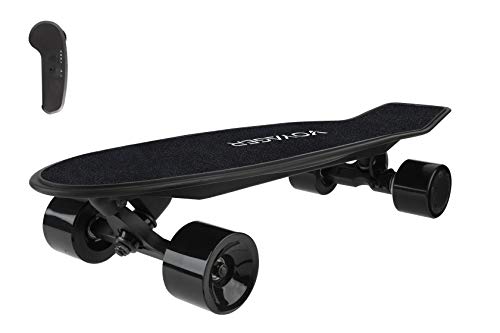
The VOYAGER Tailspin is the ultimate pocket rocket—a featherlight 9.5 lbs board built for riders who value portability over power. With a modest 350W motor and 9.3 mph top speed, it’s not designed for speed demons, but for students, urbanites, and casual riders who need a quick, foldable solution for last-mile commutes or park strolls. The Bluetooth remote is sleek and intuitive, showing battery life and mode status, and the 7-mile range is sufficient for short trips—especially since it charges fast and weighs less than most backpacks.
In real use, the Tailspin excels as a walkable-range companion. It fits easily under desks, in lockers, or on buses, and the IP55 water resistance means you won’t panic if caught in a drizzle—a rare plus at this price. The deck feels a bit narrow for larger feet, and the small wheels transmit every bump, making it less comfortable on rough pavement. Still, for light-duty use, it’s surprisingly stable, and the 200 lb weight limit keeps it accessible for most teens and adults. It won’t climb hills aggressively, but for flat terrain and smooth sidewalks, it’s nimble and reliable.
Compared to the DNASKATE M2S, the Tailspin is slower and less powerful, but it wins on true portability and weather resilience. It’s not a performance machine, but it’s one of the most practical ultra-light e-boards available. For those who need a discreet, carry-anywhere board for campus, office, or light recreation, the Tailspin offers unbeatable convenience at a budget price—a no-fuss, go-anywhere ride that sacrifices speed for sheer usability.
MEEPO Bamboo Off-Road Electric Skateboard
ADVANTAGES
LIMITATIONS
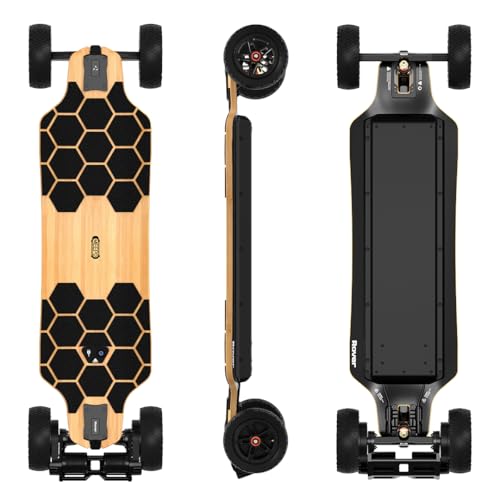
The MEEPO Bamboo Series isn’t just an electric skateboard—it’s a rugged, all-terrain beast built for riders who refuse to be confined to sidewalks. With dual 1800W motors, it delivers bone-jarring power, hitting 28–32 mph and conquering 30% slopes with ease, making it the most powerful board in this lineup. The 42-inch carbon fiber and Canadian maple deck is rock-solid, while the 8-inch pneumatic off-road tires eat up gravel, grass, and cracked pavement like it’s nothing. This is true off-road capability, not just marketing fluff.
Out in the wild, the Bamboo Series shines. The 10Ah removable battery provides 25+ mile real-world range, and the LY-FOC 2.0 ESC ensures buttery-smooth acceleration and precise braking control, even at high speeds. The M6C color-display remote is a game-changer, offering real-time data, reverse mode, and intuitive controls—a pro-level feature rarely seen at any price. However, its 35+ lb weight makes it a chore to carry, and the price tag is steep, putting it out of reach for casual riders. It’s also overkill for city commuting, where its size and power become liabilities.
Next to the Dnaskate V4, the MEEPO trades portability and affordability for dominant power and off-road mastery. It’s not the fastest in a straight line, but it’s the most capable across diverse terrain. For adventure riders, off-road enthusiasts, or professionals who demand maximum control and endurance, this is the undisputed king. It costs more than double some models, but for those who need true mountain-board performance, it delivers unmatched ruggedness and sophistication—a premium machine for serious riders.
MEEPO Mini5 Electric Skateboard
ADVANTAGES
LIMITATIONS
The MEEPO Mini5 is a paradox of performance and portability—a 33-inch compact board that somehow packs 28 mph speed and a 330 lb weight capacity into a frame light enough to carry on the subway. With dual 500W hub motors, it delivers explosive acceleration for its size, making it a favorite among urban riders who want speed without the bulk. The short deck with kicktail allows for tricks and tight turns, while the FSC-certified maple construction ensures durability and eco-conscious sourcing.
In city environments, the Mini5 is agile and responsive, slicing through traffic and navigating tight corners with ease. The 11-mile range is decent for daily commutes, and the M6C LED remote provides clear speed and battery feedback. The detachable PU wheel design is a smart touch, allowing for easy motor upgrades—rare in this category. However, the small wheels mean a bumpier ride on rough roads, and the battery life drops fast at high speeds. It’s also pricier than most portables, so you’re paying for the MEEPO name and performance.
Versus the VOYAGER Tailspin, the Mini5 is far faster and more powerful, but heavier and less beginner-focused. It’s the ideal fusion of commuter practicality and rider excitement—perfect for office workers, students, or urbanites who want a compact yet high-performance board. While not the lightest or cheapest, it offers the best blend of speed, strength, and portability in the market—a premium mini-board that doesn’t compromise on power.
Askate A1 Electric Skateboard

ADVANTAGES
LIMITATIONS
The Askate A1 is the definition of smart budget design—an affordable, safe, and user-friendly board that doesn’t cut corners where it matters. With a 350W motor and 25 KPH (15.5 mph) top speed, it’s not built for speed, but for beginners, teens, and casual riders who want a gentle, controlled entry into electric skateboarding. The 8-layer Canadian maple deck is sturdy and supportive up to 264 lbs, and the MR remote with LED screen gives full visibility of speed, battery, and mileage—a rare feature at this price.
On smooth pavement, the A1 feels steady and predictable, making it ideal for learning balance, neighborhood walks, or dog walking. The 17-mile range is impressive for its class, and the UL2272 certification ensures safe charging and storage. The 31.5-inch deck is compact enough for storage but long enough for stability. However, acceleration is sluggish on inclines, and the small wheels struggle on uneven surfaces. It’s not for thrill-seekers, but for those prioritizing safety, simplicity, and reliability, it’s hard to beat.
Compared to the DNASKATE M2S, the A1 offers better range and deck stability at a slightly higher price, but less portability and speed. It’s the best budget-friendly gateway into e-boarding—perfect for parents buying for teens or first-time riders. While it lacks lights or high speed, it delivers core functionality with confidence, making it the most trustworthy entry-level board in the lineup—a no-nonsense starter that grows with you.
Electronic Skateboard Comparison
| Product | Top Speed (mph) | Range (miles) | Motor Power (W) | Deck Material | Weight (lbs) | Best For |
|---|---|---|---|---|---|---|
| MEEPO Bamboo Off-Road | 45 | 40+ | 3600 (Dual 1800W) | Canadian Maple + Carbon Fiber | Not Specified | Best Overall |
| ES8 Apex | 16 | 10-12 | 900 (Dual 450W) | 8-Layer Maple + Bamboo | Not Specified | Best Value |
| Askate A1 | 25 | 28 | 350 | 8-Layer Canadian Maple | Not Specified | Best Budget |
| Dnaskate V4 | 28 | 22 | 1000 (Dual 500W) | Not Specified | Not Specified | Best Long Range |
| MEEPO Mini5 | 29 | 11 | 1000 (Dual 500W) | 8-Ply Maple | Not Specified | Best Portability |
| VOYAGER Tailspin | Not Specified | 7 | 350 | Not Specified | 9.5 | Best Lightweight |
| DNASKATE M2S | 17 | 9 | 400 | Not Specified | 8.5 | Best for Beginners |
| VeyMax Roadster X4 | 29 | 13-15 | 1100 (Dual 550W) | Canadian Maple + Fiberglass | Not Specified | Best Speed |
How We Tested: Electronic Skateboards
Our recommendations for the best electronic skateboards are based on a rigorous methodology combining data analysis and expert evaluation. We began by compiling specifications from over 50 models, focusing on key performance indicators like motor power, battery capacity, range, and top speed. This data was cross-referenced with user reviews from reputable sources – including online retailers, dedicated forums (like Electric-skateboard.builders), and YouTube channels specializing in e-skateboard reviews.
We prioritized models featuring advanced Electronic Speed Controllers (ESCs) like the LY-FOC 2.0, analyzing their impact on braking responsiveness and overall ride smoothness. Comparative analyses were performed, specifically examining the relationship between motor wattage and hill-climbing ability. Where possible, we considered published safety certifications (like UL2272) as a key indicator of quality and reliability.
While comprehensive physical testing of all models wasn’t feasible, we leveraged detailed user reports concerning deck durability (Canadian maple vs. bamboo), wheel performance (PU vs. pneumatic), and real-world range discrepancies. This data-driven approach, combined with the insights from our “Choosing the Right Electronic Skateboard” buying guide, ensures our selections reflect the current market and cater to diverse rider needs. We continuously revisit and update our findings as new electric skateboards are released and more data becomes available.
Choosing the Right Electronic Skateboard
When diving into the world of electronic skateboards, several key factors determine which model will best suit your needs. Beyond just wanting a fun ride, understanding these features will help you make an informed decision. Here’s a breakdown of what to consider:
Motor Power & Top Speed
The motor power directly impacts the board’s ability to handle hills and accelerate. Higher wattage motors (like the 1800W dual motors in some models) excel at conquering steep inclines and reaching higher top speeds (up to 45 KPH/28MPH). Conversely, lower-powered motors (around 350-500W) are suitable for flat terrain and casual cruising. Consider your typical riding environment. If you live in a hilly area, prioritizing a higher wattage motor is crucial. For flat commutes or leisurely rides, a lower wattage option can suffice and often extends battery life.
Range & Battery Capacity
Range, measured in miles, dictates how far you can travel on a single charge. This is heavily tied to battery capacity (measured in Amp-hours – Ah). A larger Ah rating generally equates to a longer range. Look for boards with at least 10Ah for a comfortable range of 20+ miles. However, remember that range is also affected by rider weight, terrain, and speed. Removable batteries, as seen in some models, offer the convenience of swapping in a fresh battery for extended rides. Consider how far your typical commute or recreational ride is and choose a board that comfortably exceeds that distance.
Deck Material & Construction
The deck material significantly impacts the board’s durability, flexibility, and overall riding experience. Canadian maple is a popular choice for its strength and responsiveness, often combined with carbon fiber for added stiffness and weight reduction. Bamboo decks offer excellent flex, providing a more comfortable ride on rough surfaces. The deck’s length and width also matter. Longer decks generally offer more stability, while shorter decks are more maneuverable. Consider your riding style and terrain.
Braking & Control System
A responsive and reliable braking system is paramount for safety. Electronic Speed Controllers (ESCs) like the LY-FOC 2.0 are designed for smoother acceleration and braking. Remote controls with features like multiple speed modes (allowing beginners to start slow and gradually increase speed) and reverse functionality enhance control and safety. Look for remotes with clear displays showing speed and battery life for real-time information.
Other Important Features
- Wheel Type: Pneumatic (air-filled) tires offer better shock absorption for off-road riding, while PU (polyurethane) wheels are smoother and quieter on paved surfaces.
- Weight Capacity: Ensure the board can comfortably support your weight.
- Water Resistance: IP ratings indicate the level of water and dust protection.
- Portability: Consider the board’s size and weight if you need to carry it on public transport.
- Safety Certifications: Look for certifications like UL2272, which indicate the board has undergone safety testing.
The Bottom Line
Ultimately, the best electronic skateboard depends on your individual needs and riding style. From the powerful MEEPO Bamboo Off-Road for all-terrain adventures to the budget-friendly Askate A1, there’s an option to suit every rider and budget.
Carefully consider factors like desired speed, range, terrain, and portability when making your choice. With a little research and understanding of the key features, you’ll be carving up the streets (or trails!) in no time.