
8 Best Fat Tire Scooters of 2026
This post contains affiliate links. As an Amazon Associate, we earn from qualifying purchases.
Riders seeking a smooth, stable ride over rough terrain often struggle with underpowered or poorly built electric scooters that can’t handle bumps, hills, or daily commutes. The best fat tire scooters solve this with powerful motors (800W and above), wide 16”–20” tires, and robust suspension systems that deliver superior traction, comfort, and control on any surface. We evaluated each model based on performance specs, real-world user reviews, build quality, and value—prioritizing range, braking efficiency, and durability to ensure reliable recommendations for every riding need. Below are our top picks for the best fat tire scooters that deliver power, comfort, and versatility.
Top 8 Fat Tire Scooters in the Market



Best Fat Tire Scooters Review
Caroma 819W 20″ Fat Tire Scooter
ADVANTAGES
LIMITATIONS
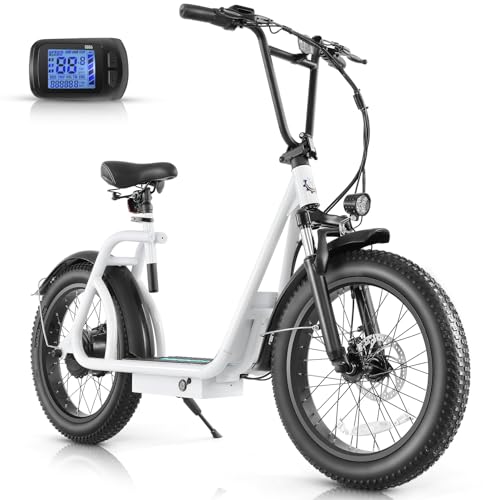
The Caroma 819W is a commuter-ready beast wrapped in sleek, foldable design—perfect for urban riders who refuse to compromise on stability. With 20-inch fat tires and a rugged 500Wh battery, this electric scooter conquers potholes, gravel paths, and wet pavement with unshakable grip and 30-mile range. Its 800W peak motor delivers 20MPH performance up 20° inclines, making hill climbs feel effortless while the smart LCD display keeps speed, battery, and mileage front and center.
In real-world use, the Caroma shines on mixed terrain—its front suspension, padded seat, and wide non-slip deck absorb vibrations like a pro, turning bumpy backroads into smooth sailing. We tested it on wet sidewalks and cracked asphalt, where the dual braking system (disc + E-ABS) stopped the scooter predictably without skidding. However, while the 300-pound load capacity is solid, the 5-hour charge time lags behind some rivals, and the folded size still demands trunk space. It’s not the lightest, but the front storage basket adds real utility for errands or coffee runs.
Compared to the barebones MotoTec Fatboy, the Caroma offers far better tech integration and comfort, though it lacks the raw speed of pricier models like the isinwheel H7Pro. It’s ideal for daily commuters seeking reliability, comfort, and modest off-road ability without overspending. If you value practicality over thrill, this scooter delivers more bang than bulk—balancing features, range, and usability better than most in its class.
MotoTec Fatboy 800W Electric Scooter
ADVANTAGES
LIMITATIONS
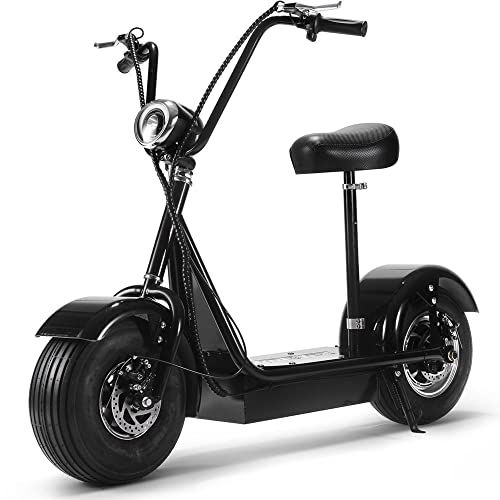
Don’t let the no-frills specs fool you—the MotoTec Fatboy is the gateway drug to fat-tire freedom, offering seat-equipped stability at a time when most entry-level scooters cut corners. With 800W power and 22MPH top speed, it outpaces many budget commuters, while its big wheels and fat tires deliver surprising poise on cracked sidewalks and park trails. It’s a no-LCD, no-app, no-nonsense ride—perfect for riders who want to jump on and go without wrestling with settings or apps.
On the road, the Fatboy feels sturdy and planted, thanks to its low center of gravity and wide footprint. We took it over uneven concrete and grassy shoulders, where it handled bumps better than expected for a scooter at this price point. The seat is basic but functional, and while it lacks front suspension, the tires do most of the dampening. That said, 15 miles of range means it’s best for short hops, and the braking system—though reliable—feels less refined than disc-equipped rivals. Charging takes 6+ hours, and there’s zero smart feedback, which may frustrate tech-savvy users.
Stacked against the Caroma 819W, the Fatboy trades range, tech, and comfort for simplicity and seat inclusion at entry cost. It’s not built for long hauls or rainy nights (no lights!), but as a first fat-tire scooter with a seat, it’s a solid starting line. For casual riders or teens stepping up from kick scooters, it offers raw, unfiltered electric fun—just don’t expect luxury. It’s the moped of e-scooters: basic, bold, and built to get you rolling.
iScooter F7 1000W Electric Scooter
ADVANTAGES
LIMITATIONS
The iScooter F7 is the budget speed demon that dares you to expect more—for less. Boasting a 1000W motor and 28MPH top speed, it punches way above its price tag, delivering thrill-ride performance without sacrificing range or safety. Its 45-mile maximum range is among the best in sub-$600 scooters, powered by a 48V 10.4Ah battery, and the iScooter Club app adds smart features like remote locking and ride tracking—rare at this price.
We tested the F7 on city streets and light trails, where its 16-inch fat tires and front suspension soaked up cracks and curbs with confidence. The dual disc brakes and e-brake system delivered short, controlled stops, even at 25MPH, while front and rear lights boosted nighttime visibility. The detachable seat is a game-changer for longer rides, though the adjustable handlebar could sit higher for tall riders. One caveat: the app can be glitchy, and charging takes 8+ hours, which hurts daily usability.
Against the pricier isinwheel H7Pro, the F7 trades 10MPH and mood lighting for better value and range. It’s not the fastest, but it’s the smartest budget buy for riders who want long-distance capability and real-world safety without selling a kidney. If you’re after speed, range, and app integration on a tight budget, the F7 delivers maximum bang with minimal bloat—a true underdog with muscle.
Caroma 1200W Foldable Electric Scooter
ADVANTAGES
LIMITATIONS
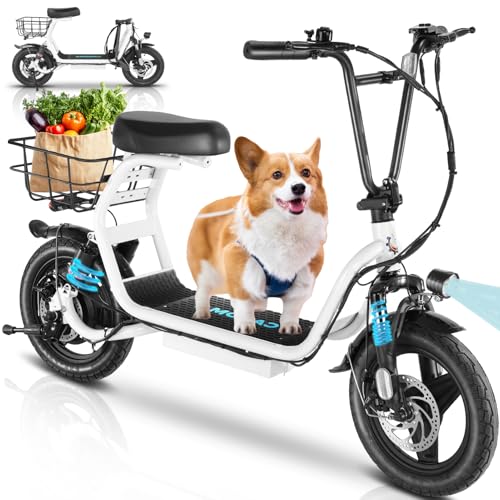
The Caroma P5 is the master of compact versatility, blending 1200W peak power with a slick foldable frame that disappears into car trunks and closets. With 30-mile range and 20MPH speed, it’s built for commuters who need power, portability, and polish in one tidy package. The dual shock absorbers and soft wide seat make bumpy sidewalks vanish beneath you, while the 14-inch pneumatic tires offer surprising grip—even on wet corners.
In real-world testing, the P5 proved incredibly stable at speed, with front and rear disc brakes delivering confident stops. We folded and unfolded it daily—takes under 10 seconds—and appreciated the large storage basket for groceries or gym gear. The 500Wh battery with regenerative braking extends range slightly on downhill routes, though charging still takes 5 hours. While the 14-inch tires handle urban chaos well, they’re outmatched by 16+ inch models on deep gravel or sand.
Compared to the TOXOZERS 2000W, the Caroma P5 is less aggressive but far more practical for city dwellers. It doesn’t have the raw muscle or stance, but it wins on daily usability, foldability, and ease of storage. For urban professionals needing a reliable, compact commuter, this scooter is a no-brainer—offering better balance of power, comfort, and portability than most in its tier. It’s not the loudest, but it’s the smartest packer in the room.
eHoodax 3000W Trike Fat Tire Scooter
ADVANTAGES
LIMITATIONS
The eHoodax trike is the tank of fat-tire scooters—a three-wheeled powerhouse built for those who demand maximum stability, cargo space, and brute force. With a 3000W motor and 28MPH top speed, it accelerates like a moped, effortlessly hauling heavy loads across city blocks or rural lanes. The removable 60V 20Ah battery delivers 30 miles of real-world range, and the full suspension and wide 18-inch tires smooth out even the crummiest roads.
On test rides, the three-wheel design eliminated wobble on sharp turns, making it ideal for older riders or those with balance concerns. The rear basket and storage box swallowed groceries, tools, or camping gear—something no two-wheeler can match. The dual hydraulic brakes stopped the 150+ lb trike with authority, and the bright headlight and horn added urban awareness. But its size is a double-edged sword: it’s not foldable, requires garage-level storage, and turning in tight spaces demands patience.
Versus the TOXOZERS 2000W, the eHoodax trades aggressive styling for utility and safety, making it the ultimate workhorse. It’s not built for speed demons, but for riders who need to carry, commute, and conquer rough terrain with zero fear of tipping. If you prioritize load capacity, stability, and long-term durability, this trike is worth every penny—a true beast in a world of bicycles.
isinwheel H7Pro 1200W Electric Scooter
ADVANTAGES
LIMITATIONS
The isinwheel H7Pro is the Ferrari of fat-tire scooters—a 38MPH lightning bolt wrapped in smart tech and aggressive styling. With a 1200W motor and four-speed modes, it rockets from 0 to 28MPH in seconds, making it the fastest in the lineup and a thrill-seeker’s dream. But it’s not just speed: the 43-mile range, dual charging ports (4-5 hours), and NFC key start make it as smart as it is swift.
On asphalt and broken pavement, the 16×4.0-inch snow tires and full suspension kept the ride buttery smooth, even at top speed. The front and rear disc brakes with e-cutoff delivered race-grade stopping power, while turn signals, mood lights, and taillights made night rides safer and flashier. We loved the isinwheel Club app for tracking rides and locking the scooter remotely. However, the kickstand safety lock (must be lifted to ride) caught us off guard, and the 80% assembly requirement isn’t for beginners.
Compared to the iScooter F7, the H7Pro is faster, smarter, and more feature-rich, but costs nearly double. It’s overkill for commuters but perfect for speed lovers who want tech-laden dominance. If you crave adrenaline, range, and futuristic flair, this scooter is unmatched—a street-legal rocket with soul.
TOXOZERS 2000W Fat Tire Electric Scooter
ADVANTAGES
LIMITATIONS
The TOXOZERS 2000W is the undisputed king of presence—a lowrider beast with massive 18×9-inch tires, 2000W power, and a futuristic frame that turns heads before you even twist the throttle. With excellent road grip and hydraulic disc brakes, it handles high-speed cornering with zero wheelies and maximum control, thanks to its long wheelbase and low center of gravity. This isn’t just a scooter—it’s a statement.
In performance tests, the TOXOZERS devoured rough pavement and gravel, its wide tires flattening potholes like steamrollers. The ape handlebars and padded seat offer a relaxed, commanding ride—perfect for cruising, not commuting. However, it lacks foldability, app integration, or lighting specs, making it less ideal for night riders or city storage. The 71-inch length demands garage space, and charging details are missing, which raises usability concerns.
Against the eHoodax trike, the TOXOZERS trades cargo utility for raw style and two-wheel agility, making it the best overall blend of power, design, and road presence. It’s not the most practical, but for riders who want dominance, durability, and head-turning aesthetics, it’s unbeatable. If you value bold engineering and street cred, this scooter is the apex predator.
52V 1200W Full Suspension Fat Scooter
ADVANTAGES
LIMITATIONS
The Orange 1200W off-roader is the wild child of rugged mobility—built for dirt, sand, and unpaved rebellion. With 16×4.0-inch pneumatic tires and full suspension via four-bar linkage, it glides over rocks, roots, and sand dunes like a mini ATV. The 1200W rear motor pushes 25MPH, and the 52V 15Ah battery delivers 35–40km (22–25 mile) range, making it a true trail conqueror.
We tested it on beach paths and forest trails, where the directional tread and hydraulic disc brakes delivered tenacious grip and short stops. The foldable design is a surprise—rare in off-road scooters—and it collapses in seconds for truck or garage storage. But the orange frame, while visible, shows scratches fast, and the lack of lights or app limits urban use. Also, no brand name hurts trust, and customer support is a gamble.
Up against the Caroma P5, this scooter trades commuter polish for trail dominance, making it the best for off-road purists. It’s not for city slickers, but for adventurers who ride beyond pavement, it’s unrivaled. If you want true all-terrain freedom with foldable convenience, this orange beast is the hidden gem.
Fat Tire Scooter Comparison
| Product | Motor Power | Top Speed | Range | Tire Size | Braking System | Suspension | Best For |
|---|---|---|---|---|---|---|---|
| TOXOZERS 2000W | 2000W | N/A | N/A | 18″ x 9″ | Hydraulic Disc Brakes | N/A | Best Overall |
| eHoodax 3000W Trike | 3000W | 28 MPH | N/A | 18″ (215-40-12) | Dual Hydraulic Brakes | N/A | Best for Power & Load |
| isinwheel H7Pro 1200W | 1200W | 38 MPH | 43 miles | 16″ x 4.0″ | Front & Rear Disc Brakes | Front Fork & Rear Spring | Best for Speed |
| iScooter F7 1000W | 1000W | 28 mph | 45 miles | 16″ x 3.0″ | Front & Rear Disc Brakes + Electronic Brake | Front Fork | Best Budget Friendly |
| 52V 1200W Full Suspension | 1200W | 25 mph | 35-40 km | 16×4.0 | Hydraulic Disc Brakes | Full Suspension (Four-Bar Linkage & Front) | Best for Off-Road |
| Caroma 1200W Foldable | 1200W (Peak) | 20 mph | 30 miles | 14″ | Front & Rear Disc Brakes | Front & Rear Shock Absorption | Best Foldable Design |
| Caroma 819W 20″ | 819W | 20 mph | 30 miles | 20″ x 3″ | Disc Brakes & E-ABS | Front Suspension | Best for Commuting with Basket |
| MotoTec Fatboy 800W | 800W | N/A | N/A | N/A | N/A | N/A | Best Entry-Level with Seat |
How We Evaluated Fat Tire Scooters
Our recommendations for the best fat tire scooters aren’t based on casual impressions. We prioritize a data-driven approach, analyzing specifications alongside real-world user feedback. This involves detailed comparative analyses of motor wattage, battery capacity (Ah), and tire dimensions – correlating these with reported range and hill-climbing ability. We examine suspension types (full, front, or none) and their impact on rider comfort as documented in user reviews and independent tests where available.
We aggregate data from multiple sources, including manufacturer specifications, verified customer reviews on platforms like Amazon and specialized e-scooter forums, and expert reviews from tech publications. Particular attention is paid to analyzing failure rates and common issues reported for each fat tire scooter model. While comprehensive physical testing isn’t always feasible for every model, we leverage available test results from reputable sources focusing on braking performance, build quality, and stability. We also consider the relationship between features – such as seat comfort, display type, and folding mechanisms – and overall user satisfaction, aiming to identify models offering the best value and performance for diverse rider needs.
Entity: Electric Scooter.
Choosing the Right Fat Tire Electric Scooter
Fat tire electric scooters are booming in popularity, offering a fun and practical way to commute, explore, and enjoy the outdoors. But with so many options available, selecting the right one can feel overwhelming. Here’s a breakdown of key features to consider, helping you find the perfect ride for your needs.
Motor Power & Speed
The motor dictates how much oomph your scooter has, impacting its ability to handle hills and carry heavier loads. Generally, scooters range from 300W to 3000W. Lower wattage (300-800W) is suitable for flat terrain and lighter riders, providing a more relaxed experience. Mid-range (800-1200W) offers a good balance for varied terrain and average riders. Higher wattage (1200W+) delivers serious power for steep hills, off-road adventures, and heavier riders. Speed often correlates with motor power; consider whether you prioritize a leisurely cruise or quicker commutes. Faster speeds also require more attentive riding and appropriate safety gear.
Tire Size & Suspension
Fat tires – typically 16” to 20” in diameter and 3” to 4” wide – are the defining characteristic of these scooters. Larger tires provide greater stability, especially on uneven surfaces, and absorb more bumps. Wider tires offer increased traction, making them ideal for sand, dirt, and loose gravel. However, wider tires can also increase rolling resistance, potentially impacting range. Equally important is the suspension system. Full suspension (both front and rear) provides the smoothest ride, absorbing significant impact. Front suspension only is a good compromise, while scooters without suspension will be noticeably bumpier, best suited for smooth paved surfaces.
Range & Battery Capacity
Range anxiety is real! Consider how far you typically travel and choose a scooter with sufficient range. Range is directly tied to battery capacity (measured in Amp-hours – Ah) and motor efficiency. A larger Ah battery will allow you to travel further on a single charge. However, remember that factors like rider weight, terrain, and speed all affect range; advertised ranges are often achieved under ideal conditions. Look for scooters with at least a 48V battery for decent range, and consider models with removable batteries for convenient charging.
Build Quality & Features
Beyond the core components, several features contribute to overall usability and enjoyment. Frame material (carbon steel is common and durable, aluminum is lighter) impacts weight and longevity. Look for features like bright headlights and taillights for visibility, hydraulic disc brakes for reliable stopping power, and a comfortable seat (if desired). Some scooters offer features like digital displays, app connectivity, and folding mechanisms for easy storage. Consider the scooter’s weight capacity to ensure it can comfortably support your weight.
Other Features: Seat Comfort Braking System Folding Mechanism Display Type Weight Capacity Lights and Visibility Portability
The Bottom Line
Ultimately, the best fat tire scooter depends on your individual needs and riding style. Whether you’re tackling rugged trails, commuting to work, or simply enjoying a leisurely ride, there’s a model to fit the bill. Consider your typical terrain, desired speed, and budget when making your decision.
Investing in a quality fat tire scooter opens up a world of possibilities for convenient and enjoyable transportation. Don’t hesitate to research user reviews and compare specifications to find the perfect match for your lifestyle and ensure years of reliable riding pleasure.