10 Best First Scooter in 2026
This post contains affiliate links. As an Amazon Associate, we earn from qualifying purchases.
The Micro Kickboard Mini 3-Wheel Toddler Scooter is the best overall first scooter for its skill-building lean-to-steer design and durable construction that grows with your child. For maximum stability, we recommend the Radio Flyer My 1st Scooter, and the Gotrax KS1 Kids Kick Scooter wins for fun with its glowing wheels.
Choosing a first scooter is about matching stability features to your child’s current balance and coordination. We focused on models that build confidence through a safe, enjoyable ride. This research-based guide compares ten top options across key criteria like deck design, steering, and adjustability.
Top 10 First Scooters in the Market
Certain content that appears on this site comes from Amazon. This content is provided "as is" and is subject to change or removal at any time.
The Best First Scooters, Reviewed
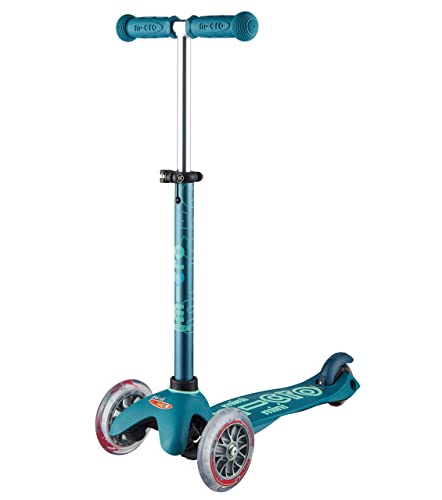
Micro Kickboard Mini 3-Wheel Toddler Scooter
What We Like
- Lean-to-steer design builds balance naturally
- Lightweight yet supports up to 110 lbs
- Adjustable T-bar grows with your child
- Smooth-ride PU wheels and rear brake
Trade-offs
- Lean-to-steer requires more rider input than a turning handlebar
The Micro Kickboard Mini’s lean-to-steer design is its defining feature, teaching toddlers as young as two how to shift their weight to turn instead of just twisting a bar. This builds balance, coordination, and steering control from the first push-off. Its 110-pound capacity and adjustable T-bar mean it genuinely grows with a child, supporting years of daily play without feeling flimsy. For parents seeking a first scooter that focuses on skill development and Swiss-engineered durability, this is the benchmark.
You pay for that quality and focused design. It doesn’t have the light-up wheels of a Gotrax KS1 or the flip-out seat of a Hurtle, which some kids find motivating. The steering requires active participation, so a child who just wants a simple, direct-steering ride might prefer something like the Razor Scooter Jr. first. But if your goal is to invest in a tool for physical development that will last, expert reviews point to the Micro Kickboard models as the hands-down favorite toddler scooters.
Radio Flyer My 1st Scooter

What We Like
- Extra-wide base for superior balance
- Two front wheels for maximum stability
- Lightweight frame for easy handling
- Textured deck provides steady footing
Trade-offs
- Weighs 4.4 pounds, heavier than the 4.2-pound Micro Kickboard Mini
- Fixed handlebar height, unlike adjustable models like the Gotrax KS1
The 12-inch wide deck and two front wheels create a uniquely stable platform for a first scooter, which is the single most important feature for a nervous toddler just finding their balance. This design gives young riders a clear, unobstructed kick path and a secure feeling, making it an excellent choice for children who need that extra confidence to start scooting. It’s built for the very first stages of learning, where preventing tip-overs is more critical than speed or sharp turns.
Designed specifically for ages two to five, the Radio Flyer My 1st Scooter prioritizes a secure, confidence-building ride above all else. Its extra-wide base and two front wheels create a stable platform that helps new riders focus on balance. The turning radius is specially designed to provide added safety, which means it may not offer the same fluid, carving motion as scooters built on a lean-to-steer principle.
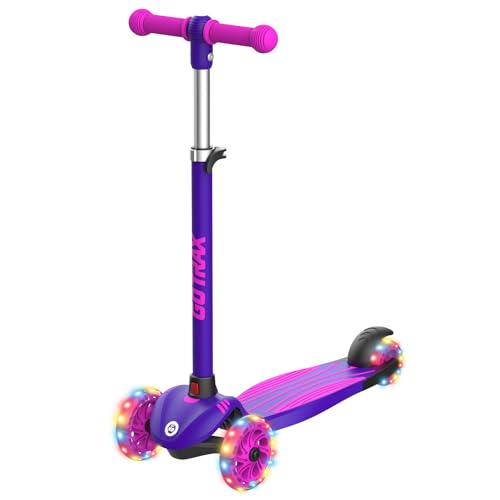
Gotrax KS1 Kids Kick Scooter
What We Like
- LED light-up wheels for visibility and fun
- Lean-to-steer design builds balance and coordination
- Three-position adjustable handlebar grows with child
- Quick-disconnect button for easy transport and storage
Trade-offs
- No seat option for toddlers who prefer to sit
- Heavier than the 4.2 lb Micro Kickboard Mini
- 110 lb weight limit is lower than some 3-in-1 models
The LED light-up wheels are the standout feature, transforming a simple ride into a captivating experience that keeps kids engaged, especially in low light. Combined with the intuitive lean-to-steer mechanism, this scooter is engineered to build a toddler’s confidence and coordination from their very first push. It’s a lightweight, adjustable package that makes the learning process feel like play, which is exactly what you want for a two-year-old’s first set of wheels.
The trade-off for that fun glow and solid construction is a bit of extra heft compared to the most minimalist options. It’s not a deal-breaker for carrying to the park, but parents comparing specs will note the Radio Flyer My 1st Scooter is both wider and lighter. This offers a different kind of stability for the most cautious beginners. The Gotrax KS1 shines when you want a feature-packed first scooter that prioritizes an exciting ride and smooth performance over absolute portability.
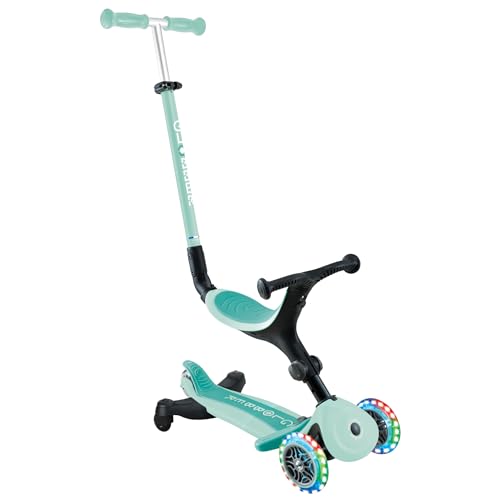
Globber Go Up Active Lights 360° Scooter
What We Like
- Transforms for 15 months to 9+ years of use
- 100% tool-less mode switching and adjustments
- Patented steering lock aids balance learning
- Folds compactly with trolley mode for transport
Trade-offs
- Folded length is 38.5 inches.
A single product that transforms from a parent-steered ride-on for a 15-month-old into a full kick scooter for a nine-year-old is a unique proposition. This is the core strength of the Globber Go Up. Its tool-less design lets you switch between ride-on, walking bike, and scooter modes as your child’s coordination develops, while the steering lock stabilizes the front wheels to build confidence. For a family seeking one adaptable vehicle to span the entire toddler and early childhood years, this design eliminates the need for multiple purchases.
The trade-off for that longevity is bulk. When folded, its length is still considerable, and the sturdy, low-slung metal frame is built for stability across modes, not for the lightweight portability of a dedicated scooter like the Razor Scooter Jr. It excels as a learning platform that evolves with a child, but it won’t match the snappy, simple feel of a traditional three-wheeled scooter once a kid is ready for faster, more agile riding.
Product photos
Radio Flyer Scoot 2 Scooter

What We Like
- Four-wheel base provides extra stability for beginners
- Converts from seated ride-on to standing scooter
- Adjustable handlebars grow with your child
- Built-in toy storage in ride-on mode
Trade-offs
- Weighs 5.5 pounds.
- Lacks a foot brake.
A four-wheel base and a flip deck that converts from a seated ride-on to a standing scooter make the Radio Flyer Scoot 2 uniquely suited for toddlers as young as one. This design provides the utmost stability for a child’s very first attempts at mobility, letting them build balance and confidence from a secure, seated position. The adjustable handlebars and built-in storage mean it can stick with them through several early developmental milestones, which is a practical consideration for parents.
It excels at the earliest phase of riding but lacks the nuanced steering mechanics that teach dynamic balance for more advanced scooting. For a family focused purely on getting a one-year-old safely rolling, this scooter delivers. If your child is already two or three and ready for a more traditional scooting experience, you’ll want to look at a three-wheel model designed for that next skill step.
Product photos
Razor Scooter Jr. Lil' Kick Scooter

What We Like
- Extra-wide slip-resistant deck for stability
- Larger polymer wheels for smoother rolling
- Anti-tip three-wheel stance for beginners
- Classic, simple kick-and-go operation
Trade-offs
- At 5.2 lb, it's heavier than the Micro Kickboard Mini.
The 14.4-inch extra-wide deck is the central feature here, providing a stable, confidence-boosting platform for a toddler’s first scooter experience. This Razor model is built for the earliest stages, where a slip-resistant surface and an anti-tip three-wheel layout matter more than speed or tricks. It suits a parent looking for a simple, durable scooter that prioritizes safety and balance for a three-year-old just learning to steer and push off.
Designed for first-time riders, the Razor Scooter Jr. Lil’ Kick Scooter uses an extra-wide, slip-resistant deck and larger wheels to provide foundational stability for young children learning to balance. This focus on a stable, beginner-friendly platform means it is intended for a specific developmental stage. When a child is ready for more advanced steering or a larger frame, an upgrade would be the logical next step. A model like the Micro Kickboard Mini, with its adjustable T-bar or a lean-to-steer design, would fit that role.
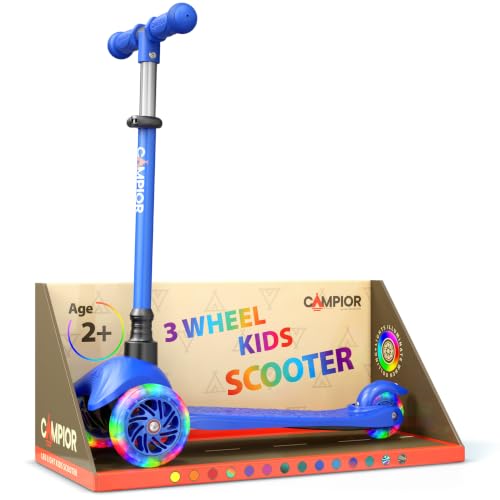
Campior Mini 3 Wheel Scooter
What We Like
- Motion-activated LED wheels for fun and visibility
- Intuitive lean-to-steer for balance development
- Four height settings to grow with a child
- Wide anti-slip deck and three wheels for stability
Trade-offs
- At 6.5 lb, it is heavier than the 4.2 lb Micro Kickboard
- No seat option like the Retrospec Chipmunk Plus
The motion-activated LED wheels are the defining feature here, transforming a simple scooter ride into a light show that delights toddlers and adds a layer of low-light safety. This makes it a standout choice for parents whose top priority is maximizing fun and visual engagement for a young child. Combined with the intuitive lean-to-steer system and a wide, grippy deck, it delivers a stable and confidence-building first scooting experience designed to grow with a kid up to 110 pounds.
That extra fun comes with a bit more heft. At 6.5 pounds, it’s noticeably heavier than some competitors, which can be a factor for smaller children carrying it or for parents toting it home from the park. If pure, lightweight maneuverability is the goal, the Micro Kickboard Mini is a lighter alternative. But for the parent who wants to guarantee a magical, glowing reaction with every push, the Campior Mini’s LED wheels are hard to beat.
Globber Elite Lights Scooter

What We Like
- Steering lock stabilizes scooter for balance training
- Four-height T-bar accommodates growing riders
- Folds compactly for easy transport and storage
- Light-up wheels require no batteries
Trade-offs
- At 32.5 inches tall, it may be too large for the smallest toddlers
- Single rear brake versus dual brakes on some models
The patented steering lock button is the core feature here, physically preventing the front wheels from turning side-to-side. This forces a beginner to focus solely on pushing and balancing forward and back, a fundamental skill before tackling steering. With a wide anti-slip deck and a super-low reinforced structure, the scooter offers a stable, confidence-building platform. It’s engineered for the specific developmental stage where a child needs to master straight-line propulsion and weight distribution. The four-position adjustable T-bar means this training tool can grow with them through that entire phase.
A patented steering lock button fixes the two front wheels to move only forward and backward, which helps young riders learn balance before graduating to lean-to-steer control. This differs from scooters like the Micro Kickboard Mini, which are always in lean-to-steer mode. The Globber Elite Lights Scooter folds with a push-button into a trolley mode for convenient carrying or rolling, an advantage over many fixed-frame competitors. Its high-rebound LED front wheels flash using dynamo lighting powered by kinetic energy, so they require no batteries and add a maintenance-free fun element.
Product photos
Retrospec Chipmunk Plus Kids Scooter

What We Like
- Removable, folding seat for sit-and-scoot breaks
- Adjustable seat and handlebar for growing kids
- Co-molded deck traction for secure footing
- Three light-up wheels for stability and visibility
Trade-offs
- Seat is only rated for riders up to 55 lb
- Lean-to-steer design requires some initial balance coordination
A 130-pound weight capacity and a removable seat make the Retrospec Chipmunk Plus a uniquely versatile first scooter. It’s ideal for parents whose child might need a rest during longer outings or who simply prefers the option to sit. The three-wheeled, lean-to-steer platform builds coordination, while the co-molded deck and smooth PU wheels offer a controlled and comfortable ride right from the start. This scooter suits a toddler who is ready to learn but may not have the stamina for a full standing session yet.
The Retrospec Chipmunk Plus Kids Scooter weighs eight pounds, which gives it a solid, stable feel on pavement but makes it less portable for frequent carrying. Its key versatility comes from a folding, removable seat that adjusts to three heights and supports up to 55 pounds, allowing a child to sit and scoot or stand as their skills develop. With a 130-pound maximum capacity and an adjustable handlebar, this scooter is designed to grow with a child from ages three and up.
Product photos
Hurtle 3-Wheel Kick Scooter
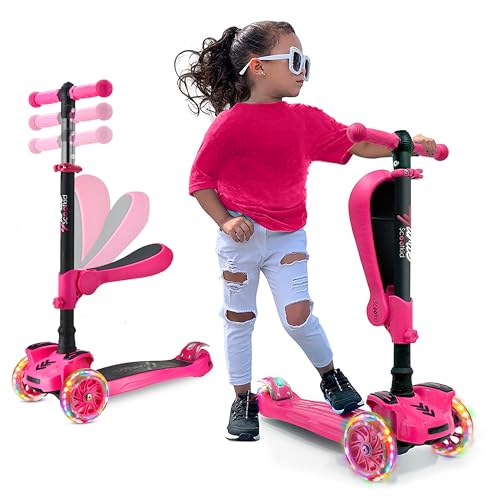
What We Like
- Flip-out seat for sit-to-stand transition
- Leans-to-steer for balance development
- Flashing LED wheel lights for visibility
- Adjustable handlebar for long-term use
Trade-offs
- Heavier at 9.0 lbs for a toddler to maneuver
- Seat capacity 45 lbs limits use for older toddlers
A 45-pound capacity flip-out seat makes this scooter uniquely suited for the youngest riders who aren’t yet steady on their feet. The Hurtle’s sit-or-stand design provides a stable, seated platform for cruising, which builds confidence before transitioning to a traditional standing stance. Its lean-to-steer technology and wide deck further support early balance and coordination development, making it a solid pick for cautious one-year-olds ready to roll.
Its flip-out seat and adjustable handlebar make the Hurtle 3-Wheel Kick Scooter a versatile 2-in-1 option for toddlers, but this functionality comes with a trade-off in portability. Weighing 9.0 pounds, it is heavier than simpler alternatives like the 4.2-pound Micro Kickboard Mini. This bulk can make it less convenient for frequent carrying or compact storage compared to models without a seat.
Product photos
How We Evaluated First Scooters
This guide is based on manufacturer specifications, expert reviews, and patterns in owner feedback. It prioritizes stability features like deck width and wheel configuration, steering mechanisms that aid learning, and adjustability for growth. Practical elements like weight and special features such as light-up wheels or integrated seats are also considered. The assessments rely on documented specifications and reported user experiences.
What To Look For In First Scooters
Selecting a first scooter involves more than just picking a fun color. You need a model that supports your child’s developmental stage, encourages safe play, and can adapt as their skills improve. Our broader scooter recommendations often highlight adaptability as a key virtue for growing kids.
Look for a stable deck, an intuitive steering system for beginners, and an adjustable handlebar. These features ensure safety, build confidence, and extend the scooter’s useful life.
Stability & Deck Design
A wide, stable deck is crucial for a beginner’s confidence. Many first scooters feature three or even four wheels to prevent tipping. The deck surface should provide good grip; textured plastic or rubberized sections help keep small feet secure. For the youngest riders, models with an extra-wide base, like our pick for maximum stability, offer a crucial platform for learning. Some stable scooters even use a four-wheel configuration for a seated ride-on mode.
Steering & Control
Beginners benefit from steering systems that feel intuitive and safe. Lean-to-steer designs, where the child shifts their weight to turn, help build natural balance and coordination for future activities like biking. Some models offer a steering lock that temporarily fixes the front wheel, allowing a toddler to focus solely on balancing and kicking before tackling steering. Traditional turning handlebars offer direct control but require more coordinated input from the rider. Choosing between these systems depends on whether your priority is skill development or immediate, simple control.
Adjustability & Weight
An adjustable handlebar is a key feature for longevity, allowing the scooter to grow with your child over several years. Check the minimum and maximum height settings to ensure a good fit. Scooter weight matters for both the child’s ability to maneuver it and for a parent who may need to carry it. Lightweight aluminum frames are common in premium models. While heavier scooters can feel more stable, they may be harder for a small child to control or lift.
- Verify the weight limit to ensure it accommodates your child’s size.
- Consider if a folding mechanism or quick-disconnect feature is important for your storage and transport needs.
- Look for a simple, effective braking system, typically a rear foot brake, that a child can learn to use.
A good first scooter supports your child’s current ability while offering room to grow into new skills.
First Scooters Compared
The comparison table below details the key specifications and features of our top ten picks side-by-side.
| Product | Age Range | Weight Capacity | Weight |
|---|---|---|---|
| Micro Kickboard Mini 3-Wheel Toddler Scooter | Ages 2-5 | Up to 110 lbs | 4.2 pounds |
| Radio Flyer My 1st Scooter | 2-5 years old | N/A | 4.4 pounds |
| Gotrax KS1 Kids Kick Scooter | 2+ | 110 lbs | 5.1 lbs |
| Globber Go Up Active Lights 360° Scooter | 15 months to 9+ years | N/A | N/A |
| Radio Flyer Scoot 2 Scooter | 1-4 years | N/A | 5.5 pounds |
| Razor Scooter Jr. Lil' Kick Scooter | Age 3+ | N/A | 5.2 pounds |
| Campior Mini 3 Wheel Scooter | Ages 2+ | Up to 110 lbs | 6.5 Pounds |
| Globber Elite Lights Scooter | N/A | N/A | 1.1 Pounds |
| Retrospec Chipmunk Plus Kids Scooter | 3+ years | 130 lb max | 8.0 lb |
| Hurtle 3-Wheel Kick Scooter | 1 Year Old+ | 132 lbs | 9.0 Pounds |
Frequently Asked Questions
What age is good for the first scooter?
Many children are ready for a simple, stable scooter around age two, but readiness depends more on physical coordination than a specific birthday. Look for signs like steady walking and the ability to follow simple instructions. Stable three- or four-wheel models with a wide deck are ideal for these very first riders, helping them build confidence safely.
What is the best ride-on scooter for a 1-year-old?
For a one-year-old, a scooter that functions as a seated ride-on toy provides the safest introduction. Look for models with a stable, multi-wheel base, a secure seat, and a low center of gravity. These allow the child to practice scooting with their feet while seated, building leg strength and coordination before transitioning to a standing scooter.
Should I get my 2 year old a scooter?
Yes, a scooter can be an excellent toy for a two-year-old, promoting balance, coordination, and outdoor activity. Choose a model designed for beginners, focusing on maximum stability with features like a wide deck, three or four wheels, and a low minimum handlebar height. Supervision and a helmet are always essential.
What is the best first scooter for a 2-year-old?
The best first scooter for a two-year-old prioritizes stability and safety above all. Our top pick, the Micro Kickboard Mini, is excellent for its lean-to-steer design that builds balance. For a child who needs even more initial support, the Radio Flyer My 1st Scooter offers an extra-wide base and two front wheels for maximum confidence.
Are light-up wheels on a scooter just for fun?
While light-up wheels are certainly fun and engaging for children, they also serve a practical safety purpose by increasing the scooter’s visibility to others, especially in lower-light conditions like dusk. The lights are typically motion-activated, requiring no batteries, and can make the scooter more appealing to a hesitant rider.
The Bottom Line
The Micro Kickboard Mini 3-Wheel Toddler Scooter is our best overall pick for its durable build, skill-developing lean-to-steer mechanism, and adjustable handlebar that ensures years of use. It’s the right choice for parents seeking a quality scooter that grows with their child.
If your top priority is budget, explore our dedicated guide to affordable kick scooters. For a toddler who needs the utmost stability, the Radio Flyer My 1st Scooter is specifically designed for that first wobbly ride. When choosing any first scooter, matching the scooter’s stability features to your child’s current balance ability is the single most important factor for a safe and confident start.
