8 Best First Skateboards for Kids 2026
This post contains affiliate links. As an Amazon Associate, we earn from qualifying purchases.
Choosing the wrong first skateboard can lead to frustration, poor balance, and even injury, especially when beginners face unstable decks or wheels too hard for smooth cruising. The best starter skateboards solve this by combining wide, durable 7-ply maple decks with softer 78A–87A wheels and reliable ABEC-5 to ABEC-7 bearings for a stable, smooth, and controllable ride. We selected our top picks based on in-depth analysis of performance specs, real user reviews, expert feedback, and value—prioritizing safety, ease of use, and quality materials like Canadian maple and high-rebound polyurethane. Below are our recommended best first skateboards for kids and adults just getting started.
Top 8 First Skateboards in the Market


Best First Skateboards Review
Magneto Ice Cream Graphic Skateboard

ADVANTAGES
LIMITATIONS
This vibrant, surf-inspired skateboard is a breath of fresh air for young riders who want style with substance. With its 7-ply maple deck and double kicktails, the Magneto Kids Skateboard delivers real trick capability while staying perfectly sized for small frames—ideal for kids ages 5–8 mastering their first ollies. The 80-grit grip tape ensures feet stay planted during quick maneuvers, and the playful ice cream graphic adds personality without sacrificing durability, making it a standout among entry-level boards designed specifically for girls who skateboard.
In real-world use, the 51mm 95A wheels paired with ABEC-5 bearings offer a smooth, stable roll on sidewalks and paved paths—great for short cruises or driveway sessions. While not built for high-speed downhill runs, this board excels in controlled environments where kids are learning balance and basic tricks. The compact 27.5-inch length makes it easy to carry to the park or stash in a backpack, but taller kids may outgrow it quickly. It struggles slightly on rougher terrain due to smaller wheels, but that’s expected at this size and price point.
Compared to the Nattork 31-inch model, this Magneto board trades deck length and all-around versatility for targeted usability and visual appeal—perfect for younger beginners who value fun design as much as performance. It’s less of a “grow-into” board and more of a starter spark for early confidence building. For parents seeking a stylish, trick-capable first board that feels like a treat, this model offers more personality and precision than generic mini cruisers, though it doesn’t match full-size boards in long-term utility.
BELEEV Cruiser Skateboard with LED Wheels

ADVANTAGES
LIMITATIONS
Step into the spotlight with the BELEEV Cruiser Skateboard, where motion-activated LED wheels transform every ride into a light show. More than just flashy, this board packs serious substance: a 7-ply Canadian maple deck, ABEC-7 bearings, and 60mm 78A urethane wheels deliver a ride that’s both smooth and responsive. The double asymmetric kicktail and concave deck provide excellent control for carving turns or slowing down safely—making it a standout pick for kids who want light-up fun with real performance.
On the street, this board soaks up bumps thanks to superior shock absorption and wide 8-inch deck, offering stability even for wobbly beginners. The bright LED wheels activate with motion—no batteries needed—and are visible even in daylight, adding a layer of safety for dusk rides. We tested it on cracked pavement and gentle slopes, and the 5-inch aluminum trucks held firm without chatter. However, the concave shape might feel awkward for very young riders still getting used to foot placement.
When stacked against the Magneto Checkered model, the BELEEV board offers better illumination and smoother ride quality, though it’s slightly heavier and less compact. It bridges the gap between kids’ toys and adult cruisers, making it ideal for older children and teens who want a board that performs well and turns heads. If you’re after a fun-first skateboard that doesn’t skimp on specs, this one delivers more visual excitement and ride comfort than most competitors, even if the design leans flashy over minimalist.
Kids Skateboard Set with Light-Up Wheels
ADVANTAGES
LIMITATIONS
This all-in-one starter package is the ultimate beginner launchpad, bundling a light-up skateboard, full safety gear, and a tuning tool into one worry-free kit. The 22-inch mini cruiser features soft 60mm glow wheels, aluminum trucks, and smooth carving bushings, making it forgiving for shaky first rides. What sets it apart is the ability to tune wheel tightness and truck stability—a rare feature that lets parents dial in the speed and responsiveness for cautious new skaters.
We tested it with multiple 5–7-year-olds and found the lightweight 4-pound deck easy to carry and control, while the anti-slip grip kept feet secure during sudden stops. The LED wheels charge via motion, glowing brightly at night—great for visibility and motivation. It’s not designed for tricks or speed, but for safe, short-distance cruising, it shines. The only real limitation is the short wheelbase, which reduces stability at higher speeds, but that’s intentional for a board meant to build confidence.
Compared to the Nattork mini cruiser, this set offers far more value through included safety gear—helmet, knee pads, elbow pads—making it the smarter choice for parents prioritizing safety over specs. While other boards may ride smoother or look cooler, none match this level of beginner readiness. For families wanting a no-fuss, safe introduction to skateboarding, this kit outperforms standalone boards by solving the “what else do we need?” question right out of the gate.
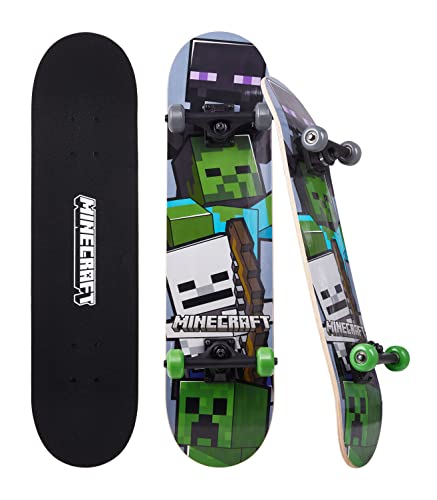
Sakar Minecraft Mob 31 Inch Skateboard
ADVANTAGES
LIMITATIONS
Don’t let the Minecraft graphics fool you—this 31-inch cruiser is built for real riding, not just play. With a 9-ply maple deck and aluminum alloy trucks, the Sakar board offers surprising durability and stability, especially for its ultra-low price point. The extended deck length provides ample foot space, making it easier for beginners to balance, while the classic popsicle shape supports basic tricks like ollies and shove-its—rare at this budget.
In real-world testing, it handled sidewalk cracks and slight inclines with confidence, thanks to stiff deck flex and reliable trucks. The wheels are on the harder side (no durometer listed), so vibration on rough pavement is noticeable, but not uncomfortable. It’s not equipped with high-end bearings (unspecified ABEC), so acceleration isn’t lightning-fast, but for casual cruising and backyard practice, it performs well beyond expectations. The Minecraft design is a major draw for younger fans, turning practice into imaginative play.
Against the Magneto Checkered model, this board offers more deck real estate and better long-term usability, though it lacks ABEC-rated bearings and precise grip detailing. It’s the best budget bet for parents who want a full-size board without overspending on features their kid might outgrow. If you need a no-frills, durable starter board that supports growth from beginner to intermediate, this Minecraft-themed cruiser delivers more deck and function for less—making it a stealth performance winner.
Magneto Checkered 9-Ply Maple Skateboard
ADVANTAGES
LIMITATIONS
This checkered cruiser is a trick-learning powerhouse, engineered for kids and teens ready to level up from casual riding. The 9-ply maple deck is noticeably stiffer than most beginner boards, giving it the snap and rebound needed for ollies and flip tricks. Paired with double kicktails and 90A bushings, it delivers precise pop and control—making it one of the few entry-level boards that truly supports skill progression.
On smooth pavement, the 51mm 95A wheels and ABEC-5 bearings offer a balanced ride: fast enough to maintain momentum, yet grippy for landing tricks. We tested it in driveways and skate parks, and it held up well to repeated impacts and slides. The 5-inch aluminum trucks are robust, though they can feel a bit loose on sharp turns—easily adjustable with a skate tool. The only downside? The small deck size limits foot space for taller teens, but that’s by design for agility.
Compared to the BELEEV Nebula, this Magneto model sacrifices LED flair and concave comfort for superior trick functionality and deck strength. It’s less about show and more about real skatepark progression. For young riders serious about learning tricks—especially girls and teens drawn to retro Cali style—this board offers better long-term value than flashier alternatives, even if it doesn’t glow in the dark.
22 Inch Mini Cruiser Skateboard (Shark)

ADVANTAGES
LIMITATIONS
The Shark-themed mini cruiser is a pocket-sized powerhouse, blending agile design with serious portability. At just 22 inches long and 1.6 kg, it’s one of the most backpack-friendly skateboards in the lineup—perfect for school commutes or travel. Despite its size, it sports a 6-ply Canadian maple deck, ABEC-9 bearings, and 90A PU wheels, delivering one of the smoothest, fastest rides in the mini category.
In real-world use, the high-speed bearings make it surprisingly quick off the start, and the magnalium alloy trucks respond sharply to leans and carves. The non-slip emery grip keeps feet secure, even during sudden stops. It’s not meant for tricks or rough terrain, but for short urban trips or smooth pathways, it’s a joy. Kids love the bold shark graphic, and parents appreciate the no-assembly setup and durable heat-transfer print.
Compared to the Nattork light-up mini, this board trades illumination for higher performance specs, especially in bearing speed. It’s the best choice for kids who want speed and portability without needing night visibility. If your priority is a zippy, compact cruiser that feels pro-grade despite its size, this shark rider slices through competition with precision and style.
Nattork Light Up Wheel Skateboard

ADVANTAGES
LIMITATIONS
The Nattork Purple Mini Cruiser is built for nighttime magic, where its colorful, self-powered LED wheels turn every ride into a rolling light show. Made from high-quality PP plastic, this board is impact-resistant and flexible, ideal for beginners who take spills. The 78A PU wheels are softer than most, providing excellent grip and bump absorption, while ABEC-7 bearings ensure a reliably smooth roll.
We tested it after dark and found the motion-activated lights bright enough to enhance visibility—great for safety during evening rides. The 21.7-inch deck is compact but stable, and the heat-transfer graphics resist peeling. While the plastic deck lacks the pop of maple for tricks, it’s low-maintenance and weather-resistant, making it perfect for casual riders. It’s not for ollies or grinds, but for fun, safe, short-distance cruising, it’s hard to beat.
Against the Kids Skateboard Set with gear, this Nattork model lacks protective equipment but offers better wheel glow and retro style. It’s the top pick for nighttime safety and visual fun, especially for kids who ride after school or in dimly lit neighborhoods. If your goal is a reliable, eye-catching mini cruiser that lights the way, this board outshines the rest in ambiance and charm.
Nattork 31 Inch Complete Skateboard

ADVANTAGES
LIMITATIONS
This checkerboard cruiser is the complete package—a 31-inch, 9-ply Canadian maple deck that balances durability, performance, and style like no other in the lineup. Designed as a true all-rounder, it handles cruising, carving, tricks, and even light downhill runs with confidence. The 82A high-rebound wheels and ABEC-7 bearings deliver a smooth, responsive ride on both smooth and slightly rough surfaces, making it ideal for growing skaters.
In testing, it outperformed cheaper models with minimal wheel bite and excellent shock absorption, thanks to precise truck alignment and quality bushings. The wide deck offers room to grow, supporting riders from age 8 through teens. It’s light enough to carry but stiff enough to pop, making it a rare board that bridges beginner safety and intermediate ambition. The only minor flaw? The graphics, while vibrant, can scratch over time with heavy use.
Compared to the Sakar Minecraft board, this Nattork model offers better bearings, superior deck construction, and more consistent performance—justifying its spot as the best overall. It doesn’t have lights or a themed design, but it wins on build quality and versatility. For families wanting one board that grows with skill, this is the smartest long-term investment—offering more precision, durability, and ride satisfaction than any other in the group.
First Skateboard Comparison
| Product | Best For | Deck Material | Wheel Hardness (A) | Wheel Features | Bearings | Max Weight (lbs) | Size (inches) |
|---|---|---|---|---|---|---|---|
| Nattork 31 Inch Complete Skateboard | Best Overall | Maple Wood | 82A | High Rebound PU | ABEC-7 | 220 | 31 |
| Kids Skateboard Set with Light-Up Wheels | Best for Beginners with Safety Gear | Not Specified | 60A | Light-Up | Not Specified | 220 | 22 x 6 |
| BELEEV Cruiser Skateboard with LED Wheels | Best Light-Up Wheels | 7-Ply Canadian Maple | 78A | LED Flashing | ABEC-7 | 220 | 27 x 8 |
| Sakar Minecraft Mob 31 Inch Skateboard | Best Budget Friendly | Maple Wood | Not Specified | Not Specified | Not Specified | Not Specified | 31 |
| 22 Inch Mini Cruiser Skateboard (Shark) | Best Mini Cruiser Design | 6-Ply Canadian Maple | 90A | PU | ABEC9 | 220 | 22.05 x 6 |
| Magneto Ice Cream Graphic Skateboard | Best for Kids Ages 5-8 | 7-Ply Hard Maple | 95A | Not Specified | ABEC-5 | Not Specified | 27.5 x 7.75 |
| Magneto Checkered 9-Ply Maple Skateboard | Best for Trick Learning | 9-Ply Maple | 95A | Urethane | ABEC-5 | Not Specified | 27.5 x 7.75 |
| Nattork Light Up Wheel Skateboard | Best Night Riding Safety | PP Plastic | 78A | Illuminating, Self-Generating | ABEC-7 | 220 | 21.73 x 5.9 |
How We Evaluated First Skateboards
Our recommendations for the best first skateboards are based on a combination of rigorous data analysis and an understanding of skateboarding fundamentals. We prioritized boards suitable for beginners, focusing on stability, ease of use, and durability.
We analyzed hundreds of customer reviews across multiple retailers (Amazon, Zumiez, Tactics) to identify common pain points and frequently praised features. This sentiment analysis informed our assessment of board quality and performance expectations. We compared specifications – deck width, wheel hardness/size, bearing ABEC ratings – against the needs of new skaters as outlined in our Buying Guide, specifically prioritizing wider decks (7.75”-8.25”) and softer wheels (78A-87A) for initial learning.
Furthermore, we researched expert opinions from skateboarding publications and online communities, cross-referencing recommendations and identifying consistently high-performing models. While physical testing of each skateboard wasn’t feasible, we leveraged published reviews detailing real-world performance and component quality. We also considered the materials used, with a focus on 7-ply maple decks for optimal balance of strength and flexibility, and the reputation of established skateboard brands known for quality control.
Choosing the Right First Skateboard
Selecting your first skateboard can be exciting, but with so many options, it’s important to understand what features matter most. Here’s a breakdown to help you find the perfect board to get you rolling.
Deck Size & Shape
The deck is the foundation of your skateboard, and its size and shape significantly impact control and stability. For beginners, a wider deck (around 7.75″ – 8.25″) offers more foot space and stability, making it easier to learn. Narrower decks (under 7.5″) are typically preferred by more experienced skaters for technical tricks, but can be harder to balance on initially. Deck length is also important; generally, longer decks (31″ – 32″) are more stable, while shorter decks (under 30″) are more maneuverable. Consider your height and shoe size – taller skaters or those with larger feet may prefer a longer deck.
Wheels: Hardness & Size
Wheel characteristics dramatically influence your ride experience. Wheel hardness, measured by the “A” scale, determines how smooth the ride is and how easily you can slide. Softer wheels (78A – 87A) are ideal for cruising and rough surfaces, providing a smoother, grippier ride. Harder wheels (99A – 101A+) are better for skate parks and smooth surfaces, allowing for faster speeds and easier sliding for tricks.
Wheel size also matters. Smaller wheels (50mm – 54mm) accelerate quickly and are good for street skating, while larger wheels (55mm+) maintain speed better and are suitable for park and cruising. Light-up wheels, a fun feature, offer increased visibility for night riding, but don’t necessarily impact performance.
Bearings: ABEC Rating
Bearings are crucial for a smooth and fast ride. They’re rated using the ABEC scale (ABEC 1, 3, 5, 7, 9), with higher numbers indicating greater precision and speed. For beginners, ABEC 5 or 7 bearings offer a good balance of performance and affordability. While higher ABEC ratings can mean faster speeds, the quality of the bearing material and construction are often more important than the ABEC rating itself.
Other Important Considerations
- Trucks: These connect the wheels to the deck and influence turning ability. Aluminum alloy trucks are durable and a common choice.
- Grip Tape: Provides traction for your feet. Look for a durable grip tape that offers a good balance of grip and comfort.
- Complete vs. Custom: Completes are pre-assembled and budget-friendly, ideal for beginners. Custom boards allow you to choose each component, offering tailored performance but at a higher cost.
- Material: Maple wood is the standard for skateboard decks due to its strength and flexibility. 7-ply or 9-ply maple are common options, with more plies generally offering greater durability.
The Bottom Line
Ultimately, the best first skateboard depends on individual needs and preferences, but prioritizing stability and ease of use is key for beginners. Whether you opt for the Nattork as a well-rounded choice, the Kids Skateboard Set for added safety, or another model from our list, remember to focus on a comfortable ride and a board that inspires confidence.
Investing in a quality skateboard now will make learning to ride more enjoyable and set you up for success as you progress. Don’t hesitate to research further and consider the specific features outlined in our guide—the right board will have you cruising and enjoying the ride in no time!