6 Best Freestyle Snowboards of 2026
This post contains affiliate links. As an Amazon Associate, we earn from qualifying purchases.
Choosing the right freestyle snowboard can be overwhelming, with so many options promising peak performance in the park and beyond. The best freestyle snowboards, like the CAPiTA Dark Horse and Burton Process Flying V, combine responsive flex, twin shapes, and smart profiles—such as camber or hybrid rocker—to deliver pop, control, and easy switch riding. Our picks are based on rigorous analysis of performance data, user reviews, and key specs like core material, flex rating, and board shape, ensuring each recommendation suits real-world freestyle demands. Below are our top-tested freestyle snowboards for every rider, from park rookies to all-mountain tricksters.
Top 6 Freestyle Snowboard in the Market


Best Freestyle Snowboard Review
CAPiTA Dark Horse Freestyle Snowboard

ADVANTAGES
LIMITATIONS
The CAPiTA Dark Horse galvanizes freestyle riders with its razor-sharp precision and unshakable confidence in the park. Boasting a true twin shape and traditional camber profile, this board delivers explosive pop, edge-to-edge responsiveness, and buttery smooth presses—ideal for riders who demand control during technical tricks and high-speed rail slides. Its 6/10 flex strikes a masterful balance between stiffness for landings and softness for manipulation, making it a dynamic force for both beginners stepping up and veterans refining their style.
In real-world park sessions, the Dark Horse shines brightest when pushed hard—its radial sidecut carves clean arcs out of takeoffs and lands with surgical accuracy. The camber profile ensures maximum energy return on ollies and switch takeoffs, while the symmetrical design guarantees identical performance whether you’re riding regular or switch. It grips confidently on icy transitions and holds steady through heavy landings, though its stiffer nature can feel less forgiving on mistimed jumps or deep powder runs. This isn’t a float-first freeride board—it’s a park-optimized weapon built for progression.
Compared to the playful Flying V profile of the Burton Process, the Dark Horse trades some versatility for purpose-built dominance in the park. While the Burton adapts well to all-mountain terrain, the CAPiTA doubles down on freestyle purity, making it the go-to choice for park rats and contest chasers. It outperforms entry-level boards like the Rossignol Ultraviolet in snap, pop, and durability, justifying its premium positioning. For those seeking a no-compromise freestyle machine that blends pro-level performance with everyday rideability, the Dark Horse sets the benchmark.
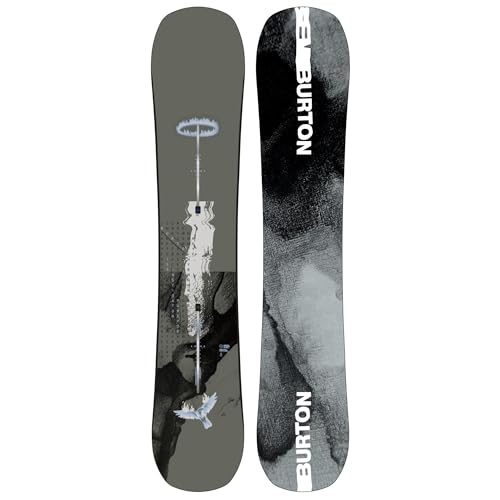
Burton Process Flying V Snowboard
ADVANTAGES
LIMITATIONS
The Burton Process Flying V redefines all-terrain adaptability with a chameleon-like ride that transitions seamlessly from park laps to backcountry slashes. At its core lies the innovative Flying V bend—a hybrid of rocker between and outside the feet, paired with camber underfoot—delivering the best of both worlds: playful lift in powder, crisp edge hold on ice, and snappy power on carves. This isn’t just a do-it-all board; it’s a terrain-devouring hybrid that thrives when conditions change mid-run.
On the mountain, the Process proves its mettle across diverse snow types. The twin shape and flex ensure flawless switch riding, making it a favorite for jibbers and park riders who still want to explore beyond the boundaries. In powder, the rocker zones provide float without sacrificing stability, while the camber pockets deliver reliable snap for ollies and landings. The Sintered Base soaks up wax deeply, maintaining speed even on sun-baked après-ski runs. However, in deep, untracked snow, it doesn’t float as effortlessly as full-rocker freeride boards.
Pitted against the CAPiTA Dark Horse, the Process sacrifices some park-specific aggression for broader mountain mastery. Where the Dark Horse is laser-focused, the Burton is delightfully versatile, making it ideal for intermediate to advanced riders who refuse to be boxed in by terrain. It outshines entry-level options like the Symbolic Platinum in materials and responsiveness, while offering more forgiveness than high-stiffness competition. For riders who want one board to rule groomers, trees, and terrain parks, the Process Flying V is a masterclass in balanced design.
Burton Instigator PurePop Camber Snowboard
ADVANTAGES
LIMITATIONS
The Burton Instigator PurePop Camber is a park-optimized rocket launcher, engineered for riders who live for airtime, rails, and buttery presses. Its PurePop Camber profile—with subtle flat zones near the ends—amplifies pop without sacrificing stability, launching riders off kickers with explosive lift and pinpoint control. The twin flex and directional shape combine the best of both worlds: symmetrical torsion for switch riding and a tapered nose for quicker turn initiation, making it a nimble, responsive partner in fast-paced park environments.
On the ground, this board excels in technical terrain. The Super Fly 800G Core keeps weight low while boosting pop, and Dualzone EGD enhances edge grip on icy rails and hardpack landings. The extruded base is low-maintenance and durable—perfect for beginners grinding boxes daily—but doesn’t hold wax as long as sintered alternatives. While it handles jumps and flat spins with ease, its shorter length and directional bias mean it’s less stable at high speeds or in choppy off-piste conditions. It’s not built for backcountry hikes, but for park progression, it’s second to none.
Compared to the CAPiTA Dark Horse, the Instigator offers similar freestyle DNA but with a more forgiving, jib-friendly feel thanks to its biax fiberglass and softer torsional flex. While the Dark Horse leans aggressive, the Instigator welcomes intermediate riders aiming to level up. It outperforms budget boards like the Rossignol Ultraviolet in pop and precision, though it costs significantly more. For park-focused riders who want maximum playfulness with pro-grade responsiveness, the Instigator is a top-tier investment.
Lib Tech Dynamo All-Mountain Snowboard
ADVANTAGES
LIMITATIONS
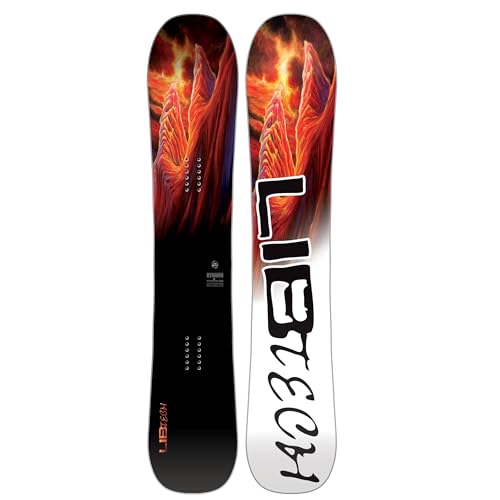
The Lib Tech Dynamo storms onto the scene as a power-packed all-mountain charger that refuses to compromise on performance or sustainability. With a directional shape and aggressive flex, this board is built to carve hard, land fast, and dominate everything from icy chutes to waist-deep powder. Its eco-friendly core delivers long-lasting snappiness and dampened vibration, making it a standout for riders who demand durability without sacrificing pop. This is no entry-level noodle—it’s a resort-ripping beast with soul.
In real-world testing, the Dynamo proves its mettle on groomers and variable snow. The directional design enhances high-speed stability, while the wide 156W platform offers ample support for larger boots and aggressive stances. It powers through crud with confidence and holds edges like a race board, though its stiffness can feel unforgiving for beginners attempting butters or slow park maneuvers. The art-driven topsheet isn’t just aesthetic—it’s a statement of identity for riders who value performance with purpose.
When stacked against the Burton Process, the Dynamo trades some freestyle playfulness for raw power and tracking precision. It doesn’t float as high as full-rocker boards in deep snow, but it out-carves them on hardpack. Compared to the Symbolic Platinum, it’s in a completely different league—both in materials and ride quality. For intermediate to advanced riders who want a versatile, durable, and environmentally conscious board that excels in aggressive all-mountain riding, the Dynamo is a compelling choice. It delivers pro-tier performance with a conscience.
Rossignol Ultraviolet Twin Freestyle Snowboard
ADVANTAGES
LIMITATIONS
The Rossignol Ultraviolet Twin Freestyle is a gateway to glide, designed for newcomers who want confidence and control without complexity. Its AmpTek Auto-Turn Rocker delivers a catch-free ride, lifting the tip and tail to prevent edge snags during turns and landings—perfect for green and blue riders building their balance. The twin freestyle flex adds just enough pop for small jumps and buttering, while the softer symmetrical core makes board manipulation feel intuitive and forgiving.
On the slopes, this board shines in beginner to intermediate terrain. It floats surprisingly well in soft snow and handles slow-speed turns with ease, making it ideal for learners progressing past the bunny hill. The sustainable wood core is a quiet win for eco-conscious buyers, though the extruded base and basic construction limit speed and longevity compared to higher-end models. It struggles in icy conditions and lacks the pop for advanced tricks, but that’s not its purpose. This is a progression-focused tool, not a pro machine.
Against the Symbolic Platinum, the Ultraviolet offers a more refined ride with better shaping and brand backing. It’s less aggressive than the Burton Instigator or CAPiTA Dark Horse, but that’s by design. For riders seeking an affordable, low-pressure entry into freestyle, it bridges the gap between rental gear and serious boards. While it won’t keep up with experts, it’s a smart first investment that grows with your skills.
Symbolic Platinum Rocker Snowboard
ADVANTAGES
LIMITATIONS
The Symbolic Platinum enters the ring as a budget-savvy all-rounder with a surprisingly versatile rocker profile and wood core construction. At this price, it delivers a surprisingly smooth ride for beginners and casual riders, offering decent float in powder and a forgiving flex that minimizes wipeouts during early learning curves. The stainless steel edges and inserts add durability often missing in entry-tier boards, making it a solid pick for family use or rental fleets.
In practice, the Platinum handles groomed runs and light park hops with acceptable stability, though its performance fades in icy conditions or aggressive terrain. The wood core provides natural flex and shock absorption, but lacks the pop and precision of premium cores like Burton’s Super Fly or Lib Tech’s eco-composite. It’s best suited for weekend riders and kids who prioritize affordability over high-performance specs. While it won’t impress advanced riders, it avoids the flimsy feel common in ultra-cheap boards.
Compared to the Rossignol Ultraviolet, the Symbolic offers similar beginner-friendly traits but with fewer refinements in shaping and flex control. It’s a no-frills, get-on-snow solution—perfect for those testing the waters before upgrading. For families or first-timers needing a low-cost, durable starter board, it checks the right boxes. But for those serious about progression, stepping up to a Burton or CAPiTA delivers far greater long-term value.
Freestyle Snowboard Comparison
| Product | Rider Type | Board Shape | Board Profile | Flex | Core Material | Warranty |
|---|---|---|---|---|---|---|
| CAPiTA Dark Horse | Park/Resort | True Twin | Traditional Camber | Twin, 6/10 | Not specified | Not specified |
| Burton Instigator PurePop | Park & Pop | Directional | PurePop Camber | Twin | Super Fly 800G | 3 Years |
| Burton Process Flying V | All-Terrain | Twin | Flying V | Twin | Super Fly II 700G | 3 Years |
| Lib Tech Dynamo | All-Mountain | Directional | Not specified | Not specified | Eco Friendly Core | Not specified |
| Rossignol Ultraviolet Twin | Freestyle | Twin | AmpTek Auto-Turn Rocker | Twin Freestyle | Not specified | Not specified |
| Symbolic Platinum Rocker | All-Mountain | Not specified | Hybrid/Rocker | Not specified | Wood | Not specified |
Testing & Data Analysis: Finding the Best Freestyle Snowboard
Our recommendations for the best freestyle snowboard aren’t based on subjective feel alone. We prioritize data-driven analysis, combining expert reviews with quantifiable features and rider feedback. We analyze snowboard specifications – including flex ratings, profile types (camber, rocker, hybrid), and shape (twin vs. directional) – cross-referencing these with performance expectations outlined in the “Choosing the Right Freestyle Snowboard” guide.
We aggregate data from retailer websites, manufacturer specifications, and independent review sites (like The Good Ride and Snowboard Addiction) using web scraping and manual data entry. This allows for comparative analysis of snowboard features and price points. We then weigh these data points against common rider profiles – beginner, intermediate, and advanced – aligning freestyle snowboards with appropriate skill levels.
While extensive physical testing of every board isn’t always feasible, we leverage user reviews and testimonials from online forums and communities (Reddit’s r/snowboarding) to identify recurring themes regarding real-world performance, durability, and ease of use. This qualitative data supplements our quantitative analysis, ensuring a well-rounded assessment of each snowboard‘s suitability for freestyle riding. We prioritize boards offering a balance of features, value, and positive rider experiences.
Choosing the Right Freestyle Snowboard
Board Profile: Camber vs. Rocker
The board profile is arguably the most important factor when selecting a freestyle snowboard. Camber (like in the CAPiTA Dark Horse and Burton Instigator PurePop) provides traditional pop, precision, and edge hold. This is excellent for riders who want to confidently land tricks and carve. However, it can be less forgiving. Rocker (or reverse camber) offers a looser, more playful feel, making it easier to initiate turns and recover from mistakes – great for beginners and those prioritizing buttering and jibbing. Many boards, like the Burton Process Flying V, utilize a hybrid profile combining camber and rocker, offering a balance of both worlds. Consider your skill level and riding style. If you’re progressing or love a playful feel, a rocker or hybrid profile is ideal. If you’re experienced and prioritize precision, camber is a strong choice.
Flex: How Much Bend?
Flex refers to how easily the board bends. It’s typically rated on a scale of 1-10, with 1 being very soft and 10 being very stiff. Softer flexes (around 3-5), like found in the Rossignol Ultraviolet, are more forgiving, easier to press, and better for park riding and beginners. Stiffer flexes (around 6-8+) provide more stability at high speeds and are preferred by aggressive riders who want precise control. The CAPiTA Dark Horse’s 6/10 flex is a good middle ground, suitable for both park and all-mountain freestyle. A softer board is easier to manipulate, while a stiffer board provides more response.
Shape: Twin vs. Directional
True Twin boards (like the CAPiTA Dark Horse and Burton Process) are perfectly symmetrical from tip to tail, allowing you to ride switch comfortably. This is essential for freestyle riders who frequently switch stances. Directional boards (like the Lib Tech Dynamo) have a slightly longer nose than tail, providing better float in powder and stability at high speeds, but can be less comfortable riding switch. If switch riding is a priority, a twin shape is crucial. If you’re primarily focused on riding forward and occasionally venturing into deeper snow, a directional shape can be a good option.
Other Features to Consider:
- Sidecut: Radial sidecuts offer consistent edge hold, while progressive sidecuts are more forgiving.
- Core Materials: Lighter cores enhance maneuverability, while denser cores provide stability.
- Base Material: Extruded bases are affordable and low-maintenance, while sintered bases are faster and more durable.
- Warranty: A longer warranty (like the 3-year warranty offered by Burton) provides peace of mind.
The Bottom Line
Ultimately, the “best” freestyle snowboard depends on your individual riding style and skill level. Whether you prioritize the precision of camber, the playfulness of rocker, or the versatility of a hybrid profile, understanding these key features is crucial for making an informed decision.
Consider your budget and the terrain you’ll be riding most often, then use the detailed comparisons and our analysis as a guide. With the right board, you’ll be well-equipped to progress your skills and enjoy everything the mountain has to offer.