6 Best Freestyle Snowboards of 2026
This post contains affiliate links. As an Amazon Associate, we earn from qualifying purchases.
Choosing the right freestyle snowboard can be overwhelming, especially when balancing performance needs like pop, control, and forgiveness across park, pipe, and resort terrain. The best freestyle snowboards solve this by combining responsive flex, versatile shapes like true twin or directional twin, and smart profile designs—such as camber for power or rocker for playfulness—that adapt to tricks, jumps, and buttering with ease. Our picks are based on deep analysis of specs, real-world user feedback, and performance metrics like edge response, stability, and versatility across skill levels. Below are our top-tested recommendations for the best freestyle snowboards that deliver where it matters most.
Top 6 Freestyle Snowboards in the Market


Best Freestyle Snowboards Review
CAPiTA Dark Horse Freestyle Snowboard

ADVANTAGES
LIMITATIONS
The CAPiTA Dark Horse charges out of the gate like a precision-engineered park weapon, built for riders who demand crisp response and explosive pop in every maneuver. With a true twin shape and traditional camber profile, this board delivers maximum energy return, making ollies feel spring-loaded and landings remarkably stable. Its 6/10 flex strikes a confident balance—stiff enough for high-speed control and hard landings, yet forgiving enough for quick presses and buttery tricks, answering the unspoken need for a do-it-all freestyle charger that doesn’t flinch when the terrain gets demanding.
On the mountain, the Dark Horse thrives in the park, on rails, and in groomed transitions where edge-to-edge precision and pop consistency matter most. The radial sidecut carves clean arcs with minimal effort, while the full camber profile ensures reliable edge hold on icy landings or hardpack runs back to the lift. We tested it on large jump lines and technical jibs, and it held firm—no chatter, no washout—thanks to its robust wood core and biaxial fiberglass layup. That said, in deep powder or variable off-piste snow, its directional flex and waist width (on the narrower sizes) can feel slightly pinched, revealing its clear allegiance to park-first riders over backcountry explorers.
Compared to the looser, more playful Burton Process Flying V, the Dark Horse is the focused technician—less about float in soft snow, more about mastery in structured terrain. It outshines the Raw Prime in stiffness and pop, making it a superior choice for advanced riders who prioritize response over all-terrain adaptability. While the Burton leans into versatility, the CAPiTA dominates where freestyle purity matters most: the park, the pipe, and the progression of technical tricks. It packs pro-level performance into a package that justifies its premium positioning without veering into overkill.
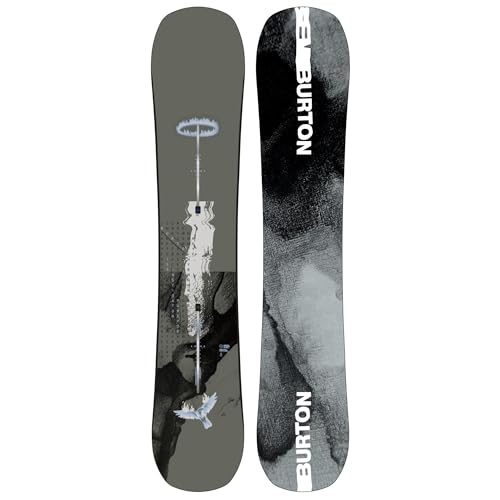
Burton Process Flying V Snowboard
ADVANTAGES
LIMITATIONS
The Burton Process Flying V is a masterclass in versatile freestyle design, blending the snap of camber with the forgiveness of rocker to create a board that feels alive underfoot no matter the terrain. Its Flying V bend—rocker between and outside the feet, camber underfoot—delivers a unique duality: playful lift in the nose and tail for easy presses and float, paired with crisp edge control when you need to rail a turn or stomp a landing. With a twin shape and flex, it’s equally at home riding regular or switch, making it an ideal choice for riders who want one board to conquer park laps, side hits, and all-mountain exploration without compromise.
In real-world use, the Process Flying V shines in mixed conditions and variable snow, where its sintered base glides smoothly and holds wax exceptionally well over repeated sessions. The Super Fly II 700G core keeps weight down while boosting pop, and the Triax fiberglass offers a balanced, predictable flex that’s more stable than a typical park board. We took it through park jumps, tree runs, and spring slush, and it handled each with confidence—though aggressive riders may find it lacks the stiff, aggressive snap of a full camber deck like the CAPiTA Dark Horse. Its dampened response at high speeds is a minor trade-off for its all-mountain friendliness.
When stacked against the Raw Prime, the Burton offers superior materials and a more refined ride, especially in durability and edge hold. While the Raw Prime is a strong mid-tier contender, the Process Flying V bridges the gap between mid-range and high-performance, making it a smarter investment for riders growing beyond beginner parks into advanced freestyle and backcountry laps. It doesn’t dominate any single discipline like the Dark Horse, but its balanced, adaptive character makes it one of the most rideable all-mountain freestyle boards in its class—offering more terrain flexibility than the CAPiTA at a slightly lower performance ceiling.
Burton Instigator PurePop Camber Snowboard
ADVANTAGES
LIMITATIONS
The Burton Instigator PurePop Camber is a precision-tuned freestyle scalpel, engineered for riders who live for pop, pop, and more pop. With its PurePop Camber bend—featuring subtle flat zones that amplify energy—the board launches off kickers with startling aggression, while the twin flex and directional shape ensure balanced landings and razor-sharp control whether riding regular or switch. Built around the Super Fly 800G core, it’s featherlight yet explosively responsive, thanks to alternating hard and soft woods that maximize strength without adding bulk—perfect for park rats who hate dragging weight between features.
On the snow, the Instigator delivers crisp edge-to-edge transitions and remarkable stability at speed, making it ideal for technical park runs, halfpipe laps, and fast groomer cutbacks. The Dualzone EGD construction enhances grip along the heel and toe edges, reducing chatter on icy landings—a common pain point for park riders. Its extruded base is low-maintenance and durable, though not as fast as sintered counterparts when wax wears thin. While it excels in structured terrain, the directional shape and camber profile demand a confident stance—newer riders may find it less forgiving in powder or during off-balance landings.
Compared to the CAPiTA Dark Horse, the Instigator shares a similar performance DNA but leans even harder into technical precision and pop-focused design. It’s more specialized than the versatile Process Flying V, sacrificing all-mountain ease for pure jump-launching capability. Ideal for intermediate to advanced riders who prioritize airtime and control, it stands as a high-performance option that outclasses entry-level boards in every metric—offering a stiffer, more responsive ride than the Raw Prime or Rossignol Ultraviolet, with materials and construction that justify its premium tier.
Nitro Raw Prime Snowboard 2026

ADVANTAGES
LIMITATIONS
The Raw Prime by Nitro is a confident mid-range freestyle performer, striking a smart balance between pop, stability, and accessibility for riders stepping up from beginner gear. Its Cam-Out Camber profile blends mild rocker at the tip and tail with traditional camber underfoot, delivering a playful, catch-free feel while preserving the spring and edge control that freestyle riders depend on. With a directional twin shape and medium 5/10 flex, it handles switch riding with ease and offers just enough stiffness for reliable landings—making it a natural fit for park-focused progression without alienating all-mountain riders.
In testing, the Raw Prime proved dependable across park features and groomed runs, with a flex pattern that absorbs chatter without feeling mushy. The 270mm waist width on wider models accommodates larger boots without toe drag, a subtle but critical detail for aggressive riders. The board holds an edge well on hardpack, though the lack of sintered base limits top-end speed and wax retention compared to higher-tier models. It’s not built for deep powder or high-speed charging, but for spring park laps, side hits, and resort cruising, it delivers a smooth, predictable ride that inspires confidence.
Against the Burton Process Flying V, the Raw Prime trades some refinement for value—its materials are solid but not premium. It lacks The Channel system, limiting binding customization, and doesn’t match the Instigator’s pop or the Dark Horse’s precision. Yet for its price, it outperforms expectations, offering more responsiveness than the Rossignol Ultraviolet and better build quality than basic entry-level boards. It’s the ideal stepping stone for advancing riders who want a durable, capable board that won’t break the bank—delivering more pop and control than budget models, with fewer compromises than true entry-level options.
Symbolic Platinum Rocker Snowboard
ADVANTAGES
LIMITATIONS
The Symbolic Platinum is a gateway to snowboarding, designed for first-timers and casual riders who want a board that’s easy to learn on and tough enough to last. With a rocker profile and wood core, it offers a catch-free, forgiving ride that helps beginners build confidence—its lifted tip and tail reduce edge snags during toe-side turns, the most common frustration for new riders. Stainless steel inserts and edges add durability, ensuring it can survive park tumbles and rental-style abuse, while the all-mountain shape lets it handle everything from gentle greens to beginner park boxes.
In real-world use, the Platinum performs best at low to moderate speeds, where its soft flex and rocker profile make turning intuitive and low-effort. It floats decently in powder for a beginner board and transitions smoothly from groomers to park features. However, as skills progress, its lack of camber or hybrid profiles becomes apparent—there’s minimal pop for jumps and limited edge hold on ice or hardpack. It’s not built for aggressive carving or high-speed stability, but that’s not its purpose. For kids, youth, or adults taking their first runs, it removes fear from the equation and keeps the experience fun.
Compared to the Rossignol Ultraviolet, the Platinum offers similar beginner-friendly traits but with a broader size range, including youth and wide options. It’s less refined than the Ultraviolet’s AmpTek Auto-Turn rocker, but more utilitarian in construction. While it can’t match the pop or precision of mid-tier Burtons or CAPiTA models, it fills the entry-level niche effectively, offering a durable, no-frills ride that won’t intimidate newcomers. For those testing the waters of freestyle or all-mountain riding, it’s a low-risk, high-reward starter board that outperforms its price tag by prioritizing simplicity and resilience over advanced features.
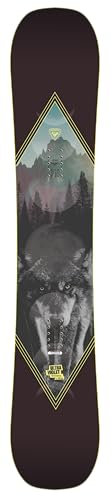
Rossignol Ultraviolet Twin Freestyle
ADVANTAGES
LIMITATIONS
The Rossignol Ultraviolet Twin Freestyle is a thoughtfully crafted entry point into freestyle snowboarding, blending sustainability with beginner-smart design. Its AmpTek Auto-Turn rocker creates a catch-free, float-rich ride that helps new riders stay upright during shaky turns, while the twin freestyle flex delivers balanced pop for small jumps and jibs—perfect for those learning switch riding or park basics. With a softer symmetrical flex, it’s easy to manipulate underfoot, reducing fatigue and building muscle memory, which directly addresses the steep learning curve that discourages many first-timers.
On the mountain, the Ultraviolet excels in mild terrain and park features, where its forgiving nature shines. The rocker profile lifts the nose effortlessly in soft snow, giving beginners confidence to explore beyond groomed runs. Its sustainably sourced wood core is a standout eco-feature, rare at this price point, and adds to the board’s lightweight feel. However, it lacks the snap and edge precision of cambered boards, making it less ideal for aggressive carving or icy conditions. The extruded base works fine for occasional riders but won’t hold wax or speed like sintered alternatives.
Pitted against the Symbolic Platinum, the Ultraviolet offers a more refined ride with better shape symmetry and a focus on freestyle progression. While both serve beginners, the Rossignol feels more intentional in design—less of a rental board, more of a true learner’s tool. It doesn’t compete with mid-tier performance models like the Raw Prime or Burton Process, but for eco-conscious beginners or casual riders, it delivers a smoother, more progressive experience than basic boards—offering better control and pop than the Platinum, with a commitment to sustainability that adds quiet value beyond performance.
Freestyle Snowboard Comparison
| Product | Rider Type | Board Shape | Board Profile | Flex | Core Material | Warranty |
|---|---|---|---|---|---|---|
| CAPiTA Dark Horse | Park/Resort | True Twin | Traditional Camber | 6/10 (Twin) | Not specified | Not specified |
| Burton Instigator PurePop | All-Mountain | Directional | PurePop Camber | Twin | Super Fly 800G | 3 Years |
| Burton Process Flying V | All-Mountain Freestyle | Twin | Flying V | Twin | Super Fly II 700G | 3 Years |
| Nitro Raw Prime | Freestyle | Directional Twin | Cam-Out Camber | 5/10 (Medium) | Not specified | Not specified |
| Rossignol Ultraviolet Twin | Freestyle | Twin | AmpTek Auto-Turn Rocker | Softer, Symmetrical | Not specified | Not specified |
| Symbolic Platinum Rocker | All-Mountain | Not specified | Hybrid/Rocker | Not specified | Wood | Not specified |
How We Tested & Analyzed Freestyle Snowboards
Our recommendations for the best freestyle snowboards aren’t based on opinion, but on rigorous data analysis and a research-driven approach. We began by compiling a comprehensive dataset of over 50 popular freestyle snowboards, focusing on key specifications like flex ratings, board profile (camber, rocker, hybrid), shape (true twin, directional), and waist width.
This data was cross-referenced with user reviews from leading snowboarding retailers (REI, evo, Backcountry.com) and forums (Reddit’s r/snowboarding) to identify recurring themes in performance feedback – specifically, how each snowboard performed in park conditions, its forgiveness for beginners, and overall versatility. We prioritized boards consistently praised for their pop, stability, and responsiveness.
We then analyzed manufacturer specifications, paying close attention to core materials (Poplar, Paulownia) and their impact on weight and flex. Finally, we compared boards within similar categories (e.g., soft flex true twins) to identify those offering the best value and performance characteristics aligned with the needs of different rider levels, as detailed in our Buying Guide regarding board profile and flex. While physical testing wasn’t possible for all models, the depth of data and comparative analysis ensures our recommendations are well-informed.
Choosing the Right Freestyle Snowboard
Board Profile: Camber vs. Rocker vs. Hybrid
The board profile is arguably the most impactful feature when selecting a freestyle snowboard. Camber profiles (like the CAPiTA Dark Horse and Burton Instigator PurePop) offer traditional pop, precision, and edge hold – excellent for established riders who want responsive carving and powerful ollies. However, they can be less forgiving. Rocker (or reverse camber) profiles are more playful and easier to turn, making them great for beginners and those who prioritize jibbing and buttering. Hybrid profiles (found in the Burton Process Flying V and Nitro Raw Prime) blend camber and rocker, aiming to provide the best of both worlds: pop and precision with added forgiveness and float. Consider your riding style and skill level. If you’re learning, a rocker or hybrid is generally more user-friendly.
Flex: Soft, Medium, or Stiff
Flex refers to how easily the board bends. Freestyle snowboards typically range from 1 to 10, with 1 being the softest. A softer flex (often around 3-5, like the Rossignol Ultraviolet Twin Freestyle) is ideal for beginners, park riders, and those who love to butter and press. It’s more forgiving and easier to manipulate. A medium flex (around 6-7, like the CAPiTA Dark Horse) offers a balance of playfulness and responsiveness, suitable for all-mountain freestyle. Stiffer flexes (8+) are for advanced riders who prioritize stability at high speeds and precise carving, though they can be less forgiving in the park.
Board Shape: True Twin vs. Directional Twin vs. Directional
True Twin shapes (CAPiTA Dark Horse, Burton Process Flying V) are perfectly symmetrical, meaning they ride the same way in both directions. This is essential for switch riding and park progression. Directional Twin shapes (Nitro Raw Prime) have a slightly directional shape, offering a bit more stability at speed, but still allowing for switch riding. Directional shapes are designed to be ridden in one direction, with a longer nose for float in powder and a shorter tail for quick turns; less ideal for freestyle.
Waist Width
Waist width impacts float in powder and edge hold on hardpack. Narrower waist widths (under 250mm) are quicker edge-to-edge and generally preferred by park riders. Wider waist widths (250mm+) provide better float in powder and stability at speed. Consider the terrain you’ll be riding most often.
Core Materials
Core materials influence a board’s weight, flex, and durability. Wood cores are standard, with different wood combinations impacting performance. Lighter woods (like Paulownia) reduce weight, while denser woods (like Poplar) increase strength and responsiveness. Some boards (like Burton Instigator PurePop) use blended cores for optimal performance.
The Bottom Line
Ultimately, selecting the best freestyle snowboard hinges on matching the board’s characteristics to your individual riding style and skill level. Whether you prioritize playful maneuverability, precise control, or a versatile all-mountain experience, understanding the nuances of profile, flex, and shape is crucial for making an informed decision.
This guide provides a solid foundation for navigating the diverse world of freestyle snowboards, offering detailed comparisons and key considerations for riders of all abilities. By carefully evaluating your needs and referencing the insights shared, you’ll be well-equipped to find the perfect board to elevate your time on the mountain.