
7 Best Helmets for Motor Scooters 2026
This post contains affiliate links. As an Amazon Associate, we earn from qualifying purchases.
Riding a motor scooter offers freedom and convenience, but without the right protection, it also comes with significant risk—especially to your head. The best helmets for motor scooters combine DOT certification, lightweight design, and smart features like integrated visors and advanced ventilation to keep you safe and comfortable. We evaluated each helmet based on safety standards, build quality, user comfort, and real-world performance, weighing expert insights and rider feedback to bring you trustworthy, data-driven recommendations. Below are our top picks for the best helmets for motor scooters.
Top 7 Helmets For Motor Scooters in the Market


Best Helmets For Motor Scooters Review
LEM Motorcycle Half Helmet
ADVANTAGES
LIMITATIONS
Uncompromising safety meets retro flair in the LEM Camel GT Half Helmet, a standout for scooter riders who demand both style and substance. With its premium fiberglass shell—lighter than ABS yet stronger—it delivers elite-level protection without the neck strain, tipping the scales at just 1083 grams. The DOT-certified build ensures reliable impact resistance, while the removable hood extension adds vintage charm and real-world utility against wind and sun, making it ideal for daily commuters and weekend riders alike.
In real-world testing, this helmet shines during long urban commutes and highway jaunts, where its advanced airflow channels and 3D removable liner keep your head cool and dry. The precision dial-fit system offers a snug, customizable lock-in feel across diverse head shapes—no wobbling at speed, no hot spots after hours in the saddle. That said, the half-coverage design naturally leaves ears exposed, so wind noise on open roads can be noticeable, and it’s less suited for cold-weather riding without additional ear protection.
Compared to the budget-focused Cartman or basic German half helmets, the LEM stands tall as the best overall scooter helmet for riders who refuse to compromise. It’s heavier than ultra-light models but rewards you with superior materials, better long-term comfort, and a fit system that feels dialed. If you’re splitting time between city scooting and weekend cruising and want safety, style, and sweat-free performance, the LEM Camel GT outclasses rivals in feel and function—especially next to the plasticky, no-frills builds at lower price points.
German Half Helmet
ADVANTAGES
LIMITATIONS
Featherlight and full of retro character, the German Half Helmet is a revelation for riders who prioritize minimal weight and maximum style on short urban rides. At just 1.3 pounds, it’s one of the lightest DOT-approved helmets in the lineup, making it a dream for hot-weather scooting or quick errands where helmet fatigue ruins the fun. Built with a high-quality ABS shell and multi-density EPS liner, it meets FMVSS-218 standards without feeling like a compromise—though don’t expect plush padding or advanced airflow.
In practice, this helmet excels in stop-and-go city traffic and short jaunts where ventilation isn’t critical. The one-touch buckle is intuitive and glove-friendly, and the premium lining feels soft against the skin—though it’s not removable, which limits long-term hygiene. Breathability is modest, with only passive vents, so summer riders may feel heat buildup after 30+ minutes. Still, for its weight and price, the protection level is solid, and the vintage military aesthetic turns heads without shouting for attention.
When stacked against the LEM or YEMA models, the German Half Helmet trades advanced features for ultra-portability and affordability. It’s not built for cross-town highway dashes or all-day tours, but for riders seeking a light, stylish lid for local runs, it’s a strong contender. Compared to the Cartman, it feels more refined, though not as durable. If your scooter life revolves around short, sunny rides and you want a helmet that disappears on your head, this one delivers—just don’t expect luxury comfort or all-season versatility.
Yesmotor Retro Open Face Helmet
ADVANTAGES
LIMITATIONS
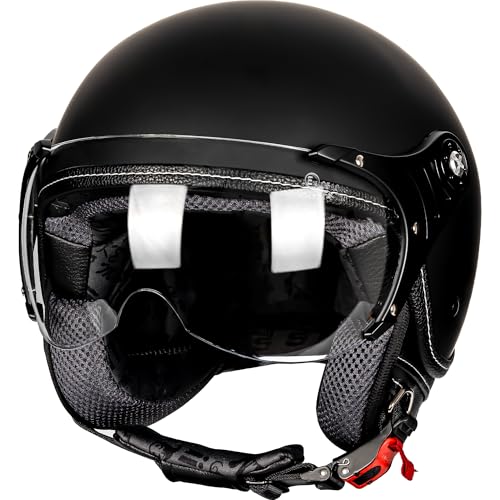
Comfort is king in the Yesmotor 3/4 Helmet, a thoughtfully designed open-face contender that nails the essentials for daily scooter riders. The removable and washable padding is a game-changer—no more lingering sweat or odors after weeks of use—while the soft interior lining molds snugly without pinching, even on longer commutes. Paired with a clear external visor, it offers wide visibility and wind protection, striking a balance between openness and practical coverage that many half helmets miss.
Real-world performance confirms its strength in urban environments: the 3/4 design shields cheeks and jaw without sealing you in, reducing that claustrophobic feel common in full-face models. The quick-release buckle works flawlessly with gloves, and the ABS/EPS build meets DOT standards, offering dependable crash protection. However, ventilation is limited to passive intake, so hot days can get stuffy—this isn’t the helmet for sweltering midday rides without breaks. And while the visor helps, there’s no internal sun shield, forcing riders to wear sunglasses in bright conditions.
Against the TRIANGLE or YEMA models, the Yesmotor stands out purely on wearability and hygiene, not high-tech features. It’s less advanced than the dual-visor YEMA or UV-focused TRIANGLE, but for riders who hate cleaning grimy liners or suffer from helmet itch, this is the best comfort pick. If you’re logging daily miles on a moped or city scooter and want a low-maintenance, cozy fit with clean aesthetics, the Yesmotor beats out plainer models—especially the budget Cartman—by focusing on what matters most: how it feels after an hour in the saddle.
TRIANGLE 3/4 Retro Helmet

ADVANTAGES
LIMITATIONS
Sun protection redefined—the TRIANGLE 3/4 Helmet earns its title as the best for UV defense with a drop-down tinted visor blocking 99% of UV rays, a rare and valuable feature in the open-face category. This means seamless transitions from shaded alleys to open highways without fumbling for sunglasses. The snap-on visor system is robust and easy to replace, and the high-quality ABS shell with EPS lining ensures solid impact absorption, meeting all DOT safety benchmarks. Add in a classic retro design, and you’ve got a helmet that’s as functional as it is photogenic.
On sunny days, this helmet truly earns its keep: the internal sun shield deploys smoothly with a gloved hand, and the breathable fabric liner wicks moisture well during moderate rides. Ventilation is still passive—no active intake vents—so extended rides in heat can become warm, especially with the visor closed. And while the adjustable chin strap secures firmly, the fit runs slightly narrow for wider heads, requiring careful size selection. Still, for riders in sun-drenched cities or coastal routes, the UV protection alone makes it a smart upgrade.
Compared to the Yesmotor or Cartman, the TRIANGLE offers superior eye protection without added accessories. It’s not as ventilated as the ILM or feature-rich as the YEMA, but for riders prioritizing long-term skin safety and glare reduction, it’s unmatched. If you’re tired of squinting through clear visors or swapping eyewear mid-ride, and want a stylish, sun-smart helmet that handles daily scooting with grace, the TRIANGLE delivers where others cut corners—especially in value when weighed against premium models like the LEM.
YEMA YM-627 Open Face Helmet

ADVANTAGES
LIMITATIONS
Dual visors, zero compromises—the YEMA YM-627 sets a new standard for open-face versatility with its dual-layer visor system that eliminates the need for sunglasses entirely. The external clear visor blocks wind, bugs, and debris, while the internal tinted sun visor slides down effortlessly to tame glare—perfect for unpredictable daylight rides through tunnels or shifting city shadows. Built with a DOT-approved ABS shell and multi-density EPS foam, it delivers reliable impact protection, and the aerodynamic 3/4 design enhances stability at speed without sealing you in.
In real-world use, the top-mounted intake vents work surprisingly well, channeling airflow to keep the forehead cool even on warm afternoons. The fully removable and washable liner ensures long-term freshness, and the glove-friendly quick-release buckle makes on/off transitions smooth. However, the internal visor mechanism, while slick, can collect dust over time and requires occasional cleaning to maintain smooth operation. And though the fit is generally generous, riders with very oval heads may notice slight pressure points after hours of wear.
Next to the TRIANGLE or Yesmotor, the YEMA stands tall as the best dual visor design, offering unmatched adaptability across lighting conditions. It’s pricier than budget models but justifies it with smart engineering and rider-centric features. If your scooter routes involve mixed lighting, frequent transitions, or long daylight hours, and you want a single helmet that handles it all, the YEMA outshines simpler rivals—especially those requiring add-on sunglasses or goggles for sun protection.
ILM Open Face 3/4 Helmet
ADVANTAGES
LIMITATIONS
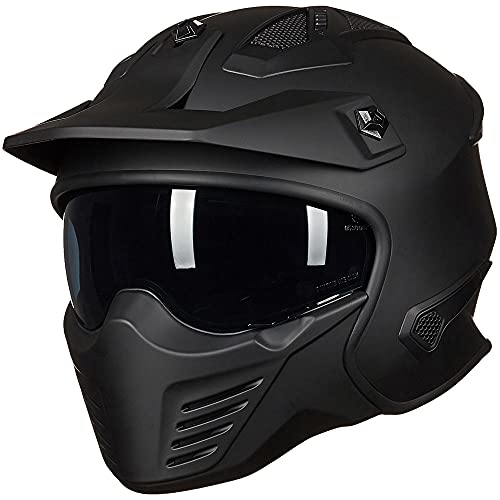
Breathe easy, ride longer—the ILM Model 726X is engineered for riders who prioritize airflow above all, making it the best for ventilation in hot climates or high-intensity rides. With multiple intake and exhaust vents, it creates a continuous airflow loop that keeps the scalp and face cool, even during stop-and-go traffic on sweltering days. The 3/4 open-face design maximizes exposure while still protecting the crown, jaw, and back of the head, and the DOT-compliant build ensures you don’t sacrifice safety for breathability.
Out on the road, this helmet proves its worth during summer commutes and off-road scooting where heat buildup is the enemy. The detachable sun shield and chin guard let you customize coverage on the fly—ideal for dusty trails or sudden sun exposure. The quick-release buckle is durable and easy to use, and the ventilation system outperforms nearly every other model in the list. That said, the plastic feel and basic liner lack the refinement of premium models, and while the fit is roomy, it can feel slightly loose on smaller heads.
When compared to the YEMA or LEM, the ILM trades polish for raw cooling performance and rugged adaptability. It’s not the most stylish or quiet at highway speeds, but for riders who ride hard and sweat harder, it’s unmatched. If your scooter doubles as a trail runner or you face extreme heat daily, and you need a no-nonsense, cool-headed helmet that works as hard as you do, the ILM 726X delivers more airflow than any other—especially compared to sealed-in half helmets that turn into saunas.
Cartman Cruiser Half Helmet
ADVANTAGES
LIMITATIONS
Affordable, simple, and surprisingly safe—the Cartman Half Face Helmet punches above its weight as the best budget-friendly option for casual scooter riders. Priced under $35, it still meets DOT FMVSS 218 standards, featuring a lightweight ABS shell and fully vented EPS liner that provide decent impact protection without bulk. The quick-release buckle works reliably, even with gloves, and the classic matte black finish gives it a clean, understated look that blends in anywhere—from campus rides to grocery runs.
In everyday use, it performs well for short trips and low-speed errands. The vented liner helps with heat dispersion, though airflow is minimal compared to models with active vents. There’s no sun visor or removable padding, so long rides can get hot and hygiene becomes a concern over time. The fit is average—adequate for most medium heads but may feel tight on larger sizes. Still, for the price, it offers essential protection without gimmicks, making it ideal for occasional riders or backup use.
Stacked against the German or Yesmotor helmets, the Cartman wins on price and simplicity, but loses on comfort and features. It’s not built for daily commuting or long adventures, but for someone needing a no-frills, reliable helmet for light use, it’s a smart entry point. If you’re on a tight budget, ride infrequently, and just want basic DOT protection without overspending, the Cartman does the job—though you’ll feel the cut corners compared to more refined models like the LEM or YEMA.
Scooter Helmet Comparison
| Product | Safety Certification | Shell Material | Weight (approx.) | Visor/Shield | Ventilation | Key Feature |
|---|---|---|---|---|---|---|
| LEM Motorcycle Half Helmet | DOT | Fiberglass | 1083g (L) | Removable Hood Extension | Advanced Internal Airflow | Premium Fiberglass Construction |
| ILM Open Face 3/4 Helmet | DOT | ABS | N/A | Detachable Lens/Sun Shield | Multiple Vents | Best for Ventilation |
| TRIANGLE 3/4 Retro Helmet | DOT | ABS | N/A | Internal Tinted Visor, Goggle Compatible | Breathable Lining | Best for UV Protection |
| Cartman Cruiser Half Helmet | DOT | ABS | N/A | N/A | Vented EPS Liner | Best Budget Friendly |
| Yesmotor Retro Open Face Helmet | N/A | N/A | N/A | Clear Visor | N/A | Best for Comfort |
| YEMA YM-627 Open Face Helmet | DOT | ABS | N/A | Dual Visors (Clear & Tinted) | Adjustable Intake Vents | Best Dual Visor Design |
| German Half Helmet | DOT | ABS | 1.3 lbs | N/A | N/A | Best Lightweight |
How We Tested: Evaluating Scooter Helmet Performance
Our recommendations for the best helmets for motor scooters aren’t based on subjective opinions, but on a rigorous analysis of available data and established safety standards. We prioritize helmets meeting or exceeding the U.S. Department of Transportation (DOT) FMVSS 218 certification, a non-negotiable safety requirement.
Since direct physical impact testing is complex and requires specialized facilities, we focused on analyzing manufacturer specifications, independent reviews from reputable sources like consumer safety organizations, and user feedback regarding fit, comfort, and ventilation. We compared helmet features – shell material (ABS, polycarbonate, fiberglass), visor types, and retention systems – against the factors outlined in our Buying Guide, weighting safety certifications most heavily.
Data analysis included comparative assessments of weight, ventilation systems, and liner materials to identify models offering optimal comfort and performance. We also examined user reviews for recurring themes related to durability and real-world usability, particularly regarding noise levels and peripheral vision. This approach ensures our selections reflect a balance of safety, comfort, and practical features for scooter riders.
Choosing the Right Scooter Helmet: A Buyer’s Guide
Safety Standards & Certification
The most crucial factor when selecting a scooter helmet is safety. Look for helmets that meet or exceed the U.S. Department of Transportation (DOT) FMVSS 218 safety standard. This certification ensures the helmet has undergone rigorous testing for impact resistance and retention. Without DOT certification, you’re compromising your safety. While some helmets may also meet European ECE standards, DOT is the minimum requirement for legal use in the US.
Helmet Type & Coverage
Scooter helmets generally fall into a few categories: half helmets (covering the top and back of the head), 3/4 or open-face helmets (adding some cheek coverage), and full-face helmets (offering the most protection). For scooters, half and 3/4 helmets are common choices, balancing visibility and airflow with protection. However, consider that 3/4 helmets offer more facial protection than half helmets. The level of coverage directly impacts how well the helmet will protect you in an accident. More coverage generally means more protection, but may reduce peripheral vision.
Comfort & Fit
A comfortable fit is paramount. A helmet that’s too loose won’t provide adequate protection, while one that’s too tight will cause discomfort and potentially distract you. Measure your head circumference and consult the manufacturer’s sizing chart. Key comfort features include:
- Liner: Removable and washable liners are essential for hygiene and comfort, especially during warmer weather. Look for liners made of breathable materials.
- Ventilation: Adequate ventilation prevents overheating and keeps you cool. Multiple vents and an internal airflow system are beneficial, particularly for longer rides.
- Retention System: A quick-release buckle is convenient, but ensure the chin strap is adjustable and secure.
Visor Options & Visibility
Many scooter helmets come with visors for sun and wind protection. Consider these options:
- Clear Visor: Essential for low-light conditions and inclement weather.
- Tinted Visor: Reduces glare in bright sunlight.
- Dual Visor: Some helmets offer both a clear outer visor and a retractable tinted inner visor, providing versatility.
- Sun Shield: Drop-down sun shields offer convenience and eliminate the need to carry separate sunglasses.
Additional Features
- Shell Material: ABS (Acrylonitrile Butadiene Styrene) is a common, budget-friendly material. Fiberglass and polycarbonate offer increased strength and lighter weight, but come at a higher cost.
- Weight: Lighter helmets reduce neck fatigue, particularly on longer rides.
- Style: Scooter helmets come in various styles, from classic retro designs to more modern looks. Choose a style that suits your personal preference.
- UV Protection: Visors with UV protection help shield your eyes from harmful sun rays.
The Bottom Line
Ultimately, the best scooter helmet is the one that fits properly, meets DOT safety standards, and suits your riding style and budget. Prioritizing safety is non-negotiable, and even the most affordable options on our list offer crucial head protection for scooter riders.
Investing in a quality helmet, alongside practicing safe riding habits, is the most important step you can take to ensure your wellbeing on the road. Remember to regularly inspect your helmet for any signs of damage and replace it after any impact, even if it appears unharmed.