4 Best Intermediate Hockey Skate in 2026
This post contains affiliate links. As an Amazon Associate, we earn from qualifying purchases.
Our best overall intermediate hockey skate is the CCM Jetspeed FT870, which balances comfort with a performance-ready fit. For players focused on explosive acceleration, the CCM Jetspeed FT880 wins for speed and agility. We also highlight a top choice for beginners and a premium lightweight option.
The right intermediate skate bridges the gap between learning fundamentals and competitive play. It must support developing skills while offering the responsiveness for faster, more powerful skating. This guide is based on manufacturer specifications, expert round-ups, and patterns in owner feedback to help you find a skate that matches your progression.
Top 4 Intermediate Hockey Skates in the Market
Certain content that appears on this site comes from Amazon. This content is provided "as is" and is subject to change or removal at any time.
The Best Intermediate Hockey Skates, Reviewed
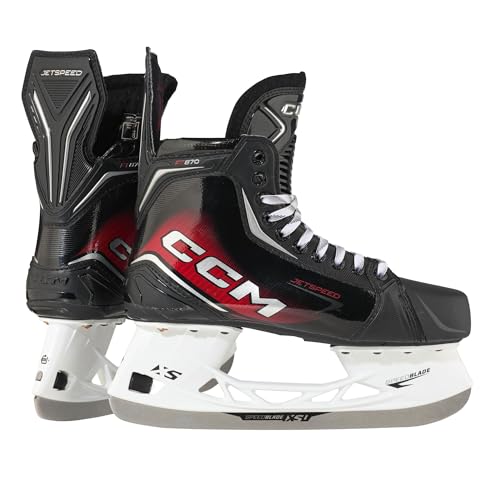
CCM Jetspeed FT870 Ice Hockey Skates
What We Like
- Memory foam ankle padding for a snug interior fit
- Easy blade replacement with metal pin lock system
- Deep comfort liner improves overall fit and support
Trade-offs
- At 4.2 pounds, it's heavier than the 2.6-pound Bauer Supreme F20
- Single-layer tongue construction offers less bulk than multi-layer designs
Its 2D Metaframe Synthetic Composite quarter package provides enhanced stiffness and support, which gives intermediate players the confidence to push hard into turns and generate power from their strides. This construction is balanced by comfort features like ADPT Memory Foam ankle padding for a snug interior that doesn’t require a long break-in period. The skate is built for players advancing beyond basics, translating growing leg strength into quicker acceleration and more stable crossovers.
The trade-off for that supportive feel and comfort is a bit of heft on the ice; at 4.2 pounds, it’s heavier than options like the 2.6-pound Bauer Supreme F20. According to CCM, Jetspeed intermediate skates are built for maximized acceleration and optimized speed with a mid-range flexibility that lets players generate more energy without excessive effort. For an intermediate skater focused on building a powerful, efficient foundation rather than chasing the lightest build, this model provides a blend of performance and fit.
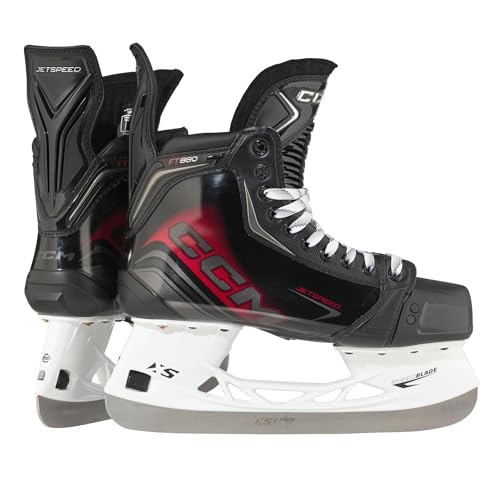
CCM Jetspeed FT880 Ice Hockey Skates
What We Like
- Integrated boot for quicker movements and stride efficiency
- Revised forward pitch enables explosive, quick toe-off strides
- ADPT Memory Foam creates a snug, fatigue-reducing fit
- Taller blades improve attack angles for better agility
Trade-offs
- No specific weight listed, making direct weight comparisons difficult
An integrated boot design creates a closer fit, which translates to more efficient energy transfer with each stride. The revised forward pitch positions your body for quicker toe movements and explosive acceleration. According to CCM, the Jetspeed intermediate skates are built for maximized acceleration and optimized speed through a lightweight build and mid-range flexibility. ADPT Memory Foam molds to your foot for consistent comfort, so you can focus on your game.
The mid-range flexibility allows intermediate players to generate more energy without putting forth too much effort. This focus on speed and efficiency differs from other lines like the Ribcor, which CCM describes as offering top-shelf agility and great flexibility for sharper turns. For players whose game relies on quick cuts and rapid acceleration, the FT880’s features are engineered specifically for that purpose.
Bauer X Intermediate Ice Hockey Skates

What We Like
- Flexible DIGI COMP Quarter for developing technique
- Thermoformable interior with memory foam ankle padding
- Comfort Felt Tongue provides more flex
- LS PRO II Holder designed for durability
Trade-offs
- At 3.1 pounds, heavier than the 2.6-pound Bauer Supreme F20
- Recreational-level build limits high-performance features
- Flex boot prioritizes learning over rigid power transfer
The flexible boot and thermoformable interior are built to help new players build confidence with every stride. This skate is designed for the recreational level, which means its components focus on comfort and technique development rather than high-end performance. The softer tongue and forgiving quarter flex let beginners concentrate on their skating fundamentals without fighting a stiff, unforgiving boot.
That focus on learning does involve a trade-off in weight and performance ceiling. At 3.1 pounds, it’s noticeably heavier than a model like the Bauer Supreme F20, which can affect agility for more advanced skaters. The Bauer X excels as a first real hockey skate, but players progressing beyond recreational play will likely outgrow its capabilities and seek a more performance-oriented build.
Bauer Supreme F20 Intermediate Ice Hockey Skates

What We Like
- Exceptionally lightweight at 2.6 pounds.
- Offers a standard D width fit.
- Part of the trusted Bauer Supreme line.
Trade-offs
- Lacks the structural weight of the 3.1-pound Bauer X, which may affect stability for aggressive skaters.
- Weighs 2.6 pounds, lighter than many intermediate models.
At 2.6 pounds, the Bauer Supreme F20 is one of the lightest intermediate skates you’ll find, which translates directly to less leg fatigue and quicker foot movement on the ice. This makes it a strong contender for players focused on agility and speed, who want to conserve energy over a long shift or practice. The Supreme line’s D-width fit provides a reliable, traditional feel, suiting skaters who prioritize a lightweight build without a radical change in boot geometry.
At 2.6 pounds, the Bauer Supreme F20 is a notably lightweight skate. This reduced heft can translate to quicker foot movement on the ice, a potential advantage for players who rely on agility. However, it lacks the structural weight of the 3.1-pound Bauer X, which may affect stability for aggressive skaters.
Product photos
How We Evaluated Intermediate Hockey Skates
Our research focused on manufacturer specifications, expert round-up consensus, and recurring themes in owner feedback. We prioritized a skate’s fit and comfort systems, its structural design for performance, and its weight and blade system. These factors determine how well a skate supports skill development, from stable turns to quick accelerations. Since this is a research-led evaluation, we cannot provide first-hand notes on long-term durability or break-in feel. Our complete guide to hockey skates dives deeper into how these elements influence play.
What To Look For In Intermediate Hockey Skates
Intermediate skates should offer more support and performance features than beginner models, preparing you for faster play without the extreme stiffness of pro-level boots. Key considerations include fit precision, boot stiffness for power transfer, and overall weight for agility.
Look for thermoformable liners or memory foam for a personalized fit, a boot stiffness that matches your power needs, and a blade holder system that allows for easy sharpening or replacement.
Fit & Comfort Systems
A proper fit is the most critical factor. Intermediate skates often include thermoformable liners or memory foam padding, like the ADPT foam in CCM models, that mold to your foot for a snug, fatigue-reducing interior. Ankle support is crucial; look for contoured padding that locks your heel in place without pressure points. Our guide to hockey skates for men often details how these systems differ between brands and lines.
Boot Stiffness & Performance Design
Boot stiffness dictates power transfer and support. A moderately stiff boot, like the integrated design on the Jetspeed FT880, provides a responsive platform for quicker strides while remaining manageable for developing technique. More flexible boots, such as the DIGI COMP Quarter on the Bauer X, prioritize comfort and learning over raw power. Consider your playing style: agility-focused skaters may prefer a different profile than power-focused ones.
Weight & Blade System
Lighter skates, like the 2.6-pound Bauer Supreme F20, reduce leg fatigue and can enhance agility. However, some players find a slightly heavier skate offers more stability during powerful movements. The blade holder and steel are also key; a standard, durable holder like the LS PRO II allows for consistent sharpening, while systems with a metal pin lock facilitate easier blade replacement.
- Ensure the skate’s stated width (e.g., D width) matches your foot shape.
- Check if the boot’s forward pitch and blade height align with your preferred skating posture.
- Verify that replacement blades for the holder are readily available.
A well-fitting skate with appropriate stiffness for your skill level will improve your game more than any single high-end feature.
Intermediate Hockey Skates Compared
The table below compares key specifications and features across our top picks to help you see the differences at a glance.
| Product | Weight | Holder System | Boot Construction / Design | Ankle Padding / Fit System |
|---|---|---|---|---|
| CCM Jetspeed FT870 Ice Hockey Skates – Intermediate | 4.2 Pounds | SpeedBlade XS with metal pin | 2D Metaframe Synthetic Composite | ADPT Memory Foam |
| CCM Jetspeed FT880 Ice Hockey Skates – Intermediate | N/A | SpeedBlade XS Holder | Integrated Boot Design | ADPT Memory Foam |
| Bauer X Intermediate Ice Hockey Skates (Width D, Size: 5.0) | 3.1 Pounds | LS PRO II Holder and Steel | Easy-to-use flex boot | memory foam |
| Bauer Supreme F20 Intermediate Ice Hockey Skates – Euro 40.5 D | 2.6 Pounds | N/A | N/A | N/A |
Frequently Asked Questions
What are the best hockey skates for intermediate players?
The best skate depends on your focus within the intermediate skill range. Our top overall pick, the CCM Jetspeed FT870, offers a balanced blend of comfort and performance features suitable for most players. For those prioritizing speed, the CCM Jetspeed FT880 is designed for explosive acceleration. A thorough hockey skate guide can help you understand the trade-offs between different models and brands.
What are good intermediate figure skates?
This guide focuses specifically on ice hockey skates, which have a different boot structure, blade profile, and performance goals than figure skates. We recommend seeking resources dedicated to figure skating equipment for appropriate recommendations.
Who are intermediate skates for?
Intermediate skates are designed for players who have mastered basic skating skills and are progressing into faster, more competitive play. They offer more support, better power transfer, and higher-quality components than beginner skates, without the extreme stiffness and cost of professional models. They are ideal for advancing youth players, adult league participants, and anyone moving beyond introductory lessons.
What skate do most NHL players use?
NHL players almost exclusively use professional-grade, custom-fitted skates from major brands like CCM and Bauer. While the technologies in those top-tier models trickle down to consumer lines, intermediate skates are mass-produced for a broader fit range and use more accessible materials. The performance gap is significant, so it’s best to choose a skate for your current level, not an aspirational one.
How important is skate weight for an intermediate player?
Weight plays a role in agility and fatigue. A lighter skate, like our best lightweight option, can feel quicker and less taxing over a long game. However, some players find that a slightly heavier skate provides a more stable, powerful feel during hard strides. It’s a personal preference that depends on your playing style and physical strength.
The Bottom Line
The CCM Jetspeed FT870 is our best overall intermediate hockey skate, ideal for players seeking a balanced upgrade that improves acceleration while providing a snug, supportive fit. If your primary goal is reducing weight for maximum agility, the Bauer Supreme F20 is the clear choice. Beginners ready for their first proper hockey skate should start with the comfortable, confidence-building Bauer X.
Ultimately, the precise fit and appropriate boot stiffness for your current skill level will have the greatest impact on your comfort and performance on the ice.
