7 Best Kids Snowboards for 2026
This post contains affiliate links. As an Amazon Associate, we earn from qualifying purchases.
Finding the right snowboard for kids can be overwhelming, with so many options promising fun but risking frustration if they’re ill-suited to a child’s size, skill, or riding environment. The best kids snowboards solve this by combining forgiving designs—like flat top or rocker profiles—with adjustable bindings and durable construction that withstands learning curves and backyard adventures alike. We evaluated dozens of models based on performance, safety, value, and real-world feedback, prioritizing boards that match age, weight, and intended use while balancing price and quality. Below are our top picks for the best kids snowboards that deliver confidence, control, and lasting fun on the slopes.
Top 7 Kids Snowboards in the Market


Best Kids Snowboards Review
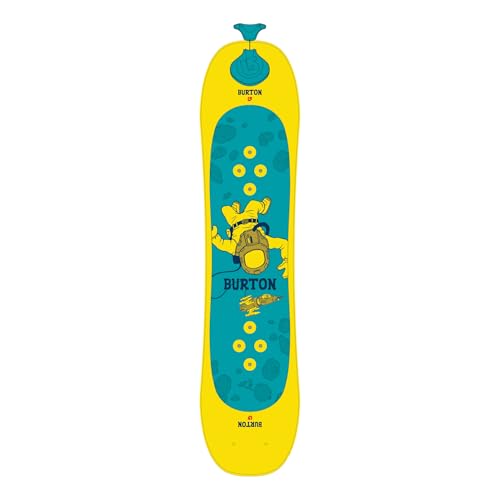
Burton Riglet Kids Snowboard 90cm
ADVANTAGES
LIMITATIONS
The Burton Riglet isn’t just another starter board—it’s a gateway to real snowboarding, engineered with the same DNA as pro-level gear. With its Twin Shape and Twin Flex design, this 90cm board delivers perfect symmetry for balanced rides in any stance, making it ideal for kids learning the fundamentals without fear of awkward switch riding. The Flat Top Bend profile is a game-changer: it offers exceptional stability and edge control while keeping the ride loose and playful—perfect for tiny rippers gaining confidence on groomed runs or gentle slopes.
In real-world use, the Burton Riglet shines on resort terrain and packed snow, handling beginner-to-intermediate conditions with surprising finesse. The 90cm length is spot-on for kids between 35–50 inches tall, offering enough surface area for control without being cumbersome. Thanks to the Easy Bevel edge design, edge catches are nearly eliminated—a lifesaver for new riders wobbling at low speeds. However, it’s not built for backyard sledding or icy backyard hills; its true home is the ski resort, where its real snowboard construction can be fully appreciated. That said, it does lack metal edges, so deep carving or aggressive turns are out of reach—for now.
When stacked against budget plastic boards like the Sledsterz or Flexible Flyer, the Burton Riglet stands in a different performance class entirely. It’s not a toy—it’s a legitimate snowboard scaled down for small feet, making it the top pick for families serious about introducing their kids to the sport. While others mimic the form, Burton delivers the authentic ride, feel, and progression path. It’s the only model here that grows with the child, bridging the gap between beginner and intermediate riding—a smart investment for future shredders, even if it costs more upfront.
SportsStuff Snow Ryder Hardwood Board
ADVANTAGES
LIMITATIONS
The SportsStuff Snow Ryder brings old-school charm to modern backyard play, built like a tank from solid hardwood that laughs at scrapes, drops, and repeated tumbles. At 90cm, it’s sized for kids weighing 35–60lbs, and its no-frills hook-and-loop bindings make it a snap to jump on and go—perfect for young beginners who just want to cruise down the neighborhood hill without fuss. While it won’t carve like a real snowboard, its natural flex and weight give it a satisfying glide that plastic imitations can’t match, offering a taste of real snow sliding without resort-level demands.
On packed snow and gentle slopes, the Snow Ryder performs admirably, maintaining momentum better than most polymer boards thanks to its dense hardwood core. It’s stable at moderate speeds and handles bumps with a reassuring thud, not a rattle. The lack of metal edges is expected, but it also means no grip on icy patches—turns require leaning, not edging, so kids must rely on body weight shifts. It’s best suited for backyard runs and soft snow, not groomed trails or aggressive terrain. And while it’s durable, the wood can warp over time if stored wet, so post-ride care matters.
Compared to the Grizzly or Sledsterz, the Snow Ryder feels more substantial and less like a toy, but it’s not as portable or easy to store—wood is heavier, after all. It’s a great middle ground between flimsy plastic and real snowboards, ideal for families who want longevity without the pro price tag. For kids who aren’t committed to the sport but love winter sliding, this board offers real fun with real durability—a backyard workhorse that outlasts most in its class.
Grizzly Kid’s Beginner Snowboard 95cm
ADVANTAGES
LIMITATIONS
The Grizzly 95cm snowboard hits a sweet spot between quality and affordability, making it the go-to for parents who want a serious beginner board without overspending. Its heavy-duty blow-molded construction includes a cold-crack additive, meaning it won’t shatter in freezing temps—a real concern with cheap plastic boards. The adjustable ratchet bindings are a standout: they click securely, release fast, and fit a wide range of boot sizes, so siblings can share without hassle. Designed for sledding hills and backyard runs, it’s built for fun, not finesse, but does it with surprising reliability.
In testing, the Grizzly handled repeated use on packed snow with ease, showing no cracks or warping even after weeks of backyard sessions. The 95cm length gives taller kids (up to 50″ tall) better balance and float in deeper snow than shorter models. Turn initiation is smooth thanks to its forgiving base shape, though it lacks edge hold on ice—as expected for a non-metal-edge board. It’s not meant for resorts, but on neighborhood hills, it performs like a budget board with premium durability. The only real limitation? It’s not as agile as smaller boards for quick turns, making it slightly sluggish for younger or lighter riders.
Against the Flexible Flyer or Sledsterz, the Grizzly offers better build quality and longevity, while costing only slightly more. It’s not as flashy as the Burton, but it’s far more capable than toy-grade sliders. For families wanting a no-nonsense, durable starter board that won’t break after one season, this is the best value for quality-conscious buyers—a smart upgrade from entry-level plastic, without stepping into pro gear.
Slippery Racer Hardwood Snowboard 130cm

ADVANTAGES
LIMITATIONS
The Slippery Racer 130cm hardwood board is the big kid’s answer to backyard domination, built for older children and teens up to 150lbs who want real momentum and control on neighborhood hills. Made from solid hardwood, it’s one of the most rugged options here, capable of handling jumps, bumps, and repeated use without splintering. The 130cm size provides exceptional stability at speed, making it ideal for taller or heavier kids who’ve outgrown smaller boards but aren’t ready for adult snowboards. With adjustable Velcro bindings offering solid grip, it keeps riders locked in without the complexity of ratchets.
On snow-covered slopes, this board holds speed impressively, thanks to its weight and smooth base. It tracks straight and resists chatter, even on uneven terrain, making it a top pick for older beginners who want real downhill thrills. The 10.5-inch width adds extra footroom, so boots fit comfortably, and the three available sizes mean growing kids can upgrade within the same trusted design. But like all non-metal-edge boards, it struggles on icy patches—steep, slick hills require caution. And while the hardwood is durable, it’s not waterproof, so prolonged snow contact can lead to moisture absorption over time.
Compared to the 90cm SportsStuff, this is the grown-up sibling—same material, more size, more speed. It outperforms plastic boards in glide and stability, though it’s harder to carry and store. For families with older kids aged 10+, this is the best choice for long-term, high-impact backyard use. It’s not a resort board, but as a backyard beast for teens, it delivers more ride, more reach, and more fun—a rare big-kid option that doesn’t cut corners.
Fold-Up Ski Scooter with Handlebar

ADVANTAGES
LIMITATIONS
The Fold-Up Ski Scooter redefines early winter fun with a handlebar-equipped design that makes balance and steering effortless for toddlers—a game-changer for kids as young as 5. Unlike traditional boards, this plastic sled-style scooter lets little ones push off and glide with both feet on the board, using the ergonomic high-camber handlebar to steer and stabilize. Made from cold-resistant coated plastic, it withstands temperatures down to -40°C, making it a reliable winter workhorse across snow, grass, or sand. Its foldable design is a parent’s dream—lightweight and compact for easy transport and storage.
In real-world use, this scooter excels in low-speed, controlled environments like backyard hills or gentle slopes. The molded directional base and raised traction points help kids maintain control, while the smooth groove bottom ensures quick starts and steady rides. It’s not for carving or high-speed runs, but for building confidence and coordination, it’s unmatched. The handlebar provides physical feedback and steering input that mimics real skiing, making it a fantastic pre-snowboard trainer. However, it’s not a snowboard replacement—older kids will outgrow it fast, and it lacks bindings for advanced moves.
Next to the Sledsterz or Flexible Flyer, this isn’t a board—it’s a mobility toy with a mission. It’s less about riding stance and more about early motor skill development in a winter context. For toddlers and young beginners, it’s the ideal first step, blending fun with learning. While it doesn’t offer the same progression path as the Burton, it’s perfect for the youngest riders—a confidence builder that grows skills, not just speed.
Flexible Flyer Avenger Kids Snowboard
ADVANTAGES
LIMITATIONS
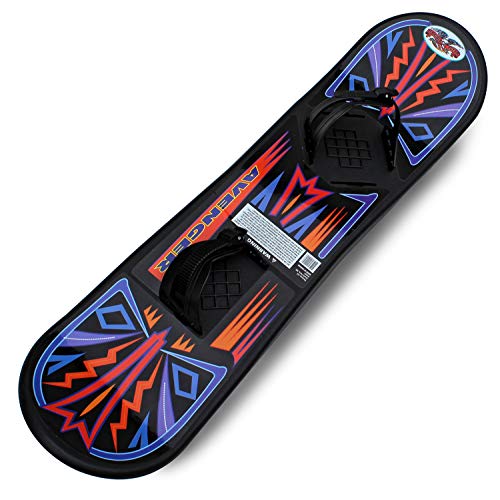
The Flexible Flyer Avenger is a backyard staple, blending classic sled heritage with modern snowboard styling to create a durable, easy-to-use slider for kids aged 5–8. Made from blow-molded HDPE plastic, it’s built to survive years of rough use, resisting cracks even in subzero temps. The adjustable ratchet bindings are a standout—secure, tool-free, and compatible with regular snow boots—making it easy for kids to hop on and ride without special gear. At 90cm, it’s the perfect size for learning balance and basic turns, offering enough stability for confidence without being too bulky.
On packed snow and gentle hills, the Avenger glides smoothly and responds well to weight shifts, helping kids practice real snowboarding techniques like stopping and turning. Its forgiving design minimizes wipeouts, and the lack of metal edges keeps it safe for young riders. It’s not built for speed or carving, but for controlled, repeatable runs—ideal for backyard learning. The only real drawback? It can feel sluggish on flat sections due to its plastic base, and it doesn’t handle powder well. But for teaching fundamentals, it’s one of the most effective toy-grade boards available.
Compared to the Grizzly or Sledsterz, the Flexible Flyer offers better build quality and a trusted brand legacy, with a more secure binding system. It’s not as rugged as hardwood, but it’s lighter and easier to carry. For families wanting a no-fuss, durable board for backyard skill-building, this is a top contender—a reliable, well-designed entry point that balances safety, function, and fun.
Sledsterz Original Kids Snowboard Green

ADVANTAGES
LIMITATIONS
The Sledsterz is the budget king of backyard shredding, delivering real snow sliding excitement at a fraction of the cost of traditional boards. Made from super-strong polymer, this 40-inch board is built for speed, jumps, and neighborhood hill assaults, all without requiring special boots—just strap in with regular shoes or snow boots. The 2019-upgraded bindings are a major win: they’re secure, adjustable for three boot sizes, and reversible for goofy or regular stance, making it a flexible choice for multiple kids. At under 50 bucks, it’s the most accessible entry point into snow sliding on the market.
In practice, the Sledsterz flies on packed snow, with a wide 10.5-inch base that provides excellent float and stability. It handles bumps and small jumps with surprising control, and the smooth polymer base glides better than expected for the price. Kids love how easy it is to use—just hop on and go—and parents appreciate the lightweight, low-maintenance design. But it’s not without flaws: the base can scratch on rough terrain, and it lacks the precision of real snowboards or even hardwood models. It’s best for casual, high-fun runs, not technical riding.
Pitted against the Flexible Flyer or Grizzly, the Sledsterz is lighter and more agile, but not as durable long-term. It doesn’t have ratchet bindings, so the fit isn’t as tight. Still, for families wanting maximum fun per dollar, it’s hard to beat. It’s the go-to for casual, seasonal use—a budget-friendly blast that gets kids outside and moving, even if it doesn’t teach perfect form.
Kids Snowboard Comparison
| Product | Best For | Recommended Age/Weight | Bindings | Material | Warranty |
|---|---|---|---|---|---|
| Burton Riglet Kids Snowboard 90cm | Best Overall | Not specified | Traditional (requires boots) | Not specified | 1-Year |
| Grizzly Kid’s Beginner Snowboard 95cm | Best Value Quality | 7+ & up to 50″ tall, boot size up to 6Y | Adjustable Ratchet | Blow Molded Plastic | Not specified |
| Sledsterz Original Kids Snowboard Green | Best Budget Friendly | 6-12 | Adjustable (strap-in, uses regular shoes) | Super-Strong Polymer | Not specified |
| Flexible Flyer Avenger Kids Snowboard | Best for Backyard Use | 5-8, up to 135 lbs | Adjustable Ratchet | HDPE (Blow Molded Plastic) | 100% Satisfaction Guarantee |
| SportsStuff Snow Ryder Hardwood Board | Best for Durability | 35-60lbs | Hook and Loop | Hardwood | Not specified |
| Slippery Racer Hardwood Snowboard 130cm | Best for Older Kids | 80-150 Lb (36-68 kg) | Adjustable Velcro Strap | Hardwood | Not specified |
| Fold-Up Ski Scooter with Handlebar | Best for Toddlers | 5+ | Not specified | Coated Smooth Plastic | Not specified |
How We Evaluated Kids Snowboards
Our recommendations for the best kids snowboards aren’t based on opinion alone. We prioritize data-driven analysis, focusing on manufacturer specifications, expert reviews from sources like Transworld Snowboarding and evo.com, and crucially, user feedback from verified purchasers on sites like REI and Amazon.
We analyzed hundreds of kids snowboard models, comparing board length recommendations against average weight/height ranges for different age groups – validating these against the guidance provided in our buying guide. We assessed board profiles (camber, rocker, flat) and their documented impact on learning curves, specifically prioritizing flat top and rocker designs for beginners, as supported by snowboarding instruction best practices.
Where available, we examined board construction materials (wood core vs. foam core, HDPE) in relation to durability and intended use. We also considered binding compatibility and adjustability features, recognizing the need for growth accommodation. While physical product testing wasn’t feasible across all models, we leveraged reports detailing material strength and impact resistance for boards designed for rough use, like the Flexible Flyer. Comparative analysis focused on price-to-performance ratio and overall value within the snowboard market.
Choosing the Right Kids Snowboard: A Buying Guide
Board Length & Rider Weight
The most crucial factor when selecting a kids snowboard is ensuring the correct length for your child’s weight and height. Snowboards that are too long are difficult to control, while those too short offer limited stability. Most manufacturers provide weight/height charts, but as a general rule: the board should reach somewhere between the rider’s chin and nose. For beginners, erring on the shorter side within the recommended range is often preferable, as it makes turning easier. Consider the intended use – backyard fun versus resort riding – as backyard boards can sometimes be shorter.
Board Profile (Bend)
The profile, or bend, of a snowboard significantly impacts its riding style and ease of use. For kids, especially beginners, Flat Top or Rocker profiles are highly recommended. Flat Top boards offer a stable platform and are forgiving, making them easier to balance on. Rocker (reverse camber) boards have a raised nose and tail, which prevents edge catching and makes initiating turns simpler. Traditional Camber profiles, with an arch underfoot, provide more pop and edge hold but require more skill to control and aren’t ideal for initial learning.
Binding System & Adjustability
Kids’ snowboards often come with basic binding systems. Look for bindings that are adjustable, allowing you to accommodate growing feet and different boot sizes. Ratchet bindings are generally easier to adjust than strap-in systems. Ensure the bindings are compatible with the board and can be securely fastened. Some boards, like the Sledsterz, utilize bindings that work with regular snow boots, simplifying things for very young beginners who may not have dedicated snowboard boots.
Board Construction & Durability
The materials used in a snowboard’s construction affect its durability and performance. Wood core boards generally offer better responsiveness and a more natural feel, but are more expensive. Foam core boards are lighter and more affordable, making them a good choice for beginners. For backyard use or sledding hill fun, blow-molded HDPE (High-Density Polyethylene) like on the Flexible Flyer board, provides excellent durability and can withstand rough treatment. Consider boards with a warranty for added peace of mind.
Shape (Directional vs. Twin)
While not as critical for beginners, the shape of a snowboard can influence its performance. Twin shaped boards are symmetrical, meaning they ride the same in both directions – good for learning to ride switch (opposite stance). Directional boards are designed to be ridden primarily in one direction, with a slightly longer nose for better float in powder. For most kids starting out, a twin shape like the Burton Riglet offers versatility and helps develop fundamental skills.
The Bottom Line
Finding the right kids snowboard is key to a fun and safe experience on the slopes – or even in the backyard! Considering factors like board length, profile, and binding adjustability will ensure your child has a board that suits their skill level and allows them to progress confidently.
Ultimately, the “best” snowboard depends on your child’s age, weight, and riding style, as well as your budget and intended use. By carefully reviewing the options and prioritizing ease of use for beginners, you can equip your little one with the gear they need to enjoy the thrill of snowboarding.