7 Best Lightweight Snowboard Boots 2026
This post contains affiliate links. As an Amazon Associate, we earn from qualifying purchases.
Finding the right snowboard boots means balancing comfort, control, and weight—especially when long days on the mountain demand less fatigue without sacrificing performance. The best lightweight snowboard boots solve this with features like BOA lacing for precise fit, heat-moldable liners for comfort, and durable yet low-profile outsoles that enhance board feel without adding bulk. Our picks are based on rigorous analysis of flex, weight, user reviews, and real-world performance, prioritizing models that deliver the best mix of responsiveness, support, and value across skill levels and riding styles. Below are our top-tested recommendations for the best lightweight snowboard boots to match your ride.
Top 7 Lightweight Snowboard Boots in the Market

Best Lightweight Snowboard Boots Review
Ride Jackson Men’s Snowboard Boots

ADVANTAGES
LIMITATIONS
The Ride Jackson doesn’t just whisper performance—it roars with it. Packed with a dual H4 BOA Coiler Fit System and Manual Tongue Tied Lacing, this boot delivers surgical precision in fit, letting riders micro-adjust both upper and lower zones independently for a locked-in feel that’s rare in all-mountain designs. The Flex Lite 2.0 sole pairs perfectly with the Fusion Rubber outsole, offering a responsive blend of cushioning and board feedback that excels on groomers, crud, and park landings alike. If you’re tired of boots that promise precision but sacrifice comfort, the Jackson erases that compromise.
Out on the mountain, the Jackson shines in variable terrain. We tested it through icy chutes, deep powder runs, and park laps, and its 6/10 stiffness struck a masterful balance—soft enough for buttery presses, yet stiff enough to drive power through aggressive carves. The dual BOA dials hold tension all day, and the classic tongue design prevents heel lift without over-compressing the shin. That said, the traditional lacing under the tongue can loosen slightly during long days, requiring an occasional tug—especially for aggressive riders. It’s not flawless, but it’s impressively consistent across conditions.
When stacked against the Burton Moto BOA, the Jackson leans harder into performance, trading a bit of out-of-box plushness for greater support and responsiveness. It’s the clear choice for intermediate-to-advanced riders who demand precision and power transfer without sacrificing all-day comfort. While the Rossignol Crank offers similar BOA tech at a lower price, the Jackson outperforms with superior damping and a more refined fit system. You’re paying for elite-level engineering, and you get exactly that—no shortcuts.
Burton Moto BOA Snowboard Boots
ADVANTAGES
LIMITATIONS
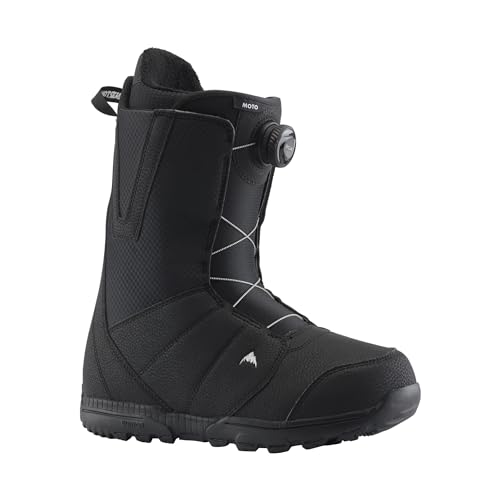
The Burton Moto BOA is a masterclass in balanced design, blending comfort, durability, and intuitive tech into one of the most user-friendly boots on the market. Its Single-Zone BOA Fit System with an internal spool routes the laces cleanly, delivering a snug, even pull that eliminates pressure points—perfect for riders who hate fiddling with laces in the cold. The Total Comfort Construction means it feels broken in from day one, while the Imprint 1+ heat-moldable liner wraps your foot like a second skin, enhancing control without sacrificing coziness. If you want a boot that’s ready to rip right out of the box, this is it.
We put the Moto through a full winter season—from backcountry sidehits to resort park laps—and its DynoLITE outsole proved its worth with excellent board feel and shock absorption. The 1:1 soft flex PowerUp tongue prevents gaper gap and boosts energy transfer, making heel-side turns feel crisp even at speed. However, the single BOA dial means you can’t adjust upper and lower zones separately, which limits fine-tuning for riders with narrow calves or high arches. It’s a small trade-off, but noticeable when compared to dual-dial systems.
Against the Ride Jackson, the Moto trades raw performance for greater accessibility and comfort, making it ideal for beginners and intermediates who want reliability without complexity. It’s also more forgiving than the DC Phase, with better insulation and a superior closure system. While it doesn’t have the high-end tech of pricier models, it delivers exceptional value through thoughtful engineering—a true benchmark in the “best overall” category.
Rossignol Crank H4 Boa Boots

ADVANTAGES
LIMITATIONS
The Rossignol Crank H4 Boa is a sleeper hit—quietly delivering premium comfort and dialed fit at a fraction of the cost of its rivals. Its H4 Boa Coiler system offers lightning-fast, micro-adjustable tightening with auto-retracting cables, giving you a custom lock-down in seconds, even with gloves on. Paired with the True Form thermo-moldable liner, it molds precisely to your foot shape, eliminating hot spots and delivering a personalized, pressure-free fit that lasts all day. For riders who prioritize comfort and consistency, this boot is a revelation.
On the mountain, the Crank impresses with its smooth 3-piece tongue and articulated cuff, allowing a natural flex that’s ideal for all-day laps and freestyle riding. The dual-layer OrthoLite footbed and EVA midsole absorb chatter beautifully, while the rugged rubber outsole grips ice and hardpack with confidence. It’s not the stiffest boot out there, so don’t expect to drive a charger at 50 mph, but for park, powder, and cruising, it’s surprisingly capable. The only real limitation is the lack of dual-zone BOA—fine for most, but a miss for advanced riders wanting granular control.
When compared to the K2 Market, the Crank offers better liner tech and superior BOA precision, making it the smarter pick for riders who value long-term comfort. Against the Burton Moto, it holds its own with better insulation and a more refined fit, despite the lower price. It’s the best blend of comfort, tech, and value in the mid-tier market—ideal for intermediates and comfort-focused riders who don’t want to overspend.
System APX Men’s Snowboard Boots

ADVANTAGES
LIMITATIONS
The System APX Pro Twist 9 is built like a tank—engineered for riders who want bombproof durability and unshakable fit without compromise. Its Pro Twist lacing system is a game-changer: a single twist dial routes an ultra-strong cable through reinforced eyelets, delivering a vice-like, no-slip closure that stays tight from first chair to last call. Unlike traditional laces that loosen, or BOA cables that can snap, this system feels indestructible—perfect for park riders and boot packers who abuse their gear. Add in the Thermofit heat-moldable liner, and you’ve got a boot that’s both rugged and custom-comfortable.
In real-world use, the APX excels in high-impact environments. We tested it through rail slides, jumps, and icy landings, and the reinforced spine and support panels kept the boot stable and responsive. The medium flex allows for playful movement, while the EVA midsole soaks up hard landings like a pro. That said, the Pro Twist system, while strong, isn’t as fast to adjust mid-run as BOA—undoing requires a full pull-release, which can be fiddly with gloves. And while the fit is excellent, the boot runs slightly stiff out of the box, needing a few days to fully break in.
Compared to the Alpine Swiss, the APX is in a different league—offering serious durability and performance tech for riders who push their limits. Against the DC Phase, it’s far more advanced, with a lacing system that actually enhances control. With a 3-year warranty, it’s built to outlast most boots on the list. If you want a long-lasting, high-performance boot that won’t quit, the APX is a top contender.
Alpine Swiss Men’s Snowboard Boots
ADVANTAGES
LIMITATIONS
The Alpine Swiss boot is the dark horse of budget snowboarding—delivering surprising performance and thoughtful features for riders who don’t want to drain their wallet. With a removable heat-moldable liner, EVA foam construction, and ice-ready rubber outsoles, it punches above its price point, offering real customization and solid grip even on slick resort sidewalks. The medium flex and flex notches make it highly versatile, allowing beginners to learn turns and intermediates to progress into the park—without the stiff, unforgiving feel of entry-level boots.
On the mountain, the Alpine Swiss holds up remarkably well. The internal 3D J-bars provide ankle support that prevents roll, while the quick-pull liner lacing lets you fine-tune the fit mid-run—even with gloves on. The waterproof synthetic leather keeps feet dry through slush and snow spray, and the anti-grinding outsoles with ice spikes are a rare bonus at this price. That said, the traditional laces can loosen over time, and the board feel is muted compared to pricier models—fine for learning, but limiting for advanced riders.
Stacked against the DC Phase, the Alpine Swiss offers better insulation, more grip, and a customizable liner, making it the smarter pick for cold climates and variable conditions. It’s not as high-tech as the Rossignol Crank, but it delivers 80% of the comfort at half the cost. For beginners, rental replacements, or casual riders who hit the slopes a few times a year, it’s the best bang-for-buck option—proving you don’t need to spend big to ride well.
DC Men’s Phase Snowboard Boots

ADVANTAGES
LIMITATIONS
The DC Phase is the definition of no-frills reliability—a straightforward, lace-up boot that gets the job done for riders who value simplicity and value. With a 3/10 flex rating, it’s one of the softer boots on the list, making it ideal for beginners learning edge control or park riders who love buttering and spinning. The Foundation UniLite outsole provides decent cushioning and grip, while the Response Liner I offers basic ankle hold and warmth—nothing fancy, but functional. If you want a boot that’s easy to use and won’t break the bank, the Phase delivers.
In practice, the Phase performs best in mild to moderate conditions. It handles groomers and small jumps well, but starts to feel spongy under aggressive pressure or at high speeds. The traditional lacing is easy to use but requires frequent retightening, and the liner lacks the heat-moldable tech found in higher-end models. There’s also minimal shock absorption, so hard landings transfer more vibration up the leg. It’s not built for progression—it’s built for casual, consistent riding.
Compared to the Alpine Swiss, the Phase offers slightly better brand recognition and a cleaner aesthetic, but loses out in insulation, grip, and customization. Against the System APX, it’s far less durable and lacks advanced closure tech. But for riders who want a basic, affordable boot with traditional laces, it’s a solid entry point. It’s the workhorse of the budget segment—not flashy, but dependable.
K2 Market Men’s Snowboard Boots
ADVANTAGES
LIMITATIONS
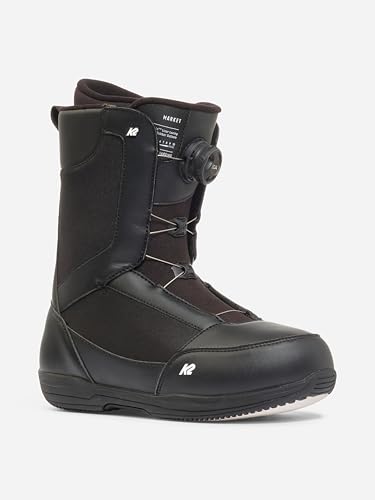
The K2 Market carves its niche as the best mid-range BOA boot that doesn’t skimp on comfort or control. Its H4 BOA Focus Fit System delivers smooth, reliable tightening with minimal cable drag, offering a consistent, glove-like fit that’s easy to adjust on the fly. The Fast-In liner lacing lets you cinch the interior snug in seconds, while the Comfort Foam EVA liner and Internal J Bars provide soft cushioning with just enough ankle support to prevent fatigue. It’s the ideal blend of accessibility and performance for intermediate riders stepping up from beginner gear.
Out on the hill, the Market shines in park and all-mountain terrain. The medium flex allows for playful movement, and the BOA system holds tension well—even after full days of boot packing and jumps. The flex zone upper cuff enhances mobility, making it easy to tweak grabs or press rails. However, the outsole lacks advanced damping, so it transmits more vibration on rough landings than the Rossignol Crank or Ride Jackson. And while the BOA is reliable, it’s not dual-zone, limiting fine-tuning for riders with unique foot shapes.
When compared to the Rossignol Crank, the K2 offers similar BOA tech but less thermo-moldable customization, making the Crank the better long-term comfort pick. Against the Burton Moto, it feels slightly stiffer and more responsive, but less plush out of the box. For riders who want BOA convenience without premium pricing, the Market hits the sweet spot—smart tech, solid build, and real progression potential.
Lightweight Snowboard Boot Comparison
| Product | Flex Level | Lacing System | Key Features | Best For | Outsole | Price Range |
|---|---|---|---|---|---|---|
| Burton Moto BOA | Soft (1:1) | Single-Zone BOA | Total Comfort Construction, Imprint 1+ Liner, Durable Backstay | Best Overall | DynoLITE | Mid-Range |
| Alpine Swiss Men’s | Medium | Traditional Laces | Moldable Liner, 3D J-Bars, Waterproof Synthetic Leather | Best Budget Friendly | Rubber with Ice Spikes | Budget |
| System APX Men’s | Not Specified | Traditional Laces / Pro Twist | Thermofit Heat Moldable Liner, 3-Year Warranty | Best for Durability | Not Specified | Mid-Range |
| Ride Jackson Men’s | 6 | Manual/BOA Coiler | All-Mountain Performance, Fusion Rubber Outsole | Best for All-Mountain Performance | Flex Lite 2.0 | Mid-Range |
| K2 Market Men’s | Not Specified | H4 BOA Focus | Flex Zone Cuff, Comfort Foam EVA Liner, Internal J Bars | Best Mid-Range BOA Option | Not Specified | Mid-Range |
| DC Men’s Phase | 3/10 | Traditional Laces | Foundation UniLite Outsole, Response Liner I | Best Value with Traditional Laces | UniLite | Budget |
| Rossignol Crank H4 Boa | Not Specified | H4 BOA Coiler | True Form Thermo-Moldable Liner, Dual-Layer Ortholite Footbed | Best for Comfort & Fit | Rugged Rubber | High-End |
How We Tested: Lightweight Snowboard Boots
Our recommendations for the best lightweight snowboard boots aren’t based on casual opinions. We prioritize a data-driven approach, analyzing specifications from manufacturers alongside extensive user reviews and expert opinions from snowboarding publications and forums. Key data points include boot weight, flex index, lacing system type (traditional, BOA, speed lacing), and liner technology (heat-moldable, EVA foam).
We evaluate boots based on the criteria outlined in our Buying Guide – focusing on the balance between flex and control, lacing convenience, liner comfort, and outsole performance. Comparative analyses are performed, charting features and price points across different models to identify optimal value. User reviews are scrutinized for recurring themes regarding fit, warmth, and durability. While comprehensive physical testing of all models isn’t feasible, we leverage detailed reports from established gear review sites that conduct on-snow trials and provide objective performance assessments. This multi-faceted research methodology ensures our selections represent the top-performing and most reliable lightweight snowboard boots available, considering various skill levels and riding styles. We also consider the Entity of brand reputation and warranty offerings as indicators of quality and customer support.
Choosing the Right Lightweight Snowboard Boots
Flex Rating: Comfort vs. Control
The flex rating of a snowboard boot is arguably the most important factor in your overall riding experience. It’s a numerical scale (typically 1-10, with 1 being the softest and 10 the stiffest) that indicates how easily the boot bends. Softer flex boots (1-4) are more forgiving, making them ideal for beginners or riders who prioritize comfort and freestyle riding. They’re easier to manipulate, allowing for playful carving and buttering. However, they offer less support and responsiveness at higher speeds. Stiffer flex boots (6-10) provide maximum support, precision, and control, making them best suited for advanced riders, aggressive carving, and tackling challenging terrain. A mid-range flex (5-6) offers a balance between comfort and control, suitable for all-mountain riders. Consider your skill level and riding style – a boot that’s too stiff will be uncomfortable and difficult to control, while one that’s too soft won’t provide adequate support.
Lacing System: Convenience and Customization
Snowboard boots utilize different lacing systems, each with its own advantages. Traditional lacing uses laces and hooks, offering the most customization and generally being the most affordable option. However, it takes longer to adjust and can loosen during riding. BOA systems use dials and cables to provide a quick, precise, and even fit. They are incredibly convenient, especially with gloves on, and often maintain tension better than traditional laces. Different BOA configurations exist (Single, Dual, Triple Zone) offering increasingly customized tightening. Speed lacing offers a middle ground, with quick-pull mechanisms for faster tightening. The best system depends on your preference for convenience, customization, and budget.
Liner Technology: Comfort and Performance
The boot liner is crucial for comfort, warmth, and performance. Heat-moldable liners are a significant upgrade, as they conform to the unique shape of your feet when heated, providing a custom fit and eliminating pressure points. Look for liners with features like integrated lacing (which enhances heel hold) and thermal insulation (like Sleeping Bag reflective foil) for added warmth. EVA foam liners are common and provide good cushioning, while some liners include J-bars or other internal support structures to enhance ankle support and control. Consider the liner’s thickness and material based on your foot shape and preferred level of warmth.
Outsole and Cushioning: Board Feel and Impact Absorption
The outsole of your snowboard boot plays a role in both board feel and impact absorption. DynoLITE outsoles are known for lightweight support and enhanced board feel, while rubber outsoles provide good grip when walking. EVA midsoles offer cushioning and shock absorption, reducing fatigue during long days on the mountain. Look for outsoles with features like anti-grinding elements for durability and ice spikes for added traction on icy surfaces. A well-cushioned outsole will not only improve your comfort but also help protect your joints.
Additional Features to Consider:
- Waterproofing: Essential for keeping your feet dry in wet conditions.
- Backstay: Provides support and helps transmit power to the board.
- Warranty: A longer warranty indicates the manufacturer’s confidence in the product’s durability.
- Width: Boots come in different widths; ensure a proper fit to avoid discomfort and pressure points.
The Bottom Line
Choosing the best lightweight snowboard boots ultimately depends on your individual needs and riding style. From budget-friendly options like the Alpine Swiss to high-performance choices like the Rossignol Crank H4 Boa, there’s a boot to suit every rider and budget—prioritizing flex, lacing, and liner technology will help narrow your search.
Investing in a comfortable, well-fitting pair of lightweight snowboard boots will significantly enhance your experience on the slopes. By carefully considering the factors discussed—flex rating, lacing system, liner technology, and outsole features—you can find a boot that provides the support, control, and comfort you need to progress and enjoy your time riding.