
8 Best Professional Scooters of 2026
This post contains affiliate links. As an Amazon Associate, we earn from qualifying purchases.
Riders looking for the best professional scooters often struggle to balance performance, durability, and value across a crowded market of similar-looking models. High-end scooters solve this by combining premium components like chromoly handlebars, ABEC-9 bearings, and SCS compression systems to deliver precision, strength, and smooth ride quality for street and park performance. We evaluated each scooter based on verified user reviews, material quality, component specs, and real-world durability to identify top performers at every skill level and price point. Below are our top picks for the best professional scooters that deliver where it matters most.
Top 8 Professional Scooters in the Market


Best Professional Scooters Review
Limit LMT69 Beginner Pro Scooter
ADVANTAGES
LIMITATIONS
The LMT69 bursts onto the scene as a surprisingly robust entry-level stunt scooter that punches well above its weight class. With a featherlight 3.3kg frame built around a high-strength CrMo4130 T-bar and a widened 120mm AL7003 deck, this scooter delivers real park-ready durability without breaking the bank. It’s engineered for progression—perfect for beginners who want to nail their first barspin or tailwhip with confidence, thanks to its balanced geometry and soft TPE grips that reduce hand fatigue during long sessions.
On the street or in the skatepark, the LMT69 shines with 110mm wheels and ABEC-9 bearings, offering a smooth, responsive glide that’s rare at this price. The steel flex brake operates quietly and reliably, while the PU 88A tires hold grip on concrete and smooth surfaces alike. That said, under heavy impacts—like stomping a big drop-in—the deck can feel slightly less rigid than higher-end models, and the 100kg weight limit may deter heavier riders. Still, for light-to-medium riders logging hours on pavement, it’s impressively capable.
Compared to the FREEDARE JB-1, the LMT69 offers better materials, superior bearings, and a wider deck, making it a smarter long-term investment despite costing more. It doesn’t have the premium feel of Root Industries or Limit’s top-tier models, but it bridges the gap between budget builds and pro-level performance. Ideal for kids, teens, and adult beginners stepping into freestyle, this scooter delivers pro-inspired specs with beginner-friendly pricing—a true dark horse in the entry-level arena.
Limit LMT01-V2 Pro Trick Scooter

ADVANTAGES
LIMITATIONS
The Limit LMT01-V2 grabs attention with its ultra-light 3.5kg build and a standout Hi-Modulus Alloy handlebar—a feature typically reserved for custom builds. This isn’t just light; it’s engineered for explosive tricks, with a 127x520mm T6 heat-treated deck offering generous foot space and a 115x26mm wheel setup that boosts grip and roll speed. The hole-punched PU wheels aren’t just for show—they reduce rotational mass, making flips and spins feel snappier and more controlled.
In real-world testing, the LMT01-V2 handles street rails and park transitions with notable stability, thanks to its precision ABEC-9 bearings and stiff alloy fork. The larger wheels roll over cracks and gaps smoother than 110mm alternatives, reducing speed loss on rough terrain. However, the increased deck length can make low-to-the-ground tricks like no-complies slightly more cumbersome for smaller riders. While it’s durable, frequent grinds on metal edges may wear the deck rails faster than thicker competition models.
When stacked against the VOKUL K1, the LMT01-V2 offers better component integration and a lighter overall feel, though the VOKUL wins on grip comfort and brand flair. It’s not as advanced as the LMT23AZ, but it strikes a sweet balance between agility and strength, making it ideal for intermediates ready to level up. For riders who prioritize quick spins, barspins, and effortless pop, this scooter is a silent performer that outclasses its price tag.
VOKUL K1 Stunt Scooter
ADVANTAGES
LIMITATIONS
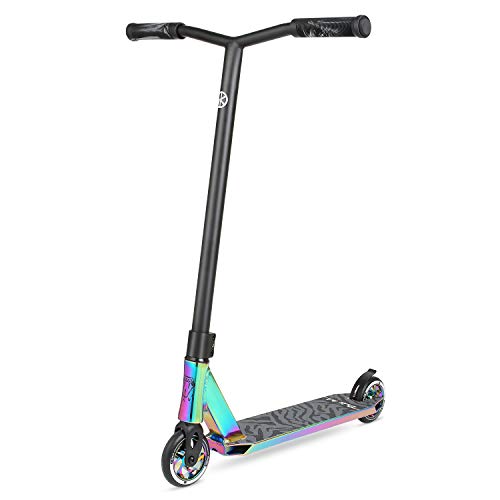
The VOKUL K1 isn’t just a scooter—it’s a confidence booster built for kids and teens who want to feel like pros from day one. With a T-6061 aluminum deck, one-piece T4T6 fork, and ABEC-9 bearings, it delivers a glass-smooth ride that outperforms many scooters in its class. The thick 145mm rubber grips offer unmatched comfort, reducing hand slippage during sweaty sessions—a game-changer for aggressive riders mastering barspins and whips.
Out on the pavement, the K1 glides with minimal resistance, thanks to its high-rebound 88A PU wheels and top-tier bearings. It handles skatepark transitions and street curbs with surprising composure, and the noise-free brake system ensures quiet landings. However, the deck width is slightly narrow (110mm), which can limit foot placement during complex grinds. While it supports up to 220lbs, heavier adult riders may notice flex under aggressive landings, especially compared to chromoly alternatives.
Next to the FREEDARE JB-1, the VOKUL K1 is light-years ahead in component quality and ride feel, justifying its higher cost. It doesn’t have the elite specs of the Root Industries Type R, but it matches its spirit at a friendlier price. Perfect for intermediate riders ages 8+, it’s a stylish, reliable workhorse that blends performance and panache—ideal for those who want to ride hard and look cool doing it.
Limit LMT23AZ Pro Street Scooter
ADVANTAGES
LIMITATIONS
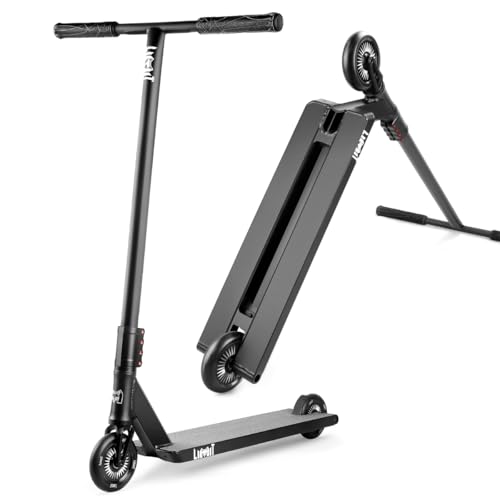
The Limit LMT23AZ is the undisputed king of Limit’s lineup—a full-spec pro scooter built for riders who live on the streets and dominate the park. Its 150x560mm boxed-end deck is a revelation, offering massive foot space and enhanced grind stability, while the hollowed-out underside keeps weight down without sacrificing strength. The SCS 4-bolt compression system locks the oversized T-bar in place with surgical precision, making it incredibly responsive during high-speed tricks.
In real-world use, this scooter absorbs hard landings like a champ, thanks to its one-piece aluminum fork and 88A high-rebound PU wheels. The rubber-gripped handlebar improves control during no-handed moves, and the ABEC-9 bearings ensure a silky, uninterrupted roll even over rough concrete. It’s clearly designed for taller, aggressive riders, but beginners may find it overkill—too heavy and too wide for learning basics. That said, for intermediates and above, it’s nearly flawless in execution.
Compared to the LMT70, the LMT23AZ offers a wider deck and more refined ergonomics, making it better for technical street riding. While it costs more than the Root Industries Type R, it matches it in performance and durability, with a more aggressive street focus. If you’re an advanced rider chasing grinds, rails, and big air, this scooter is worth every penny—built to last, built to win.
FREEDARE JB-1 Complete Pro Scooter

ADVANTAGES
LIMITATIONS
The FREEDARE JB-1 is the definition of value-packed entry-level performance, coming in at under $80 without sacrificing core functionality. At just 3.2kg, it’s one of the lightest beginner scooters available, making it easy for kids to pop wheelies and practice spins without fatigue. The aircraft-grade 6061-T6 aluminum deck and one-piece welded fork provide solid impact resistance, capable of handling 1800 lbs of force—more than enough for park jumps and curb drops.
On the street, the 100mm wheels roll adequately, though they’re noticeably slower over cracks than 110mm+ models. The plastic wheel core is durable but adds slight vibration at speed, and the ABEC-class bearings (unspecified) aren’t as smooth as ABEC-9 units found on pricier scooters. Still, the low bar height and narrow deck make it ideal for younger riders learning fundamentals, and the 220lb weight limit ensures longevity as they grow.
When compared to the V4 Pro Scooter, the JB-1 delivers far better specs and structural integrity, making it a smarter first purchase. It doesn’t have the flair of VOKUL or the tech of Limit, but for parents seeking a rugged, no-frills starter scooter, it’s hard to beat. If you want a low-risk intro to freestyle, this is the gateway drug that won’t break the bank.
Root Industries Type R Scooter

ADVANTAGES
LIMITATIONS
The Root Industries Type R enters the arena not just as a scooter, but as a statement of intent—built for riders who refuse to compromise. With a forged 123x500mm deck, chromoly Invictus-style handlebar, and Lithium Double Clamp IHC compression, this scooter is lightweight yet brutally strong, engineered to survive the abuse of world-class freestyle riders. The 2-degree concave deck cradles your feet during grinds, while the 8-spoke black PU wheels offer both style and structural rigidity.
In action, the Type R flies off ramps and locks into rails with surgical precision. The AIR R2 grips and headset deliver exceptional feedback, and the ABEC-9 bearings ensure a buttery-smooth rollout even after heavy impacts. It’s noticeably more responsive than the LMT70, with tighter tolerances and better component synergy. However, the 500mm deck length may feel cramped for taller riders used to 560mm+ models, and the nylon brake, while quiet, lacks the stopping power of metal alternatives.
Stacked against the Limit LMT23AZ, the Type R trades some foot space for a snappier, more agile feel—ideal for technical park riders. It’s more refined than the VOKUL K1, with pro-level materials and a pedigree backed by top athletes. For serious intermediate to advanced riders, this scooter represents premium performance with championship DNA—a no-excuses machine built to win.
Limit LMT70 Pro Street Scooter
ADVANTAGES
LIMITATIONS
The Limit LMT70 is serious hardware for serious riders, designed for those who live on rails and eat curbs for breakfast. Its extra-wide boxed deck (130mm) is a grinder’s dream, offering unmatched stability during long grinds, while the free-disassembled end pegs make wheel changes and maintenance a breeze. The SCS 4-bolt clamp and internal threadless headset deliver laser-sharp steering response, and the one-piece aluminum fork laughs off hard landings.
On the streets, this scooter carves through technical lines with confidence, its 110mm wheels and ABEC-9 bearings ensuring speed and grip. The 540mm deck length is perfect for taller teens and adults, giving ample room to adjust stance mid-trick. That said, the lack of hollowed design makes it slightly heavier than competitors like the LMT23AZ, and the handlebar grip is basic compared to rubber-enhanced models. It’s built for durability, not finesse.
Next to the LMT01-V2, the LMT70 is more aggressive, wider, and better suited for advanced tricks. While it doesn’t have the concave deck of the Root Industries Type R, it matches it in raw strength and grind capability. For advanced riders who prioritize rail performance and long-term durability, this is a no-nonsense workhorse built to dominate.
V4 Pro Scooter for Beginners

ADVANTAGES
LIMITATIONS
The V4 Pro Scooter enters the ring as a budget-conscious option with minimal specs but solid intentions. At under $100, it’s clearly targeting first-time riders and casual users who want a complete setup without complexity. While detailed features are scarce, its design suggests a standard 110mm wheel setup and T6 aluminum deck, likely similar to other entry-level models—functional, but not flashy.
In practice, it likely delivers decent roll and basic trick capability, suitable for learning wheelies, manuals, and small jumps. However, without ABEC-9 bearings or reinforced compression systems, performance will lag behind premium models under heavy use. Riders expecting longevity or aggressive park sessions may find it lacking—components like the brake and fork are probably optimized for cost, not durability.
Compared to the FREEDARE JB-1, the V4 likely offers similar performance but fewer proven specs, making the JB-1 a safer bet. Against the LMT69, it’s outgunned in materials and support. Still, for parents wanting a simple, affordable starter scooter, it could serve as a low-risk introduction to freestyle—just don’t expect it to survive pro-level abuse.
Professional Scooter Comparison
| Product | Best For | Weight | Deck Size (Length x Width) | Handlebar Material | Bearings | Compression System | Warranty |
|---|---|---|---|---|---|---|---|
| Limit LMT23AZ Pro Street Scooter | Best Overall | N/A | 560 x 150mm | Aluminum | ABEC-9 | SCS | N/A |
| Root Industries Type R Scooter | Best Premium Performance | N/A | 500 x 123mm | Chromoly | N/A | IHC | Extended Warranty |
| Limit LMT70 Pro Street Scooter | Best for Advanced Riders | N/A | 540 x 130mm | Aluminum | N/A | SCS | 6-Month (Main Components) |
| Limit LMT01-V2 Pro Trick Scooter | Best Lightweight Design | 3.5 kgs (7.9lbs) | 520 x 127mm | Hi-Modulus Alloy | ABEC-9 | N/A | 6-Month (Main Components) |
| Limit LMT69 Beginner Pro Scooter | Best Budget Friendly | 3.3 kgs | 510 x 120mm | CrMo4130 | ABEC-9 | N/A | 6-Month (Main Components) |
| V4 Pro Scooter for Beginners | Best Entry-Level Option | N/A | N/A | N/A | N/A | N/A | N/A |
| VOKUL K1 Stunt Scooter | Best for Intermediate Riders | N/A | N/A | Aluminum | ABEC-9 | N/A | 6-Month Manufacturing Defect |
| FREEDARE JB-1 Complete Pro Scooter | Best Value Under $80 | 3.2kg | 582 x 100mm | 6061-T6 Aluminum | N/A | N/A | N/A |
How We Evaluate Professional Scooters
Our recommendations for the best professional scooters aren’t based on opinions alone. We prioritize data-driven analysis, focusing on specifications and user feedback to identify top performers. We begin by compiling a comprehensive dataset of available professional scooters, noting key features like deck dimensions, handlebar material (Chromoly steel vs. aluminum), wheel size (typically 110mm), durometer, and bearing type (ABEC ratings).
We analyze user reviews from verified purchasers across multiple platforms – skatepark communities, retailer websites, and independent review sites – using sentiment analysis to gauge real-world experiences regarding durability, performance, and suitability for different skill levels. Comparative analysis charts are created, highlighting strengths and weaknesses of each scooter based on these data points.
While extensive physical testing isn’t always feasible for every model, we prioritize researching crash test data (where available) and scrutinize materials used in critical components like the deck and fork to assess structural integrity. We also consider the type of compression system (IHC or SCS) and its impact on ride quality and responsiveness, referencing expert opinions from established scooter riders and industry professionals. This rigorous process ensures our recommendations align with the needs of both aspiring and experienced riders seeking a high-quality professional scooter.
Choosing the Right Professional Scooter
When diving into the world of professional scooters, it’s easy to get overwhelmed by the sheer number of options. To find the perfect ride, focus on a few key features that align with your skill level, riding style, and budget. Here’s a breakdown to help you navigate the choices.
Deck Size & Material
The deck is where you stand, so its size and material significantly impact your control and comfort. Wider decks (around 5-5.5 inches) offer more foot space, providing stability for beginners and riders who prefer a relaxed stance. Narrower decks are favored by advanced riders for technical tricks, as they allow for quicker rotations. Deck length typically ranges from 19-21 inches; longer decks offer more stability while shorter decks are more maneuverable.
Material is equally important. Aluminum decks are common, offering a good balance of lightweight construction and durability. Higher-end scooters often utilize aircraft-grade aluminum for increased strength without adding significant weight. Look for decks with a box-end shape, which provides more surface area for locking in during grinds.
Handlebar Design & Height
Handlebars dictate your control and posture. T-shaped handlebars are the standard, offering a comfortable grip and ample leverage. Bar width impacts control – wider bars provide more stability, while narrower bars are preferred for technical tricks. Height is crucial for a comfortable and efficient ride.
Generally, the handlebars should reach somewhere between your hip and your navel. Too low, and you’ll be cramped; too high, and you’ll lose control. Many scooters offer adjustable bar heights, allowing you to fine-tune the fit. The material of the handlebars is also important; Chromoly steel is very durable but heavier, while aluminum is lighter but potentially less robust.
Wheel Size, Material & Bearings
Wheels impact the scooter’s speed, smoothness, and ability to handle different terrains. The standard wheel size for pro scooters is 110mm, though you’ll find variations. Larger wheels roll over cracks and bumps more easily, providing a smoother ride, while smaller wheels offer quicker acceleration.
Wheel material is typically polyurethane (PU). Higher durometer (hardness) PU wheels (88A-90A) are faster and more durable, suitable for smooth skatepark surfaces. Softer wheels (78A-85A) offer more grip and a smoother ride on rougher terrain.
Bearings are rated using the ABEC scale (1, 3, 5, 7, 9). Higher ABEC ratings indicate tighter tolerances and smoother rolling. ABEC-9 bearings are common in pro scooters, providing excellent speed and performance.
Compression System
The compression system connects the handlebars to the fork and is vital for a smooth, rattle-free ride. The most common systems are IHC (Integrated Headset Compression) and SCS (Standard Compression System). IHC is simpler and more affordable, making it popular for beginner and intermediate riders. SCS is more complex and durable, offering a more responsive and precise feel, favored by advanced riders.
Other Considerations:
- Fork Material: Aluminum forks are lightweight but less durable than steel forks.
- Brake Type: Flex brakes are standard and reliable.
- Weight: Lighter scooters are easier to maneuver and perform tricks with.
- Warranty: A good warranty indicates the manufacturer’s confidence in their product.
The Bottom Line
Ultimately, the “best” professional scooter depends heavily on individual needs and skill level. Whether you’re a beginner seeking a budget-friendly option like the Limit LMT69 or an advanced rider demanding peak performance from a scooter like the Root Industries Type R, careful consideration of deck size, handlebar height, and compression systems is key.
Investing in a quality scooter built with durable materials and a reliable compression system will significantly enhance your riding experience. Don’t hesitate to research user reviews and prioritize features that align with your riding style to ensure you choose a scooter that will help you progress and enjoy the ride for years to come.