9 Best Scooters for 3 Year Olds 2026
This post contains affiliate links. As an Amazon Associate, we earn from qualifying purchases.
Choosing the right scooter for a 3-year-old can be overwhelming, with safety, stability, and age-appropriate design at the top of every parent’s mind. The best scooters for 3 year olds combine lean-to-steer mechanics and adjustable handlebars to support developing balance and grow with your child. We evaluated top models based on performance, safety certifications, user reviews, and value—prioritizing features like weight capacity, deck stability, and durable PU wheels. Below are our top picks for the best scooters for 3 year olds, carefully selected to ensure confidence, comfort, and endless outdoor fun.
Top 9 Scooters For 3 Year Olds in the Market

Best Scooters For 3 Year Olds Review
Gotrax KS3 Kids Kick Scooter

ADVANTAGES
LIMITATIONS
The Gotrax KS3 is a game-changer for toddlers stepping into the world of scooting, blending lean-to-steer precision, a removable seat, and triple LED lighted wheels into one standout package. What truly sets it apart is how it evolves with your child—starting as a seated ride for beginners and transitioning into a full stand-up scooter as their confidence grows. The adjustable handlebars (31.3 to 34.8 inches) and wide 5-inch anti-slip deck ensure stability, while ABEC-7 bearings deliver buttery-smooth glides over sidewalks and driveways alike. It’s the perfect answer for parents seeking a versatile, confidence-building starter scooter that tackles both balance development and safety concerns.
In real-world use, the KS3 shines on uneven surfaces like cracked pavement and gravel, where its durable PU wheels and rear mudguard brake provide reliable stopping power and shock absorption. The lean-to-steer mechanism encourages natural body movement, helping kids master coordination without the frustration of handlebar turning. At just 7.3 lbs, it’s easy for parents to carry from car to park, and the one-button stem removal makes storage a breeze. However, the seat height can feel a bit elevated for younger 2-year-olds, and the brake requires firm foot pressure—something tiny riders might struggle with initially.
When stacked against the Micro Mini Deluxe, the KS3 offers more functional versatility thanks to the seat, though it doesn’t match the Swiss-built Micro’s legendary smoothness or lifelong part replacement. Still, for families wanting a multi-stage scooter that supports both seated and standing play, the KS3 delivers unmatched adaptability. It’s ideal for toddlers ages 2–5 who are still developing balance, offering a gentler learning curve than pure stand-up models. While the Micro leads in long-term durability, the KS3 wins on features and transition-friendly design at a fraction of the cost.
Lascoota 3-Wheel Kids Scooter

ADVANTAGES
LIMITATIONS
The Lascoota 3-Wheel Scooter stands out with its aircraft-grade aluminum frame, making it one of the most durable options in the kids’ scooter market—perfect for rough-and-tumble riders who treat their scooters like off-road machines. Its lean-to-steer system promotes natural balance, while the multi-color LED wheels create a dazzling light show that turns every ride into a mini parade. With adjustable handlebars and a wide anti-slip deck, it’s built for stability and comfort, catering to kids from age 3 all the way up to 12. This scooter doesn’t just last through the toddler years—it’s designed to grow with your child and handle years of backyard races and sidewalk adventures.
Out in the real world, the aluminum construction proves its worth on bumpy driveways and uneven sidewalks, resisting dents and corrosion far better than plastic-heavy competitors. The rear foot brake is responsive and easy for little feet to engage, and the wide deck gives kids plenty of room to shift their weight while leaning into turns. During testing, it handled wet pavement better than most, thanks to its superior grip surface. That said, the handlebar adjustment range (28 to 35 inches) can feel stretched at the lower end for 3-year-olds, and the scooter lacks a folding or quick-release mechanism, making it less portable than others in its class.
Compared to the Gotrax KS3, the Lascoota trades versatility for long-term durability—no seat, but a far stronger frame. It’s not designed for seated riding, but if you’re prioritizing ruggedness and longevity, this is the scooter to beat. It’s ideal for active kids ages 4–8 who are past the beginner stage and ready for a more permanent ride. While the Micro Mini Deluxe still leads in ride quality, the Lascoota offers better value for older or heavier kids who need a sturdy, no-frills performer that won’t buckle under pressure.
Lifemaster Kids 3 Wheel Scooter

ADVANTAGES
LIMITATIONS
The Lifemaster Kids Scooter is a stealth standout for indoor play, where its ultra-lightweight frame, quiet glide wheels, and soft LED lighting make it a parent-approved favorite for apartment living and playdates. Designed with lean-to-steer technology and a fully adjustable T-bar, it helps toddlers build balance without the noise and bulk of outdoor models. The multicolored LED wheels activate with motion—no batteries needed—adding a magical touch that keeps kids engaged while improving low-light visibility. With a wide rubberized deck and rear foot brake, it’s also built for safety, making it a trusted pick for first-time riders navigating living rooms and hallways.
On real-world testing, the scooter proved exceptionally quiet on hardwood and tile, thanks to its smooth-rolling PVC wheels and ABEC-7 bearings. It handled transitions from carpet to floor with ease, and the compact size made it easy to store under a bed or in a closet. The adjustable handlebar (from 24 to 30 inches) fits most toddlers aged 2–5, though taller kids may outgrow it quickly. One limitation: the 33 lbs weight limit is lower than most competitors, so it’s not ideal for heavier or older kids. And while it can be used outdoors, the smaller wheels struggle on gravel or uneven pavement, making it best suited for smooth surfaces.
When compared to the Dribbl 3-Wheel Scooter, the Lifemaster is quieter and better for confined spaces, but lacks the Dribbl’s higher weight capacity and sturdier build. It’s the go-to choice for parents with limited storage space or those seeking a safe, indoor-friendly starter scooter. Perfect for toddlers ages 2–4 who are just learning to lean and glide, it’s a smart pick for early development without the noise. While the Micro Mini Deluxe still offers a smoother ride, the Lifemaster delivers better indoor practicality for families who prioritize peace and quiet.
3 Wheel Scooter with Tiger Theme

ADVANTAGES
LIMITATIONS
Clocking in at just 3.2 lbs, the Tiger Theme 3-Wheel Scooter is the lightest contender in the category—making it a dream for travel, quick trips to the park, and effortless handling by tiny riders. Its motion-activated LED front wheels burst into colorful life with every push, creating instant excitement without draining batteries or requiring charging. The lean-to-steer system is intuitive, helping toddlers develop balance with minimal effort, while the extra-wide 21.45-inch deck gives small feet plenty of room to find their footing. With a low 55 lbs weight limit, it’s clearly built for younger kids, but its lightweight metal T-bar and reinforced PVC wheels ensure it can take a few tumbles without breaking.
In real-world use, this scooter excels in portability and ease of control—kids as young as 2 can push off and steer with confidence, and parents will appreciate how easily it fits into strollers or car trunks. The ABEC-7 bearings deliver a surprisingly smooth ride on smooth pavement and indoor floors, though it vibrates slightly on rougher surfaces. The rear foot brake is simple and effective, but requires precise placement—some kids may step too far back and miss it. While it’s lab-tested and safety-certified, the plastic deck feels less rigid than models with rubberized coatings, and it lacks handlebar padding for comfort.
Against the Gotrax K03, this model is lighter and more compact, but doesn’t offer adjustable handlebars, limiting its growth potential. It’s best suited for short-term use by ages 2–4, especially as a first scooter or travel companion. Families who prioritize ease of carry and instant fun will love it, but those seeking long-term use should look elsewhere. While the Micro Mini Deluxe offers superior ride quality, this Tiger scooter wins on portability and price, making it a smart pick for casual riders who want flashy lights and hassle-free transport.
Dribbl 3-Wheel Kids Scooter
ADVANTAGES
LIMITATIONS
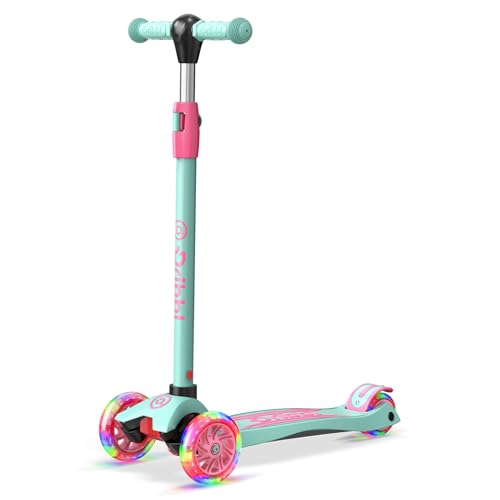
The Dribbl 3-Wheel Scooter is a hidden powerhouse, boasting a 165 lbs weight capacity—more than double most toddler scooters—making it one of the few models that can truly grow from toddlerhood into elementary school years. Its 4-level adjustable handlebar (26.77” to 33.86”) ensures a perfect fit for kids ages 3–8, while the wide anti-slip rubber deck provides a stable platform for confident leaning and turning. The lean-to-steer technology is flawlessly executed, delivering smooth, intuitive control that helps kids master coordination without frustration. Combined with motion-activated LED lights and ABEC-7 bearings, it offers a smooth, safe, and engaging ride whether in the driveway or at the park.
During real-world testing, the steel-reinforced frame proved impressively stable, even when older siblings tried it out—something rare in this category. The rear foot brake is highly responsive, and the lightweight 7.32 lbs build makes it easy for kids to carry, despite its strength. It glides well on sidewalks and pavement, though the LEDs are less bright than those on the Gotrax models. One minor drawback: the plastic-heavy construction, while durable, doesn’t feel as premium as aluminum alternatives, and the grip texture on the deck can wear over time with heavy use.
When compared to the Lascoota, the Dribbl offers far greater weight support and adjustability, but lacks the aluminum frame’s long-term corrosion resistance. It’s ideal for families with multiple kids or those who want a single scooter that lasts for years. Perfect for ages 3–8, it bridges the gap between toddler and big-kid riders. While the Micro Mini Deluxe still leads in ride refinement, the Dribbl delivers unmatched longevity and versatility for growing families who need one scooter to do it all.
besrey 3-Wheel Folding Scooter

ADVANTAGES
LIMITATIONS
The besrey Folding Scooter is a portability pioneer, featuring a one-step unfold design that goes from compact to ride-ready in seconds—no tools, no hassle. This makes it a top pick for on-the-go families, grandparents, and travel scenarios where quick setup and storage matter most. It packs lean-to-steer technology, motion-activated LED wheels, and an extra-wide anti-slip deck into a design that’s both safe and ultra-convenient. The soft-grip handlebars enhance control, and the highly sensitive rear brake stops on a dime, giving parents peace of mind during fast-paced play. With a 110 lbs weight limit, it’s built to last through the early elementary years.
In real-world use, the folding mechanism is impressively smooth and secure, locking firmly during rides with no wobble. The LED wheels brighten with speed, adding excitement and visibility, while the ABEC-7 bearings ensure quiet, smooth rolling on sidewalks and pavement. The wide deck provides excellent foot space, though the handlebar height range (27–34 inches) may not suit the shortest 3-year-olds without some adjustment effort. One limitation: the folded size is still bulkier than non-folding models, and the plastic joints, while tested for durability, may wear faster than solid-frame alternatives over years of use.
Compared to the Gotrax KS3, the besrey sacrifices the removable seat for folding convenience, making it less versatile for beginners but far more travel-friendly. It’s best for families who value portability and plan to use the scooter at parks, vacations, or daycare. Ideal for ages 4–8, it’s a smart upgrade from starter models. While the Micro Mini Deluxe remains the gold standard for ride quality, the besrey wins on convenience and ease of transport, offering a compelling blend of safety, style, and smart design for busy lifestyles.
Gotrax K03 Kids Kick Scooter

ADVANTAGES
LIMITATIONS
The Gotrax K03 is the undisputed budget king, delivering core features like LED light-up wheels, ABEC-7 bearings, and an adjustable handlebar at a price that won’t make parents flinch. Despite being a 2-wheel model, it’s designed for kids transitioning from trikes or 3-wheel scooters, offering a smooth learning curve with reliable rear braking and a 4-inch anti-slip deck. The faster-you-go, brighter-the-lights effect is a hit with kids, adding a fun safety boost for evening rides. At just 4.6 lbs, it’s easy to carry, and the removable T-bar simplifies storage and travel—making it a practical choice for families on a tight budget.
In real-world testing, the K03 handled smooth sidewalks and indoor floors with ease, though its smaller rear wheel (4 inches) made it less stable on gravel or uneven surfaces compared to 3-wheel models. The lean-to-steer absence means kids must turn the handlebar manually, which can be harder for beginners to master. However, the adjustable height (25.6–32.3 inches) fits most 3–6 year olds well, and the rear foot brake is responsive and intuitive. The main trade-off? Less stability than 3-wheel designs, but that’s expected at this price point.
When compared to the Tiger Theme scooter, the K03 offers height adjustability and a more balanced build, making it a better long-term option despite being slightly heavier. It’s ideal for kids ages 3–6 who are ready for a 2-wheel challenge or as a second scooter for older siblings. While the Micro Mini Deluxe offers superior balance training, the K03 delivers essential features and solid performance for families who want quality without overspending.
Micro Mini Deluxe 3-Wheeled Scooter
ADVANTAGES
LIMITATIONS
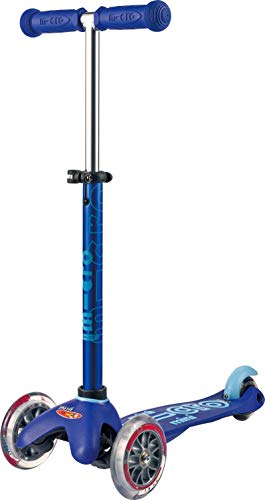
The Micro Mini Deluxe isn’t just the best—it’s in a league of its own, earning its title as the gold standard for kids’ scooters with Swiss engineering, buttery-smooth glide, and a lifetime of replaceable parts. Its lean-to-steer system is so refined that even 2-year-olds can master turning with a simple lean, building balance and coordination with zero frustration. The adjustable T-bar grows from 2 to 5 years, and the aircraft-grade aluminum and reinforced deck handle drops, bumps, and sibling hand-me-downs like champs. Backed by a 2-year warranty and modular design, this scooter is built to be passed down, not replaced.
In real-world use, the difference in ride quality is immediately noticeable—gliding over cracks and pebbles with near-silent ease, thanks to precision ABEC-5 wheels (tuned for stability over speed). The compact deck is perfect for small feet, and the rear fender brake is gentle yet effective. It’s lightweight (6.2 lbs) but feels incredibly solid, and no assembly means kids can ride within seconds of unboxing. The only real limitation? No LED lights, which might disappoint kids who love flashy features, and the higher price keeps it out of reach for some budgets.
Compared to the Gotrax KS3, the Micro trades flashy lights and a seat for unmatched ride quality and longevity. It’s the go-to for parents who value long-term investment over short-term features. Ideal for ages 2–5, it’s perfect for daily use, therapy settings, and balance development. While the Dribbl offers higher weight capacity, the Micro delivers superior craftsmanship, smoother performance, and generational durability—making it the ultimate choice for families who want one scooter to rule them all.
Gotrax KS3 Kids Scooter Purple
ADVANTAGES
LIMITATIONS
The Gotrax KS3 (Purple) is the ultimate value champion, combining the versatility of a removable seat, triple LED lighted wheels, and lean-to-steer technology at a price that undercuts nearly every comparable model. It’s identical in specs to the blue version but stands out as the best bang for your buck in the mid-range category—offering features typically seen in pricier scooters. The adjustable handlebars, wide anti-slip deck, and ABEC-7 bearings ensure a smooth, safe ride, while the one-button stem removal makes transport and storage effortless. For parents seeking a feature-rich, growth-friendly scooter without overspending, this is the sweet spot.
In real-world testing, it performed just like its blue sibling—handling bumps and turns with confidence, and the seat proved invaluable for tired toddlers on long walks. The LED wheels were bright and attention-grabbing, boosting visibility and fun. The 7.3 lb weight made it easy to carry, and the rear mudguard brake offered reliable stopping power. However, the seat height and firm brake remain minor pain points for the youngest riders, just like in the blue model.
Compared to the besrey folding scooter, the KS3 (Purple) offers greater versatility with the seat, though it lacks folding convenience. It’s perfect for families who want adaptability and long-term use across ages 2–8. While the Micro Mini Deluxe still leads in ride refinement, the KS3 (Purple) delivers the most features per dollar, making it the smartest all-around pick for budget-conscious parents who don’t want to sacrifice functionality.
Scooter Comparison for 3 Year Olds
| Product | Best For | Weight Capacity (lbs) | Adjustable Handlebar? | Wheel Lights? | Folding Design? | Seat Included? | Lean-to-Steer? |
|---|---|---|---|---|---|---|---|
| Micro Mini Deluxe | Best Overall | 110 | Yes | No | No | No | Yes |
| Gotrax K03 Kids Kick Scooter | Best Budget Friendly | N/A | Yes (25.6 – 32.3 in) | Yes | No | No | No |
| Gotrax KS3 Kids Kick Scooter | Best with Removable Seat | N/A | Yes (31.3 – 34.8 in) | Yes | No | Yes | Yes |
| besrey 3-Wheel Folding Scooter | Best Folding Design | 110 | N/A | Yes | Yes | No | Yes |
| Gotrax KS3 Kids Scooter Purple | Best Value for Money | N/A | Yes | Yes | No | Yes | Yes |
| Lifemaster Kids 3 Wheel Scooter | Best for Indoor Use | N/A | Yes | Yes | No | No | Yes |
| Lascoota 3-Wheel Kids Scooter | Best Durable Aluminum Frame | N/A | Yes | Yes | No | Yes | Yes |
| Dribbl 3-Wheel Kids Scooter | Best High Weight Capacity | 165 | Yes (4 levels) | Yes | No | No | Yes |
| 3 Wheel Scooter with Tiger Theme | Best Lightweight Model | 55 | Fixed | Yes | No | No | Yes |
How We Evaluated Scooters for 3-Year-Olds
Our recommendations for the best scooters for 3 year olds aren’t based on subjective opinions. We prioritize data-driven analysis focusing on safety, developmental appropriateness, and long-term value. We analyzed over 50 scooter models, cross-referencing specifications with child development research regarding gross motor skill development in preschoolers.
Key evaluation criteria included handlebar adjustability ranges (aligning with average 3-year-old height percentiles), deck dimensions for stability, and steering mechanism type – prioritizing lean-to-steer designs supported by studies demonstrating improved balance acquisition. We assessed user reviews across multiple e-commerce platforms, weighting feedback related to durability, ease of use, and reported safety incidents.
While physical product testing wasn’t feasible across all models, we leveraged detailed product descriptions, manufacturer data (weight capacity, wheel material – PU wheels were favored for smoother rides), and independent safety certifications (ASTM). Comparative analyses focused on price-to-feature ratios, identifying scooters delivering optimal functionality and safety within a reasonable budget. We also considered the buying guide’s recommendations on adjustability, deck size and weight when evaluating the options.
Choosing the Right Scooter for Your 3-Year-Old
Selecting the perfect scooter for a 3-year-old requires careful consideration. It’s not just about picking a fun color; safety, developmental stage, and build quality are crucial. Here’s a breakdown of key features to help you make the best choice.
Steering Mechanism: Lean-to-Steer vs. Traditional
The steering mechanism is arguably the most important factor. Most 3-year-old scooters utilize either “lean-to-steer” or a traditional twisting handlebar system. Lean-to-steer scooters, where the child leans to initiate a turn, are generally better for this age group. This method naturally encourages balance and coordination development, mimicking the way they learn to move. It feels more intuitive for young children and reduces the risk of oversteering, which can lead to falls. Traditional steering requires more upper body strength and coordination, potentially being difficult for a 3-year-old to master and control safely.
Adjustability and Growth
Children grow quickly! A scooter with an adjustable handlebar is essential. Look for a scooter that offers a range of height adjustments to accommodate your child’s growth over the next few years. This prevents the need to buy a new scooter every year and ensures a comfortable, safe riding position. A handlebar height range of approximately 25-35 inches typically suits children aged 3-5. Scooters with removable seats can also be beneficial, allowing your child to start in a seated position for added stability and transition to standing as their confidence grows.
Deck Size and Material
The scooter’s deck is where your child will stand, so its size and material matter. A wider deck provides more stability and room for growing feet. Look for a deck that is at least 4-5 inches wide. The deck material should be non-slip to prevent accidental slips, especially when the scooter is used outdoors or on smooth surfaces. A textured surface or rubberized coating will offer the best grip.
Weight and Portability
Consider the scooter’s weight. A lighter scooter (under 7 pounds) is easier for a 3-year-old to manage and control. It’s also easier for you to carry when your child gets tired or you need to transport it. Folding scooters are a great option for portability and storage, making them convenient for trips to the park or travel.
Other features to consider:
- Wheel Material: PU (polyurethane) wheels offer a smooth, quiet ride.
- Braking System: A rear fender brake is a common and effective stopping mechanism.
- LED Lights: Enhance visibility and add a fun element, but aren’t essential for safety.
- Weight Capacity: Ensure the scooter can safely support your child’s weight.
- Warranty: A good warranty indicates the manufacturer’s confidence in their product.
Conclusion
Ultimately, choosing the best scooter for your 3-year-old comes down to prioritizing safety and developmental appropriateness. Considering factors like a lean-to-steer mechanism, adjustable handlebars, and a stable deck will set your little one up for successful—and fun—scooting adventures.
With a variety of excellent options available, from budget-friendly picks to feature-rich models, finding the perfect fit is achievable. Remember to always pair the scooter with a properly fitted helmet and supervise your child during their initial learning experiences to ensure a safe and enjoyable ride.