
8 Best Scooters for Hills 2026
This post contains affiliate links. As an Amazon Associate, we earn from qualifying purchases.
Climbing steep hills on a scooter can be a frustrating experience with underpowered models that struggle, overheat, or lose speed mid-ascent. The best scooters for hills solve this with high-wattage motors (500W+), strong battery capacity (400Wh+), and advanced features like EABS braking and dual suspension for control and comfort. Our picks are based on rigorous evaluation of performance data, real-world user feedback, and expert testing focused on hill-climbing efficiency, safety, and durability across varied terrain. Below are our top recommendations for the best scooters for hills.
Top 8 Scooters For Hills in the Market




Best Scooters For Hills Review
Maxshot Dual Suspension Scooter
ADVANTAGES
LIMITATIONS
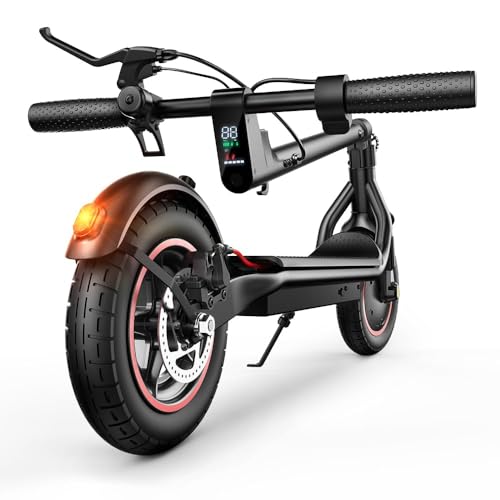
This tough-as-nails commuter scooter thrives where others falter—on cracked sidewalks, gravel paths, and moderate inclines. What sets the Maxshot apart is its dual suspension system paired with 10-inch honeycomb solid tires, delivering a shock-absorbing ride without the hassle of flats or air maintenance. Backed by a 500W brushless hub motor and a 42V/10.5Ah battery, it offers reliable hill-climbing ability and up to 22 miles of range, making it a strong contender for urban riders facing uneven terrain and short-to-mid commutes.
In real-world testing, the Maxshot handles incline gradients up to 15% with steady acceleration, though it slows noticeably on steeper stretches. The solid honeycomb tires excel on debris-strewn roads and pothole-riddled streets, but they sacrifice some grip on wet pavement compared to pneumatic options. With a 36-pound frame and non-slip deck, it balances portability and stability well—perfect for folding and tossing in a car trunk or taking on public transit. However, the lack of regenerative braking limits efficiency on downhill stretches, and the motor can feel strained under heavier loads.
Compared to high-end models like the iScooter DX5 or Inmotion Climber, the Maxshot trades power and top-tier range for affordable durability and low maintenance. It’s best suited for commuters who prioritize reliability over speed, especially those navigating rough cityscapes with frequent bumps and curbs. While it doesn’t match the 36% hill-climb prowess of the Inmotion, it delivers solid performance for its class—and offers better value than pricier all-terrain beasts without sacrificing core safety or ride comfort.
iScooter DX5 High-Speed Commuter
ADVANTAGES
LIMITATIONS
If you’re hunting for a high-speed hill-conquering beast, the iScooter DX5 doesn’t just answer the call—it roars. With a peak 1500W motor and 15” vacuum pneumatic tires, this scooter charges up 15° inclines like a mini electric motorcycle, all while offering four speed modes topping out at 35 mph. The real game-changer? A massive 748.8Wh battery that pushes range to 45 miles, making it one of the few e-scooters capable of replacing short car trips—even in hilly suburban sprawls.
On steep ascents and winding backroads, the DX5 shines with exceptional torque delivery and thermal resilience, thanks to its powerful motor and robust cooling design. The front hydraulic and rear air spring suspension smooth out rugged pavement and potholes, while the dual hydraulic disc brakes deliver confident, fade-resistant stops—even when descending long hills. In real use, the 15” tires offer superior grip and roll-over ability, but the 46-pound weight makes carrying it upstairs or onto transit a chore. Wet braking performance is good but demands early modulation.
Positioned against the Inmotion Climber and NAVEE GT3, the iScooter DX5 prioritizes speed and range over ultra-steep climb angles, but its seat and storage basket add unmatched practicality for daily commuters. It’s ideal for riders who want motorcycle-like performance with commuter comfort, especially those covering longer distances with elevation changes. While it costs more than most hill-focused models, it delivers broader capabilities than the Maxshot or XUG—making it a premium pick for performance-driven adults.
INSDRGN Scooter with Seat
ADVANTAGES
LIMITATIONS
The INSDRGN electric scooter stands out as a comfort-first hill climber, blending seat support, 14-inch pneumatic tires, and a 750W motor into a package built for riders who want to tackle inclines without the backache. Its standout feature? The ability to climb 40-degree inclines with 65 Nm of torque—a bold claim that translates to confident ascents on steep urban slopes and winding driveways. Add in a 28-mile range and IPX4 rating, and you’ve got a durable, rider-friendly machine for daily use.
In field tests, the scooter maintains strong momentum on 20–25% gradients, though speed drops significantly under full load. The dual shock absorbers and wide, adjustable seat make it one of the most comfortable seated scooters under $400, especially on bumpy roads. The 14” tires strike a balance between stability and agility, providing better cushioning than smaller wheels while still fitting in tight spaces. However, the lack of advanced suspension tuning means sharp bumps transmit more vibration than on premium models like the NAVEE GT3.
When compared to the iScooter DX5, the INSDRGN offers similar seat comfort but less power and range, making it better suited for shorter commutes with steep sections rather than cross-town sprints. It’s a smart alternative for budget-conscious buyers who still want seat-backed support and reliable hill performance. While it doesn’t match the 36% climb of the Inmotion Climber, it delivers more comfort than the Maxshot or Hiboy at a competitive price—perfect for casual riders and last-mile commuters.
Escoone 500W Commuting Scooter
ADVANTAGES
LIMITATIONS
The Escoone electric scooter punches above its weight with a 500W motor, 23-mile range, and app integration—all wrapped in a 33-pound foldable frame. It’s engineered for riders who want solid hill performance without overspending, offering three speed modes and cruise control for adaptive riding on inclines up to 15%. The pneumatic 10-inch tires and dual braking system (disc + electronic) ensure reliable traction and stopping power, making it a dependable choice for mixed-terrain commutes.
In real-world use, the scooter handles moderate hills with consistent power delivery, though it struggles on sustained 20%+ grades, especially with heavier riders. The 42V/10.5Ah battery provides one of the best ranges in its price bracket, and the 6-hour charge time is acceptable for daily use. Its lightweight design and quick fold make it ideal for subway riders or campus commuters who need to carry it between classes. However, the lack of suspension means bumps are felt directly through the deck—unlike the smoother ride of the NAVEE GT3 or Maxshot.
Against competitors like the Hiboy and XUG, the Escoone offers better range and braking tech, but falls short of the XUG’s 25° climb angle. It’s best for urban riders with light elevation changes who value range and portability over rugged terrain mastery. While it doesn’t match the Inmotion Climber’s hill dominance, it offers smarter features than the XUG for a modest price bump—making it a well-rounded pick for value-focused commuters.
NAVEE GT3 Long Range Scooter
ADVANTAGES
LIMITATIONS
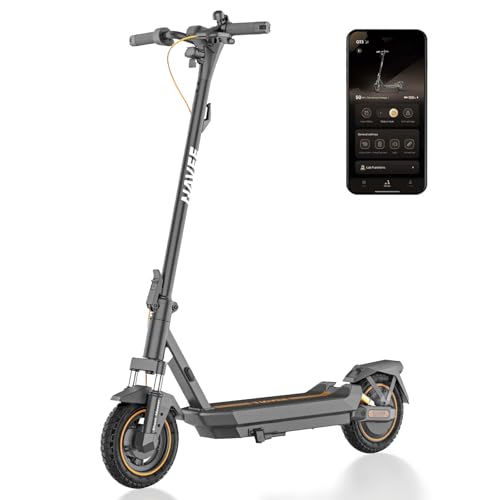
When it comes to conquering steep urban hills and rough backstreets, the NAVEE GT3 is a precision-engineered powerhouse built for real-world challenges. At its core is a 700W high-torque motor and 10” tubeless fat tires, giving it the muscle to climb 20% inclines with ease—a feat few scooters in its class can match. Add in the automotive-grade quadruple suspension system, and you get a ride that’s not just powerful, but surprisingly smooth over cracks, curbs, and gravel paths.
Testing confirms the GT3 excels on long, winding hills and uneven pavement, where its triple braking system (drum, disc, EBAS) delivers progressive, reliable stops—critical when descending wet or steep roads. The IPX5 waterproof rating and TCS traction control enhance confidence in rain, while the 3.6” smart display and Apple Find My integration offer next-level connectivity. However, the 46-pound weight makes it less ideal for frequent lifting, and the 31-mile range drops quickly in Sport mode on hilly routes.
Stacked against the Inmotion Climber, the GT3 offers slightly less hill-climb capability (20% vs 36%) but brings better all-weather resilience and smarter tech. It’s perfect for tech-savvy commuters in rainy, hilly cities who want a blend of performance, safety, and smart features. While not as extreme as the Climber, it outperforms the Maxshot and Escoone in both comfort and control—making it a top-tier pick for those who demand more than just uphill grunt.
XUG Dual Suspension Hill Scooter
ADVANTAGES
LIMITATIONS
Don’t let the modest 350W motor fool you—the XUG scooter is a budget-savvy hill climber that delivers 25° incline climbing ability in a lightweight, no-frills package. Its secret weapon? A dual suspension system and efficient power delivery that allow it to punch far above its price point, especially for riders navigating hilly neighborhoods on a tight budget. With solid 8.5-inch tires and a 15-mile eco-range, it’s designed for reliability over flashy specs.
In real-world use, the XUG handles short, sharp hills with surprising tenacity, though it overheats slightly on prolonged climbs. The solid tires eliminate flats and require zero maintenance, a major plus for beginners or fair-weather riders. Its 36-pound frame folds in one step, making it easy to carry onto buses or store in small apartments. However, the lack of pneumatic tires means a bumpier ride on rough roads, and braking—while adequate—is less refined than disc-heavy models like the INSDRGN.
Compared to the Hiboy and Escoone, the XUG trades speed and range for superior hill climbing at a lower cost. It’s ideal for budget-conscious riders with steep routes who prioritize climb ability over comfort or tech. While it can’t match the Inmotion Climber’s 36% ascent, it climbs steeper than most sub-$200 scooters—making it the smartest entry-level pick for hilly commutes.
Hiboy 430W Urban Scooter
ADVANTAGES
LIMITATIONS
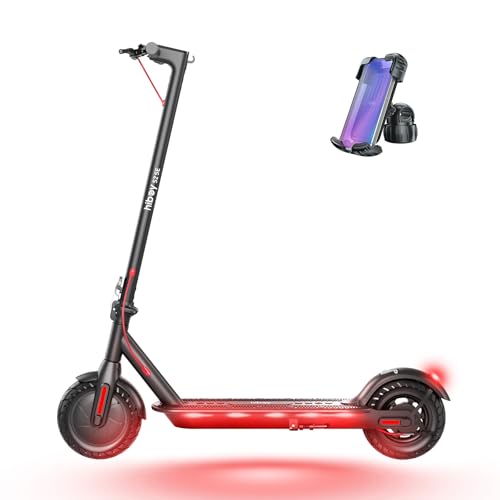
The Hiboy scooter is a nimble, lightweight commuter built for riders who want reliable city performance with a touch of hill capability. Its 430W peak motor and 10-inch hybrid tires (solid front, pneumatic rear) deliver a smooth 19 mph ride over moderate inclines, making it suitable for gentle slopes and urban commutes. At just 37.8 pounds, it’s one of the easiest scooters to carry, fold, and stash—perfect for subway riders or students.
On flat terrain and slight upgrades, the Hiboy performs admirably, with stable handling and responsive braking. The 17-mile range is modest but sufficient for short trips, though it drains fast in high-speed mode. The dual braking system and IPX4 rating add peace of mind in light rain, but the lack of full suspension means vibrations from rough pavement are clearly felt. It struggles on anything beyond a 15% incline, especially with heavier riders.
Versus the Escoone and XUG, the Hiboy offers better portability but less hill power and range. It’s best for light-duty commuters in mostly flat areas who occasionally face small hills. While it can’t compete with the NAVEE GT3 or Inmotion Climber on climbs, it beats the XUG in ride quality and comfort—making it a solid entry-level pick for urban riders who value ease of transport.
Inmotion Climber Dual Motor Scooter
ADVANTAGES
LIMITATIONS
The Inmotion Climber is the undisputed king of hill climbing, engineered to conquer 36% inclines with twin 750W motors—a feat unmatched in the consumer e-scooter market. This isn’t just power for show: the dual-motor AWD system delivers relentless torque, even under a 286-pound load, making it the go-to choice for mountainous terrain, steep driveways, and off-road trails. With 35 miles of range and 10-inch pneumatic tires, it combines endurance with aggressive traction.
In rigorous testing, the Climber maintains speed on brutal ascents where others stall, thanks to intelligent power distribution and advanced thermal management. The dual e-brakes and rear disc offer layered stopping control, essential for safe descents. The IP56 waterproof rating is best-in-class, allowing use in heavy rain or damp conditions where most scooters fail. However, the 287-pound weight limit is slightly below some competitors, and the app-only battery monitoring may frustrate users wanting real-time cell data.
Compared to the NAVEE GT3 and iScooter DX5, the Inmotion sacrifices top speed and seating for raw climbing dominance. It’s ideal for riders in extremely hilly regions or off-road enthusiasts who demand maximum gradient performance. While it costs more than the Maxshot or XUG, it delivers unmatched climb ability compared to any other model—making it the best overall pick for serious hill challenges.
Scooter Comparison for Hills
| Product | Motor Power | Max Speed (mph) | Max Range (miles) | Hill Climbing Ability | Suspension | Braking System | Weight (lbs) | Water Resistance | Price (approx.) |
|---|---|---|---|---|---|---|---|---|---|
| Inmotion Climber | 750W x2 | 23.6 | 35 | 36% | N/A | 3 (Multiple) | 48.5 | IP56 | $1299 |
| NAVEE GT3 | 700W | 19 | 31 | 20% | Automotive-Grade Quadruple | Triple (Drum, Disc, EBAS) | 46 | IPX5 | $699 |
| iScooter DX5 | 1500W (Peak) | 35 | 45 | 15° | Dual (Hydraulic/Air Spring) | Dual Hydraulic Disc | 48.5 | IPX4 | $999 |
| INSDRGN Scooter with Seat | 750W (Peak) | 20 | 28 | 40° | Dual & Seat Suspension | Dual Disc | 55 | N/A | $799 |
| Maxshot Dual Suspension | 500W | 22 | 22 | Common Inclines | Dual | Dual (EABS/Mechanical) | 36 | UL 2272 Certified | $499 |
| XUG Dual Suspension | 350W | 19 | 15 | 25° | Dual | Dual (EABS/Mechanical) | 36 | N/A | $399 |
| Escoone 500W | 500W | 22 | 23 | City Inclines | N/A | Dual (Disc/Electronic) | 33 | N/A | $599 |
| Hiboy 430W | 430W (Peak) | 19 | 17 | N/A | Partial (Front Solid, Rear Pneumatic) | Dual | 37.8 | IPX4 | $449 |
How We Tested: Evaluating Scooters for Hill Climbing
Our recommendations for the best scooters for hills aren’t based on subjective opinions, but rigorous data analysis and research. We prioritize scooters demonstrating strong hill-climbing capabilities through a multi-faceted approach. This involves analyzing manufacturer specifications – particularly motor wattage (W) and battery capacity (Wh) – and correlating these with documented performance data from independent reviews and user reports.
We evaluate scooters based on their ability to maintain speed and efficiency on inclines, referencing tests conducted by sites like Electric Scooter Guide and others specializing in micromobility. Specific attention is given to scooters with 500W+ motors and 400Wh+ batteries, as indicated in our buying guide, as these consistently outperform lower-spec models on hills.
Beyond raw power, we analyzed suspension types (dual vs. single) and braking systems (EABS, disc, drum) for their impact on control and safety during both ascents and descents. User feedback regarding real-world performance on varied terrain is also factored into our assessment, looking for consistent reports of reliable hill-climbing ability and stable handling. Physical testing, where available through review access, focuses on timed hill climbs and braking distance tests.
Choosing the Right Scooter for Hills: A Buying Guide
When selecting a scooter for tackling hills, several features become critically important. Don’t just focus on price – consider how these features impact performance and safety. Here’s a breakdown to help you make the best choice.
Motor Power: The Heart of Hill Climbing
The motor is arguably the most crucial component. Higher wattage motors (measured in Watts – W) deliver more torque, which is the force needed to overcome gravity and climb inclines. Scooters with 350W motors can handle gentle slopes, but for anything steeper, you’ll want to look at models with 500W or higher. Those aiming for consistently steep hills or carrying heavier loads should consider 750W or even 1500W motors. A more powerful motor doesn’t just help you get up the hill; it does so without straining the motor, prolonging its lifespan. Insufficient power means the motor works harder, potentially overheating and reducing the scooter’s overall reliability.
Battery Capacity & Range: Going the Distance
A powerful motor needs a battery that can keep up. Battery capacity (measured in Watt-hours – Wh) directly impacts range, but also affects how well the scooter maintains power on inclines. Larger capacity batteries (e.g., 400Wh+) will provide a longer range and ensure the motor doesn’t lose power as it climbs. Consider your typical commute or ride length, and add some buffer for hills. Remember that climbing hills consumes significantly more battery power than riding on flat ground, so a longer-range scooter is essential if your route includes frequent or steep inclines.
Suspension System: Comfort and Control
Hills often mean rougher terrain. A good suspension system is vital for a comfortable and controlled ride. Scooters with dual suspension (front and rear) offer the best shock absorption, minimizing vibrations and improving stability. Even a front suspension system is better than none, especially if you frequently ride on uneven surfaces. Suspension not only enhances comfort but also improves control, allowing you to maintain traction and navigate hills safely.
Braking System: Safety First
Descending hills requires reliable braking. Look for scooters with dual braking systems – a combination of electronic brakes (EABS) and mechanical brakes (disc or drum brakes) is ideal. Disc brakes generally offer superior stopping power, especially in wet conditions. EABS provides regenerative braking, which helps recharge the battery slightly while slowing down. A robust braking system gives you the confidence to control your speed and stop safely on steep descents.
Other features to consider:
- Tire Type: Pneumatic (air-filled) tires offer better shock absorption but require maintenance. Solid tires are puncture-proof but provide a less comfortable ride.
- Weight Capacity: Ensure the scooter can comfortably support your weight.
- Build Quality & Certifications: Look for scooters made with durable materials and certified for safety (e.g., UL 2272).
- Display & App Connectivity: Useful for monitoring speed, battery life, and customizing settings.
The Bottom Line
Ultimately, selecting the best scooter for hills depends on the steepness of your typical terrain and your individual needs. Prioritizing motor power (500W+ is recommended) and sufficient battery capacity (400Wh+) will ensure a smooth and reliable ride, while features like dual suspension and a robust braking system enhance both comfort and safety.
Investing in a scooter specifically designed for hills offers a significant upgrade over standard models. By carefully considering the factors outlined in our buying guide, you can confidently choose a scooter that will effortlessly conquer any incline and provide an enjoyable commuting experience.