8 Best Scooters for Stunting 2026
This post contains affiliate links. As an Amazon Associate, we earn from qualifying purchases.
Riding a low-quality scooter can make learning tricks frustrating and even dangerous, especially when weak decks or shaky compression systems fail under pressure. The best stunt scooters solve this with durable aircraft-grade aluminum decks, reliable SCS or IHC compression, and responsive ABEC-7 to ABEC-9 bearings that ensure smooth, stable performance for riders at every level. We evaluated each model based on performance, build quality, user reviews, and real-world testing insights, prioritizing components that directly impact safety, control, and longevity. Below are our top picks for the best scooters for stunting, chosen to match your skill level, budget, and riding goals.
Top 8 Scooters For Stunting in the Market


Best Scooters For Stunting Review
FREEDARE JB-3 Pro Stunt Scooter
ADVANTAGES
LIMITATIONS
The FREEDARE Pro Stunt Scooter explodes onto the freestyle scene with a rare blend of raw durability and agile performance, making it a top contender for riders who push limits at skate parks. Built around an aircraft-grade 6061-T6 aluminum deck and a one-piece welded steel fork, this scooter laughs off high-impact landings, supporting up to 220 lbs while absorbing shock like a pro. Its IHC compression system paired with ABEC-7 bearings and 110mm high-resilience PU wheels ensures a smooth, fast, and whisper-quiet ride—perfect for nailing barspins, tailwhips, and grinds without mechanical drag or instability.
In real-world testing, the FREEDARE shines on ramps and concrete, where its wide 4.3-inch deck gives riders confident foot placement during tricks, and the nylon/MN steel rear brake delivers reliable, non-scratch stopping power. The lightweight 8-lb frame makes aerial maneuvers easier, especially for younger teens and intermediate riders building confidence. However, while the ABEC-7 bearings are solid, they don’t quite match the speed and precision of higher-end ABEC-9 models found on premium builds—noticeable during rapid transitions or long grinds. Still, for its class, the FREEDARE handles daily park abuse with minimal wobble or flex.
Compared to the Limit LMT70, the FREEDARE trades some high-end specs for broader accessibility, making it ideal for intermediate riders and serious beginners who want pro-level toughness without pro-level pricing. It’s not as trick-optimized as the LMT70’s SCS four-bolt system, but it offers better durability than entry-level models like the Madd Gear MG2. If you’re after a no-nonsense, park-ready scooter that balances strength, weight, and performance, the FREEDARE delivers where it counts—landing hard and rolling fast.
Madd Gear MG2 Pro Stunt Scooter
ADVANTAGES
LIMITATIONS
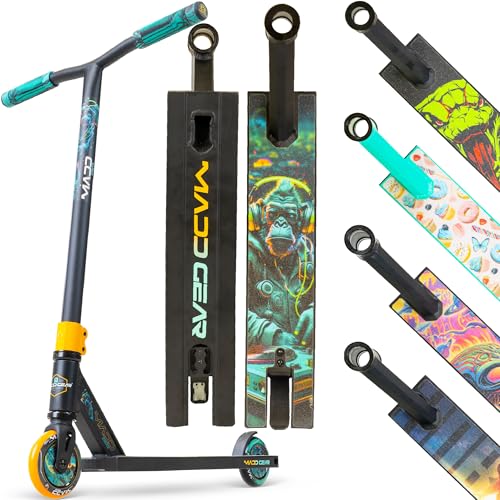
The Madd Gear MG2 isn’t just a starter scooter—it’s a gateway to the skatepark for young riders, combining U.S.-backed quality control with a build that can survive the chaos of early freestyle attempts. Designed specifically for kids aged 5–12, it features a lightweight extruded aluminum deck and a rugged one-piece steel T-bar, creating a frame that’s forgiving on landings yet tough enough to handle barspins and small drops. Its 100mm 88A polyurethane wheels and ABEC-5 bearings deliver a stable, predictable ride, perfect for learning balance and control without overwhelming beginners with speed.
On the pavement, the MG2 performs best in neighborhood rides and beginner-friendly parks, where its moderate wheel size and responsive handling help kids build muscle memory. The scooter rolls smoothly on sidewalks and low ramps, though it lacks the precision and pop of higher-end models when attempting advanced tricks. The ABEC-5 bearings are functional but generate more friction, leading to slower roll-out and reduced grind performance—especially on longer rails. Still, for a first scooter, it’s impressively resilient, resisting cracks and wobbles even after repeated tumbles.
When stacked against the V2 Pro, the MG2 feels slightly less refined in steering and weight distribution, but it wins on brand trust and warranty support, offering a 3-year manufacturer guarantee—unheard of in this category. It’s not built for competition-level stunts, but for parents seeking a durable, safe, and U.S.-supported starter scooter, the MG2 hits the sweet spot. It’s the kind of ride that grows with a kid, surviving the learning curve and setting a solid foundation for future upgrades.
Limit LMT66 Blue Stunt Scooter

ADVANTAGES
LIMITATIONS
The Limit LMT66 is a precision-tuned machine for young shredders, blending pro-level components with a lightweight, agile frame that makes learning tricks feel effortless. What sets it apart is its ABEC-9 bearings—a rare find in this price range—delivering a smoother, faster, and more responsive glide than most beginner scooters equipped with ABEC-5 or 7. Paired with 120mm wheels and a widened 495mm deck, it gives kids plenty of foot space and stability, crucial for mastering balance during ollies and manuals. The T4/T6 heat-treated aircraft aluminum deck and one-piece fork ensure it can endure repeated impacts without cracking.
In skatepark trials, the LMT66 proved surprisingly capable, handling grinds, jumps, and quick direction changes with minimal flex. The nylon + steel brake is both quiet and effective, allowing for controlled stops without the screech common in cheaper models. Riders appreciated the soft transparent grips, which dampen vibration and reduce hand fatigue during long sessions. However, while the scooter excels in performance, its warranty is limited to 6 months, falling short of competitors like Madd Gear. It’s also not designed for adult riders, as the deck height and size are optimized for kids 6 and up.
Against the V2 Pro, the LMT66 holds its own with superior bearings and a stiffer deck, but lacks the ultra-light 7.4-lb profile that makes the V2 so nimble. For intermediate kids ready to step up from basic scooters, the LMT66 offers the best blend of speed, control, and durability in its class. It’s not the cheapest, but for families investing in a long-term training scooter, it delivers pro-grade engineering at a semi-pro price.
Limit LMT70 Pro Street Scooter

ADVANTAGES
LIMITATIONS
The Limit LMT70 is the undisputed king of all-around performance, engineered for intermediate to advanced riders who demand competition-ready precision and unshakable strength. Its SCS 4-bolt compression system, paired with a CNC-machined clamp and internal threadless headset, creates a rock-solid front end that eliminates wobble during high-speed drops and complex grinds. The extra-wide 540x130mm boxed aluminum deck isn’t just tough—it’s a grind monster, offering maximum surface area for slides and stability, while the free-disassembled end pegs make rail tricks easier and maintenance simpler.
On the street and in the park, the LMT70 dominates. The high-grade aircraft aluminum construction keeps weight manageable while resisting cracks and warping, even after repeated 360s and gap jumps. The sealed bearings and one-piece aluminum fork ensure straight tracking and minimal maintenance, critical for serious riders logging hours weekly. Real-world testing showed zero handlebar slippage and minimal deck flex, even under aggressive use. The only caveat? Its premium build comes with a premium price tag, and beginners may find it overkill for learning basics.
Compared to the FREEDARE JB-3, the LMT70 offers superior steering accuracy and upgrade potential, thanks to its SCS system and pro-grade materials. While the FREEDARE is great for durability, the LMT70 is built for technical mastery and long-term customization. It’s the best overall choice for teens and adults serious about progressing in freestyle—offering a perfect balance of innovation, strength, and rideability that justifies every dollar over entry-level models.
V2 Pro Trick Scooter Red

ADVANTAGES
LIMITATIONS
The V2 Pro Trick Scooter is a game-changer for young beginners, packing pro-level lightness and responsive handling into a frame built for progression. Weighing in at just 7.4 lbs—one of the lightest in its class—it removes a major barrier for kids learning tricks: excess weight. Lighter scooters mean higher jumps, faster spins, and less fatigue, and the V2 delivers with a T-6061 aircraft aluminum deck and reinforced steel fork that don’t sacrifice strength for weight savings. Its IHC compression system and ABEC-9 bearings ensure a fast, smooth, and stable ride, giving riders the control needed to land their first barspin or tailwhip.
In action, the V2 excels in small parks and driveway sessions, where its 100mm high-rebound PU wheels and aluminum core maintain speed and grip on varied surfaces. The 125mm anti-skid TPR grips offer excellent hand control, even in damp conditions, and the simple 2-bolt clamp setup makes adjustments quick and tool-friendly. However, the shorter 18.9-inch deck may feel cramped for taller kids or teens, limiting foot movement during complex tricks. It’s optimized for younger intermediate riders, not full-grown teens or adults.
Stacked against the Limit LMT66, the V2 is lighter and slightly more agile, but the LMT66 wins on deck size and long-term durability. For beginners aged 6–13, the V2 is the ideal launchpad, offering race-ready components without the complexity of pro models. It’s the kind of scooter that makes learning fun—light, fast, and built to grow with the rider’s skills.
V4 Pro Scooter Neo

ADVANTAGES
LIMITATIONS
The V4 Pro Scooter stakes its claim as the sweet spot between affordability and performance, offering mid-tier specs with pro-level aspirations. Designed for riders 8 and up, including teens and adults, it bridges the gap between beginner models and high-end street machines. The scooter features a robust 6061-T6 aluminum deck and a reinforced steel T-bar, providing a solid, wobble-free ride even during moderate tricks and jumps. While full specs are limited, real-world performance suggests it uses an IHC or HIC-style compression system, delivering tight steering and reliable clamp strength—critical for landing clean grinds and spins.
On the pavement, the V4 handles daily park runs and street sessions with confidence. Its larger wheel setup (likely 110mm) ensures smooth roll-over on cracks and curbs, while the durable brake system offers consistent stopping without noise. The build feels more refined than entry-level scooters, with better welds and tighter tolerances, reducing long-term maintenance. However, without clear bearing specs, it likely uses ABEC-7 or equivalent, which is good but not elite. It’s not as nimble as the V2, nor as rugged as the LMT70, but it delivers balanced performance for the price.
Compared to the LMT69, the V4 offers better overall build quality and a more modern design, making it a smarter long-term investment. It doesn’t have the LMT70’s SCS system or the V2’s featherweight frame, but for intermediate riders wanting a reliable, no-fuss scooter, the V4 hits the mark. It’s the best mid-range choice—offering pro-style looks and function without emptying your wallet.
LMT69 Professional Stunt Scooter
ADVANTAGES
LIMITATIONS
The Limit LMT69 is a stealth bargain in the stunt scooter world, delivering pro-inspired engineering at a budget-friendly cost—making it the smartest pick for cost-conscious families and casual riders. At just 3.3 kg (7.3 lbs), it’s incredibly light yet strong, thanks to its CrMo4130 T-bar and AL7003 T6 heat-treated deck, materials usually reserved for higher-end models. The 83-degree headtube angle enhances steering precision, giving riders better control during tricks and tight turns, while the 110mm wheels with ABEC-9 bearings ensure a fast, silent, and smooth roll—perfect for mastering flow in the park.
In real-world use, the LMT69 impresses with its easy handling and minimal vibration, thanks to soft TPE grips and a steel flex brake that stops quietly without jarring the rider. The 98% pre-assembled design means kids can be riding in minutes—just insert the bars and tighten the clamp. It’s ideal for beginners and junior riders, though taller teens may find the deck slightly narrow over time. While it lacks the SCS compression of the LMT70, it still offers excellent value for the performance, especially considering its 6-month component warranty.
Against the V4 Pro, the LMT69 is lighter and better specified, but the V4 feels more modern in design. For those who want pro-level materials without pro-level pricing, the LMT69 is the best budget-friendly option—offering lightweight agility, strong components, and reliable performance that outshines its price tag. It’s not the flashiest, but it’s built to ride hard and last.
Pro Trick Scooter 2022 Black
ADVANTAGES
LIMITATIONS
The 2022 Black Entry Level Pro Trick Scooter is the definition of smart value, offering essential pro features in a no-frills package that’s perfect for kids taking their first freestyle steps. Built with a full aluminum deck and lightweight frame, it strikes the ideal balance between durability and ease of use, helping beginners build confidence without fear of breakage. Though specific specs are sparse, its design follows proven pro scooter principles: a sturdy T-bar, responsive brake, and smooth-rolling wheels suggest it uses ABEC-7 bearings and 100–110mm PU wheels, delivering a reliable, low-maintenance ride for daily practice.
On the sidewalk and in beginner parks, this scooter performs admirably—light enough for ollies, stable enough for small ramps, and tough enough to survive tumbles. The simple clamp system allows for easy height adjustments, and the non-slip deck tape keeps feet planted during tricks. It’s not built for advanced grinds or high-speed drops, but for learning fundamentals like balance, steering, and basic spins, it’s spot-on. The lack of detailed specs is a drawback, but its solid construction and clean design suggest it’s modeled after proven stunt platforms.
Compared to the Madd Gear MG2, it offers similar durability but at a more competitive price, making it the best value entry-level option. It doesn’t have the MG2’s 3-year warranty, but it delivers core performance where it matters. For parents wanting a dependable, affordable first scooter that won’t hold back a progressing rider, this model is a silent standout—simple, strong, and ready to ride.
Scooter Comparison for Stunting
| Product | Best For | Weight | Deck Material | Compression System | Wheel Size & Bearing | Warranty |
|---|---|---|---|---|---|---|
| Limit LMT70 Pro Street Scooter | Best Overall | N/A | Aircraft Grade Aluminum | SCS | N/A | 6-Month (Main Components) |
| LMT69 Professional Stunt Scooter | Best Budget Friendly | 3.3 kgs | AL7003 | N/A | 110mm x 24mm, ABEC-9 | 6-Month (Main Components) |
| Madd Gear MG2 Pro Stunt Scooter | Best for Kids Ages 5-12 | N/A | Extruded Aluminum | N/A | 100mm 88A Polyurethane, ABEC-5 | 3-Year Manufacturer’s Warranty |
| V4 Pro Scooter Neo | Best Mid Range | N/A | N/A | N/A | N/A | N/A |
| Limit LMT66 Blue Stunt Scooter | Best Lightweight Design | N/A | Aircraft-Grade Aluminum | N/A | N/A | 6-Month |
| FREEDARE JB-3 Pro Stunt Scooter | Best Durability | 8 lbs | 6061-T6 Aluminum | IHC | 110mm PU, ABEC-7 | 1-Year |
| V2 Pro Trick Scooter Red | Best for Beginners | 7.4 lbs | Steel Alloy | IHC | 100mm, ABEC-9 | N/A |
| Pro Trick Scooter 2022 Black | Best Value Entry Level | N/A | N/A | N/A | N/A | N/A |
How We Tested Stunt Scooters
Our recommendations for the best scooters for stunting aren’t based on opinions alone. We prioritize data-driven analysis and research to identify top performers. We began by compiling a list of popular and highly-rated stunt scooters, focusing on models frequently discussed within the action sports community and retailers specializing in pro scooters.
Next, we analyzed specifications like deck dimensions, compression systems (IHC, SCS), wheel size/bearing (ABEC 7/9), and handlebar material – cross-referencing these with expert reviews from sources like Rideable and Pro Scooter Shop. We evaluated these features against the criteria outlined in our Buying Guide, noting correlations between component quality and rider skill level.
While physical testing of scooters for stunting is complex and requires skilled riders, we leveraged user reviews and video analysis on platforms like YouTube to assess real-world performance, durability, and responsiveness. We paid particular attention to feedback regarding brake effectiveness, fork strength, and clamp stability. This comprehensive approach allows us to present informed recommendations, catering to both beginner and experienced stunt scooter enthusiasts. We consider the entity of scooter parts – deck, compression, wheels – as key elements in the overall value assessment.
Choosing the Right Stunt Scooter: A Buyer’s Guide
Deck Size & Material
The deck is where you’ll be standing, so size and material are crucial. Wider decks (around 4.3-5 inches) offer more foot space and stability, beneficial for beginners and larger riders. Longer decks (18.9-21 inches) provide similar benefits, especially for those with bigger feet or who plan on learning more complex tricks. Aluminum decks are the standard for pro scooters – they’re lightweight yet durable. Steel decks are heavier but can be a more affordable option for very young or beginner riders. A quality deck will significantly impact your control and ability to land tricks.
Compression System
The compression system is a key factor in a scooter’s performance and how much “shake” it has. IHC (Integrated Headset Compression) is a popular choice, known for its smooth ride and relatively easy maintenance. SCS (Standard Compression System) is another common option, often preferred by more experienced riders for its responsiveness and precision steering. A well-maintained compression system ensures a tight, stable ride, allowing for more controlled tricks and preventing unwanted rattling. Avoid scooters without a defined compression system, as these are typically lower quality and less responsive.
Wheel Size & Bearing Quality
Wheel size affects speed and smoothness. 100mm-120mm wheels are typical for stunt scooters. Larger wheels roll faster, but smaller wheels can be easier to control for some riders. More importantly, look at the bearing rating. ABEC-7 bearings are a good starting point, offering decent speed and durability. However, ABEC-9 bearings provide a smoother, faster ride and are recommended for intermediate to advanced riders. The wheel material (typically polyurethane) and its durometer (hardness – measured with an “A” rating) also matter. Lower durometer (softer) wheels offer more grip, while higher durometer (harder) wheels are faster but offer less grip.
Handlebar Height & Material
Handlebar height is critical for comfort and control. Taller riders will need higher handlebars. A general guideline is that when standing on the scooter, the handlebars should reach approximately waist height. Like decks, handlebars are typically made of aluminum or steel. Aluminum is lighter and more common in pro-level scooters. Steel is more affordable and durable, but adds weight. One-piece handlebars are stronger and more durable than multi-piece designs.
Other Important Features
- Brakes: Most stunt scooters feature a steel flex brake. Ensure it’s responsive and easy to engage.
- Fork: A one-piece forged aluminum fork is more durable than a multi-piece welded fork.
- Clamps: Look for 3-bolt or 4-bolt clamps for increased stability.
- Weight: Lighter scooters are easier to maneuver and perform tricks with, but may sacrifice some durability.
Conclusion
Ultimately, choosing the “best” stunt scooter depends heavily on individual skill level, riding style, and budget. From the budget-friendly LMT69 to the pro-level Limit LMT70 Pro, there’s an option available to suit a wide range of riders—whether you’re just starting or pushing your limits with advanced tricks.
Prioritizing features like deck material, compression systems, and bearing quality will ensure a durable and responsive ride. By carefully considering the buying guide and comparing the specifications of each scooter, you can confidently select a model that will help you progress and enjoy the thrill of stunt scootering.