4 Best Skate Skis in 2026
This post contains affiliate links. As an Amazon Associate, we earn from qualifying purchases.
Our best overall skate ski is the Rossignol Delta Skate for its efficient glide and responsive power transfer, delivering a lively, quick feel. For competitive athletes, the Fischer LS Skate S is our top high-performance race pick, while the Fischer Aerolite Skate 70 is the best lightweight race ski.
Beginners exploring major brands should consider the Rossignol Delta Sport Skate. Choosing the right skate ski is about matching the ski’s construction to your skill and goals. A fitness ski needs efficient glide, a race ski demands lightweight speed, and a beginner model should offer approachable stability.
Our research compares specifications, construction details, and patterns in expert and owner feedback across four top models to highlight the right ski for your next stride.
Top 4 Skate Skis in the Market
Certain content that appears on this site comes from Amazon. This content is provided "as is" and is subject to change or removal at any time.
The Best Skate Skis, Reviewed
Rossignol Delta Skate Cross Country Skis
What We Like
- Performance-oriented, skate-specific construction
- Efficient glide and responsive power transfer
- Lively, stable ride that feels quick underfoot
Trade-offs
- Not a top-tier race model, lacks ultimate high-end features
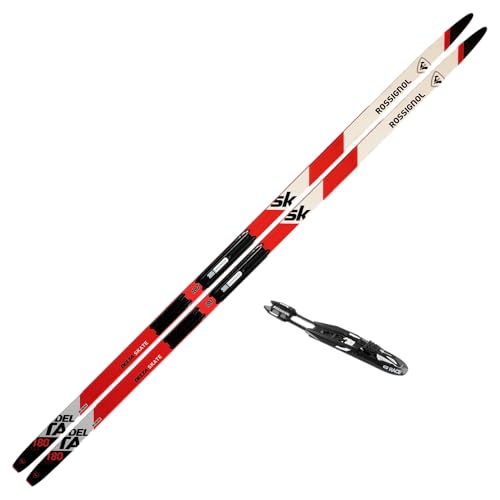
The Rossignol Delta Skate ski carries much of the same DNA as Rossignol’s top-tier race models. That makes it a compelling choice for fitness skiers and developing racers who want a ski that feels quick and responsive without being overly demanding. It delivers the efficient glide and power transfer serious skiers need for a great workout or to push their personal limits on groomed trails.
Designed for dedicated skating technique on prepared tracks, this performance-oriented ski delivers efficient glide and responsive power transfer for fitness skiers and developing racers. It sits below Rossignol’s top-tier race models, offering a lively, stable ride that feels quick underfoot without becoming overly demanding. This balance makes it a strong choice for those seeking a taste of race-level performance for training rather than pure competition.
Fischer LS Skate S Cross-Country Ski

What We Like
- Air Tec core for lightweight performance
- Tool-free binding adjustment on the fly
- Integrated IFP plate for balance adjustment
Trade-offs
- 172 cm S length may be short for heavier skiers
- Specific 41-44-44 sidecut for prepared trails
The Fischer LS Skate S features a 41-44-44 mm sidecut and a Worldcup Pro climbing zone, which translates to exceptional tracking and power transfer on machine-groomed race courses. This construction, paired with an Air Tec core and Sintec coating, is designed for skiers seeking a direct, efficient connection to the snow for high-speed skating. Research and owner feedback highlight its reputation for being extremely sturdy and stable, making it a premium choice for dedicated training and competition where every second counts.
The ski is designed for skating on prepared slopes. Its integrated IFP plate lets a skier adjust the center of gravity fore or aft with one click, useful for fine-tuning balance during a session. This setup, combined with features like the Power Edge, caters to skiers focused on controlled, aggressive skating.
Product photos
Fischer Aerolite Skate 70 Nordic Skis

What We Like
- Extremely lightweight Air Core Basalite Pro construction
- Arrow-shaped sidecut improves performance for 1:1 skating
- Skating 115 feature and special camber enhance stability
- Durable Power Edge and reinforced chassis for long service life
Trade-offs
- Sold without bindings, requiring a separate purchase
- Performance optimized for hard snow conditions
Fischer’s Aerolite Skate 70 uses an extremely lightweight Air Core Basalite Pro construction with volcanic basalt fibers, which reduces fatigue and provides a consistent flex in varying temperatures. Its arrow-shaped sidecut is designed to improve dynamics for the 1:1 skating technique, while the Skating 115 feature and special camber are intended to increase stability and deliver a more powerful kick on hard snow.
These skis are sold without bindings, requiring an additional purchase for a complete setup. Their design incorporates a reinforced chassis and Power Edge for durability, and a homogeneous pressure distribution for uniform wax wear, which Fischer states contributes to a longer service life.
Product photos
Rossignol Delta Sport Skate Skis
What We Like
- Unisex design suits a wide range of users
- Major brand with established market presence
Trade-offs
- No published dimensions or weight on Amazon
- No model-specific performance details in provided research
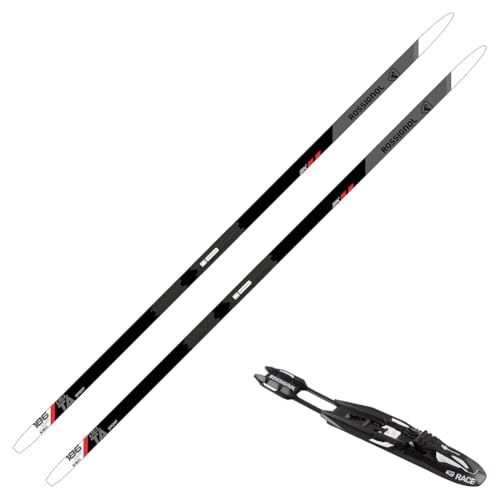
Rossignol is one of the few major Nordic ski brands available in the U.S., which means the Delta Sport Skate Skis come from a well-established player. Expert round-ups consistently list Rossignol as a core brand to research, giving a buyer confidence they are considering a mainstream option. This broad market presence suggests the skis are built on widely understood technology.
The Delta Sport is presented as a foundational sport model, implying general capability rather than a highly specialized design. Since the Amazon listing lacks a published sizing chart or specific dimensions, a buyer must consult an external resource or a shop to determine the correct length. Comparisons in research mention other models from brands like Fischer and Atomic, indicating buyers are expected to evaluate multiple options.
How We Evaluated Skate Skis
This guide is based on an analysis of manufacturer specifications, expert reviews, and common feedback from experienced skiers. It examines construction details like core materials and sidecut, performance traits such as glide efficiency and stability, and the intended user profile for each model. This approach identifies skis that suit specific purposes, from fitness skiing to competitive racing.
What To Look For In Skate Skis
Skate skis are engineered for speed on groomed trails, with construction focused on efficient energy transfer and glide. Key differences lie in weight, flex, and intended snow conditions.
Prioritize a ski’s flex and sidecut for your weight and technique. Lightweight cores aid speed, while proper camber ensures a stable push. Race models often excel on hardpack, while beginner skis offer more forgiveness.
Ski Construction & Weight
The core material significantly impacts a ski’s weight and feel. High-performance models use advanced materials like Air Tec or carbon laminates to minimize weight, enhancing quickness and reducing fatigue. For example, the Fischer Aerolite Skate 70 uses an Air Core Basalite Pro construction for an extremely lightweight build.
A lighter ski generally feels more responsive and is easier to swing into the next stride, which is a major advantage in racing. However, some skiers report that ultra-light skis can feel less stable at high speeds on descents compared to slightly heavier, more dampened models.
Flex & Camber Profile
A skate ski’s flex, or camber, must match your weight to function properly. The camber should be stiff enough to keep the ski’s middle section off the snow when your weight is balanced, yet soft enough to flatten fully when you push off. Manufacturers often categorize skis by flex (e.g., Medium, Stiff) or by recommended skier weight ranges.
An improper fit leads to poor glide and inefficient skating. Most recreational skiers do well with a ski optimized for mid-range conditions, while racers may seek specific cambers for warm or cold snow. Our research into ice skating gear shows that proper equipment fit is equally critical across all sliding sports for control and performance.
Sidecut & Intended Use
The ski’s sidecut, the width dimensions from tip to waist to tail, influences stability and tracking. A narrower waist, like the 41-44-44 mm sidecut on the Fischer LS Skate S, enhances agility and is designed for prepared race trails. Wider sidecuts can offer more stability for developing skiers.
Your skiing goals dictate the ideal category: beginner skis prioritize stability, fitness skis like the Rossignol Delta Skate balance performance and forgiveness, and race skis maximize speed for advanced technique. It’s wise to understand the differences in winter sliding sports, such as comparing snowskate models to grasp how design shapes function.
- Check the manufacturer’s recommended skier weight range for the specific flex.
- Consider if the ski is sold with bindings or requires a separate purchase.
- Verify the sidecut dimensions if you prioritize specific tracking or stability traits.
- Research the optimal snow temperature range for the model’s construction.
- Look for integrated binding plates or adjustment features for fine-tuning.
The right skate ski should feel like an extension of your stride, not a hindrance.
Skate Skis Compared
The comparison table below details key specifications for our top skate ski picks side-by-side.
| Product | Length | Sidecut | Binding Included |
|---|---|---|---|
| Rossignol Delta Skate Cross Country Skis | 186 cm | 40/44/43 mm | Yes |
| Fischer LS Skate S Cross-Country Ski | 172 cm | 41-44-44 mm | Yes |
| Fischer Aerolite Skate 70 Nordic Skis | 191 cm | Arrow-shaped | No |
| Rossignol Delta Sport Skate Skis | N/A | N/A | N/A |
Frequently Asked Questions
What are the top ski brands for skate skiing?
Major brands in the skate ski market include Fischer, Rossignol, Salomon, Atomic, and Madshus. Each offers models across the spectrum from beginner to World Cup-level race skis, with distinct constructions and feels. Researching each brand’s specific technology, like Fischer’s Air Core or Salomon’s carbon layouts, helps identify which aligns with your performance needs and budget.
Are skate skis different than classic cross-country skis?
Yes, skate skis and classic skis are designed for different techniques. Skate skis are shorter, with a stiffer camber optimized for pushing off to the side, and they pair with longer poles and high-ankle boots for lateral support. Classic skis are longer with a kick zone for grip and use shorter poles. The mechanics differ, so dedicated equipment for each style is recommended.
What size should skate skis be?
Skate ski length is primarily determined by the skier’s weight, not height, due to the critical role of camber flex. Manufacturers provide weight charts for each model and flex category. A properly fitted ski will fully flatten under your foot during the push phase while retaining camber when your weight is light. Always consult the specific ski’s fitting guide.
Is skate skiing harder than classic skiing?
Skate skiing generally requires more initial balance and core strength than classic skiing, as it involves a continuous side-to-side motion similar to ice skating or inline skating. Classic skiing can feel more intuitive for beginners. However, with proper instruction and equipment, many skiers find skate skiing’s speed and rhythm highly rewarding. Exploring resources on aggressive skating technique can highlight the balance skills that transfer between disciplines.
Can one pair of skate skis handle all snow conditions?
While high-level racers use multiple pairs optimized for specific snow temperatures and hardness, most recreational skiers use one pair designed for mid-range conditions. Advanced construction in some universal models broadens the effective temperature range. For the majority of skiers, a single, well-chosen pair is sufficient for varied grooming on local trails.
The Bottom Line
The Rossignol Delta Skate stands out as the best overall skate ski for fitness skiers and developing racers who want a responsive, efficient glide without the premium of a top-tier race model. For competitive skiers focused solely on speed, the high-performance Fischer LS Skate S is the clear choice, while the Fischer Aerolite Skate 70 serves beginning racers seeking a lightweight, race-ready platform. Your single most important task is matching the ski’s flex and construction to your weight and ability, this fit matters more than any brand name or marketing claim.
