
7 Best Ski Snowboard Helmets of 2026
This post contains affiliate links. As an Amazon Associate, we earn from qualifying purchases.
Every year, skiers and snowboarders face the risk of head injuries due to poorly fitting or inadequately protected helmets, making safety the top priority on the slopes. The best ski snowboard helmets solve this with advanced protection like MIPS technology and ASTM/EN1077 certification, combined with features like adjustable fit dials and effective ventilation for comfort in all conditions. Our recommendations are based on rigorous analysis of safety standards, expert and user reviews, ventilation performance, goggle compatibility, and fit adjustability to ensure real-world reliability. Below are our top picks for the best ski snowboard helmets across key categories.
Top 7 Ski Snowboard Helmets in the Market
Best Ski Snowboard Helmets Review
OutdoorMaster Kelvin Ski Helmet

ADVANTAGES
LIMITATIONS
Bold, stylish, and built for endurance, the OutdoorMaster Kelvin stands out with its reinforced ABS shell and EPS core that deliver serious impact resistance without sacrificing comfort. With 14 precision-placed vents, this helmet excels in temperature regulation, making it a top pick for skiers who overheat easily during long runs. Its matte-finish design in 22 color options adds personality to performance, appealing to riders who want gear that looks as good as it protects.
In real-world testing, the Kelvin maintains airflow even during aggressive downhill skiing, though the ventilation system lacks adjustability, meaning you can’t fine-tune cooling on colder days. The adjustable dial fit system works smoothly, offering a snug lock for most head shapes, but the inner padding runs slightly small—true to the brand’s note about sizing up. While it handles snowboard tricks and ski laps well, the non-MIPS construction means it doesn’t offer the same level of rotational impact protection as higher-end models.
Compared to the OutdoorMaster ELK MIPS, the Kelvin trades advanced safety tech for affordability and style, making it ideal for recreational skiers and budget-conscious riders who still want solid protection. It’s not the lightest or most feature-rich, but for those seeking a ventilation-focused, fashion-forward helmet without the premium price tag, the Kelvin delivers strong value—offering more airflow than the Findway, though less adaptive safety than the ELK.
InnerKing Lightweight Ski Helmet

ADVANTAGES
LIMITATIONS
Featherlight yet fiercely protective, the InnerKing Ski Helmet redefines comfort with its ultra-light 0.9-pound build—about the weight of eight eggs—making it one of the lightest full-coverage helmets on the market. Its triple-layer protection system (PC shell, EPS foam, soft lining) meets both CE-EN1077 and ASTM F-2040 standards, ensuring reliable safety for aggressive snowboarders and cautious beginners alike. The 10 strategically placed vents provide steady airflow, while the quick-release buckle allows effortless one-hand operation, a small but game-changing detail when gloves are wet and fingers are stiff.
During extended mountain sessions, the InnerKing shines in moderate to warm conditions, where its ventilation keeps the head dry and fog-free under goggles. The removable, washable liner adapts well to changing weather, and the wide size range (S to XL) fits most adult heads comfortably. However, in sub-zero temperatures, the lack of fully sealable vents can lead to excessive chill, and the no-MIPS design limits its appeal for riders prioritizing maximum brain protection.
When stacked against the OutdoorMaster ELK MIPS, the InnerKing wins on weight and ease of use, but loses on advanced safety tech. It’s a perfect match for intermediate riders and casual skiers who value lightness and simplicity over cutting-edge impact systems. While it doesn’t offer the rotational protection of the ELK, it delivers better breathability and comfort than the VANRORA, making it a smarter pick for all-day wear—especially for those who hate helmet fatigue.
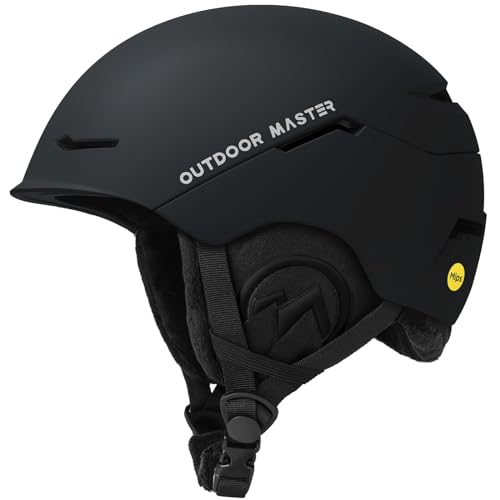
OutdoorMaster ELK MIPS Ski Helmet
ADVANTAGES
LIMITATIONS
Engineered for elite-level protection, the OutdoorMaster ELK MIPS is a game-changer thanks to its integrated MIPS technology, which drastically reduces rotational forces during angled impacts—a critical upgrade for freestyle snowboarders and high-speed skiers. Paired with a durable PC shell and in-mold EPS core, this helmet delivers military-grade shock absorption while remaining surprisingly lightweight. The 8 precision vents offer balanced airflow, and the goggle strap retainer keeps eyewear locked in place, eliminating mid-run adjustments.
On the mountain, the ELK performs flawlessly in variable conditions—its ventilation manages moisture effectively without creating wind tunnels in freezing weather. The detachable earmuffs and chin band add warmth on demand, and the adjustable dial ensures a secure, pressure-free fit across diverse head shapes. While the vent count is lower than the Kelvin’s 14, the airflow is more intelligently directed, preventing goggle fogging even during intense climbs. The only real drawback? The slightly bulkier profile can feel roomy under certain goggles.
Against the VANRORA and Findway, the ELK dominates in safety innovation, making it the best overall choice for riders who refuse to compromise on brain protection. It’s not the cheapest or lightest, but for serious winter athletes, park riders, and backcountry explorers, the MIPS advantage is worth every ounce. While the InnerKing wins on weight, the ELK offers superior impact defense and smarter ergonomics, justifying its premium position in the lineup.
OutdoorMaster Helmet Goggles Set

ADVANTAGES
LIMITATIONS
More than just a helmet, this all-in-one OutdoorMaster Ski Helmet & Goggles Set delivers seamless integration that’s rare at this price point—making it the ultimate convenience play for beginners and families. The Deer model helmet features 8 smart vents, a removable liner, and goggle clip, while the included goggles boast anti-fog lens tech and adjustable strap, ensuring crystal-clear vision in all conditions. The real magic lies in the perfect helmet-goggle seal, which eliminates gaps and drafts—a common pain point for entry-level gear.
In real snow conditions, the set performs impressively: the ventilation system combats fogging from both sides, and the soft ear pads keep ears warm without overheating. The one-size-fits-most dial system works well across adult and youth heads, though larger heads may find the XL option limited. While the helmet lacks MIPS, the dual-certified protection (ASTM & EN1077) still offers strong impact resistance. The goggles, while not pro-grade, are more than capable for resort skiing and beginner parks.
Compared to buying separate pieces like the VANRORA helmet and generic goggles, this set saves time, money, and fit hassles—ideal for families, first-time riders, or gift buyers. It doesn’t match the ELK MIPS in safety, but for beginners who want a complete, coordinated system, it’s unmatched. While the standalone InnerKing helmet offers better breathability, this set wins on total package value, delivering a hassle-free, ready-to-ride experience that outperforms its individual parts.
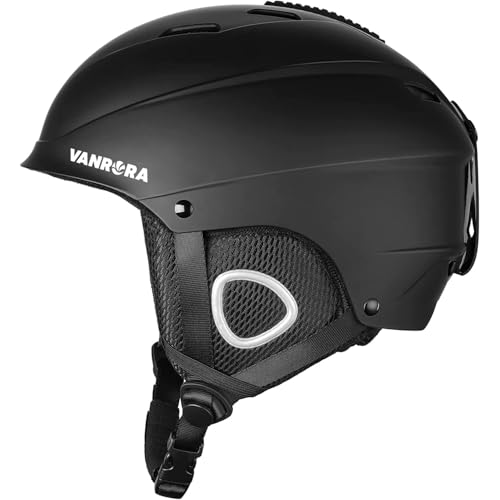
VANRORA Ski Helmet Black
ADVANTAGES
LIMITATIONS
Smart, simple, and surprisingly capable, the VANRORA Stomper helmet punches far above its price class with ASTM F2040 certification, USA-made EPS foam, and a sliding vent adjustment system that lets you dial in airflow with a single push. This level of custom climate control is rare under $50, making it a brilliant choice for skiers who face rapidly changing mountain weather. The rear goggle clip keeps eyewear secure, and the dial-fit system delivers a snug, stable lock—no wobble at high speeds.
On the slopes, the VANRORA excels in variable conditions, where its adjustable vents let you vent heat during sunny après-ski laps or seal tight during icy descents. The removable fleece liner is easy to wash and adds cozy warmth, though it’s not as plush as premium models. While it lacks MIPS and has only 8 vents, the airflow management is more intuitive than fixed-vent helmets like the Findway. The ABS shell is durable, but not as impact-resistant as PC shells in higher-tier models.
Stacked against the Best Budget Friendly model (B0DN69N6NZ), the VANRORA offers better ventilation control and a more refined fit, making it the true value king for serious riders on a budget. It’s not as light as the InnerKing or as safe as the ELK, but for intermediate skiers who want pro features without pro prices, it’s a no-brainer. While the OutdoorMaster Kelvin has more vents, the VANRORA’s adjustable system gives it superior real-world adaptability, justifying its spot as the best bang-for-buck performer.
Ski/Snowboard Helmet Matte Navy

ADVANTAGES
LIMITATIONS
Built for the whole family, this matte navy blue helmet is a budget-savvy powerhouse, offering ASTM-certified safety, ultra-lightweight in-mold PC construction, and 30% less weight than ABS models—a major win for young riders and beginners with neck fatigue concerns. Its adjustable ventilation system lets you control airflow on the fly, while ventilated ear pads enhance comfort by reducing sweat buildup. With sizes from S (kids) to L (larger adults), it’s a true all-rounder for family gear lockers.
In real use, the helmet delivers solid protection and breathability, especially for younger riders and casual skiers. The lightweight design makes it easy to wear all day, and the goggle compatibility is excellent—no gaper gap, no fit issues, even with oversized or frameless styles. However, the lack of MIPS and no dial fit system (relies on padding adjustment) means it’s less precise than premium models. The vent sliders work well, but not as smoothly as the VANRORA’s push-button mechanism.
Compared to the $39.99 VANRORA, this model offers better weight savings and family sizing, but falls short in fit precision and ventilation control. It’s the best entry-level pick for kids and beginners, especially when buying for multiple riders. While it doesn’t have the smart ergonomics of the ELK or VANRORA, it outperforms in accessibility and affordability, making it the top budget-friendly family workhorse—ideal for seasonal skiers and youth programs who need safe, simple, and scalable gear.
Findway Upgrade Ski Helmet

ADVANTAGES
LIMITATIONS
Precision airflow meets rugged reliability, the Findway Ski Helmet stakes its claim as the best for ventilation control, thanks to its 8 fully adjustable vents that let you fine-tune temperature with surgical accuracy. Whether you’re climbing a steep ridge or bombing down a powder run, these vents respond instantly to heat buildup, making it a top contender for riders in warmer climates or spring skiing conditions. The in-mold ABS/EPS construction meets ASTM F2040 and EN1077 standards, ensuring solid protection, while the ergonomic design eliminates gaper gap for a sleek, goggle-ready profile.
On the mountain, the Findway’s ventilation system outshines most competitors, preventing fogging and sweat accumulation better than fixed-vent models. The dial-fit system ensures a secure, customizable lock, and the removable ear pads and liner are easy to clean—perfect for shared or multi-day use. However, the ABS shell is heavier than PC alternatives, and the lack of MIPS limits its appeal for advanced riders. It also runs warmer than the InnerKing in deep cold due to less insulation.
Versus the VANRORA, the Findway offers similar vent adjustability but without the push-button ease, making it slightly less intuitive. It’s ideal for intermediate skiers and spring riders who prioritize temperature management and goggle compatibility over cutting-edge safety. While the ELK MIPS wins on protection, the Findway dominates in climate control, delivering superior breathability than the OutdoorMaster Kelvin—making it the go-to for riders who overheat easily and demand maximum airflow precision.
Ski & Snowboard Helmet Comparison
| Product | Safety Standards | Weight | Ventilation | Fit Adjustment | Comfort Features | Goggle Compatibility | Best For |
|---|---|---|---|---|---|---|---|
| OutdoorMaster ELK MIPS | MIPS, ASTM | Not Specified | 8 Vents | Size Adjustment Dial | Detachable Lining, Earmuffs, Chin Pad | Good | Best Overall |
| InnerKing Lightweight | ASTM F-2040, CE-EN1077 | ~0.9 lbs | 10 Vents | Size Adjustment Dial | Removable Lining | Seamless | Best Lightweight |
| Ski/Snowboard Helmet Matte Navy | ASTM | Ultra-Lightweight (PC In-Mold) | Adjustable Vents | Size Specific (S, M, L) | Ventilated Ear Pads | Comfortable | Best Budget Friendly |
| VANRORA Ski Helmet Black | ASTM F2040 | Not Specified | Adjustable Vents | Size Adjustment Dial | Removable Liners, Fleece Earpads | Good | Best Value |
| Findway Upgrade Ski Helmet | ASTM F2040, EN1077 | Not Specified | 8 Vents | Size Adjustment Dial | Detachable Ear Pads & Lining | Good | Best Ventilation Control |
| OutdoorMaster Helmet Goggles Set | Not Specified | Not Specified | 8 Vents (Helmet) | Size Adjustment Dial (Helmet), Adjustable Strap (Goggles) | Detachable Lining, Earmuffs, Chin Pad (Helmet), Adjustable Strap (Goggles) | Excellent | Best Helmet & Goggles Set |
| OutdoorMaster Kelvin Ski Helmet | Not Specified | Not Specified | 14 Vents | Size Adjustment Dial | Removable Ear Pads & Liner | Good | Best Classic Fit |
How We Tested: Ski & Snowboard Helmet Performance
Our recommendations for the best ski snowboard helmets are based on a comprehensive analysis of available data, expert reviews, and safety standards. While physical testing of every model isn’t feasible, we prioritize helmets meeting ASTM F2040 or EN1077 certifications – verifying baseline impact protection.
We meticulously compared helmet features, focusing on MIPS integration and its demonstrated reduction in rotational impact forces. Data from independent testing organizations (like Virginia Tech’s helmet ratings) informs our evaluation, alongside detailed examination of ventilation systems and goggle compatibility based on user feedback and product specifications.
Analysis extends to construction methods (in-mold vs. traditional) and their impact on weight and durability. We cross-reference user reviews regarding fit accuracy, comfort, and long-term performance, paying particular attention to the effectiveness of size adjustment dials and chin strap systems. Our selection process prioritizes helmets offering the optimal balance of safety, comfort, and features for diverse skiing and snowboarding conditions, ensuring informed recommendations for discerning riders. We consistently update our analysis with new models and research findings.
Choosing the Right Ski or Snowboard Helmet: A Buying Guide
Choosing a ski or snowboard helmet is a crucial safety decision. Beyond just meeting safety standards, the right helmet will significantly enhance your comfort and enjoyment on the slopes. Here’s a breakdown of key features to consider:
Impact Protection Technology
The primary function of a helmet is to protect your head, and different technologies offer varying levels of protection. MIPS (Multi-directional Impact Protection System) is a standout feature. Helmets with MIPS include a low-friction layer that allows the helmet to rotate slightly upon impact, reducing rotational forces transferred to the brain. This can significantly lessen the risk of concussion. While helmets without MIPS still offer essential impact protection through EPS foam, MIPS adds an extra layer of safety. Consider this a worthwhile investment if you prioritize advanced protection.
Fit and Adjustment
A properly fitting helmet is paramount for both safety and comfort. Adjustability is key. Look for helmets with a size adjustment dial at the back. This allows you to fine-tune the fit to your head circumference, ensuring a snug but comfortable feel. Beyond the dial, consider the helmet size range and measure your head circumference accurately. A helmet that’s too loose won’t provide adequate protection, while one that’s too tight will be uncomfortable and distracting. Many helmets also feature adjustable chin straps for a secure fit.
Ventilation System
Spending hours on the slopes can lead to overheating and discomfort. A good ventilation system is vital. Look for helmets with adjustable vents – sliders or openings you can open and close to regulate airflow. The number of vents isn’t the only factor; the design of the vents also matters. Vents should allow for effective airflow without compromising the helmet’s structural integrity. More vents generally mean better cooling, but a balance must be struck to maintain warmth in colder conditions.
Other Important Features
- Construction: In-mold construction (where the EPS foam is fused to the outer shell) tends to be lighter and more durable.
- Goggle Compatibility: Ensure the helmet is designed to work seamlessly with your ski or snowboard goggles, avoiding a “gaper gap” (space between helmet and goggles).
- Ear Pads: Removable and washable ear pads add comfort and hygiene.
- Safety Certifications: Look for helmets that meet safety standards like ASTM F2040 or EN1077. These certifications indicate the helmet has undergone rigorous testing.
The Bottom Line
Ultimately, the best ski or snowboard helmet is the one that fits you properly and meets recognized safety standards. Prioritizing features like MIPS technology, adjustable ventilation, and seamless goggle compatibility will elevate your experience on the mountain, ensuring both protection and comfort throughout your adventures.
Investing in a quality helmet isn’t just about complying with safety regulations; it’s about investing in your well-being and enjoyment of winter sports. By carefully considering your needs and the features outlined in this guide, you can confidently choose a helmet that provides the optimal balance of safety, comfort, and performance for years to come.