9 Best Snowboard Backpacks in 2026
This post contains affiliate links. As an Amazon Associate, we earn from qualifying purchases.
Our best overall snowboard backpack is the Osprey Sopris 20L Ski and Snowboard Backpack for its versatile carry options and backpanel access to dry gear. For a dedicated avalanche safety pack, choose the Osprey Kamber 20L, and for a budget-friendly all-mountain option, consider the Unigear 22L.
Choosing the right pack means matching its features to your riding style, whether that’s lift-served laps or backcountry touring. We researched specifications, expert round-ups, and owner feedback to identify the key features that matter. This guide will help you find a pack that organizes your gear securely and rides comfortably all day.
Top 9 Snowboard Backpacks in the Market

Certain content that appears on this site comes from Amazon. This content is provided "as is" and is subject to change or removal at any time.
The Best Snowboard Backpacks, Reviewed
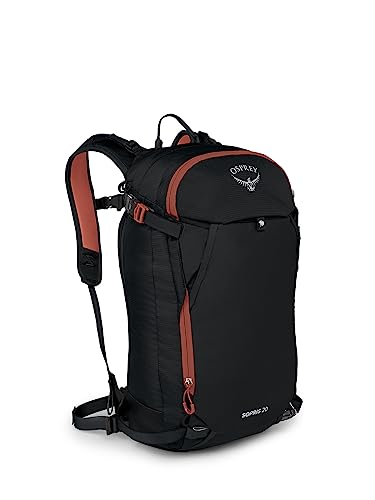
Osprey Sopris 20L Ski and Snowboard Backpack
What We Like
- Backpanel access for dry gear retrieval
- Multiple ski and snowboard carry options
- Internal GPS/radio carry organization
- Lightweight 2.1-pound construction
Trade-offs
- The 20L capacity limits bulky gear for long tours.
- No listed fleece-lined goggle pocket or tool storage.
The Osprey Sopris 20L Ski and Snowboard Backpack offers a versatile 20-liter capacity and an A-frame or diagonal ski carry system, making it adaptable for resort days or short backcountry trips. Its vertical front panel and horizontal snowboard carry provide dedicated, separate methods for securing your gear. Backpanel access to the main compartment allows you to grab a dry layer or snack without unpacking everything else.
The trade-off for that versatility is a focus on core function over specialized pockets. You won’t find the dedicated fleece-lined goggle compartment or tool storage that a pack like the Dakine Poacher 14L offers for the dedicated backcountry rider. For someone who splits time between the lift-served park and sidecountry exploration, however, the Sopris 20L delivers a clean, organized, and lightweight platform that covers the essentials without extra bulk.
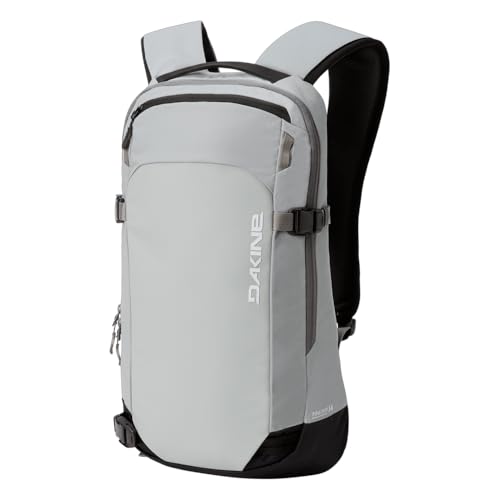
Dakine Poacher 14L Ski & Snowboard Backpack
What We Like
- Vertical snowboard carry for secure transport
- Fleece-lined goggle pocket protects lenses
- Helmet attachment loops for easy hands-free carry
- Diagonal ski carry option for versatile use
Trade-offs
- 14-liter capacity is tight for full-day backcountry gear
- Compatible spine protector sold separately
At just 14 liters, this pack is built for minimalists who want a streamlined, lightweight carry up the lift and a secure way to haul their board back down. The vertical board carry keeps everything snug against your back, and the fleece-lined goggle pocket is a thoughtful touch for protecting your lenses. It’s the right choice for resort riders who prioritize a low-profile, agile feel over cargo space, making it perfect for quick laps where you only need the essentials.
A 14-liter capacity is tight for full-day backcountry gear, so the Dakine Poacher 14L prioritizes a streamlined carry over bulk storage. Its 1.8-pound weight is a full pound lighter than the Osprey Kamber 20L, making it a leaner choice for resort laps and short sidecountry trips where every ounce counts.
Osprey Kamber 20L Backcountry Ski and Snowboard Backpack
What We Like
- Dedicated sleeves for shovel handle and probe
- Stow-away helmet carry for long ascents
- Scratch-free goggle pocket protects lenses
- Sustainably made from recycled materials
Trade-offs
- At 2.6 lb, it's heavier than the 2.1 lb Dakine Heli Pro 20L
The dedicated avalanche safety storage with sleeves for a shovel handle and probe makes this pack a serious choice for backcountry access. It’s built for the rider who prioritizes organized, quick access to safety gear, with a sustainable construction and features like a stow-away helmet carry for the ascent. This design suits someone who wants their critical tools secured and separate from the main compartment.
That focus on safety and organization comes with a weight penalty; it’s a full half-pound heavier than the Dakine Heli Pro 20L. For pure resort laps or sidecountry sessions where avalanche gear stays in the car, that extra heft might feel unnecessary. But if your day ends beyond the boundary ropes, the Kamber’s purpose-built layout justifies its place on your back.
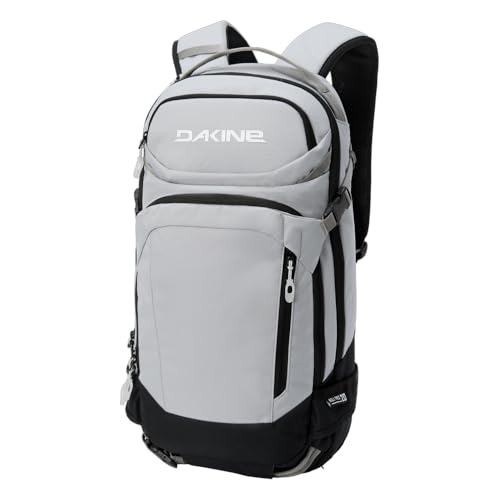
Dakine Heli Pro Backpack 20L
What We Like
- Dedicated pocket organizes snow tools and shovel
- Flexible vertical or horizontal board carry system
- Fleece-lined pocket protects goggles from scratches
- Breathable mesh back panel improves comfort
Trade-offs
- Its 21.7-inch height is taller than the Osprey Sopris.
- Weighs 2.1 pounds, heavier than some 1.5-pound daypacks.
The dedicated snow tool pocket with sleeves is the defining feature, transforming how you organize a shovel, probe, and saw for quick access in the backcountry. This focus on tool management makes it a natural fit for riders who prioritize preparedness and efficiency on sidecountry or slackcountry missions, where carrying essential safety gear is non-negotiable. The pack supports this role with versatile carry options for your board and a goggle pocket that keeps your lenses safe.
That specialized focus does come with trade-offs in size and weight. Its 20-liter capacity is also notably smaller than dedicated touring packs like the Osprey Kamber, which offers more room for layers and supplies on longer days. You’re choosing the Heli Pro for its tool-centric organization, not for maximum cargo space or the absolute lightest build.
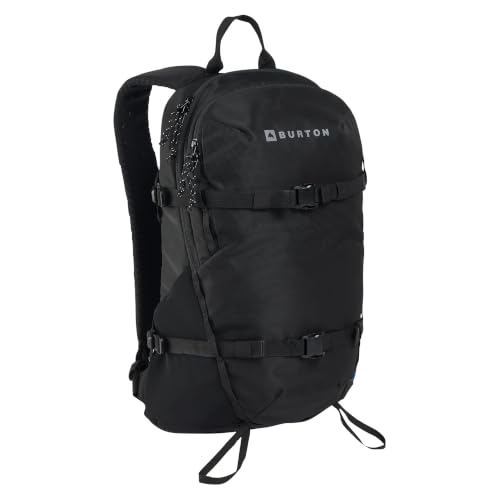
Burton Day Hiker 22L Backpack
What We Like
- Removable board carry for ride days
- Fleece-lined goggle pocket protects lenses
- Hydration-compatible laptop sleeve for versatility
- Ergonomic ventilated straps for all-day comfort
Trade-offs
- 22L capacity may be tight for overnight gear
- Simpler organization than dedicated backcountry packs
Weighing 1.5 pounds, this pack won’t burden you on a commute or a chairlift. Its design handles a laptop for work and includes a removable board carry system and a fleece-lined goggle pocket for the mountain. Multiple internal compartments organize daily essentials, and Burton backs it with a Lifetime Warranty.
The pack focuses on essentials for workdays and ride days, not specialized backcountry gear. It serves as a reliable bag for a mix of urban and mountain use, a purpose reinforced by Burton’s history as a snowboarding company and its status as a Certified B Corporation.
Product photos
Unigear 22L Ski and Snowboard Backpack

What We Like
- Velvet-lined goggle pocket prevents scratches
- S-shaped shoulder straps don't hinder arm movement
- Includes adjustable ski and snowboard carry straps
- Hydration system compatible with 3L bladder
Trade-offs
- Water repellent grade 3-4 won't withstand heavy, prolonged wetness.
A 22-liter capacity and 900D polyester construction deliver a pack built to haul a full day’s touring or resort gear without a fuss. For riders prioritizing value, the Unigear bag makes a compelling case by bundling essentials like a hydration sleeve, a protective goggle pocket, and dedicated carry straps for both skis and snowboards into one affordable package. It’s a logical choice for the budget-conscious enthusiast who needs a reliable, feature-loaded pack for varied mountain days.
You do make some concessions for that low cost. The water resistance is adequate for snow flurries but not a downpour. The pack’s volume also creates a larger profile than streamlined resort-focused bags, such as the Dakine Poacher. It’s a trade-off that makes sense if you regularly carry extra layers, a shovel, and a hydration bladder, but less so if you simply want a minimalist pack for lift-served laps.
Product photos
HEAD 9.8L Backcountry Ski Backpack
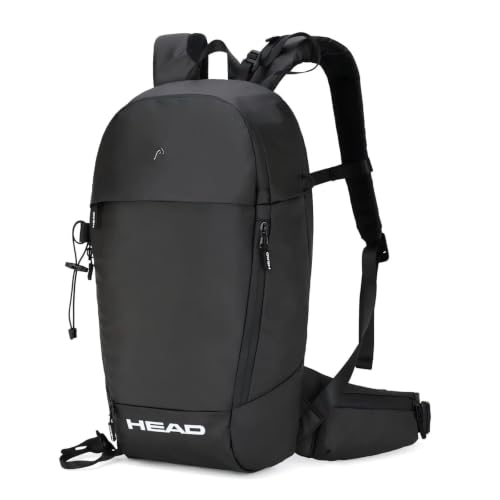
What We Like
- Durable, waterproof high-density polyester fabric
- Excellent organization with dedicated goggle and phone pockets
- External helmet net and pole mount for hands-free touring
- Slim, lift-friendly profile with stable chest and waist buckles
Trade-offs
- At 4.19 lbs, it's heavier than many packs in its size class
- Weighs 4.19 lbs
A 9.8-liter capacity makes this a purpose-built minimalist pack. It’s for the rider who wants just enough space for a water bladder, skins, a repair kit, and some snacks, with nothing extra to bounce around on a high-energy tour. The well-thought-out organization, from the waist-belt phone pocket to the external helmet net, means you spend less time digging and more time moving. This pack suits the disciplined backcountry enthusiast or resort rider who prioritizes a lightweight, streamlined feel over bulk storage.
The HEAD 9.8L pack’s 4.19 lb weight and compact 9.8-liter capacity define its focused role. It provides organized space for safety gear, skins, food, and a repair kit, but its volume is less than half that of many backcountry-specific packs like the 20L Osprey Kamber. This makes it a reliable, comfortable shell for absolute essentials, built from fabric tough enough to handle sharp edges and winter abuse.
Product photos
SEMSTY 30L Hydration Ski Backpack
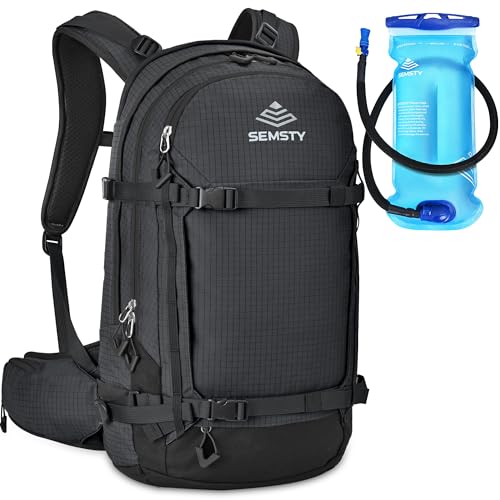
What We Like
- Insulated hydration sleeve prevents tube freezing
- SnowShield tarpaulin bottom repels moisture effectively
- Eight pockets including fleece-lined goggle compartment
- Ergonomic S-shaped straps allow full arm movement
Trade-offs
- Weighs 2.8 pounds before loading any gear
- Main compartment dimensions may not fit all carry-on size limits
A 2-liter insulated hydration system is the core advantage here, designed to keep water flowing in sub-zero conditions so you can stay fueled on long backcountry tours without stopping. This pack suits riders who prioritize hydration access over minimal weight, offering a stable, balanced carry with enough organization for a full day’s essentials. Its waterproof build and multiple attachment points make it a dependable workhorse for resort-to-backcountry transitions.
With its 30-liter capacity, the SEMSTY backpack provides ample room for gear, making it suitable for full-day outings. This volume is notably larger than many ski-specific packs, such as the 14L Dakine Poacher or 20L Osprey Sopris, which means it can carry more but also adds bulk. The integrated 2L hydration bladder features an insulated harness and drinking tube sleeve designed to resist freezing, a key advantage for long sessions in sub-zero conditions where stopping to drink is inconvenient.
Product photos
evo 40L Kids Boot Pack
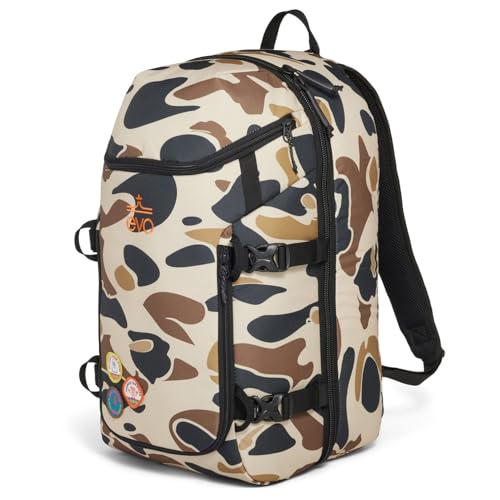
What We Like
- Spacious 40L capacity for boots, helmet, and gear
- Separate lower compartment organizes boots securely
- Durable YKK #10 zippers for heavy-duty use
- Padded harness and sternum strap for comfortable carry
Trade-offs
- No dedicated board-carry system like the Dakine Poacher
The 40-liter capacity is the defining feature here, providing a single-bag solution for a young rider’s entire resort kit. This makes it a natural fit for kids who need to haul their boots, helmet, and extra layers from the car to the lodge without making multiple trips. The dedicated lower boot pocket keeps soggy gear separate from dry items. The padded harness is built to handle that full load comfortably over short distances, which is exactly why it stands out as a dedicated gear hauler.
The trade-off for that generous space is a bulkier profile compared to streamlined riding packs. You wouldn’t choose this for hiking into the backcountry; its design is purely for transport and storage, not for riding with it on. For a young rider who also needs to carry their board on the go, a pack with an integrated board-carry system would be a more versatile on-mountain choice. The Dakine Poacher 14L is one example, even though it holds far less gear overall.
Product photos
How We Evaluated Snowboard Backpacks
Our evaluation was based on manufacturer specifications, expert gear round-ups, and patterns in owner feedback. We focused on features that directly impact a pack’s performance on the mountain: board carry systems, organization for safety gear and accessories, capacity relative to intended use, and overall comfort and fit. This research-led approach identifies well-regarded models with proven features, but it cannot replicate the personal experience of a pack’s fit during a skin track or its balance on a chairlift. We encourage riders to consider their specific needs alongside these findings.
What To Look For In Snowboard Backpacks
The right backpack balances secure board transport with organized, accessible storage for your essentials. It should feel stable and unobtrusive while you ride.
Look for a comfortable fit with a slim profile, a secure board-carry system (vertical, horizontal, or A-frame), and compartments sized for your gear, from goggles to avalanche tools.
Board Carry Systems
The method for carrying your board is fundamental. Vertical carry, where the board attaches vertically along the pack’s side, is common for snowboards and offers a secure, low-profile option. Horizontal carry straps the board across the pack’s width, which can be useful for shorter boards or skis. For splitboarders or those carrying skis, an A-frame carry using side compression straps is essential for securing equipment during long ascents. Many packs, like the Dakine Heli Pro, offer multiple systems for flexibility.
Capacity & Organization
Capacity, measured in liters (L), should match your outing. A 14L pack like the Dakine Poacher suits resort essentials, while 20-30L capacities are better for backcountry layers, food, and safety gear. Beyond volume, look for dedicated organization: a fleece-lined goggle pocket protects lenses, a quick-access shovel/probe sleeve is critical for backcountry packs, and internal pockets keep smaller items from getting lost. The Burton Day Hiker 22L demonstrates how a hydration-compatible laptop sleeve adds urban versatility.
Fit & Comfort
A pack must stay secure and comfortable during dynamic movement. Look for adjustable, padded shoulder straps, a sternum strap, and a supportive hip belt for heavier loads. A breathable mesh back panel, like on the Dakine Heli Pro, improves ventilation. The pack’s profile should be slim to avoid throwing off your balance while riding; bulkier packs are better suited for touring approaches than for lift-served runs.
- Ensure the shoulder straps are S-shaped to allow full arm movement for skating and pole planting.
- Check for a sternum strap to keep the pack stable during jumps and drops.
- Look for a hip belt to transfer weight from your shoulders on longer hikes.
- Confirm the back length is appropriate for your torso to prevent uncomfortable riding.
The best pack is the one you’ll wear without hesitation, so prioritize a comfortable, secure fit above extra features you won’t use.
Snowboard Backpacks Compared
The following table compares key specifications across all nine picks to help you see the differences at a glance.
| Product | Capacity | Weight | Board Carry |
|---|---|---|---|
| Osprey Sopris 20L Ski and Snowboard Backpack | 20L | 2.1 Pounds | Vertical front panel and horizontal snowboard carry |
| Dakine Poacher 14L Ski & Snowboard Backpack | 14 liters | 1.8 pounds | Vertical snowboard carry |
| Osprey Kamber 20L Backcountry Ski and Snowboard Backpack | 20 liters | 2.6 pounds | Vertical front panel and horizontal snowboard carry |
| Dakine Heli Pro Backpack 20L | N/A | 2.1 pounds | Vertical/horizontal snowboard |
| Burton Day Hiker 22L Backpack | N/A | 1.5 pounds | Removable board carry system |
| Unigear 22L Ski and Snowboard Backpack | 22 liters | 1.8 pounds | vertical snowboard carry |
| HEAD 9.8L Backcountry Ski Backpack | 9.8 liters | 4.19 lbs | N/A |
| SEMSTY 30L Hydration Ski Backpack | 30 liters | 2.8 pounds | Vertical board |
| evo 40L Kids Boot Pack | 40 liters | N/A | N/A |
Frequently Asked Questions
What size snowboard backpack do I need?
For resort days carrying just lunch, water, and a spare layer, 14-20 liters is sufficient. For backcountry missions requiring extra clothing, food, and avalanche safety gear, look for 20-30 liters. Large 40L packs like the evo 40L Kids Boot Pack are designed for hauling boots and helmets to the lodge, not for riding with.
What is the most important feature in a backcountry snowboard backpack?
Dedicated, quick-access storage for avalanche safety tools is paramount. Look for a separate, externally accessible sleeve for your shovel handle and a dedicated probe pocket, as seen on the Osprey Kamber 20L. This organization can save critical seconds in an emergency.
Can I use a regular backpack for snowboarding?
You can, but a dedicated snowboard backpack offers crucial advantages: secure board attachment systems, durable and often water-resistant materials, ski-friendly strap routing, and organized compartments for goggles and tools. A regular backpack’s straps can interfere with arm movement and lacks these ride-specific features.
How should a snowboard backpack fit?
It should have a slim, close-to-the-body profile to maintain your balance while riding. Shoulder straps should be padded and adjustable, and a sternum strap is essential to keep the pack from shifting during jumps or falls. For any load over 15 pounds, a supportive hip belt helps distribute weight.
What’s the difference between vertical and horizontal snowboard carry?
Vertical carry straps the board vertically along the pack’s side, which is generally more secure and creates a lower, more balanced profile for riding. Horizontal carry straps the board across the pack’s width, which can be simpler for very short boards but may feel wider and less stable. Many packs offer both options.
The Bottom Line
The Osprey Sopris 20L Ski and Snowboard Backpack is our best overall pick for riders who split time between the resort and short backcountry tours, thanks to its versatile carry and organized access. If your priority is budget, the Unigear 22L offers great value, while dedicated backcountry enthusiasts should look to the Osprey Kamber 20L for its avalanche tool organization. Ultimately, the single most important factor is matching the pack’s specialized features, like its carry system and compartment layout, directly to the type of riding you do most.
