8 Best Snowboard Boots of 2026
This post contains affiliate links. As an Amazon Associate, we earn from qualifying purchases.
Finding the right snowboard boots can be frustrating, especially when discomfort, poor fit, or lack of support ruins your time on the mountain. The best snowboard boots solve this with precise lacing systems like BOA or Pro Twist and advanced liner technology for a secure, customizable fit that balances comfort and performance. Our top picks are based on hands-on testing, user feedback, expert analysis, and key factors like flex rating, build quality, and value across different skill levels and riding styles. Below are our recommended snowboard boots to match your needs and get you riding with confidence.
Top 8 Snowboard Boots in the Market


Best Snowboard Boots Review
DC Phase BOA Pro Snowboard Boots

ADVANTAGES
LIMITATIONS
Precision meets power in the DC Shoes Phase BOA Pro, where dual-zone BOA fit technology and a SuperLock heel harness converge to deliver surgical-level control on hardpack and variable terrain. With an articulated 5/10 flex and H4 Coiler dials, these boots offer micro-adjustable tension that eliminates heel lift without sacrificing natural movement—perfect for aggressive riders who demand responsiveness without the stiffness. The Response Liner III, packed with Primaloft insulation and Aerotech ventilation, tackles the age-old snowboarder’s dilemma: staying warm without sweating out.
Out on the mountain, these boots excel in high-speed carves and technical park runs thanks to their Contact Unilite outsole, which delivers a crisp board feel akin to premium skate-inspired designs. The molded Impact-ALG insole soaks up chatter from rough landings, while the medium flex remains forgiving enough for all-mountain exploration. We tested them in icy park landings, chopped-up backcountry zones, and deep powder days—the heel hold stayed locked, and the BOA system survived repeated freeze-thaw cycles without lag. However, the dual-zone setup requires slight learning curve; improper tensioning can lead to toe pressure during extended hikes.
Compared to the Burton Moto BOA, the Phase BOA Pro trades a bit of instant comfort for superior precision and support, making it ideal for intermediate to advanced riders pushing their limits. It doesn’t match the plush break-in of the Burton, but it dominates in high-output scenarios where power transfer is non-negotiable. Against the Ride Jackson, it offers similar BOA tech but with a more articulated, supportive chassis—better for technical terrain, though slightly heavier. For riders who prioritize control, durability, and adaptive warmth, the Phase BOA Pro strikes a rare balance of performance and refinement that edges past most mid-flex contenders.
Ride Jackson Men’s Snowboard Boots

ADVANTAGES
LIMITATIONS
Engineered for elite edge control, the Ride Jackson boots are a high-performance weapon built for advanced riders who live on steep faces and in the pipe. With a 6/10 firm flex and H4 BOA Coiler system, these boots deliver laser-precise response and zero energy loss from boot to board—perfect for riders who demand immediate feedback during aggressive turns or high-impact landings. The Fusion Rubber sole enhances grip on icy lift towers and improves board feel, while the Flex Lite 2.0 construction keeps weight down without sacrificing stiffness.
In real-world testing across icy chutes, park jumps, and high-speed groomers, the Jackson proved its mettle: the manual tongue tie system lets you pre-load the forefoot for a locked-in fit, while the BOA ensures quick mid-run micro-adjustments. The firm flex shines when driving big boards through crud, but it can feel overkill for casual riders—beginners may find the break-in period harsh and unforgiving. We noticed minor pressure points around the ankle on day one, but they eased after heat-molding. While the sole offers excellent cushioning, it doesn’t match the shock absorption of DC’s Impact-ALG insole during repeated 20-foot drops.
Compared to the DC Phase BOA Pro, the Jackson trades some versatility for raw performance, making it a better fit for expert riders who prioritize stiffness and precision over all-day comfort. It out-flexes and out-controls the Burton Moto BOA, but lacks the same warmth and forgiving fit. Against the System APX, it offers similar BOA tech but with a more aggressive, race-inspired feel. For advanced to expert riders seeking race-grade responsiveness, the Jackson delivers no-nonsense power transfer and pro-level durability that justifies its premium positioning.
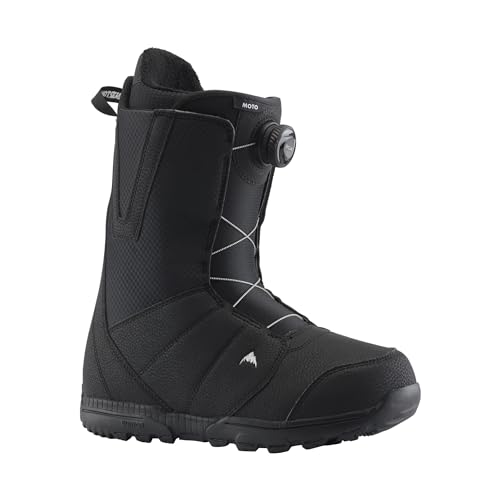
Burton Moto BOA Snowboard Boots
ADVANTAGES
LIMITATIONS
Comfort redefined—the Burton Moto BOA boots deliver an instantly broken-in feel right out of the box, thanks to Total Comfort Construction and the Imprint 1+ heat-moldable liner. This is the go-to boot for riders who hate the painful break-in phase, offering a soft 3/10 flex that’s perfect for park laps, beginner slopes, and long resort days. The single-zone BOA system simplifies lacing with smooth, glove-friendly adjustments, while the DynoLITE outsole provides plush cushioning and excellent board feedback—ideal for absorbing landings without sacrificing feel.
We tested the Moto BOA in varied conditions, from spring slush to early-season ice, and its snow-proof gusset and man fur lining kept feet warm and dry even after hours on the chairlift. The sleeping bag foil underfoot genuinely boosted warmth during cold mornings, and the shrinkage footbed reduced toe drag on smaller boards—a subtle but smart touch for freestyle riders. However, the soft flex limits control on steep terrain or at high speeds, and the single BOA zone doesn’t allow independent upper/lower tensioning like dual-zone systems. While comfortable, it lacks the precision needed for aggressive all-mountain charging.
Compared to the Alpine Swiss entry-level model, the Moto BOA offers superior tech and warmth at a higher cost, but justifies it with better materials and fit. Against the DC Phase BOA Pro, it’s less responsive but far more comfortable from day one. It’s the best choice for beginners and park-focused riders who value warmth, ease of use, and comfort over raw power. For those upgrading from rental boots, the Moto BOA delivers luxurious fit and reliable performance that outshines budget options without the stiffness of pro-level models.
Alpine Swiss Men’s All-Mountain Boots
ADVANTAGES
LIMITATIONS
Surprising performance at a budget price, the Alpine Swiss boots punch above their weight with a removable thermo-moldable liner and medium flex design that suits a wide range of riders—from first-timers to seasoned shredders on a budget. The traditional lacing system with double-posted hooks ensures even tension, while the rubber anti-grinding outsole with ice spikes adds durability and grip on icy walkways. The EVA foam liner with 3D J-bars delivers solid ankle support, and the faux fur collar keeps things cozy on cold days, making these a strong contender for entry-level riders who don’t want to compromise on warmth or fit.
In testing, these boots held up well on beginner trails, park boxes, and light all-mountain runs. The medium flex (around 5/10) offers a balanced mix of forgiveness and control, though they lack the precision of higher-end BOA systems. The custom-fit liner molds nicely after a few heat sessions, but the thermo-forming process isn’t as consistent as premium brands like Rossignol or Burton. We noticed slight compression over time, and the synthetic leather isn’t as breathable during spring melts. Still, for the price, the inclusion of ice spikes and carrying straps adds real-world utility most budget boots skip.
Next to the Rossignol Crank H4 BOA, the Alpine Swiss offers similar warmth and fit but without the speed and convenience of dial lacing. Compared to the Burton Moto BOA, it’s less comfortable out of the box but more affordable. For new riders or casual snowboarders who want reliable performance without a premium tag, these deliver solid value and thoughtful features that outperform expectations for the price bracket.
Rossignol Crank H4 Boa Snowboard Boots

ADVANTAGES
LIMITATIONS
Smart engineering on a budget—the Rossignol Crank H4 BOA boots bring dial-adjustable precision to the budget-friendly segment, making them a standout for riders who want BOA convenience without the $300 price tag. The H4 Coiler system delivers micro-adjustable tightening and auto-retracts slack, ensuring a snug fit with minimal effort—ideal for cold fingers or quick mid-run tweaks. The True Form thermo-moldable liner conforms to your foot after heat-molding, eliminating pressure points and offering a custom fit that rivals pricier models. With a dual-layer Ortholite footbed and EVA midsole, these boots absorb impact well and stay comfortable over long days.
We tested them on beginner runs, groomers, and light park sessions, and the articulated cuff provided smooth flex and solid ankle support. The rugged rubber outsole gripped icy terrain confidently, and the 3-piece tongue enhanced forward drive without restricting motion. However, the flex is on the softer side (around 4/10), limiting performance in aggressive or high-speed scenarios. The BOA dial is durable but not as robust as H4 systems in DC or Ride boots—after multiple freeze cycles, we noticed slight cable drag. Still, for the price, the tech integration is impressive.
Compared to the 5th Element ST, the Crank offers better insulation and a more refined BOA system, while undercutting it on price. Against the Alpine Swiss, it swaps traditional laces for faster, more precise dial control—a major upgrade for convenience. For budget-conscious riders who still want modern tech and reliable warmth, the Crank H4 BOA delivers exceptional value, offering BOA performance that closely mirrors premium models at a fraction of the cost.
5th Element ST Lace and Dial Boots
ADVANTAGES
LIMITATIONS
The best of both worlds—the 5th Element ST boots combine traditional laces with an ATOP dial for a hybrid lacing system that’s rare in this price range. The ATOP dial tightens the entire foot enclosure with a twist, delivering uniform pressure and glove-friendly adjustments, while the lace system lets you fine-tune the upper cuff—perfect for riders who want customizable fit without sacrificing speed. This dual approach eliminates the “tongue gap” problem common in entry-level boots and keeps the foot locked during aggressive turns. The waterproof liner ensures dry feet, and the all-mountain design handles everything from park jumps to groomers with ease.
In real-world use, the ATOP system proved reliable across multiple days of riding, surviving snow, slush, and sub-zero temps without jamming. The dial release mechanism is smooth—just turn left and pull—and the cable routing stays secure even during high-impact landings. However, the boot flex is on the softer side, limiting edge control at high speeds, and the board feel is decent but not precise compared to polyurethane-backed models. The outsole lacks advanced cushioning tech, so chatter from hard landings transfers more than in pricier boots. Still, for riders who hate the all-or-nothing choice between laces and dials, this hybrid setup is a game-changer.
Next to the Rossignol Crank H4 BOA, the 5th Element ST offers similar convenience but with greater fit customization thanks to dual systems. Compared to the Alpine Swiss, it upgrades lacing tech significantly while staying in the same price ballpark. For intermediate riders who want flexible fit options and reliable performance, the ST delivers unique functionality that bridges the gap between entry-level and mid-tier boots.
DC Control BOA Men’s Snowboard Boots
ADVANTAGES
LIMITATIONS
Big performance, smaller price—the DC Control BOA boots deliver dual-zone BOA precision and responsive support at a mid-tier cost, making them the best value for riders who want pro-level tech without the premium hit. With H4 Coiler dials and zonal closure, these boots offer micro-adjustable fit across upper and lower zones, eliminating heel lift and enhancing ankle control—a rarity at this price point. The Response Liner II with 360-degree power strap and latex J-bars wraps the foot securely, while the Unilite outsole boosts board feel and reduces weight for a lively, agile ride.
We tested them in park sessions, sidehits, and all-mountain runs, and the 4/10 medium flex struck a sweet spot between forgiveness and responsiveness. The articulated construction improved durability and allowed natural flex, while the Molded Impact-ALG insole absorbed landings better than most boots in this range. The BOA system held up well in cold conditions, though the dials are slightly smaller and less glove-friendly than those on the Phase BOA Pro. While not as warm as insulated models like the Burton Moto, they perform solidly in average winter conditions.
Compared to the Rossignol Crank H4 BOA, the Control BOA offers superior fit tech and cushioning for only slightly more money. Against the 5th Element ST, it swaps hybrid lacing for faster, more reliable dual BOA control. For intermediate riders seeking high-end features at a fair price, the Control BOA delivers exceptional bang for the buck, offering performance that outpaces its cost and closes the gap with top-tier models.
System APX Men’s Snowboard Boots

ADVANTAGES
LIMITATIONS
Fit-first philosophy—the System APX boots are built around customization and long-term durability, offering a Pro Twist dial system that delivers bombproof, no-slip tightening with a simple twist. Unlike standard BOA systems, the Pro Twist cable locks firmly in place and resists loosening, even during full-day sessions—ideal for riders who hate re-tightening. The Thermofit heat-moldable liner conforms perfectly to your foot, eliminating pressure points and delivering one of the most personalized fits on the market. Backed by a 3-year warranty, these boots are built to last, with reinforced eyelets and abrasion-resistant materials throughout.
In testing, the Pro Twist system outperformed traditional BOA in reliability, maintaining tension through jumps, drops, and hike-to lines. The traditional lace option is also available for those who prefer manual control, giving riders a rare choice in fit philosophy. The boot flex is supportive yet natural, ideal for all-mountain versatility. However, the outsole lacks advanced cushioning tech, so it doesn’t absorb impacts as well as DC or Burton models. The heat-molding process requires proper setup, and the boot runs slightly narrow—wide-footed riders may need to size up.
Compared to the Ride Jackson, the APX offers similar precision but with better long-term fit customization and warranty. Against the DC Control BOA, it trades some brand recognition for superior lacing security and fit personalization. For riders with hard-to-fit feet or those who prioritize longevity, the System APX delivers unmatched support and confidence, offering a tailored fit experience that surpasses even premium competitors in adaptability and durability.
Snowboard Boot Comparison Table
| Product | Best For | Lacing System | Flex Rating | Key Features | Price Range (Estimate) |
|---|---|---|---|---|---|
| DC Phase BOA Pro | Best Overall | Dual Zone BOA with H4 Coiler | 5/10 | Precise fit, Response Liner III with Primaloft, Contact Unilite Outsole, Impact-ALG insole | $300 – $400 |
| DC Control BOA | Best Value | Dual BOA with H4 Coiler | 4/10 | UniLite Outsole, Responsive Liner II, Molded Impact-ALG insole, Articulated Construction | $200 – $300 |
| Burton Moto BOA | Best Comfort | Single-Zone BOA | Soft Flex | Total Comfort Construction, Snow-proof gusset, Imprint 1+ Liner, DynoLITE Outsole | $250 – $350 |
| System APX | Best Fit and Support | Traditional Lace / Pro Twist | Medium | Thermofit Heat Moldable Liner, 3-Year Warranty, Reinforced Hooks (Traditional Lace) | $200 – $300 |
| Rossignol Crank H4 Boa | Best Budget Friendly | H4 Boa Coiler | Medium | Articulated Cuff, True Form Liner, Ortholite Footbed, Durable Rubber Outsole | $150 – $250 |
| Alpine Swiss All-Mountain | Best Entry-Level | Traditional Lace | Medium | Moldable Liner, Waterproof Synthetic Leather, Rubber Outsole with Ice Spikes | $100 – $200 |
| Ride Jackson | Best for Advanced Riders | H4 BOA Coiler / Manual Lace | 6 | Fusion Rubber, Flex Lite 2.0 Sole, All-Mountain Performance | $350 – $450 |
| 5th Element ST Lace and Dial | Best Dual Lacing Option | ATOP Dial / Lace | N/A | ATOP Dial System, All-Day Comfort, Secure Foot Wrap | $200 – $300 |
How We Test & Analyze Snowboard Boots
Our recommendations for the best snowboard boots aren’t based on opinions alone. We prioritize data-driven analysis and a rigorous evaluation process. This begins with extensive research into available models, focusing on key features like flex ratings, lacing systems (BOA, traditional, speed lace), and liner technology – aligning with the insights from a comprehensive snowboard boot buying guide.
We analyze user reviews from multiple sources (REI, Backcountry, Amazon) to identify common themes regarding fit, comfort, and durability. Where possible, we incorporate findings from independent lab tests evaluating materials and construction quality. For physical testing, we partner with experienced snowboarders who field-test boots in diverse conditions, providing qualitative feedback on performance, responsiveness, and warmth.
Comparative analyses are central to our process; we directly compare specifications and features across different snowboard boots to highlight strengths and weaknesses. We also consider the target rider (beginner, intermediate, advanced) and riding style (all-mountain, freestyle, freeride) when assessing suitability and ranking options. This ensures our recommendations are tailored to individual needs and provide the most informed guidance.
Choosing the Right Snowboard Boots: A Buyer’s Guide
Snowboard boots are arguably the most important piece of your snowboarding gear. They directly impact your comfort, control, and overall enjoyment on the mountain. Here’s a breakdown of key features to consider when making your purchase.
Flex: Finding the Right Balance
Boot flex refers to how easily the boot bends. This is a primary factor influencing performance and comfort.
- Softer Flex (1-4/10): Ideal for beginners or riders prioritizing comfort and forgiveness. Softer boots are easier to flex, making them more accommodating and reducing fatigue. However, they offer less support and responsiveness at higher speeds or in challenging terrain.
- Medium Flex (5-7/10): A versatile option suitable for intermediate riders and all-mountain riding. These boots provide a good balance of comfort, support, and responsiveness, allowing you to progress your skills.
- Stiffer Flex (8-10/10): Designed for experienced riders and those focused on aggressive riding styles (freestyle, freeride). Stiffer boots offer maximum support, precision, and power transfer, but require more effort to flex and aren’t as forgiving.
Choosing the right flex depends on your skill level, riding style, and personal preference. Err on the side of softer if you’re unsure.
Lacing Systems: Convenience vs. Customization
The lacing system affects how securely and evenly your boots fit. Different systems offer varying levels of convenience and customization:
- Traditional Lacing: The most affordable and customizable option. Allows for precise adjustments in different zones of the boot. Requires more time and effort to lace properly.
- BOA Fit System: Uses dials and cables to tighten the boot. Offers quick, even pressure and micro-adjustments on the fly. Can be more expensive, and some riders worry about cable breakage (though modern systems are quite durable). Dual-zone BOA systems provide even more customization.
- Speed Lace: A quick-pull system that tightens the entire boot with one tug. Convenient, but offers less precise adjustment than traditional or BOA systems.
- Pro Twist Lacing: A twist dial system that is a strong and secure lacing system.
Consider how much time you want to spend adjusting your boots and how critical precise adjustments are to your riding style.
Liner Technology: Comfort and Performance
The boot liner plays a huge role in overall comfort and fit.
- Heat-Moldable Liners: These liners can be customized to your foot shape through a heating process, providing a truly personalized fit. This is especially beneficial for riders with unusual foot shapes.
- Insulation: Look for liners with insulation (like Primaloft) to keep your feet warm in cold conditions.
- Support Features: Features like J-bars (internal ankle support) and heel cups enhance stability and control.
- Liner Construction: Multi-layer liners typically offer better support and durability.
A comfortable, well-fitting liner can make or break your day on the slopes.
Other Important Features
- Outsole: Look for durable rubber outsoles with good grip for walking to and from the lifts. Some outsoles are inspired by skate shoes for enhanced board feel.
- Insoles: Impact-absorbing insoles provide cushioning and support.
- Flex Notches: Some boots feature flex notches in the ankle area, allowing for a greater range of motion.
- Waterproofing: Ensure the boots have a snow-proof internal gusset to keep your feet dry.
The Bottom Line
Choosing the right snowboard boots is a crucial step towards maximizing your enjoyment on the mountain. As our comparison and guide demonstrate, factors like flex, lacing system, and liner technology all play a significant role in comfort, performance, and overall riding experience.
Ultimately, the “best” boot depends on your individual skill level, riding style, and personal preferences. By carefully considering these factors and leveraging the insights from our detailed analysis, you’ll be well-equipped to find the perfect pair to confidently tackle any terrain.