10 Best Snowboard Glasses in 2026
This post contains affiliate links. As an Amazon Associate, we earn from qualifying purchases.
Our best overall pick is the Smith Squad Snow Goggles with ChromaPop Lens for its superior optical clarity and secure helmet integration. For riders who swap lenses often, the Smith Squad MAG offers a best magnetic lens system, while the Anon Sync Cylindrical Goggles are the best over-the-glasses fit.
A great goggle keeps your vision sharp and fog-free, letting you focus on the terrain, not your gear. This guide helps you find the right balance of lens technology, fit, and ventilation for your riding style. We built this list by researching specifications, manufacturer data, and patterns in expert round-ups and owner feedback.
Top 10 Snowboard Goggles in the Market
Certain content that appears on this site comes from Amazon. This content is provided "as is" and is subject to change or removal at any time.
The Best Snowboard Goggles, Reviewed
Smith Squad Snow Goggles with ChromaPop Lens

What We Like
- ChromaPop lens enhances definition and contrast
- Semi-rimless design for a wide field of view
- Best anti-fog tech for clear optics
Trade-offs
- Lens is not magnetically interchangeable
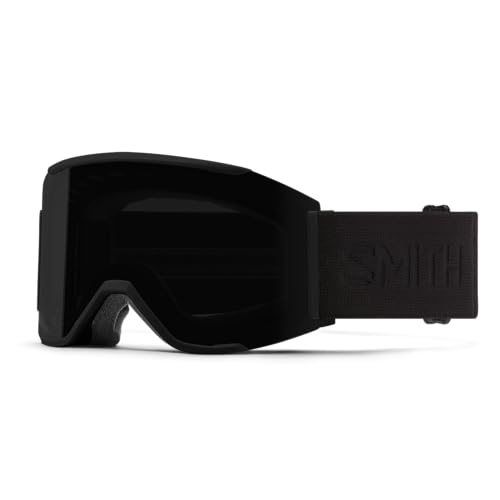
The Smith Squad’s ChromaPop lens technology makes details pop on the mountain by enhancing definition and natural color, a decisive advantage for reading terrain. Its semi-rimless, oversized cylindrical lens provides a crystal clear, wide view, which is critical for spotting obstacles and changes in light.
The lens is replaceable, but unlike the Smith Squad MAG model, this version lacks the advertised ‘Easy Lens Change Technology’ for magnetic swaps. For a rider whose priority is optical clarity and helmet integration, the standard Squad is a focused option. If quick, tool-free lens changes in shifting conditions are essential, the MAG model presents a clear alternative.
Smith Squad MAG Goggles with ChromaPop Lens
What We Like
- Magnetic lens system for quick, tool-free changes
- ChromaPop technology enhances contrast and color
- Includes a dedicated low-light lens
- Vented design for fog-free performance
Trade-offs
- Weighs 0.7 pounds, heavier than some premium models
- Only includes two lenses; additional lenses are separate
- Best performance requires pairing with a Smith helmet
The Smith Squad MAG’s magnetic lens system is the defining feature, letting you swap from a sunny to a stormy-day lens in seconds without fumbling. This, combined with Smith’s ChromaPop lens technology that sharpens terrain definition, makes it a top pick for riders who chase variable conditions and need their vision to adapt instantly. It’s built for the mountain athlete who values quick adjustments and clear optics to spot every undulation and change in the snow.
At 0.7 pounds, the Smith Squad MAG goggles weigh the same as some magnetic competitors like the OutdoorMaster PRO, giving them a stable, secure fit on the mountain. Their design is optimized for integration with Smith helmets, which can improve venting and comfort for users of that brand. Unlike the Oakley Flight Deck, which reviewers noted uses a tedious, old-school lens swap method, the Squad MAG’s magnetic system allows for quick changes to suit different light conditions.
Product photos
Anon Sync Cylindrical Goggles
What We Like
- Secure magnetic latch lens swap system
- Spacious frame for over-the-glasses fit
- Includes compatible face mask with MFI tech
- Wide field of view with 100% UV protection
Trade-offs
- One-size frame may not suit smaller facial structures
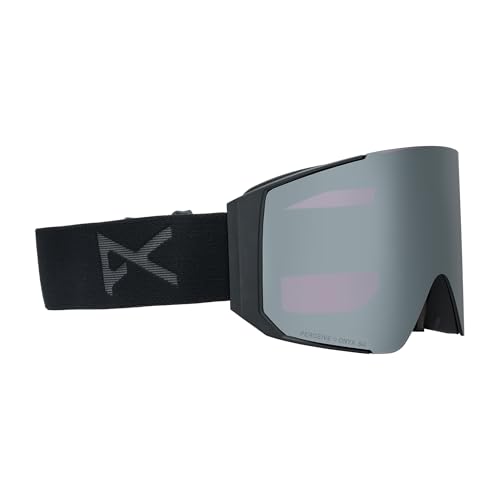
The roomy goggle frame designed to fit comfortably over most prescription eyewear makes the Anon Sync a standout for riders who need to wear their glasses on the mountain. Its exclusive Perceive Lens Technology provides the high-contrast vision necessary for accurately reading terrain in variable conditions, which is crucial for maintaining confidence and control when the light shifts. This combination of optical clarity and a dedicated over-the-glasses fit caters specifically to snowboarders who prioritize clear, uncompromised vision without needing contact lenses.
That accommodating design comes with a notable trade-off in overall weight. For riders who don’t require an OTG fit, the added heft offers little benefit. However, for its core audience, the secure MFI face mask integration and the intuitive M-Fusion lens change system deliver practical, glove-friendly functionality that supports adapting to changing mountain weather.
Product photos
Anon M5 Toric Ski & Snowboard Goggles

What We Like
- Wide field of view with reduced distortion
- Magnetic lens swaps and face mask integration
- Fits over most prescription eyewear
- High-contrast vision in variable conditions
Trade-offs
- Medium/large frame may not suit smaller faces
- Only includes Sunny and Variable lens options
The Anon M5’s toric lens design delivers a wide, distortion-free field of view, which is crucial for spotting terrain changes and obstacles in your periphery while moving at speed. This makes it a strong choice for riders who prioritize optical clarity and situational awareness across varied mountain conditions. Its magnetic system also streamlines gear changes, letting you swap lenses or attach the face mask quickly on the lift.
That excellent vision comes with a noticeable weight penalty of 1.3 pounds, which some riders may feel over a full day compared to lighter options like the Smith Squad MAG. However, the integrated MFI mask and over-the-glasses fit offer substantial comfort and convenience for those who need it, balancing the heft with practical features the lighter models lack.
Wildhorn Outfitters Snowboard Glasse
What We Like
- Ultra-wide 185-degree field of view
- Fast magnetic lens swap system
- Upgrade path with Fenom lens family
Trade-offs
- At 0.6 lb, it is heavier than some cylindrical models
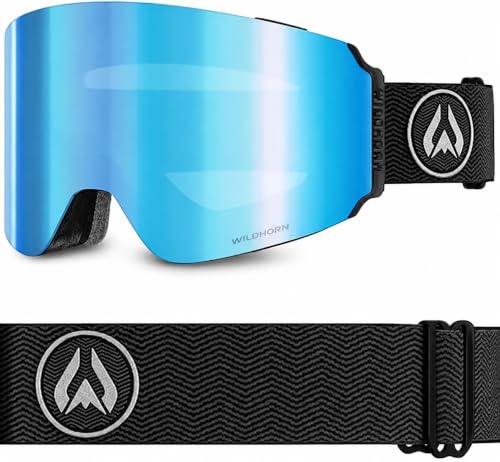
An 185-degree field of view is the standout feature here, wrapping around your face to eliminate blind spots and give you a panoramic view of the entire slope. This design is built for riders who prioritize maximum situational awareness, whether you’re navigating tight trees or spotting features in the park.
The trade-off for that expansive view is a frame weighing 0.6 pounds. However, the magnetic lens system with eight powerful magnets is a clever counterpoint, allowing for fast swaps when the light changes. You can adapt from a bright sunny day to a flat-light afternoon without fumbling in the cold.
Dragon Alliance DRG1636 Snowboard Glasse
What We Like
- Patented frameless design for wide field of view
- Swiftlock system for quick lens changes
- Includes a bonus replacement lens
- Super Anti-Fog coating on lenses
Trade-offs
- At 1.0 lb, it's heavier than the Dragon NFX2 (0.2 lb)
- 54% VLT lens is only for low light conditions
- No high VLT lens included for sunny days
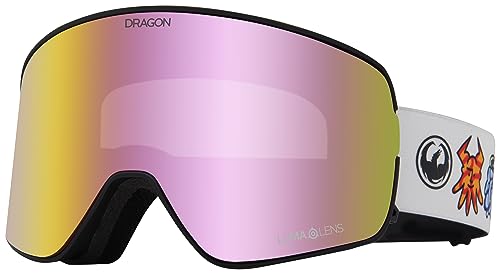
The Dragon Alliance DRG1636’s patented frameless design eliminates the traditional frame around the lens, which creates an exceptionally wide and unobstructed view critical for spotting terrain features. Combined with its cylindrical lens and Swiftlock change system, this goggle is built for riders who prioritize maximum peripheral vision and quick adaptability in changing mountain light. The included Lumalens Pink Ion lens, optimized for 54% VLT, is specifically engineered for flat light, stormy days, and late afternoon sessions.
The Dragon Alliance DRG1636 is optimized for low-light conditions with its 54% VLT lens, which means it excels on cloudy days but requires a separate lens purchase for bright sun. At 1.0 pounds, it weighs more than the 0.2-pound Dragon NFX2 model, a difference some riders may notice over a full day. This focus on a specific light condition defines its primary use case.
Product photos
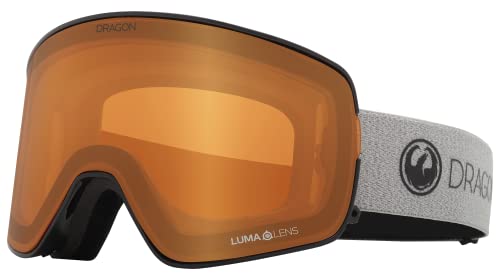
Dragon Alliance NFX2 Snow Goggles
What We Like
- Photochromic lens adapts to all light conditions
- Swiftlock system allows for quick lens changes
- Armored venting with triple foam reduces fogging
Trade-offs
- Only 0.2 pounds, which some may perceive as less substantial.
- Armored venting and triple-layer foam add bulk for a sealed fit.
The Dragon Alliance NFX2’s core advantage is its Lumalens photochromic technology, which automatically adjusts tint to maintain optimal visibility from flat light to bright sun. This eliminates the need to carry multiple lenses or stop to swap them. Combined with the Swiftlock lens system for easy changes and armored venting to manage moisture, these goggles are built for riders who face constantly shifting mountain conditions and want a single, adaptable solution. It’s a streamlined choice for maximizing time on the slope.
The Dragon Alliance NFX2 Snow Goggles weigh 0.2 pounds, a figure that makes them among the lightest options listed, which can reduce pressure on the face during long days. Their design uses an injected cylindrical polycarbonate lens with Lumalens photochromic technology, engineered to improve visibility across environments without manual lens changes. This combination of low weight and adaptive clarity suits riders looking for simple, all-condition performance from a single goggle.
OutdoorMaster Ski Goggles PRO

What We Like
- Frameless spherical lens gives an unobstructed view
- Magnetic system allows quick lens swaps for conditions
- OTG design accommodates wearing prescription glasses
- Includes protective case and carrying pouch
Trade-offs
- Extra lenses are sold separately, not included
A magnetic, frameless lens system that swaps in seconds is the core appeal here, letting you match your lens to the light without fumbling. That, combined with the OTG design, makes these goggles a functional and adaptable choice for riders who need versatility without complexity. It suits anyone looking for a straightforward performance feature set typically found in more expensive models.
The OutdoorMaster Ski Goggles PRO uses a magnetic interchangeable lens system, so you can quickly swap lenses for different light conditions. However, extra lenses are sold separately, which means the full benefit of the system requires additional purchases. This is a practical compromise for the entry point.
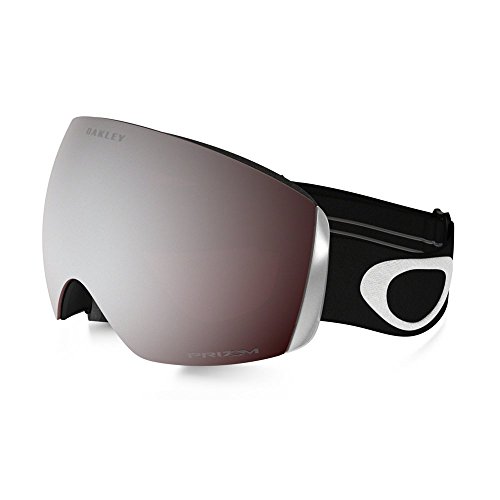
Oakley Flight Deck Ski Goggles
What We Like
- Frameless, spherical lens for outstanding field of view
- Premium build and soft foam for all-day comfort
- Prizm lenses offer excellent contrast in tricky conditions
- Large, frameless lens sits snugly to the face
Trade-offs
- Lens swapping is tedious without a magnetic system
- Only one lens is included with the goggle
- Additional lenses are a significant extra purchase
Oakley’s Flight Deck uses a frameless, spherical lens design that sits snug to the face. Research mentions highlight its outstanding field of view in all directions, which provides a wide visual range while skiing or snowboarding. The Prizm lenses are noted for offering contrast in low-light or tricky conditions.
The lens change system on the Flight Deck is described as an old-school, rip-it-out method. Research indicates swapping lenses is tedious and not something you’d want to repeat often, with one tester referencing a video guide to avoid damaging the frame. Unlike products like the Smith Squad MAG or Anon Sync which have easy lens change technology, the Flight Deck includes only one lens, so choosing a tint suitable for your season is important.
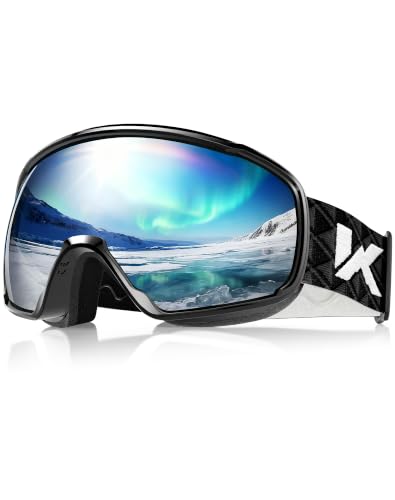
InnerKing EN174 Anti-Fog Goggles
What We Like
- EN174-certified anti-fog with dual-layer lenses and vents
- HD28 lens clarity for better terrain detail at speed
- Spacious OTG frame fits most prescription eyewear comfortably
- Lightweight, helmet-ready fit with three anti-slip strips
Trade-offs
- At 0.3 lb, it's lighter than premium models like the Smith Squad MAG (0.7 lb), which may feel less substantial.
- The fixed-lens design lacks the quick-change convenience of magnetic models like the OutdoorMaster PRO.
SGS-tested EN174 anti-fog certification means these goggles are built to manage heat and moisture aggressively, so your vision stays clear from first chair to last run without constant wiping. The HD28 lens clarity delivers a measurable step up from basic goggles, helping you spot changes in snow texture and terrain features with more confidence.
You do trade away some premium features for that certified anti-fog focus. The lens is not interchangeable like on the Smith Squad MAG, so you can’t swap for different light conditions. For a rider who needs over-the-glasses compatibility and values tested fog resistance over quick lens swaps, the InnerKing delivers a straightforward solution.
Product photos
How We Evaluated Snowboard Goggles
Our evaluation was research-based, comparing specifications from manufacturers and analyzing patterns in expert round-ups and owner feedback. We focused on three key criteria for this category: lens technology and visibility, fit and comfort, and anti-fog performance. Lens clarity, field of view, and the ability to handle variable light conditions are paramount for safety and performance.
A comfortable, secure fit that works with helmets and, for some, prescription glasses, ensures a goggle stays in place all day. Finally, effective ventilation and anti-fog coatings are non-negotiable for maintaining clear vision. The limit of this research-led approach is that we cannot verify personal fit nuances, which is why we emphasize checking frame size and shape against your own face and helmet.
What To Look For In Snowboard Goggles
Finding the right goggle involves balancing lens performance, physical comfort, and reliable fog resistance. Your choice should enhance your vision without distracting you from the ride.
Key factors are lens technology for clarity and light adaptation, a secure and comfortable fit with your helmet, and a proven ventilation system to prevent fogging.
Lens Technology & Light Transmission
Lens technology defines what you see on the mountain. Look for proprietary systems like ChromaPop or Prizm that enhance contrast and color definition, helping you read terrain more accurately. The Visible Light Transmission (VLT) percentage indicates how much light passes through; a lower VLT is for bright sun, while a higher VLT is for low-light or stormy conditions. Photochromic lenses automatically adjust their tint across a VLT range, offering a versatile single-lens solution for changing weather.
Fit & Compatibility
A proper fit keeps the goggle sealed against wind and snow while remaining comfortable. The frame should sit snugly against your face without pressure points, and the strap must adjust securely to your head. Crucially, the goggle must integrate well with your snowboard helmet; many models are designed to pair effectively with helmets from the same brand. For riders who wear glasses, look specifically for models labeled OTG (Over-The-Glasses), which have a deeper frame channel to accommodate your eyewear without pinching.
Anti-Fog & Ventilation
Fogged lenses ruin a day on the slopes. Effective systems combine passive frame vents that allow airflow with dual-layer lens construction, where an insulating layer of air between the lenses reduces temperature differential. Anti-fog coatings applied to the inner lens also help, though they can wear over time. For the most demanding conditions, some anti-fog goggles feature certified technologies or advanced venting designs. Remember, managing your body temperature by venting your jacket can be as important as the goggle’s own ventilation.
- Check that the foam is soft, breathable, and provides a full seal around your eyes.
-
Look for multiple vents, often at the top and bottom of the frame, to promote airflow. Consider a magnetic lens system for easy swaps if you frequently change lenses in variable conditions.
-
Ensure the strap is wide, adjustable, and has non-slip silicone backing to stay secure.
Prioritize a fog-free design and a comfortable fit over aesthetic details.
Snowboard Goggles Compared
The table below compares the key features of our top picks at a glance.
| Product | Lens Shape | Lens Change System | Weight |
|---|---|---|---|
| Smith Squad Snow Goggles with ChromaPop Lens | Cylindrical | N/A | 0.5 pounds |
| Smith Squad MAG Goggles with ChromaPop Lens | Cylindrical | Magnetic interchange | 0.7 Pounds |
| Anon Sync Cylindrical Goggles | Cylindrical | M-Fusion magnetic latch | 8.0 pounds |
| Anon M5 Toric Ski & Snowboard Goggles | Toric | Magna-Tech magnetic | 1.3 pounds |
| Wildhorn Outfitters Snowboard Glasse | N/A | 8-magnet magnetic lockdown | 0.6 pounds |
| Dragon Alliance DRG1636 Snowboard Glasse | Cylindrical | Swiftlock | 1.0 pounds |
| Dragon Alliance NFX2 Snow Goggles | Cylindrical | Swiftlock lens system | 0.2 pounds |
| OutdoorMaster Ski Goggles PRO | N/A | Magnetic | 0.7 pounds |
| Oakley Flight Deck Ski Goggles | Spherical | Single included | 0.7 Pounds |
| InnerKing EN174 Anti-Fog Goggles | N/A | N/A | 0.3 pounds |
Frequently Asked Questions
What glasses do snowboarders wear?
Snowboarders primarily wear goggles, not sunglasses, for full eye protection. Goggles shield from wind, snow, UV rays, and impacts, and their strap ensures they stay on during falls. They offer superior peripheral vision, anti-fog ventilation, and the option for tinted lenses suited to specific light conditions, which is essential for safety and performance on the mountain.
What are the top 5 snowboarding goggles?
Rankings vary based on individual needs, but our research highlights five top models for different priorities. The Smith Squad is noted for overall optical clarity, while the Smith Squad MAG stands out for magnetic lens swaps. The Anon Sync is a strong choice for an over-the-glasses fit. Your best option depends on your specific requirements for lens tech, fit, and budget.
Which sunglass tint is best for snowboarding?
For snowboarding, you choose goggle lens tints based on VLT, not sunglass tints. For bright, sunny days, a dark lens with a low VLT like gray, black, or mirrored is best. For overcast or flat light, a high-contrast lens with a higher VLT in rose, yellow, or amber helps define terrain. Photochromic lenses that adjust automatically are a versatile single-lens option.
What are the best glasses for skiing?
The best eyewear for skiing is snowboard goggles, as the needs are identical: eye protection, fog resistance, and lens clarity for variable conditions. Key features to look for include spherical or toric lenses for a wide field of view, effective anti-fog systems, and a comfortable fit that works with your ski helmet.
How important is a wide field of view for snowboarding?
A wide field of view is very important for snowboarding, as it increases peripheral awareness. This helps you spot other riders, navigate through trees, and anticipate terrain changes without having to turn your head as much. Cylindrical and especially spherical lens shapes offer the widest views, with some models boasting very wide fields of view for a more immersive and safer riding experience.
The Bottom Line
The Smith Squad Snow Goggles with ChromaPop Lens are our best overall pick, delivering exceptional optical clarity and a secure fit for most riders seeking premium performance. If you’re on a budget but want magnetic lens convenience, look to the OutdoorMaster Ski Goggles PRO, while those who wear glasses should consider the Anon Sync or other OTG goggles. Ultimately, the most important factor is choosing a goggle with a lens system and anti-fog design that matches the light conditions you ride in most often.
