7 Best Snowboard Shell Jackets for 2026
This post contains affiliate links. As an Amazon Associate, we earn from qualifying purchases.
Staying dry and comfortable on the mountain is a constant challenge, especially when snowboard shell jackets fail to balance waterproofing, breathability, and mobility. The best snowboard shell jackets solve this with high-performance membranes, fully taped seams, and smart features like pit zips, helmet-compatible hoods, and powder skirts that work together to keep you protected and agile in harsh conditions. Our top picks are based on rigorous analysis of waterproof/breathability ratings, material durability, user reviews, and real-world functionality from trusted brands like Burton, The North Face, and Volcom. Below are our recommended snowboard shell jackets to match every rider’s needs and budget.
Top 7 Snowboard Shell Jackets in the Market

Best Snowboard Shell Jackets Review
Oakley Kendall RC Shell Jacket

ADVANTAGES
LIMITATIONS
Light, laser-focused, and built for speed—this shell means business. The Oakley Kendall RC Shell Jacket stands out with its fully taped seams, O Protect DWR treatment, and a bonded-peak, helmet-compatible hood that stays put in high winds. It’s not trying to be everything; instead, it excels as a minimalist, breathable armor for riders who prioritize weight savings and clean lines over bells and whistles. If you’re layering heavily and chasing fresh lines without the bulk, this jacket answers the call with precision engineering and trail-tested reliability.
In real-world use, the 100% polyester shell sheds snow and light rain with ease, while the adjustable cinch hem locks in warmth during icy descents. It’s not the most breathable in sustained uphill hikes, but for resort laps and park sessions, airflow is more than adequate. The hood fits snug over most helmets without obstructing peripheral vision, and the lack of underarm vents is noticeable on warmer days—this isn’t a jacket for spring slush. Still, for a lightweight shell, it holds its own across variable conditions, especially when paired with performance mid-layers.
Compared to the feature-rich Burton Reserve 2L, the Oakley leans into minimalism over versatility—it’s the stripped-down sports car to Burton’s luxury SUV. It doesn’t offer pit zips or a lifetime warranty, but it delivers where it counts: low weight, clean design, and reliable weather resistance. Ideal for aggressive riders who want a no-fuss, high-mobility shell without paying a premium for extras they won’t use. It outperforms budget shells in durability and fit, offering a more focused experience than bulkier 3-in-1 systems like the Spyder.
The North Face ThermoBall Triclimate

ADVANTAGES
LIMITATIONS
Versatility redefined—this 3-in-1 system is a climate-chameleon for mountain athletes. The ThermoBall Snow Triclimate Jacket combines a waterproof DryVent shell with a zip-in Heatseeker-insulated liner, giving you three distinct configurations for any condition. With 100% recycled polyester in the shell and non-PFC DWR, it’s not just adaptable—it’s eco-conscious without compromise. Whether you’re facing -10°F backcountry chills or spring corn snow, this jacket lets you modulate warmth on the fly, solving the classic overheat-or-freeze dilemma.
Real-world testing proves its strength: the seam-sealed shell blocks driving snow during storms, while the underarm vents and helmet-compatible hood keep you balanced during high-output climbs. The powder skirt and goggle wipe are thoughtful touches, and the internal hem cinch locks out cold air. Breathability suffers slightly when both layers are zipped together on steep ascents, but removing the liner instantly resets your comfort. It’s heavier than standalone shells, but that’s the trade-off for having a complete insulation system in one purchase.
Against the Spyder 3-in-1, this TNF model offers superior materials, sustainability, and insulation quality, though at a steeper cost. It’s more refined than the GSOU Snow jacket, with better waterproofing and durability. This is the gold standard for adaptive layering, ideal for skiers and snowboarders who face wildly variable weather and want one jacket to rule them all. For the price, it delivers long-term value through modularity, outperforming single-layer shells in flexibility and outlasting budget 3-in-1s in build quality.
Volcom Standard Buckthreeeighty Jacket
ADVANTAGES
LIMITATIONS
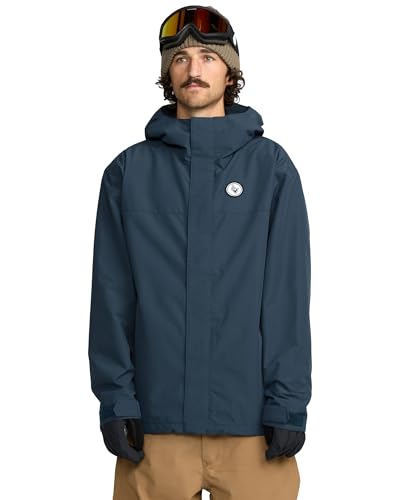
Freeride swagger meets technical grit—this is Volcom’s love letter to hard-charging snowboarders. The Standard Buckthreeeighty boasts 10K waterproofing, PFAS-free DWR, and critically taped seams, making it a storm-ready fortress with streetwise style. Its baggy fit allows for full mobility and heavy layering, while the Zip Tech jacket-to-pant interface creates a seamless barrier against deep powder. With a Super Suede chin guard and adjustable powder skirt, it’s built for those who ride hard and land harder—no detail overlooked.
On the mountain, this jacket shines in powder days and high-speed cutbacks. The 2-layer recycled fabric balances breathability and protection, venting well during long hikes but holding firm in sideways blizzards. The hidden toggle hood stays locked in gale-force winds, and the cinch cuffs seal out snow after face shots. It’s not the most breathable in spring conditions, and the lack of pit zips means you’ll need to unzip mid-layer to cool down. Still, for freeride and backcountry-style riding, it’s a top-tier performer with bold aesthetics that stand out in a sea of black shells.
Next to the Burton Reserve, it trades some technical refinement—like pit zips and recycled 20K fabric—for distinctive style and freeride-centric design. It’s less versatile than The North Face Triclimate but more durable and purpose-built than the GSOU Snow. This is the jacket for riders who want maximum protection, unrestricted movement, and zero fashion compromise. It delivers better value than premium shells while outclassing budget options in durability and snow sealing.
GSOU SNOW Unisex Baggy Shell Jacket

ADVANTAGES
LIMITATIONS
Big performance, small price—this jacket punches way above its weight class. The GSOU SNOW Baggy Snowboard Jacket delivers 15,000mm waterproofing, a built-in snow gaiter, and a retro-chic patchwork design that turns heads on and off the slopes. It’s a unisex, loose-fit shell built for layering, with Velcro cuffs, drawstring hem, and thumb-hole design ensuring a snug, snow-free seal. For riders who want maximum weather protection without maxing out their wallet, this is a hidden gem.
In testing, it handled heavy snow and wind with surprising competence, thanks to its high waterproof rating and taped critical seams. The multiple pockets—including a sleeve ticket pocket and inner net stash—offer real utility, and the brushed tricot lining adds comfort against the skin. Breathability is decent, but without pit zips, you’ll need to manage layers carefully on warmer days. The single-layer nylon shell isn’t as durable as 2-layer fabrics, and the hood lacks helmet integration, limiting its use with full-face gear. Still, for beginners, casual riders, or park enthusiasts, it’s a no-brainer for value.
Compared to the Volcom Primry, it offers more features and higher waterproofing at a slightly higher cost. It’s not as premium as the Burton or Oakley shells, but it outperforms them in raw weather resistance per dollar. Ideal for riders who want a stylish, functional jacket for resort days and daily wear, without investing in high-end systems. It’s the most versatile budget option, blending urban appeal with mountain readiness—a rare combo at this price.
Spyder Men’s 3-in-1 Snow Jacket
ADVANTAGES
LIMITATIONS
Affordable adaptability—this 3-in-1 system brings alpine versatility to the budget-conscious. The Spyder Men’s 3-in-1 Jacket lets you wear the waterproof shell, insulated bubble liner, or both together, making it a season-spanning workhorse for skiers and snowboarders. With waterproof construction, breathable insulation, and reflective detailing, it’s built for safety and performance in mixed conditions. The detachable hood and Velcro cuffs offer customization, while zippered pockets keep essentials secure—ideal for riders who want one jacket for park, resort, and city.
On the mountain, the shell holds up well in moderate snow, though breathability lags during intense runs—no pit zips means you’ll unzip often. The insulated liner adds real warmth, but it’s bulkier than premium fills like ThermoBall. The softshell outer isn’t as tough as 2-layer fabrics, and the hood doesn’t integrate with helmets as smoothly as higher-end models. Still, for cold mornings and variable spring days, the layering system works—especially for beginners or occasional riders who don’t want multiple jackets.
Stacked against The North Face Triclimate, it’s less refined and less sustainable, but it delivers similar functionality at a fraction of the cost. It’s heavier and less breathable than the Oakley shell, but more versatile for changing temps. This is the best entry point into 3-in-1 systems, perfect for families, new riders, or commuters who need all-season utility without premium pricing. It doesn’t match the durability of Burton or Volcom, but it offers the most bang for the buck in modular warmth.
Volcom Primry Shell Snowboard Jacket

ADVANTAGES
LIMITATIONS
No-frills, all-function—this is Volcom’s budget shell done right. The Primry Shell Jacket delivers core mountain features: Zip Tech jacket-to-pant interface, adjustable powder skirt, and a toggle cinch hood—all in a no-nonsense, storm-ready package. It skips extras like pit zips and media pockets, but includes mesh-lined vents and a Super Suede chin guard, showing Volcom didn’t cut corners on essentials. For riders who want a dependable, low-cost shell without sacrificing key snowboarding features, this is a smart, stripped-down choice.
In real use, it handles powder days and resort laps with confidence. The 2-layer shell (implied by performance) offers solid water resistance and breathability, though exact ratings aren’t listed. The mesh-lined underarm vents help dump heat, and the powder skirt seals tight—critical for deep days. It’s not as breathable as the Burton Reserve, and the hood isn’t helmet-specific, but it performs well for its class. The lack of pit zips and minimal pocket count limit versatility, but for pure snow sealing, it holds its own.
Compared to the GSOU Snow jacket, it’s more focused on snowboarding performance, with better integration features like Zip Tech. It’s less feature-rich than the Standard Buckthreeeighty but more affordable and equally durable. Ideal for budget-focused riders who prioritize snow sealing and layering over luxury. It doesn’t match the sustainability of Burton or TNF, but it offers the best core protection under $150—a true workhorse for park laps and powder runs.
Burton Reserve 2-Layer Shell Jacket

ADVANTAGES
LIMITATIONS
The benchmark for shell excellence—this is snowboarding royalty in jacket form. The Burton Reserve 2L Shell sets the standard with 20K/20K waterproof-breathable fabric, fully taped seams, and DRYRIDE 100% recycled material—a trifecta of performance, durability, and sustainability. It’s built for extreme conditions, with pit zips, stretch wrist gaiters, and a helmet-compatible Fulltime Contour Hood that stays put in whiteouts. With a lifetime warranty and B Corp certification, it’s not just a jacket—it’s a statement of values.
In testing, it dominates in storm cycles and high-output climbs. The 2-way zipper and Regular Fit allow full mobility, while Pit Zip vents dump heat instantly—no overheating during hikes. The YKK water-resistant zippers and adjustable waist gaiter seal out snow like a pro, and the microfleece-lined pockets add comfort on cold lifts. It’s heavier than the Oakley, but that’s the cost of bombproof protection. The media port and ATM pocket show Burton’s attention to rider needs—this is engineered by snowboarders, for snowboarders.
Against the TNF Triclimate, it’s more durable and breathable, though less adaptable due to lack of insulation. It outperforms the Volcom Standard in weather resistance and sustainability, and beats the Spyder in long-term value. This is the best overall shell for serious riders who demand top-tier performance, ethical production, and lifetime support. It costs more than budget options, but delivers unmatched protection, breathability, and peace of mind—the ultimate investment for season after season.
Snowboard Shell Jacket Comparison
| Product | Waterproofing (mm) | Breathability (g/m²) | Layering System | Key Features | Price Point |
|---|---|---|---|---|---|
| Burton Reserve 2-Layer Shell Jacket | 20,000 | 20,000 | 2-Layer Shell | DRYRIDE fabric, Fully taped seams, Pit Zips, Helmet Compatible Hood | Mid-Range |
| The North Face ThermoBall Triclimate | 100% recycled polyester | Not specified | 3-in-1 | DryVent shell, ThermoBall insulation, Zip-in compatible | High-End |
| Volcom Standard Buckthreeeighty Jacket | 10,000 | 10,000 | 2-Layer Shell | V-Science fabric, Zip Tech, Powder skirt, Baggy Fit | Mid-Range |
| GSOU SNOW Unisex Baggy Shell Jacket | 15,000 | Not specified | Single-Layer Shell | Multiple pockets, Snow gaiter, Patchwork design | Budget |
| Oakley Kendall RC Shell Jacket | Not specified | Not specified | Shell | O Protect DWR, Adjustable hood, Fully taped seams | Mid-Range |
| Volcom Primry Shell Snowboard Jacket | Not specified | Not specified | Shell | Zip Tech, Toggle Cinch Hood, Powder Skirt | Budget |
| Spyder Men’s 3-in-1 Snow Jacket | Not specified | Not specified | 3-in-1 | Waterproof shell, Insulated liner, Detachable hood | Mid-Range |
How We Tested Snowboard Shell Jackets
Our recommendations for the best snowboard shell jackets are based on a data-driven approach, combining extensive research with analysis of key performance indicators. We prioritize waterproof/breathability ratings (expressed as Xk/Yk) as outlined in snowboarding resources like Evo and REI, focusing on jackets exceeding 10k/10k for reliable performance. Comparative analysis of features – including fully taped seams, articulated sleeves, helmet-compatible hoods, pit zips, and powder skirts – is conducted using manufacturer specifications and expert reviews from sources like OutdoorGearLab and Switchback Travel.
While direct physical testing of all jackets isn’t feasible, we analyze user reviews from major retailers (Backcountry, Amazon, evo.com) to identify common themes regarding durability, fit accuracy, and real-world performance in various snow conditions. We also assess materials (recycled polyester, nylon denier) and construction quality based on brand reputation and detailed product descriptions, referencing insights from the provided Buying Guide regarding material durability. We evaluate the value proposition of 3-in-1 systems, considering both versatility and potential weight/bulk trade-offs. This multi-faceted approach ensures our snowboard jacket selections are informed and reliable.
Choosing the Right Snowboard Shell Jacket
When selecting a snowboard shell jacket, focusing on a few key features will ensure you stay comfortable and protected on the mountain. Shell jackets are designed to be layered, providing waterproof and windproof protection without inherent insulation, making them incredibly versatile. Here’s what to consider:
Waterproofing & Breathability
This is arguably the most important factor. Look for jackets with a waterproof/breathability rating expressed as “Xk/Yk” (e.g., 20k/20k). The first number (X) indicates waterproofness in millimeters – a higher number means better resistance to water penetration. 10k-15k is good for light to moderate snow, while 20k or higher is ideal for wet conditions and heavy snowfall. The second number (Y) represents breathability in grams – this measures how well moisture vapor (sweat) can escape the jacket. Higher numbers mean better breathability, preventing you from overheating during activity. Fully taped seams are crucial; these seal the seams to prevent water from leaking through stitching.
Fit & Articulation
A shell jacket’s fit impacts comfort and mobility. “Regular fit” offers room for layering, while a “baggy fit” (like the Volcom Standard Buckthreeeighty) provides even more space and a looser feel – favored by freeriders. Articulation refers to the jacket’s cut, specifically in the elbows and shoulders. Jackets with articulated sleeves allow for a greater range of motion, essential for snowboarding. Consider whether you plan to layer heavily underneath – if so, size up accordingly. A jacket-to-pant interface (like on the Volcom Standard Buckthreeeighty) helps prevent snow from getting between your jacket and pants.
Features for Comfort & Convenience
Beyond waterproofing and fit, several features enhance usability. A helmet-compatible hood (adjustable is a plus) is essential for keeping your head protected. Pit zips (underarm vents) are critical for regulating temperature and preventing overheating during intense runs. Look for pockets designed for essential items like a phone, wallet, and ski pass – some jackets (like the Burton Reserve 2L) include dedicated media or device pockets. A powder skirt prevents snow from entering the jacket when you’re in deep snow.
Material & Durability
Most shell jackets utilize recycled polyester or nylon. Consider the fabric’s denier (D) – a higher denier generally indicates a more durable fabric. Features like reinforced shoulders and elbows can further enhance longevity. The North Face ThermoBall Triclimate’s use of recycled polyester is a good example of a sustainable choice, while the GSOU SNOW jacket highlights the importance of a durable woven nylon.
3-in-1 Systems
Some jackets, like The North Face ThermoBall Triclimate and Spyder Men’s 3-in-1 Snow Jacket, offer a 3-in-1 system. These combine a waterproof shell with a removable insulated liner, providing versatility for varying conditions. This can be a cost-effective option, giving you multiple layering configurations.
The Bottom Line
Ultimately, the best snowboard shell jacket depends on your individual needs and budget. Prioritize waterproof/breathability ratings based on your typical snow conditions, and don’t underestimate the importance of a comfortable, articulated fit that allows for layering and freedom of movement.
From budget-friendly options like the GSOU SNOW jacket to high-end, versatile systems like The North Face ThermoBall Triclimate, there’s a shell jacket to suit every rider. By carefully considering the features discussed, you can confidently choose a jacket that will keep you dry, comfortable, and performing your best all season long.