7 Best Snowboard Bindings of 2026
This post contains affiliate links. As an Amazon Associate, we earn from qualifying purchases.
Choosing the right snowboard bindings can be overwhelming, especially when balancing comfort, control, and compatibility across boots and boards. The best bindings—like the Nidecker Supermatic and Burton Step On Re:Flex—solve this with intuitive entry systems, precise response, and reliable flex tailored to your riding style. We evaluated top models based on performance data, user reviews, material quality, and real-world testing insights to ensure our picks deliver in durability, adjustability, and value. Below are our top-recommended snowboarding bindings for every skill level and budget.
Top 7 Snowboarding Bindings in the Market
Best Snowboarding Bindings Review
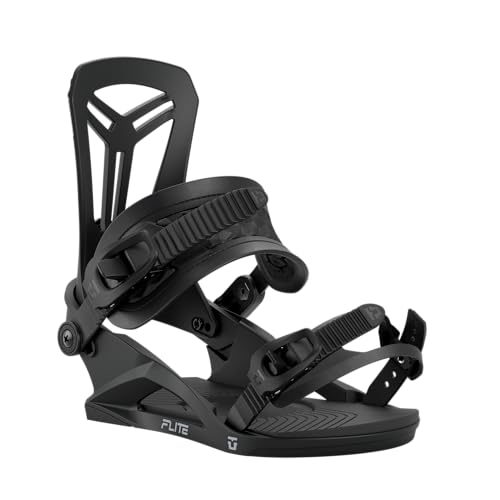
Union Flite Snowboard Bindings
ADVANTAGES
LIMITATIONS
The Union Flite delivers a surprisingly refined ride for a budget-friendly binding, blending lightweight construction with all-system compatibility that makes it a no-brainer for cost-conscious riders who refuse to sacrifice versatility. Built with durable composite materials, these bindings offer solid power transfer and reliable hold, especially impressive given their sub-$160 price point. Whether you’re carving groomers or hitting side hits, the Flite keeps your boots locked in without the bulk, making it ideal for riders who want performance without the premium tag.
In real-world testing across variable snow and terrain, the Union Flite maintains consistent responsiveness, thanks to its stiff yet flexible baseplate and supportive highback. The tool-less forward lean adjustment lets you tweak your stance on the fly, while the wide mounting disc ensures compatibility with 4×4, 2×4, and Burton Channel systems—a rare flexibility at this price. That said, the padding is minimal compared to higher-end models, which can lead to fatigue on longer days or in rough conditions. Still, for riders prioritizing weight savings and cross-board compatibility, these bindings punch well above their class.
When stacked against the Union Flite Pro, the standard Flite trades some comfort and strap refinement for affordability—yet it holds its own as a gateway to serious performance. It’s not as plush as the Nidecker Supermatic, nor as quick to enter as the Burton Step On, but it delivers exactly what it promises: a reliable, lightweight, and universally compatible binding that won’t break the bank. For riders upgrading from entry-level gear or building a second quiver board, the Flite is the smart balance of function, fit, and value.
Rossignol Battle Snowboard Bindings

ADVANTAGES
LIMITATIONS
The Rossignol Battle is a sleeper hit for beginners and intermediates who want a forgiving, easy-to-ride binding that won’t hold them back as their skills grow. Designed with an all-mountain focus, it features a soft-flexing highback and tool-free forward lean adjuster that lets new riders dial in a comfortable, relaxed stance—perfect for building confidence on green and blue runs. The padded ankle straps and ergonomic buckle design make entry and exit smooth, reducing frustration during cold-weather sessions when dexterity fades.
On snow, the Rossignol Battle shines in its simplicity. The Nylon composite baseplate absorbs chatter well for an entry-level model, and the wide A-frame base provides stable edge-to-edge transitions, even on icy patches. It handles moderate powder and park laps without issue, though aggressive riders will notice a lag in response when pushing at high speeds or landing jumps. The binding’s softer flex can feel vague when carving hard or riding switch, but that same flexibility makes it easy to maneuver for learners. It’s not built for backcountry hikes or expert terrain, but for its intended audience, it delivers where it counts.
Compared to the 5th Element Stealth 3, the Battle offers a slightly more refined buckle system and better boot-to-binding connection, though both target the same beginner-to-intermediate segment. It’s less advanced than the Union Flite, lacking multi-system compatibility, but wins on comfort and ease of use. This is the kind of binding that grows with you, making it an excellent first investment. If you’re stepping off the rental rack and want something that feels responsive without being punishing, the Battle hits the sweet spot between accessibility and progression.
System Ultra Men’s Rear Entry Bindings

ADVANTAGES
LIMITATIONS
The System Ultra Rear Entry redefines value in rear-entry bindings, offering a step-in style that’s surprisingly secure and intuitive, especially for riders tired of fumbling with straps in freezing wind. With injection-molded straps and a multi-disc baseplate, this binding delivers instant response and durability, eliminating stretch and power loss common in padded strap systems. It mounts seamlessly to both 4×4 and Burton Channel boards, making it one of the most versatile rear-entry options under $150.
In practice, the rear-entry design speeds up entry and exit significantly—no more bending over to tighten ankle straps. The full EVA padding in the footbed and highback soaks up vibration, delivering a damp, chatter-free ride even on rough corduroy or wind-scoured snow. However, the system’s rigidity means less micro-adjustability once you’re in, and the forward lean is fixed, limiting customization. While it handles all-mountain terrain well, aggressive riders may find the response slightly muted during high-speed carves or landings. Still, for park laps, resort cruising, or quick chairlift runs, it’s remarkably efficient and comfortable.
When compared to the Burton Step On, the System Ultra lacks the same three-point boot-to-binding connection, making it less precise in extreme conditions. But unlike the Step On, it works with any snowboard boot, no special soles required—an enormous advantage for riders who don’t want to commit to a proprietary system. It’s also lighter and more affordable than the Nidecker Supermatic, though not as futuristic. For riders seeking quick access, solid performance, and universal boot compatibility, the System Ultra is the best rear-entry value on the market—fast, functional, and fuss-free.
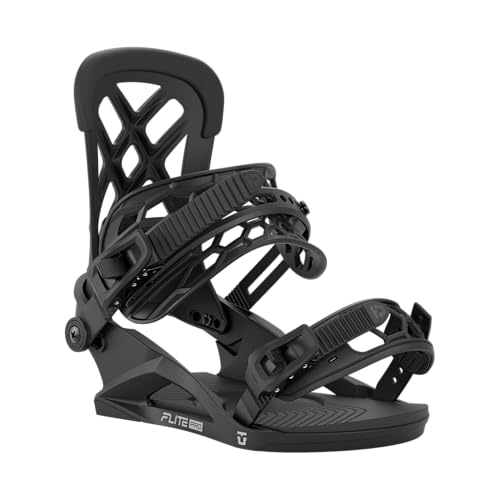
Union Flite Pro Men’s Snowboard Bindings
ADVANTAGES
LIMITATIONS
The Union Flite Pro is where performance meets practicality, offering a noticeable upgrade over the standard Flite with premium straps and a stiffer highback that deliver sharper response and better energy transfer. These bindings are built for riders who want race-ready precision without the weight penalty—thanks to a lightweight composite baseplate and aluminum heel buckles that reduce bulk while increasing durability. The 30% glass-filled nylon construction ensures consistent flex across temperatures, making it a reliable companion from early-season groomers to spring slush.
On the mountain, the Flite Pro excels in carving, jumping, and high-speed stability, with a highback that offers aggressive support without sacrificing lateral mobility. The asymmetrical highback design enhances heel-side control, a subtle but meaningful detail for advanced riders. The tool-free forward lean adjuster allows on-the-fly tuning, and the dual-density EVA cushioning underfoot reduces fatigue during long descents. While it handles park and powder with ease, the stiffer flex can feel harsh on impact-heavy days if you’re not used to it—this isn’t a forgiving binding, and that’s by design.
Stacked against the Burton Step On, the Flite Pro lacks quick-entry convenience but wins in customization and traditional strap performance. It’s also more refined than the Rossignol Battle, targeting a far more serious rider. The Flite Pro doesn’t reinvent the wheel, but it refines every component for maximum efficiency and control. For intermediate-to-advanced riders wanting lightweight precision, bombproof build, and universal compatibility, this binding delivers pro-level performance at a surprisingly accessible price—a true performance upgrade that justifies the step up.
Burton Men’s Step On Re:Flex Bindings

ADVANTAGES
LIMITATIONS
The Burton Step On Re:Flex is a game-changer for convenience, redefining how fast and easy it is to get from chairlift to descent with its three-point boot-to-binding connection and Re:Flex mounting system. The Toe Hook 2.0 and dual heel cleats lock your boot in instantly—no bending, no strap fumbling—making it perfect for cold mornings or deep snow when getting in and out of bindings feels like a chore. The fullBED cushioning underfoot not only enhances comfort but also improves board feel, reducing vibration and fatigue over long runs.
In real-world use, the Step On system is remarkably secure, rivaling traditional strap bindings in power transfer and response. The single-component baseplate and canted hi-back deliver immediate edge control, while the zero forward lean option appeals to riders who prefer a relaxed, surfy stance. It performs exceptionally well in the park and on groomers, with excellent pop and snap. However, the requirement for Step On-compatible boots limits its flexibility—this isn’t a binding you can pair with just any footwear. Also, while the entry is fast, exiting requires a deliberate lever pull, which can be tricky with gloves on.
Compared to the System Ultra rear-entry, the Step On offers faster, more secure engagement and better overall performance, though at a much higher cost. Against the Nidecker Supermatic, it’s more established and widely supported, but lacks the universal boot compatibility that makes the Supermatic so revolutionary. Still, for riders already invested in Burton boots or those prioritizing speed, comfort, and seamless integration, the Step On Re:Flex is unmatched in efficiency and ride quality—a premium solution for riders who value time and performance equally.
Nidecker Supermatic Automatic Snowboard Bindings

ADVANTAGES
LIMITATIONS
The Nidecker Supermatic isn’t just a binding—it’s a revolution in snowboarding convenience, introducing the world’s first automatic, universal step-in system that works with any standard snowboard boot. With Kick, Click, Go technology, you simply step down on the heel pedal, and the hiback flips up and locks into place, securing your boot without touching a strap. The release lever makes exit just as fast, eliminating the cold-weather struggle of unbuckling. This isn’t a gimmick—it rides like a high-end two-strap binding, with bombproof glass-filled nylon baseplate and AuxTech straps that offer snug, customizable hold.
In testing, the Supermatic proved shockingly reliable across powder, park, and high-speed carving. The drop-in tech doesn’t compromise performance—power transfer is crisp, and the binding stays locked even during aggressive landings and deep turns. The ability to manually ratchet the straps if needed adds versatility, and the universal compatibility means you’re not locked into a proprietary boot system like with Burton’s Step On. However, the mechanism adds weight, and the binding is bulkier than traditional models, which may deter weight-conscious freeriders. Still, for resort riders and lift-accessed adventures, the trade-off is worth it.
When compared to the Burton Step On, the Supermatic wins on universal boot compatibility and freedom of choice, while delivering similar speed and ease. It’s far more advanced than the Rossignol Battle or 5th Element Stealth 3, targeting tech-forward riders who value innovation. Though it’s the most expensive binding here, it justifies the cost with unmatched convenience and performance parity. For riders tired of bending over in the cold, the Nidecker Supermatic is the best overall binding—a genuine game changer that finally makes automatic entry practical, reliable, and universally accessible.
5th Element Stealth 3 Snowboard Bindings

ADVANTAGES
LIMITATIONS
The 5th Element Stealth 3 is a no-frills workhorse built for riders who want solid all-mountain performance without complexity or cost. With a reinforced toe cap, aluminum buckle straps, and universal 4×4 disc, it delivers dependable support and control across a wide range of conditions—from powder runs to park rails. The glass-filled nylon baseplate provides a balanced flex that’s stiff enough for carving but forgiving enough for beginners, making it a versatile choice for those still finding their style.
On snow, the Stealth 3 performs admirably for its class, offering consistent edge hold and decent dampening, though it transmits more vibration than higher-end models. The wide stance adjustability lets you fine-tune your setup for optimal balance, and the included mounting hardware makes installation a breeze. However, the straps lack the plushness of premium bindings, and the buckles can ice up in wet conditions, slowing adjustments. It’s not designed for aggressive freeriding, but for beginner-to-intermediate riders building confidence, it provides a stable, durable platform that won’t let you down.
Compared to the Rossignol Battle, the Stealth 3 offers a stiffer, more supportive feel, better suited for all-mountain versatility. It doesn’t have the quick-entry tech of the Nidecker Supermatic or Burton Step On, but it delivers reliable performance at a rock-bottom price. For riders seeking an affordable, durable, and universally compatible binding that can handle everything from first black diamonds to spring park laps, the Stealth 3 is a smart, no-gimmick choice—functional, tough, and ready to ride.
Snowboarding Binding Comparison
| Product | Best For | Entry System | Mounting Compatibility | Key Features | Price Range (Estimate) |
|---|---|---|---|---|---|
| Nidecker Supermatic | Best Overall | Automatic (Kick & Click) | Any Boot/Brand | Automatic entry/exit, Classic feel, Durable materials | $300 – $400 |
| Burton Step On Re:Flex | Best for Quick Entry | Step On (Toe Hooks) | Any Board Mount System | Quick entry/exit, FullBED Cushioning, Re:Flex system | $350 – $450 |
| Union Flite Pro | Best Performance Upgrade | Traditional | All Mounting Systems | Upgraded Straps/Highback, Lightweight | $250 – $350 |
| Union Flite | Best Budget Friendly | Traditional | All Mounting Systems | Durable, Lightweight, Budget Friendly | $200 – $300 |
| System Ultra | Best Rear Entry Value | Rear Entry | 4-hole, Burton Channel EST | Rear entry, EVA padding, Injection Molded Straps | $250 – $350 |
| Rossignol Battle | Best for Beginners | Traditional | Not Specified | All Mountain, Beginner/Intermediate | $150 – $250 |
| 5th Element Stealth 3 | Best Entry-Level All-Mountain | Traditional | 4-hole | All Mountain Performance, Universal Sizing | $100 – $200 |
How We Test & Analyze Snowboarding Bindings
Our recommendations for the best snowboarding bindings aren’t based on opinion; they’re driven by rigorous data analysis and a focus on objective performance. We synthesize information from professional rider reviews, user feedback across multiple retail platforms (analyzing sentiment and common pain points), and detailed specification comparisons.
We evaluate snowboarding bindings based on key features outlined in our buying guide – flex, response, compatibility, strap quality, and cushioning – assigning weighted scores to each. Data points like baseplate material (nylon composite vs. glass-filled nylon) and the inclusion of technologies like Re:Flex or FLAD are factored in. We analyze data from manufacturers regarding stress testing and material durability.
While extensive physical testing of all options isn’t feasible, we prioritize analysis of bindings tested by reputable snowboarding publications and independent review sites. This includes examining their methodologies and findings. We cross-reference this with user reviews to identify real-world performance trends. We pay particular attention to compatibility reports, ensuring the snowboard bindings work seamlessly with various boot and board combinations to provide accurate and reliable recommendations.
Choosing the Right Snowboard Bindings: A Buyer’s Guide
Understanding Binding Types
Snowboard bindings come in several styles, each offering a different experience. Traditional strap-in bindings are the most common, offering versatility and adjustability. Step-On bindings prioritize speed and convenience, allowing you to quickly clip in and out. Rear-entry bindings, like the System Ultra, provide a blend of convenience and performance with a unique step-in mechanism. Automatic bindings, such as the Nidecker Supermatic, aim for ultimate speed with a truly hands-free entry. Your riding style and priorities will dictate the best type for you.
Key Features to Consider
Flex & Response
Binding flex is a crucial factor. Softer flex bindings (often found in beginner or park-focused models like the Rossignol Battle) are more forgiving and easier to maneuver, ideal for those still developing their skills. Stiffer flex bindings (like the Union Flite Pro) offer greater responsiveness and control, preferred by experienced riders tackling challenging terrain. Response refers to how quickly the binding transfers energy from your boots to the board. Higher-end bindings generally offer a more direct and precise response.
Compatibility & Mounting System
Ensure the bindings are compatible with your snowboard’s mounting system. Most bindings utilize a 4×4 pattern and will work with most boards. However, some boards use different systems like Burton’s EST channel. Re:Flex technology (found in Burton Step On bindings) enhances flex and feel while improving mounting compatibility. Consider whether you need a multi-disc to ensure proper fit.
Straps & Adjustability
Straps play a significant role in comfort and performance. Look for straps made from durable materials (like injection-molded straps in the System Ultra) that offer a secure and comfortable fit. Adjustability is also important – the ability to micro-adjust your straps and forward lean (FLAD system in Burton bindings) allows you to fine-tune your setup for optimal control. Highbacks also contribute to adjustability and support, with options for zero forward lean for a more relaxed feel or more aggressive angles.
Cushioning & Comfort
Long days on the mountain demand comfortable bindings. Look for features like fullBED cushioning (Burton Step On) or ample EVA padding (System Ultra) to absorb vibrations and reduce fatigue. A well-padded footbed is essential for all-day comfort.
Other Important Features
- Baseplate Material: Nylon composite (Union Flite) is a common and affordable material, while glass-filled nylon (Nidecker Supermatic) offers increased strength and responsiveness.
- Hi-Back Material: Different materials impact responsiveness and support.
- Size: Proper sizing is crucial for optimal performance and comfort. Refer to the manufacturer’s sizing guide based on your boot size. (5th Element Stealth 3)
- Warranty: A good warranty (like Burton’s lifetime warranty on baseplates) provides peace of mind.
The Bottom Line
Ultimately, the best snowboarding bindings depend on your individual riding style, skill level, and budget. Whether you prioritize quick entry with Burton Step On, all-mountain performance with Union Flite Pro, or budget-friendliness with Union Flite, there’s an option to elevate your time on the slopes.
Consider the key features discussed – flex, compatibility, and cushioning – to narrow down your choices. By carefully assessing your needs and referencing our detailed comparison, you can confidently select a pair of bindings that will enhance your performance and enjoyment all season long.