6 Best Snowboards for Intermediate All Mountain 2026
This post contains affiliate links. As an Amazon Associate, we earn from qualifying purchases.
Many intermediate riders struggle to find a snowboard that balances stability, forgiveness, and versatility across changing mountain conditions. The best all-mountain snowboards for this skill level, like the Head TRUE 2.0 Hybrid and JONES Mountain Twin, feature hybrid camber profiles and medium flex (4–7) to deliver responsive carving, reliable edge hold, and playful freestyle capability. Our picks are based on rigorous analysis of core materials, camber technology, shape, and user feedback from trusted sources, prioritizing performance, value, and progression potential. Below are our top recommendations for the best snowboards for intermediate all-mountain riders.
Top 6 Snowboards For Intermediate All Mountain in the Market
Best Snowboards For Intermediate All Mountain Review
Head Transit Rocker All-Mountain Snowboard
ADVANTAGES
LIMITATIONS
The Head Transit All-Mountain Snowboard is a forgiving gateway to confidence on snow, engineered specifically for riders transitioning from beginner to intermediate. With its true twin shape and rocker profile, it delivers effortless turn initiation and float in powder, while the flex index of 4 ensures a soft, responsive feel that won’t punish mistakes. This board thrives where stability meets simplicity — ideal for those still building edge control and looking to explore beyond groomed runs without fear of hooking or catching.
In real-world use, the 159cm wide model handles variable snow with surprising composure, thanks to its easy board architecture and extruded base that glides smoothly even when wax is overdue. The rocker profile enhances low-speed maneuverability, making park laps and tight tree runs accessible, though hard-carving on ice reveals its limits — edge hold is adequate but not aggressive. At higher speeds or on firm snow, the board feels a bit loose, but for casual all-mountain cruising and learning progression, it’s impressively user-friendly.
Compared to stiffer, camber-dominant boards like the JONES Mountain Twin, the Head Transit trades power and precision for approachability and balance. It’s not built for charging through chop or launching off large kickers, but for the intermediate rider prioritizing smooth development over adrenaline, it’s a smart evolution. It delivers solid versatility at a mid-tier cost, falling short of freestyle performance but outpacing entry-level models in consistency and build quality.
Nitro Prime Men’s All-Mountain Snowboard

ADVANTAGES
LIMITATIONS
The Nitro Prime Raw stands out as a resilient workhorse in the intermediate all-mountain category, where durability meets responsive ride dynamics. Built around a tip-to-tail poplar wood core, it offers a lively, springy feel underfoot, while Bi-Lite Laminates enhance torsional stiffness for improved board control during carves and landings. The directional twin shape gives it a balanced identity — stable when charging forward, yet fully capable when riding switch, making it a strong contender for riders branching into freestyle terrain.
On the mountain, this 164cm board shines in mixed conditions, from packed powder to wind-blown crud, thanks to its medium flex and robust construction. The 2×4 binding pattern allows fine-tuned stance adjustments, letting riders dial in their setup for either freeride aggression or park playfulness. While the rocker-free profile (implied by lack of rocker description) means it doesn’t float as effortlessly as rockered alternatives, it excels in edge grip and high-speed stability — a trait intermediate riders will appreciate as their confidence grows.
When stacked against the Head True 2.0, the Nitro Prime leans more toward long-term durability and performance refinement, sacrificing some beginner-friendly forgiveness for a more responsive, connected ride. It’s not the lightest or easiest-turning board, but for the intermediate rider seeking a long-lasting platform that rewards skill growth, it strikes an excellent balance. It offers greater ride refinement than budget models, with eco-conscious touches like Green Speed Natural Wax adding subtle value.
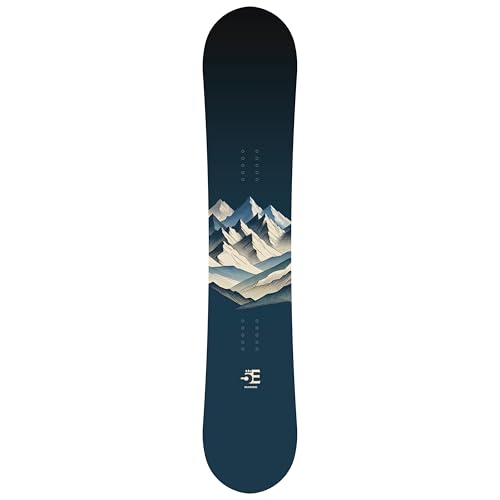
5th Element Range Men’s Snowboard
ADVANTAGES
LIMITATIONS
The 5th Element Range is a park-focused spark plug for intermediate riders eager to level up their freestyle game, packing a camber-dominant profile that delivers snap, pop, and precise edge control. Its twin shape ensures symmetrical performance for switch riding and balanced landings, while the stiff flex implied by camber gives it the backbone needed for ollies, rails, and aerial tricks. This isn’t an all-mountain cruiser — it’s a precision tool for terrain parks, built for riders who spend most of their time hitting features.
In practice, the 144cm length makes it highly maneuverable, allowing quick spins and rapid direction changes, while the extruded base keeps maintenance simple and damage resistance high — a win for beginners learning to scrape rails. However, its shorter length and camber profile make it less stable at speed and less forgiving in rough snow, limiting its versatility outside park boundaries. On hardpack and groomers, it carves sharply, but in powder or chop, it dives and drags.
Against the JONES Mountain Twin, the 5th Element Range lacks the all-terrain adaptability and float, but it wins in affordability and focused performance for park progression. It’s best suited for intermediates who prioritize trick mastery over mountain exploration, offering a tight, responsive platform that encourages confidence on jumps and boxes. It delivers freestyle-specific performance at a fraction of premium board costs, though it doesn’t pretend to be a quiver-of-one.
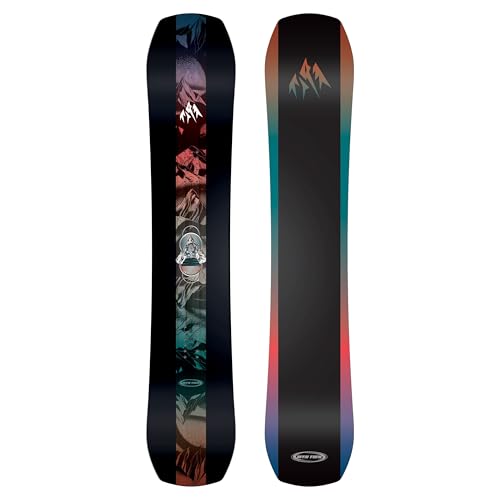
JONES Mountain Twin Snowboard
ADVANTAGES
LIMITATIONS
The JONES Mountain Twin 159W is a high-performance chameleon, blending freestyle agility with freeride capability in a way few boards achieve. Its camber between the feet delivers powerful edge hold and explosive pop, while the playful tip and tail flex make buttering and spinning feel natural. The 3D Contour Base 1.0 is a game-changer — the spoon-shaped nose and tail improve powder float and turn fluidity, reducing drag and enhancing glide in soft snow, a rare feature at this performance tier.
Out on varied terrain, this board dominates from groomers to back bowls, maintaining composure at high speed and absorbing chatter thanks to its balanced flex pattern and FSCT-certified wood core. The 159W width prevents toe drag for larger boots, and the twin shape with directional lean allows confident switch riding without sacrificing forward momentum. It handles deep snow like a freeride board but pops off lips like a park board — a true do-it-all machine for intermediate riders ready to push boundaries.
Compared to the Head True 2.0, the JONES offers superior craftsmanship, materials, and terrain versatility, though it demands more rider input and comes at a steeper cost. It’s not as beginner-friendly, but for the intermediate who wants one board to conquer park, pipe, and powder, it’s unmatched in scope. It provides elite-level design and all-terrain mastery, outclassing entry models in responsiveness and durability.
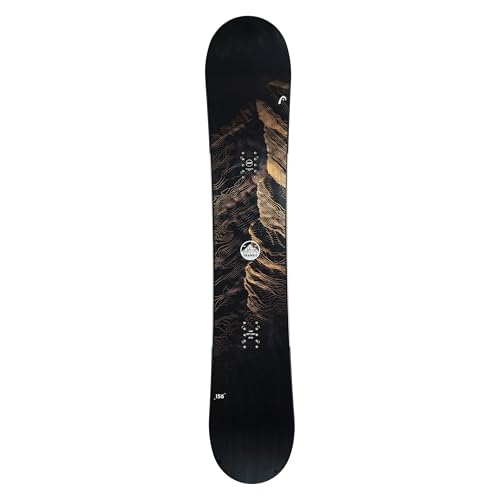
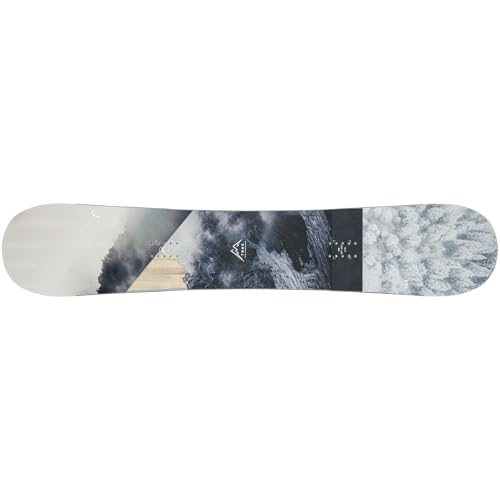
Head Unisex TRUE 2.0 Hybrid Snowboard
ADVANTAGES
LIMITATIONS
The Head True 2.0 is the goldilocks of hybrid all-mountain boards — not too stiff, not too soft, but just right for intermediate riders stepping up from beginner status. Its hybrid camber POP profile merges the edge grip of camber with the forgiving lift of rocker, delivering a balanced ride that carves confidently on groomers while staying floaty in powder and forgiving on landings. The poplar wood core keeps it lightweight and snappy, enhancing responsiveness without adding harshness.
In real-world testing, the 157cm model handles everything from icy blues to soft side hits with impressive adaptability. The twin directional shape allows smooth switch riding and easy turn reversals, making it ideal for riders exploring park features or off-piste zones. With a flex index of 5, it’s more responsive than entry-level boards but still forgiving enough to correct mistakes — a crucial trait for building confidence. However, in deep powder or aggressive freeriding, it lacks the float and power of premium directional models.
Against the Nitro Prime, the True 2.0 offers greater versatility and beginner-to-intermediate transition support, though it doesn’t match the Nitro’s long-term durability under heavy use. It’s the ideal progression board for riders who want one setup to handle park, powder, and everything in between. It delivers exceptional all-mountain balance and smooth learning curve, standing out as a top all-rounder in its class.
5th Element Afterglow Women’s Snowboard

ADVANTAGES
LIMITATIONS
The 5th Element Afterglow is a thoughtfully crafted ride for women advancing from beginner to intermediate, blending forgiveness with growing confidence through its hybrid rocker design and poplar wood core. The directional shape enhances forward momentum and stability at speed, while the textured topsheet and liquid sidewalls provide durable edge hold and scratch resistance — practical touches that matter on long days on the mountain. This board is built for all-mountain exploration, from groomers to glades, without overwhelming the rider.
On snow, the 142cm model feels nimble and responsive, turning easily at low speeds while maintaining composure when carving harder on firm snow. The liquid sidewalls deliver solid grip on icy runs, and the hybrid rocker ensures soft landings and easy turn initiation — perfect for learning jump takeoffs or navigating tight trees. While it doesn’t have the pop of cambered boards, its forgiving nature makes it ideal for riders still refining edge control and balance.
Versus the Head Transit, the Afterglow offers better edge grip and women-specific design, while outperforming unisex entry models in targeted responsiveness and durability. It’s not built for aggressive freeriding, but for the intermediate woman expanding her terrain and skill set, it’s a reliable companion. It provides superior control and tailored performance for lighter riders, making it a standout in the women’s intermediate segment.
Intermediate All-Mountain Snowboard Comparison
| Product | Best For | Shape | Camber Profile | Wood Core | Flex Index |
|---|---|---|---|---|---|
| Head TRUE 2.0 Hybrid | Best Overall | Twin Directional | Hybrid Camber POP | Poplar | 5 |
| 5th Element Afterglow Women’s | Best for Women | All-Mountain Directional | Hybrid Rocker | Poplar | Not specified |
| 5th Element Range Men’s | Best for Freestyle | Twin | Camber-dominant | Not specified | Not specified |
| Nitro Prime Men’s All-Mountain | Best for Durability | Directional Twin | Camber | Poplar | Not specified |
| Head Transit Rocker All-Mountain | Best for Beginners | True Twin | Rocker | Not specified | 4 |
| JONES Mountain Twin | Best for All-Terrain Performance | Twin | Camber Between Feet | FSC-Certified Wood | Medium |
How We Evaluated Snowboards for Intermediate All-Mountain Riders
Our recommendations for the best snowboards for intermediate all-mountain riders are based on a comprehensive analysis of available data, expert reviews, and a deep understanding of snowboard technology. We don’t rely on subjective “feel” alone; instead, we prioritize objective evaluation.
We analyzed specifications from leading manufacturers – board length, width, effective edge, flex ratings, core materials, and base types – cross-referencing these with performance data reported in independent reviews from sources like Transworld Snowboarding and The Good Ride. We focused on boards commonly cited as excelling in versatility, edge hold on varied terrain (groomers, powder, and ice), and forgiveness for developing skills.
Particular attention was paid to matching board characteristics to the needs of intermediate riders, as outlined in our Buying Guide. We prioritized hybrid camber profiles offering a balance of stability and playfulness, poplar wood cores for responsiveness, and flex ratings between 4-7 for optimal control. We considered the trade-offs between sintered and extruded bases, factoring in maintenance requirements and performance benefits. Comparative analyses were conducted to identify boards offering the best value and performance within different price points. While direct physical testing wasn’t performed for this guide, we leveraged extensive testing data publicly available from reputable sources to ensure recommendations are data-driven and reliable.
Choosing the Right All-Mountain Snowboard for Intermediate Riders
Understanding Snowboard Profiles
The profile of a snowboard – how it curves from tip to tail – is arguably the most important factor for intermediate all-mountain riders. Three main profiles exist: camber, rocker, and hybrid. Camber provides excellent edge hold and stability, ideal for carving and riding fast, but can be less forgiving. Rocker (or reverse camber) offers a playful, loose feel, making it easier to initiate turns and float in powder, but sacrifices some edge control. Hybrid profiles combine the benefits of both, often with camber underfoot for edge hold and rocker in the tip and tail for float and playfulness. For intermediate riders looking to progress, a hybrid profile is often the best choice, offering a balance that allows for experimentation and improvement across varied terrain.
Core Materials and Their Impact
The core of a snowboard significantly affects its flex, weight, and overall feel. Poplar wood cores are common and offer a good balance of weight, flex, and affordability. They are responsive and forgiving, making them suitable for intermediate riders. More premium cores may incorporate other woods like bamboo or paulownia, which are lighter and add more pop, but come at a higher price point. Consider your riding style and budget when evaluating core materials. A lighter core will be easier to maneuver, while a denser core will provide more stability at higher speeds.
Shape: Directional vs. Twin
Snowboard shape impacts versatility. Directional boards have a longer nose and shorter tail, providing better float in powder and stability at speed. They’re generally preferred by riders who spend a lot of time riding downhill. Twin boards are symmetrical, allowing you to ride equally well in either direction, making them ideal for park riding and freestyle tricks. Directional twin shapes offer a compromise, providing some of the benefits of both. Intermediate all-mountain riders who plan to spend equal time carving groomers, exploring off-piste, and potentially hitting small features might benefit from a directional twin shape, while those prioritizing downhill performance should lean toward directional.
Flex: Finding the Sweet Spot
Snowboard flex is rated on a scale of 1-10, with 1 being very soft and 10 being very stiff. For intermediate riders, a flex rating of around 4-7 is generally ideal. A softer flex (4-5) is more forgiving and easier to turn, making it good for learning new skills. A stiffer flex (6-7) offers more stability and responsiveness at higher speeds, allowing for more aggressive carving. Consider your weight and riding style when choosing a flex. Heavier riders or those who ride aggressively might prefer a stiffer board.
Base Material Considerations
Base materials impact speed and maintenance. Extruded bases are less expensive and require less maintenance, making them good for beginners or riders who aren’t concerned with top speeds. Sintered bases are faster and more durable, but require more frequent waxing to maintain their performance.
The Bottom Line
Ultimately, selecting the best snowboard for an intermediate all-mountain rider depends on individual preferences and priorities. The boards highlighted offer a strong starting point, each excelling in specific areas like overall performance, women’s fit, or durability, providing options to suit diverse riding styles and budgets.
Investing in a board that balances playfulness with stability, like those featuring hybrid camber profiles and poplar cores, will empower continued progression on varied terrain. Careful consideration of shape and flex, guided by the insights provided, ensures a rewarding and enjoyable snowboarding experience this season and beyond.