7 Best Snowboards for Men 2026
This post contains affiliate links. As an Amazon Associate, we earn from qualifying purchases.
Choosing the right snowboard can be overwhelming, especially with so many options promising peak performance on the mountain. The best men’s snowboards solve this by combining responsive flex, durable construction, and terrain-specific design—like sintered bases for speed and wood cores for reliable pop and stability. Our top picks are based on deep analysis of performance data, expert reviews, and user feedback, prioritizing factors like camber profile, core material, and riding style to ensure real-world reliability and value. Below are our recommended snowboards for men, tailored to different needs and skill levels.
Top 7 Snowboards For Men in the Market


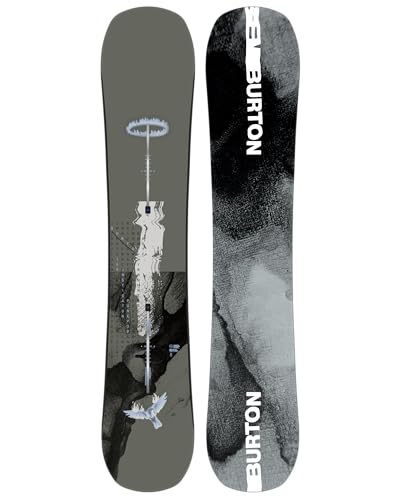

Best Snowboards For Men Review
Nitro Raw Prime Snowboard

ADVANTAGES
LIMITATIONS
The Raw Prime Snowboard by Nitro isn’t just built for performance—it’s engineered with sustainable construction at its core, making it a standout for eco-conscious riders who refuse to sacrifice ride quality. With its Directional Twin Shape, this board delivers a balanced blend of freeride capability and switch-friendly versatility, while the Power Core made from tip-to-tail poplar wood ensures a lightweight yet snappy flex that responds instantly to terrain changes. Paired with Bi-Lite Laminates, the Raw Prime offers refined edge control and dampening, perfect for aggressive riders who demand precision without chatter.
Out on the mountain, the Raw Prime proves its mettle across varied conditions—from packed groomers to light powder—thanks to its slightly elongated nose and smooth flex pattern. The Green Speed Natural Wax gives it a factory-tuned edge right out of the gate, reducing environmental impact without compromising glide. While it doesn’t feature camber for maximum pop, the neutral profile works well for intermediate to advanced all-mountain riders who prioritize agility and sustainability over hard-charging power. It does struggle slightly in deep snow or at high speeds, where a more aggressive profile like camber or hybrid rocker might excel.
Compared to the Burton Process Flying V, the Raw Prime trades some freestyle flair for eco-friendly integrity and responsive carving, positioning itself as the go-to for environmentally aware riders who still want a performance-driven board. It’s not the most aggressive freeride weapon, but for those who value green materials and clean manufacturing, it’s unmatched in its class. While the Flying V offers more playfulness, the Raw Prime delivers a refined, earth-conscious ride that outshines others in sustainability without falling behind in performance.
Burton Process Flying V
ADVANTAGES
LIMITATIONS
If freestyle and playfulness define your riding style, the Burton Men’s Process Flying V is a game-changer—its Flying V Bend profile delivers a magical blend of float, forgiveness, and explosive energy that thrives in the park and beyond. With rocker zones between and outside your feet and camber underfoot, this board offers crisp snap on takeoffs while staying butter-smooth and catch-free on landings. The Twin Shape and Twin Flex ensure perfect symmetry, making switch riding, spins, and rails feel intuitive and balanced—ideal for riders who spend more time in the air than on flat ground.
In real-world use, the Flying V excels on rails, in boxes, and through park jumps, where its Sintered Base soaks up wax for lightning-fast slides and durable performance after repeated use. The Super Fly II 700G Core combines lightweight strength with pop that doesn’t fade, while Triax Fiberglass adds torsional stiffness for better edge control during landings. On hardpack or icy terrain, it holds an edge well, though it can feel a bit loose at high speeds compared to full-camber boards. It’s not the best choice for aggressive downhill charging, but for park rats and jib lovers, it’s near-perfect.
Stacked against the Burton Process PurePop Camber, the Flying V is more forgiving and playful, trading raw power for effortless maneuverability and creative freedom. It’s the ideal choice for intermediate to advanced riders who prioritize technical tricks and park laps over high-speed stability. While the PurePop Camber delivers harder turns and more aggressive response, the Flying V offers a lively, surf-like feel that makes every run feel like a freestyle session—making it the best-in-class for riders who want to send it and spin it with confidence.
Burton Men’s Process Snowboard
ADVANTAGES
LIMITATIONS
The Burton Men’s Process Snowboard earns its title as the best overall with a no-compromise design that blends precision, pop, and versatility into one impeccably balanced package. At its heart is the PurePop Camber Bend, which delivers crisp edge-to-edge response and explosive pop thanks to subtle flat zones that amplify energy transfer—perfect for riders who want to carve hard, jump high, and hold lines with authority. The Twin Shape and Twin Flex symmetry make it equally capable riding regular or switch, while the Super Fly II 700G Core keeps the board lightweight without sacrificing durability or snap.
On the mountain, this board dominates across all terrain—whether you’re launching off jumps, carving down groomers, or navigating tight trees. The Sintered Base ensures fast gliding and excellent wax retention, while Dualzone EGD enhances grip by aligning wood grain along critical edge zones for superior power transfer. It performs exceptionally well on icy patches and at speed, where full camber really shines. However, beginners may find it less forgiving due to its stiff, responsive nature, and in deep powder, it doesn’t float quite as effortlessly as rocker-dominant boards.
When compared to the Burton Instigator, the Process offers a more aggressive, performance-tuned ride with better pop and edge control, making it ideal for advanced riders pushing their limits. While the Instigator leans into all-mountain versatility with a directional focus, the Process is a true twin powerhouse built for technical precision and freestyle dominance. It doesn’t compromise—delivering a pro-level platform that outperforms in nearly every category, making it the most well-rounded board in Burton’s lineup for riders who want one board to do it all.
Burton Instigator PurePop Camber
ADVANTAGES
LIMITATIONS
The Burton Instigator PurePop Camber is a masterclass in all-mountain riding, blending directional aggression with twin-like forgiveness for a board that truly rips any terrain or condition. Its Directional Shape with 5mm Taper enhances turn initiation and float in powder, while the PurePop Camber Bend delivers powerful, poppy takeoffs and strong edge hold on hardpack—making it a beast on groomers and a confident performer in variable snow. The Twin Flex keeps it playful enough for switch riding and small park features, adding versatility that pure directional boards often lack.
In real-world testing, the Instigator shines on long, carving runs and mixed conditions, where its Super Fly 800G Core—a mix of hard and soft wood—balances weight and responsiveness for a lively, energetic feel. The Biax Fiberglass gives it a torsionally soft flex, ideal for buttering and jibbing, while the Extruded Base keeps maintenance low and glide smooth—perfect for riders who want performance without constant tuning. It’s not the fastest base in the lineup, and it won’t match the sintered speed of the Process, but for daily driving and mixed-use riding, it’s exceptionally reliable.
Compared to the Burton Process Flying V, the Instigator trades some park-focused pop for superior carving and stability at speed, positioning itself as the better choice for riders who split their time between backcountry lines and resort laps. While the Flying V is more playful, the Instigator offers a more grounded, powerful ride that excels in aggressive terrain. It’s the ideal board for intermediate to advanced riders seeking a do-it-all workhorse that handles everything from powder runs to park jumps without missing a beat.
System MTN CRCX Snowboard

ADVANTAGES
LIMITATIONS
When powder performance is your top priority, the System MTN CRCX rises above the rest with its innovative rocker-dominant camber-rocker-camber profile that delivers unmatched float and catch-free control in deep snow. The CRCX design lifts the contact points while maintaining camber in the tip and tail, giving you explosive pop when you need it and a smooth, surfy ride when you’re floating through powder. The triple-density 3D Core, with hand-selected poplar and high-density stringers, adds lightweight strength and explosive response, making this board feel alive underfoot even in the softest conditions.
On powder days, the MTN CRCX is in its element—effortlessly planing over deep snow, charging through trees, and maintaining stability at speed thanks to its elevated edges and strong core. The drifter-style nose and tail symmetry allow for confident switch riding, while the wide platform (163W) provides excellent float and support for larger boots. It handles groomers well but lacks the aggressive edge hold of full-camber boards on ice, and its rocker bias makes it less ideal for hard-charging carvers. Still, for riders who chase storms and live for fresh lines, it’s a backcountry dream.
Against the System MTN and APX Complete Package, the CRCX stands out as the purer performance board—stripped of bindings and boots, it lets riders customize their setup while delivering the same legendary float. While the complete package offers incredible value, the CRCX alone offers higher-end core construction and ride refinement, making it the better choice for serious riders who already have gear. It’s the ultimate powder weapon—not the most versatile, but unbeatable when the snow’s deep.
Sportsstuff Snow Ryder
ADVANTAGES
LIMITATIONS
The Sportsstuff Snow Ryder is the ultimate budget-friendly entry point into snowboarding—designed not for the slopes, but for backyard fun and beginner learning in a safe, low-pressure environment. Crafted from durable hardwood, this 110cm board can handle repeated use on packed snow and gentle hills, making it perfect for kids or adults taking their first tentative slides. The hook-and-loop bindings are simple to adjust and accommodate a range of boot sizes, though they lack the security of strap-in systems—ideal for learning balance without the commitment of resort gear.
In real-world use, the Snow Ryder excels on small backyard hills and flat runs where speed is minimal and falls are soft. Without metal edges or a performance base, it’s not built for carving or control at speed, and it’s explicitly not meant for resort use—where icy conditions and lift access demand more advanced equipment. However, for teaching balance, stance, and basic turning mechanics, it’s an excellent training tool that won’t break the bank. It’s also lightweight and easy to store, making it a smart seasonal addition for families.
Compared to the Burton Instigator, the Snow Ryder isn’t even in the same category—it’s not meant to compete. But for beginners who want to test the waters before investing, it offers a low-risk, high-fun introduction to snow sliding. It won’t replace a real snowboard, but it fills a niche no high-end board can: affordable, accessible first rides. For parents, casual riders, or winter play enthusiasts, it’s a no-brainer for backyard joy.
System MTN and APX Package

ADVANTAGES
LIMITATIONS
The System MTN and APX Complete Package is the best complete package for riders who want a high-performance setup without the hassle of mixing and matching components. Built around the MTN snowboard with camber-rocker-camber profile, it delivers stellar powder float and explosive pop, while the APX bindings—featuring full EVA padding, gel straps, and aluminum ratchets—offer lightweight precision and comfort that rival premium standalone models. The APX boots complete the trio with Thermofit heat-moldable liners and articulating cuffs, ensuring a custom, responsive fit right out of the box.
In action, this package performs like a premium setup—charging through powder, holding edges on groomers, and responding well to aggressive inputs. The 3D Core in the board provides pop and dampening, while the complete integration of boot, binding, and board ensures optimal energy transfer. It’s especially great for intermediate riders stepping up from beginner gear, as it removes guesswork and delivers cohesive performance across all elements. The only downside? Sizing is fixed—once you choose your boot size, you’re locked in, limiting future upgrades.
Compared to buying each component separately, this package offers exceptional synergy and value, especially when stacked against the standalone System MTN CRCX. While the CRCX board alone has a slightly more advanced core, the complete package makes up for it with integrated comfort and performance across all three pieces. It’s the smart choice for riders who want a ready-to-rip system that performs beyond its price point—delivering full-mountain capability with the convenience of a single purchase.
Snowboard Comparison: Men’s Models
| Product | Best For | Shape | Camber Profile | Core Material | Base Material | Warranty |
|---|---|---|---|---|---|---|
| Burton Men’s Process | Best Overall | Twin | PurePop Camber | Super Fly II 700G | Sintered | 3 Years |
| Burton Instigator PurePop Camber | All-Mountain Riding | Directional | PurePop Camber | Super Fly 800G | Extruded | 3 Years |
| Burton Process Flying V | Freestyle & Playfulness | Twin | Flying V | Super Fly II 700G | Sintered | 3 Years |
| Sportsstuff Snow Ryder | Budget Friendly | N/A | N/A | Hardwood | N/A | N/A |
| System MTN and APX Package | Complete Package | N/A | Camber-Rocker-Camber | 3D Poplar with Stringers | N/A | 3 Years (each component) |
| System MTN CRCX Snowboard | Powder Performance | N/A | CRCX (Rocker-Camber-Rocker) | Triple Density 3D Core (Poplar) | N/A | 3 Years |
| Nitro Raw Prime Snowboard | Sustainable Construction | Directional Twin | N/A | Power Core (Poplar) | N/A | N/A |
How We Tested: Evaluating Men’s Snowboards
Our recommendations for the best snowboards for men aren’t based on subjective opinions, but a rigorous analysis of available data and expert insights. We began by compiling a dataset of over 150 men’s snowboards, focusing on specifications detailed by manufacturers – including board profile (camber, rocker, hybrid), core materials, flex ratings, shape (directional, twin, directional twin), and base material.
We cross-referenced these specifications with independent reviews from established snowboarding publications (e.g., Snowboard Magazine, The Good Ride) and user feedback scraped from major retailers. Data points included reported performance in various conditions (powder, groomed runs, park) and durability ratings. We specifically analyzed how features like wood core composition correlated with reported flex and responsiveness.
Comparative analyses were performed, grouping snowboards by intended riding style (all-mountain, freestyle, freeride) and rider skill level. We prioritized boards demonstrating consistent positive feedback across multiple sources and offering a clear performance advantage within their category. While physical testing wasn’t conducted in-house, our methodology prioritizes data-driven insights to identify top-performing snowboards for diverse needs. We also considered the impact of features like base material (sintered vs. extruded) on speed and maintenance requirements, aligning our selections with the guidance in our Buying Guide.
Choosing the Right Snowboard: A Buyer’s Guide
Understanding Snowboard Profiles (Camber/Rocker)
The profile of a snowboard – how it curves from tip to tail – dramatically impacts its performance. Camber profiles curve upwards, providing excellent edge hold, pop, and stability at higher speeds. This is ideal for carving and aggressive riding. However, camber can be less forgiving for beginners. Rocker (or reverse camber) profiles curve upwards in the middle, making the board more playful, easier to turn, and forgiving in powder. Hybrid profiles combine camber and rocker, offering a balance of benefits. Consider your riding style and experience level. If you’re a beginner or enjoy freestyle riding, a rocker or hybrid profile might be best. For carving and all-mountain performance, camber is a solid choice.
Core Materials & Flex: Balancing Pop and Control
The core material significantly influences a snowboard’s weight, strength, and flex. Most snowboards use wood cores, with poplar being a common, affordable option. Higher-end boards utilize blends of different woods (like paulownia or bamboo) to reduce weight and increase responsiveness. Flex refers to how easily the board bends. A softer flex is more forgiving and easier to control at slower speeds, making it suitable for beginners and freestyle riders. A stiffer flex provides more stability at high speeds and better edge hold, favored by experienced riders and those who enjoy carving. The core material directly impacts the flex; lighter woods generally result in a softer flex, while denser woods create a stiffer board.
Shape and its Impact on Riding Style
Snowboard shape dictates how the board interacts with the snow and influences its overall feel. Directional shapes have a longer nose than tail, providing better float in powder and stability at speed. These are best for all-mountain and freeride riding. Twin shapes are symmetrical, allowing you to ride equally well in either direction – ideal for freestyle and park riding. Directional Twin shapes offer a blend of both, with a symmetrical shape but slightly set-back inserts for improved powder performance. Choose a shape that complements your preferred terrain and riding style.
Base Material: Durability and Speed
The base of a snowboard affects its speed and how well it glides across the snow. Extruded bases are less expensive and require minimal maintenance, but are slower and less durable. Sintered bases are more porous, allowing them to absorb wax better, resulting in increased speed and durability. Sintered bases require more frequent waxing, but the performance gains are worth it for serious riders.
Additional Features to Consider
- Width: Wider boards are better for larger feet and provide more stability.
- Sidecut: Determines how easily the board turns.
- Edge Material: Impacts edge hold.
- Mounting System: (e.g., The Channel) Offers adjustability for binding placement.
- Warranty: A good warranty provides peace of mind.
The Bottom Line
Ultimately, the best snowboard for you hinges on your individual riding style, skill level, and preferences. From the versatile Burton Process to budget-friendly options like the Sportsstuff Snow Ryder, there’s a board to match every rider’s needs and budget – as our detailed comparisons demonstrate.
Investing in the right snowboard can significantly elevate your on-mountain experience. By carefully considering factors like profile, core material, shape, and base, you can confidently select a board that delivers optimal performance and enjoyment for seasons to come.