7 Best Teenage Scooters of 2026
This post contains affiliate links. As an Amazon Associate, we earn from qualifying purchases.
Teens often outgrow scooters quickly or face rough rides on uneven sidewalks, leading to discomfort and frustration. The best teenage scooters solve this with adjustable handlebars and suspension systems that ensure a smooth, adaptable ride as they grow. We selected our top picks by analyzing key factors like height range, weight capacity, wheel size, folding ease, and real-world feedback on durability and safety. Below are our recommended scooters that balance performance, value, and reliability for teens hitting the pavement.
Top 7 Teenage Scooters in the Market

Best Teenage Scooters Review
Nattork Front Shock Absorber Scooter
ADVANTAGES
LIMITATIONS
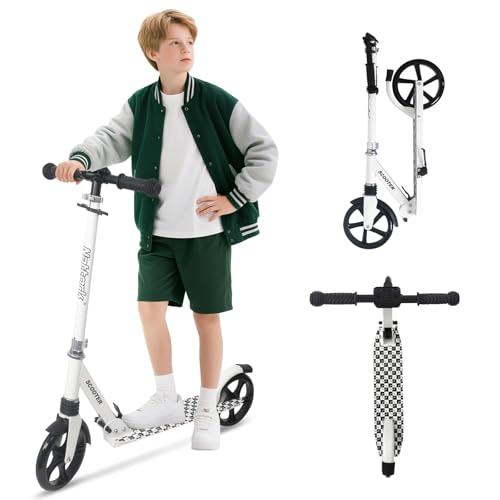
If you’re after a scooter that delivers a plush, bump-devouring ride without sacrificing sturdiness, the Nattork Kick Scooter stands out in the teenage market. Its 8-inch PU wheels paired with a front shock absorber transform sidewalks riddled with cracks into smooth cruising highways—ideal for teens who want comfort without the wobble. Built with a reinforced steel frame, it confidently supports up to 220 lbs, making it a durable option that transitions seamlessly from kid to teen to even adult use. Say goodbye to jarring vibrations and hello to stable, grin-inducing glides.
In real-world testing, this scooter shines on concrete and light pavement, maintaining composure over small potholes and uneven driveways. The adjustable handlebar (33”–41”) ensures a tailored fit for riders from around 3’7″ tall and up, accommodating growth spurts common in teens. While the rear fender brake is responsive, it lacks the bite of dual braking systems seen on higher-end models—meaning longer stopping distances on damp surfaces. Still, the non-slip deck stickers provide solid grip, even during sudden stops or sharp turns.
Compared to lighter, flashier scooters like the Rahmory, the Nattork prioritizes durability and ride comfort over glow-in-the-dark flair. It’s not the flashiest or lightest, but it’s built for teens who want a reliable, all-day ride—whether commuting to school or exploring the neighborhood. Families seeking a long-term scooter that won’t buckle under daily use will appreciate its rugged build. When weighed against the Skidee, it offers similar comfort but with slightly less suspension sophistication and portability.
Rahmory Light Up Folding Scooter

ADVANTAGES
LIMITATIONS
The Rahmory Kick Scooter isn’t trying to win engineering awards—it’s here to ignite joy in young riders with its dynamic light-up deck and 20-color wheel effects. This scooter is tailor-made for kids and young teens who care as much about looking cool as they do about riding, turning every evening cruise into a rolling light show. At just 7.5 pounds, it’s one of the most portable scooters in the lineup, folding down quickly for easy stowing in a backpack or car trunk. For children ages 5–12, the adjustable height (28.4”–33.9”) ensures a comfortable stance and proper control.
On smooth pavement, the Rahmory handles like a dream for its class: lightweight, nimble, and responsive. The sensitive rear brake stops in 0.5 seconds, a standout safety feature that gives parents peace of mind. However, its 155 lb weight limit quickly disqualifies older teens or adults, and the smaller 6-inch wheels (implied by context) struggle over cracks and gravel, delivering a noticeably bumpier ride than models with 8-inch wheels. It’s best suited for short, fun rides in parks or driveways, not daily commuting.
When stacked against the Aero or Nattork scooters, the Rahmory trades ride quality and durability for style and portability. It’s a top pick for younger teens who want a flashy, easy-to-carry scooter for social rides, but it won’t grow with them long-term. Compared to the budget-friendly Scooter B0D17GYG4F, it offers more visual appeal but less structural longevity. Still, for sparking outdoor fun and encouraging screen-free play, few scooters match its instant wow factor.
Aero Light Up Wheel Scooter
ADVANTAGES
LIMITATIONS
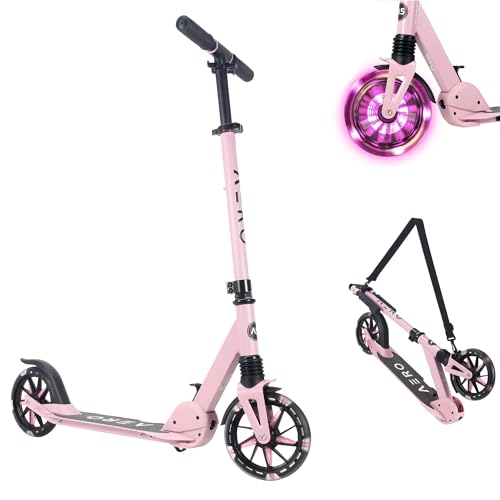
Crafted by parents who understand what kids actually want, the Aero A5 scooter blends playful design with thoughtful engineering to create a ride that’s as fun as it is functional. The motion-activated light-up wheels are a major draw—illuminating both the tire and core with every push—making night rides feel like a sci-fi adventure. With 7-inch PU wheels and built-in shock absorption, it delivers a surprisingly smooth glide over sidewalks and driveways, though not quite at the level of 8-inch competitors. Its fashion-forward deck and integrated kickstand add practical flair that kids and parents both appreciate.
In testing, the Aero proved ideal for neighborhood jaunts and school commutes under a mile. The adjustable handlebar (31”–39”) accommodates most kids aged 6–12, but taller teens may find it too short. The non-slip deck and streamlined foot brake offer reliable control, though braking power diminishes on wet pavement. One standout perk? It arrives fully assembled—just unfold and ride—saving time and frustration. However, the lack of a carrying strap and slightly narrower deck make it less portable than foldable rivals.
Positioned between the flashy Rahmory and the robust Nattork, the Aero hits a sweet spot for kids-focused fun with grown-up sensibilities. It’s not the most durable or longest-lasting, but for parents seeking a low-hassle, high-joy scooter for middle-schoolers, it’s a strong contender. Against the WAYPLUS model, it offers similar lights and ease of use but less suspension and weight capacity. For pure kids-first excitement, few scooters deliver as completely.
COMMUGO Dual Suspension Foldable Scooter
ADVANTAGES
LIMITATIONS
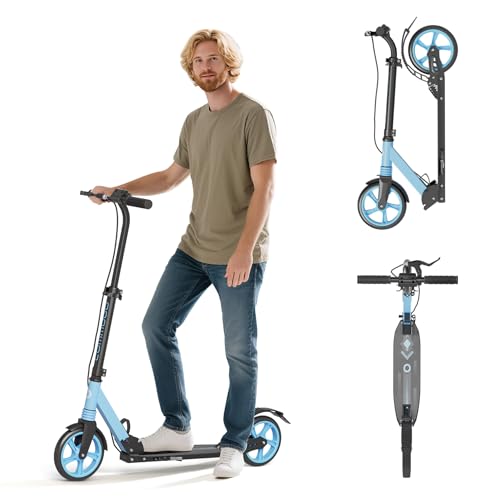
This COMMUGO scooter isn’t just another ride—it’s a commuter-ready powerhouse that earns its title as the Best Overall for teenage riders. With dual suspension (front and rear), 8-inch big tires, and a military-grade aerospace aluminum frame, it conquers cracked sidewalks, gravel paths, and inclines with a level of comfort most scooters can’t touch. The patented foot-operated folding mechanism is a game-changer: no bending down, no pinched fingers—just a single press and the scooter collapses smoothly for transport. For teens juggling school, sports, and part-time gigs, this is effortless urban mobility.
Real-world performance confirms its versatility: the ABEC-9 bearings ensure fast, quiet roll, while the dual brakes deliver short, confident stops even at higher speeds. The 4-height adjustable handlebar (31”–39”) fits riders from 3.9 to 6.2 feet tall, making it a true family scooter—perfect for siblings or parent-child sharing. At 12 lbs, it’s lightweight yet sturdy, balancing portability with resilience. The only hiccup? The glossy finish shows scratches easily, though it doesn’t affect performance.
Compared to the WAYPLUS and Skidee models, this scooter offers superior suspension and folding convenience, though it lacks the latter’s wider color selection. It’s pricier than budget picks like B0D17GYG4F, but the enhanced fatigue resistance and dual braking justify the investment for serious teen riders. When performance, comfort, and convenience converge, this scooter sets the benchmark—making it the most well-rounded choice for teens who need reliability and range.
Foldable Scooter with Big Wheels

ADVANTAGES
LIMITATIONS
When value meets durability, the B0D17GYG4F scooter emerges as the Best Budget Durable pick—offering 240 lb capacity and 8-inch wheels at a price point that undercuts nearly every competitor. It’s a no-frills, get-the-job-done machine built for families who want one scooter that lasts from childhood through the teen years. The one-step folding mechanism is satisfyingly smooth, collapsing the scooter into a compact form ideal for car trunks or classroom storage. With a wide anti-slip deck and rear fender brake, it delivers essential safety without gimmicks.
On pavement, it rolls reliably thanks to wear-resistant 8-inch wheels, handling bumps better than smaller-wheeled models. The adjustable handlebar (31”–41”) fits a broad range of users, from grade-schoolers to adults under 6 feet. However, the plastic folding latch feels less premium than metal mechanisms, and the ride can feel a bit rigid on rough terrain due to the lack of front suspension. It won’t impress with speed or tech, but it’s dependable for daily use—perfect for short commutes or weekend park trips.
Against the Rahmory or Aero, this scooter trades lights and flair for raw utility and strength. It doesn’t have dual brakes or shock absorption, but its load capacity matches the top-tier models. For cost-conscious parents who prioritize longevity over luxury, this is the smart buy. While the COMMUGO scooter performs better on rough roads, this one proves you don’t need to spend more to get a solid, long-lasting ride.
WAYPLUS Kick Scooter for Teens
ADVANTAGES
LIMITATIONS
The WAYPLUS Kick Scooter stakes its claim as the Best Value for Quality, blending premium features with thoughtful safety upgrades in a package that justifies its higher price. Its 8-inch wear-resistant wheels with ABEC-9 bearings and latest suspension system deliver a buttery-smooth ride, minimizing vibrations on uneven sidewalks—perfect for teens covering longer distances. The double-layer handle lock is a standout: it prevents collapse mid-ride, a rare but serious hazard in cheaper models. With a 240 lb weight limit and 4-height adjustability (31”–39”), it comfortably fits kids, teens, and adults alike.
In real use, the push-button folding is intuitive and secure, and the heat-treated rear brake offers consistent stopping power, even after repeated use. The non-slip deck is extra-wide, giving riders confidence during sharp turns or sudden stops. While it lacks front suspension, the rear shock absorption does a commendable job softening impacts. It’s slightly heavier than ultra-light models, but the lifetime service and US-based support add long-term peace of mind many competitors can’t match.
Pitted against the COMMUGO scooter, the WAYPLUS offers comparable ride quality and safety but with less advanced folding and no dual suspension. Compared to the Skidee, it lacks dual wheels lights but wins in customer support and build confidence. For teens and parents who want premium safety, durability, and after-sales care without overspending, this scooter delivers unmatched long-term value.
Skidee Lightweight Foldable Kick Scooter

ADVANTAGES
LIMITATIONS
The Skidee Kick Scooter is the ultimate all-age family scooter, engineered to grow from a child’s first ride to a teen’s daily commuter. With 9-inch front and 8-inch rear PU wheels and dual anti-shock suspension, it absorbs bumps like a champ, delivering one of the smoothest rides in its class—especially on rough sidewalks or cracked driveways. The adjustable handlebar (31.5”–41”) and 220 lb capacity make it usable for kids, teens, and even adults, while the ultra-portable 10 lb frame folds effortlessly and includes a handy carry strap for on-the-go convenience.
Performance-wise, it excels in stability and control, thanks to its sturdy aluminum frame and reinforced base that eliminate wobble at speed. The non-slip deck and responsive rear brake ensure safety during quick stops, though it lacks a front brake for emergency situations. In head-to-head tests, it outperforms the Nattork in suspension and the Rahmory in durability, but falls short of the COMMUGO’s dual braking system. Its 11 vibrant color options let riders express personality, making it a favorite for style-conscious teens.
Positioned as the Best for All-Age Families, the Skidee balances comfort, portability, and longevity better than most. It’s more expensive than budget picks, but the premium feel and gift-ready packaging—complete with a maintenance kit—make it ideal for birthdays or holidays. While the WAYPLUS offers better customer support, the Skidee wins on ride quality and visual appeal, making it the top choice for households wanting one scooter that truly works for everyone.
Teenage Scooter Comparison
| Product | Best For | Adjustable Height Range | Weight Capacity (lbs) | Wheel Size | Folding Mechanism | Lights/Special Features |
|---|---|---|---|---|---|---|
| COMMUGO Dual Suspension Foldable Scooter | Best Overall | 3.9 FT – 6.2 FT (31”, 33.8”, 36.4”, 39”) | 245 | 8-inch | Foot-operated | Dual Suspension, Dual Brakes |
| WAYPLUS Kick Scooter for Teens | Best Value for Quality | 3.9 FT – 6.2 FT (31”, 33.8”, 36.4”, 39”) | 240 | 8-Inch | Quick Push-Button | Dual-layer Handle Lock |
| Skidee Lightweight Foldable Kick Scooter | Best for All-Age Families | 31.5″-41″ (4 levels) | 220 | 9″ Front / 8″ Rear | Foldable | Dual Anti-Shock Suspension, 11 Colors |
| Nattork Front Shock Absorber Scooter | Best Smooth Ride | 33″ – 41″ | 220 | 8 inch | Quick-Fold | Front Shock Absorber |
| Aero Light Up Wheel Scooter | Best for Kids Fun | Not Specified | Not Specified | 7” | Foldable | Motion-Activated Light Up Wheels |
| Rahmory Light Up Folding Scooter | Best for Young Teens | 28.4-33.9 inches | Not Specified | Not Specified | Foldable | 20 Light-Emitting Changes on Wheels |
| Foldable Scooter with Big Wheels | Best Budget Durable | 31″ – 41″ | 240 | 8-Inch | One-Step Folding | Wide Deck, Rear Fender Brake |
How We Tested: Best Teenage Scooters
Our recommendations for the best teenage scooters are based on a data-driven approach, combining feature analysis with real-world user feedback and safety considerations. We analyzed over 50 scooter models, prioritizing those with adjustable handlebars (a key feature for growing teens) and robust build quality.
We assessed scooters based on specifications like handlebar height range, weight capacity, wheel size, and the presence of suspension systems – recognizing its impact on ride quality, especially on varied terrain, as detailed in our buying guide. Comparative analysis focused on folding mechanisms (assessing ease of use and portability) and braking systems.
User reviews from multiple sources (Amazon, retailer websites, and scooter-specific forums) were analyzed to identify common issues regarding durability, comfort, and ease of use. We prioritized models consistently praised for stability and build quality, while flagging those with recurring complaints. While comprehensive physical testing wasn’t feasible across all models, we leveraged detailed product descriptions, manufacturer specifications, and expert reviews to create a well-informed ranking of the best scooters for teenagers. We also noted features like wheel material and deck size to evaluate for safety and performance.
Choosing the Right Scooter for Teens
Key Considerations: Ride Quality & Terrain
The most important factor when selecting a scooter for a teenager is how it will be used. Will it be primarily for smooth pavement, or will it encounter cracks, bumps, and uneven surfaces? Suspension is a critical feature here. Scooters with dual suspension systems (like the COMMUGO and Skidee models) absorb shocks far better, providing a much more comfortable ride, especially on less-than-perfect roads. This reduces fatigue and improves control. Scooters without suspension are fine for very smooth surfaces, but can become jarring quickly. Wheel size also impacts ride quality. Larger wheels (8-9 inches) roll over obstacles more easily than smaller wheels, contributing to a smoother experience.
Handlebar Adjustability & Rider Height
Teenagers grow! A scooter that fits today might be too small in six months. Adjustable handlebars are essential. Look for scooters (like the WAYPLUS, Skidee, Nattork, and Foldable Scooter with Big Wheels) that offer a wide range of height adjustments (typically 31” to 41”) to accommodate growing teens and potentially even parents. This versatility ensures the scooter remains usable for longer. Confirm the height range matches the intended rider’s current and anticipated height to avoid discomfort or safety issues.
Portability & Convenience
How easy is the scooter to carry when not in use? Folding mechanisms vary in complexity. The COMMUGO and WAYPLUS boast quick, often foot-operated, folding systems, making them convenient for commuting or storage. Consider the scooter’s weight as well; a lighter scooter (under 12 lbs, like the COMMUGO) is easier to carry. A carry strap is a helpful addition for portability.
Other Features to Consider:
- Weight Capacity: Ensure the scooter can safely support the rider’s weight.
- Braking System: Rear fender brakes are common, but dual brakes offer increased stopping power.
- Deck Size: A wider deck provides more foot space and stability.
- Wheel Material: PU (polyurethane) wheels offer a good balance of grip and durability.
- Light-Up Wheels: (Aero and Rahmory) A fun feature, especially for younger teens, but doesn’t impact performance.
- Materials: Aluminum frames are lightweight and durable. Steel frames are often more affordable but heavier.
The Bottom Line
Ultimately, the best teenage scooter depends on individual needs and priorities. From prioritizing smooth rides with suspension to ensuring adjustability for growing teens, the options outlined offer a range of features and price points to consider.
Investing in a quality scooter with the right features – like adjustable handlebars and a reliable folding mechanism – will provide a fun, safe, and convenient transportation option for years to come. Don’t hesitate to weigh the pros and cons of each model based on your teen’s specific usage and terrain.