10 Best Toddler Scooters in 2026
This post contains affiliate links. As an Amazon Associate, we earn from qualifying purchases.
Our best overall toddler scooter is the Micro Kickboard Mini 3-Wheel Toddler Scooter for its premium build and skill-building lean-to-steer design. For maximum portability, the Gotrax KS1 is our foldable pick, and the Campior Red Mini excels for the youngest riders. Choosing the right first scooter builds coordination and confidence through safe, stable play.
A poor fit or overly complex design can frustrate a beginner and stall their progress. This guide distills key specifications, expert round-ups, and patterns in owner feedback to help you find a scooter that matches your toddler’s size, your storage needs, and your family’s priorities.
Top 10 Toddler Scooters in the Market
Certain content that appears on this site comes from Amazon. This content is provided "as is" and is subject to change or removal at any time.
The Best Toddler Scooters, Reviewed
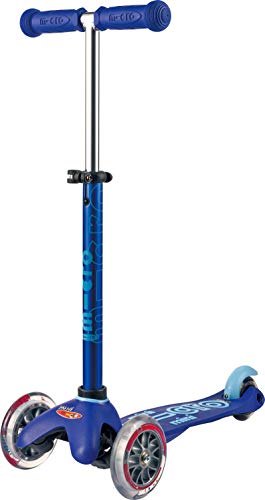
Micro Kickboard Mini 3-Wheel Toddler Scooter
What We Like
- Adjustable T-bar grows with your child
- Lean-to-steer design builds balance and coordination
- Slip-resistant grip footplate for steady footing
- Lightweight yet strong for years of use
Trade-offs
- No integrated lights or flashy features like some competitors
- At 5.3 lbs, it's slightly heavier than the 5.1 lb Gotrax KS1
With a rider capacity of 110 pounds, this scooter can support a child from their first wobbly pushes all the way through confident cruising. Its Swiss-engineered lean-to-steer system provides the stable, intuitive platform toddlers need to develop coordination naturally. Research round-ups call Micro Kickboard scooters the hands-down favorite toddler option, noting that if you want the best 3-wheel scooter available, this is it. The anodized aluminum T-bar and polyurethane deck are built to meet ASTM safety standards and withstand daily play, backed by a two-year warranty.
The trade-off for that premium durability and clean design is the absence of flashy extras like light-up wheels, which are found on models like the Radio Flyer Glider Jr. This scooter focuses purely on ride quality and longevity. Research indicates a preference for decks that combine rubberized and hard plastic sections, like those on the Micro Mini and Retrospec Chipmunk, for the best grip in both wet and dry conditions. If your priority is a straightforward, expertly engineered tool that teaches core skills, this is the benchmark.
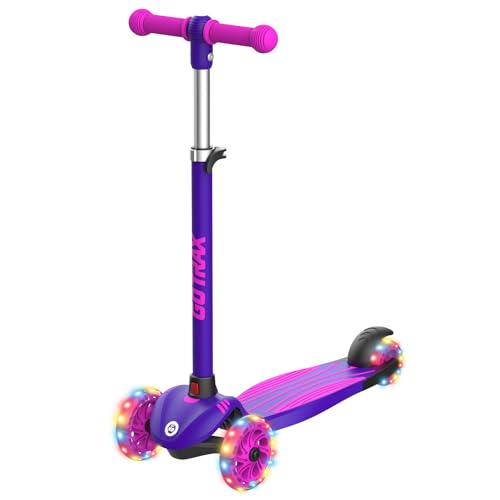
Gotrax KS1 Kids Kick Scooter
What We Like
- Extremely lightweight and easy to carry
- Simple one-button folding for compact storage
- Lean-to-steer design builds balance and coordination
- LED wheels enhance visibility for evening rides
Trade-offs
- Lacks the premium construction of higher-end brands
- No dedicated carrying strap mentioned for folded transport
- Lean-to-steer may feel less direct for some riders
At 5.1 pounds, the Gotrax KS1 is lightweight enough for a child to manage and for a parent to carry easily. Its one-button folding mechanism collapses the scooter quickly, so it fits in a car trunk or stores in a closet without taking up much space. The lean-to-steer system helps young riders develop balance, and three handlebar height settings let the scooter grow with a child.
A 5-inch wide anti-slip deck and ABEC-7 bearings are designed to offer stability and a smooth ride on uneven surfaces. This scooter emphasizes convenience with its simple folding and light weight rather than premium construction. Families who value easy transport and storage will find it suitable, while those seeking a benchmark for steering feel might consider the Micro Kickboard Mini.
Campior Red Mini 3 Wheel Scooter

What We Like
- Intuitive lean-to-steer for natural balance development
- Motion-activated LED wheels for fun and low-light visibility
- Four-position adjustable T-bar handlebar grows with the child
- Wide anti-slip deck and three-wheel design enhance stability
Trade-offs
- No integrated seat for resting
- Maximum handlebar height is 28.35 inches
A lean-to-steer mechanism and a wide anti-slip deck make this scooter an exceptionally stable platform for a two-year-old’s first rides. The intuitive steering requires no complicated handlebar turning, which lets toddlers focus on balance and coordination from the start. It suits families who want a dedicated, straightforward scooter that prioritizes safety and confidence-building for the youngest riders. The flashing LED wheels add a layer of engagement that makes practice feel like play.
Designed purely for standing, this scooter focuses on developing core balance and coordination skills through its lean-to-steer control. Unlike the Hurtle 3 Wheeled Scooter or the Retrospec Chipmunk Plus, it lacks a flip-out seat for a child who tires easily. Its length is 21.1 inches. For a household seeking a classic scooter experience, the Campior Red Mini delivers, but families wanting a transitional ride-on toy might prefer a 2-in-1 design.
Product photos
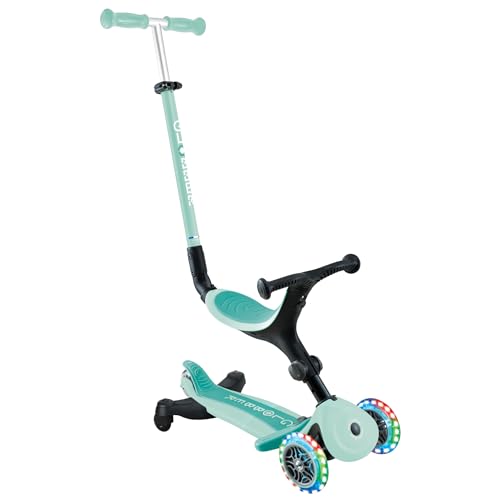
Globber Go Up Active Lights 360° Scooter
What We Like
- Transforms tool-lessly between three growth stages
- 360° parent steering in ride-on mode for control
- Steering lock system aids balance learning
- Super-low, reinforced frame with wide anti-slip deck
Trade-offs
- At 38.5 inches long, it requires significant storage space
- Scooter mode only suitable from age 3, not earlier
The Globber Go Up Active Lights 360° Scooter transforms without tools from a parent-steered ride-on for toddlers into a standard scooter for older kids, covering ages 15 months to 9+ years. Its patented steering lock fixes the front wheels for a stable, to-and-fro movement to help children learn balance. An adjustable seat and a T-bar with four height settings allow the fit to change as a child grows.
That versatility results in a larger folded size than many dedicated scooters, measuring 38.5 inches long. For example, the Micro Kickboard Mini folds down to just 21.7 inches in length. Parents focused purely on a simple scooter for a preschooler might prefer a more compact single-mode option.
Product photos
Hurtle Toddler Scooter

What We Like
- Adjustable handlebar grows with your child
- Lean-to-steer control aids beginner stability
- LED wheels add fun and visibility
- Lightweight and portable for indoor/outdoor use
Trade-offs
- Supports only up to 44 lbs
- Steering requires more effort
A 44-pound weight limit and a handlebar that adjusts over three inches make this scooter a solid fit for the youngest riders just starting out. Its lightweight frame and wide anti-slip deck offer the extra stability and confidence a two-year-old needs, while the flashing LED wheels are a surefire hit for playtime. This combination of safety-focused basics and playful extras is why it suits small riders best.
Independent testing found its performance doesn’t quite match the polish of other scooters in its class. The steering requires more effort and the overall ride feels less smooth, which means a child might outgrow its clunkiness before they outgrow the size adjustments. For parents seeking a premium, effortless glide, the Micro Kickboard Mini is a more refined choice, but the Hurtle delivers core functionality for a beginner’s first scooter.
Product photos
Scoot & Ride Highwaykick 1 Scooter

What We Like
- Unique sit-to-stand design grows with child
- Three-wheel layout provides superior stability
- Tool-free adjustments for personalized fit
- Lightweight and easy to transport
Trade-offs
- The 2-in-1 mechanism adds complexity over simple scooters
A tool-free convertible design lets a toddler start as a seated ride-on before graduating to a standing scooter, making it a uniquely safe first step into the scooter world. Its three-wheel layout is designed for a stable ride, and research mentions it allows sitting while working on balance and learning to steer. This scooter suits parents who want a single product to carry a child from early, tentative exploration all the way to confident kicking around age five.
You do get a bit more bulk in exchange for that versatility. However, if your priority is a gentle, stable introduction that eliminates the need for a separate ride-on toy, the Scoot & Ride’s smooth transition is its core advantage.
Product photos
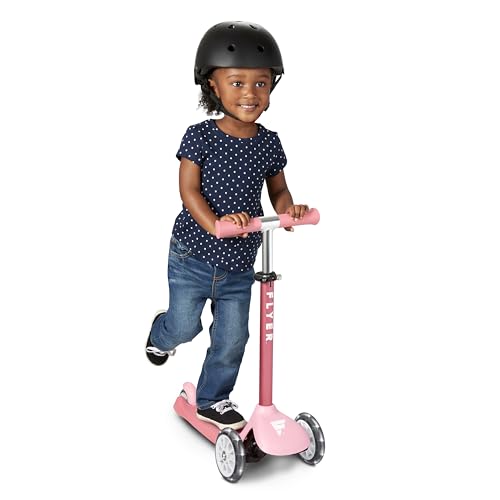
Radio Flyer Glider Jr. Scooter
What We Like
- Motion-activated LED wheels for visual fun.
- Lean-to-steer design builds balance intuitively.
- Smooth bearings require fewer kicks to glide.
- Adjustable handlebar grows with a child from 2 to 5.
Trade-offs
- Handlebar adjusts only vertically, not the T-bar width.
- No seat attachment for a 2-in-1 sit/stand mode.
The Radio Flyer Glider Jr. Scooter’s premium PU wheels with high-performance bearings deliver the fast, smooth ride referenced in its award. This is a beginner-friendly scooter where the lean-to-steer technology helps toddlers build coordination naturally, and the light-up wheels add excitement to every push. It’s a solid choice for parents seeking a classic, reputable brand that focuses on stable, confidence-building play for kids aged 2 to 5. The adjustable handlebar ensures it remains useful for several growth spurts.
Weighing 5.2 pounds, the Radio Flyer Glider Jr. Scooter is comparable to many models in its class, like the 5.1-pound Gotrax KS1 or the 5.8-pound Hurtle Toddler Scooter. Its construction provides a stable platform for riders aged two to five. The adjustable handlebar and three-wheel design support balance development as children grow.
Product photos
Retrospec Chipmunk Plus Kids Scooter

What We Like
- Foldable seat converts from sit-down to stand-up scooter
- LED light-up wheels increase visibility during rides
- Lean-to-steer system builds balance intuitively
Trade-offs
- At 8.0 pounds, it's heavier than models like the 5.3 lb Micro Mini
- Seat supports only up to 55 lb, limiting its sit-down use phase
- Foldable seat mechanism adds complexity compared to simpler scooters
A 130 lb total weight capacity and convertible seat make this scooter a uniquely adaptable choice for families. It starts as a stable, seated ride for the youngest toddlers, then transforms into a standard kick scooter as skills progress. The adjustable T-bar and seat heights create a genuine grow-with-me design, accommodating a child from initial, unsteady attempts up to confident, standing rides. This dual-purpose functionality is the core reason it stands out for parents seeking a single product to span multiple developmental stages.
Weighing 8.0 pounds, the Retrospec Chipmunk Plus is heavier than many toddler scooters, so a small child may find it more difficult to maneuver and a parent will notice the extra weight when carrying it. Its bulk comes from added features like a removable seat, which the lighter Micro Kickboard Mini does not have. Expert reviewers preferred the deck’s combination of rubberized and hard plastic sections, a design also seen on the Micro Mini, for its grip. The scooter includes a rear brake for controlled stopping and LED light-up wheels for visibility.
Razor Scooter Jr. Lil' Kick Scooter

What We Like
- Extra-wide deck provides stability for beginners.
- Larger polymer wheels aid balance and steering.
- Anti-tip stance prevents tipping during learning.
Trade-offs
- Manual steering lacks the intuitive lean-to-steer of models like the Micro Kickboard.
- No built-in lights compared to options like the Gotrax KS1.
An extra-wide, slip-resistant deck and a three-wheel anti-tip stance give this scooter a planted, secure feel underfoot. That makes it a straightforward choice for a three-year-old’s first scooter, where the primary goal is building confidence. The classic manual steering operates without a lean-to-steer mechanism. Its larger polymer wheels are part of a design made for stability. The product focuses on fundamental stability over features like light-up wheels.
This simple stability comes with a trade-off in growth-oriented features. The handlebar is fixed, so it won’t adjust as your child gets taller, unlike the Micro Kickboard Mini or the Gotrax KS1. Its steering is traditional, requiring a child to turn the bar physically rather than leaning. For a parent seeking a pure, classic scooter experience to master the basics of kicking and balancing, this design excels. If you foresee wanting a scooter that adapts over several years of growth, a model with an adjustable T-bar might be a better long-term fit.
Hurtle 3 Wheeled Scooter
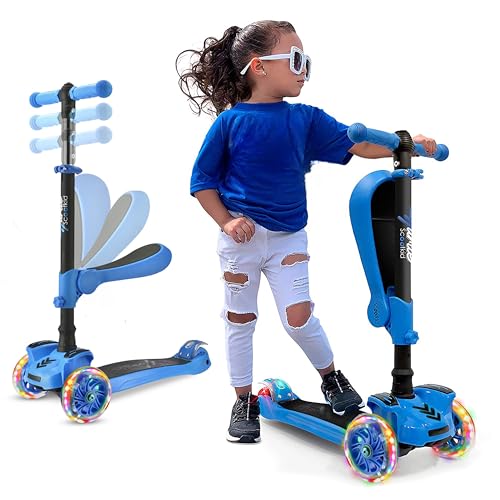
What We Like
- Flip-out seat converts from sit-to-stand scooter
- Lean-to-steer design helps develop balance
- Flashing wheel lights add fun visibility
- Four handlebar heights grow with your child
Trade-offs
- At 9.0 pounds, it's heavier than many toddler scooters
- Steering felt more difficult in expert testing
- Ride quality was clunkier and less smooth
A flip-out seat rated for 45 pounds makes this scooter a versatile pick for the youngest riders who aren’t yet confident standing. The seat provides a stable, sit-down cruising option with a footrest, and it can be detached when they’re ready to stand. That feature, combined with a handlebar offering four height options, means it can accommodate a wide age range, supporting riders up to 132 pounds. For parents seeking a single scooter to transition a child from toddler to preschooler, this 2-in-1 design is the core appeal.
The trade-off comes in performance. Research notes the Hurtle’s steering feels more difficult and the ride is clunkier than other models, lacking the smoothness found on scooters like the Micro Kickboard Mini. Its 9.0-pound weight also makes it noticeably heavier to carry than many competitors. While the flashing lights and convertible seat are big hits with kids, it’s best for families who prioritize that versatile seating over the most refined gliding experience.
How We Evaluated Toddler Scooters
Our research focused on manufacturer specifications, expert round-ups from trusted review sites, and consistent patterns in verified owner feedback. We prioritized criteria that directly impact a toddler’s safety, learning curve, and the scooter’s longevity. This includes stability from three-wheel designs and wide decks, adjustable handlebars for a proper fit across growth stages, and intuitive steering mechanisms that build coordination.
We also considered practical factors for parents, like overall weight for carrying and special features like integrated seats or lights. A research-led evaluation cannot replicate years of hands-on wear, but it effectively identifies models celebrated for durability and those where owners report recurring issues.
What To Look For In Toddler Scooters
Selecting a scooter for a toddler involves balancing immediate needs for stability with long-term value. The right choice encourages active play and skill development safely.
Look for a stable three-wheel base, an adjustable handlebar that fits your child’s height, and an intuitive steering system. Consider weight for portability and any extra features, like a seat or lights, based on your child’s age and your storage space.
Stability & Steering
Three-wheel configurations, with two wheels in front, provide essential self-stability for beginners, preventing tip-overs. The best models use a lean-to-steer design, where the front wheels pivot as the rider leans, mimicking a skateboard’s motion. This intuitive system builds natural balance and coordination, which experts note can translate to skills for biking or skateboarding later. In contrast, manual steering requires more deliberate handlebar turning and can be less intuitive for very young children.
Adjustability & Fit
An adjustable handlebar is essential for a scooter to grow with your child. The range of adjustment determines both the starting age and the usable lifespan. For a young toddler, a sufficiently low minimum handlebar height is necessary for proper control, especially if using an integrated seat. A maximum height that extends well into the preschool years accommodates growth. Continuous adjustment offers the most precise fit over time. Models with the best fit ranges for specific ages are highlighted in guides for scooters for 2-year-olds and scooters for 3-year-olds.
Deck & Build Quality
The deck’s width, length, and surface texture contribute to stability and confidence. Wider decks offer a more secure platform, allowing some toddlers to place their feet side-by-side. Look for slip-resistant surfaces, combining rubberized sections with textured plastic, for grip in various conditions. Overall build quality affects the ride’s smoothness, noise level, and durability. Premium materials and bearings create a quiet, effortless glide that requires fewer kicks, while budget models may feel clunkier. For a deeper look at durable options, see our guide to the best kids scooters.
Check the manufacturer’s stated weight limit to ensure the scooter will last through your child’s growth spurts.
Assess the scooter’s total weight; a model under 6 pounds is significantly easier for a small child to maneuver and for a parent to carry.
Look for a rear friction brake, which is typically simple for toddlers to learn by stepping down.
If storage is tight, prioritize a foldable design or a model that stands upright on its own.
Consider if features like LED wheels or a convertible seat align with your child’s current needs or are unnecessary complexities.
The most important factor is a proper fit: your child should be able to stand on the deck with a slight bend in their knees while gripping the handlebars comfortably.
Toddler Scooters Compared
The comparison table below details key specifications for all ten scooters to help you weigh the differences at a glance.
| Product | Recommended Ages | Steering Design | Weight |
|---|---|---|---|
| Micro Kickboard Mini 3-Wheel Toddler Scooter | 2-5 years | Lean-to-steer, 3-wheel | 5.3 pounds |
| Gotrax KS1 Kids Kick Scooter | 2+ | Lean-to-Steer | 5.1 lbs |
| Campior Red Mini 3 Wheel Scooter | Ages 2+ | Lean-to-steer | N/A |
| Globber Go Up Active Lights 360° Scooter | 15 months to 9+ years | N/A | N/A |
| Hurtle Toddler Scooter | Ages 2-5 | Lean-to-steer | 5.8 pounds |
| Scoot & Ride Highwaykick 1 Scooter | 1 to 5 years | N/A | 6.6 pounds |
| Radio Flyer Glider Jr. Scooter | Ages 2-5 Years | Lean-to-Steer | 5.2 pounds |
| Retrospec Chipmunk Plus Kids Scooter | 3+ Years | Lean to Steer | 8.0 pounds |
| Razor Scooter Jr. Lil' Kick Scooter | Age 3+ | N/A | 5.2 pounds |
| Hurtle 3 Wheeled Scooter | N/A | Lean-to-steer | 9.0 pounds |
Frequently Asked Questions
What is the best scooter for a 2-year-old?
For a 2-year-old, stability and a low minimum handlebar height are crucial. Our Best For Young Toddlers pick, the Campior Red Mini 3 Wheel Scooter, is designed specifically for this age with an intuitive lean-to-steer system and a wide anti-slip deck. Many parents also start with the Micro Kickboard Mini due to its reputation for smooth, stable riding and excellent adjustability.
Are 3-wheel scooters better for toddlers?
Yes, three-wheel scooters are universally recommended for toddlers because they are self-stable and won’t tip over on their own. The two-front-wheel design provides a wide, secure base and enables intuitive lean-to-steer mechanics, which are easier for young children to learn than traditional handlebar steering. For more on this style, explore our resource on best 3-wheel scooters.
Should I get a toddler scooter with a seat?
A seat is beneficial for very young beginners who lack the leg strength or confidence for standing scooting. It allows them to practice balance and steering in a secure position. The Best Scooter With Seat and Best Flip-Out Seat picks cater to this need. However, most children quickly outgrow the seated phase, so consider if this short-term feature is worth the added weight and complexity.
What is the difference between lean-to-steer and manual steering?
Lean-to-steer scooters turn by the rider shifting their weight, causing the front wheels to pivot. This feels natural and builds core balance. Manual steering requires physically turning the handlebars, which can be less intuitive and more challenging for coordination. Nearly all expert-recommended toddler scooters use lean-to-steer for its developmental benefits.
How long will a toddler scooter last?
A well-chosen scooter can last 3-4 years. Longevity depends on the adjustable handlebar’s height range and the scooter’s weight capacity. Models like the Micro Kickboard Mini and the multi-mode Globber Go Up offer extensive adjustability to grow with a child from age 2 to 5 or 6. For older preschoolers, our guide to the best scooter for a 5-year-old highlights the next stage of options.
The Bottom Line
The Micro Kickboard Mini 3-Wheel Toddler Scooter earns our best overall recommendation for parents seeking a durable, skill-focused scooter that will provide a smooth, confidence-building ride for years. If your primary need is easy storage or portability, the lightweight, foldable Gotrax KS1 is the clear choice. For those with a very young beginner who might benefit from a seated option, consider the Retrospec Chipmunk Plus or a convertible model like the Scoot & Ride Highwaykick 1.
Ultimately, the single most important factor is matching the scooter’s size and steering style to your child’s current height and coordination level to ensure a positive, fun first experience on wheels.
