7 Best Trampoline Scooters in 2026
This post contains affiliate links. As an Amazon Associate, we earn from qualifying purchases.
Our best overall trampoline scooter is the Madd Gear Bounce Trampoline Pro Scooter for its authentic, pro-scooter components and protective foam deck. For a model that grows with a young rider, consider the Best Adjustable Design, the In Do The Trick Scooter Trampoline Scooter. We also highlight the BOUNCEBOARD Classic Training Board for multi-sport aerial training.
Choosing the right trainer can accelerate skill development while minimizing the risk of concrete falls. These tools let riders practice rotations, grabs, and landings in a safe, forgiving environment. Our guide is based on researching manufacturer specifications, expert round-ups, and patterns in owner feedback.
We evaluate key factors like deck design, adjustability, and weight to help you find the best match for your trampoline and skill goals.
Top 7 Trampoline Scooters in the Market
Certain content that appears on this site comes from Amazon. This content is provided "as is" and is subject to change or removal at any time.
The Best Trampoline Scooters, Reviewed
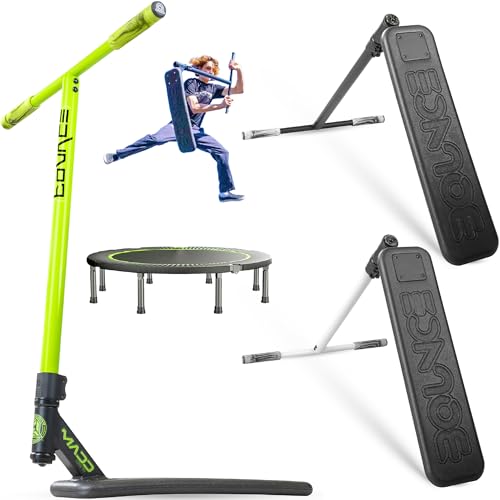
Madd Gear Bounce Trampoline Pro Scooter
What We Like
- Wide foam deck protects trampoline mats
- Pro-grade IHC headset for stable rotations
- Lightweight 5.5 lb build aids trick speed
- U.S.-based warranty and customer support
Trade-offs
- At 5.5 lbs, heavier than wheel-free models like X-GETZ
- 22" fixed bar width may not suit all riders
The 5.5-pound weight and full-size 22-inch T-bar give this trampoline scooter a feel remarkably close to a real stunt scooter, which is why it’s the top pick for riders serious about skill transfer. Its IHC compression headset and sealed bearings are legitimate pro components, ensuring the barspins and whips you practice on the trampoline will feel authentic when you take them to the pavement. This makes it ideal for beginners building fundamentals and experienced riders honing complex combos, all backed by a U.S. company with a three-year warranty.
The trade-off for that pro feel is a bit more heft compared to ultra-light, wheel-free trainers. For instance, the X-GETZ model is nearly two pounds lighter, a feature some younger riders might prefer for pure air control. However, if your goal is to bridge the gap between trampoline practice and street riding, the Madd Gear Bounce delivers. It supports riders up to 220 pounds, offering a durable, performance-oriented package that stands up to repeated sessions.
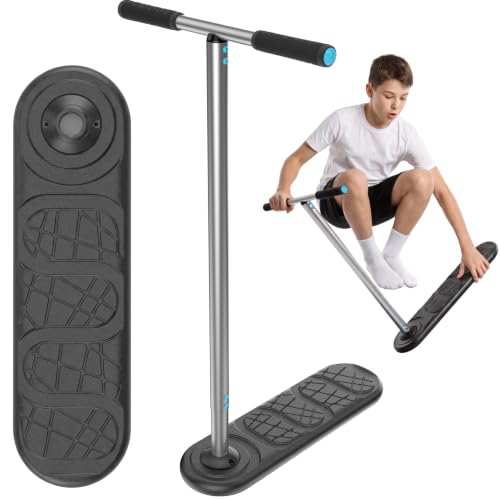
In Do The Trick Scooter Trampoline Scooter
What We Like
- Two handlebar heights for a custom, growing fit
- Ultra-lightweight, flexible board for easy mid-air control
- Soft, grippy TPU handgrips keep hands locked in place
Trade-offs
- At 28.5 inches long, it requires a larger trampoline bed
- Essential tools and trampoline are not included
The adjustable handlebars, offering two distinct heights, mean this scooter can genuinely grow with a rider’s skill and confidence. That flexibility, combined with a remarkably light 1000-gram frame, makes it a standout for kids and teens progressing from basic bounces to complex aerial tricks. The soft, grippy TPU handgrips provide a secure hold, which is crucial when you’re learning to let go for tailwhips. It’s built for the rider who wants one tool to last through multiple skill levels.
Its 28.5-inch length requires a larger trampoline for safe use, so measure your equipment before buying. The wheel-free design is built specifically for trampoline tricks, but the trampoline and any necessary tools are not included.
Product photos
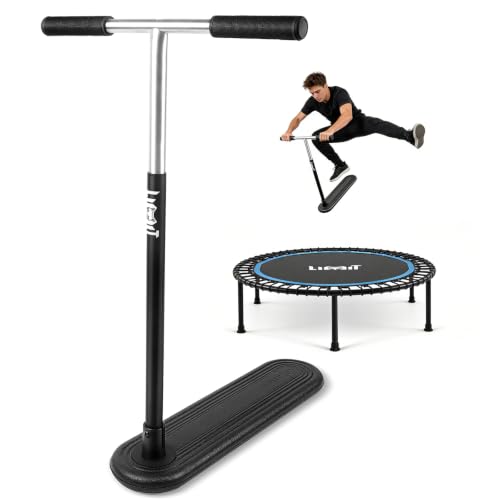
Limit Pro Trampoline Scooter
What We Like
- Ultra-lightweight design for easier control
- Three adjustable handlebar heights grow with rider
- Durable aluminum construction with upgraded gasket
- Soft foam deck prevents collision injuries on trampolines
Trade-offs
- Weighs 2.7 pounds, less than some wheel-free rivals
- Handlebar adjusts to only three specific heights
An adjustable handlebar with three distinct height settings allows this scooter to grow alongside a rider, transitioning smoothly from a beginner’s tool to a practice aid for more advanced tricks. The 1.24 kg frame is light enough for younger users to manage confidently, especially during the repeated attempts on a backyard trampoline that research highlights as the ideal training environment. This combination makes it a strong fit for developing riders who need a single, adaptable scooter to last through multiple skill levels.
Designed with a high-density soft foam deck, the Limit Pro Trampoline Scooter is built for safe practice on flat surfaces or trampolines, preventing collision injuries. Its lightweight 1.24kg frame makes it easier to control while learning tricks. This focus means it is specialized for aerial and controlled-environment practice, not for rugged outdoor skating on pavement.
Product photos
X-GETZ Indoor Trampoline Scooter

What We Like
- Adjustable handlebar grows with rider skill
- High 100 kg weight capacity for teens and adults
- Lightweight 1.4 kg design for easy maneuverability
Trade-offs
- No wheels limits use to trampoline or flat ground practice
A 100 kg weight capacity makes this trampoline scooter a serious option for older kids, teens, and adults who need a practice tool that can handle their size. The adjustable handlebar, which extends from 630 to 780 mm, ensures it can adapt to a growing rider’s height and evolving skill level. Its 1.4 kg weight is a key feature, allowing for quick, controlled movements in the air without being cumbersome. This combination of strength and adjustability targets users who are progressing beyond basic bounces and need a durable platform for learning flips and stunts safely.
The X-GETZ Indoor Trampoline Scooter has a 20.5-inch deck length, which can feel compact for users with larger feet or those used to a longer platform. Its certified, wheel-free design prioritizes safe, repetitive practice, making it a dedicated training aid rather than a replacement for a wheeled scooter meant for pavement.
Product photos
BOUNCEBOARD Classic Training Board

What We Like
- Extended 34-inch platform for stable landings.
- Durable design for repeated trampoline sessions.
- Trains multiple board sports in one tool.
- Builds muscle memory for grabs and spins.
Trade-offs
- The 34-inch length requires a larger trampoline surface.
- Designed for teens and adults, not younger children.
A 34-inch long platform provides the stable, roomy surface needed for complex aerial maneuvers. This makes the BOUNCEBOARD Classic an excellent choice for teenagers and adults serious about translating trampoline practice to real-world board sports. Its design specifically builds muscle memory for the rotations, grabs, and controlled landings used in kiteboarding, snowboarding, skateboarding, and wakeboarding. You get a versatile training zone that turns any backyard trampoline into a dedicated practice facility.
The trade-off is its weight and size. At five pounds, it’s a substantial piece of equipment compared to a minimalist option like the X-GETZ Indoor Trampoline Scooter. That heft contributes to its stability during landings, but it also means it’s less about casual bouncing and more about focused, sport-specific training. If your goal is to safely drill the same trick fifty times to lock in the feel, this board’s durable, extended platform is built for that job.
Product photos
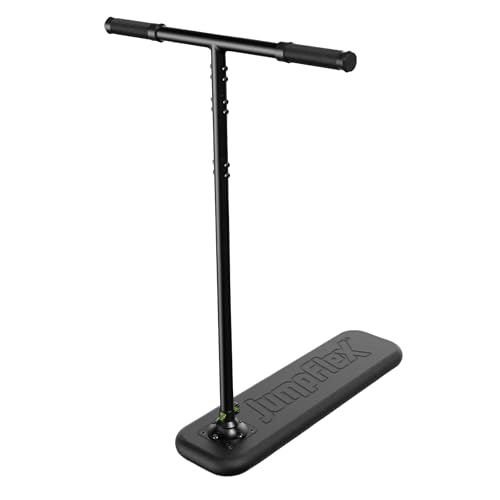
JumpFlex Trampoline Trick Scooter
What We Like
- Soft-padded foam deck protects trampolines
- Non-slip grips for stable trick control
- Lightweight build for easy handling by kids
- Steel handlebars promise durable construction
Trade-offs
- No adjustable handlebar height for growing riders
- Lacks the sealed bearings found on the Madd Gear model
Its soft-padded, foam-covered board delivers a lightweight setup that’s fundamentally about safety, protecting both the trampoline mat and the rider during falls. This makes the JumpFlex an excellent foundational tool for younger kids or beginners who want to practice spins and scooter-style tricks without the hard impact of concrete. The non-slip handlebar grips and strong steel frame are built for active play, encouraging balance and coordination in a controlled, backyard environment.
The JumpFlex Trick Scooter is built with a focus on safety over high-performance features. Its design includes soft-padded foam and rubber grips to protect both trampolines and users, creating a stable platform for learning. Unlike the Madd Gear Pro Trick Scooter, it lacks sealed bearings for smoother rotations, and its handlebars are not adjustable. This makes it a straightforward option for practicing spins and flips in a safer, wheel-free environment.
Product photos
Spacejump Hoverboard Bounce Board
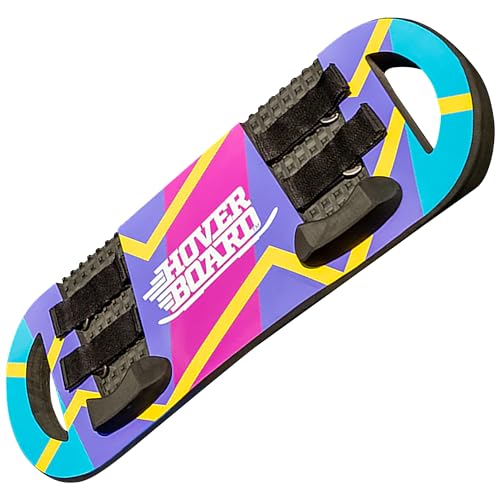
What We Like
- Secure hook-and-loop foot straps for aerial control
- Lightweight foam platform for repeated jumping
- Soft top surface is safe for trick practice
- Designed for balance and footwork coordination
Trade-offs
- No handlebars for riders who prefer steering control
- Lacks the rigid deck of a traditional trick scooter
Spacejump’s Hoverboard Bounce Board features a strap-on foam deck with hook-and-loop foot straps, holding feet firmly in place for trick practice and aerial control. This secure design focuses on balance building and footwork coordination directly on the trampoline surface. The lightweight cushioned board is intended for freestyle bounce tricks and aerial skill development.
Unlike products like the Madd Gear Bounce Trampoline Pro Scooter or the X-GETZ Indoor Trampoline Scooter, this accessory has no handlebars. It is a foam trick platform, which means practice is centered on foot placement and body movement. The design is described as an attachment for trampoline hoverboard use.
Product photos
How We Evaluated Trampoline Scooters
Our evaluation synthesized product specifications, manufacturer documentation, and insights from expert round-ups within the action sports community. We also analyzed recurring themes in owner feedback to understand real-world durability and performance. This research-led approach ensures our picks are grounded in the features and trade-offs that matter most to riders.
We prioritized three criteria: deck safety and feel, handlebar adjustability, and overall weight. A protective, foam-padded deck is non-negotiable for trampoline mat safety and rider comfort during hard landings. Adjustable handlebars extend a scooter’s usable life as a young rider grows, while proper weight impacts mid-air control and trick speed. For example, a heavier, aluminum deck like the Madd Gear’s better mimics a real stunt scooter, while a lighter foam model can feel more agile.
The main limitation of a research-based review is that we cannot personally verify durability over months of hard use or measure the exact “feel” of each model. We rely on aggregated owner reports and manufacturer claims about construction. Our goal is to provide a clear, comparative framework so you can make an informed choice based on your specific trampoline setup and training objectives, whether you’re looking for a scooter for stunts or a simple recreational tool.
What To Look For In Trampoline Scooters
A trampoline scooter is a specialized training tool, not a toy. The right choice depends on the rider’s age, skill goals, and the size of your trampoline. Key considerations include the deck material’s impact on both safety and realism, the scope for handlebar adjustment, and the overall weight for aerial control.
Look for a foam-padded deck to protect your trampoline mat, adjustable handlebars to accommodate growth, and a weight that balances realistic feel with easy mid-air maneuverability for your skill level.
Deck Design and Safety
The deck is the platform you stand on, and its design is critical for safety and performance. Most models use a thick foam pad to prevent damage to the trampoline mat and cushion awkward landings. Some, like the Madd Gear Pro Scooter, feature a wider foam deck that offers more foot placement room, mimicking a real scooter deck. Others, like the BOUNCEBOARD, use an extended flat platform designed for training board sports landings.
A foam deck is essential for trampoline use, as a rigid or wheeled scooter can puncture the jumping surface. The material also affects the trainer’s feel; a heavier, more solid deck provides a realistic training experience for trick riding, while an ultra-lightweight foam board can feel more agile for practicing rotations. Consider what you’re training for: replicating a scooter’s exact feel or developing general aerial awareness.
Handlebar Adjustability
Handlebar height significantly affects riding posture and control. For growing kids and teens, an adjustable design is a smart investment. Models like the In Do The Trick Scooter offer two height settings, while the Limit Pro provides three specific positions. This allows the scooter to remain ergonomic as the rider’s height increases, supporting proper technique over several seasons.
Fixed handlebars, found on budget and some pro-style models, offer simplicity and often a more solid connection, but they lock you into a single size. Before choosing a fixed-width bar, check its measurement against the rider’s natural stance; a bar that’s too wide or narrow can hinder trick execution. Adjustability is less critical for adults or if the scooter will be used by a single rider whose height is stable.
Weight and Construction
Overall weight influences how easily a rider can manipulate the scooter in the air. Lighter models, often around 2-3 pounds, allow for quicker spins and are easier for younger riders to control. Heavier models, which may use aluminum components, provide a more authentic feel that builds the specific muscle memory needed for pro scooters. The construction material also dictates durability; aluminum and steel parts typically withstand repeated impacts better than plastic.
- Check your trampoline size: Measure your trampoline bed’s diameter. Longer decks, like the 34-inch BOUNCEBOARD, require a larger surface for safe use.
- Verify weight capacity: Ensure the scooter’s rated capacity (often listed in kilograms) exceeds the rider’s weight.
- Assess assembly needs: Most arrive mostly assembled, but some require attaching handlebars with basic tools.
- Consider the training focus: Decide if you need a true scooter analog or a general balance trainer like a strap-on board.
- Review warranty details: Some brands offer U.S.-based support, which can simplify repairs or part replacements.
Match the scooter’s length and weight to your trampoline’s available jumping area and the rider’s strength for the safest and most effective sessions.
Trampoline Scooters Compared
The table below compares key specifications across our seven picks to highlight their differences at a glance.
| Product | Weight | Deck Dimensions | Handlebar Height |
|---|---|---|---|
| Madd Gear Bounce Trampoline Pro Scooter | 5.5 lbs | 22.5" x 6" | 22" |
| In Do The Trick Scooter Trampoline Scooter | 3.1 pounds | 28.5" L x 20.5" W | 570mm or 670mm |
| Limit Pro Trampoline Scooter | 2.7 pounds | N/A | 3 adjustable positions |
| X-GETZ Indoor Trampoline Scooter | 3.1 Pounds | N/A | 630-780 mm |
| BOUNCEBOARD Classic Training Board | 5.0 pounds | 34.0 inches; Width: 12.0 inches | N/A |
| JumpFlex Trampoline Trick Scooter | 0.0 Pounds | N/A | N/A |
| Spacejump Hoverboard Bounce Board | 0.0 Pounds | N/A | N/A |
Frequently Asked Questions
Are trampoline scooters any good?
Yes, they are excellent training tools for developing aerial awareness and trick muscle memory in a safe environment. By using a trampoline’s bounce, riders can practice rotations, bar spins, and landings repeatedly without the risk of concrete falls. This accelerates skill progression for both beginners learning fundamentals and advanced riders dialing in complex maneuvers.
What is the highest rated rebounder?
Our research focuses on trampoline scooters as training equipment, not on the trampolines themselves. The quality and size of your rebounder are crucial, however. For effective training, you need a trampoline with a sturdy mat, sufficient bounce, and a diameter large enough to accommodate both the rider and the scooter’s deck safely during tricks.
What brand of scooter is the best?
There is no single “best” brand, as the ideal choice depends on your needs. For a trampoline scooter that closely replicates a professional stunt scooter’s components and feel, Madd Gear is a standout. Other brands excel in different areas, such as In Do The Trick for adjustable designs or X-GETZ for high weight capacity and ultra-lightweight construction.
How much does a trampoline scooter cost?
Prices vary based on materials, brand, and features. Budget-friendly models offer basic foam decks and fixed handlebars, while mid-range options often include adjustable components. Premium picks feature pro-grade construction like sealed bearing systems and aluminum parts, which can justify a higher cost for serious riders seeking authentic training feel and durability.
Can I use my regular scooter on a trampoline?
No, you should never use a standard wheeled scooter on a trampoline. The wheels and hard deck can severely damage the trampoline mat and create serious safety hazards for the rider. Trampoline scooters are specifically designed with soft, foam decks and no wheels to protect both the equipment and the user during practice sessions.
The Bottom Line
The Madd Gear Bounce Trampoline Pro Scooter is our best overall pick for riders who want a trainer that feels identical to a professional stunt scooter, thanks to its authentic headset and wide foam deck. It’s ideal for dedicated scootering enthusiasts of various ages practicing for park riding.
If you’re shopping on a budget, the JumpFlex Trampoline Trick Scooter provides a safe, wheel-free option for kids learning basics. For a rider who will grow significantly, the In Do The Trick Scooter Trampoline Scooter or the Limit Pro Trampoline Scooter offer valuable handlebar adjustability. The most important factor is ensuring the scooter’s deck is soft and non-abrasive to keep your trampoline, and the rider, protected during every session.
