5 Best Trick Snowboards of 2026
This post contains affiliate links. As an Amazon Associate, we earn from qualifying purchases.
Choosing the right trick snowboard can be overwhelming, especially when balancing performance, durability, and terrain versatility. The best trick snowboards solve this by combining a playful flex, true twin shape, and hybrid camber profiles like CamRocker to deliver pop, pressability, and seamless switch riding. We determined our top picks by analyzing performance data, rider feedback, and construction quality—prioritizing sintered bases, proven flex ratings, and real-world park performance from trusted brands like YES., JONES, and Flowboard. Below are our top-recommended trick snowboards for riders looking to progress their freestyle game.
Top 5 Trick Snowboards in the Market


Best Trick Snowboards Review
JONES Mind Expander Twin Snowboard

ADVANTAGES
LIMITATIONS
The JONES Mind Expander Twin is a revelation for freestyle riders who refuse to choose between backcountry float and park performance. With its surf-inspired shape and true twin symmetry, it delivers a rare fusion of deep powder slashing and buttery pressability, making it a dominant force across all-mountain terrain. The Surf Camber Rocker profile provides snappy pop underfoot while the rockered tips glide effortlessly through powder, addressing the common struggle of maintaining momentum in variable snow. This board doesn’t just ride—it flows like water, ideal for creative riders who want to toss tricks off natural features and still hold an edge on the descent.
In real-world testing, the 154 cm length proved agile in tight trees and responsive on high-speed carves, thanks to the Traction Tech 3.0 edges that bite hard even on icy traverses. The Basalt Power Stringers significantly reduce chatter at speed, offering a smoother ride than most freestyle boards when charging through crud. However, the stiffer flex demands a more aggressive stance, making it less forgiving for beginners attempting flat spins or rail slides. It truly shines when launching off pillows or carving arcs in fresh snow, but riders seeking ultra-soft pressability for park jibs may find it slightly too rigid.
Compared to the YES. Shifter 3D, the Mind Expander Twin trades some park-specific forgiveness for superior power, edge grip, and backcountry versatility. While the Shifter excels in buttery 3D presses, the JONES board dominates in mixed conditions and faster terrain, positioning it as the premium pick for advanced all-mountain freestylers. It’s not the softest twin on the list, but for those who want to huck tricks in the trees and still carve with precision, this board offers unmatched balance. It delivers more raw performance and environmental integrity than the YES. Standard, making it a top-tier choice for eco-conscious riders who charge hard.
YES. Greats Uninc. Asymmetric Snowboard
ADVANTAGES
LIMITATIONS
The YES. Greats Uninc. is a masterclass in asymmetrical freestyle engineering, built for riders who demand precision on heel edge and balance in the air. Its true twin asym shape gives it a unique advantage: sharper, more controlled heel-side turns without sacrificing smooth switch landings—solving the classic asymmetry trade-off. The CamRocker Pro profile blends camber’s pop with rocker’s forgiveness, making it catch-free during spins while maintaining drive out of landings. For park riders tired of boards that feel awkward switch or chatter on landings, this 154 cm model delivers confident, balanced performance in every direction.
On the ground, the mid-stiff flex provides excellent pop for ollies and grabs, translating leg drive into explosive launches off kickers. The sintered base accelerates quickly and holds speed well, even after repeated park laps in mixed snow. It handles rails with composure, though it’s not as ultra-soft as dedicated jib boards—meaning it’s best suited for intermediate to advanced riders who want one board for park, pipe, and all-mountain laps. Where it falters slightly is in deep powder; the 154 cm length and directional flex limit float compared to boards like the JONES Mind Expander Twin.
When stacked against the YES. Standard, the Greats Uninc. offers sharper asymmetrical control and a more refined flex, making it the better choice for technical freestyle. It outperforms the Shifter 3D in edge precision and pop, though it lacks the 3D base’s extreme pressability. This board is ideal for riders who prioritize switch consistency and heel-side power in a single, high-performance package. It delivers more tailored freestyle responsiveness than the Standard, with a precision that justifies its flagship status.
YES. Standard Directional All-Mountain Snowboard
ADVANTAGES
LIMITATIONS
The YES. Standard is the definition of a do-it-all freestyle charger, built for riders who want one board to conquer parks, pow fields, and everything in between. Its directional twin shape gives it the stability of a directional board on steep runs while preserving twin-like balance for switch takeoffs and landings—making it perfect for those who hate compromising between versatility and pop. The medium-stiff flex delivers power for carving and jumps, yet remains forgiving enough for playful slashes and butters, striking a rare balance most all-mountain boards miss.
At 159 cm, it offers excellent float in powder without feeling sluggish in the park, and the sintered base ensures it stays fast even after multiple days on abrasive snow. The CamRocker profile keeps edge catches at bay during spins while maintaining enough camber to drive aggressively through turns. It’s not as surfy as the JONES Mind Expander Twin, nor as soft as the Shifter 3D, but it nails the middle ground—ideal for riders who spend equal time on rails and groomers. However, its larger size can feel cumbersome for smaller riders or those focused solely on technical park tricks.
Compared to the Greats Uninc., the Standard sacrifices some asymmetrical precision for broader terrain adaptability, making it better for all-mountain freestyle than pure park performance. It’s less specialized than the Shifter 3D but far more capable in variable snow and high-speed runs. This board is perfect for intermediate to advanced riders who want one reliable deck for every condition. It offers more stability and float than the 154 cm twins, while still delivering enough pop and playfulness to keep park sessions exciting.
YES Shifter 3D True Twin Snowboard
ADVANTAGES
LIMITATIONS
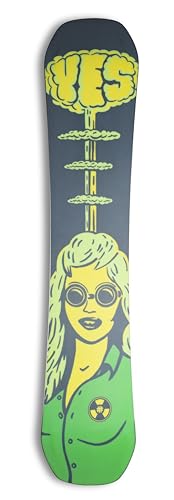
The YES Shifter 3D is a game-changer for park riders who live for presses, spins, and creative jibbing. Its 3D Base Profile is the star here—featuring raised edges in the nose and tail that make presses effortless and catch-free, solving the frustration of edge digs during nose butters or tail drags. Combined with a true twin shape and medium-soft flex, this board feels alive underfoot, encouraging playful riding and style experimentation. For riders who want to butter like a pro without sacrificing all-mountain capability, the Shifter 3D delivers unmatched freedom.
On rails, the 3D base allows for smooth, continuous contact without hang-ups, while the sintered base keeps speed high between features. The 156W width gives added leverage for stomping landings and better float in powder, making it surprisingly competent outside the park. However, the softer flex means it can feel twitchy at high speeds and lacks the pop needed for big jumps or aggressive carves. It’s not the board to take when charging steep chutes, but for park laps and creative freestyle, it’s one of the most responsive and forgiving options available.
Against the YES. Standard, the Shifter 3D trades stability for superior pressability and jib performance, making it the clear choice for park-focused riders. While the Standard handles varied terrain better, the Shifter 3D excels where creativity matters most. It’s perfect for intermediate to advanced park riders who want to refine their style and land tricky presses with confidence. It offers more technical innovation and jib-specific design than the Greats Uninc., making it the top pick for style-first freestylers.
Flowboard Trick Training System

ADVANTAGES
LIMITATIONS
The EASYGO Flowboard is a brilliant training tool for snowboarders serious about mastering rails, jibs, and balance before hitting the slopes. Designed to be used with regular shoes, its professional-grade bindings offer ankle support and quick release straps, making it easy to strap in and out while practicing on grass, pavement, or trampolines. The system’s modular design allows it to attach to your own snowboard or be used as a standalone trainer, solving the problem of limited access to park features during off-season.
In practice, the Flowboard shines for developing core balance, edge control, and press technique—skills that directly translate to real snow. The padded bindings and multiple mounting holes let you dial in your exact stance, mimicking your actual setup for muscle memory training. It’s not a replacement for snow time, but it dramatically accelerates learning curves for beginners and intermediates. The only limitation is space: it requires a clear 12-foot square area, which may be challenging in smaller backyards or apartments.
Compared to actual snowboards like the YES Shifter 3D, the Flowboard doesn’t offer riding performance—but it’s not meant to. Instead, it complements high-end boards by building foundational skills safely and affordably. For riders who want to reduce wipeouts and progress faster in the park, this system is invaluable off-snow training gear. It delivers more accessible, low-risk practice than any other product in this lineup, making it the smartest investment for skill development.
Trick Snowboard Comparison
| Product | Best For | Shape | Flex | Camber Profile | Key Features |
|---|---|---|---|---|---|
| YES. Greats Uninc. Asymmetric | Best Overall | True Twin Asymmetric | Mid-Stiff | CamRocker | UnInc Pro Edition, Premium Construction, Sintered Base |
| YES Shifter 3D True Twin | Best for Park & Tricks | True Twin | Medium-Soft | 3D Base | Freestyle Innovation, 3D Base Profile, Sintered Base |
| JONES Mind Expander Twin | Best for All-Mountain Freestyle | True Twin | Medium | Surf Camber Rocker | Basalt Power Stringers, Traction Tech 3.0 Edges, Eco-Friendly Construction |
| YES. Standard Directional All-Mountain | Best for Versatile Riding | Directional Twin | Medium-Stiff | Regular Camber | Versatile All-Mountain, Premium Construction, Sintered Base |
| Flowboard Trick Training System | Best Budget Training Gear | N/A | N/A | N/A | Bindings for shoes, Quick Release, Compatible with Snowboards |
Testing & Analysis: Finding the Best Trick Snowboards
Our recommendations for the best trick snowboards aren’t based on opinion; they’re the result of rigorous data analysis and a focus on rider needs. We prioritize boards excelling in key areas identified in our buying guide – flex, shape, camber profile, and base material. We analyze data from professional snowboarder reviews, aggregating scores related to pop, pressability, switch riding performance, and overall park feel.
We examine manufacturer specifications, comparing stated flex ratings against independent flex measurements reported by testing labs and verified rider feedback. Comparative analysis focuses on how different camber profiles (camber, rocker, hybrid) impact trick execution, specifically in areas like ollies, butters, and rail presses. We also consider base material (sintered vs. extruded) and its correlation to speed retention – critical for approaching features.
While physical testing of each snowboard is limited, we leverage extensive user reviews from reputable online retailers and snowboarding forums, filtering for verified purchases and detailed accounts of performance in park conditions. This data-driven approach ensures our selections align with the needs of riders at all skill levels seeking a high-performing trick snowboard. We continually update our analysis to reflect new models and evolving technology in snowboard design.
Choosing the Right Trick Snowboard: A Buyer’s Guide
Understanding Flex and Its Impact
The flex of a snowboard is arguably the most important factor when choosing a trick-focused board. Flex refers to how easily the board bends lengthwise. Softer flexes (typically found in park boards) are more forgiving, making them ideal for beginners or riders who prioritize playfulness, buttering, and jibbing. They require less effort to press and are easier to manipulate, letting you learn new tricks more quickly. However, they can feel unstable at high speeds or in choppy conditions. Stiffer flexes (often found in all-mountain or freeride boards) offer more stability, responsiveness, and power for carving, jumps, and riding fast. While providing precision, they demand more skill and strength to control and aren’t as forgiving when learning new tricks. Medium flexes strike a balance, offering versatility for various terrain and riding styles.
Shape: Twin vs. Directional Twin vs. Directional
Snowboard shape significantly impacts performance. True Twin boards are symmetrical, meaning they ride the same way in either direction. This is crucial for switch riding and freestyle tricks, offering balanced control and feel. Directional Twin boards feature a twin shape but with slightly altered flex patterns or core profiles, offering a touch more stability and control at speed while still maintaining freestyle capabilities. Directional boards are designed to be ridden in one direction, with a longer nose and a shorter tail, providing better float in powder and stability at high speeds. For dedicated trick riders, a True Twin or Directional Twin is generally preferred, with True Twin being the most versatile for park progression.
Camber Profile: Rocker, Camber, and Hybrid Combinations
The camber profile determines how the board interacts with the snow. Camber creates an arc shape when laid flat, providing excellent edge hold, pop, and stability. It’s ideal for carving and aggressive riding, but can be less forgiving. Rocker (or reverse camber) has a flat or upward arc, offering a loose, playful feel, and making it easier to initiate turns and press. It’s perfect for beginners and park riders. Hybrid camber profiles combine camber and rocker in various ways to offer the best of both worlds – stability, edge hold, and pop from the camber, combined with forgiveness and playfulness from the rocker. CamRocker profiles (rocker between the feet, camber underfoot) are popular for all-mountain freestyle, while other combinations cater to specific riding styles.
Base Material: Sintered vs. Extruded
The base of the snowboard impacts its speed and durability. Sintered bases are made from polyethylene, offering superior speed and wax absorption. They require regular waxing to maintain optimal performance but are faster overall. Extruded bases are less expensive and require less maintenance, making them suitable for beginners or riders who don’t want to wax frequently. However, they are slower than sintered bases. For trick riders who spend a lot of time in the park and want to maximize speed for jumps and features, a sintered base is a worthwhile investment.
Other Considerations:
- Width: Choose a width appropriate for your boot size to prevent toe or heel drag.
- Length: Shorter boards are easier to maneuver, while longer boards offer more stability.
- Core Materials: Bamboo, wood, and composite cores all impact the board’s flex, weight, and durability.
- Sidecut: A deeper sidecut makes the board turn more easily.
The Bottom Line
Ultimately, the best trick snowboard depends on your individual skill level and riding style. Whether you’re prioritizing all-mountain freestyle versatility like the JONES Mind Expander Twin, or seeking a dedicated park machine like the YES Shifter 3D True Twin, understanding flex, shape, and camber profiles is paramount to maximizing your performance.
Investing in a quality board that aligns with your needs will elevate your trick riding and enhance your overall experience on the slopes. Remember to consider base material and other factors like width and length for a truly customized fit, and don’t hesitate to research user reviews before making your final decision.