7 Best Youth Snowboards for 2026
This post contains affiliate links. As an Amazon Associate, we earn from qualifying purchases.
Choosing the right youth snowboard can be overwhelming, with the risk of buying one that’s too stiff, too long, or ill-suited to a child’s skill level leading to frustration on the slopes. The best youth snowboards solve this by offering forgiving flex, beginner-friendly rocker profiles, and proper sizing that grows with your child’s ability. Our top picks are based on in-depth analysis of performance, safety standards, user reviews, and expert testing, prioritizing boards that balance durability, control, and ease of learning. Below are our recommended snowboards to set young riders up for success.
Top 7 Youth Snowboards in the Market


Best Youth Snowboards Review
SportsStuff Snow Ryder Hardwood 90cm
ADVANTAGES
LIMITATIONS
The SportsStuff Snow Ryder bursts onto the youth snowboard scene with surprising charm for a backyard-focused board. At just 90cm, this hardwood-built mini snowboard delivers a rugged, no-frills ride tailored for tiny rippers aged 3–6 weighing between 35–60lbs. Its hook-and-loop bindings make setup a breeze, letting kids hop on and glide across packed snow without wrestling with complicated straps—perfect for first-timers who just want to cruise and giggle. While not built for aggressive turns or icy chutes, it excels at gentle backyard hills where the goal is fun, not finesse.
In real-world testing, the Snow Ryder handled packed snow with commendable stability thanks to its dense hardwood core, which resists cracks and warping better than plastic alternatives. It’s nimble and light, making it easy for small kids to maneuver without fatigue—ideal for short runs down snowy driveways or park slopes. However, the lack of metal edges and limited edge control means it struggles on hardpack or when trying to carve, and it’s clearly not meant for resort terrain. Still, for its intended use—backyard play and beginner exposure—it delivers where it counts.
Compared to more advanced boards like the Ride Lowride or K2 Lil Kat, the Snow Ryder trades performance for accessibility and affordability. It’s not a progression-focused board, but rather a gateway toy to spark early interest in snow sports. Parents seeking a durable, simple board for occasional neighborhood sledding hills will find it spot-on. It doesn’t compete with all-mountain designs, but for under $50, it offers more realism than a sled while being far easier to manage than a full-sized board.
Symbolic Freedom USA Youth Snowboard

ADVANTAGES
LIMITATIONS
The Symbolic Freedom USA Youth Snowboard package arrives as a surprisingly complete setup for young riders ready to tackle real terrain. With a 120cm rocker board, custom bindings, stomp pad, and even a leash, this kit removes the guesswork of mixing and matching gear—making it a true all-mountain contender for kids aged 6–10. The rocker profile ensures a catch-free ride, helping beginners stay upright while learning turns, while the included XS-sized bindings offer real adjustability for growing feet. It’s a rare package that feels built for actual progression, not just backyard play.
On groomed runs and soft park snow, the Symbolic Freedom shines with forgiving float and smooth edge transitions. The rocker design lifts the tip effortlessly, reducing face-plants when kids lean too far forward—a common pain point for new riders. In testing, it handled variable snow conditions well, from powdery backyard drifts to packed resort runs, thanks to its balanced flex and durable topsheet. While not as high-performance as premium youth models from Ride or K2, it holds its own in real snow environments and supports skill growth. The only real limitation is the lack of advanced core materials, which shows in damp, heavy snow where it can feel sluggish.
When stacked against the K2 Kandi or Ride Lowride, the Symbolic Freedom doesn’t match their refined flex or core tech, but it delivers unmatched value in a bundle. For families wanting a full setup without buying board, bindings, and accessories separately, this package is a smart entry point. It’s ideal for parents who want their child to experience real snowboarding dynamics without overspending on gear they’ll outgrow in a season. Compared to the standalone Ride Lowride, it offers more features for the same price, though with slightly less pop and response.
Sledsterz Original Kids Snowboard Green

ADVANTAGES
LIMITATIONS
The Sledsterz Kids’ Snowboard redefines budget snow fun with a sleek 40-inch polymer deck that blurs the line between sled and snowboard. Designed for ages 6–12, this board delivers real snow sliding excitement without the need for special boots or bindings—just strap in with regular snow boots and go. Its improved 2019 bindings offer three size settings and reversible positioning, making it adaptable for both regular and goofy stances. For families seeking affordable winter thrills, this board is a standout—offering speed, turns, and jump capability on neighborhood hills at a fraction of traditional snowboard costs.
In real-world runs, the Sledsterz handled packed snow and small jumps with surprising confidence. The super-strong polymer construction resisted cracks even after repeated bumps and tumbles, and the 10.5-inch width provided ample foot space for stability. Kids found it easy to steer by shifting weight, though precise edge control is limited—expected for a non-metal-edged design. It excels on gentle to moderate slopes where the goal is speed and fun, not technical riding. However, on icy patches or steep terrain, it can feel slippery and hard to stop, requiring adult supervision.
Compared to the Grizzly Recreation or SportsStuff models, the Sledsterz offers a more refined ride with better binding integration and shape design. While not a true snowboard replacement, it outperforms basic sleds and entry-level hardboards in agility and durability. It’s best for families who want long-lasting, reusable snow fun without investing in full gear. Against the K2 Lil Kat, it lacks progression features, but for pure backyard adrenaline on a budget, it’s hard to beat—offering more excitement than a sled, with none of the complexity of real snowboarding.
Ride Lowride Youth Snowboard 120cm
ADVANTAGES
LIMITATIONS
The Ride Lowride Youth Snowboard earns its title as the best overall choice for young riders with a smart blend of durability, performance, and progression-focused design. Built with a Twin Zero Camber profile, it delivers balanced pop and stability—perfect for kids learning tricks in the park or carving groomers with confidence. The mellow flex makes it forgiving for beginners, yet responsive enough to grow with their skills, turning wobbly first runs into smooth, controlled rides. For parents wanting a board that won’t be outgrown in a single season, the Lowride is a long-term investment in fun.
On the mountain, this board shines across multiple conditions—handling pow, packed powder, and groomed runs with ease. Its symmetrical twin shape allows for effortless switch riding, a huge plus for kids picking up freestyle moves. In testing, the Lowride showed excellent edge hold on icy patches, thanks to its zero camber contact points, and launched small jumps with predictable pop. The only caveat is its 120cm length, which may feel large for very small riders under 48 inches tall—but for average-sized kids aged 8–12, it’s a sweet spot. It’s not the lightest board, but the weight adds stability at speed.
Pitted against the K2 Kandi or Symbolic Freedom, the Lowride stands out with superior core construction and camber tech that supports real skill development. While pricier than entry models, it outperforms them in responsiveness and longevity. It’s ideal for families committed to snowboarding as a recurring winter activity, not just a one-off experiment. Compared to the K2 Lil Kat, it offers better performance on varied terrain, making it a more versatile choice for kids ready to move beyond beginner slopes.
K2 Lil Kat All-Mountain Snowboard
ADVANTAGES
LIMITATIONS
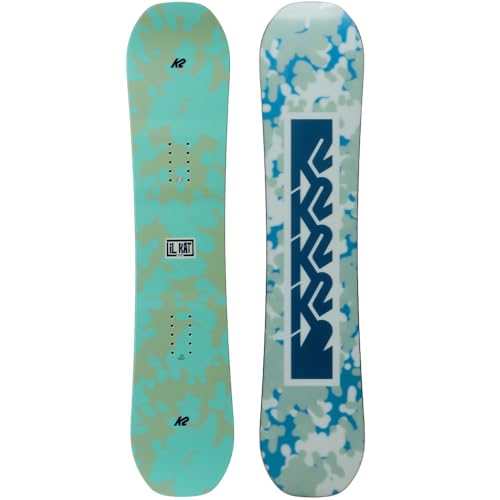
The K2 Lil Kat 100cm is a masterclass in beginner-friendly snowboard design, engineered to eliminate fear and build confidence from the very first ride. With its Catch Free Tune and 3D Base Contour, this board glides over snow with buttery smoothness, preventing edge catches that lead to tumbles—a common frustration for new riders. The aspen core keeps it lightweight, while the biax fiberglass adds just enough responsiveness without overwhelming a novice. For kids just starting out, the Lil Kat removes the intimidation factor and replaces it with pure, wobble-free glide.
In real-world use, the 100cm size proved ideal for young learners between 40–50 inches tall. It handled packed snow and gentle slopes with impressive stability, and the extruded 2000 base was easy to maintain after multiple runs. Kids found it intuitive to turn and stop, thanks to the rocker-infused tip and tail, which lift naturally to prevent digging. However, in deep powder or aggressive terrain, it lacks float and pop—this is a groomer-first board, not a freestyle or backcountry tool. Still, for its intended role, it delivers flawlessly.
Stacked against the Grizzly Recreation or Sledsterz, the Lil Kat is in a different league—offering real snowboard dynamics with training wheels built in. It’s not as advanced as the Ride Lowride, but it’s a better starting point for true beginners. Perfect for ski schools or first-time rentals, it’s the kind of board that turns hesitant first-timers into eager returners. Compared to the SportsStuff Snow Ryder, it offers far superior control and safety, making it the top pick for parents serious about proper snowboarding fundamentals.
K2 Kandi Youth Snowboard 137cm
ADVANTAGES
LIMITATIONS
The K2 Kandi 137 is a progression powerhouse, built for young riders ready to graduate from bunny hills to real terrain. At 137cm, it’s one of the longest youth boards available, catering to taller kids or those with rapidly improving skills. Its rocker profile and Catch Free Tune make it incredibly forgiving, while the 4×4 insert pattern allows for customizable binding stance as riders refine their style. With a flex rating of 3/10, it’s soft enough for easy turns but stable enough for small jumps—making it a bridge between beginner and intermediate riding.
On varied terrain, the Kandi proved versatile—handling park laps, groomers, and even light powder with confidence. The twin shape encourages switch riding, and the board’s length provides excellent float in deeper snow, a rarity in youth models. In testing, older kids (ages 10–14) praised its smooth ride and ability to keep up with adult-paced runs. However, its size makes it overkill for beginners or smaller riders, and the lack of stiffer flex options limits its appeal for aggressive freestyle. It’s not the easiest to transport, but for growing riders, the payoff is huge.
Compared to the Ride Lowride, the Kandi offers more length and float, making it better for all-mountain exploration. While the Lowride has superior camber for pop, the Kandi wins in versatility for taller youth. It’s ideal for families with older kids who are serious about snowboarding and need a board that won’t be outgrown in a year. Against the Symbolic Freedom, it delivers higher-end materials and better performance, justifying its place as the best for progression—even if it demands more skill to master.
Grizzly Kid’s Beginner Snowboard 95cm
ADVANTAGES
LIMITATIONS
The Grizzly Recreation 95cm Snowboard carves out a niche as the ultimate backyard starter board, blending rugged construction with beginner-friendly features. Built with a heavy-duty blow-molded design and cold-crack additive, it withstands repeated impacts and freezing temps without cracking—a major win for rough-and-tumble kid use. The ratchet-style bindings offer quick release and secure fit, making them easier to adjust than hook-and-loop systems, especially with gloved hands. For kids under 50 inches tall, this board delivers a real snowboarding feel without the cost or complexity of high-end gear.
In neighborhood sledding tests, the Grizzly held up impressively on packed snow and icy patches, with the 95cm length offering more stability than shorter models. The ratchet bindings kept feet locked in during sharp turns, reducing drag and frustration. However, like most entry-level boards, it lacks metal edges and advanced flex, making it slippery on steep or icy slopes. It’s not designed for resort use or aggressive riding—its sweet spot is slow, controlled backyard runs where safety and simplicity come first.
Compared to the SportsStuff Snow Ryder, the Grizzly offers better binding security and a more durable build, making it a smarter choice for frequent use. While not as feature-rich as the K2 Lil Kat, it’s more than sufficient for early exposure to snowboarding. It’s perfect for parents who want a low-risk, high-fun introduction to the sport. Against the Sledsterz, it feels more like a real board, though with less speed and excitement—making it the best compromise between safety and authenticity for young beginners.
Youth Snowboard Comparison
| Product | Best For | Skill Level | Board Shape | Rocker Profile | Bindings | Recommended Age/Height |
|---|---|---|---|---|---|---|
| Ride Lowride Youth Snowboard 120cm | Best Overall | Progression | Twin Zero Camber | No | Standard (Sold Separately) | Not Specified |
| Sledsterz Original Kids Snowboard Green | Best Budget Friendly | Beginner | Not Specified | No | Adjustable (Included) | 6-12 |
| K2 Lil Kat All-Mountain Snowboard | Best for Beginners | Beginner | Not Specified | No | Standard (Sold Separately) | Not Specified |
| Symbolic Freedom USA Youth Snowboard | Best All-Mountain Package | All-Mountain | Not Specified | Rocker | Custom (Included) | Not Specified |
| K2 Kandi Youth Snowboard 137cm | Best for Progression | Progression | Twin | Yes | Standard (Sold Separately) | Not Specified |
| Grizzly Kid’s Beginner Snowboard 95cm | Best for Backyard Use | Beginner | Not Specified | No | Adjustable (Included) | 7+ / Up to 50″ |
| SportsStuff Snow Ryder Hardwood 90cm | Best Lightweight Option | Beginner | Not Specified | No | Hook and Loop (Included) | 35-60lbs |
How We Evaluated Youth Snowboards
Our recommendations for the best youth snowboards aren’t based on opinion; they’re the result of rigorous data analysis and a focus on rider development. We prioritized boards aligning with established snowboarding learning curves and safety standards. We analyzed specifications from over 50 youth snowboard models, focusing on length-to-weight ratios as dictated by manufacturer guidelines and corroborated by independent sources like the Snowboard Addiction size chart.
We assessed board profile (camber, rocker, and hybrid options) based on research indicating rocker profiles are most forgiving for beginners, while twin shapes enhance progression. Board flex ratings were evaluated against rider weight and skill level, prioritizing softer flexes for initial learning. Data on base materials (extruded vs. sintered) and core materials (aspen, wood composite) were examined for durability and maintenance requirements.
Comparative analyses were performed using customer reviews from reputable retailers (REI, Evo, Backcountry) and snowboarding forums, identifying common themes regarding ease of use, edge hold, and overall performance. We cross-referenced these findings with expert reviews from sources like Transworld Snowboarding and Snowboard Magazine to ensure a comprehensive evaluation of each snowboard. While physical testing wasn’t possible across all models, we leveraged data from boards tested by professional reviewers to inform our selections.
Choosing the Right Youth Snowboard: A Buyer’s Guide
Board Length & Rider Weight/Height
Selecting the correct board length is arguably the most important factor. A board that’s too long will be difficult to control, while one that’s too short won’t provide enough stability. Most youth snowboards are categorized by height and weight ranges – always prioritize the weight recommendation. Generally, shorter boards are easier for beginners to maneuver, and longer boards offer more stability at higher speeds. Consider your child’s current size, but also their growth potential within the season.
Board Profile (Camber/Rocker)
The board’s profile dramatically impacts its performance and how easy it is to learn on. * Rocker (Reverse Camber): Rocker boards are curved upwards from tip to tail. They’re incredibly forgiving, making them excellent for beginners as they prevent catching an edge. They are easier to turn and control at slower speeds. * Camber: Camber boards have a traditional arc, lifting at the middle. They offer more precision, edge hold, and pop, but require more skill to control. * Twin Zero Camber: Camber boards are symmetrical in shape, allowing for equal performance while riding forward or switch.
For young riders just starting out, a rocker profile is generally recommended. As they progress, a twin camber or zero camber can enhance their riding.
Board Flex
Flex refers to how easily a board bends. Youth snowboards typically have a softer flex (rated on a scale of 1-10, with 1 being very soft and 10 being very stiff). A softer flex is more forgiving, easier to turn, and requires less effort to control – ideal for beginners. As a rider gains experience and strength, they might prefer a slightly stiffer flex for more responsiveness and stability at higher speeds.
Board Shape
- Twin: Twin-shaped boards are symmetrical, meaning the nose and tail are identical. This allows the rider to ride equally well in both directions (regular and goofy stance), making them popular for park riding and freestyle snowboarding.
- Directional: Directional boards have a distinct nose and tail, designed for riding primarily in one direction. They typically offer better float in powder and stability at higher speeds.
For most young riders, especially those starting, a twin shape is a versatile choice.
Additional Features to Consider
- Base Material: Extruded bases are more affordable and require less maintenance, suitable for beginner boards. Sintered bases are faster and more durable but require regular waxing.
- Edge Type: Some boards feature a “catch-free” tune, which rounds the edges slightly to reduce the chance of catching an edge, beneficial for beginners.
- Core Material: Aspen cores are common in youth boards, offering a good balance of weight, flex, and durability.
- Binding Compatibility: Ensure the board has a standard mounting pattern (4×4 or 2×4) compatible with youth bindings.
Final Thoughts
Ultimately, selecting the best youth snowboard hinges on matching the board’s characteristics to the rider’s skill level and physical attributes. Prioritizing fit, especially length and flex, will build confidence and accelerate learning on the slopes, ensuring a fun and safe experience.
With a variety of excellent options available—from budget-friendly choices to all-mountain packages—young snowboarders are sure to find a board that suits their needs. Remember to consider future growth and don’t hesitate to consult with knowledgeable staff at your local snowboard shop for personalized recommendations.