Braille Skateboard Review: The Bottom Line
This post contains affiliate links. As an Amazon Associate, we earn from qualifying purchases.
Braille skateboards are a functional, beginner-focused product with a mixed quality record, built on a brand identity that is deeply polarizing within the skate community. Their maple completes are serviceable starter boards, but their bamboo decks have shown severe durability issues, and purchasing decisions are complicated by the brand’s affiliation with Scientology and allegations of unfair labor practices.
That split, between a product that works for its intended use and a brand history that many find unacceptable, is the core of any Braille skateboard review. You can’t talk about the board without acknowledging the baggage it carries, because for a significant portion of skaters, the baggage is the deciding factor.
What follows is a breakdown of the hardware, the performance, and the controversies. By the end, you’ll know exactly where Braille fits among beginner skateboards and be able to make an informed choice, whether your priority is pure function, ethical consumption, or something in between.
Key Takeaways
- Braille’s “Best Beginner” maple complete is a legitimately functional starter board, often rated well by first-timers for its stable shape and included tutorial.
- The brand’s bamboo decks have a documented failure mode, with severe pressure cracks reported within the first 20 minutes of skating by at least one experienced reviewer.
- Component quality can be inconsistent; the brand states parts may vary with stock, and some Amazon reviews note hardware (like locking nuts) that doesn’t hold.
- Braille’s brand reputation is severely impacted by its founder’s affiliation with and donations to Scientology, a factor many skaters weigh heavily.
- For a pure beginner focused only on a cheap, rideable board, Braille can work. For anyone concerned with brand ethics or long-term durability, local shop completes or brands like Element are safer bets.
Are Braille Skateboards Good for Beginners?
The core Braille skateboard review question is this. If you strip away the YouTube channel, the controversies, and the brand drama, is the physical object a good starting point for a true beginner? For a true beginner, someone who has never stood on a board, the answer is often yes.
The “Best Beginner Skateboard” deck is made from 100% Hard Rock Canadian Maple, a standard and respectable material for entry-level boards. Reviewers on the Braille Army site and Amazon consistently praise the board for being stable and easy to learn on. One experienced skater, while critiquing the brand’s target demographic, still wrote that Braille skateboards are “perfect for beginners” and offer “better quality than what you would typically get at a major retail store.”
The included “Skateboarding Made Simple Volume 1” tutorial is a tangible value-add, even if a free YouTube playlist covers the same tricks. For a kid or an adult who just wants a ready-to-ride package that won’t explode on the first push, it fills a need.
Where this goes sideways: Expecting this board to be a long-term companion. It’s a learner tool. The components are entry-level, and the deck is not built for the repeated high-impact stress of intermediate or advanced tricks. Thinking of it as a disposable first step, not a forever board, is the right mindset.
The Beginner’s Trade-Off Table
| Aspect | Advantage for Beginners | The Catch / Limitation |
|---|---|---|
| Deck Material (Maple) | Familiar feel, predictable pop, standard industry material. | Not a high-performance or ultra-durable construction. |
| Complete Setup | Ready to skate out of the box; no assembly knowledge needed. | Component quality varies; some users report loose hardware. |
| Included Tutorial | Structured learning path from day one. | Audio quality on paid DVDs is reportedly poor; free YouTube versions exist. |
| Price & Accessibility | Often positioned as an affordable, online-accessible option. | Ethical concerns and quality inconsistencies add hidden “costs.” |
The shape helps, too. Reviews note a “medium concave reminiscent of skating in a Santa Cruz or Blind shape.” That’s a predictable, middle-of-the-road shape. A predictable, middle-of-the-road shape is exactly what a beginner needs, it’s not too flat to be dead, not too steep to be intimidating.
So, are they good for beginners? Functionally, yes. But “good” is a narrow evaluation here. It means the board rolls, turns, and allows someone to learn the basics. It does not mean it’s the best choice, the most ethical choice, or a board that will grow with the skater.
The Deck Materials: Maple vs. Bamboo
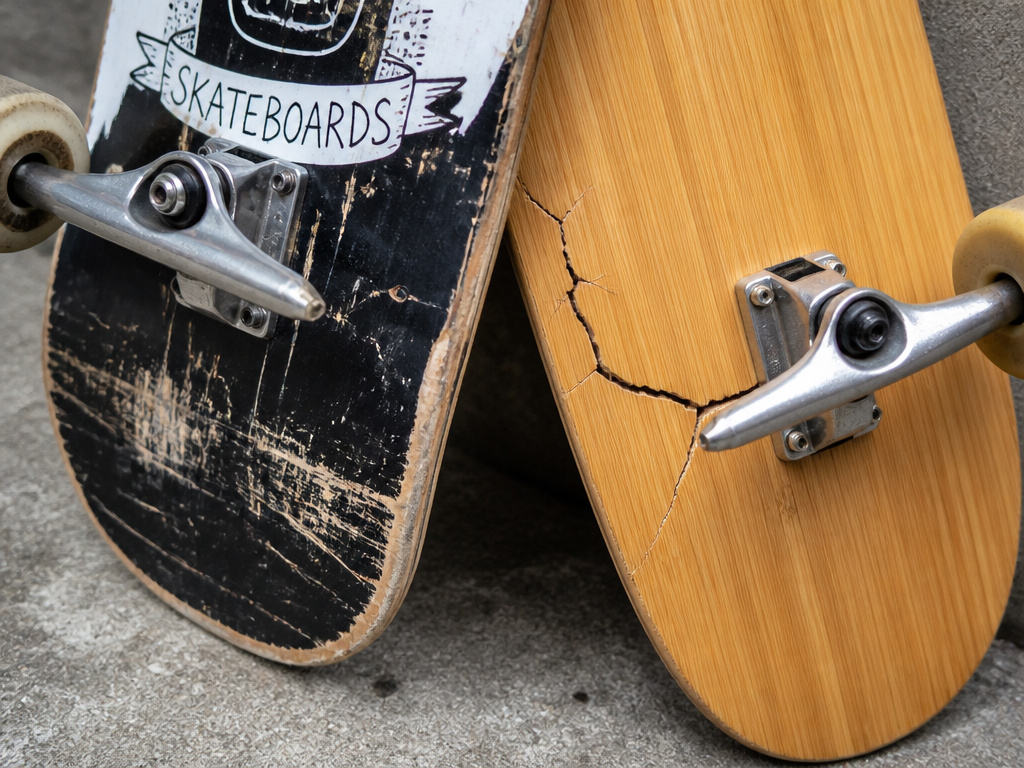
Braille offers two primary deck materials: traditional 7-ply maple and bamboo. The performance and durability stories for these two are not just different, they’re contradictory, and that contradiction is rooted in who is skating them and what they expect.
The Maple Workhorse
The maple used in their completes is standard fare. It’s the same 100% Hard Rock Canadian Maple you’ll find in countless other entry-level decks from major manufacturers. It’s a known quantity: it will chip, it will pressure crack, and it will eventually lose its pop with enough abuse. For a beginner not launching down stairs, this timeline is measured in months, which is often enough. The feel underfoot is crisp, and the feedback is direct, exactly what you want when you’re building fundamental muscle memory.
The Bamboo Question Mark
Bamboo decks are marketed differently. Braille promotes them as “much stronger than traditional decks,” claiming they keep pop longer and are better for the environment, but a reviewer experienced severe pressure cracks ‘right away’ and rated the deck’s strength 3.1/5. This is where the user experience splits dramatically from the marketing.
A reviewer for Board of the World, testing a bamboo deck for strength, reported catastrophic failure almost immediately: “the largest pressure cracks I have ever got on a skateboard deck” appeared “right away” during the first skate session. They rated the deck’s strength a 3.1 out of 5. While Braille customer support called this “not a normal experience” and offered a replacement, the documented failure is a major red flag.
I’ve seen this kind of material promise before in other sports equipment. When a non-traditional material is sold as a revolutionary upgrade, it often has a specific failure mode that doesn’t show up in controlled factory tests, only in real-world, uneven impact. That’s what the pressure crack report sounds like.
The reviewer also noted the deck “felt a little softer than a traditional maple skateboard deck” after the cracks appeared. That’s the sensory reality: a deck that’s lost its structural integrity doesn’t just look damaged; it skates dead. For a beginner, a softer-feeling deck might mask poor technique. For anyone trying to learn proper pop, it’s a handicap.
Who Makes the Decks?
This is a critical piece of entity coverage that adds context. Braille is a media company that sources its hardware; they don’t press their own wood.
- Maple Decks (under 8.25″ width): Sourced from PS Stix, a highly respected woodshop that manufactures for many top brands. This is a point of quality.
- Maple Decks (8.25″ and wider): Sourced from Clutch, another manufacturer.
- All Bamboo Decks: The manufacturer is unspecified but is explicitly not PS Stix.
This sourcing disclosure, found on their product pages, tells you that the quality of the blank deck itself is tied to the reputation of these woodshops. A PS Stix-pressed maple deck is a legitimately good foundation. The mystery around the bamboo deck’s origin adds to the uncertainty.
The Complete Board: Specs and Real-World Performance
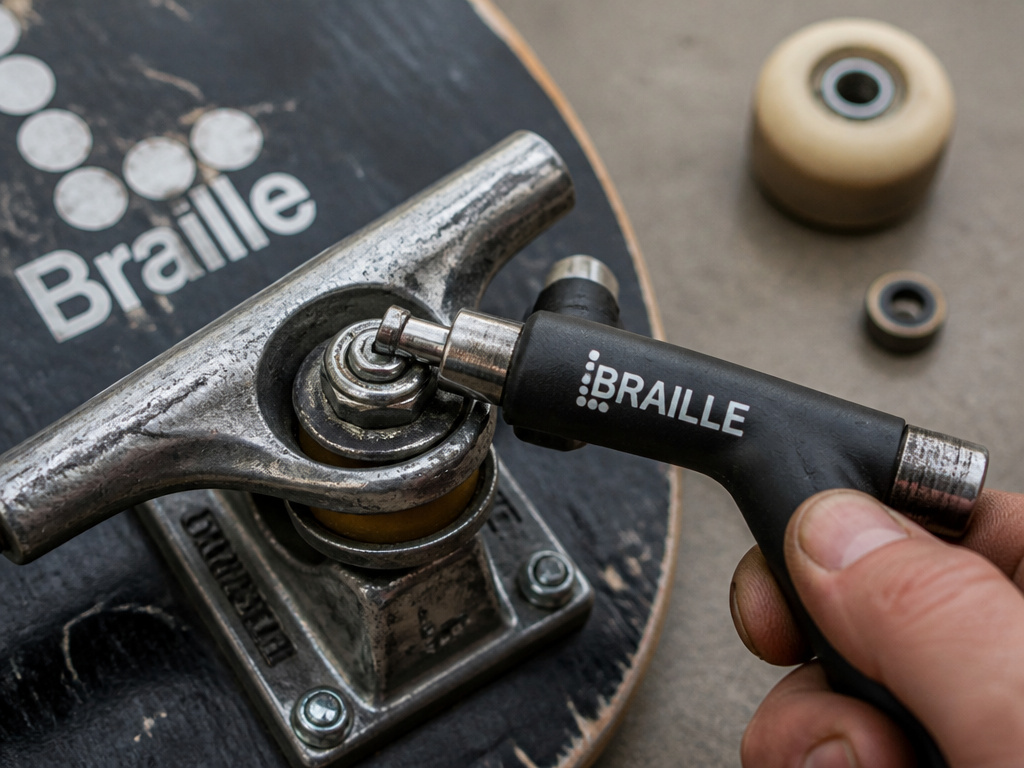
When you buy a Braille complete, you’re not just buying a deck. You’re buying an ecosystem of parts that the brand openly admits “may vary depending on stock availability.” This variability is the single biggest wildcard in the quality equation.
Consider a concrete example: the Braille Complete Skateboard listed on Amazon (Model SUVELAM, ASIN B0CGGH6T84, UPC 643934080740). It aggregates a 4.7 out of 5-star rating from customer reviews. The top reviews praise it for handling “anything a beginner skater is likely to attempt,” but a reviewer testing for strength in a ‘pro-use context’ found durability lacking and would not recommend it for intermediate/advanced skaters.
But dig into the critical reviews, and you find the non-commodity, specific failure reports that define the risk in a Braille skateboard review:
Common mistake: Assuming all the hardware is secure. One Amazon reviewer stated the “locking nuts… Don’t hold very well” and reported that the “nut, bearing, and spacer came off while riding after very little use.”
That’s not a vague complaint about “feeling cheap.” It’s a specific, mechanical failure with a consequence (components disassembling during a ride) and a timeline (very little use). It points to either inferior hardware or improper factory assembly, a known issue with some budget completes that buyers must check and rectify themselves with a skate tool.
Typical Complete Skateboard Specs
These are the absolute baseline specs for a functional skateboard. They will roll and turn. They are not performance-oriented. The trucks will be heavier and less responsive than branded ones from Independent or Thunder. The wheels will be a generic urethane formula that may flatspot easily. The bearings will be serviceable but not fast or long-lasting.
For a beginner doing straight-line pushes and gentle carves in a parking lot, this is adequate. The moment you start attempting shove-its, ollies onto curbs, or skating daily, these components will show their limits quickly. This isn’t unique to Braille; it’s true of almost all budget-priced complete skateboards. The difference is that other brands aren’t saddled with the same ethical debates.
Brand Reputation and the Scientology Factor
You cannot review Braille skateboards without addressing the elephant in the room. For a large segment of the skating community, the discussion begins and ends with the brand’s association with the Church of Scientology.
The facts, as reported by users in forums like Reddit’s r/NewSkaters and r/OutOfTheLoop, are that founder Aaron Kyro is a known Scientologist and has reportedly donated significant funds derived from the Braille business to the church. There have also been allegations of unfair wages for Braille employees set against these donations.
The part nobody mentions: This ethical dimension transforms a simple gear purchase into a values-based decision. For many, supporting a brand linked to an organization with a documented history of alleged abuses is a non-starter, regardless of product quality, while others pragmatically view the board as a cheap, functional option for specific uses.
The community sentiment is stark. In one Reddit thread, a user advises, “I highly encourage anyone to avoid buying from braille.” Another acknowledges the ethical issue but pragmatically states, “the braille beginner complete board… Is pretty cheap and makes for a good wet/rainy day board.” This is the exact divide: absolute ethical rejection versus pragmatic, situational use.
Impact on Perception
This reputation affects how the brand is perceived within skate culture:
- “YouTube Skateboarding”: Braille is often categorized separately from “core” skate companies. They are seen as media creators first, a brand that “operates outside the skate ecosystem” by making vlogs and content for a younger, online audience rather than traditional skate videos.
- Target Demographic: The ethical concerns, combined with their video style, cement the perception that Braille targets a “younger demographic” or beginners unaware of the controversy. This can make adult beginners feel the product isn’t meant for them.
- Community Standing: Supporting core brands is seen as supporting the culture and the athletes driving it forward. Supporting Braille, for its critics, is seen as supporting a different agenda entirely.
Your decision here is personal. If your primary goal is to get a skateboard and you can compartmentalize the brand’s background, the product exists. If supporting ethical businesses and the traditional skate ecosystem matters to you, you will look elsewhere. It’s not a minor footnote; for countless skaters, it’s the headline.
Braille vs. Other Beginner Brands: A Direct Comparison
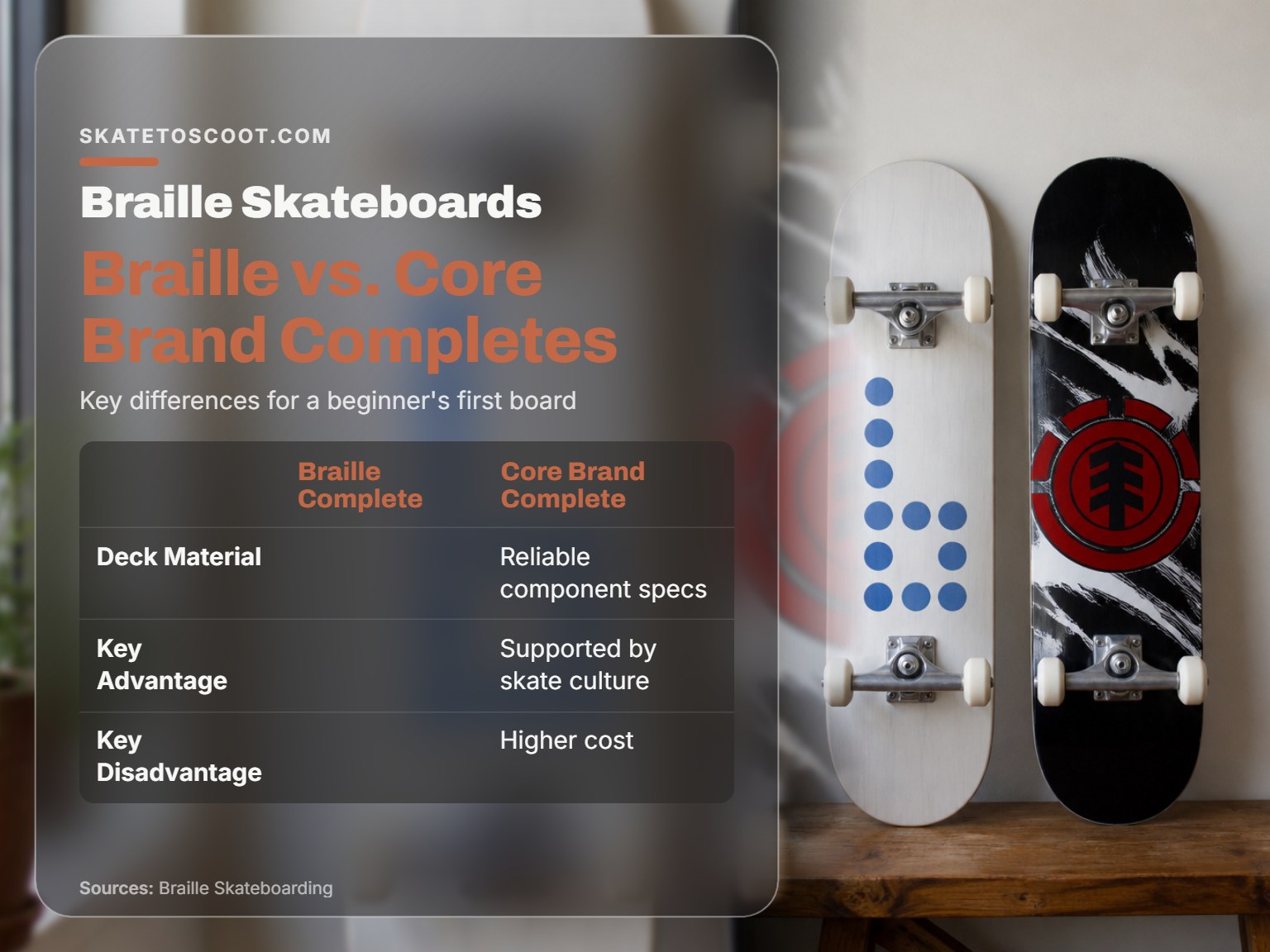
So if not Braille, then what? The beginner skateboard market is crowded. We can put Braille side-by-side with two other common entry points: a generic Amazon complete and a complete from a core brand like Element or Santa Cruz purchased from a local shop.
| Brand / Option | Typical Price Point | Key Advantage | Key Disadvantage | Best For… |
|---|---|---|---|---|
| Braille Complete | Mid-range | Integrated learning (tutorial), recognizable brand for beginners, PS Stix maple for smaller decks. | Ethical controversies, component variability, documented bamboo deck issues. | Beginners who value the bundled tutorial and buy online without local shop access, and who are indifferent to the brand issues. |
| Generic Amazon Complete | Low-end | Extremely low cost. | Wildly inconsistent quality. Decks can be plywood, trucks bend, bearings seize. A total gamble. | The absolute most cost-conscious buyer willing to risk getting a unusable product. |
| Core Brand Complete (e.g., Element, Enjoi) | Mid-to-High | Supported by skate culture, reliable component specs (often name-brand trucks/wheels), supports skate shops. | Higher cost than the bare minimum, less “all-in-one” packaging than Braille. | Beginners who want a reliable board that can progress with them and who want to support the traditional skate industry. |
| Local Skate Shop Blank Complete | Mid-range | Expert advice, supports local community, often uses quality woodshops (like PS Stix), you can feel the board first. | No branded graphic, less “cool” factor for some kids. | Beginners who want the best quality foundation for the money and value human interaction. |
The comparison reveals Braille’s niche. It’s a step above a generic box-store board regarding predictable deck quality (thanks to PS Stix/Clutch), but it doesn’t carry the cultural credibility or component consistency of a core brand complete. Its unique selling proposition is the Skateboarding Made Simple ecosystem.
However, even that USP is contested. Reddit users point out that the paid DVD version has “stock cheap music mixed so high you can barely hear him talking,” while a free YouTube playlist covers the same tricks. The real value may be in the structured curriculum, not the physical media.
If your goal is purely to get a decent complete skateboard to learn the basics, and you’re buying online, Braille is a defensible choice if you stick to their maple completes and check all the hardware. If you have a local shop, walking in and asking for their beginner complete, which will often be a shop deck with solid components, is almost always a better, more supportive choice for your skating journey.
The Tutorials: “Skateboarding Made Simple” Value Assessment
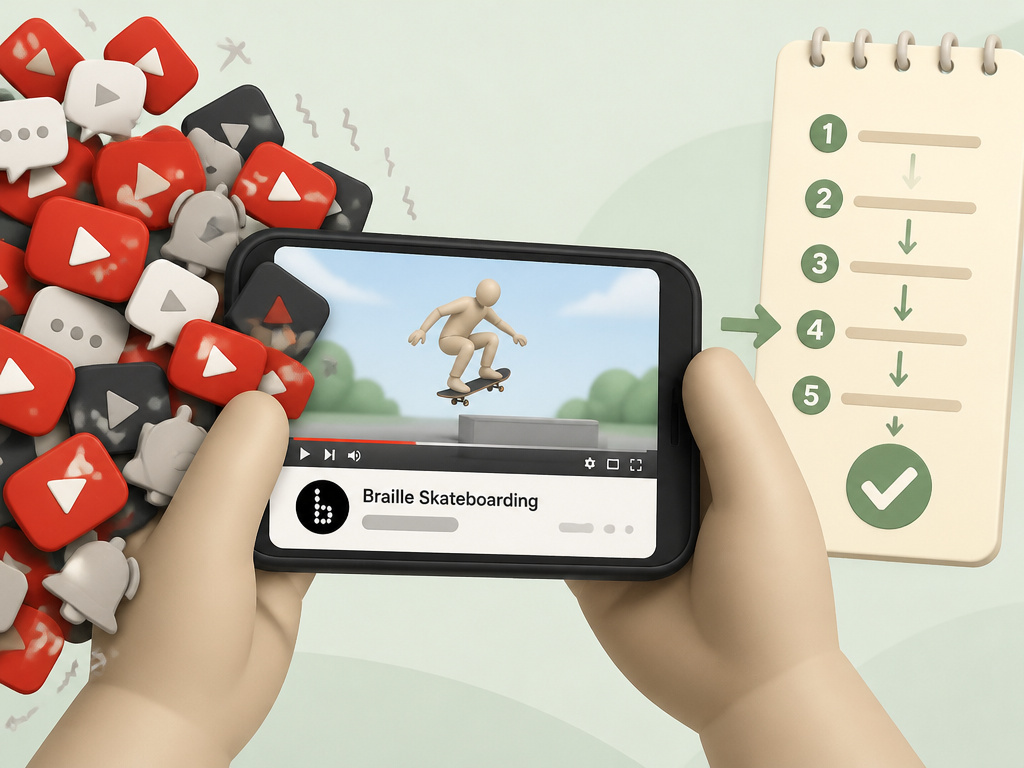
Braille’s content is a huge part of its brand. The Skateboarding Made Simple series is marketed as the ideal learning path. Does it deliver?
The consensus from users who have actually bought it is mixed. Some find the structure “great,” while others, like one Reddit user, called a DVD volume “so poorly made… Stock cheap music mixed so high you can barely hear him talking,” and noted the same content is available for free on YouTube.
This is a critical insight. The free YouTube playlist covering the same trick progression exists. The potential value of the paid version lies in its organized, linear path, a virtue for someone overwhelmed by the chaos of YouTube. However, if the production quality of the paid product is inferior to the free content, that value evaporates.
I’ve coached for a decade. A structured progression is invaluable for a beginner. But if the instruction is garbled by bad audio, the structure is worthless. The free Braille YouTube tips are thorough and address common beginner errors. For most people, starting there is the logical, zero-cost first step before considering any paid package.
Should You Buy the Tutorials?
- Start Free: Use the extensive Braille YouTube channel. It covers everything from pushing to kickflips.
- If You Need Structure: If you’re the type of learner who needs a locked-in, step-by-step sequence and doesn’t mind paying for that curation, then the digital downloads might have value, but research the current audio/video quality first.
- Look Beyond Braille: Other YouTube instructors, like VL Skate, offer exceptional, detailed tutorials with different teaching styles. Diversifying your instruction sources can prevent you from plateauing on a single instructor’s methodology.
The tutorials, like the hardware, are a functional tool with acknowledged flaws. They are not a magic bullet, and their paid advantage over free resources is questionable.
Customer Service and Shipping
Direct customer service experiences are not widely documented, but there is one reported case involving a defective product. A reviewer who experienced severe pressure cracks on a bamboo deck within the first 20 minutes of use contacted Braille support. The company’s customer service stated this was ‘not a normal experience’ and offered to send a replacement deck. This suggests that if you receive a board with a clear manufacturing defect, reaching out to their support team may resolve the issue. For shipping, since components on complete boards can vary based on stock availability, your order might ship with slightly different wheels or trucks than pictured, which is a common practice for many completes.
FAQs: Your Braille Skateboarding Questions Answered
Is Braille a good skateboard brand?
For a complete beginner looking for a functional first board purchased online, Braille’s maple completes can be good enough. The decks are pressed by reputable woodshops (PS Stix/Clutch). However, the brand has significant ethical controversies (Scientology affiliation) and mixed reports on component durability and bamboo deck strength. Many skaters recommend supporting core brands or local shops instead.
What happened to Braille skateboarding?
Are bamboo skateboards good quality?
The experience with Braille’s bamboo decks has been contradictory. While marketed as stronger and more environmentally friendly, an experienced reviewer documented severe pressure cracks within the first 20 minutes of use, rating the strength 3.1/5. Braille customer service called this an abnormal experience. Given this documented failure and the unspecified manufacturer, caution is advised compared to traditional maple.
Is the “Skateboarding Made Simple” tutorial worth buying?
Opinions vary. The same trick progression is available for free on Braille’s YouTube channel. Some users report poor production quality (bad audio mixing) on the paid DVDs. The value lies only in the structured, linear curriculum for those who need it and are willing to pay for that organization over free, potentially higher-quality video on YouTube.
The Bottom Line
Here is the single, consolidated verdict you can walk away with: Braille skateboards are a compromised solution.
They solve the problem of “I need a skateboard to learn on” with a product that is, objectively, skateable and often liked by its target audience of first-timers. The maple deck foundation is sound. But that solution comes with attached problems: ethical baggage that many in the community find unacceptable, component variability, and a high-profile failure case for their alternative bamboo material.
If your only two options are a Braille complete and a no-name generic board from a big-box store, choose Braille. Its connection to PS Stix/Clutch gives it a quality floor the generic board lacks.
But you almost always have a third option: your local skate shop. Walking in and buying their recommended best complete skateboards, often a shop deck with reliable trucks and wheels, supports the actual skate ecosystem, gets you expert fitting advice, and typically delivers better components for a similar price. You trade the Braille tutorial for human guidance, which is almost always more valuable.
For the online shopper determined to buy now, the path is clear: choose a Braille maple complete (not bamboo), budget for a skate tool to check all hardware before your first ride, and use their free YouTube content, not the paid DVDs. Understand that you are buying a beginner tool with a finite lifespan and a controversial lineage. For a significant number of skaters, that last part is the deal-breaker.
