Burton Feelgood Snowboard Review: Who Is It For?
This post contains affiliate links. As an Amazon Associate, we earn from qualifying purchases.
The Burton Feelgood Camber is a stiff, fast, and aggressive all-mountain snowboard built for carving groomers at high speed, not for beginners or deep powder days. It rewards powerful, expert-level riding with exceptional edge hold and stability.
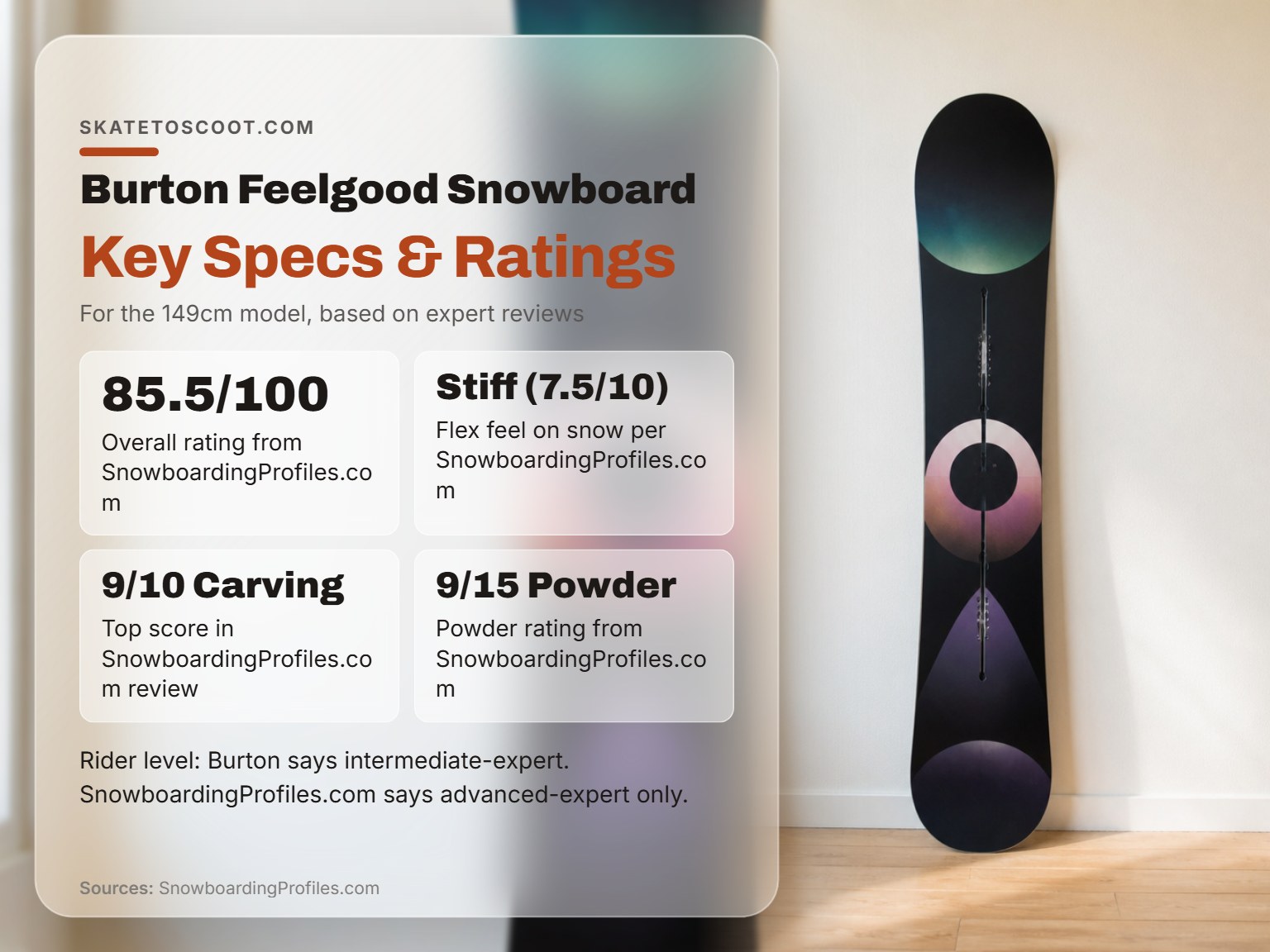
That performance comes from a full camber profile and Burton’s high-end tech like a Super Fly II 700G core and Carbon I-Beam. The board is light on paper but feels heavy on snow due to its stiffness, and its narrow waist widths (238-244mm) suit US women’s boots up to about size 10, as noted by AllMountainSport.com. While Burton markets it for intermediate to expert riders, SnowboardingProfiles.com and Snow Magazine place it firmly in the advanced-to-expert-only category, a consensus reflected in the typical Burton Feelgood snowboard review.
What follows is a breakdown of its real-world performance, the specs that matter, and the riders who will either love it or be overwhelmed by it. We’ll also look at how it compares to alternatives and the critical setup choices that make or break the experience.
Key Takeaways
- Not for beginners or intermediates. Burton says “intermediate-expert,” but SnowboardingProfiles.com and Snow Magazine explicitly state it’s for advanced to expert riders only.
- Craves speed, hates slowness. This board comes alive when ridden hard and fast. At casual speeds, it feels sluggish, unresponsive, and makes you work for every turn.
- Exceptionally stiff and damp. With a flex feel rated 7.5/10 (Stiff) and damp construction, it absorbs chatter on hardpack but demands significant leg strength to maneuver.
- The Channel mounting system is versatile. It works with all major binding brands using included hardware, but Burton’s own EST bindings provide the full, fine-tuned adjustment range.
- Powder performance is its weak point. A full camber tail wants to sink in deep snow, making it the weakest performer in its category on powder days according to comparative reviews.
Specs, Weight, and Sizing
Look at the numbers first. The 2025 Burton Feelgood Camber (149cm) has a 242mm waist width and an 11mm camber height. In a demo, it weighed 2380 grams (5lbs 4oz). That gives it a weight per cm of 15.97g/cm, which is lighter than the average of 17.16g/cm from a sample of 100+ women’s boards. On paper, that’s a lighter-than-average weight.
On snow, its stiffness and dampness are pronounced.
The Burton Feelgood Camber uses a Super Fly II™ 700G core with Dualzone™ EGD™ for stronger wood along the edges, Women’s Specific Triax™ fiberglass with a Carbon I-Beam™ for torsional stiffness, Frostbite edges for extra bite on hardpack, and a sintered WFO base for speed. The proprietary Channel mounting system allows for micro-adjustments to stance width and angle.
The 149cm model is rated for riders 120-180 lb. / 54-82kg. The waist widths run from 238mm (142cm) to 244mm (152cm), which, as AllMountainSport.com notes, suit US women’s boots up to about size 10.
Stance setback varies by source and model year: The 2027 Burton product page lists a -12.5mm setback for the 149cm, while a 2020 review from SnowboardingProfiles.com listed it as a 20mm setback. Always check the spec sheet for the model year you’re buying.
Who Is the Burton Feelgood Camber For?
Burton positions the Feelgood Camber for “intermediate to expert riders.” This is the first place where you should ignore the marketing copy.
SnowboardingProfiles.com is blunt: “Definitely not for beginners and I wouldn’t even recommend it to intermediate riders. This is for advanced to expert riders only.” Snow Magazine lists its level as “Advanced, Expert.” The board doesn’t have a gentle side.
It’s for the rider who prioritizes stability at high speed over playful maneuverability. It’s for someone with the leg strength to drive a stiff board all day. Look at the Capita Birds of a Feather or the Jones Twin Sister instead.
For a versatile daily driver that’s easier to live with, our guide to the best women’s Burton snowboards covers more forgiving options.
Performance Breakdown: Where It Shines and Where It Sinks
Carving & Speed (9/10): This is its home turf. The full camber and Frostbite edges lock into hard snow with a confidence that’s hard to match. SnowboardingProfiles.com gave it 9/10 for carving and 9/10 for speed.
Crud & Chop (9/10): That same damp, stiff construction provides stability in rough, chopped-up snow.
Powder (6-8/10): Here’s a major disagreement. Snow Magazine (2016) rated it 8/10 for powder. A 2024 review from AllMountainSport.com calls it “the weakest powder performer” among comparable boards, noting “the cambered tail wants to sink on deep days.” The profile explains it: full camber tip-to-tail is the least floaty shape made. You can set your stance back in The Channel to help, but it will never be a powder board.
Maneuverability & Playfulness (6/10 or lower): This is the trade-off. SnowboardingProfiles.com rated it 6/10 for turns and 6/10 for trees. It scored 2.5/5 for butters and 2.5/5 for rails. It doesn’t like things slow. In tight trees or at low speeds, it is less responsive. Switch riding is possible (rated 7/10).
Park Performance: It scored 8/10 for jumps, 3/5 for spins and 2.5/5 for rails.
| Performance Area | Rating (out of 10) | Why It Scores That |
|---|---|---|
| Carving | 9 | Full camber and Frostbite edges provide exceptional edge hold and snap. |
| Speed & Stability | 9 | Damp, stiff construction absorbs chatter and instills confidence at high speed. |
| Crud/Chopped Snow | 9 | Plows through variable snow without getting knocked off line. |
| Powder | 6-8 | Full camber tail sinks; stance setback helps but it’s not a powder tool. |
| Turns & Trees | 6 | Demands speed and space; feels sluggish and hard to maneuver at slow speeds. |
| Playfulness (Butters, Rails) | 2.5-3 | Too stiff and damp for playful ground tricks or jibbing. |
Where this goes sideways: Relying on it for a deep powder day. The cambered tail will fight you, and you’ll exhaust your back leg trying to keep the nose up. It’s a specific tool, and deep snow isn’t the job it was built for.
The Channel Mounting System and Setup Tips
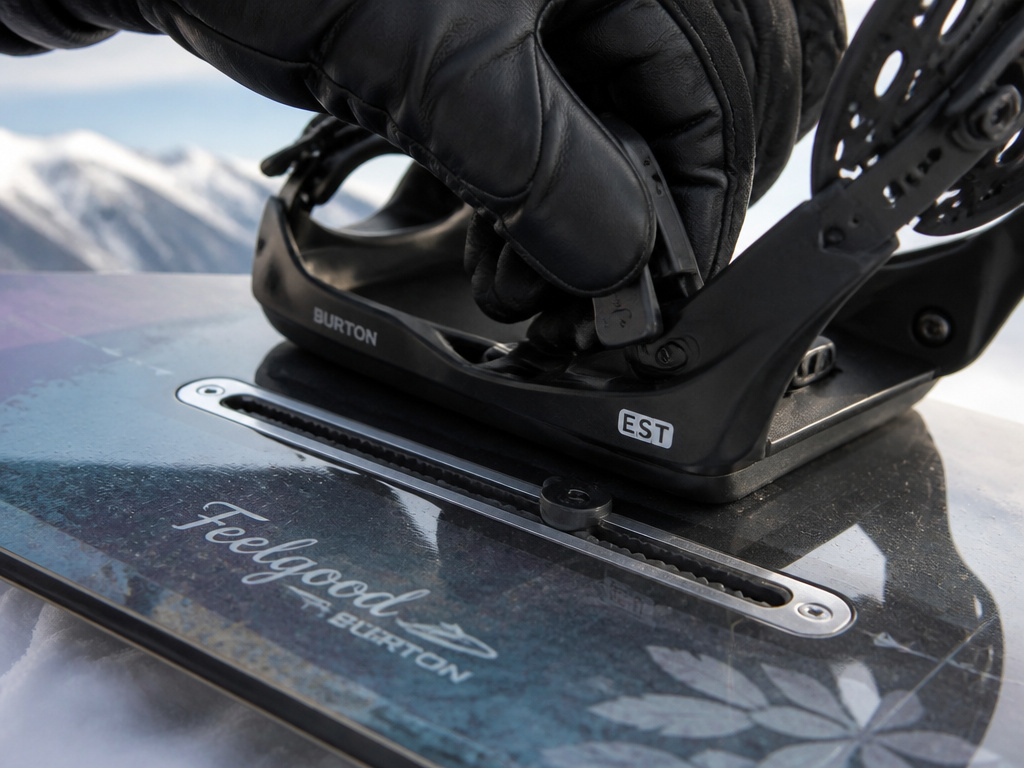
The Feelgood Camber uses Burton’s proprietary Channel mounting system, not traditional 4×4 or 2×4 inserts. This isn’t a problem, but it’s different.
All major binding brands (Union, Burton, Nidecker, etc.) ship discs compatible with The Channel. You won’t have trouble finding bindings. However, Burton’s own EST bindings are designed specifically for The Channel. They click directly into the tracks, eliminating a disc plate, which allows for a more direct board feel and provides the system’s full, infinite adjustment range for stance width and angle.
For boots, AllMountainSport.com recommends pairing it with supportive boots and bindings rated 7/10 flex or firmer. “Soft gear wastes what you are paying for here.” A soft boot on this board is like putting all-season tires on a race car—you’ll never access the performance you bought.
When setting up, follow the weight chart and resist sizing up for stability. The camber provides all the stability you need. A longer board will only make it harder to turn at the speeds where it already struggles.
How It Compares: The Feelgood vs. The Alternatives
No board exists in a vacuum. How does the Feelgood Camber stack up against its direct competitors? It depends on what you’re willing to trade.
Feelgood Camber vs. YES Hell Yes: The YES Hell Yes, as AllMountainSport.com notes, “gives up a little of the Feelgood’s top-end grip and speed to be dramatically easier to live with.” The Hell Yes is more forgiving, better in powder, and a better choice for most riders. The Burton is for the specialist who knows they need that last 5% of locked-in performance.
Feelgood Camber vs. Jones Twin Sister: The Jones Twin Sister is softer, more forgiving, and more eco-focused in construction. It cannot match the Burton’s edge hold or stability at speed. This is a choice between a precise carver (Burton) and a more versatile, surfy all-mountain board (Jones).
Feelgood Camber vs. Never Summer Infinity: These are opposites. The Never Summer Infinity is loose, surfy, and rocker-dominant. The Burton is locked, precise, and camber-dominant. Riders torn between these two are choosing between two different sports.
If you’re still evaluating the broader Burton snowboard lineup, a burton feelgood snowboard review will remind you the Feelgood Camber sits at the aggressive, performance-oriented end of the spectrum. It’s not the default choice.
Long-Term Notes: Warranty and Durability
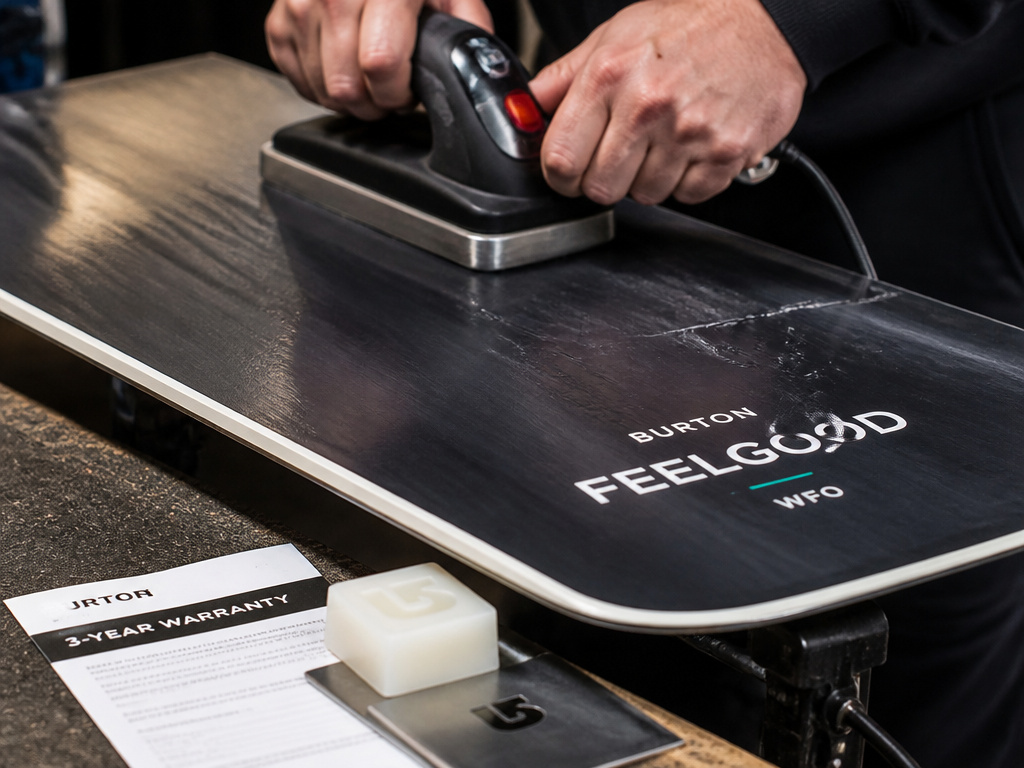
Burton backs the Feelgood Camber with a 3-year warranty for boards with The Channel mounting system (2014 and newer models). This is a significant commitment and speaks to confidence in the construction.
The sintered WFO base is Burton’s fastest and is also more durable than an extruded base, though it requires more frequent waxing. The core tech—Dualzone EGD, Carbon I-Beam—is designed for longevity and consistent performance. This isn’t a board that will soften up and change character dramatically after one season. It’s built to last.
How much does the Burton Feelgood cost and where can I get it?
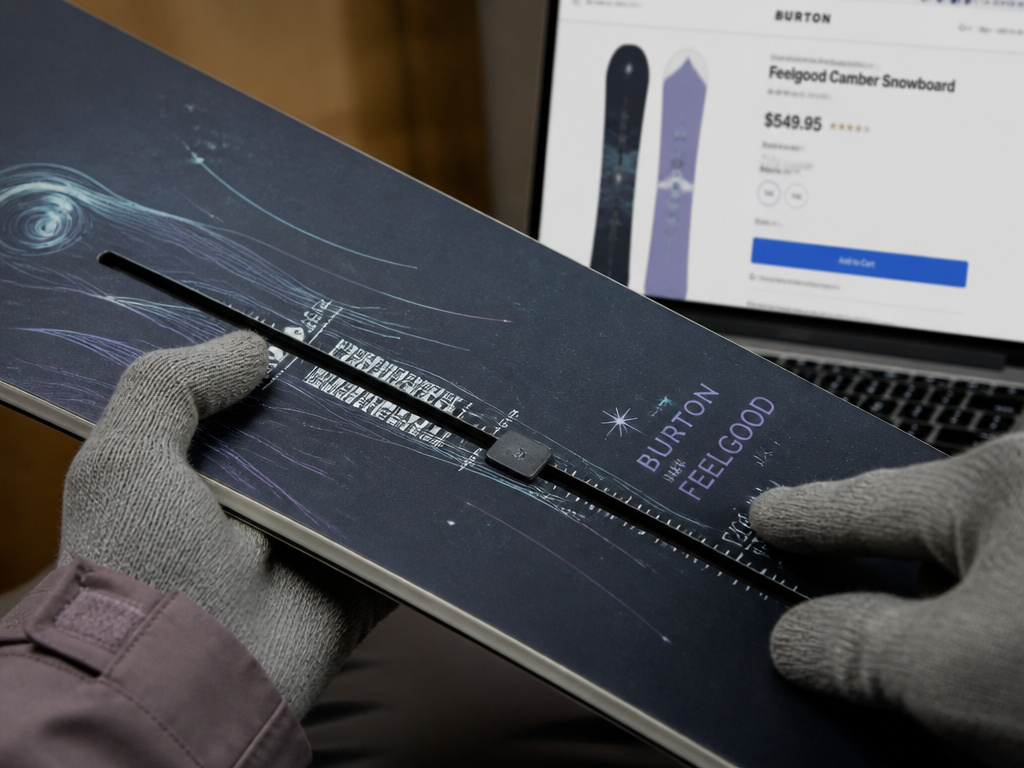
You won’t find a specific price listed here because it changes with the season, model year, and retailer. As a current-year model from a major brand, expect it to be priced as a premium all-mountain board. Your best bet is to check Burton’s official website for the most up-to-date pricing and availability. Major online snowboard retailers and local shops that carry Burton will also have it. Remember, boards with Burton’s Channel mounting system, like the Feelgood, come with a 3-year warranty. If you’re looking for a deal, consider shopping for previous model years as new boards are released, but be aware that specs like the stance setback and flex can change between versions.
Frequently Asked Questions
Is the Burton Feelgood good for beginners?
No. It is explicitly not recommended for beginners or even intermediate riders by multiple independent reviewers. Its stiffness, need for speed, and demanding nature will frustrate a learning rider. Beginners should look for softer, more forgiving boards.
Can I use non-Burton bindings on the Feelgood Camber?
Yes. All major binding brands include a Channel-compatible disc with their bindings. You are not locked into Burton bindings. However, Burton’s EST bindings are designed specifically for The Channel and provide a more direct connection and finer adjustments.
Is the Burton Feelgood Camber good for powder?
It is its weakest performance area. While you can set the stance back to help, the full camber profile from tip to tail is not designed for float. It will sink compared to boards with rocker in the tail. For occasional powder, it’s manageable with effort. For frequent deep days, you’ll want a different board.
What’s the difference between the Feelgood Camber and Feelgood Flying V?
They are completely different boards. The Camber version has traditional camber for grip and pop. The Flying V is a rocker-camber-rocker hybrid that is much more forgiving, easier to turn, and better in powder but can feel “chattery” on hard groomers. The Camber is for advanced experts; the Flying V is more accessible.
How does it compare to men’s boards like the Burton Custom?
The Feelgood Camber is often called the women’s version of the Burton Custom Camber. They share the same core technologies, camber profile, and aggressive intent. The Feelgood features women’s-specific sizing (narrower waist widths) and a slightly softer flex pattern, but the ride experience is very similar.
The Bottom Line
The Burton Feelgood Camber is a specialist. It’s one of the best women’s snowboards you can buy for high-speed carving and hardpack stability. It is not versatile, not playful, and not forgiving.
Buy it if you are an advanced-to-expert rider who charges down groomers with power and precision, who values edge hold above all else, and who has the leg strength to drive a stiff board all day. It will reward aggressive, committed riding with a level of performance that few other women’s boards can match.
Look elsewhere if you’re still progressing, if you love trees and tight maneuvers, if you see a lot of powder, or if you want a playful, forgiving daily driver. For that rider, the board’s demanding nature will feel like a chore, not a tool. In that case, the wealth of options in our ranking of the best Burton snowboards will serve you far better.
