Can You Do Tricks on a Drop Through Longboard?
This post contains affiliate links. As an Amazon Associate, we earn from qualifying purchases.
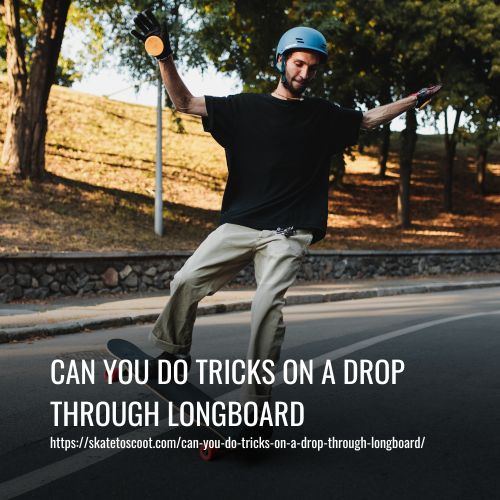
Yes, you can do tricks on a drop-through longboard, but your options are specific: dancing steps, hands-down slides, and some freestyle moves like bonelesses and no-complies. The design trades pop and grip for stability, making ollies and kickflips significantly harder than on a standard skateboard. Your success hinges on matching the board to the right kind of trick and using proper reverse kingpin trucks.
The “with limits” clause is where most guides stop and the real conversation starts. A drop-through isn’t just a low cruiser; it’s a specific tool with a distinct mechanical relationship between your feet and the trucks. That relationship changes what the board can and cannot do under your weight. For example, you might ask, can you do tricks on a drop through longboard?
What follows is a breakdown of the trick categories that actually work, the mechanical reasons why others fight you, and the specific setup tweaks, from truck brands to wheel durometer, that bridge the gap between a stable carver and a capable freestyle deck.
Key Takeaways
- Drop-throughs excel at dancing steps and slides but struggle with pop-dependent tricks like ollies because their tail provides little mechanical advantage and the platform is lower.
- Always use reverse kingpin (RKP) trucks; street trucks lower the deck too much and don’t turn enough, a point Lush Longboards strongly emphasizes.
- For freeride and sliding, a stiffer deck like the Cali-Strong Trojan or Eastside DK DropKick handles impact better than a flexible cruiser model.
- Adjust your technique, not just your expectations: slides initiate easier but control is harder; dancing requires precise foot placement to avoid wheelbite.
- A board like the TGM ‘Double Drop‘ blurs the line, combining drop-through and drop-down for a freeride-focused deck that’s “great for sliding and other tricks.”
What Is a Drop-Through Longboard? (And What Isn’t It?)
You’ve seen the cutouts. Unlike a topmount where trucks bolt directly underneath, a drop-through longboard has holes in the deck. The truck’s baseplate mounts on top, with the hanger dropping through, lowering the ride height significantly.
This Longboard comes assembled & ready to ride! Double Drop construction combines the Drop Down & Drop Through methods which allows for a very low traction and very low ride height. This is a freeride style board which is great for sliding and other tricks.. TGM Skateboards product description.
That lower center of gravity is the whole game. It creates inherent stability, makes pushing less tiring, and lowers your stance for speed control. But “minimal” is the key word everyone glosses over. The design has two immediate trade-offs for tricking: a reduced lever arm for popping and, as Lush Longboards points out, “less grip when cornering.”
It’s not a defective topmount. It’s a different tool. Thinking of it as a low, stable platform for specific kinds of movement is the first step to using it well.
What Tricks Can You Actually Do?
Be realistic about the menu. You can’t just look at a trick list for a street deck and check boxes. The mechanics of a drop-through filter the possibilities. Here’s what works, what’s a fight, and what to avoid.
The Yes List: Dancing, Sliding, and Freestyle (No Pop Required)
These tricks use the board’s stability and low platform to their advantage.
Dancing Steps: This is the drop-through’s sweet spot. The large standing platform and low ride height are perfect for cross-steps, Peter Pans, and lookbacks. The board feels planted under your shifting weight. You can absolutely dance on a drop-through longboard.
Hands-Down Slides (Colemans, Pendulums): The lower center of gravity helps break traction. Initiating a slide often feels easier on a drop-through than on a topmount. However, that same mechanical disadvantage can make controlling and exiting the slide trickier. It’s a trade-off: easier to start, harder to master.
Freestyle Tricks (No Pop): This includes bonelesses, no-complies, tiger claws, and ghost rides. These tricks use your body and one foot to manipulate the board, not the tail. These tricks are viable on a drop-through longboard.
The Maybe-With-Extreme-Effort List: Pop-Dependent Tricks
This is where the community splits and the physical limits show up.
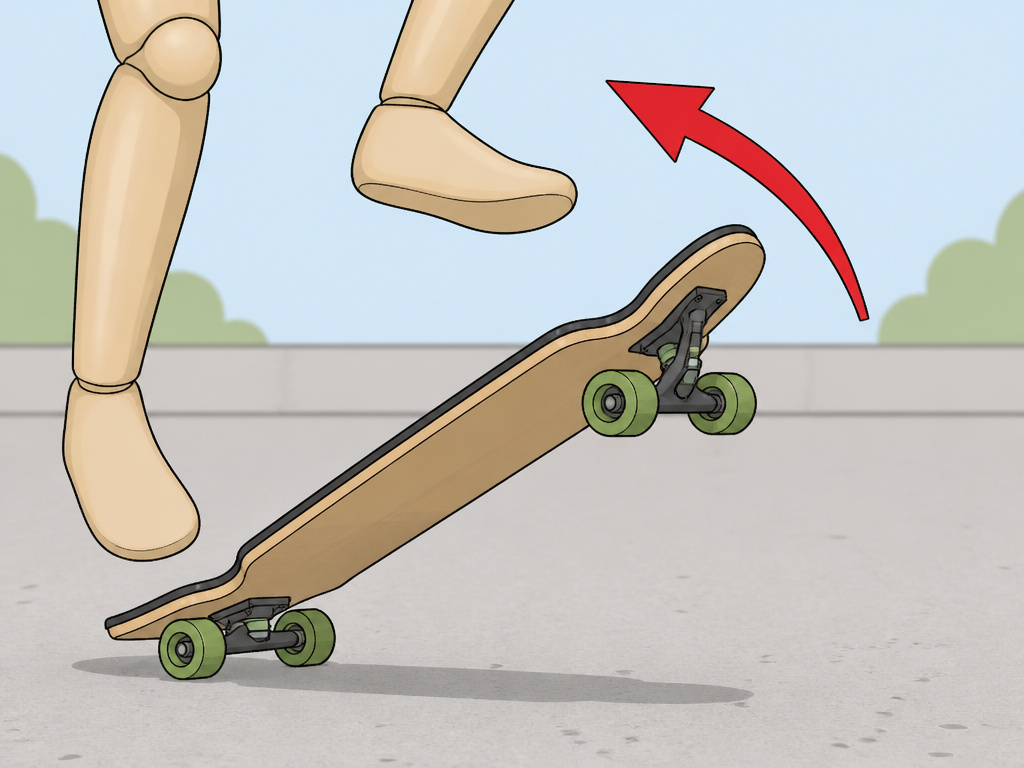
Ollies: Can you ollie on a longboard? Technically, yes. It is possible to ollie on a drop-through longboard. But it’s an uphill battle. The tiny tail offers almost no lever. You have to pop almost entirely with your ankle and jump backwards to stay over the board. Achieving an ollie requires significant practice on a drop-through longboard. Most riders say it’s not worth the effort on this deck type.
Shuv-its & Bigspins: Similar story. Without a solid pop, these become more of a awkward scoop. Possible, but inconsistent and physically taxing.
Kickflips: The holy grail. A 2023 Reddit thread shows a skater determined to learn kickflip on a longboard on his drop-through. The consensus? It’s possible, pro skater Hans Wouters has videos, but it’s a monumental task. The flick point is different, the board is heavier, and the margin for error is tiny. Learning a kickflip on a drop-through longboard is a challenging task.
The No List (Or: How to Snap Your Deck)
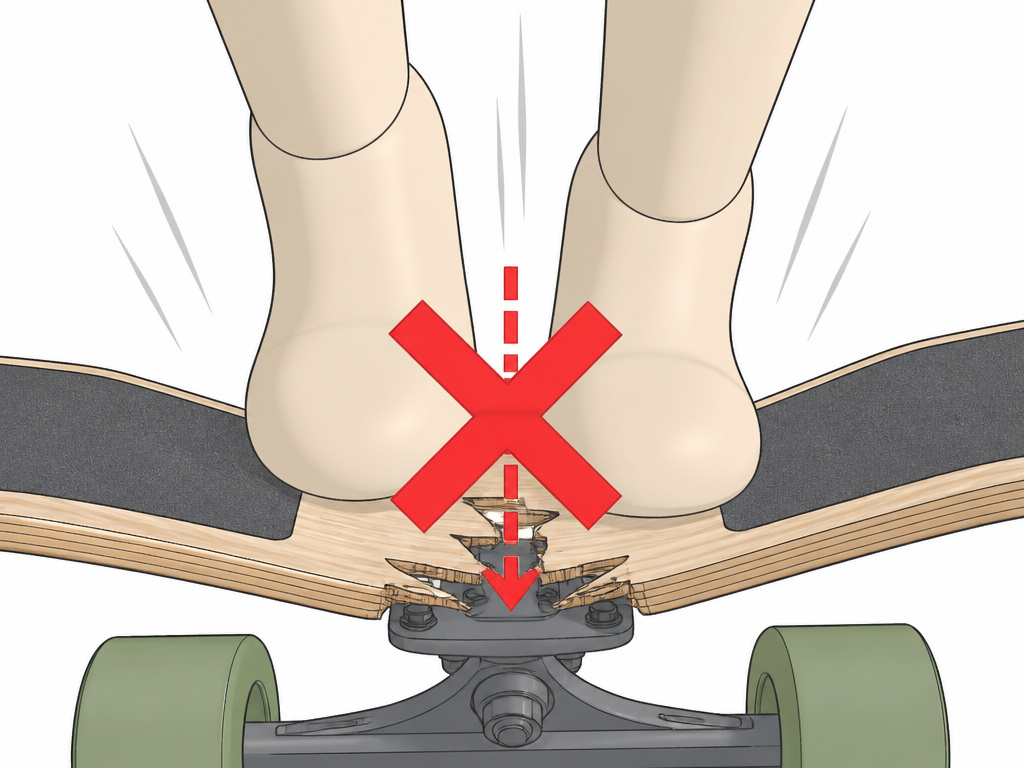
High-Impact Landing Tricks: Avoid anything where you jump onto the board from a height. The truck mounting point is a structural weak spot. Outuro states drop-throughs are “not as structurally strong as other boards.” A hard landing from an aero-grab or caveman concentrates force right on those cutouts. This can damage the deck.
Aggressive Downhill with Technical Corners: While you can take a drop-through downhill, its “less grip when cornering,” per Lush and Outuro, can be a liability on tight, grippy turns, though some brands like Cali-Strong market their drop-throughs as great for downhill. Topmounts offer more mechanical advantage and precision for such terrain.
| Trick Category | Viability on Drop-Through | Primary Reason | Example Tricks |
|---|---|---|---|
| Dancing & Carving | High | Low, stable platform, large standing area. | Cross-steps, Peter Pans, deep carves. |
| Slides | Medium-High | Lower CG helps break traction. | Coleman slides, push-up slides, pendulums. |
| Freestyle (No Pop) | Medium | Relies on body motion, not tail. | Boneless, no-comply, tiger claw, ghost ride. |
| Pop-Dependent | Very Low | Minimal tail leverage, heavy deck. | Ollie, shuv-it, kickflip. |
| High-Impact | Do Not Attempt | Stress concentrated at truck mounts. | Caveman, high-drop aero-grab. |
The Mechanical Why: It’s All About Leverage and Platform
You can feel the difference in your first kickturn. On a topmount, you lean and the board arcs beneath you. On a drop-through, you lean and… it feels dampened. That’s the physics talking.
When trucks mount top-down, the distance between your foot (the force) and the truck’s pivot point (the fulcrum) is shorter. This reduces your turning force. It’s why they feel more stable at speed, they’re less reactive to small inputs. But for tricks, that reduced mechanical advantage means you have to work harder to make the board do anything dramatic.
The platform height is the other half. Being closer to the ground is great for pushing and stability, but it robs you of the pre-load and spring you get from a higher tail. An ollie on a street deck uses the flex of the deck and the rebound of the tail hitting ground. A drop-through deck is already halfway to the ground, so that “snap” is muted. It’s like trying to jump from a crouch versus a standing start.
This isn’t a design flaw. It’s a deliberate trade: stability and ease for agility and pop.
Setting Up Your Drop-Through for Trick Success
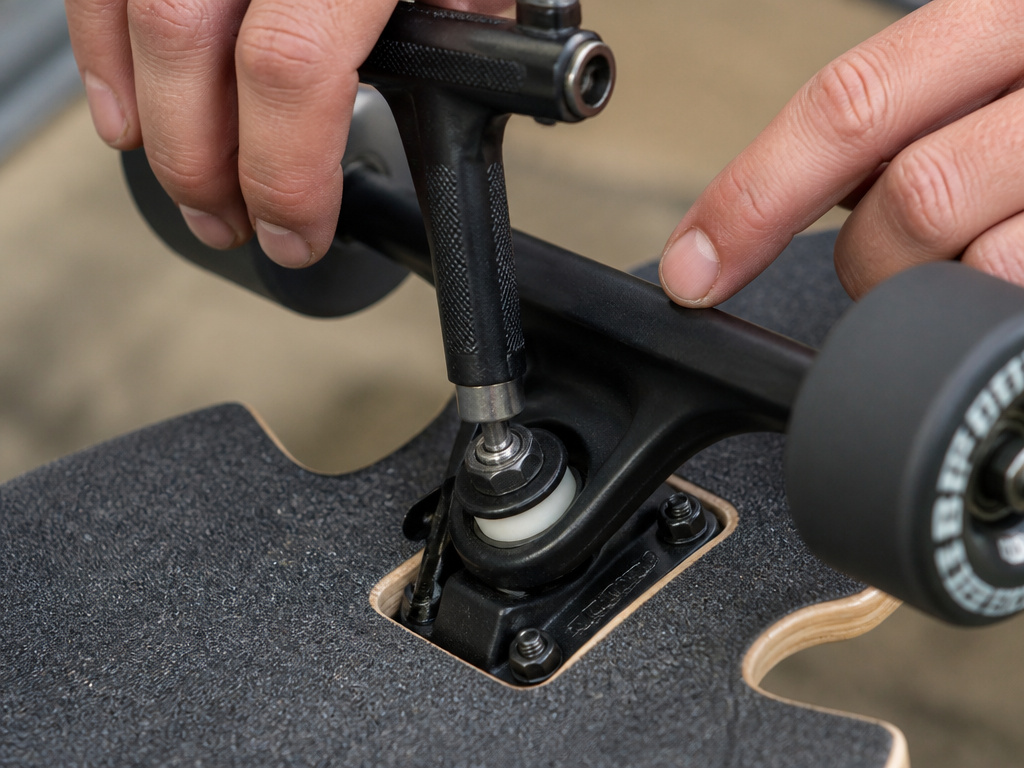
You can’t change the deck’s geometry, but you can optimize everything attached to it. This is where you close the gap between “possible” and “enjoyable.”
The Non-Negotiable: Reverse Kingpin Trucks
In theory, drop-through decks work with any kind of skateboard trucks. However, we strongly recommend a proper longboard (“RKP”) truck rather than a regular “Street Style” truck. Regular Street trucks don’t turn enough for a drop-through, and often they make the board too low.. Lush Longboards Workshop Guide.
This is the single most important setup rule. RKPs are taller and have a different turning geometry that makes up for the lost mechanical advantage. Brands like Paris, Sabre, Gunmetal, and Caliber are the standard. Trying to force street trucks onto a drop-through, as Outuro notes is “not strongly recommended,” results in a board that’s too low to turn properly and prone to bottoming out.
Wheels: Softer for Grip, Harder for Slides
Your wheel choice defines your trick style.
- For Dancing & Carving: Stick with a softer wheel (78a-82a) in a moderate size (70-73mm). Softer wheels grip better during those flowing carves and cross-steps, giving you confidence mid-maneuver. The Cali-Strong Trojan comes with 73mm 87A wheels as a solid default.
- For Sliding & Freeride: Go for a harder wheel (84a-88a) with a rounded lip. The TGM ‘Double Drop’ uses 78a wheels, which is a middle ground between softer and harder wheels, but stepping up to an 84a like a Powell Peralta Snide or Remember Hoots will break traction more predictably for slides.
Deck Stiffness Matters
If you’re serious about freeride or harder freestyle, deck construction isn’t just marketing. A stiff, multi-ply maple deck like the 9-Ply Canadian Maple on the TGM or the 8-ply Canadian Maple on the Cali-Strong Trojan will handle the torsional forces of slides and minor impacts far better than a cheap, flexible cruiser deck. A stiffer deck may provide more control for certain tricks.
Progression Path: What to Learn First
If you’re holding a drop-through and want to trick, follow this sequence. It builds skills that transfer upward and minimizes frustration.
- Master Carving and Speed Control. Before any trick, be utterly comfortable controlling your speed with deep carves and foot braking. This is your safety net.
- Learn Basic Dancing Steps. Start with a simple cross-step. Get used to shifting your weight on the moving, low platform without getting wheelbite. This teaches board feel.
- Introduce Hands-Down Slides. In a safe, open area, practice gloved-down slides like Colemans. The drop-through will help you initiate; focus on controlling the hookup and stand-up.
- Experiment with No-Pop Freestyle. Try a boneless. Then a no-comply 180. These tricks teach you how to use your body to move the board without relying on the tail.
- Only then, attempt Pop Tricks. If you still want to ollie, spend a session just trying to get the tail to tap and the nose to lift slightly without worrying about landing. It will be humbling. Seek out tutorials specific to longboard trick techniques.
This path respects the board’s strengths. Trying to ollie first is a fast track to quitting.
Drop-Through vs. Topmount vs. Double-Kick for Tricks
You asked about tricks, so you’re probably comparing board types. Here’s the blunt breakdown.
- Drop-Through: Best for dancing, cruising, and sliding. Worst for pop-based street tricks. It’s the specialist.
- Topmount Longboard: Better for downhill, precise carving, and powerful slides because it provides more grip and mechanical advantage. Still not great for ollies, but better than a drop-through.
- Double-Kick Cruiser/Popsicle Deck: The actual tool for ollies, kickflips, and street skating. The tail is made for popping, the deck is light, and the geometry is designed for aerial tricks.
Thinking of learning skateboard tricks like kickflips and heelflips? Get a skateboard. A drop-through longboard is for a different kind of movement. Using it for its intended purpose is where the real satisfaction lies.
Frequently Asked Questions
Is a drop-through longboard good for beginners?
Yes, for the right beginner. If your goal is cruising, light carving, and maybe learning to dance, a drop-through’s stability is fantastic. If you dream of immediately doing ollies and kickflips, start with a standard double-kick skateboard.
What are some easy tricks to start with on a drop-through?
Start with cross-steps for dancing. For freestyle, the boneless is the most accessible. It teaches you how to lift the board with your hands and foot without needing a pop. For sliding, a gloved hands-down 180 (Coleman) is a foundational move.
Can you still do tricks on a cruiser?
Cruisers often have a more pronounced kicktail than a typical drop-through, making ollies and shuv-its more feasible. They sit higher, restoring some pop. So yes, but they’re a midpoint between a drop-through’s stability and a street deck’s trickability.
How do I stop my drop-through from getting wheelbite when dancing?
First, ensure your trucks are tight enough to restrict ultra-deep carves while you learn. Second, consider smaller wheels or riser pads. Even a 1/8″ riser can add crucial clearance. Finally, practice your foot placement, dancing is about smooth, controlled weight shifts, not jerky movements.
The Bottom Line
A drop-through longboard isn’t a trick board in the traditional sense. It’s a platform for a different kind of expression: flowing carves, graceful dancing, and controlled slides. You can force it to ollie, but you’ll spend months on a trick that takes weeks on a different deck.
The real trick is matching your ambition to your equipment. If you want to learn longboard tricks that play to a drop-through’s strengths, stability, a low platform, a large standing area, you’ll unlock a uniquely satisfying style of riding. If you want to kickflip down a stair set, sell it and buy a skateboard.
Your board is a tool. Use it for the job it was built for, and you’ll progress faster and have a lot more fun. That’s the only secret that matters.
