Can You Longboard at a Skatepark? Etiquette and Gear Guide
This post contains affiliate links. As an Amazon Associate, we earn from qualifying purchases.
Yes, you can ride a longboard at most skateparks, but the official answer is printed on a sign at the entrance. Local ordinances are the final word, not online advice. Parks in Lincoln, California, for example, explicitly permit “skateboarding, biking, scooter and in-line skating,” which covers longboards, while others like Orlando’s may restrict use to specific wheeled devices.
That local-law clause is where the fun starts. A park’s posted rules dictate your helmet, pads, and even whether you can enter if you’re not actively using a permitted device. They also answer the question, can you longboard at a skatepark? Ignoring them isn’t a style choice; it’s a fast track to being asked to leave.
What follows is a breakdown of the rules you’ll actually face, the board specs that work (and the ones that don’t), and a straightforward plan for your first session that keeps you rolling and welcome.
Key Takeaways
- Check the posted rules first. Your local municipal skatepark ordinance PDF overrides any general advice, helmet and pad mandates vary by city and age.
- A helmet is essential. The CPSC states it must fit snugly with the chin strap fastened and be level on your head, not tilted back, to stay on during a fall.
- Wrist guards reduce fracture risk. The federal skateboarding safety fact sheet singles them out as especially important, alongside knee and elbow pads.
- Boards with kicktails and harder wheels win. A longer wheelbase is fine for carving bowls, but a lack of kicktails makes navigating a crowded park frustrating.
- Go during off-hours for your first visit. Early mornings or weekdays mean less crowd pressure, giving you space to find your flow without the social anxiety.
The Short Answer: Yes, But It’s All About Local Rules
The simple answer is yes, a longboard is usually allowed. The complicated answer lives in your city’s municipal code. Places like Sandy, Oregon, base their rules on state law, requiring helmets only for riders under 16, while Lincoln, California, mandates them for all users without age-based exceptions. Orlando’s rules carve out an exception for adults on certain devices, while other ordinances like Lincoln, CA mandate helmet use for all users, and Sandy, OR requires them only for riders under 16. You see the pattern? There isn’t one universal rule.
This is not scare talk. It is the predictable outcome of checking five different city skatepark regulations document and finding five different answers on helmets, pad requirements, and even which vehicles are permitted.
Your first job isn’t to practice carves; it’s to answer the can you longboard at a skatepark question by walking up to the park’s entrance and reading the sign. Look for keywords like “wheeled recreational device,” “skateboard,” or the specific list of allowed equipment. If it says “skateboards and in-line skates only,” your BMX buddy is out of luck, while parks like those in Lincoln, CA explicitly permit BMX bicycles and scooters. If it says “skateboarding, biking, scootering,” your longboard almost certainly qualifies. This minute of reading saves the awkward moment of a park attendant asking you to leave.
Navigating the Social Landscape (A.K.A. Skatepark Etiquette)
The skatepark is a shared space with a built-in hierarchy. The unspoken rules of etiquette also matter alongside the posted ones. This isn’t about gatekeeping; it’s about flow and safety. A longboard takes up more real estate and has a different turning radius, so awareness is your best skill.
The cardinal rule is one rider per feature at a time. This isn’t a suggestion. It’s in the written rules for places like Sandy’s Basecamp and is a key safety practice. Wait your turn, and make eye contact or a quick nod to signal you’re going next. If you’re sessioning a bowl, take your run, then clear out so someone else can drop in.
Common mistake: Camping at the top of a ramp while you psyche yourself up. It blocks the line of sight for the rider already in the bowl and kills the session’s rhythm. Step back, take your breath, then go.
Your board choice also sends a signal. Showing up with a very long downhill board with no kicktail tells everyone you’re there to cruise, not engage with the park’s features. That’s okay, but pick your moments. When the park is packed with kids trying kickflips, your wide, sweeping carves become a hazard. This is a big part of the longboarder stigma you might have heard about, which often starts with the can you longboard at a skatepark debate. It’s less about hate and more about a mismatch of equipment and environment.
The Gear That Actually Keeps You Safe
Gear talk usually focuses on the board. We should focus on the opposite. Your body is what hits the concrete. The board is replaceable. According to the Consumer Product Safety Commission report, a few specific pieces of equipment turn a hospital visit into a brushed-off stumble.
First, the helmet. The CPSC is explicit: it must be a hard shell with foam interior designed for skateboarding. The CPSC recommends wearing a helmet designed for skateboarding (hard shell with foam interior). The fit is everything. It should sit level on your head, not tilted back like a hat, with the chin strap tight enough that you feel your cheeks push up slightly when you open your mouth. A loose helmet pops off on the first impact.
| Gear | CPSC Mandate | Why It Matters |
|---|---|---|
| Helmet | Snug fit, level, chin strap fastened | Prevents fatal head injury; comes off if loose |
| Wrist Guards | “Especially important” for reducing fractures | Hands instinctively go out in a fall; wrists snap |
| Knee/Elbow Pads | “Use knee and elbow pads.” | Abrasions are the most common injury; pads prevent road rash |
| Shoes | “Wear flat-soled shoes.” | Grips the board better than running shoes; protects feet |
Wrist guards are the unsung hero. The CPSC highlights them for a reason. When you fall, you throw your hands out. Wrist guards disperse that impact along the guard’s plastic splint, not through the small bones of your wrist.
Knee and elbow pads are about preserving skin and joints. And for footwear? Flat-soled skate shoes. They give you the board feel you need for subtle weight shifts.
Choosing (or Modifying) Your Board for Park Use
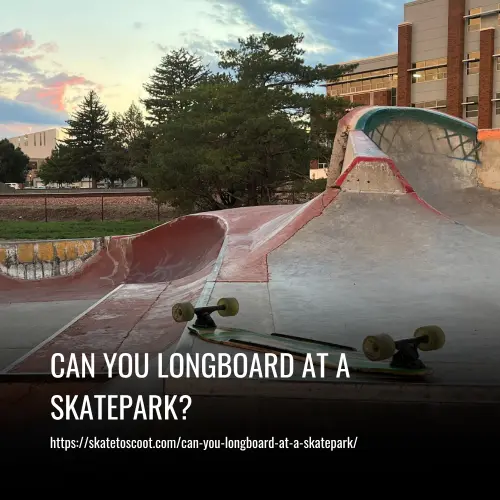
Not all longboards are created equal for park riding. The differences between skateboards and longboards are crucial here. You’re looking for a hybrid, something that borrows from both worlds. You need maneuverability for tight transitions and enough stability to hold a line.
The two most important specs are kicktails and wheel hardness. A kicktail, the upturned end of the board, provides additional control. You can pivot, tick-tack for speed, and get out of tricky spots. A pure cruiser or downhill board without one leaves you with fewer options when you need to adjust your line quickly.
Wheel hardness is measured in durometer. For park concrete, you generally want harder wheels. Softer wheels are for cruising and absorbing road vibrations; they can grip too much and slow you down in the park, making pumping for speed a chore. Harder wheels slide more predictably and maintain speed through transitions.
| Board Type | Best For Park? | Key Reason |
|---|---|---|
| Traditional Longboard (40″+) | No | Too long, no kicktails, hard to maneuver in tight spaces. |
| Cruiser (30″-36″) | Maybe | Better, but often lacks a functional kicktail. |
| Hybrid/Dance Board (38″-42″ with kick) | Yes | Length for stability, kicktail for control. Ideal balance. |
| Old School Pool Shape | Yes | Wide wheelbase, pronounced kicktails. Built for bowls. |
If you only have a big cruiser, you can modify it. Start by tightening your trucks a quarter-turn. This reduces the lean and makes the board feel more stable at lower speeds. Swapping to harder wheels is the next, most impactful upgrade. You don’t need a new board to start.
A Beginner’s First-Visit Game Plan
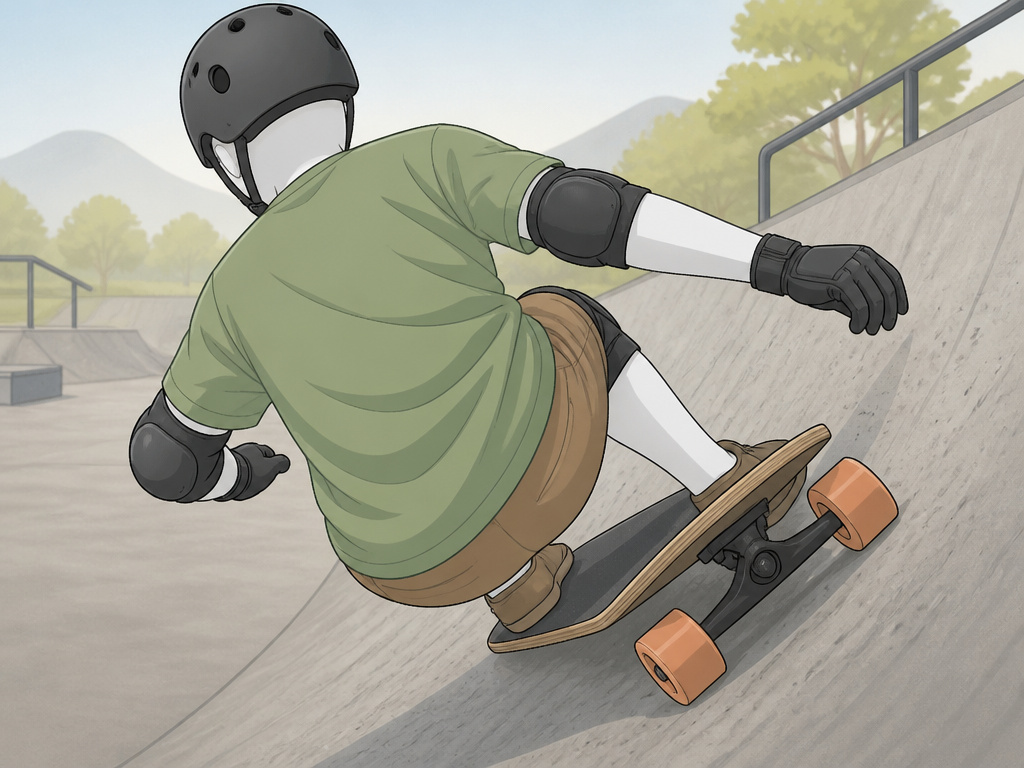
The hardest part is walking through the gate. Here’s a step-by-step plan to make that first session productive, not overwhelming.
- Pick Your Time: Go on a weekday morning. The park will be empty or have a few dedicated regulars who are often more helpful than a chaotic weekend crowd.
- Warm Up on the Flat Ground: Don’t even look at the bowls yet. Roll around the flat bottom of the park. Get a feel for the concrete, practice pushing and carving.
- Find a Mellow Bank: Find a gentle, sloping wall. Practice riding up it and letting gravity bring you back down, turning your shoulders to carve back and forth. This teaches you weight transfer without the commitment of a deep bowl.
- Watch and Learn: Sit for five minutes. Observe how riders use the space, how they signal, the lines they take. You’ll learn the park’s rhythm.
- Set a Micro-Goal: “Today, I’ll get comfortable carving this one bank.” Not “I will learn to drop in.” One small win builds confidence for next time.
Where this goes sideways: Trying to mimic advanced skaters on day one. The fundamentals, carving, stopping, controlling speed, always come first.
Remember, everyone was a beginner once.
Best skatepark features for longboarding
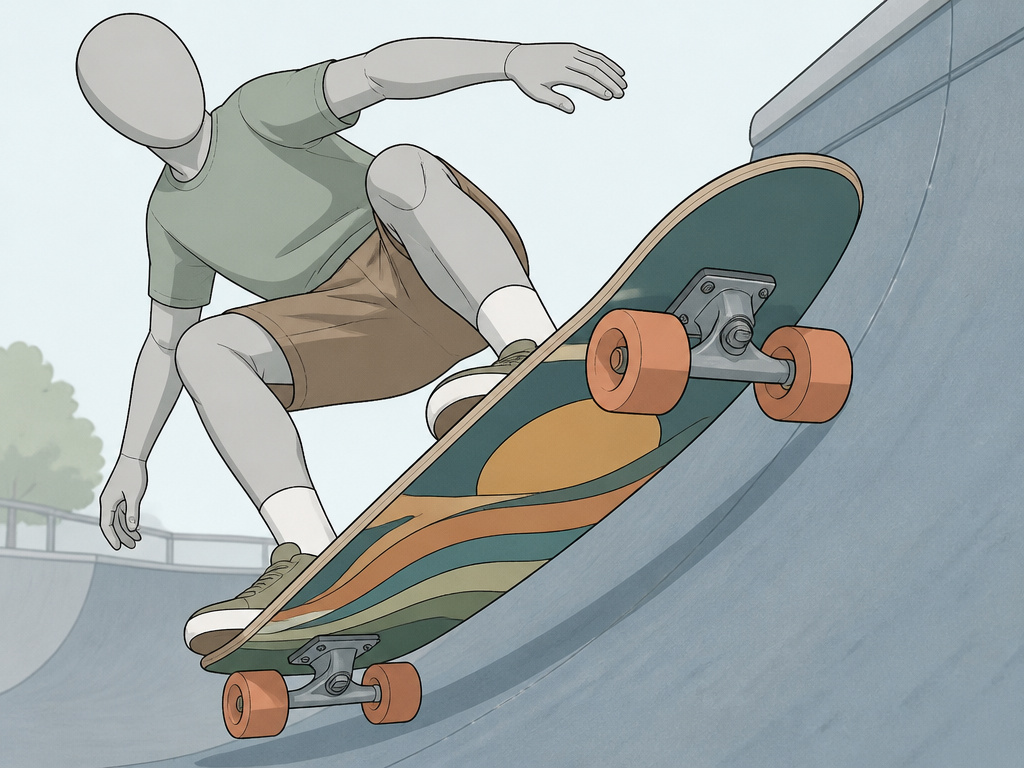
Look for smooth transitions and banked turns. These features let you use the longboard’s natural stability and control to maintain flow without needing to push. According to the CPSC, a longer board increases stability, and wider hangers give riders greater control. Focus on areas of the park that are designed for carving rather than technical street obstacles. Always check that your equipment is in good repair, as this is required by some local rules like those in Lincoln, California. Wait your turn and only use one feature at a time, and never add your own obstacles or use the park when the surface is wet.
Riding style/how to ride a longboard in a park
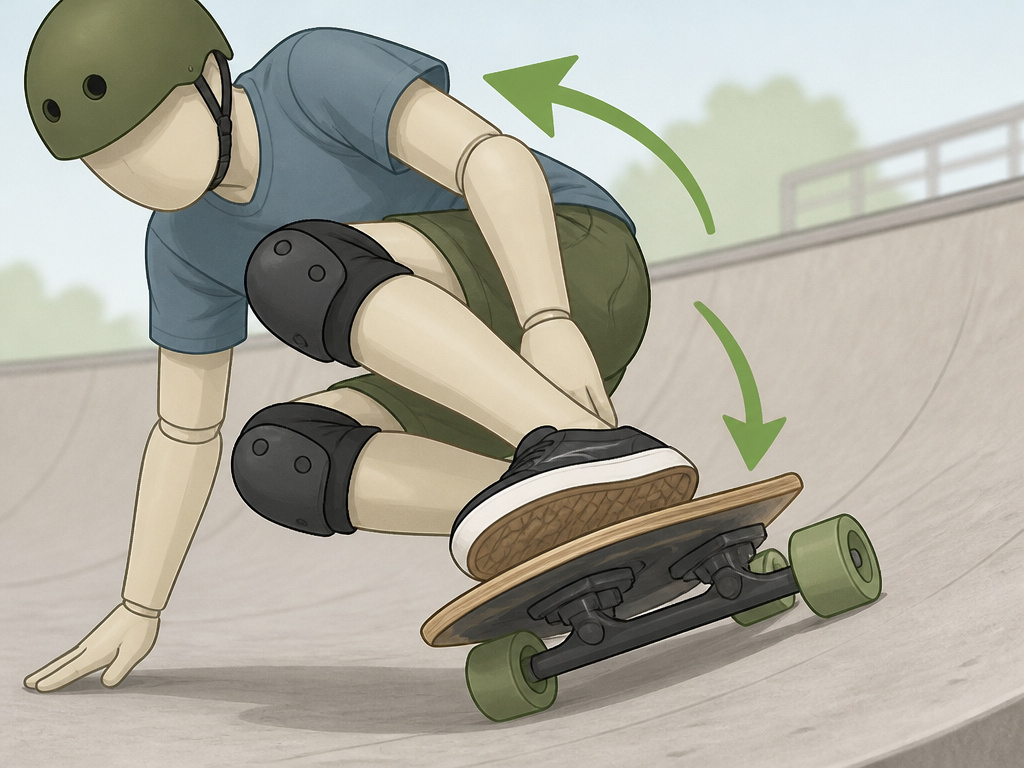
Pumping and carving are your core techniques for generating speed and flow in a skatepark. Use your body weight to pump through transitions, shifting your stance to build momentum without pushing. Carving, or making deep, turning cuts, helps you control speed and change direction on banked walls. Keep your trucks, wheels, and all hardware properly tightened to improve stability at higher speeds. Wear a skateboarding helmet that fits snugly and sits level on your head, along with wrist guards, knee pads, and elbow pads. Flat-soled shoes give you the best grip for this kind of riding.
Frequently Asked Questions
Are longboards officially banned at any skateparks?
Some are. It’s rare, but certain parks’ posted rules explicitly list permitted devices (e.g., “skateboards and in-line skates only”). A longboard is a skateboard, so it’s usually included, but a park with a “no bicycles” rule might be stricter. Always check the sign. The Orlando Skate Park official rules are an example of specific device regulation.
Is a longboard harder to use in a skatepark than a skateboard?
For certain things, yes. The lack of a kicktail makes doing tricks like ollies much harder, and the longer wheelbase makes quick turns more difficult. For purely carving and pumping around bowls, a well-suited longboard can be equally fun and sometimes more stable. It’s a different tool for a slightly different job.
What’s the best longboard for a complete beginner at a skatepark?
Look for a “hybrid” or “cruiser” board with a clear kicktail. Many brands offer hybrid or cruiser boards suitable for beginners. Avoid a huge, flexy dancer or a stiff downhill board. You want something you can maneuver.
Can I learn to drop in on a longboard?
You can, but the technique is different. Your stance will be wider, and you need to commit your weight forward decisively. It’s often harder because the longer wheelbase makes the board feel less responsive at the pivotal moment. Many riders find it easier to learn the drop-in motion on a standard skatepark skateboards first, then transfer the skill.
Will skateboarders be annoyed if I’m there with a longboard?
If you follow the etiquette, waiting your turn, not snakeing people, being aware of your space, most won’t care. The irritation comes from behavior, not your board choice. Being the person who unknowingly cuts across everyone’s line is the real issue, regardless of what you’re riding.
The Bottom Line
You can absolutely longboard at a skatepark, but permission comes from the city ordinance posted on the fence, not from the internet. Your safety hinges on a CPSC-certified helmet that fits right, wrist guards, and the humility to start on the mellow banks.
The board under your feet matters, but not as much as the awareness between your ears. Choose a hybrid deck with a kicktail if you can, go during quiet hours, and focus on carving and flow before anything else. The park is a shared space. Respect its rhythms, and you’ll find a new playground that rewards patience with a unique kind of concrete surf.
Now go check the local rules, strap on your pads, and get rolling.
