Can You Lose Weight by Longboarding? How It Actually Works
This post contains affiliate links. As an Amazon Associate, we earn from qualifying purchases.
Yes, you can lose weight by longboarding. The peer-reviewed science shows it elicits moderate to vigorous exercise intensity, burning significant calories and improving body composition. The 2014 Hansen study measured it at ~8.5 METs, vigorous intensity, with a typical rider burning ~41.8 kJ per minute. For effective weight loss, you must meet the dose-response threshold: at least 150 minutes of moderate-intensity longboarding per week, with a mix of terrain to push into vigorous zones, as downhill riding alone may only be moderate intensity.
The 41.8 kJ/min figure isn’t just a number. It’s a metabolic snapshot of an experienced rider moving at a typical 4.5 meters per second. That translates to a real-world effort level that, when sustained, creates the caloric deficit necessary for weight loss. The trick isn’t just getting on the board; it’s understanding the specific intensity, duration, and consistency that turns a fun ride into a fat-loss tool. This is how you can answer the question, can you lose weight by longboarding.
What follows is a breakdown of the exact metabolic data, the terrain that changes everything, and a practical plan to convert those kJs into pounds lost. We’ll clear up where the sources disagree, give you a sample weekly schedule, and explain how to track progress when the scale isn’t moving.
Key Takeaways
- Longboarding at typical speeds burns energy at a rate of ~41.8 kJ per minute, a vigorous intensity (~8.5 METs) according to a 2014 PubMed study.
- Terrain dictates intensity: uphill riding is vigorous (>60% HRR), while downhill coasting is only moderate (54% HRR), per a 2013 heart rate study.
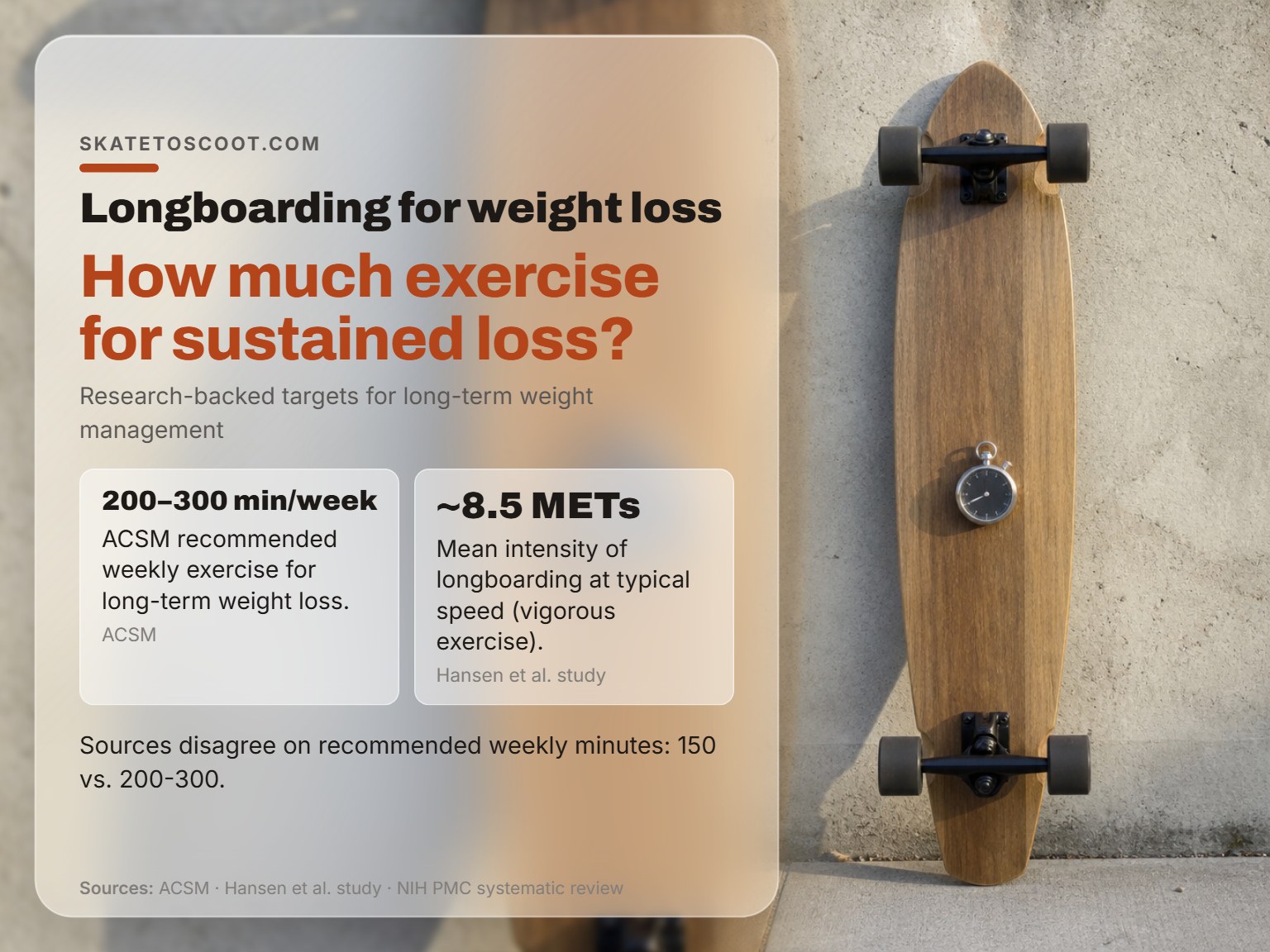
- For weight loss, aim for at least 150 minutes per week of moderate-intensity longboarding, progressing toward the ACSM’s recommended 200-300 minutes for sustained results, as sources differ on the recommended weekly duration for weight loss.
- Pair your riding with purposeful pushing and hill repeats to maximize calorie burn, as passive coasting won’t hit the necessary intensity.
- Track progress with measurements and endurance gains, not just the scale, as improved fitness and muscle development can mask fat loss initially.
The Core Science: What the Studies Actually Say
We should clarify something. A lot of fitness advice is vague. “Be more active.” “Move your body.” With longboarding, we have hard numbers. A 2014 study published on PubMed took experienced riders and measured their oxygen use and energy expenditure at slow, typical, and fast speeds. The results give us a blueprint.
At a typical cruising speed of 4.5 meters per second, the average rider’s body was working at 8.5 METs. That’s the Metabolic Equivalent of Task, a standard measure of exercise intensity. Sitting quietly is 1 MET. Brisk walking is about 3-4 METs. At 8.5 METs, longboarding is classified as vigorous-intensity exercise. The study concluded it was more economical than walking but still a serious metabolic workout. This is the primary source for understanding the potential for calorie burn.
The 2014 Hansen et al. Study found the gross metabolic cost of longboarding at typical speed was ~2.2 J kg^(-1) m^(-1), with a mean energy expenditure rate of 41.8 kJ per minute. This intensity (~8.5 METs) meets the threshold for vigorous physical activity.
But here’s where it gets interesting, and where a second study adds a critical layer. Not all longboarding is created equal. A 2013 study published in the International Journal of Sciences measured heart rate response specifically. They had riders tackle a course with uphill and downhill sections. The data showed a stark split: uphill riding shot heart rates to 81% of Heart Rate Reserve (vigorous intensity), while downhill riding averaged only 54% HRR (moderate intensity).
This is the disagreement you need to know about. The first study measured overground travel at self-selected speeds, likely a mix, and got “vigorous.” The second study proves that if your route is all downhill coasting, you’re only working at a moderate level. For weight loss, that distinction changes everything when you compare a can you lose weight by longboarding scenario of vigorous vs. Moderate effort. Vigorous intensity burns more calories per minute and has a stronger effect on cardiorespiratory fitness and benefits for overall health.
From Intensity to Fat Loss: How It Actually Works
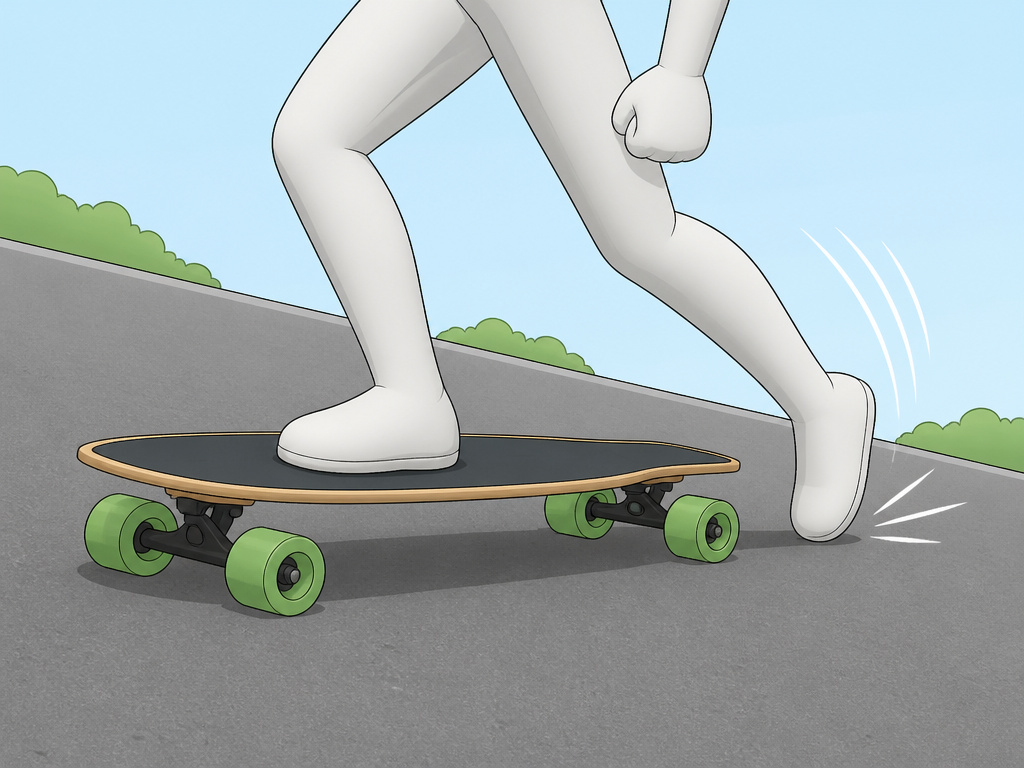
So you’re burning 41.8 kJ per minute. What does that mean for your waistline? It means you’re creating an energy deficit. The body taps into stored fat to make up the difference between the calories you eat and the calories you burn through riding and basic metabolism. A systematic review of randomized controlled trials on the NIH PMC platform confirms the mechanism: consistent exercise reduces weight, BMI, and, most importantly, visceral fat.
The review, which analyzed programs for overweight and obese individuals, found the average effective protocol was 4 times per week, for 50 minutes per session, over 22 weeks. That’s the dose. The American College of Sports Medicine (ACSM) refines it further, recommending 200-300 minutes of moderate-intensity exercise per week for long-term weight loss maintenance. This PMC systematic review of exercise provides the framework that turns a longboarding habit into a results-driven routine.
Your body doesn’t just shed pounds. It recomposes. Another 2024 study on surf-skate training, a close cousin to aggressive longboarding, showed that after an 8-week program (three 60-minute sessions per week), participants saw significant decreases in body weight, BMI, and percent body fat, alongside increased VO2 max. The takeaway? Consistency with a moderately intense board sport reshapes your body from the inside out, providing a clear answer to can you lose weight by longboarding. This principle applies directly to using skateboarding for weight loss in all its forms.
| Study / Source | Key Finding for Weight Loss | What It Means for Your Routine |
|---|---|---|
| Hansen et al. (2014) | Typical longboarding = ~8.5 METs (vigorous intensity). | Your regular cruise is a legit cardio workout. |
| Amtmann et al. (2013) | Uphill = 81% HRR (vigorous); Downhill = 54% HRR (moderate). | Seek hills to maximize intensity; coasting is less effective. |
| NIH PMC Review (2021) | Effective protocol: 4x/week, 50 min/session, moderate-vigorous intensity. | Frequency and duration are as important as how hard you ride. |
| ACSM Recommendation | 200-300 min/week of moderate exercise for long-term loss. | Aim for longer weekly ride times to see sustained results. |
Building Your Weight Loss Longboarding Routine
Knowing the science is one thing. Applying it is another. Here’s how to build a routine that meets the effective dose shown in the research.
First, assess your terrain. If you only have gentle downhill paths, you’ll be stuck in that “moderate intensity” zone from the heart rate study. To hit vigorous, you need to incorporate flats where you push continuously, or better yet, find hills. A route with a long uphill climb followed by a downhill recovery is perfect, it mimics interval training, which is highly effective for fat loss.
Second, track your time. Start by aiming for the baseline public health recommendation of 150 minutes per week. That could be five 30-minute sessions. As your fitness improves, push toward the ACSM’s weight-loss recommendation of 200-300 minutes. A 60-minute session where you’re actively pushing for most of it will burn far more than two lazy 30-minute coasts.
Common mistake: Only riding downhill. The heart rate data is clear: downhill coasting alone only reaches moderate intensity. Without uphill or sustained flat-ground pushing, you’ll need to double or triple your ride time to match the calorie burn of a mixed-terrain session.
Here’s a sample progression-focused weekly plan. Adjust the minutes based on your current fitness level.
Weeks 1-4: Foundation Building
- Goal: 150 minutes of total ride time.
- Session Structure: 3-5 rides per week, 30-50 minutes each.
- Focus: Find your balance. Practice consistent pushing on flats. Include one route with a small, manageable hill. Consistency is the goal, not intensity.
Weeks 5-8: Intensity Introduction
- Goal: 180-200 minutes, mixing moderate and vigorous effort.
- Session Structure: 4 rides per week. Two longer (50-60 min) moderate cruises, two shorter (30-40 min) sessions focused on hill repeats.
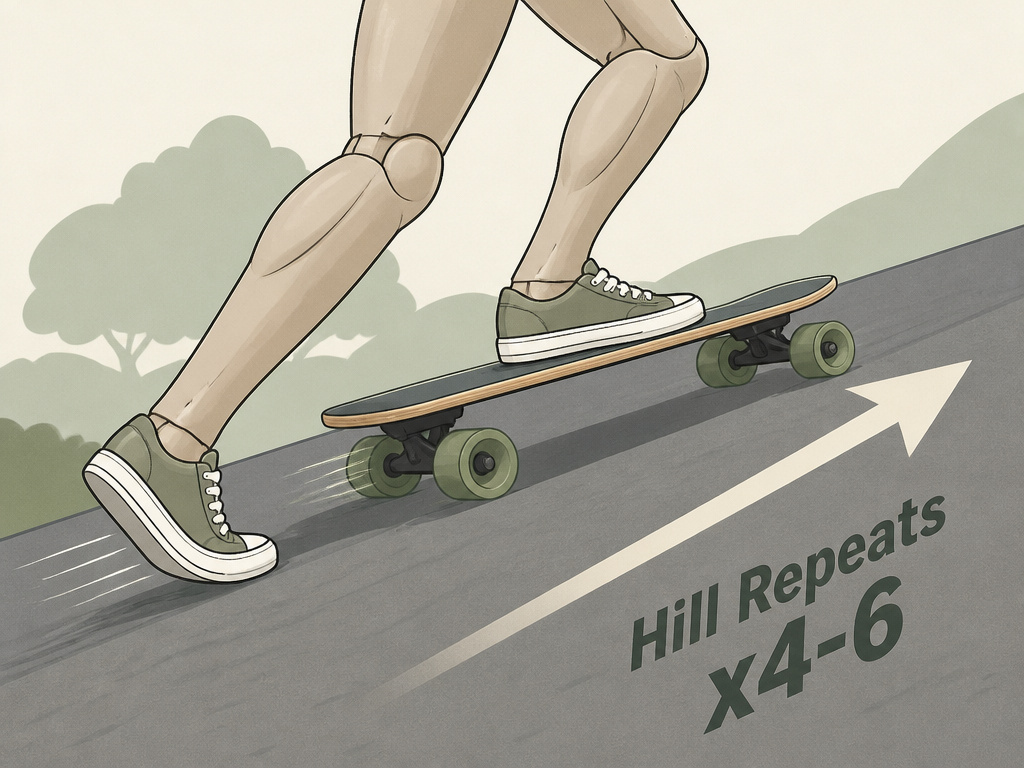
- Focus: On hill repeat days, find a moderate incline. Push up it 4-6 times, riding or walking back down for recovery. This directly targets the vigorous intensity zone shown in the research.
Weeks 9+: Sustained Weight Loss
- Goal: 220-300 minutes per week.
- Session Structure: 4-5 rides per week. Mix long endurance rides (60+ min) with high-intensity interval days (hill repeats, sprint pushes on flats).
- Focus: By now, your longboarding skills and cardiovascular fitness should have improved significantly, allowing you to sustain longer periods in the vigorous zone.
The Non-Scale Victories: How to Know It’s Working
The scale is a fickle tool. Muscle weighs more than fat, and hydration swings can mask progress. If you’re building leg and core strength from balancing and pushing, you might not see dramatic weight loss immediately, even as you lose inches and feel better. This is where the broader benefits of exercise reveal themselves.
Track these markers instead of, or in addition to, your weight:
- Endurance: Are you less winded after pushing up your usual hill? Can you ride for 45 minutes now instead of 30? This is a direct sign of improved cardiovascular fitness.
- Measurements: Use a tape measure. Track your waist, hips, and thighs every 4 weeks. The NIH review showed a strong effect on visceral fat (the harmful fat around organs), which often shows here first.
- Skill: Can you carve tighter? Handle speed more comfortably? Improved skill means improved neuromuscular efficiency, which means your body is performing the work more effectively.
- Mental State: That post-ride clarity, the reduced stress, the simple joy of rolling, these are real, measurable health outcomes that reinforce the habit.
For heavier riders just starting, these non-scale victories are crucial. The Reddit communities are full of stories from riders who started at 250lbs or more. The universal report isn’t an immediate weight drop; it’s the feeling of accomplishment from nailing a push technique, completing a longer route, or simply getting back up after a fall. That mental win fuels the next session.
Safety, Gear, and the Role of Diet
The reality is that you can’t out-exercise a bad diet. The energy deficit required for weight loss is a simple equation, and food intake is one half of it. The research is clear, exercise is incredibly effective for improving body composition and health, but for maximum weight loss, it works best alongside mindful nutrition. Think of longboarding as the powerful tool that expands the “calories out” side of your equation, giving you more flexibility and health benefits than dieting alone.
Before you start any aggressive routine, gear is essential. This is doubly true if you’re carrying extra weight.
- Helmet: Always. No exceptions.
- Wrist Guards, Knee & Elbow Pads: Essential for beginners. Falling is part of learning, and protecting your joints keeps you consistent.
- The Right Board: A quality, stiff deck (like a 9-ply maple) is better for heavier riders than a flexible one. Don’t worry about manufacturer weight limits for cruising, as countless forum users attest, a well-built board can handle it. The concern is aggressive tricks or drops, not steady riding.
Frequently Asked Questions
Is longboarding a good way to lose weight?
Yes, based on peer-reviewed exercise physiology. A 2014 study measured it as a vigorous-intensity activity (~8.5 METs), and a 2024 study on surf-skating showed significant improvements in body composition. Its effectiveness depends entirely on the duration, intensity, and consistency of your rides, matching the exercise protocols proven in wider research.
Can you lose belly fat by skateboarding?
Yes, exercise can specifically reduce visceral fat. A 2021 NIH systematic review found exercise interventions for overweight individuals reduced visceral fat with an effect size of d = -1.08, which is considered a large effect. Longboarding, as a vigorous aerobic exercise, fits the type of activity shown to be most effective for this.
How does longboarding compare to running for calories?
The 2014 study provides a direct comparison: longboarding at typical speed had a gross metabolic cost that was more economical than walking. This means it’s more efficient, you use less energy to cover the same distance. However, because it’s more enjoyable, you might do it longer and more often. For pure calorie burn per minute, running is likely higher intensity, but adherence is key for long-term weight loss.
I’m overweight. Is longboarding safe for me?
Thousands of riders start at higher weights. The key is starting slow, prioritizing balance on flat ground, using appropriate safety gear, and choosing a sturdy board. Focus on the skill and the enjoyment first; the fitness and weight loss will follow as you’re able to ride longer and more intensely. Your first goal is to build confidence, not burn calories.
How long until I see weight loss results from longboarding?
Don’t expect overnight changes. The effective protocols in the research lasted an average of 22 weeks. Aim for consistent practice, at least 150 minutes per week, for a month before you even look for scale changes. First, you’ll notice improved endurance, better mood, and tighter clothing. Trust that process.
The Bottom Line
Longboarding isn’t a magic weight-loss bullet. It’s a highly effective, vigorous-intensity exercise tool. The data from the PubMed metabolic cost study and the International Journal of Skateboarding study gives us the specs: it burns energy at a rate that can create a meaningful caloric deficit.
Your job is to meet the dose. That means seeking terrain that pushes you past moderate intensity, tracking your weekly minutes until you hit 200-300, and pairing the activity with sensible nutrition. The scale might be slow to move, but your measurements, endurance, and mood won’t lie.
One rule most guides skip: if you’re only coasting downhill, you’re leaving half the metabolic benefit on the table. Find a hill and push up it. Then do it again. That’s where the real work, and the real transformation, happens.
