Can You Put Longboard Wheels on a Skateboard?
This post contains affiliate links. As an Amazon Associate, we earn from qualifying purchases.
Yes, you can put longboard wheels on a skateboard. The 8mm axle is standard, so they physically fit. The real question concerns managing the consequences: a larger, softer wheel changes your board’s clearance, its trick performance, and its cruising comfort. You’ll need to address wheelbite with riser pads, accept a heavier feel for flip tricks, and choose a wheel size that balances your goals.
The axle size gets you to the starting line. What happens next is a series of physical trade-offs you can measure and control. A wheel that’s 10mm taller cuts your deck clearance by that same 10mm, which is why a 60mm wheel on a tight truck might be fine while a 70mm wheel on a loose truck will lock up on the first carve. The community has tested these limits, and the data is specific. A common question is, can you put longboard wheels on a skateboard?
What follows is a map of those trade-offs: the wheel size and hardness specs that work, the mandatory hardware changes, the impact on your riding, and the exact steps to make the swap without damaging your board or your day.
Key Takeaways
- Wheelbite is your primary enemy. Larger wheels reduce deck clearance. Use riser pads for wheels over 60mm, and consider harder bushings or tightened trucks.
- Performance is a clear trade-off. Softer, larger wheels (78a-90a, 55-70mm) cruise smoothly but make flip tricks harder and powerslides more difficult due to increased grip.
- Keep your original trucks. Traditional kingpin (TKP) skateboard trucks maintain a lower ride height for tricks. Reverse kingpin (RKP) longboard trucks feel awkward on a short deck.
- Match your wheel to your terrain. For rough pavement, look for larger, softer wheels within the longboard range. For a hybrid trick-and-cruise setup, 54-60mm cruiser wheels like Powell Peralta Snakes are the benchmark.
- Longer hardware is required. When adding riser pads, you must use longer mounting bolts (1 inch or more) to ensure safe, secure truck attachment.
Will It Even Fit? The Axle and Bearing Answer
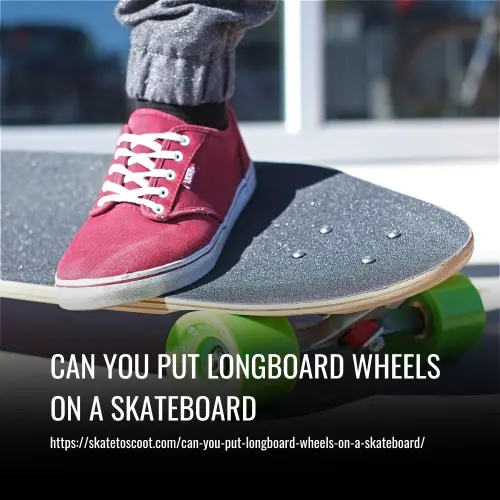
The first hurdle is mechanical. A skateboard truck axle is usually 8mm in diameter. So is a longboard truck axle. This standardization means the physical hole in the center of a longboard wheel will slide onto your skateboard truck’s axle. On that basic level, they are interchangeable.
The catch lives in the details the word “usually” hides. The MBS All-Terrain Longboard Wheels, for example, specify they require 22mm O.D. Bearings. Most standard skateboard bearings are designed for a different core width. If your longboard wheels need a special bearing size, you’ll need to source those bearings separately—the axle fit doesn’t guarantee the bearing seat will match your current spacers and hardware.
Common mistake: Assuming all wheels use the same bearing core. Always check the manufacturer’s spec sheet for the required bearing outer diameter before buying.
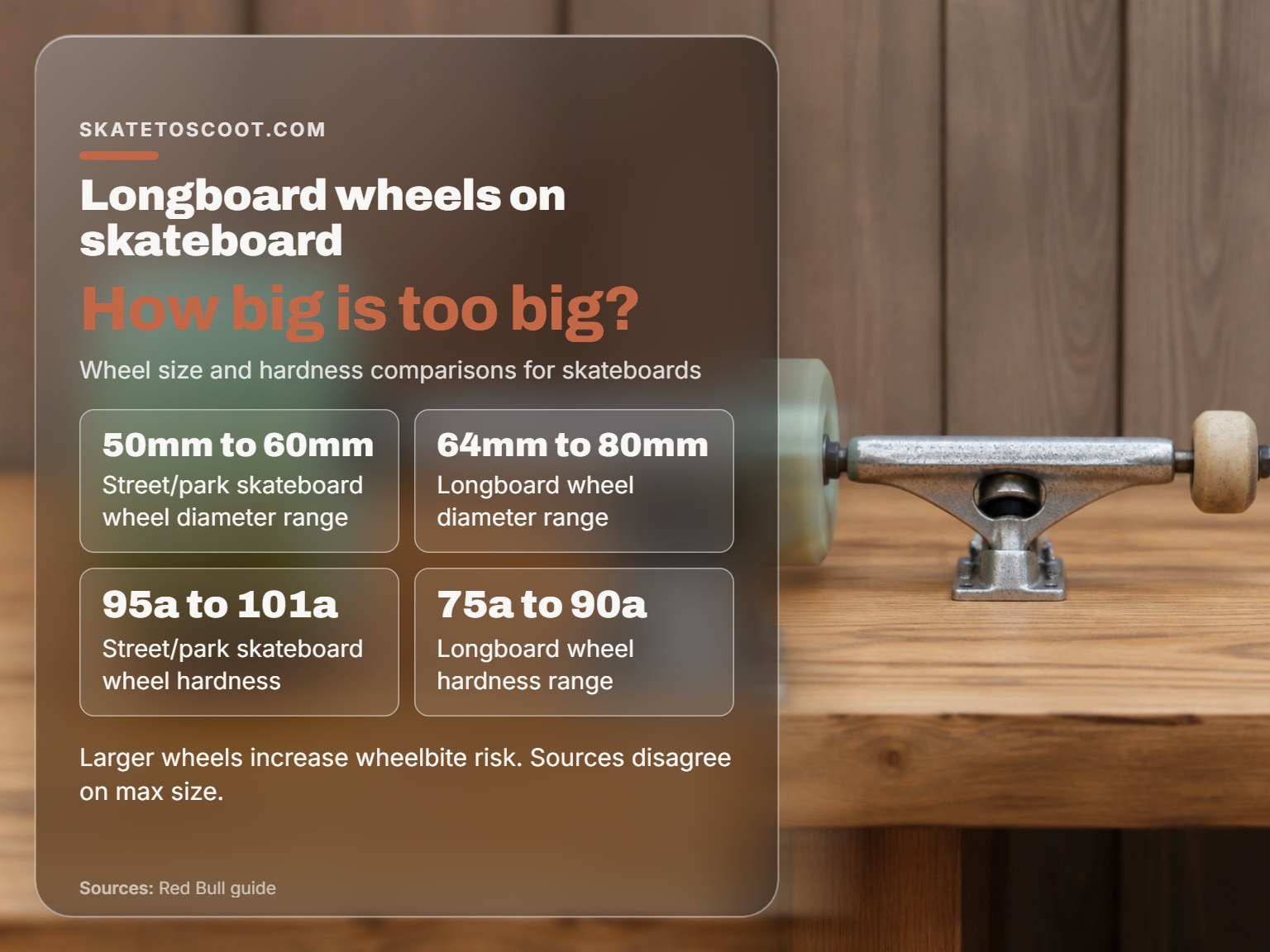
The other half of the fit question is the wheel itself. According to the Red Bull guide, street/park skateboard wheel diameters range between 50mm and 60mm. A longboard wheel starts around 64mm and goes up to 80mm or more. When you slide that taller wheel onto the same axle, the top of the wheel tread moves closer to the underside of your deck, which is the core mechanical reality behind the can you put longboard wheels on a skateboard question. This lost clearance is the root of every problem and solution that follows.
Choosing Your Wheels: Size and Hardness
You don’t just pick a longboard wheel. You pick a diameter and a durometer, and each number commits you to a different riding experience.
Diameter dictates clearance and roll speed. According to Concrete Waves, larger wheels accelerate slower but maintain a higher top speed. Smaller wheels do the opposite. For a skateboard, you need a diameter that balances this speed with your deck’s ability to clear it. The Red Bull guide notes longboard wheels commonly range from 64mm to 80mm, but putting an 80mm wheel on a standard popsicle deck isn’t a modification—it’s a reconstruction project requiring multiple risers.
Durometer (hardness) dictates grip and slide. The A scale measures this: lower numbers are softer. Street wheels are hard, from 95a to 101a. The Red Bull guide states longboard wheel hardness is between 75a and 90a. Softer wheels grip the pavement, soaking up vibrations for a smooth cruise. That same grip makes powerslides trickier and, as Concrete Waves points out, makes any wheelbite that does occur more violent because the soft urethane grabs the deck aggressively.
| Wheel Type | Typical Diameter | Typical Durometer | Best For | Wheelbite Risk on Skateboard |
|---|---|---|---|---|
| Street/Park Skateboard | 50-60mm | 95a-101a | Tricks, smooth surfaces | Low |
| Cruiser Skateboard | 54-60mm | 78a-90a | Hybrid cruising/tricks | Moderate |
| Longboard | 64-80mm | 75a-90a | Commuting, downhill, carving | High |
The community consensus points to a sweet spot. Concrete Waves recommends a wheel size of 55-65mm for a skateboard to preserve pop-ability, while the Red Bull guide suggests street/park wheels range from 50mm to 60mm. One Reddit user reported success with 60mm 78a wheels on an 8.6-inch deck, noting ollies and 180s were fine but flip tricks were difficult, which is a key data point when you compare a can you put longboard wheels on a skateboard setup to a standard one. Another praised 65mm Powell Peralta Snakes or similar 66mm wheels with a 1/4 inch riser for maintaining slideability and manageable ollies.
The Physical Swap: A Step-by-Step Guide
This is where you move from theory to wrench time. The process is simple if you follow the order. Skip a step, and you risk stripped bolts, cracked decks, or a wheel that seizes on the first hard turn.
What You’ll Need:
- Your new longboard wheels
- 1/2″ socket wrench or skate tool
- Riser pads (a common starting size is 1/4″ for wheels 60-65mm)
- Longer mounting bolts (if adding risers)
- Optional: harder bushings (if you ride trucks very loose)
The Process:
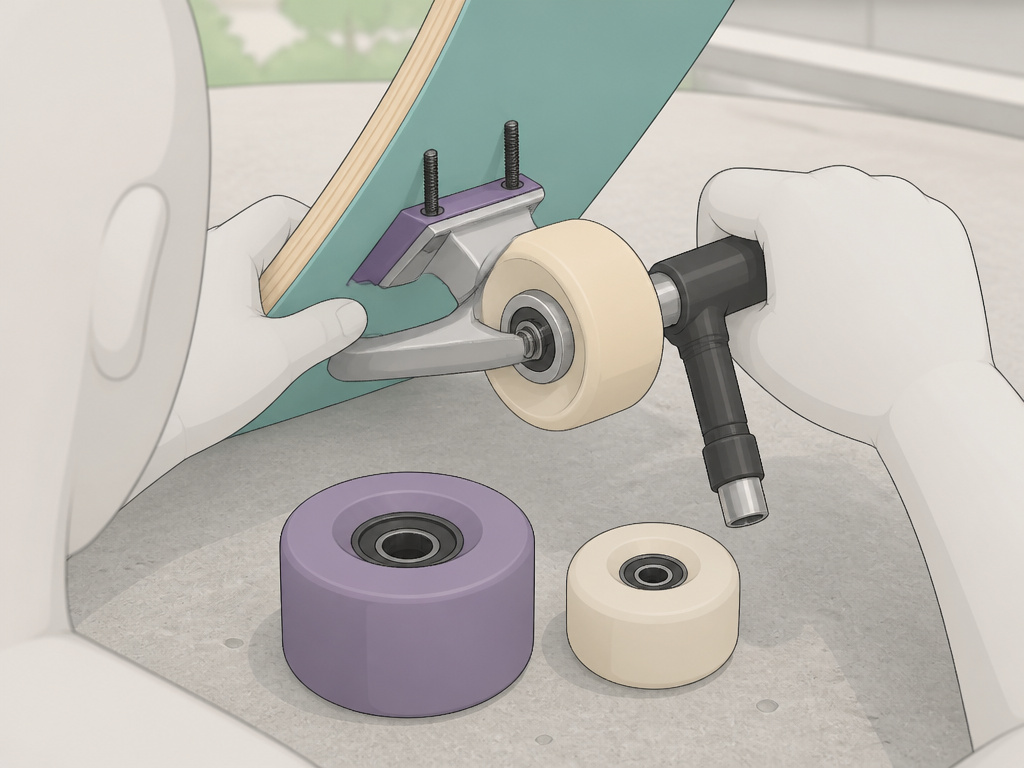
- Remove the old wheels. Use your skate tool or a socket wrench to loosen the axle nut. Slide the wheel off the axle. If the bearings are stuck in the old wheel, you can often push them out by pressing on the inner race with a spare axle or a bearing press tool. Never pry at the bearing shield.
- Add riser pads. Place a riser pad between the baseplate of the truck and the deck. The pad’s hole should align with the deck’s mounting holes.
- Install longer hardware. If you added risers, your original bolts are now too short. Thread the new, longer bolts through the deck from the top, down through the riser pad, and into the truck baseplate. Hand-tighten until the truck is snug against the riser.
- Mount the new wheels. Slide your new longboard wheel onto the axle. Add a spacer if your wheel core is wider than your axle (this prevents the wheel from pinching the bearing). Thread on the axle nut.
- Set the axle nut tension. This is the feel step. Tighten the axle nut until you can just barely feel a side-to-side wiggle in the wheel. Then back it off a quarter-turn. The wheel should spin freely for several seconds when flicked firmly. Over-tightening pinches the bearings, creating friction and heat that will destroy them. Under-tightening lets the wheel wobble, which kills speed and feels unstable.
- Repeat for all four wheels.
- Test for wheelbite. Before riding, lean your weight onto the deck at a standstill, compressing the trucks. Tilt the deck sharply to the left and right. Listen and look. If the wheel touches the deck, you need thicker risers, harder bushings, or to tighten your kingpin nut.
A proper axle nut setting lets the wheel spin freely with just a hint of lateral play. The sound you want is a quiet, sustained whirr, not a gritty, quick-stop grind.
Wheelbite: Your New Constant Concern
Wheelbite is a hard stop, not merely a nuisance. When a turning wheel contacts the deck, the friction can lock the wheel instantly, throwing you forward. With softer longboard wheels, the effect is worse because the urethane grips the wood.
The fixes are mechanical and layered:
- Riser Pads: The direct solution. They increase the distance between the wheel and deck. Start with a riser pad thickness appropriate for your wheel size.
- Harder Bushings: If you love loose trucks, a harder durometer bushing reduces how far the truck can lean before the wheel hits.
- Tighten Your Kingpin: The simplest change. A tighter truck reduces lean angle, sacrificing turn radius for clearance.
- Sand Wheel Wells: A permanent modification. Using sandpaper or a router, you can carve shallow arcs into the deck’s underside where the wheels contact, creating clearance. This weakens the deck, so it’s a last resort.
The Reddit reports show the variability. A Reddit user reports getting wheelbite with 58mm wheels when riding street. A Reddit user reports running 60mm wheels without risers and no wheelbite, while MBS states its All-Terrain Wheels require a riser kit for compatibility. The difference? Truck tightness, bushing hardness, and deck shape. Your setup is a system. Changing one part (the wheel) forces you to adjust the others.
Trucks: Should You Swap Them Too?
You can mount longboard trucks on a skateboard deck. The baseplate holes match. But you almost certainly shouldn’t.
Longboard trucks, known as Reverse Kingpin (RKP) trucks, are designed differently. They sit higher off the ground to accommodate those larger wheels. That extra height makes ollies and flip tricks more difficult because you have to lift the deck further. More critically, as Concrete Waves notes, the different baseplate angle of an RKP truck can feel awkward and overly turny on a short skateboard wheelbase.
The better path is to use your existing Traditional Kingpin (TKP) skateboard trucks. They keep the ride height lower and the turning geometry familiar. Your skateboard conversion from trick machine to cruiser happens at the wheel, not the truck. This approach keeps the door open to switch back to street wheels later.
The Ride Experience: What Actually Changes
Swapping wheels changes how the board communicates. The first push is the biggest tell. A soft 65mm wheel rolls over sidewalk cracks and pebbles with a muted thump-thump. A hard 52mm wheel would chatter and stick. The ride is quieter, smoother, and requires less effort to maintain speed.
The trade-off comes when you try to pivot. The board feels heavier underfoot because the wheels have more mass spinning at the ends of the axles. This rotational inertia makes the deck respond more sluggishly to flicks and pops. That Reddit user with the 60mm 78a wheels said flip tricks were difficult—this is the physical reason. The board doesn’t snap around as quickly.
Powerslides, a standard method for speed control, become a different skill. Softer wheels want to grip. Initiating a slide requires more commitment and speed. For a dedicated cruiser, this isn’t a problem. For a skater used to kicking out a quick 50-50 slide on demand, it’s a noticeable loss of control.
Where this goes sideways: Expecting your new cruiser setup to handle exactly like your street setup. The heavier, grippier wheels reward a more committed, fluid riding style. Trying to force quick, technical tricks will feel like fighting the board.
Specific Wheel Recommendations
Generic advice says “get a soft cruiser wheel.” Useful advice names. Here are specific models that bridge the gap, grounded in community feedback and manufacturer specs.
The Powell Peralta Snakes (66mm, 75a) are the standard for a true hybrid that still lets you practice flip tricks. Reddit users specifically call them out for maintaining slideability while being manageable for ollies on a popsicle deck with a 1/4 inch riser. They are a known quantity.
For maximum comfort and speed over rough ground, look at wheels like the Seismic Tantrum (72mm, 78a). One user paired these with wedged riser pads for directional steering and reported no wheelbite. This is a bigger commitment, turning your board into a dedicated pusher.
For a subtle upgrade that doesn’t require risers, target the cruiser skateboard category. Wheels like the OJ Super Juice Minis (55mm, 78a) or Ricta Clouds (56mm, 78a) are designed to fit a standard skateboard. They offer a smoother ride than 101a park wheels but keep the diameter low enough to avoid major geometry changes.
If you’re looking at a full wheel replacement process, these are the models that have proven themselves in the real world. They represent the spectrum from slight modification to full transformation.
Frequently Asked Questions
Will using longboard wheels damage my skateboard deck or trucks?
No, the wheels themselves will not cause damage. The risk comes from improper setup leading to wheelbite, where the wheels contact and grind against the deck during turns. This can wear a groove into your deck. Using the correct size riser pads to increase clearance prevents this physical contact and protects your board.
Can I use the same bearings from my skateboard wheels for the longboard wheels?
Often, yes, as many wheels use the standard 8mm bore. However, you must verify the bearing seat width. Some specialized longboard wheels require wider, 22mm outer diameter bearings. If your new wheels have a non-standard bearing seat, your existing bearings will not fit securely.
How do longboard wheels affect my speed and pushing effort?
Larger, softer longboard wheels will significantly increase your speed and reduce pushing effort on rough surfaces. The increased diameter covers more ground per revolution, while the softer urethane absorbs vibrations and maintains better contact with asphalt, making cruising and commuting far less fatiguing.
Is this modification reversible, or will I need to buy new trucks later?
The swap is completely reversible. You can reinstall your original skateboard wheels at any time. The only potential permanent change would be if you drilled new mounting holes for a different truck configuration, which is not required for a simple wheel and riser pad upgrade.
Before You Go
The math is simple. Adding 10mm of wheel height removes 10mm of clearance. Your job is to add that clearance back with riser pads and bushing adjustments, then accept the performance trade-offs that come with a heavier, grippier wheel.
Start with a modest change. Try a set of cruiser wheels with a modest riser. See how the board feels. You can always go bigger or softer later, but this middle ground will show you the direction of the trade-off without overwhelming your setup or your trick muscle memory. The goal is to build a board that’s perfect for the three-block push to your friend’s house, one you can still kick up and carry when the sidewalk ends. That board exists, and the parts to build it are on the shelf.
