CCM Skates Review: Jetspeed, Tacks, RibCor Compared
This post contains affiliate links. As an Amazon Associate, we earn from qualifying purchases.
CCM skates break into three distinct lines: the lightweight, speed-focused Jetspeed; the balanced, power-driven Tacks; and the agile, quick-release RibCor. The warranty is a 90-day standard for most gear, but blades can have longer coverage, and custom skates are excluded. Sizing down 1.5 to 2 sizes from your street shoe is the rule, but Jetspeed runs narrow while Tacks suits wider feet.
That 90-day window is the manufacturer’s deadline. It covers defects, not damage from play, and it starts ticking the moment you buy. Miss it and you own every crack, popped stitch, or glue failure. The distinction between a warranty claim and normal wear is the practical line between a free repair and a $400 bill, which is why a thorough CCM skates review should always check the warranty details.
What follows: a breakdown of the three CCM lines and who each is for, the exact warranty terms you must know before buying, a sizing guide that accounts for CCM’s specific fit quirks, and the long-term durability issues owners actually report.
Key Takeaways
- CCM’s 90-day standard warranty covers most skates and gear against manufacturing defects, but excludes team sales and custom skate orders.
- Size down 1.5 to 2 full sizes from your street shoe; the Jetspeed line is notably narrow, while the Tacks line is built for a medium-to-wide volume fit.
- For pure speed and a close-to-the-ice feel, the Jetspeed line (stiffness 190-195) is the pick; for power and stability, choose Tacks; for agility and quick releases, look at RibCor.
- Sharpen skate blades every 15-20 hours of ice time to maintain performance and edge integrity.
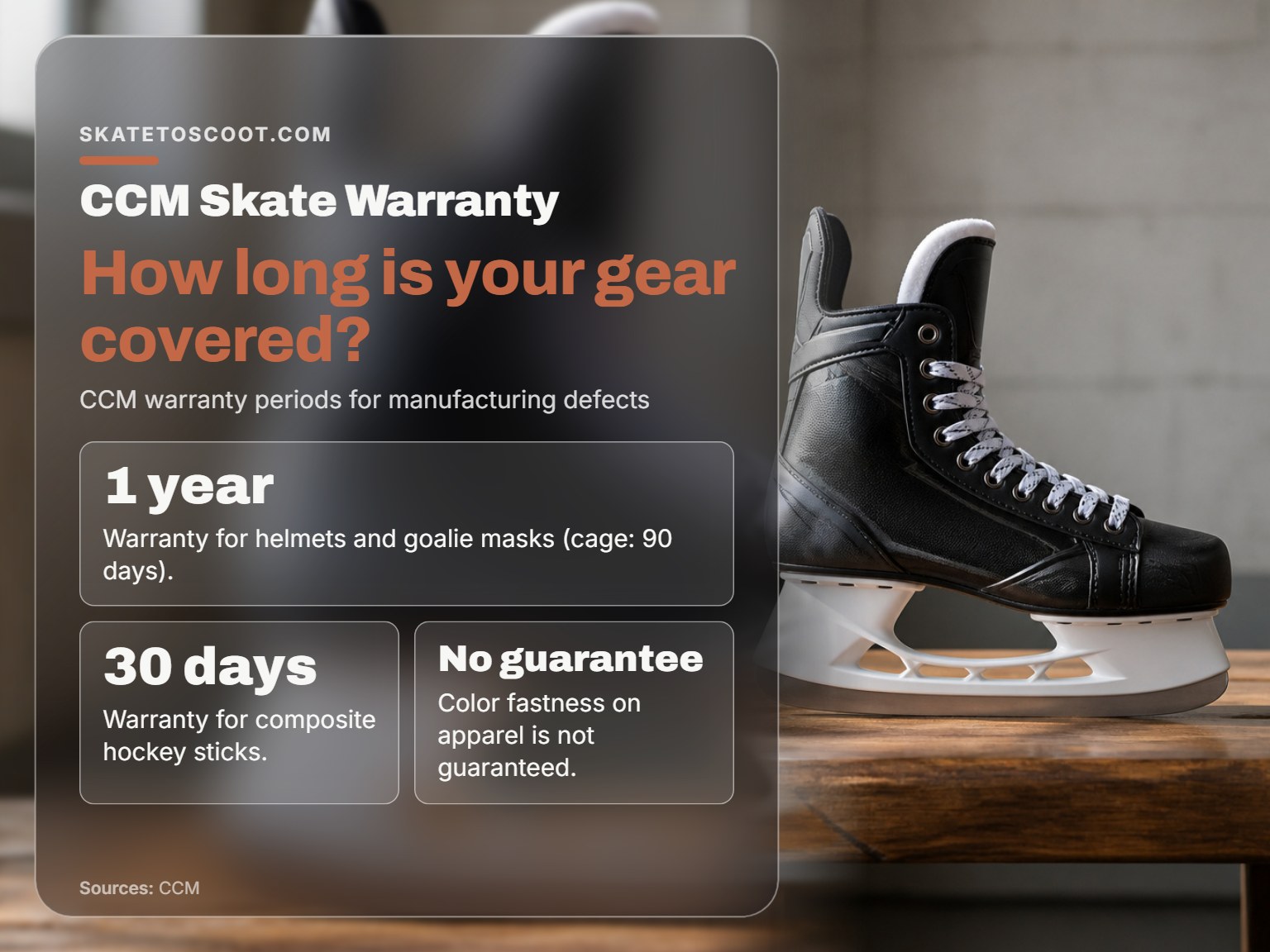
- The official CCM return policy allows free returns within 30 days if the product is unused and in its original packaging.
The CCM Skate Lineup: Jetspeed, Tacks, RibCor
You don’t pick a CCM skate. You match your skating style to one of three engineered responses. It’s the difference between a sports car, an SUV, and a rally car, each is fast, but they put power down differently.
The Jetspeed line is your sports car. It’s built for acceleration and top-end speed. The one-piece boot construction, like on the Jetspeed FT6 Pro, sits closer to the holder for improved energy transfer. You feel every push directly. The stiffness rating here is high, 190 for the women-specific FTW model, 195 for the standard FT8. That stiffness translates to immediate response but demands strong ankle strength and a proper break-in period. If you’re a forward who relies on explosive first steps and wants to feel glued to the ice, this is your line; see our picks for the best hockey skates for other top options.
The part nobody mentions: That one-piece boot is unforgiving if your foot shape doesn’t match its last. The Jetspeeds run slightly narrow. If you have even moderately wide feet, you’ll feel pressure on the sides before the first period is over.
The Tacks line is the power SUV. It’s designed for stability, heavy loading, and delivering force through turns. It’s the skate for defensemen and power forwards who drive through contact and need a stable platform. The Tacks 9060 Youth model is the gateway, built for wider feet according to a review.
It’s often the choice for agile playmakers and danglers.
| CCM Line | Best For | Key Characteristic | Fit Profile |
|---|---|---|---|
| Jetspeed | Speed, explosive acceleration | High stiffness (190-195), one-piece boot | Narrow, low volume |
| Tacks | Power, stability, heavy loading | Balanced stiffness, higher in-step volume | Medium to Wide |
| RibCor | Agility, quick turns, playmaking | More flexible boot, quick release | Varies by model |
Decoding Stiffness: Why a Number Changes Everything
Stiffness is a mechanical rating that dictates how much of your leg’s energy actually reaches the ice. A higher number means less boot flex, more direct transfer, and a faster, more responsive skate. It also means a longer, more demanding break-in period and zero forgiveness for a weak stance.
CCM publishes these ratings. The Jetspeed FTW skate has a stiffness rating of 190. The Jetspeed FT8 is rated at 195. That five-point gap is tangible on the ice, the FT8 will feel noticeably more rigid under the same load. This matters because a skate that’s too stiff for your strength won’t let you flex your ankle properly for a full stride. You’ll fight the boot instead of using it. Conversely, a skate that’s too soft for a powerful skater will flex prematurely, wasting energy and robbing you of snap.
Here’s the simple rule: if you’re a lighter player or still building leg strength, a moderate stiffness (found in mid-tier Tacks or RibCor models) will be more manageable and let you develop proper technique; compare models in our best ice skates guide. If you’re an advanced player with strong mechanics, the high stiffness of a top-tier Jetspeed or Tacks AS3 Pro is what turns muscle into motion. Don’t buy a stiffness rating you can’t use.
Sizing and Fit: The 1.5-Size Rule and Where It Breaks
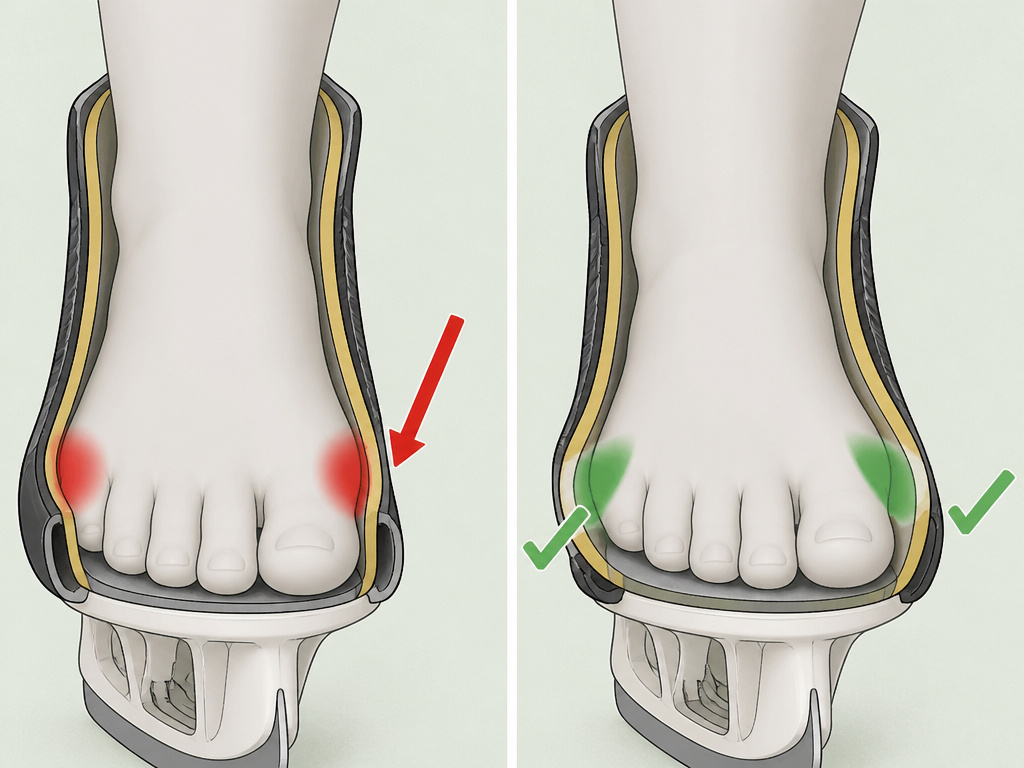
Sizing for ice skates is usually at least 1.5 sizes down from your street shoe. This is the baseline. Your heel must be locked in place with zero lift when you bend your knees. A finger’s width of space at the toe is the maximum.
But CCM’s own lines break this rule in different ways. A community CCM skates review of the Jetspeed FT6 notes, “The Jetspeeds run slightly narrow, so if you have wide feet, you might want to look at another model from CCM.” That’s your first warning. The Jetspeed last is built for a low-volume, tapered foot. If your forefoot is broad, you’ll feel a vice-like squeeze no matter the length.
Conversely, the Tacks line, especially the 9060 series, is explicitly built for wider feet with a medium-volume fit. It’s the safer choice if you’re unsure or have historically needed a wider shoe.
Where this goes sideways: Buying a skate that’s too big because it “feels comfortable” in the shop. Your foot will swim in it after the liner packs out, leading to heel lift, blisters, and a complete loss of energy transfer. That wobbly feeling destroys confidence faster than any missed shot.
Three things to do in the shop:
- Wear the socks you’ll skate in.
- Lace up firmly, stand up, and then bend your knees deeply into an athletic stance.
- Your heel should not move. At all. If it slides, the skate is too big.
CCM’s 90-Day Warranty: What’s Covered and What’s Not
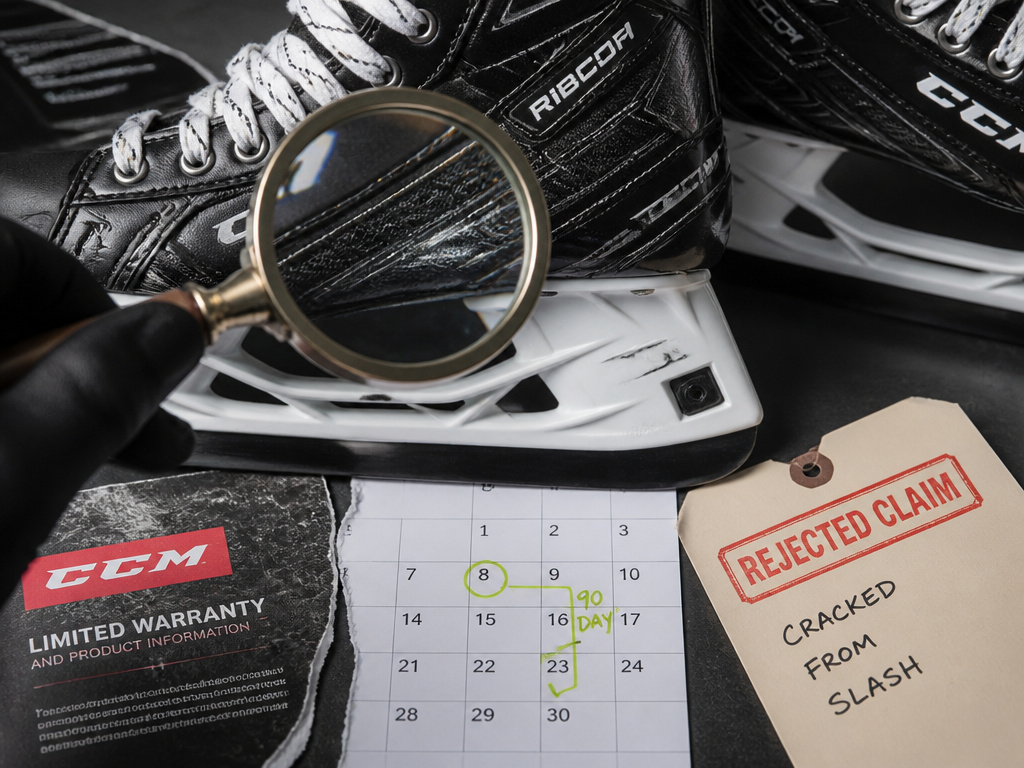
The warranty is a 90-day clock that starts on your date of purchase (note that policies differ for street hockey skates). According to CCM’s official policy, this covers skates against manufacturing defects and workmanship under normal use. It does not cover damage from accidents, abuse, negligence, or “abnormal use.” A broken stitch or a boot separating from the outsole? That’s a claim. A blade nicked from a gate or a holder cracked from a slash? That’s on you.
Skates are warranted against manufacturing defects and workmanship under normal use and maintenance for a period of ninety (90) days from the date of sale to the consumer when used as intended under normal use and alterations.
There are critical exclusions you must know:
- Team Sales: Professional, NHL, CHL, USHL, AHL, university, college, and all other team sales are excluded. If your team orders skates, they have no manufacturer warranty.
- Custom Skates: CCM’s 90-day warranty page explicitly states, “Custom skate purchases are not eligible under this program.”
- Blades Have Different Rules: While the skate boot gets 90 days, CCM warrants the blade on a Tacks 9060 Youth skate for one year against defects. This is a noted discrepancy, the general warranty page says 90 days for skates, but a specific model review cites a one-year blade warranty. Always check the documentation for your specific model.
The process requires your original proof of purchase and, for stick claims, a picture of the serial number. CCM reserves the right to repair or replace the product at its discretion.
Boot Construction and Tech: One-Piece vs. Metaframe
The boot is where CCM’s engineering focus lies. You’ll encounter two main constructions: the one-piece boot and the Metaframe.
The benefit is a seamless connection that eliminates energy-absorbing gaps. Your push travels directly from calf to ice. The downside is fit inflexibility; it molds to your foot but won’t change its fundamental shape.
It’s often lighter and can offer a more forgiving, anatomical fit. It’s a great choice for developing players whose feet are still growing or for those who want a balance of performance and comfort.
Blade Holders and Steel: Speedblade and Step
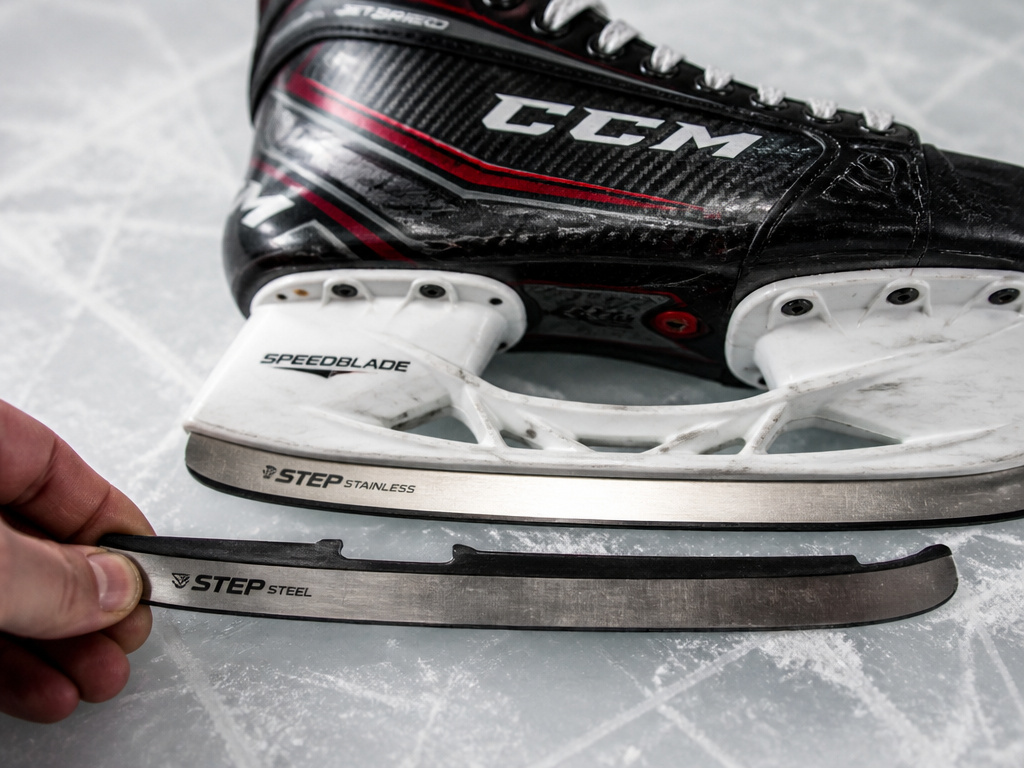
The connection between your boot and the ice is the holder and the steel runner. CCM primarily uses its Speedblade holders. Taller holders raise your center of gravity slightly, which can help with energy transfer but may feel unstable to some skaters until they adapt.
The steel runner is your point of contact. CCM uses stainless steel runners, like the one on the Tacks 9060 Youth which has a 16mm height and a 10 ft. Radius. A smaller radius puts less steel on the ice, offering quicker turns. A larger radius provides more stability and glide speed. The 10 ft. Radius is a middle-ground, versatile choice.
It is recommended to sharpen skate blades after 15-20 hours of use.
CCM now owns Step Steel, a brand renowned for its high-quality, durable steel. However, Step Steel options are typically only available on custom-order skates or as an aftermarket upgrade. For most retail models, you’ll get CCM’s branded stainless steel.
Long-Term Durability and Common Wear Points
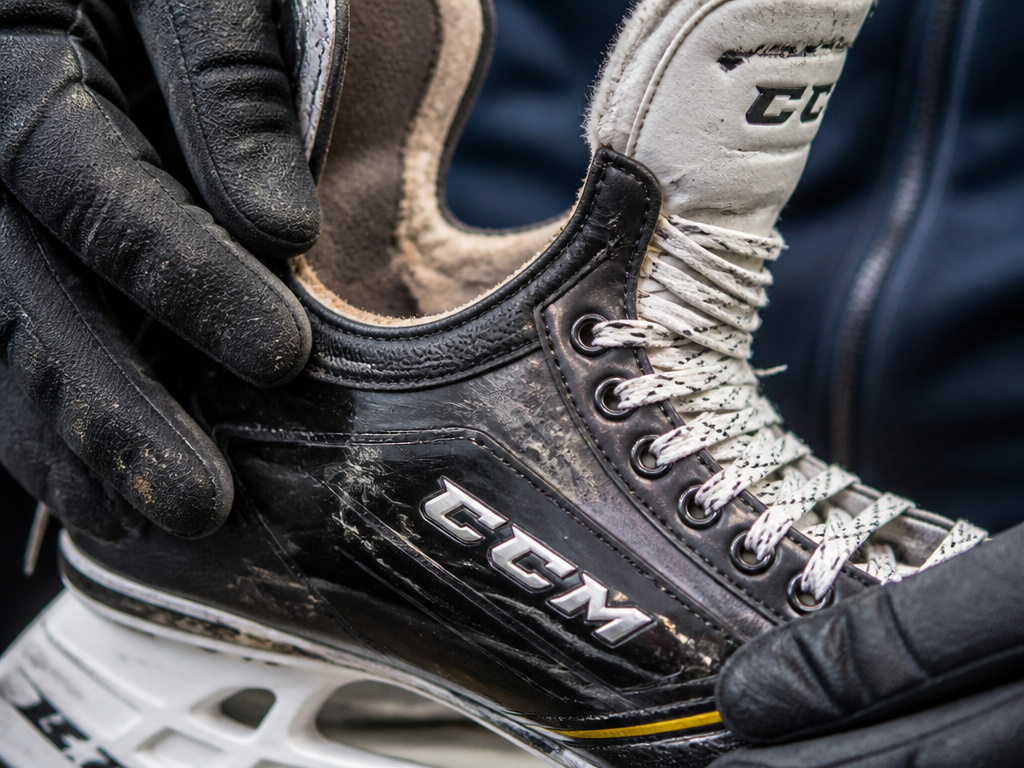
Beyond the 90-day warranty, what happens? The most common long-term wear points are predictable if you know where to look.
The liner is the first to go. Areas around the ankle bones and the Achilles tendon guard see constant friction. Without it, you can expect the liner to thin and pack out within a season or two of regular use.
On cheaper models, repeated hard stops and pushes can cause the rivets to loosen or the composite to fatigue.
Finally, the tongue and eyelets take a beating from tight lacing. The longevity of a skate often comes down to the quality of materials in these specific, high-stress areas, not just the overall boot composite.
How CCM Compares to Bauer
The eternal question. Bauer is CCM’s direct competitor, and the choice often comes down to fit philosophy and feel.
CCM’s recent innovations, like the women-specific FTW line and its ownership of Step Steel, show a strong push into specialized markets and premium components, while competitors like the Bauer Vapor X3 offer different performance profiles. The best advice from any CCM skates review remains the same: try on both. Your foot will decide.
How do Jetspeed skates fit and perform?
They often run slightly narrow, so players with wider feet might find them too constricting and may need to consider other CCM models.
How long does it take to break in CCM skates?
Break-in time varies by model and the stiffness of the boot. Performance-level skates with higher stiffness ratings will generally require more time to mold to your foot. The key is a proper fit from the start; skates that are too tight or too loose will never become comfortable. Wear them around the house for short periods to start the process. If you experience persistent pressure points after several ice sessions, the fit may be incorrect and you should consult with a professional.
Are CCM skates good value for the price?
Value depends on matching the skate’s features to your playing level. Higher-priced models offer advanced materials and construction for better performance and longevity, while entry-level models provide core functionality. CCM offers a 90 Day Satisfaction Guarantee on senior skate models over $199 and all intermediate and junior skate models over $99. Remember that custom skate purchases are not eligible for the standard 90-day warranty against manufacturing defects, so factor that into your decision.
Frequently Asked Questions
Are CCM skates better than Bauer?
Neither is universally better. CCM skates, particularly the Jetspeed and Tacks lines, are renowned for their energy transfer and specialized fits (like the women-specific FTW). Bauer excels with its structured fit system and often has a broader retail presence. The “better” skate is the one that fits your foot shape and matches your skating style.
Is CCM a good skate brand?
Yes, CCM is a top-tier brand alongside Bauer. They equip professionals and are consistently at the forefront of skate technology, from one-piece boot construction to advanced liner systems. CCM’s 90 Day Satisfaction Guarantee on qualifying models also shows confidence in their product.
Which CCM skate is the best?
There is no single “best.” The Jetspeed FT6 Pro or FTW is best for speed-focused skaters who want maximal energy transfer. The Tacks AS3 Pro or XR is best for powerful skaters who prioritize stability and a secure fit. The Tacks 9060 is the best beginner and intermediate model, offering great value and a forgiving fit.
How should CCM skates fit?
CCM skates should fit snugly with no heel lift when your knees are bent. Expect to size down 1.5 to 2 sizes from your street shoe. The Jetspeed line fits narrow, the Tacks line fits medium to wide, and the RibCor varies. Your toes should gently brush the cap without curling.
Can you bake CCM skates at home?
Many mid-to-high-end CCM skates are heat-moldable. You can bake them at home following CCM’s precise instructions, but it’s generally safer to have it done by a professional at a hockey shop. Incorrect temperature or time can damage the boot’s integrity and void your warranty.
Before You Go
Ignore the marketing hype about which pro wears what. Your skate choice is a mechanical partnership. A powerful defenseman in lightweight Jetspeeds is wasting his strength; a finesse playmaker in stiff, unforgiving Tacks is fighting his own gear.
If you take one thing, let it be this: the 90-day warranty is your inspection period. Skate hard in them immediately. Listen for creaks, feel for pressure points that don’t resolve, and check for glue lines separating. That’s when a defect shows up. After 90 days, you own every quirk. And if you’re between sizes, always size down. A skate that’s slightly tight will mold to you. A skate that’s slightly big will only get bigger.
