CCS Skateboard Review: Key Takeaways and Trade-Offs
This post contains affiliate links. As an Amazon Associate, we earn from qualifying purchases.
The CCS Logo Complete skateboard delivers a professional-grade 7-ply Canadian maple deck paired with budget-level trucks, wheels, and bearings, making it a top-value starter board for beginners on smooth surfaces, but its components wear quickly under aggressive street skating or for riders over 200 lbs.
That’s the short version. The longer story is about where the corners were cut to hit that price point, and what happens when you push past the beginner phase, a key point in any thorough ccs skateboard review.
This ccs skateboard review is built on owner reports, documented complaints, and the specific timelines where parts fail, like trucks lasting less than two months of curb grinding or paint scratching off within two hours of pushing. What follows is a breakdown of each component, who should buy it, and the exact upgrade path to follow once you’ve outgrown the stock setup.
Key Takeaways
- The 7-ply Canadian maple deck is the highlight, using the same sturdy material as many pro brands.
- Stock components are entry-grade: The 139mm trucks have very soft bushings, the 52mm 100A wheels are prone to flat spots, and the ABEC 7 bearings are slow. Plan to upgrade wheels and bearings first.
- Not for heavy or aggressive skaters: Reviews explicitly state the board is not recommended for riders over 200 lbs or for experienced skaters doing daily grinds; the trucks are the weak point.
- Customer service is hit-or-miss: While some praise it, the Better Business Bureau complaints profile shows cases of unresponsive support for defective products, with a strict 72-hour window to report issues.
- Upgrade in this order: Start with quality wheels (like Powell Peralta Dragons for rough ground), then Bones Reds bearings, then replace the trucks (Independent, Thunder, or Ace) once you start grinding regularly.
The Parts Breakdown: Deck, Trucks, Wheels, and Bearings
A complete skateboard is only as strong as its weakest part. With the CCS Logo Complete, the deck is standout, but the other three components tell a different story.
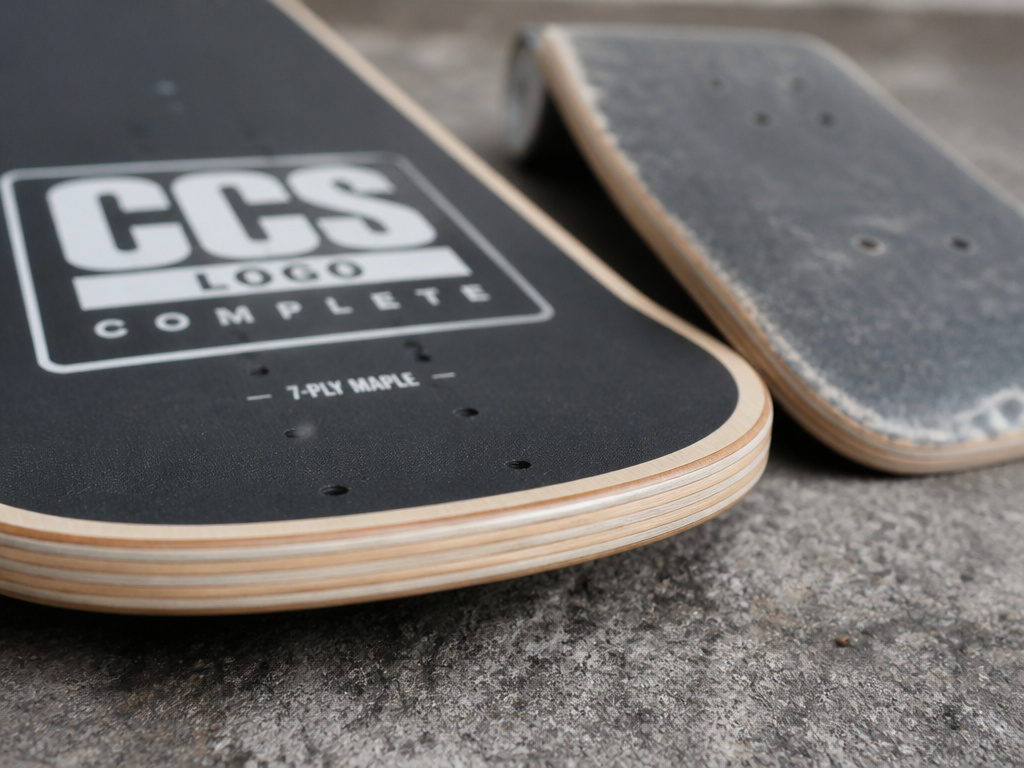
The deck is 7-ply Canadian maple, pressed into a classic shape. For the 8.0″ width model, it’s 32 inches long with a 14.25-inch wheelbase. This isn’t a toy-grade plank; it’s the same material used by pro brands. The concave is described as mellow, which most beginners prefer. One Reddit user skating a CCS blank for a month while being a “heavy” skater reported it held up well until a high-impact gap — a testament to the deck’s durability. The lack of a graphic keeps the cost down, which is a fair trade for a blank canvas.
The deck construction is 7-Ply Canadian Maple, with a length of 32 inches and a wheelbase of 14.25 inches for the 8.0″ width model. Trucks are 139mm, paired with 52mm 100A durometer wheels and ABEC 7 rated bearings.
The 139mm CCS trucks are a component with divided opinions in every ccs skateboard review. One review calls them “strong enough to bear full weight and endure friction,” while another states they “won’t last longer than 2 months if grinding curbs often.” This describes their limits. They’re strong for cruising and basic tricks, but the metal and bushings aren’t meant for repeated, high-impact grinds. The stock bushings are notably soft, which is why the board is not recommended for people over 200 lbs. A 2025 Reddit user put it bluntly: “the stock ones are crap!” Upgrading to Bones or Indy bushings is a cheap and immediate improvement.
The 52mm, 100A durometer wheels are a similar story of context. They’re small and hard, which makes them “perfect for park skating” and slick surfaces, as one review notes. However, another source says they are “too small and not soft enough for street skating.” They lack the diameter and give to smooth over rough asphalt. Owners also report they are “prone to flat spots from powerslides.” For a beginner just rolling around a tennis court or smooth park, they’re fine. For anything else, they’re the first thing you’ll want to swap out. When looking at other best skateboards, you’ll see wheel quality and size are critical differentiators.
The ABEC 7 bearings are a marketing point that doesn’t translate to performance. ABEC ratings measure tolerances for high-RPM machinery, not skateboard speed or durability. One review found them “smooth and high-quality,” while a more detailed assessment calls them “questionable,” noting they “require too much effort to get up to speed.” For a beginner, slower bearings can be a safety feature. But the moment you want to maintain momentum with fewer pushes, you’ll feel the drag. This is why many complete skateboards in a slightly higher tier include better bearings.
Performance: Street, Park, and Who It’s Really For
So, how does this mix of a pro deck and budget parts actually ride? The answer splits sharply based on your skill level and terrain.
For Beginners & Casual Riders: This is where the board shines. It’s fully assembled, includes a skate tool, and rolls out of the box. The deck has reliable pop for learning ollies and kickflips. The trucks with soft bushings can feel more forgiving for turning when you’re still finding your balance. A review from skateboardershq.com sums it up: “perfect for beginners on a budget.” It’s a legitimate tool to see if you enjoy skating without a major financial commitment. One review states the board is suitable for street and mini-ramp skating on smooth surfaces, while another finds the wheels too small and hard for street skating.
For Street Skating on Rough Ground: Here, the limitations hit fast. The hard, small wheels are not great for longer distances or rough asphalt. Maintaining speed requires constant, strenuous pushing. That “great for slick surfaces” tagline has a flip side: it’s not great for longer distances or rough asphalt. If your local spot is cracked sidewalks or rough roads, you’ll be shopping for new wheels within weeks.
For Aggressive Skaters & Grinders: This is the clear red line. The manufacturer says it’s for “first-timers to seasoned vets,” but some reviews, like one from skateboardershq.com, state the board is not for experienced skateboarders. “This board isn’t for seasoned skateboarders,” states one review bluntly. The trucks are the failure point. If you’re grinding curbs daily, expect the trucks to wear out within two months, according to one review. At that skill level, you should be looking at dedicated street skateboards built with those impacts in mind.
For Heavier Riders (Over 200 lbs): The soft bushings can create a very loose turn, which is why the board is not recommended for people over 200 lbs. While one heavy Reddit skater reported the deck held up, the truck performance for a heavier rider will be subpar. You’ll need to upgrade the bushings immediately, and likely the trucks sooner than a lighter skater.
Common Issues and Long-Term Wear
Beyond “it’s good for beginners,” what do owners actually complain about after the first few weeks? The research points to a few predictable patterns.
| Component | Common Issue | Typical Timeline | Source |
|---|---|---|---|
| Paint/Finish | Scratches and chips easily | “After a combined time of two hours” of basic pushing | Amazon Customer Review (2023) |
| Trucks | Bent hangers, worn axles from grinding | “Won’t last longer than 2 months” if grinding curbs often | skateboardershq.com review |
| Wheels | Develop flat spots from powerslides | As the skater progresses to sliding tricks | skateboardershq.com review |
| Bearings | Slow, require excessive pushing | Noticeable after the first few sessions as speed demands increase | Multiple review comparisons |
| Customer Service | Unresponsive to emails/calls for defects | Reported in BBB complaint (2024) | BBB Complaint Record |
Where this goes sideways: Assuming the trucks can handle progressive street skating. If you start grinding regularly, the metal will fatigue and deform within two months, changing your board’s geometry and feel before a catastrophic failure.
An Amazon review noted paint scratches after two hours of basic pushing. The real mechanical wear is in the trucks and wheels. Owners report the wheels are prone to flat spots from powerslides. It’s a clear sign to upgrade to a branded wheel like Spitfire or Bones when you start attempting powerslides.
Customer service experience varies. CCS policy states that shipping or product problems must be reported within 72 hours of delivery. This tight window means you need to inspect the board immediately.
The Upgrade Path: What to Replace and When
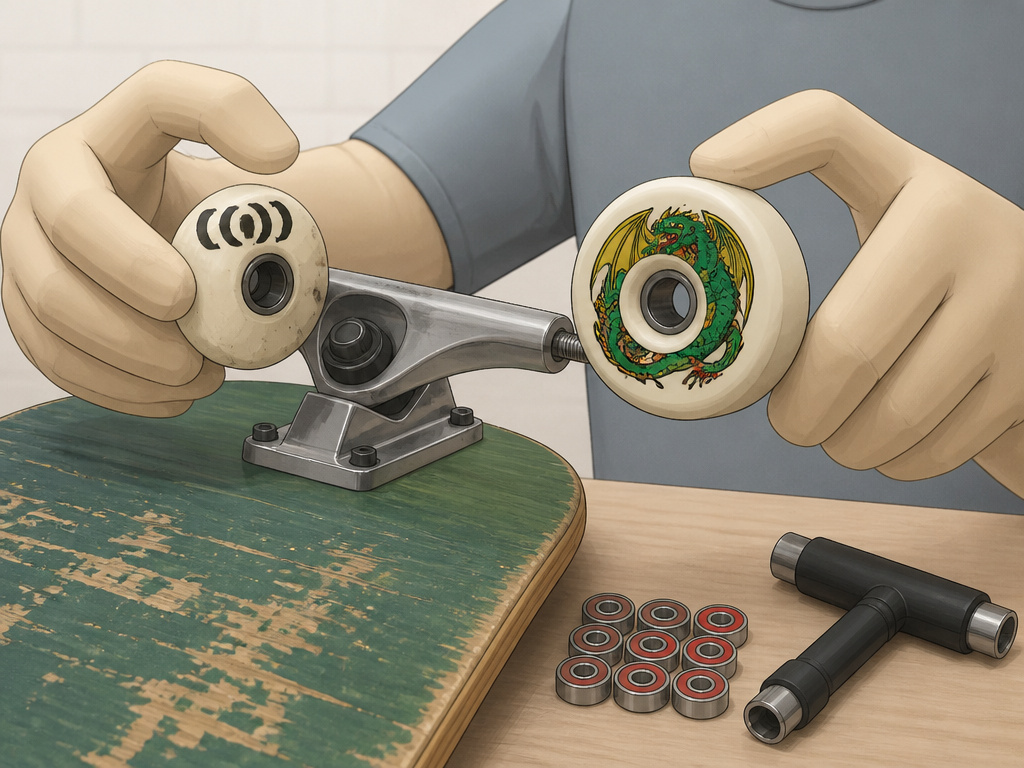
You don’t buy a CCS complete as a forever board. You buy it as a starting point. The smart move is to know which parts to upgrade, and in what order, to build a much better setup without buying a whole new board.
- First Upgrade: Wheels & Bearings. This is the single biggest performance jump for the least money. Swap the 52mm 100A wheels for something like 54mm Powell Peralta Dragons (93A) if you skate rough ground, or Spitfire Formula Four (99du) for park skating. Pair them with Bones Reds bearings. The difference in roll speed, smoothness, and vibration damping is immediate. This upgrade alone can make the board feel like a higher-tier quality skateboard.
- Second Upgrade: Bushings. If the trucks feel too loose or squirrelly, especially if you’re over 150 lbs, don’t replace the whole truck yet. Install Bones Hardcore or Independent hard bushings for a few dollars. Upgrading bushings can improve turning stability and is a common way to adjust truck feel.
- Third Upgrade: Trucks. Once you’re committing to grinds and skating several times a week, invest in proper trucks. Independent, Thunder, or Ace trucks are durable brands often recommended for upgrade. You can then move these trucks to your next skateboard deck.
- Deck Last. The CCS deck is often cited as a durable component. Ride it until it chips, razor tails, or snaps. When it’s time, you can choose any blank or branded deck you like, and you’ll already have quality trucks, wheels, and bearings ready to mount.
This staged approach spreads out the cost and lets you feel the improvement from each new part. It turns a beginner complete into a legit, personalized setup.
Customer Service, Returns, and What You Need to Know
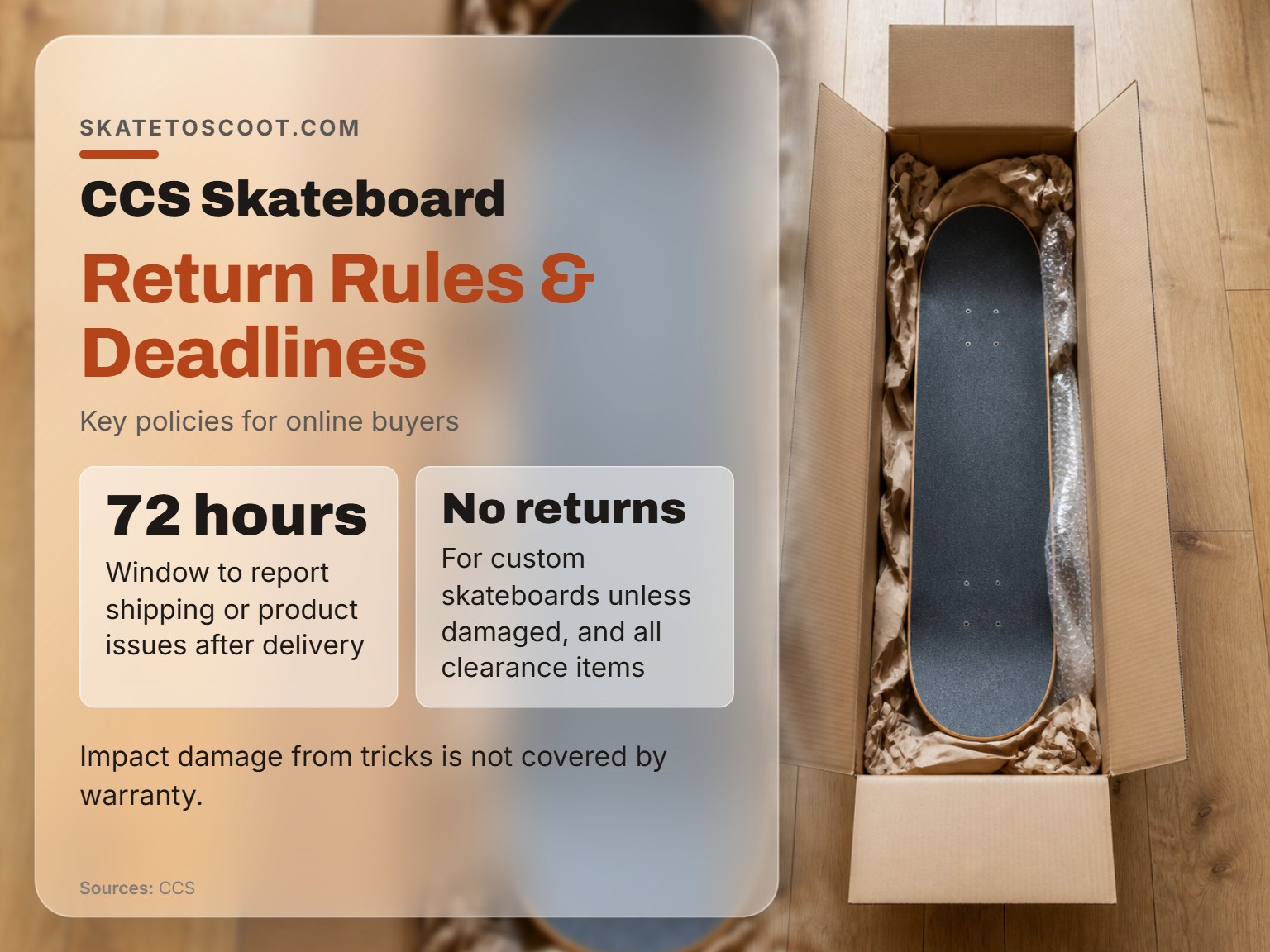
Buying a complete board online has risks. CCS’s official policies are strict, and your experience may depend on whether you get a defective item.
- Returns & Restocking: Returns of complete skateboards incur a $12.99 restocking fee. Custom products, including custom skateboards, cannot be returned unless they arrive damaged.
- Problem Reporting Window: Any shipping or product issues (damage, wrong item, assembly problems) must be reported to CCS within 72 hours of package delivery.
- No Warranty for Tricks: The official safety page clearly states that impact damage from tricks is not covered by warranty. This is standard for the industry but important to remember.
- Final Sale Items: All clearance items (marked in red) are final sale. There are also no returns or cancellations permitted on Nike SB Dunks.
The combination of a restocking fee and a short 72-hour window puts the onus on you. Unbox the board immediately, check for damage, and ensure it’s the correct size and color. Take pictures if anything is wrong and email [email protected] right away with your order number.
CCS vs. Other Completes: Where It Stands
Is the CCS Logo Complete the best budget board? It’s certainly among the top contenders, but “best” depends on your priorities.
It uses a professional-grade 7-ply maple deck, unlike many toy skateboards. Compared to other budget completes from online retailers, it often wins on deck quality.
The CCS board’s advantage is consistency and history. It’s been a top seller for over a decade. You know exactly what you’re getting: a great deck with passable, upgradeable parts. Its weakness is that those parts have very defined limits, clearly outlined by owner experiences. If you’re a total beginner on a tight budget, it’s an excellent choice.
Is CCS a good skateboard brand?
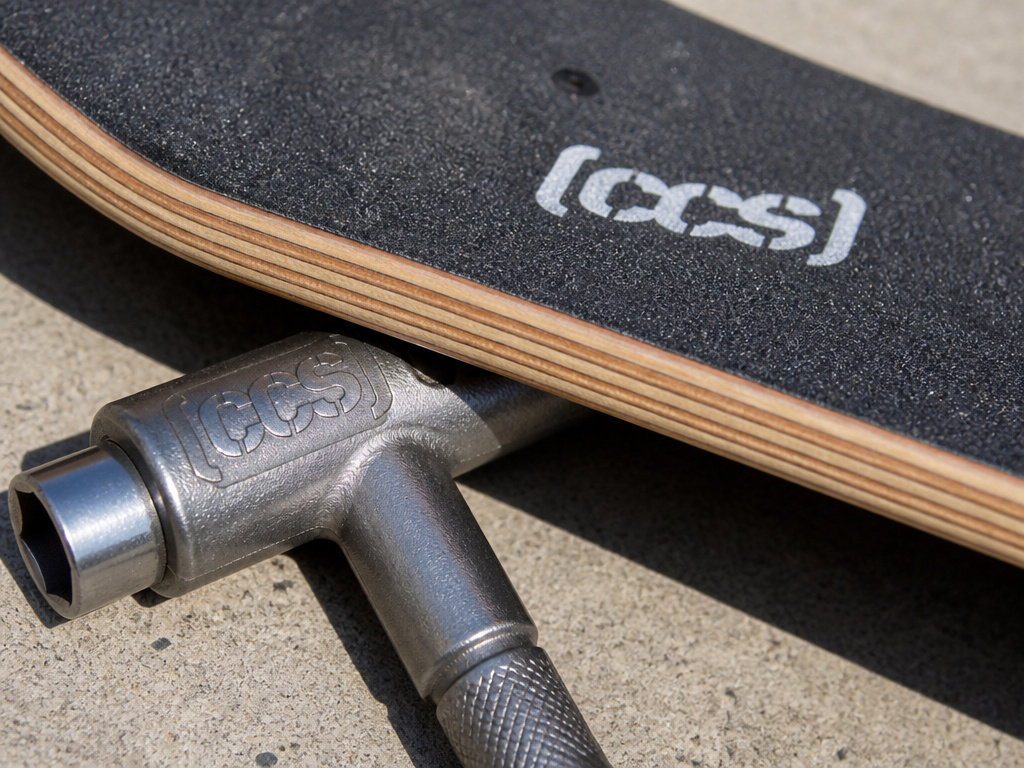
CCS has been a top seller for over a decade, known for providing a solid entry point. Their complete boards are fully assembled and include a skate tool, making them perfect for beginners on a budget. The deck is sturdy 7-ply Canadian maple, and multiple sources praise their excellent customer service. However, the brand’s reputation is split on performance. This positions CCS as a reliable first board, but one you’ll likely outgrow as your skating progresses.
What size CCS board should I get?
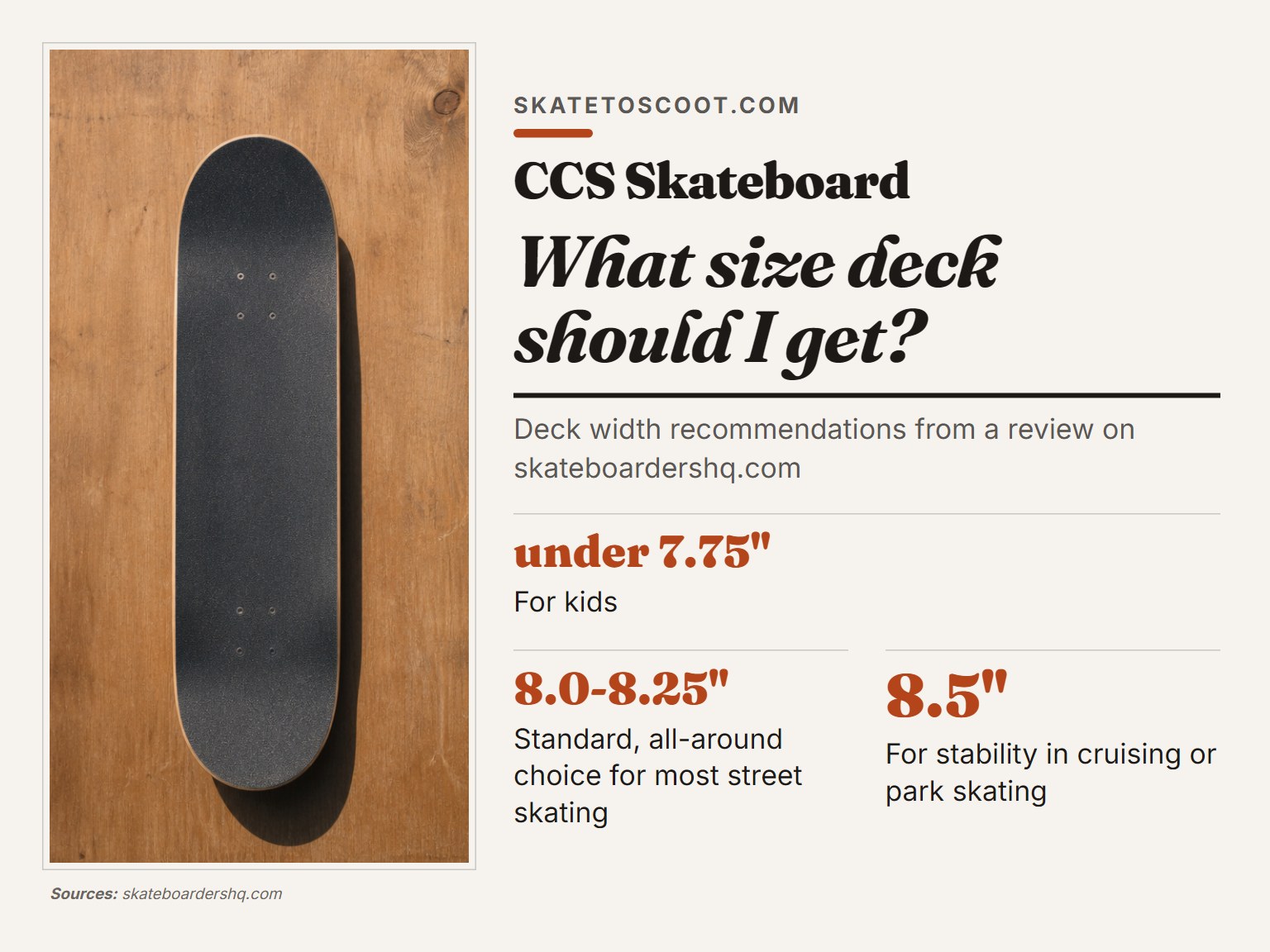
Choosing the right size depends on your feet and style. A common recommendation is to use deck width as your guide. A review from skateboardershq.com suggests a size under 7.75 inches for kids. The 8.0 to 8.25 inch range is considered a standard, all-around choice good for most street skating. If you prioritize stability for cruising or park skating, an 8.5 inch deck is the way to go. Remember, wider decks offer more stability, while narrower ones can be easier to flip for technical tricks. The deck length for the 8.0″ width model is 32 inches.
Can I customize or return a CCS skateboard?
You can customize your setup, but be aware of the return policy. Custom products, including custom skateboards, cannot be returned unless they arrive damaged. Standard complete boards can be returned, but there’s a restocking fee if the grip tape has been applied. If you plan to upgrade parts immediately, a common path is to start with wheels and bearings. A review from skateboardershq.com suggests upgrading bearings as soon as you can afford it, then replacing trucks after a year or sooner if skating often. Since the stock bushings are frequently criticized, swapping them out is a cheap and effective first upgrade.
Frequently Asked Questions
Are CCS skateboards good?
Yes, for the specific person they are designed for: beginners and casual skaters on a budget. The deck is professional quality, but the trucks, wheels, and bearings are basic and will need upgrading if you progress beyond the basics or skate aggressively.
Is the CCS complete good for street skating?
It’s suitable for street skating on very smooth surfaces like skate parks or new concrete. For rough asphalt, cracked sidewalks, or anything other than pristine ground, the stock 52mm 100A wheels are too small and hard. You’ll want to upgrade the wheels immediately for a comfortable street skating experience.
How long do CCS trucks last?
For cruising and basic tricks, they can last a year or more. For regular grinding, one review suggests they won’t last longer than two months. Their durability is the component’s biggest question mark.
Should I upgrade the bearings right away?
Not necessarily. For a complete beginner, the slower ABEC 7 bearings can be a benefit, making the board less intimidating. Once you’re comfortable pushing and want more speed and less effort, upgrading to Bones Reds or similar is a cheap and significant improvement.
Can heavy skaters use a CCS complete?
The deck can handle the weight, as evidenced by a Reddit user’s report. However, the very soft stock bushings will make the trucks feel uncontrollably loose for a heavier rider. The board is not recommended for people over 200 lbs due to very soft bushings.
Does CCS have good customer service?
Experiences are mixed. Some report excellent service, while the BBB has a documented complaint from 2024 citing unresponsive support for a defective deck. Their policies are strict, with a 72-hour window to report problems, so it’s crucial to inspect your board immediately upon delivery.
The Bottom Line
The CCS Logo Complete skateboard is a tool with a specific job. Its job is to get a new skater rolling on a real maple deck for under a hundred dollars. It does that job very well.
The trade-off is in the components wrapped around that excellent deck. They are designed to be adequate until you know what you, as a skater, actually need. The timeline is clear: wheels and bearings first, then bushings, then trucks, then finally the deck itself.
So, who should buy it? A first-time skater, a parent buying for a kid, or someone getting back into skating who wants a no-fuss starting point. Who should look elsewhere? An experienced street skater who grinds daily, a rider over 200 lbs, or anyone skating exclusively on rough ground. For those folks, spending a bit more upfront on a setup with better base components, or building a custom board, is the wiser investment. The CCS is a very good beginning.
