Deathwish Skateboards Review: The 7-Ply Maple Construction
This post contains affiliate links. As an Amazon Associate, we earn from qualifying purchases.
Deathwish skateboards are pro-grade decks built from 7-ply maple, offering a snappy pop and a mellow-to-steep concave designed for street skating. For most intermediate to advanced street skaters, they are a reliable, performance-focused choice.
That answer covers the basics, but the real question is about how a board feels under your feet after three weeks of daily abuse. Does the pop hold? Does the shape work for your tricks? And what happens when something goes wrong with the laminate?
Most reviews stop at the first impression. They’ll tell you the wood is good and the team is legendary. That’s the commodity take. What follows is a look at the specific geometry numbers that change your flip tricks, the weird ply separation one owner reported, and why buying a Deathwish complete skateboard is a bit of a lottery.
Key Takeaways
- Deathwish decks use 7-ply Canadian maple for a stiff, poppy feel, but a documented case of unexplained ply separation suggests occasional quality control variance.
- The DW Mellow Concave feels distinct from Baker’s mellow concave, often translating to steeper kicks that excel at scoop tricks but require an adjustment period.
- Complete skateboard components vary by distributor, some use Independent trucks and Triclops wheels, others use generic “Core” brand trucks, drastically changing the ride.
- For skaters under a US men’s size 5 shoe, a mini skateboard (deck width under 7.38”) is the recommended starting point, not a Deathwish standard deck.
The 7-Ply Maple Construction and DW Mellow Concave
The foundation is 7-ply Canadian maple. Every retailer and the brand’s own site repeat this. It’s the standard for a reason, it provides a predictable blend of stiffness for pop and a slight flex for impact absorption. You know what you’re getting.
A 50–60 word, third-person, pronoun-free technical summary of Deathwish deck construction and concave profile. This construction yields a consistent, snappy pop favored by street skaters who rely on quick ollies and flip tricks. The DW Mellow Concave provides a locked-in feel without being overly aggressive, suiting a wide range of foot placements and styles.
Where things get interesting is the “DW Mellow Concave” label. One long-term reviewer noted their Deathwish concave felt distinctly different from the mellow concave on a Baker board, despite the sister-company relationship. It wasn’t worse, just different, more defined, with steeper kicks.
That steepness is a double-edged sword. A pointy, steep tail is a dream for 360 flips and frontside flips; there’s less board to scoop through. But if you’re coming from a flatter deck, your first session will feel awkward. Nollie nose slides feel like you’re missing real estate. Your foot placement needs to recalibrate. After a week, your brain maps the new shape and the advantages click.
The ply separation incident. In one owner’s review, their deck developed a split in the plies right in the middle of the board, with no clear cause like a primo landing. The board remained skateable, but it introduced a weak point. This is a specific, documented data point that “durable 7-ply maple” doesn’t account for. It’s the kind of thing you notice after the honeymoon period.
Sizing, Shape, and Model-Specific Geometry
Deathwish isn’t one shape. Pro models have unique dimensions that drastically alter the ride. Choosing based on your favorite rider’s graphic is a fine approach, but knowing the numbers prevents a month of adjustment hell.
We can be precise. The CCS product pages provide hand-measured specs you won’t find on a generic size chart.
| Pro Model | Width | Length | Wheelbase | Tail | Nose |
|---|---|---|---|---|---|
These are measurable differences that determine whether a board flips fast or feels stable.
Where this goes sideways: Picking a deck solely by width. An 8.25″ Deathwish from one pro model can have a completely different wheelbase and kick profile than another 8.25″. You’re not just buying a width; you’re buying a specific geometry package built for that skater’s style.
And a note on mini skateboards: CCS defines them as decks 7.38” or less in width, recommended for younger skaters with a US men’s shoe size 5 or smaller. If that’s your situation, you’re not in the market for a standard Deathwish deck. Look for a deck 7.38” or less in width.
Ride Characteristics: Pop, Flick, and Break-In
The first week on a fresh Deathwish is all about that crisp, high-pitched crack on every ollie. The pop is excellent out of the wrapper. Maple delivers that. The real test is week three.
This isn’t a deal-breaker, all boards wear, but the timeline is the insight. The performance doesn’t drop off a cliff, but the sound changes from a sharp crack to a deeper thud.
Flick feel is top-tier. The combination of the steep kicks (on many models) and the stiff maple creates a platform that shoots out from under your feet with minimal effort. Tricks like hardflips and frontside flips feel effortless once you dial in the foot placement. The board seems to help you.
Common mistake: Pairing a steep-kick Deathwish deck with trucks that are too wide. The deck’s performance is tied to your truck choice.
The break-in period is mostly about you, not the board. The concave doesn’t really “flatten out.” Your feet get used to the pockets. The initial awkwardness on nollie tricks fades as your muscle memory updates. That’s the hump to get over.
Complete Skateboards: Not All Deathwishes Are Equal
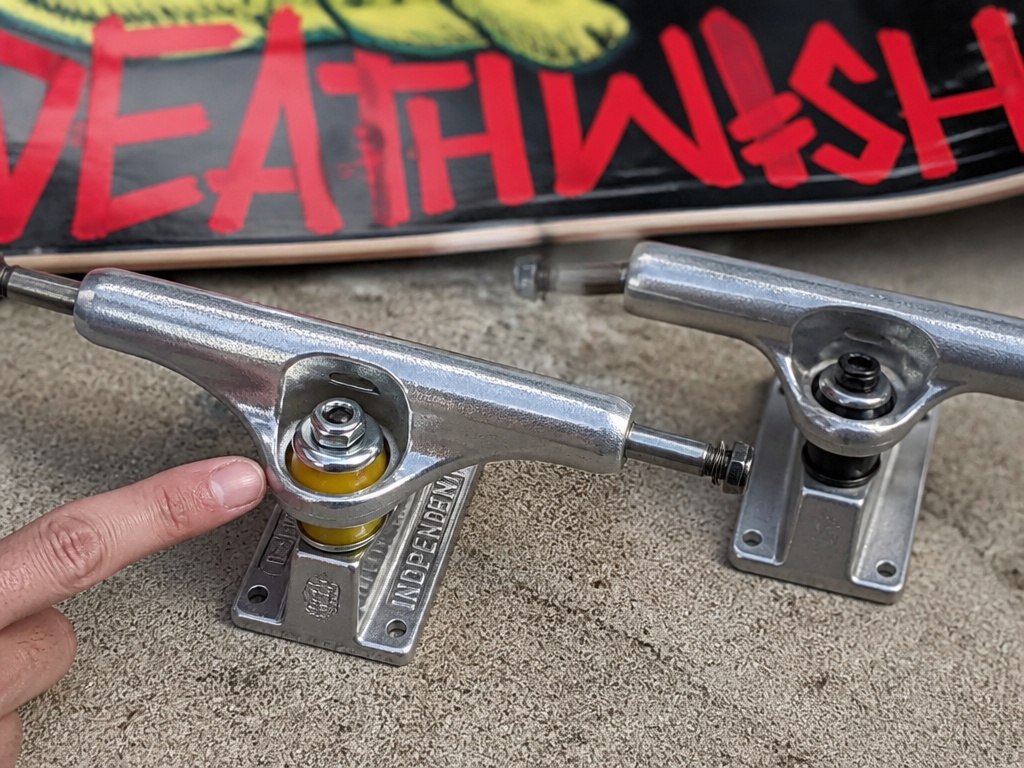
Buying a Deathwish complete skateboard seems straightforward. It’s not. The brand licenses its name to distributors who assemble completes with different components. This means two Deathwish completes can ride like entirely different brands.
Independent vs. A generic truck is the difference between a precise, stable turn and a sluggish, dead feel. The wheels and bearings vary just as much.
If you want a true Deathwish experience, you’re better off buying a deck and building your setup with known quality components like Independent, Thunder, Bones, or Spitfire. The pre-built completes are a gamble, and the performance review of one does not apply to another deathwish skateboards review. This is a critical content gap most overviews miss.
Durability Assessment: Razor Tail and the Ply Question
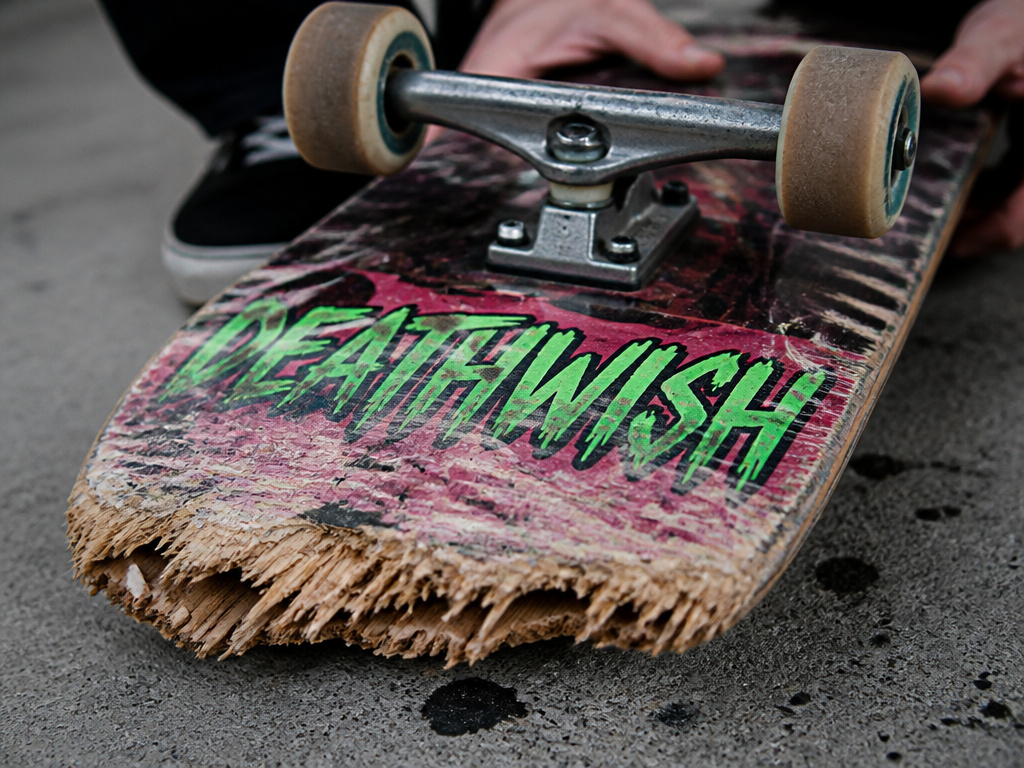
Deathwish decks are durable. They withstand big stairs and gaps without that scary flexing feeling. The 7-ply construction sees to that. The wear patterns, however, follow a specific path.
Razor tail is the primary failure mode. The nose holds up better. This is physics, but the rate seems accelerated for some skaters. If you’re heavy on tail scrapes and manual landings, keep an eye on it.
The ply separation incident mentioned in a deathwish skateboards review earlier is the outlier. A split in the middle of the deck, unrelated to an obvious impact, points to a laminate or glue issue during pressing. It’s rare, but it happened. When you invest in a pro deck, you’re paying for consistency. One in a thousand having a press flaw is statistically likely, but it’s still your problem if you get that one.
For the vast majority, the deck will last until you break it doing something dramatic. The durability is more than sufficient for street and park skating. Just don’t expect it to be indestructible.
Brand Identity, Team, and How It Compares to Baker
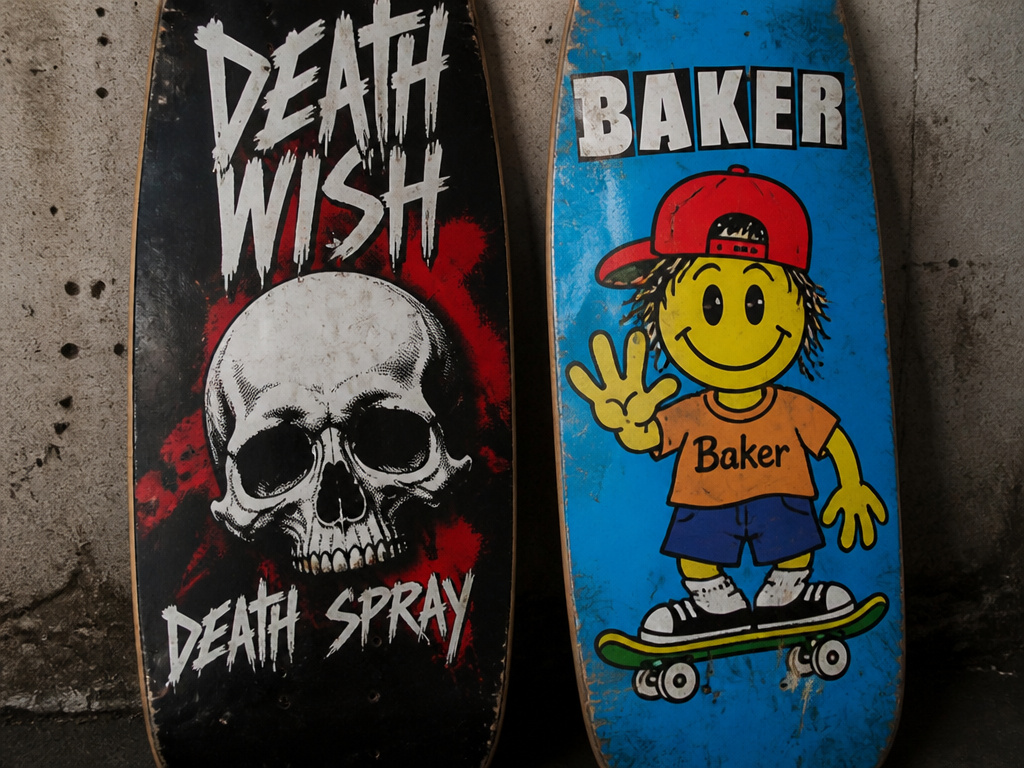
Both sources agree on the core identity: a darker, grittier, more street-focused sibling to Baker.
The graphics reflect that, skulls, spray paint, occult imagery. It’s not for everyone, but it’s authentic to the skatepark vibe they cultivate.
So, Deathwish vs. Baker? They share the same distribution (often Deluxe) and the same maple source. The differences are subtle but tangible:
- Concave: Deathwish concave is often described as steeper or more defined than Baker’s “mellow” standard.
- Graphics: Deathwish leans into dark, aggressive art; Baker has a wider range, including classic cartoon styles.
- Vibe: Deathwish feels like the specialist brand for technical street skating, while Baker is the broader, more iconic household name.
If you love Baker but want a slightly more aggressive platform, Deathwish is the logical next step. They’re more alike than different, but that slight edge in steepness is what you’re choosing.
Price & value for money
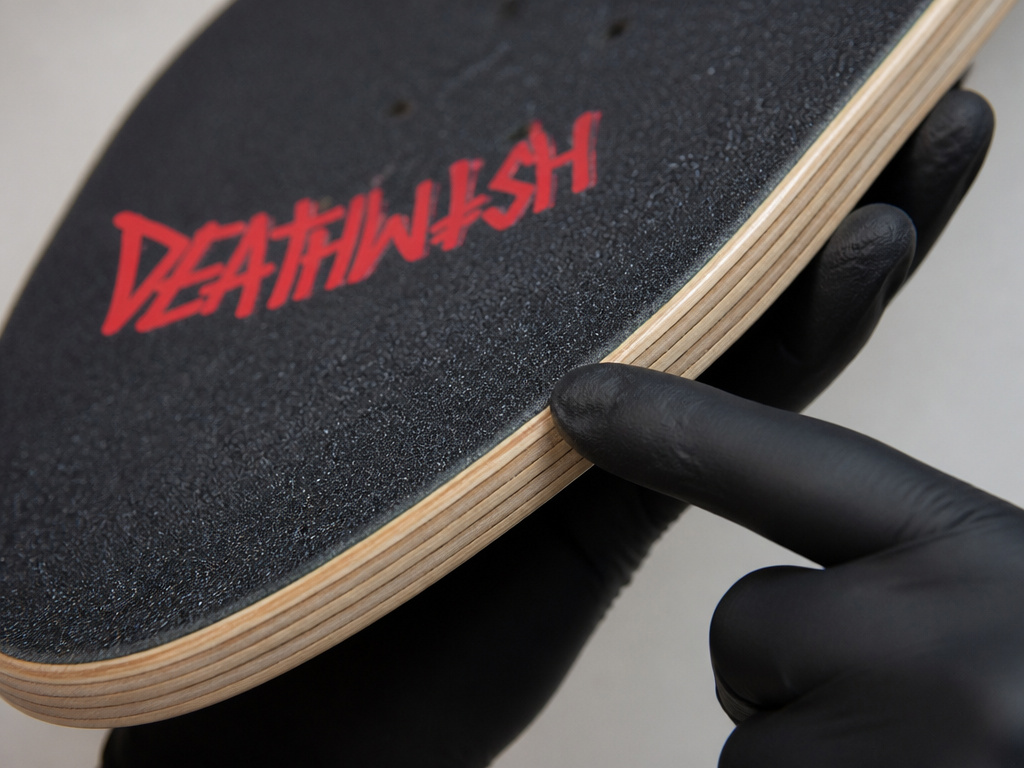
Deathwish decks are priced in line with other professional skateboard brands. The value comes from the consistent use of 7-ply maple, which is the industry standard for a durable, high-performance deck. You’re paying for a proven construction that delivers reliable pop and longevity. The real value question depends on whether you’re buying a complete skateboard or just the deck. Completes can be a mixed bag, as the quality of the included trucks, wheels, and bearings varies. For the best value, many skaters recommend buying the deck separately and choosing your own components to match your skating style.
Frequently Asked Questions
Is Deathwish a good skateboard brand?
Yes, for intermediate to advanced street skaters. The 7-ply maple construction provides reliable pop and durability, and the shape library offers serious performance geometry. Beginners might find the steep kicks on some models less forgiving than a truly mellow concave from another brand.
Are Baker and Deathwish the same?
They are sister companies under the same distribution umbrella (BakerBoys/Deluxe) and share manufacturing resources. They are not the same brand. Decks come from the same factories but often have different concave profiles, graphic styles, and team riders.
What are the top 5 best skateboard deck brands?
This is highly subjective and depends on skating style. However, brands consistently praised for quality, innovation, and team strength include Baker, Deathwish, Santa Cruz, Anti-Hero, and Toy Machine. For a deeper dive, our guide on the best skateboard decks breaks down what makes each one unique.
Deathwish Skateboards is its own brand, but according to Warehouse Skateboards, it was founded by BakerBoys Distribution. This shared production is why the core material quality is consistent between the two.
Are Deathwish skateboards good for beginners?
They can be, but they aren’t optimized for it. A beginner would benefit more from a board with a genuinely mellow concave and a slightly softer wheel for forgiveness. A Deathwish is a performance tool. A beginner might progress faster on a dedicated complete skateboard designed for learning.
Before You Go
Deathwish makes a very good skateboard. The 7-ply maple is standard-grade excellent, the pop is crisp, and the shapes are refined for street tech. They sit firmly in the upper tier of quality skateboards.
The catch is in the details. Your experience hinges on picking the right pro model geometry for your flick, and your complete setup depends heavily on which distributor box you happen to buy. Don’t just grab any 8.25″.
For the skater who knows their stance and wants a deck that helps with scoop tricks and precise ledge work, a Deathwish like the Jamie Foy 8.00” or the Chris Athans 8.25” is a fantastic choice. For everyone else, especially those building a first serious setup, the wider world of best skateboard brands has more consistently beginner-friendly options. Start there, then earn the Deathwish.
