Hi Boy S2 Electric Scooter Review: Is It Worth It?
This post contains affiliate links. As an Amazon Associate, we earn from qualifying purchases.
The Hiboy S2 is a 350W, 19 mph electric scooter built for flat, short urban commutes under 10 miles, priced as a budget entry point. Its honeycomb tires deliver a harsh ride on rough pavement, its real-world range falls short of its 17-mile claim for most riders, and its value hinges entirely on finding it on sale for under $400.
That’s the spec sheet answer. The real question is whether a scooter that makes these trade-offs fits your actual commute, your weight, and your local roads. For a detailed assessment, see the hi boy s2 electric scooter review.
What follows is a breakdown of the numbers that actually matter — not just the marketing ones — and the specific situations where the S2 works or fails. This article explains the difference between the S2 and the S2 Pro, the common “F2” throttle error that owners face, and what it’s like to ride this thing for more than just a YouTube unboxing video.
Key Takeaways
- The S2’s 350W motor struggles on hills; the manufacturer claims a climbing angle of approximately 15% under optimal conditions.
- Real-world range is often less than the advertised 17 miles, which is tested under ideal, lightweight conditions.
- Honeycomb tires mean zero flats but transmit every bump; the ride is harsh on anything but smooth pavement.
- The F2 error code (throttle fault) is a common failure; checking wiring connections resolves most cases before replacing parts.
- This scooter is a budget buy only on sale; at its regular $549 price, competing models offer better performance or comfort.
The Hiboy S2: Specs That Matter
Forget the fluff. When you’re sizing up a commuter scooter, three specs decide everything: motor power, battery capacity, and tire type. The Hiboy S2’s manual gives you the raw numbers, but the translation to real streets is what counts.
The S2 runs a 350W brushless motor with a 500W peak. That 350W rating is the sustained power, and it’s the number that matters when you’re climbing a slight incline or carrying a backpack. For comparison, many commuters now start at 500W sustained. This puts the S2 in the “adequate for flat ground” category. Its 36V, 7.5Ah (270Wh) battery is UL 2272 certified, a critical safety standard you should always look for.
Before you start: The scooter’s IPX4 rating means it can handle light rain, not a downpour or puddles. Riding in wet conditions significantly increases stopping distance and the risk of slipping on its solid tires. Always wear a helmet, and assume cars cannot see you.
The battery’s performance has a hard temperature dependency that most hi boy s2 electric scooter review articles skip. According to the manual, performance is “poor” below 32°F (0°C), and riding range can drop to half or less of normal when below -4°F (-20°C). If you live in a climate with cold winters, this scooter has a very short seasonal window.
That’s nearly a 4-pound discrepancy on paper. In practice, lifting it feels closer to the 35-pound mark — it’s not featherlight, but the folding mechanism works well for getting it onto a bus or storing it under a desk.
| Specification | Hiboy S2 Claim | Real-World Meaning |
|---|---|---|
| Motor Power | 350W Rated, 500W Peak | Adequate for flats; struggles on hills >6% grade. |
| Max Speed | 19 mph (Sport Mode) | Achievable on flat ground with a lighter rider. |
| Max Range | 17 miles (Ideal Test) | Expect 8-12 miles for a 165+ lb rider using Sport mode. |
| Tire Type | 8.5″ Honeycomb Solid | No flats, very harsh ride, poor wet traction. |
| Max Load | 220 lbs (100 kg) | Accurate. Exceeding this voids warranty and stresses frame. |
| Charge Time | 3-5 hours | Accurate with included 42V, 1.5A charger. |
Ride Quality & Everyday Commuter Reality
Here is where the S2’s budget nature comes through in physical sensation. The 8.5-inch honeycomb tires are a defining feature. They never go flat, which is a genuine benefit if your route is littered with potholes or debris. But the trade-off is a complete lack of pneumatic cushioning.
Every crack in the sidewalk, every seam in the pavement, travels directly up the stem and into your hands and knees. After a 20-minute ride on city streets, your palms will feel the buzz. It’s not dangerous, but it is fatiguing. The small deck, while covered in a grippy diamond-pattern rubber, also feels cramped if you wear shoes above a size 10.
The dual braking system — a rear disc brake and a front electronic regenerative brake — works, but with caveats. The regen brake, activated by the left lever, has a soft, gradual feel. The mechanical disc brake is stronger but can squeal if not kept clean. Together, they can bring you to a stop, but the distance is longer than on scooters with dual hydraulic or full-sized mechanical discs.
Where this goes sideways: Relying on the electronic brake alone in an emergency. It’s not strong enough. You must use both brakes together for confident stopping, and you must anticipate stops earlier than you would on a bike.
Cruise control is a nice feature for long, straight bike paths. It activates after maintaining a constant throttle for about five seconds. You’ll hear a beep. It’s convenient, but disengages the moment you touch the brake or throttle again.
Performance: Speed, Range, and Hill Climbing
The 350W motor matters most on a slope. The manufacturer claims a climbing angle of approximately 15%. For a rider at the maximum range test weight of 165 lbs, it might manage it under optimal conditions.
For anyone heavier, or on a damp surface, performance changes. On hills, the S2’s speed can drop significantly for riders near or above the maximum load capacity. That’s barely faster than walking. If your commute has any meaningful incline, this scooter will slow to a crawl. The S2 Pro and its 500W motor are better choices for hilly areas.
Range is the other major “your mileage will vary” spec. The advertised 17 miles comes from a test at 77°F, with a 165 lb rider, going a constant 11.4 mph on flat ground. It’s a lab test.
In the real world, using Sport mode (19 mph), with starts and stops, minor hills, and added weight, range will be less than the maximum 17 miles. That’s enough for a short commute or campus travel, but it means charging every single day. The battery indicator on the dashboard is a basic 5-bar graph, not a percentage, so your last two bars disappear quickly.
| Use Case | Sport Mode (19 mph) | Drive Mode (13 mph) | Note |
|---|---|---|---|
| Flat Bike Path | 8-10 miles range | 12-14 miles range | Best-case, 165 lb rider. |
| Urban Commute (Stops/Starts) | 6-9 miles range | 10-12 miles range | Realistic expectation. |
| Hilly Route (>5% grade) | 4-6 miles range | 6-8 miles range | Motor draws high power, drains battery fast. |
| Cold Weather (<32°F) | 3-5 miles range | 5-8 miles range | Battery chemistry severely reduces capacity. |
The S2 vs. S2 Pro Choice: Which One Is For You?

This is a frequent point of confusion. The S2 Pro isn’t just an S2 with a seat. It’s a different scooter built for slightly more demanding use.
The S2 Pro swaps in a 500W sustained motor and advertises a 25-mile maximum range. The S2 Pro uses 10-inch tires, which may improve ride comfort over the S2’s 8.5-inch ones. The extra motor power translates directly to better hill-climbing ability and slightly better acceleration.
However, the Pro model also costs more. At a price of $669, it’s a significant step up. The value calculation is straightforward: if your route has hills, or if you weigh over 180 lbs, the Pro’s extra power is worth the investment. If you are within the specified test conditions (165 lb rider, flat ground), the standard S2 may be sufficient.
Common mistake: Buying the base S2 because it’s cheaper, then realizing you need the Pro’s power. Test your planned route’s elevation first. A hill you walk up easily can be a major obstacle for a 350W scooter.
Both models share the same core platform: similar folding mechanism, IPX4 rating, app connectivity, and the potential for the same common issues. Your choice is really about power and budget.
Long-Term Ownership: Reliability, Issues, and the “F2” Code
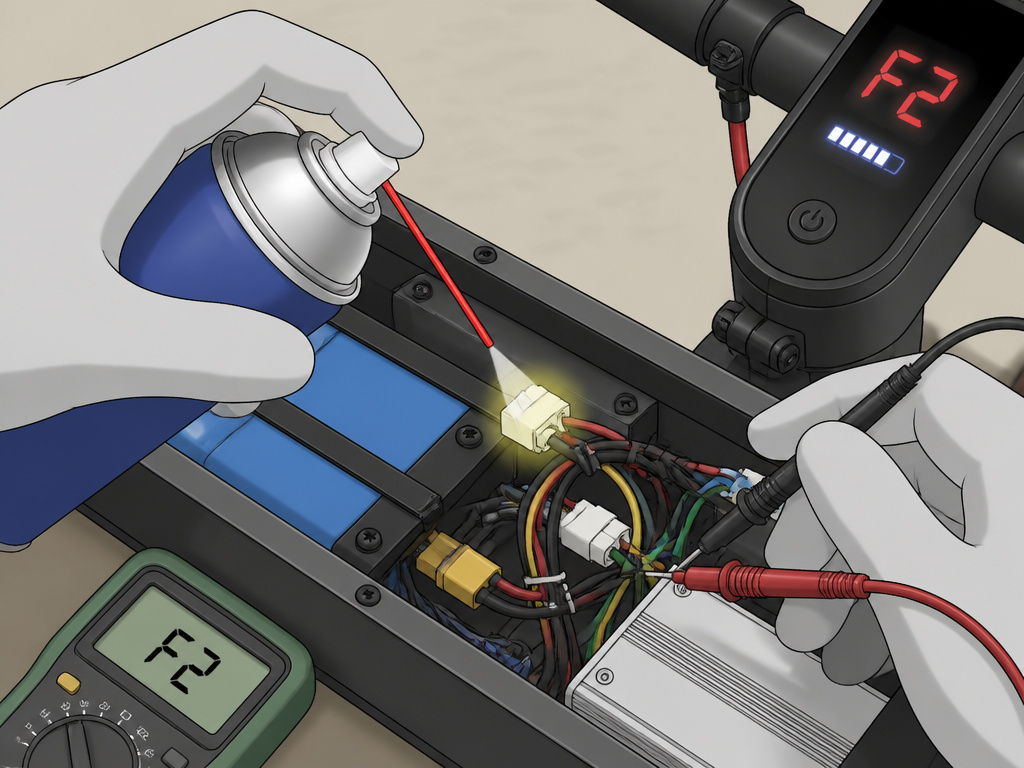
This is the section most “first look” reviews miss, but a thorough hi boy s2 electric scooter review should cover. The S2 is a mass-market budget scooter, and its long-term reliability has a pattern. The most documented issue is the F2 error code.
The F2 code indicates a throttle signal fault. The scooter beeps, won’t accelerate, and displays “F2” on the dashboard. According to technical diagnostics for several Hiboy models including the S2, loose, damaged, or corroded wiring and connections account for 25-30% of F2 error cases. The good news is that connection cleaning resolves approximately 60-70% of F2 errors that initially appear to be component failures.
The fix often isn’t a new throttle. It’s opening up the deck or handlebar stem, disconnecting the throttle cable connector, spraying it with electrical contact cleaner, and re-seating it firmly. If that doesn’t work, a multimeter can check if the throttle is sending the correct voltage (for hall sensor types: 0.8V-1.2V at rest, 4.0V-4.5V at full throttle).
Other long-term considerations:
- Brake Maintenance: The rear disc brake needs periodic adjustment as the pads wear. A soft lever or squealing means it’s time.
- Folding Mechanism: The latch can loosen over time. Check it every few months and tighten the bolts if there’s play.
- Battery Longevity: For long-term storage (over 30 days), the manual dictates a specific and unusual routine: fully charge it, then recharge every 60 days. Ignoring this can void the battery warranty.
App, Portability, and Final Verdict
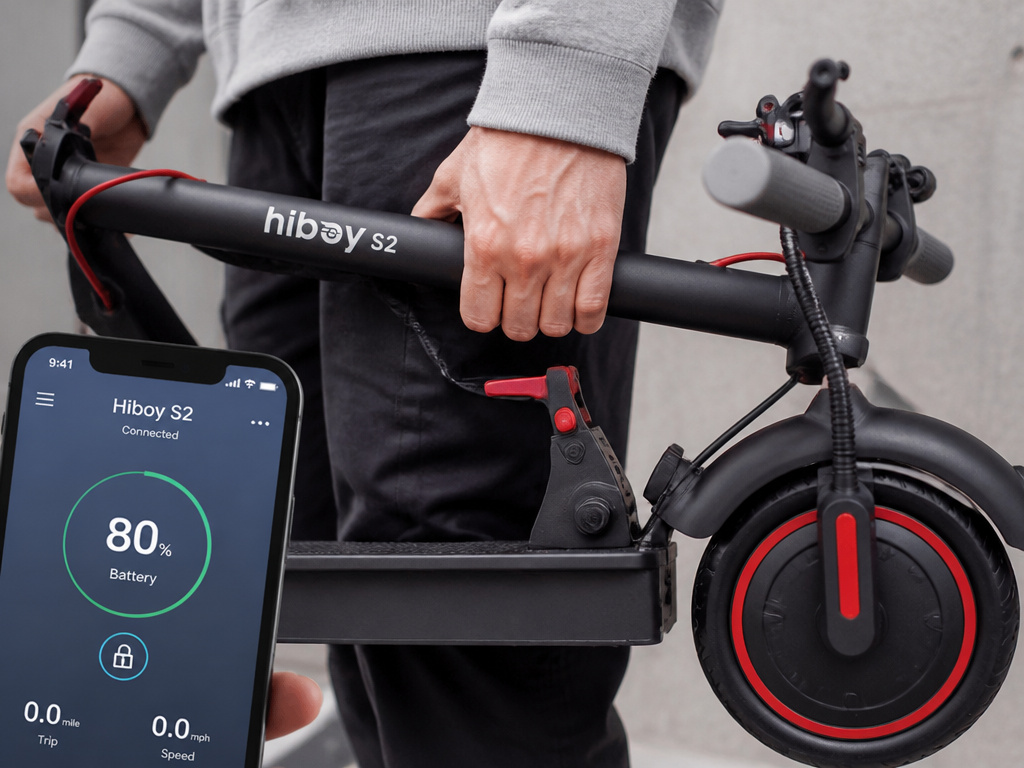
The Hiboy app connects via Bluetooth and adds useful functionality: you can lock the scooter (a deterrent, not a strong lock), toggle lights, switch modes, and see a battery percentage instead of just bars. It’s not essential, but it’s well-implemented.
Portability is a genuine strength. The one-step folding lever works reliably, and the hooked stem secures to the rear fender. With a weight listed between 31.7 and 35.49 lbs, it’s liftable for short distances. It fits in a car trunk or can be rolled alongside you like a suitcase.
So, who is the Hiboy S2 for?
It’s for an urban commuter with a flat, short route who can buy it on sale. It’s a first scooter, a last-mile solution, or a campus cruiser.
Who should look elsewhere?
Riders near or above the 220 lb maximum load, those with hilly commutes, anyone needing a smooth ride over rough pavement, or shoppers who can’t find the S2 on sale. In those cases, the S2 Pro or competitors from brands like Niu or Segway offer better performance for a higher price.
Expectations must be managed. The Hiboy S2 delivers basic electric mobility at a budget price, with all the compromises that entails. It’s not a premium product, but for its specific niche, it gets the job done. Just know the job’s limits before you buy.
How does the Hiboy S2 compare to other scooters?
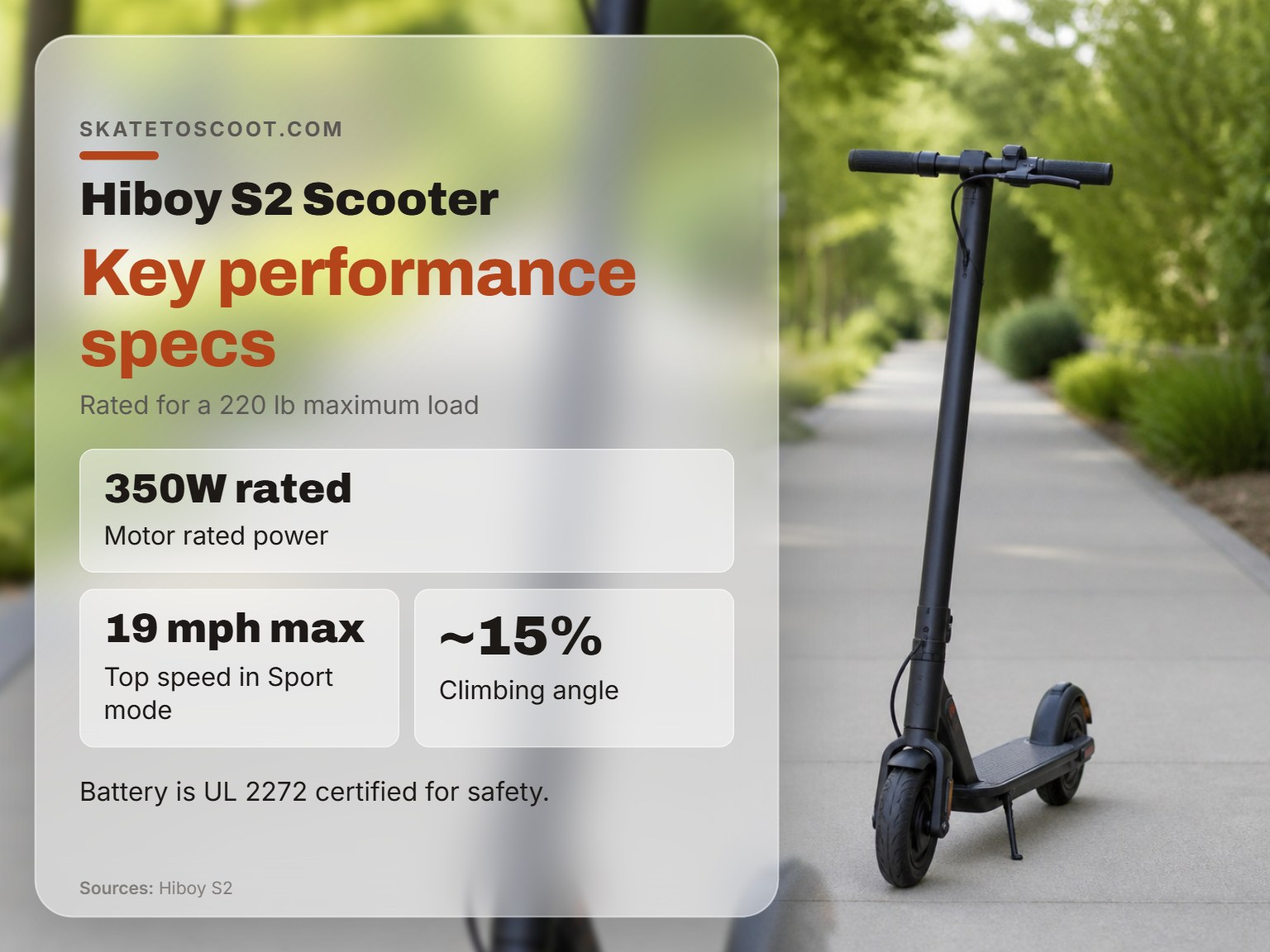
When placed against popular models, the Hiboy S2’s performance profile is clear. Its 350W rated motor and 17-mile maximum range under ideal conditions are its key performance specs. The S2 Pro variant offers a more powerful motor and a longer advertised range, but at a higher price point. The S2’s key advantage is its UL 2272 certified battery, a critical safety feature. It has a climbing angle of approximately 15% and a top speed of 19 mph in Sport mode.
How easy is the Hiboy S2 to assemble?
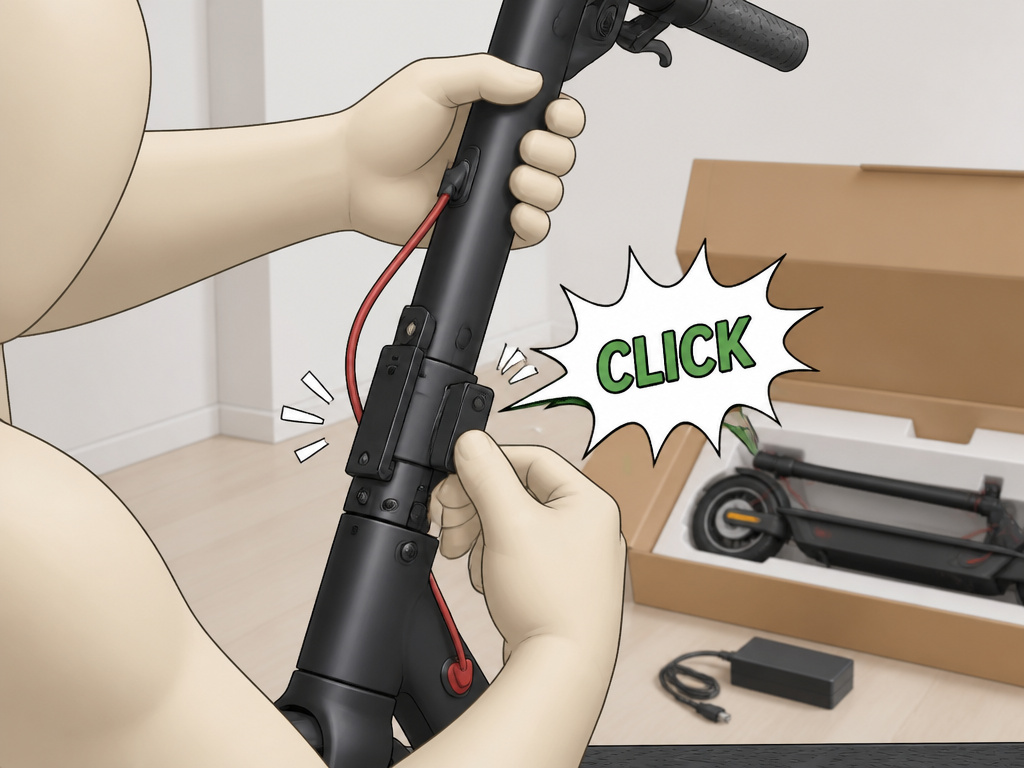
Unboxing the scooter is straightforward. The main task is unfolding the stem and securing the locking mechanism; you’ll hear a click when it’s properly engaged. Before your first ride, take a moment to ensure all fasteners are tight, particularly around the handlebar and folding joint. Check that the brake cable has no kinks and moves freely. Finally, connect the charger to fully power up the battery before use. The entire process should take only a few minutes with no special tools required.
Frequently Asked Questions
Are Hiboy S2 scooters good?
They are good at one thing: providing affordable, low-maintenance electric transport for short, flat trips. If your needs match that exact scenario, yes. If you need comfort, hill power, or long range, they are not the right tool.
Is Hiboy a good brand for electric scooters?
Hiboy occupies the value segment of the market. They offer functional scooters with decent features (like app connectivity and lights) at competitive prices. They are not known for premium build quality or industry-leading innovation, but for budget-minded commuters, they are a legitimate option. Their official repair portal offers a wealth of disassembly guides, which is a plus for DIY owners.
How fast do Hiboy S2 scooters go?
The Hiboy S2 has a top speed of 19 mph in Sport mode and 13 mph in Drive mode. These speeds are achievable on level ground. Adding weight, hills, or headwinds will reduce the actual speed you experience.
How long do Hiboy S2 scooters last?
The scooter’s mechanical frame should last for years with normal use. The consumable parts are the battery, brake pads, and tires. The lithium battery is the life-limiting component; its lifespan depends on usage and care. Proper care (avoiding extreme temperatures, not draining it fully) can extend that.
Can you fix the Hiboy S2 yourself?
Yes, to a degree. Hiboy provides an extensive online library of repair instruction videos for tasks like replacing the dashboard, adjusting brakes, and dismantling the suspension. Common issues like the F2 error code often involve simple connector cleaning. However, major work like motor or controller replacement requires more technical skill.
Before You Go
The S2’s value collapses if you pay full price. Its entire proposition is built on being a sale item. At its regular price of $549, it competes with other models in that price range. At a sale price of $399 or less, it represents a budget option.
Your first step shouldn’t be clicking “buy.” It should be mapping your commute on Google Maps, checking the elevation profile, and honestly assessing your weight. If the route is flat and you’re under the 220 lb limit, the S2 can work. If not, the equation changes immediately, and your money is better spent elsewhere.
Finally, factor in the true cost of ownership: a helmet, a bike lock (the app lock is not enough), and maybe a seat if you want one. The scooter is the initial cost; the gear is what lets you use it safely and reliably. Don’t skip that part.
