Hopps Skateboards Review: Is It Worth It?
This post contains affiliate links. As an Amazon Associate, we earn from qualifying purchases.
Hopps skateboards are a skater-owned brand making 100% Canadian maple decks in the USA, founded in 2007 and located in New York City. They offer a solid, no-frills option that prioritizes core skate culture over mainstream hype, with decks that perform reliably for most street and park skating.
That’s the baseline. Most review pages just repeat the brand story. For a detailed breakdown, read our Hopps skateboards review. We’ll examine the specs, the conflicting advice online, and where these decks excel or fall short.
What follows: a breakdown of their maple construction, a clear path through the confusing sizing charts, a direct comparison to other brands riders mention in the same breath, and whether you should buy a Hopps complete or build your own.
Key Takeaways
- Hopps decks are built from 100% hard rock Canadian maple, the industry standard for pop and durability, and are made in the USA.
- The brand is 100% skater-owned, founded by Jahmal Williams, with a focus on East Coast shop culture and artistic team riders over mass marketing.
- For a first board, a Hopps complete is a hassle-free start, but experienced skaters will likely prefer swapping in their own trucks and wheels.
- Compared to brands like Creature (steep concave) or Baker (mellow), Hopps offers a middle-of-the-road shape suitable for all-around street and park skating.
Brand History & Ethos: More Than a Logo
Jahmal Williams started Hopps in 2007 after a career riding for companies like Toy Machine. The name comes from his BMX days, unfamiliar with skate terminology, he translated an “ollie” as a bunny hop. That outsider-turned-insider perspective defines the brand. Hopps is 100% skater owned and operated, based in New York City, and has grown organically, supported heavily by East Coast shops and skaters who seek out brands off the beaten path.
Where this goes sideways: Choosing a deck based solely on a brand’s story. The graphic might speak to you, but the concave under your feet decides your session.
This isn’t a corporation with a skate team; the team is the brand. Artists and riders like Dustin Eggeling handle much of the graphic design, which leans into classic, sometimes painterly, styles rather than loud, cartoonish logos. If you’re tired of seeing the same five deck brands at every park, Hopps offers a legitimate alternative with its roots still firmly in sidewalk cracks and shop rails.
How Does Hopps Deck Construction Stack Up?
They use 100% hard rock Canadian maple. That phrase gets thrown around a lot, but it’s not marketing fluff. Hard maple is the industry benchmark because of its natural resiliency and snap, what skaters call “pop.”
A complete skateboard includes a deck, grip tape, wheels, bearings, trucks, and hardware. That’s the retailer definition, and a Hopps complete delivers all six.
Consider plastic or composite boards honestly. Reviews note they lack the same pop as wood and make tricks harder, though they rarely snap. For actual skating, maple is the play. Hopps doesn’t tout carbon fiber layers or bamboo cores; it’s straight-up, seven-ply maple. This is a workhorse, not a lab experiment. The performance is consistent and predictable, which, for most skaters, is exactly what you want. You learn the board’s character quickly.
| Construction Aspect | Hopps Spec | Why It Matters |
|---|---|---|
| Material | 100% Hard Rock Canadian Maple | Industry standard for optimal pop and durability. |
| Manufacturing | Made in the USA | Supports domestic manufacturing; consistent quality control. |
| Finish | Traditional Maple (non-wax/sealed options vary) | Provides a familiar, grippy surface for griptape adhesion. |
Decoding the Confusing World of Deck Sizing
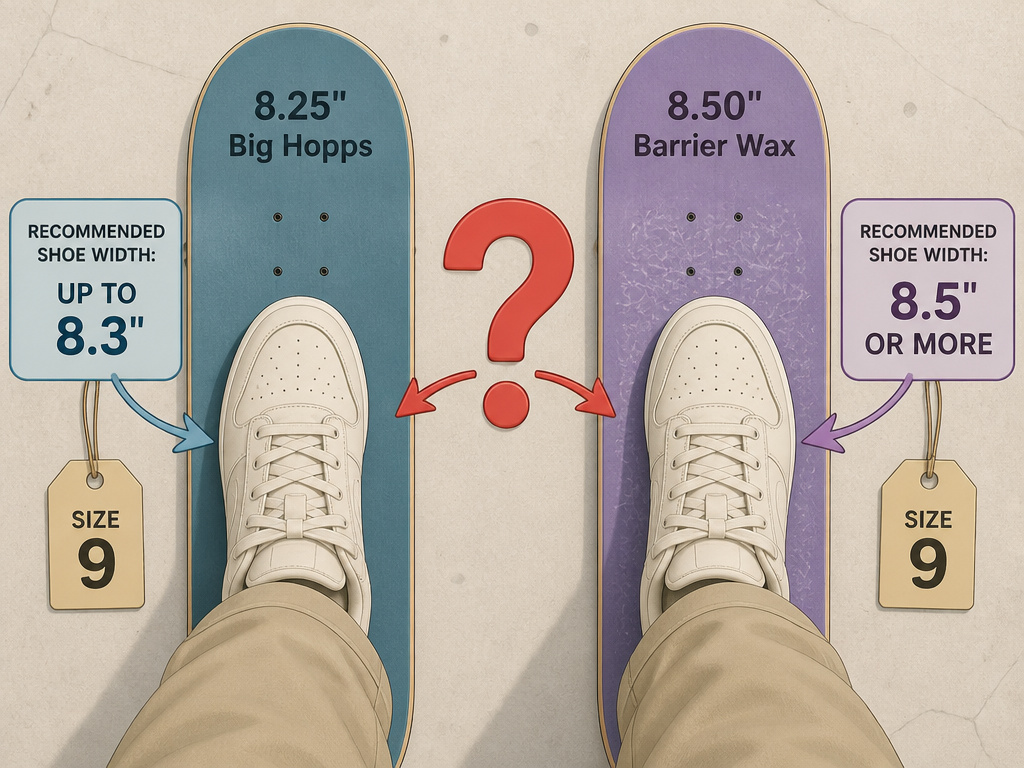
Here is the most practical part of this review, because the advice online will contradict itself. Look at two Hopps products on the same retailer site (CCS).
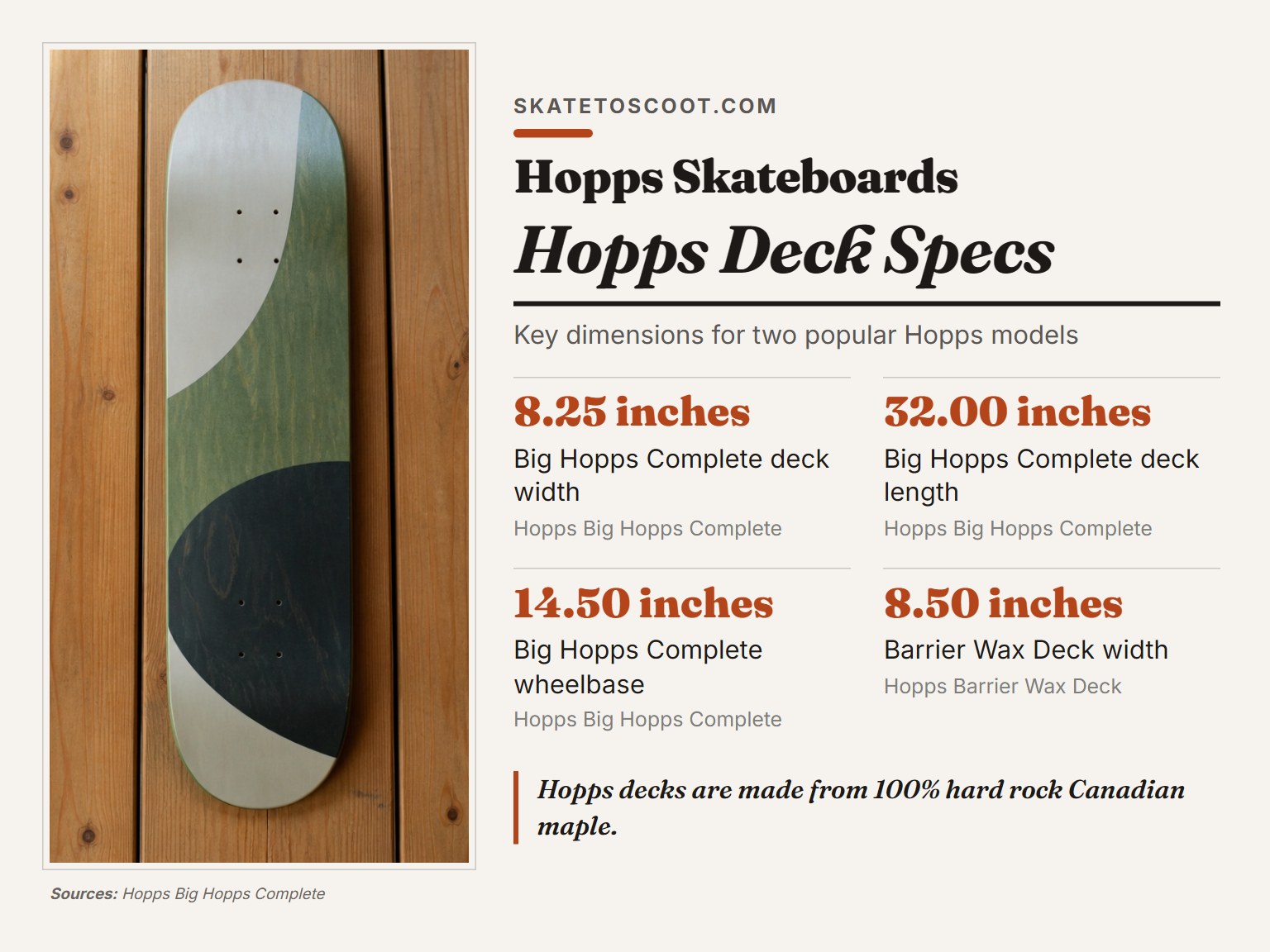
For the Hopps Big Hopps Complete 8.25“, the sizing guide recommends a deck width of 7.5 inches and up for men’s shoe size 9 or larger. Yet, for the Hopps Barrier Wax Deck 8.50“, the guide recommends 8.25″ – 8.50″ for men’s shoe size 9.0 – 10.5. Both are from CCS. Which is right?
Common mistake: Picking a deck width solely by shoe size. A size 9 foot can comfortably skate anything from 8.0″ to 8.5″; the choice should be about stability versus flick speed.
Shoe size is a starting point, not a rule. Your skating style dictates width more than your foot does.
- Street/Technical (lots of flip tricks): Lean toward 8.0″ – 8.25″. The narrower deck is lighter and the flick feels faster.
- All-Around/Park (transition, bowls, a mix): CCS sources disagree on the ideal width, suggesting either 8.0″-8.25″ or 8.25″-8.5″ for all-around skating.
- Beginners: An 8.25″ is a safe, versatile middle ground. Don’t overthink it.
For very young or small skaters, CCS defines a mini skateboard as 7.38” or less, recommended for a US Men’s Size 5 shoe or smaller.
Hopps Completes vs. Building Custom: The Value Question
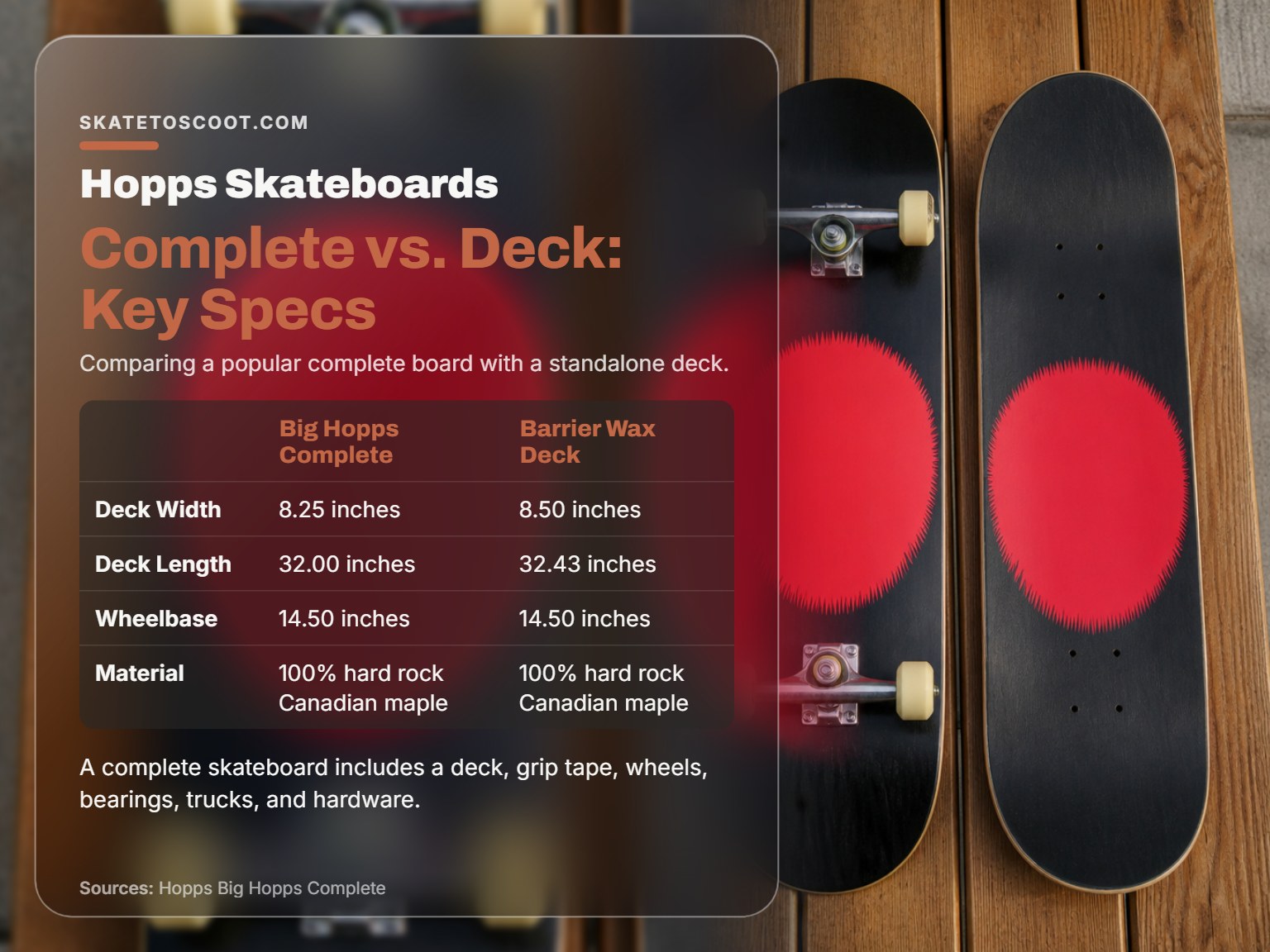
A Hopps complete, like the Big Hopps Complete 8.25″, comes with a deck, trucks, wheels, bearings, and hardware. The specs for the Big Hopps Complete 8.25″ are solid: a 32.00″ length and a 14.50″ wheelbase. It’s rideable right out of the box. This is a fantastic option for a first board or a gift. You avoid the analysis paralysis of picking each component.
However, if you’ve been skating for more than a few months, you probably have preferences. You might swear by specific wheels for slides or certain trucks for their turn. A complete’s components are often generic-brand or mid-tier. The trucks might be heavier, the wheels might be slower.
Should you buy a Hopps complete?
- Yes, if: You’re new, you want simplicity, or you need a backup board fast.
- No, if: You have strong preferences on trucks/wheels, or you’re chasing specific performance traits.
Assembling a custom board allows you to pair a Hopps deck, a reliable maple blank canvas, with your preferred parts. Many skaters end up here. They buy a Hopps deck for the graphic and the reliable maple feel, then pair it with their trusted setup. It’s the best of both worlds.
Performance and Feel: Where Hopps Fits Among Other Brands
This is where forum chatter becomes useful for a Hopps skateboards review. Skaters on Reddit and in shops constantly compare deck “feel.” Concave (the upward curve along the board’s width) and kick angle (the steepness of the nose/tail) are the main variables.
Worth knowing before you start: Most well-known brand decks are made by the same 2-3 woodshops. The difference is in the shape mold and the graphic.
Based on aggregated user reports:
- Steeper Concave/Higher Pop Brands: Creature and Welcome are often cited as having the steepest concaves. A steeper concave can feel more locked-in and may offer a more responsive pop.
- Mellow Concave Brands: Baker and its affiliates, along with Zoo York, are known for mellower concaves. These can feel more comfortable for cruising or skaters who prefer a flatter platform.
- Hopps’ Place: Hopps typically falls in the middle. It’s not as aggressively steep as a Creature, nor as flat as a Baker. It’s an all-around shape, forgiving enough for learning, responsive enough for progression.
This middle-ground approach makes Hopps a safe recommendation. It’s unlikely to feel wrong to someone used to a major brand. It won’t blow your mind with pop, but it also won’t let you down mid-session. For durability, while one Reddit user praised Creature boards for longevity, another specifically mentioned putting together a Hopps board to support a lesser-known company, implying satisfactory performance.
Recent video projects / media
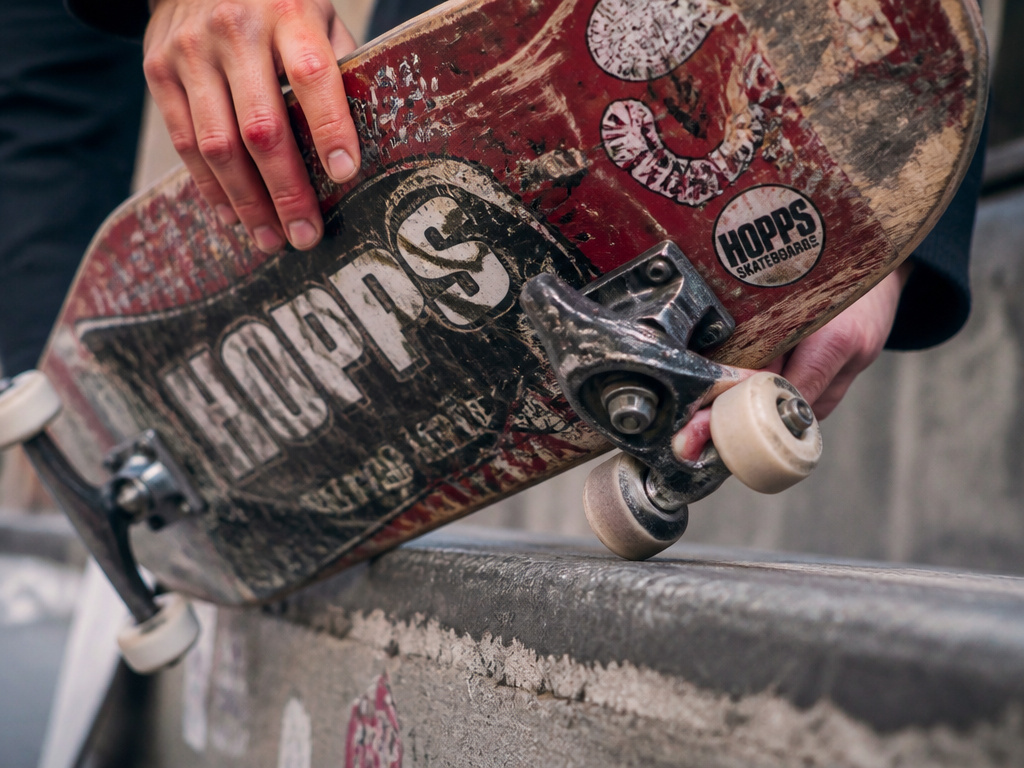
Hopps has maintained a steady presence through its team riders and video parts, often shared directly through their own channels and those of core skate shops. As a brand that grew organically from the New York City scene, their media output focuses on raw, street-focused skating that reflects their roots. You can find their latest edits by searching for the team riders or checking the social media pages of East Coast skate shops that carry their boards. This direct, skater-owned approach means their videos prioritize genuine skateboarding over heavy production, offering a clear look at how their decks perform in real street situations.
Frequently Asked Questions
What are the top 5 best skateboard deck brands?
Brands like Creature (for durability and steep concave) and Hopps (for skater-owned ethos and all-around performance) are strong contenders just outside that mainstream bubble.
Is Hopps a good brand for beginner skaters?
Yes. Their decks are made from quality maple, their completes are affordable and ready-to-ride, and their middle-of-the-road concave isn’t intimidating. A beginner won’t be fighting the board’s shape. Starting on a properly constructed maple deck like Hopps is better than starting on a cheap plastic department store board.
What board did Rob Dyrdek skate on?
His early career was associated with standard pro models from the era’s major companies.
How does Hopps compare to CCS brand completes?
CCS completes are the retailer’s house brand. A Hopps complete usually sits at a slightly higher price point, offering a branded deck with distinct graphics and the backing of a recognized, skater-owned company. The components may be similar, so you’re largely paying for the Hopps deck and brand support.
Are Hopps skateboards good for street skating?
Absolutely. The 8.25″ to 8.5″ sizes are ideal for street skating, offering a balance of stability for landings and width for control. The maple construction provides the snap needed for ollies and flip tricks. Many of their team riders are street-focused, which influences the board’s design ethos.
The Bottom Line
Hopps isn’t trying to be the biggest brand in skateboarding. It’s trying to be an authentic one. You’re buying a well-made, Canadian maple deck from a company that still answers to skaters, not shareholders. For that alone, they deserve a look.
If you’re sizing one up, ignore the conflicting charts. Match the width to your dominant skating style, not just your shoe. An 8.25″ is the universal translator. And if you’re on the fence between a complete and a custom, buy the deck only. Pair that Hopps maple with your favorite trucks and wheels, that’s where you’ll feel what the brand is really about. It’s a foundation you can build on, not a finished monument, according to a thorough Hopps skateboards review. And sometimes, that’s exactly what you need.
