Hoverboard Hover 1 Review: Recalls, Safety and Performance
This post contains affiliate links. As an Amazon Associate, we earn from qualifying purchases.
A Hover-1 hoverboard can be a fun ride, but your purchase decision starts with two federal recalls and a strict warranty that only covers items bought from authorized retailers. The brand has models like the UL 2272-certified Sypher and the compact Maverick, but long-term owner complaints highlight charging issues, part failures, and difficult support experiences that you won’t find in the marketing specs.
That gap between a product’s advertised performance and its real-world durability is where most buying guides stop, but a detailed hoverboard hover 1 review fills it in. They list speed, range, and weight limits. They rarely tell you that a specific serial number means your board could catch fire, or that buying from Amazon might void your warranty before you even open the box.
What follows is a breakdown of the official recalls, the actual model specifications, the warranty’s fine print, and the common failure patterns owners report in a typical hoverboard hover 1 review. By the end, you’ll know exactly how to check if a board is safe, where your money is best spent, and what to expect after the first six months of ownership.
Key Takeaways
- Stop using and check the serial numbers for Hover-1 Helix (fifth code 15914, 19203, or 19988) and Superfly (starts with SPFY-BLK-GO-2008/2009/2010) models immediately; they are under federal recall for fire and injury hazards.
- The Hover-1 warranty is void if you use any charger other than the one supplied, if the board gets wet, or if you didn’t buy it from an authorized retailer like Best Buy or the Hover-1 website.
- For most new riders, the Hover-1 Sypher is the better default pick over the Maverick due to its higher weight limit (220 lbs), longer range (up to 7 miles), and UL 2272 certification.
- Charge only when you are present and can watch the board; the CPSC attributes more than 250 fire incidents to hoverboards, with fatal consequences.
- Long-term reliability is a common complaint; owner reports cite failing batteries, broken stems, and unavailable replacement parts within a year or two of purchase.
The Two Hover-1 Recalls You Must Know About
Here is the essential point. If you’re looking at a used Hover-1 or found a great deal online, the first step isn’t checking the price. It’s checking the bottom label for one of two specific serial number patterns. Two models have been recalled by the U.S. Consumer Product Safety Commission (CPSC) in cooperation with DGL Group, the distributor. This isn’t a minor quality program. These are official recalls for hazards that have caused fires, injuries, and property damage.
The CPSC announced the 2024 Hover-1 fire hazard recall for approximately 25,000 Hover-1 Helix hoverboards. The lithium-ion battery can overheat. DGL reported three fires, five smoke inhalation incidents, and about $25,000 in property damage. You identify it by the serial number on the bottom label: it must contain 15914, 19203, or 19988 as the fifth code in a six-code sequence.
The second recall is for a different, equally serious problem. The 2022 hoverboard fall hazard recall covers about 93,000 Hover-1 Superfly hoverboards (model H1-SPFY). A malfunction can cause the board to continue providing power, leading to unexpected acceleration and falls. The firm received 29 reports of this issue and four minor injuries. These were sold at Best Buy from October 4, 2020, through October 17, 2021. The identifying serial numbers on the bottom begin with SPFY-BLK-GO-2008, SPFY-BLK-GO-2009, or SPFY-BLK-GO-2010.
Before you start: If you have a recalled hoverboard, stop using it immediately. Do not attempt to charge it or repair it yourself. Contact DGL Group at 1-888-556-8426 or visit the Hover-1 recall page for instructions on a free replacement (Helix) or free repair (Superfly).
| Recalled Model | Hazard | Identifying Serial Number | Reported Incidents | Remedy |
|---|---|---|---|---|
| Hover-1 Helix | Fire | Contains 15914, 19203, or 19988 as the 5th of 6 codes | 3 fires, 5 smoke inhalation | Free replacement hoverboard |
| Hover-1 Superfly (H1-SPFY) | Fall/Injury | Begins with SPFY-BLK-GO-2008, 2009, or 2010 | 29 incidents, 4 minor injuries | Free software repair |
The process for each is different, but the rule is the same: a recalled product is not safe to use.
Hover-1 Sypher vs. Maverick: A Side-by-Side Look
Once you’ve ruled out the recalled models, you’re likely looking at current offerings like the Sypher and the Maverick. A spec sheet tells you numbers; a comparison in a hoverboard hover 1 review tells you which board actually fits your life. The Sypher is the flagship model Hover-1 promotes, while the Maverick is a more compact, budget-friendly option. Here’s how they stack up on paper and in practice.
The Hover-1 Sypher is UL 2272 certified, which is the safety standard covering the entire electrical system of self-balancing scooters. It has a maximum load of 220 lbs, a range of up to 7 miles, and a charge time of 4-5 hours. It uses non-pneumatic solid tires and has an operating temperature range of 32-104°F (0-40°C).
The Hover-1 Maverick (model H1-MVRK) is documented by iFixit with a net weight of 15 lbs and a load range of 44-160 lbs. Its maximum speed is up to 7 mph, with a maximum distance of up to 3 miles on its 36V, 2.0 Ah Lithium-ion battery. Charge time is up to 6 hours. It also uses non-pneumatic solid tires and shares the same 32-104°F operating range. The Maverick has a maximum incline of 10 degrees.
The Sypher’s 220 lb weight limit and 7-mile range make it suitable for most teens and adults for casual use. The Maverick’s 160 lb limit and 3-mile range target younger, lighter riders for very short trips.
So which one should you consider? If the rider is over 160 lbs or you want more than a quick loop around the block, the Sypher is the only choice between these two. The Maverick’s specs confine it to a narrow use case: a lightweight rider on perfectly flat, smooth ground for a very short distance. For anything else, you’ll overwhelm its battery and motor quickly. Choosing a board with a load limit below the rider’s weight can lead to poor performance and premature failure.
What the Hover-1 Warranty Actually Covers (And What It Doesn’t)
Your fundamentals are your foundation, and with a hoverboard, the foundation is the warranty. Hover-1’s warranty terms are specific, strict, and full of clauses that can void your coverage before you even have a problem.
First, the warranty is non-transferable and limited to the original purchaser only. It only applies to products purchased through an authorized Hover-1 retailer. This is the big one. Buying from Amazon, eBay, or a private seller? The warranty is void. You must have a receipt or online order confirmation with the purchase date visible for any claim.
Second, several common actions void the warranty immediately:
- Using any charger other than the genuine Hover-1 charger supplied with your board “voids the warranty and is a serious fire hazard.”
- Exposure to water, moisture, mud, dirt, or debris voids the warranty.
- Any repairs or modifications performed without Hover-1’s written consent void the warranty.
Where this goes sideways: Using a generic charger that fits the port because you lost the original one. According to Hover-1, this not only voids coverage but creates a “serious fire hazard.” The company and the CPSC agree: use only the supplied charger.
The process itself is demanding. For a warranty claim, you contact the service center. They may require photos and videos to diagnose the issue. If they issue an RMA (Return Material Authorization), you must ship the package within 14 days or it will be refused. If the damage is due to conditions that void the warranty, such as water exposure, the warranty will not cover repairs. Finally, Hover-1’s total liability under the warranty will not exceed the amount you actually paid for the product.
Charging and Safety: The Non-Negotiable Rules
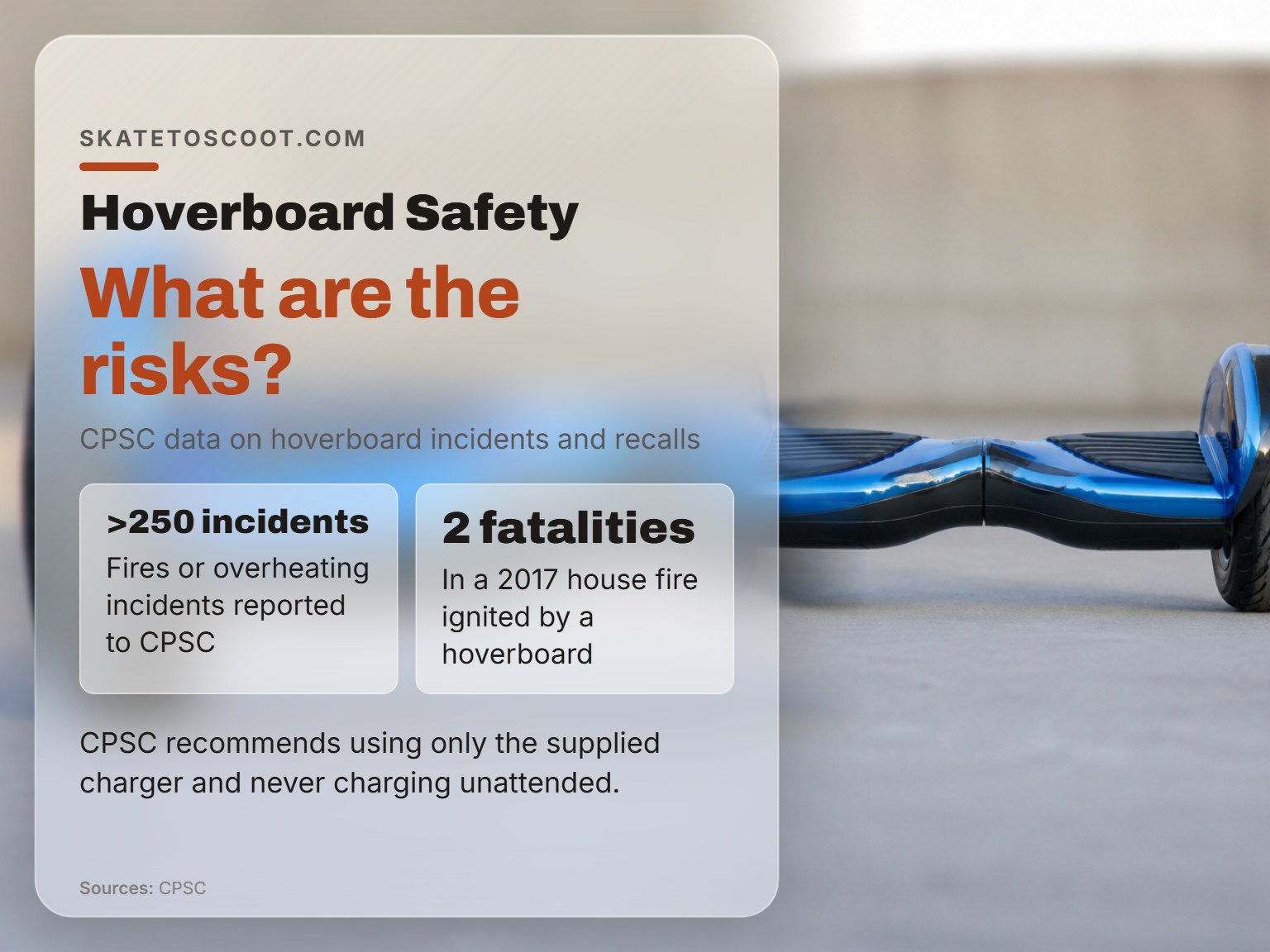
The CPSC safety alert notes more than 250 hoverboard incidents related to fires or overheating, including a 2017 house fire that killed two children. The rules that follow aren’t suggestions; they’re the documented path of failure.
Always use only the charger supplied with the hoverboard. The CPSC recommendation and Hover-1’s own warning are identical on this point. Do not use a charger simply because the plug fits.
Only charge the hoverboard when you are there to watch it. Do not charge unattended, especially overnight. This allows you to monitor the board while charging.
Keep the hoverboard away from flammable items while charging or even storing it. Don’t charge it on a carpet, near curtains, or in a cluttered garage.
Here’s a quick list of the absolute must-dos and must-nots:
- DO charge in an open, hard-floored area.
- DO NOT attempt to charge a board that has gotten wet. Hover-1 states the Sypher is “non-repairable” if wet and doing so “creates a fire hazard.”
- DO check for recalls at CPSC.gov before buying, especially for used models.
- DO NOT buy a hoverboard from a kiosk, secondhand seller, or online retailer without proof of UL 2272 compliance for the entire unit, not just components.
These steps are your primary safety system. The board’s built-in protections are your backup.
Long-Term Ownership: What Owners Report Goes Wrong
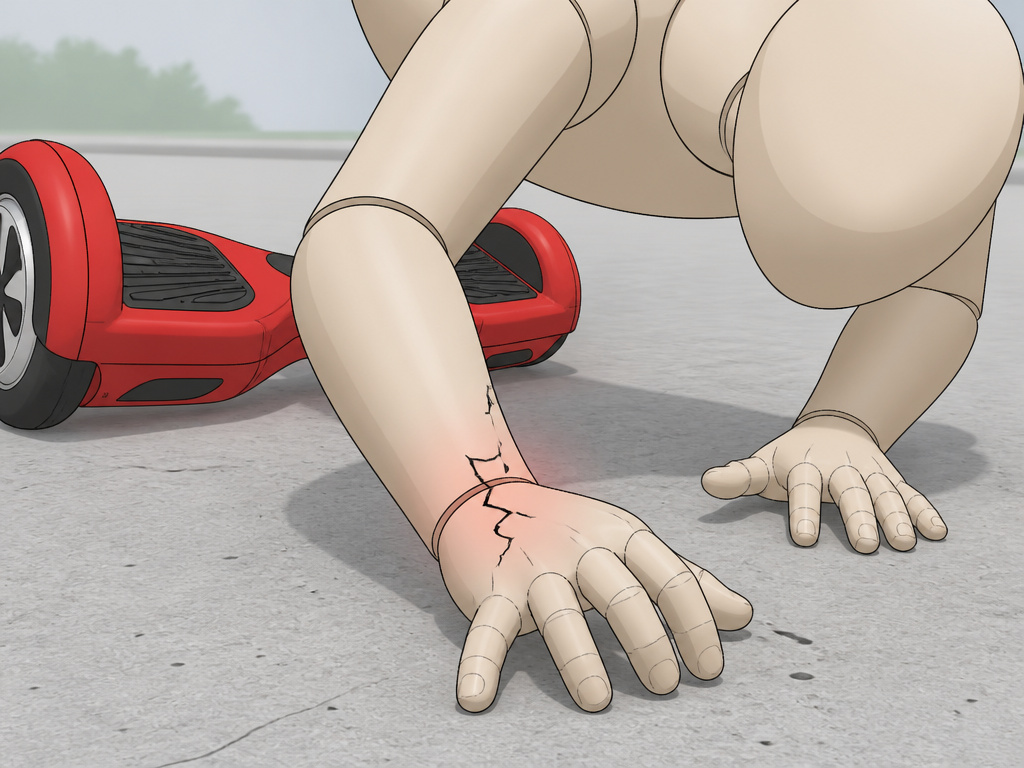
A study in the journal Injury Epidemiology adds data to the risk. Their peer-reviewed hoverboard injury study analyzed 83 emergency department visits and found the mean age of patients was 26.2 years, with adults (18+) constituting over half (53%) of injuries. Upper extremities were the most injured body region (53%). This shows that hoverboards are not only for children and that falls can cause broken bones.
Hover-1 vs. Other Brands: How to Decide
Dealing with Hover-1 customer service and warranty claims
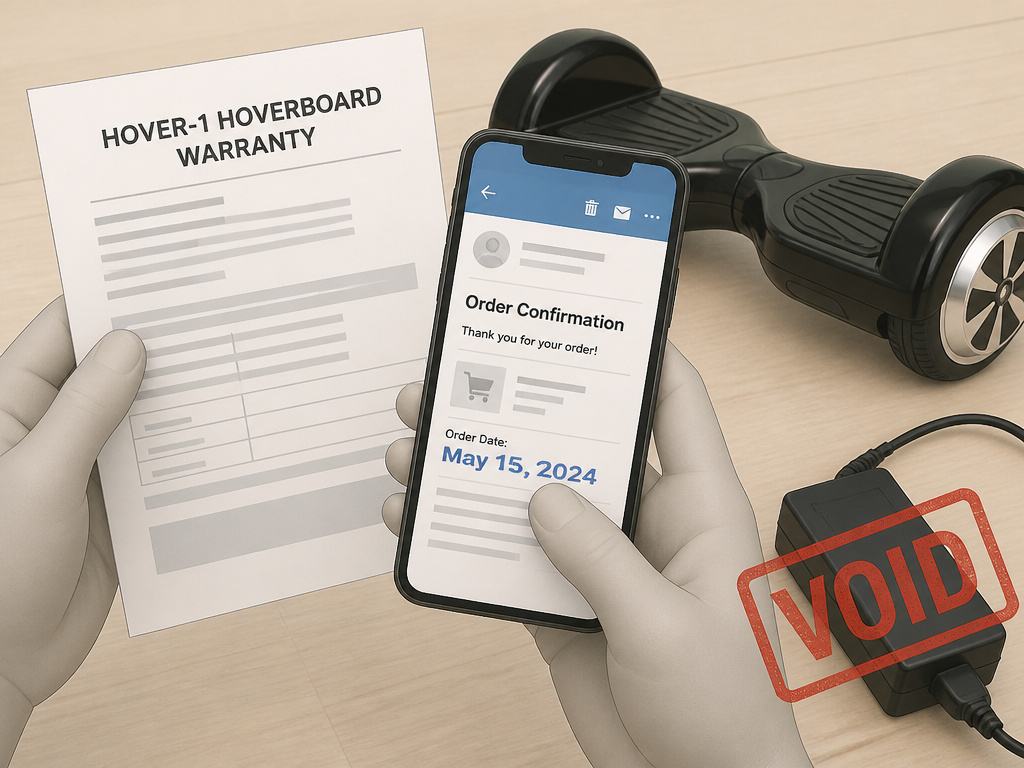
Getting warranty service from Hover-1 involves navigating a specific set of rules. The warranty only applies if you bought the board from an authorized retailer and are the original purchaser; it’s non-transferable. You’ll need your original receipt or order confirmation with the date clearly visible to make any claim. The company may also ask for photos or videos to diagnose the issue before authorizing a return. If they issue an RMA, you typically have a strict window to ship the product back. Be aware that using any charger other than the one that came with your board voids the warranty and is considered a serious fire hazard. Exposure to water, moisture, or debris also voids the warranty entirely.
Frequently Asked Questions
Is Hover-1 a good hoverboard brand?
Hover-1 produces hoverboards that meet safety standards like UL 2272 on current models, which is a critical baseline. However, the brand has been subject to two major federal recalls affecting over 100,000 units for serious hazards. Long-term owner reviews frequently cite difficulties with customer support and part availability. It’s a brand where you must buy the right model (UL certified) from the right place (authorized retailer) and be prepared for a potentially challenging experience if something goes wrong after the warranty period.
Is there a recall on the Hover-1 hoverboard?
Yes, there are two active recalls. The Hover-1 Helix is recalled for a fire hazard (check if the serial number’s fifth code is 15914, 19203, or 19988). The Hover-1 Superfly (model H1-SPFY) is recalled for a software malfunction causing unintended acceleration (check if the serial number begins with SPFY-BLK-GO-2008, 2009, or 2010). If you have one of these boards, stop using it and contact DGL Group at 1-888-556-8426 for a free replacement or repair.
Which Hover-1 hoverboard is best?
Among current, non-recalled models, the Hover-1 Sypher is generally the best option for most riders. It is UL 2272 certified, supports up to 220 lbs, and has a range of up to 7 miles. The smaller, lighter Hover-1 Maverick is only suitable for very light riders (up to 160 lbs) and very short distances (up to 3 miles). Your choice should be based primarily on the rider’s weight and your need for range.
How do I check if my Hover-1 is safe to use?
First, check if it’s a recalled Helix or Superfly model by inspecting the serial number on the bottom label. Second, look for a UL 2272 certification mark on the packaging or a holographic UL 2272 label on the bottom of the board itself. Third, ensure you have the original charger and that the board has never been exposed to water. Fourth, follow the CPSC’s safety rules: never charge unattended and keep it away from flammables. If you’re unsure about any of these points, err on the side of caution and don’t use it.
Before You Go
The bottom line with Hover-1 is that you are buying a specific configuration of components, not just a brand name. Your safety and satisfaction depend entirely on selecting a certified model, purchasing it through official channels, and adhering strictly to the charging and maintenance guidelines.
If your decision comes down to a used Hover-1 at a great price versus a new board from another brand with a clearer support history, spend the extra money on the new board. The financial and safety risk of a used, potentially recalled, or out-of-warranty hoverboard is too high. The initial savings are erased the moment you need a proprietary charger you can’t find or face a repair bill that costs more than the board.
One final, contrarian stance: for true beginners, especially younger riders, investing in a high-quality helmet and pads is more important than the brand of hoverboard you choose. The hoverboard safety guide is your first read, before any review of speed or Bluetooth speakers. The board is the vehicle; the safety gear and knowledge are what protect the driver. Start there, and your choice of model becomes a lot simpler.
