How to Clean Bearings Roller Skates: The 7-Step Process
This post contains affiliate links. As an Amazon Associate, we earn from qualifying purchases.
To clean roller skate bearings, you need to remove them from the wheels, open any removable shields, soak them in a citrus-based cleaner or solvent, dry them thoroughly, lubricate them with 1-2 drops of light oil, and reassemble. The 608 bearing standard governs most skates, and the process hinges on whether your bearing shields are removable or crimped shut.
The 8mm inner diameter of a 608 bearing is the constant. Everything else, cleaning solvents, shield policies, lubrication quantities, depends on who made your bearings and what they’re sealed with. Brands disagree on fundamentals, which is why a generic guide on how to clean bearings roller skates can wreck a set of Bones Reds as easily as it fixes them.
What follows: the mandatory tool list you actually need, a seven-step process that accounts for brand conflicts when you compare a how to clean bearings roller skates, a clear rule for when to clean versus replace, and the one test that tells you if you got it right.
Key Takeaways
- Clean bearings immediately after skating in wet conditions to prevent rust, per Powerslide’s manual.
- Use only 1-2 drops of light oil (like Bones Speed Cream) per steel bearing; over-lubrication attracts dirt.
- Never clean rubber shields with solvent. Bones Bearings states this blisters the rubber. Wipe them with a cloth or soapy water instead. However, Powerslide’s guide implies soaking the whole bearing, shields on, in citrus cleaner.
- Identify serviceable vs. Non-serviceable bearings before you start; crimped metal shields cannot be opened for internal cleaning.
- For very dirty bearings, expect to repeat the cleaning process 2-3 times with fresh solvent to remove all grit.
The 608 Bearing: Your Skate’s Universal Heart
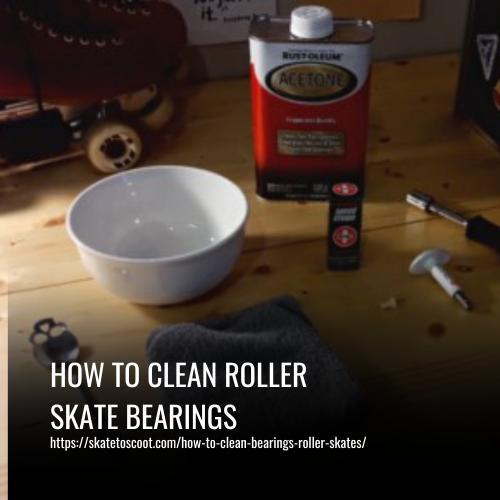
Every roller skate you own almost certainly runs on the 608 bearing standard. Powerslide’s bearing guide spells out the specs: an 8mm inner diameter, a 22mm outer diameter, and a 7mm width. That 8mm bore is why your axle fits. The 0.01 kg mass and 3500 N dynamic load rating are why it spins under your weight.
The 608 deep-groove ball bearing is the industrial standard adopted by inline and roller sports. Its 8mm inner diameter, 22mm outer diameter, and 7mm width are consistent across manufacturers, making maintenance tools and replacement parts universally compatible.
This standardization is a gift. It means the Bont Bearing Press works for quad wheels up to 70 mm, and the Bones Bearings Cleaning Unit holds eight bearings at once. But the how to clean bearings roller skates standardization ends at the shield. Whether that shield is rubber, metal, removable, or crimped changes the entire cleaning process. That’s the first decision point.
Serviceable vs. Non-Serviceable: The Shield Divide
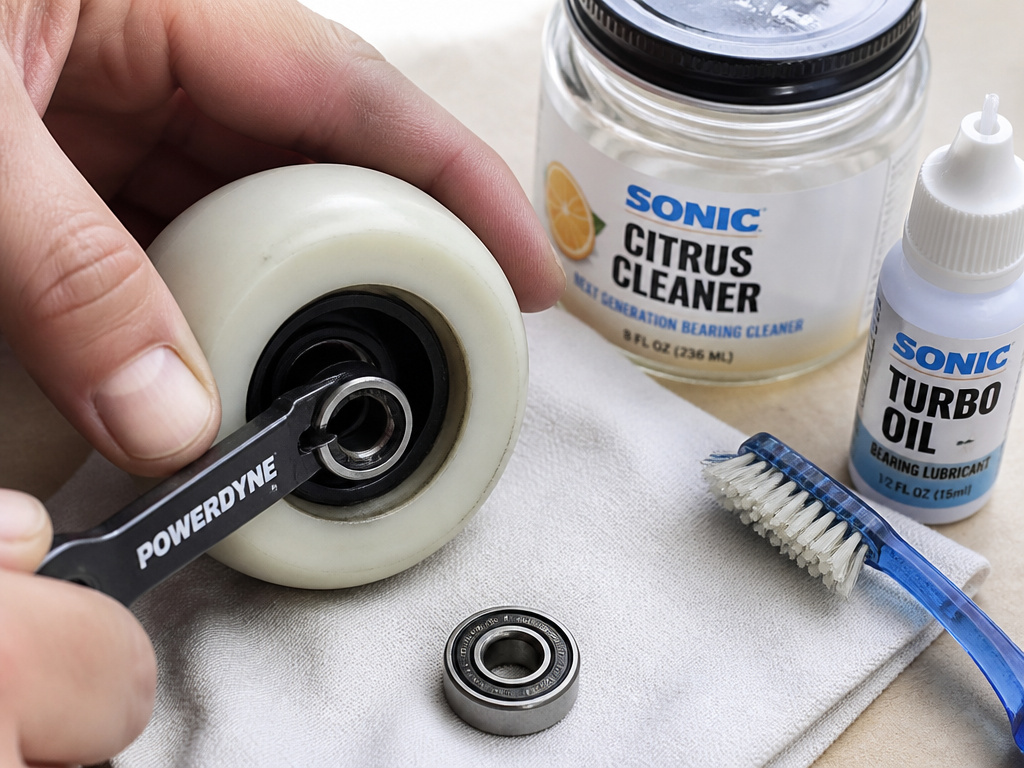
You can’t clean what you can’t open. Bearings fall into two categories, and the difference is not academic, it’s a physical line drawn by the manufacturer.
Serviceable bearings have removable shields. These are often rubber or plastic caps held in by a C-clip or just friction. Brands like Bones design them for maintenance. Non-serviceable bearings have crimped or staked metal shields. They’re sealed at the factory. No amount of prying will open them without destroying the bearing.
Bont’s maintenance blog gives the only sane rule: remove a shield only if the bearing manufacturer identifies it as removable and provides a method. If your bearing has a smooth, seamless metal shell, it’s non-serviceable. Your cleaning process for those is surface-level: wipe the outside with a dry cloth. Any guide telling you to pop them open is setting you up for a broken bearing and a wasted afternoon.
The 7-Step Cleaning Process (Tools & Method)
You don’t need a workshop. You need a few specific items and the patience to follow the order. Rushing the drying step is how bearings rust.
Tools & Materials You Actually Need
- Skate Tool or Bearing Press: To remove wheels and pop bearings out. The Bont Bearing Press is built for 7mm and 8mm bearings.
- Cleaning Solvent: Citrus cleaner (like Goo Gone) is the safest start. For heavy grime, Bones Bearings recommends acetone, methyl ethyl ketone, or denatured alcohol.
- Small Container: A glass jar or the Bones Bearings Cleaning Unit, which holds eight bearings.
- Lubricant: A light synthetic oil. Bones Speed Cream is the benchmark.
- Lint-free Cloths & Paper Towels: For drying.
- Safety Pin or Push Pin: To pry removable shields.
- Toothbrush: For scrubbing grime off bearing races.
Skip the WD-40 and the water hose. WD-40 is a penetrant, not a lubricant, it displaces the oil your bearing needs. Water, unless you’re following Bones’ specific soapy-water method for rubber shields and drying them completely, invites rust. Sources disagree: Impala Rollerskates says to avoid water, while Bones Bearings permits soapy water for rubber shields if dried completely.
Step-by-Step Walkthrough
This sequence works for serviceable bearings with removable shields. If yours are non-serviceable, stop after Step 2 and just wipe them clean.
Step 1: Remove Wheels and Bearings
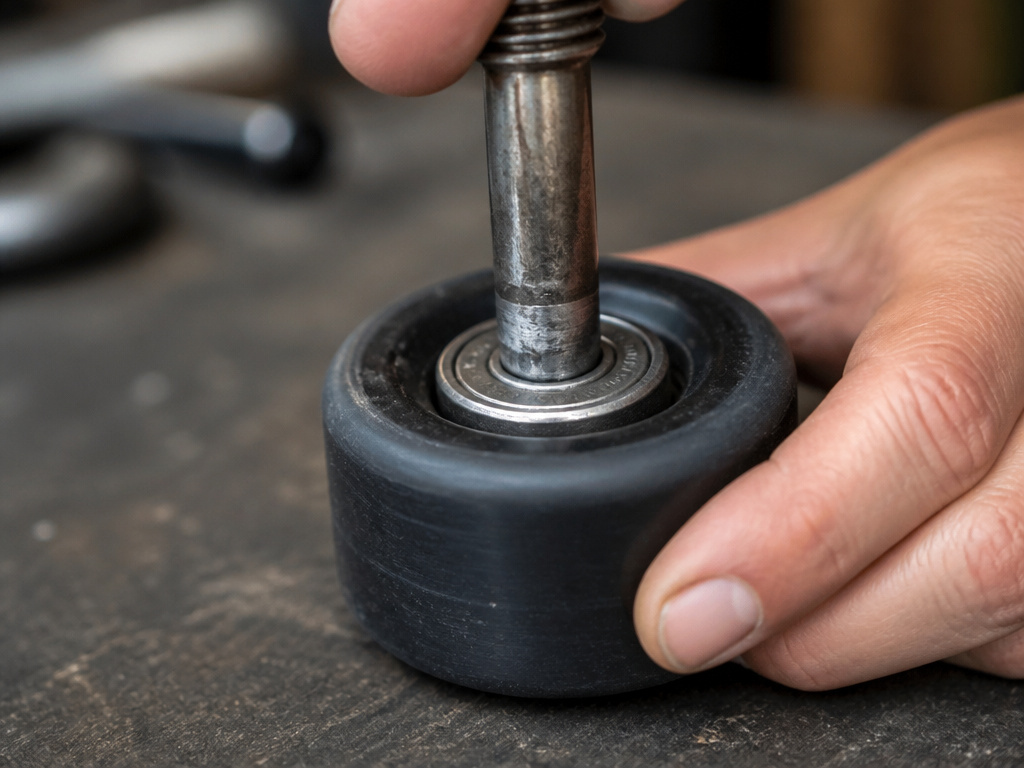
Use your skate tool to unbolt the wheels. Press the bearings out from the back. If you don’t have a press, a skate axle or a large socket can work as a punch. Don’t hammer directly on the bearing’s inner race, you’ll dent the balls.
Step 2: Remove Shields (If Possible)
Gently pry the rubber shield with a safety pin. Look for a small C-clip on metal shields and remove it with the pin. If the shield doesn’t budge, it’s likely crimped. Reassess: is this bearing serviceable? If not, wipe it and move on.
Common mistake: Forcing a non-removable shield. The metal deforms, the seal breaks, and dirt gets in permanently. You’ve just turned a sealed bearing into a gritty, unfixable mess.
Step 3: Soak and Agitate
Place the open bearings in your container. Pour in enough solvent to cover them. Citrus cleaner or another Bones-recommended solvent like acetone, methyl ethyl ketone, or denatured alcohol works. Seal the container and shake vigorously for 30 seconds. For the Bones Cleaning Unit, fill it one-third full, cap it, and shake.
Step 4: Scrub and Inspect
Remove the bearings and scrub the races and balls with a toothbrush. This dislodges packed-in grit. If the solvent is now cloudy with dirt, discard it and use fresh solvent for the next soak. SkatePro notes that for very dirty bearings, repeating this soak-scrub cycle 2-3 times is necessary.
Step 5: Dry Thoroughly
This is the step that decides if your bearings rust. Lay the bearings on a lint-free cloth or paper towel. Spin them to fling out solvent. Bones recommends using a can of compressed air to blow out the residual liquid from inside the bearing. Do this over a towel. Let them air-dry for at least 10 minutes. No moisture can remain.
Step 6: Lubricate
Lubrication is not a bath; it’s a precise dose. For steel bearings, apply two drops of light oil like Bones Speed Cream. For ceramic bearings, use one drop. Spin the bearing in your fingers to distribute the oil. Over-lubrication is a trap, excess oil attracts dirt and forms a grinding paste.
Step 7: Reassemble and Reinstall
Click the clean shields back into place. They should snap in with light thumb pressure. Insert the bearings back into the wheels, ensuring the spacer sits between them if your wheels use one. Impala Rollerskates stresses the importance of replacing that spacer. If you forget it, the bearings can shift and grind under load. Bolt the wheels back onto your skates.
The Solvent Debate: Citrus, Acetone, or Soapy Water?
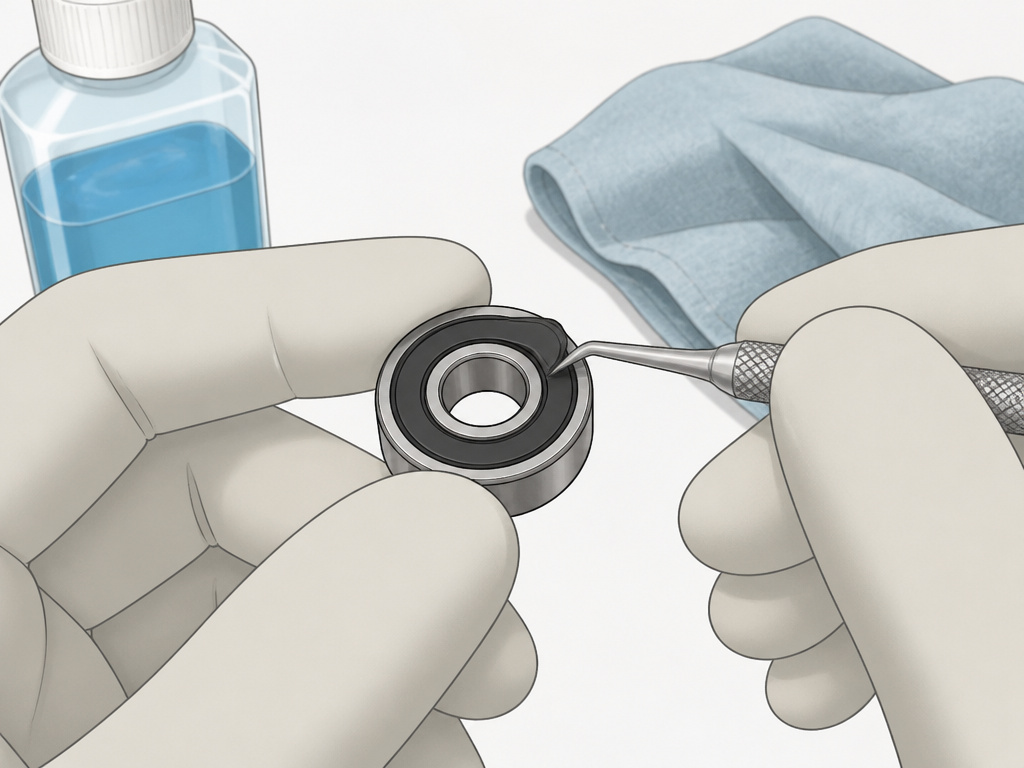
Manufacturers don’t agree. Your choice depends on your bearing’s shield type and your risk tolerance.
| Solvent Type | Best For | Key Risk / Brand Warning |
|---|---|---|
| Citrus Cleaner | All serviceable bearings, rubber shields. | Can leave oily residue (Bones). Safe for rubber. |
| Acetone / Denatured Alcohol | Heavy grease, sealed bearings (shields off). | Flammable, requires ventilation. Avoid on rubber. |
| Soapy Water | Rubber shields only (per Bones). | Water causes rust if not dried perfectly (Impala). |
Bones Bearings is categorical: do not clean rubber shields with any solvent. Solvents cause the rubber to blister and ruin the fit. Their instructions say to wipe rubber shields with a clean cloth or soapy water, drying them completely afterward. Powerslide’s guide, however, implies soaking the whole bearing, shields on, in citrus cleaner. If you follow Powerslide with Bones rubber shields, you’ll damage them.
The safe path: if your shields are rubber, remove them first and clean them separately with a damp cloth. Soak only the bare bearing in solvent.
When Should You Clean vs. Replace Your Bearings?
Cleaning is maintenance; replacement is when maintenance fails. You clean to preserve; you replace when the cost of preserving exceeds the cost of new parts.
Clean your bearings when:
- They sound gritty or raspy, but still spin.
- You’ve skated in wet conditions (clean them immediately after).
- Rolling distance between strides feels shorter.
- It’s been 3-6 months of regular use, and performance is declining.
Replace your bearings when:
- They feel crunchy or lock up even after a thorough cleaning.
- The shields are damaged or lost.
- You see visible pitting or corrosion on the balls or races.
A cleaned bearing should spin freely with a soft, metallic whirr for several seconds when flicked. A dry spin test after cleaning is your final exam. If it spins silently and smoothly, you passed. If it stutters or stops abruptly, you missed a step, often incomplete drying or under-lubrication.
Troubleshooting Persistent Noise After Cleaning
You followed the steps, but the grind remains. This usually points to one of three culprits.
First, residual dirt. Grit hides in the bearing race under the balls. If you didn’t repeat the cleaning cycle 2-3 times for very dirty bearings, some debris remains. Soak and scrub again with fresh solvent.
Second, improper lubrication. One drop of oil isn’t enough for a standard steel bearing; it needs two. Conversely, two drops in a ceramic bearing will drown it and attract gunk. Match the dose to the bearing type.
Third, water damage or rust. If you skated through a puddle and didn’t clean immediately, microscopic rust may have started on the races. Cleaning removes surface rust, but pitting is permanent. A bearing with pitted races will never sound silent. At that point, replacement is the only fix.
How to Clean Bearings Without a Bearing Puller
Not everyone has a dedicated press. You can remove bearings with common tools, but the principle is the same: push on the inner race, not the shield.
The Socket Method: Find a socket wrench socket that is slightly smaller than your bearing’s outer diameter (22mm for a 608). Place the wheel over the socket, bearing-side down. Use a smaller socket or a bolt to press on the bearing’s inner race from the other side. Tap gently with a hammer. The bearing will pop out into the larger socket.
The Axle Method: If you have an old skate axle or a long bolt of the same diameter, use it as a punch. Insert it through the wheel’s other bearing hole to contact the inner race of the bearing you’re removing. Tap it through.
The goal is to apply force evenly around the inner race.
How to Test Bearings After Cleaning
Hold the cleaned and lubricated bearing between your fingers and spin the inner race. A bearing that spins smoothly with a quiet, fluid sound and coasts to a gradual stop is good. Listen for any grinding or gritty noise, which means dirt remains inside. Feel for any hitch or catch in the rotation, which could indicate a damaged ball or race. After testing, install the bearing back into a wheel with the spacer replaced. Give the wheel a fast spin by hand; it should rotate freely and silently for a long time. If the wheel stops abruptly or sounds rough, the bearing likely needs another cleaning cycle or may be worn out and ready for replacement.
Frequently Asked Questions
What can I use to clean roller skate bearings?
You can use citrus-based degreasers, acetone, methyl ethyl ketone, or denatured alcohol. Citrus cleaner is the safest for beginners and is effective for most grime. The Bont Electronic Bearing Cleaner requires a non-flammable cleaning solution.
Is WD-40 bad for skate bearings?
Yes. WD-40 is a water-displacing penetrant, not a lasting lubricant. It will strip the existing oil from your bearings, leaving them dry and prone to wear. It also attracts dirt. Use a dedicated skate bearing oil like Bones Speed Cream.
Can I use rubbing alcohol to clean skate bearings?
You can use denatured alcohol, which is recommended by Bones Bearings. It evaporates quickly, which helps with drying, but may not dissolve thick lubricant residue. Denatured alcohol is a stronger alternative recommended by Bones.
What must be avoided when cleaning bearings?
Avoid using water (except on rubber shields per Bones’ specific method), petroleum-based solvents like paint thinner or gasoline, and never force open crimped metal shields. Also avoid over-lubrication, more than 2 drops of oil per steel bearing attracts dirt.
How often should I clean my roller skate bearings?
There’s no fixed rule. Powerslide states it depends on skating conditions, terrain, and style. There is no fixed rule; Powerslide states it depends on skating conditions, terrain, and style. Clean them immediately after any session in wet conditions. Listen for increased noise and feel for decreased roll.
The Bottom Line
Cleaning roller skate bearings is a straightforward mechanical process that gets complicated only when you ignore the manufacturer’s fine print. The 608 standard gives you a universal starting point, but the shield on your specific Bones, Powerslide, or Bont bearing dictates the rules.
If you take away one thing, let it be this: identify your bearing type before you pick up a tool. Serviceable bearings with removable shields get the full seven-step treatment. Non-serviceable bearings with crimped metal shields get a wipe-down and a sooner replacement date. That distinction saves more bearings than any solvent.
The sound of a perfectly cleaned set, a faint, liquid whirr as the wheels spin, is the reward. It’s the sound of friction losing. Keep that in mind when you’re elbow-deep in citrus cleaner, and the process feels like a chore. You’re not just cleaning bearings; you’re tuning the instrument.