JMK Free Skates Review: The Component Breakdown
This post contains affiliate links. As an Amazon Associate, we earn from qualifying purchases.
JMK Free Skates are a premium, strapless skate platform built from aircraft-grade aluminum decks and steel trucks, using 78a wheels and ABEC-7 bearings. They are not returnable if you cannot learn to ride them, and while the manufacturer claims a 5-hour learning timeline, real-world experience suggests 8-10 hours of dedicated practice is a more realistic starting point for basic mobility.
That “no returns” policy isn’t a gimmick. It’s a direct consequence of the product’s unique challenge—mastering freeskating is a physical skill, not an assembly error. For a detailed look at the experience, check out the JMK free skates review. The question shifts from “can I send them back?” to “am I willing to put in the reps?”
What follows is a breakdown of where that premium price actually goes, a timeline you can plan your first week around, and a clear look at what you’re signing up for before you click buy.
Key Takeaways
- The aircraft-grade aluminum deck and painted high-strength steel truck construction is the main differentiator from cheap, all-plastic clones; this build handles weight up to 500 lbs and absorbs vibration better.
- Plan for 8-10 hours of focused practice over 1-2 weeks to achieve basic, wobbly forward motion; the manufacturer also states it’s possible to learn to ride downhill and on flat in about 5 hours, which is a best-case scenario for naturally coordinated learners.
- No returns for inability to learn; the manufacturer’s policy explicitly states they cannot accept used skate returns if they are not faulty, making this a commitment-heavy purchase.
- For a lower-risk entry, JMKRIDE itself sells the Tudex Intro Freeskates, a budget-friendly, wood-deck option with pre-installed edge guards, though returns are also not accepted.
- Wrist guards and a helmet are essential; the learning phase involves repeated, unpredictable bails where your hands hit the ground first.
What Exactly Are You Reviewing?
JMK Free Skates, often called freeskates or freeline skates, are two independent, strapless platforms. Each skate has a deck you stand on, a truck that holds the axle, and two wheels. You control them by shifting your weight and using a side-to-side “pumping” motion. The sport was originally called ‘side skating’ and was invented in 2005 by a company called ‘Freeline’. JMKRIDE was founded by former Freeline employees to keep the sport alive after the original company folded.
This JMK free skates review focuses on the flagship JMKRIDE Freeskates Complete Set. It’s the model they push in all their tutorials and the one that defines the brand’s reputation for quality against a sea of Amazon knock-offs.
The part nobody mentions: This isn’t a toy or a casual impulse buy. It’s a skill-based sport tool with a steep initial learning curve, similar to learning to ride a bike. The community is small but dedicated, and the company actively supports it through tutorials and events.
The JMK Build: A Component Breakdown
Where does the money go? Straight into the spec sheet. Cheaper skates often use a single cast piece for the deck and truck, usually a brittle alloy or plastic. JMK’s construction is modular and uses distinct, high-grade materials.
| Component | JMKRIDE Spec | Why It Matters |
|---|---|---|
| Deck | Aircraft-grade aluminum | Stiffness for control, vibration damping for a smoother ride, and high weight capacity. |
| Truck | Painted high-strength steel | Handles torsion from carving and pumping without flexing or failing at the axle. |
| Wheels | 78a hardness, 73x43mm (US) / 82A, 72mm (Japan) | Softer urethane (78a) grips pavement better for learning; harder (82A) offers slightly less grip but more speed. |
| Bearings | ABEC-7 rated with built-in spacers | Smoother, faster roll with less maintenance. The spacers keep the bearings aligned under lateral pressure. |
| Weight Capacity | Tested to 500 lbs | The steel truck and aluminum deck combo isn’t just for show; it’s why a 300lb+ former MMA fighter can use them. |
The ABEC-7 bearings are a tangible upgrade. On cheap skates, the wheels often feel gritty and slow. JMK’s spin freely with a quiet, metallic whirr. You feel the difference on your first push—less effort to start rolling.
That said, you will be assembling them. The decks arrive separate from the trucks. You bolt them together and apply the grip tape. A common mistake is building two “left” or two “right” skates. The trucks are handed; the kingpin (the main bolt) should point outward from the center of your body when you stand on them.
How Long Does It Really Take to Learn?
Here’s where the marketing and reality often diverge. The official FAQ states it’s “possible to be riding downhill and on flat in about 5 hours.” Another product page says “with proper instruction, it’s possible to learn in around 8-10 hours (~1-2 weeks of consistent practice).” Their YouTube tutorial even mentions some learners getting it in an hour, but immediately calls that “not exactly realistic.”
Here is how that translates into a practical first-week schedule.
Days 1-2: The “What Have I Done?” Phase.
You will not be skating. You will be holding onto a fence, wall, or patient friend, trying to simply stand on the skates without them shooting out from under you. The goal is to find your balance point, which is farther forward than you think. Most people lean back instinctively, which makes the skates slip backward. Expect frustration. Your calves and hip flexors will ache from muscles you didn’t know you had.
Days 3-5: The “First Wobbly Yard” Phase.
You’ll manage a few unassisted pushes and a shaky, uncontrolled glide for 10-20 feet. This is where most people either have a breakthrough or quit. The key is committing to the fall—you have to push past the point of no return to feel the skates start to roll under you. This is also when you’ll discover the importance of wrist guards. You will put your hands down, a lot.
Day 6-7 and Beyond: Building Consistency.
If you’ve put in 30-60 minutes daily, you might start linking pushes together. The motion shifts from a desperate stagger to a tentative, rhythmic pump. Conquering a slight hill, as the manufacturer suggests around the 15-hour mark, is a legitimate medium-term goal.
I recommend against buying the cheapest skates you can find when the goal is to learn. A flimsy boot or a flexing frame adds instability on top of an already difficult skill. Poorly built gear makes learning harder and falls more likely.
The Amazon listing warns of a “learning curve similar to learning how to ride a bike,” and notes refunds aren’t given due to this curve, a point often stressed in a thorough JMK free skates review. That’s your most honest timeline indicator.
The Realistic Learning Progression
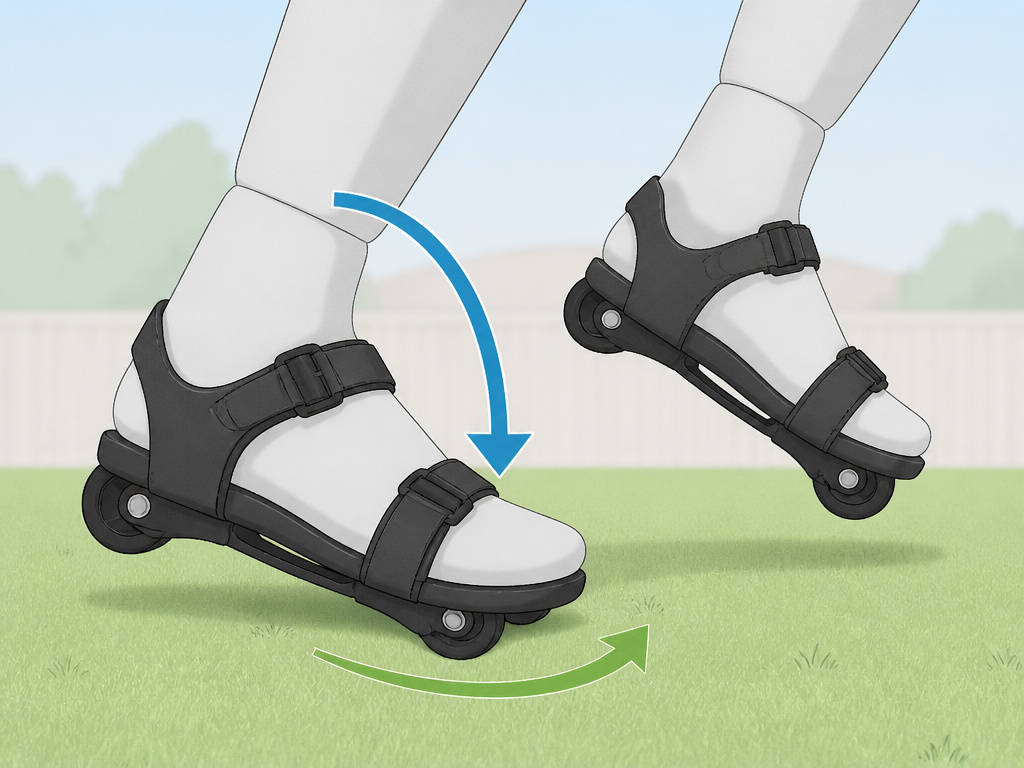
Forget “riding downhill” as a day-one target. Follow this sequence instead. It’s slower, safer, and actually works.
- Balance Drills (No Movement). On grass or carpet, just stand on the skates. Get comfortable shifting your weight from heel to toe and side to side. Skip this, and your first push on pavement will end in under two seconds.
- Assisted Gliding. Find a smooth, flat path with a railing. Hold on and simply roll forward, getting used to the feeling of the wheels moving underfoot. This builds the muscle memory for a stable platform.
- The “Scooter” Push. Instead of trying to pump, push off with one foot like a scooter, keeping the other skate on the ground. Glide as far as you can, then push again. This teaches forward momentum without the complex coordination of pumping.
- Introduction to Pumping. On a very gentle slope, let gravity start your roll. Then try adding a small, subtle “S” carve to feel how side-to-side motion generates speed. This is the core mechanic.
- Linking Pumps on Flat Ground. This is the final hurdle. It requires committing your weight fully from one edge to the other. It feels wrong until suddenly it doesn’t.
The community on Facebook (“USA Freeskaters”) is a real asset here. People post their early, wobbly videos and get specific advice. It’s more useful than any generic tutorial.
Portability, Maintenance, and Longevity
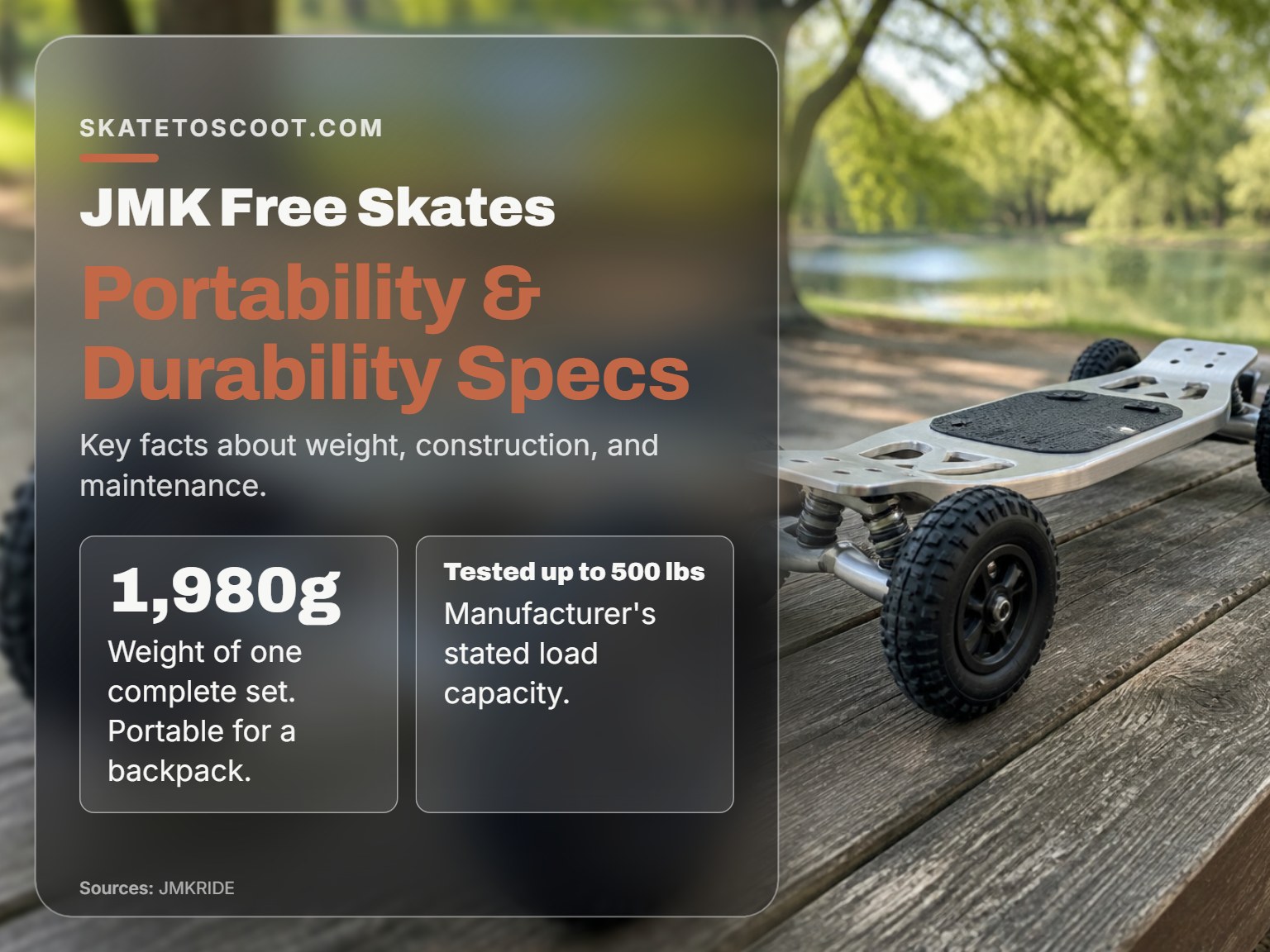
The skates are portable. A set weighs 1,980g and fits in a backpack. This is a genuine advantage for campus commuting or taking them to a smooth parking lot.
Maintenance is straightforward but necessary. It’s not a “ride till it breaks” item if you want performance.
- Clean your bearings. Grit and water will ruin them. Pop the shields, soak them in isopropyl alcohol, and re-lube with skate bearing oil. Do this every few months if you skate regularly.
- Rotate your wheels. Swap them front-to-back to even out the wear.
- Check hardware. Give the axle nuts and deck bolts a tighten with the Allen key every couple of weeks; vibration can loosen them.
- Replace parts. This is JMK’s advantage over no-name brands. You can buy official JMKRIDE Trucks, Proformance Wheels, JMKRIDE Bearings, Replacement Screw Kits, and Shock Pads directly from them.
JMK vs. The Budget Alternative: Tudex Intro Freeskates
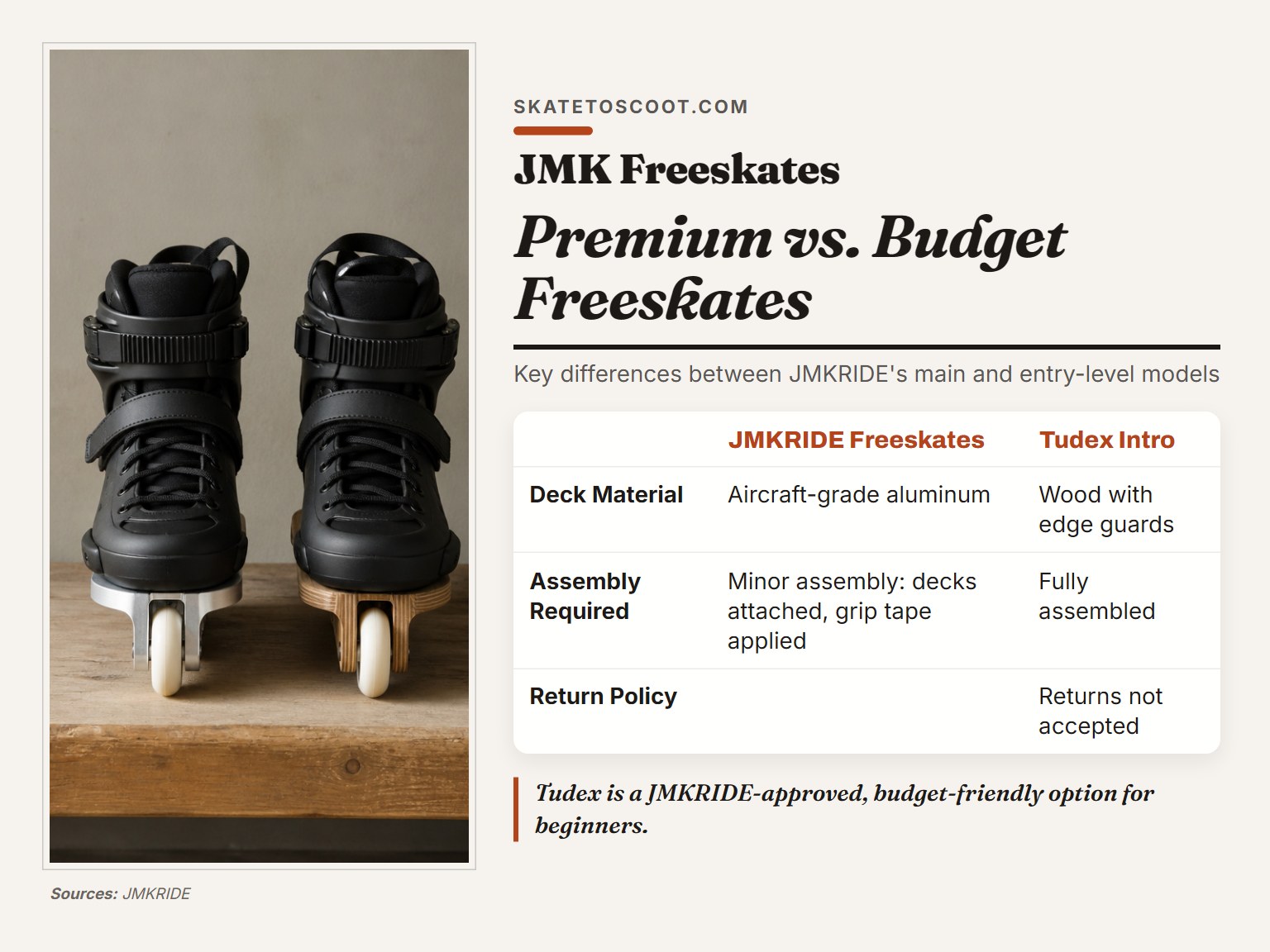
JMKRIDE itself offers a cheaper path: the Tudex Intro Freeskates. This is a crucial comparison.
| Aspect | JMKRIDE Freeskates (Complete Set) | Tudex Intro Freeskates |
|---|---|---|
| Decks | Aircraft-grade aluminum | Wood with pre-installed edge guards |
| Assembly | Required (decks attached, grip tape applied) | Fully assembled |
| Target Use | Long-term skating, learning, tricks | Casual exploration, “try before you invest” |
| Durability | Built for long-term use and tricks | Not built for heavy tricks or long-term durability |
| Return Policy | No returns for inability to learn | Returns not accepted for this product |
| Price Point | Premium | Budget-friendly |
The Tudex skates exist for one reason: to let you see if you even enjoy the concept of freeskating without the $125+ commitment. They are a JMKRIDE-approved, lower-quality tool. As one Reddit user put it, cheap skates “bring many people to the sport that would’ve otherwise never tried it.” If you’re genuinely curious but hesitant, the Tudex route is a JMKRIDE-approved, budget-friendly option.
For a pure, smooth ride and a platform you can grow with, the aluminum and steel construction of the main JMK skates is a key feature.
Who Are JMK Free Skates Actually For?
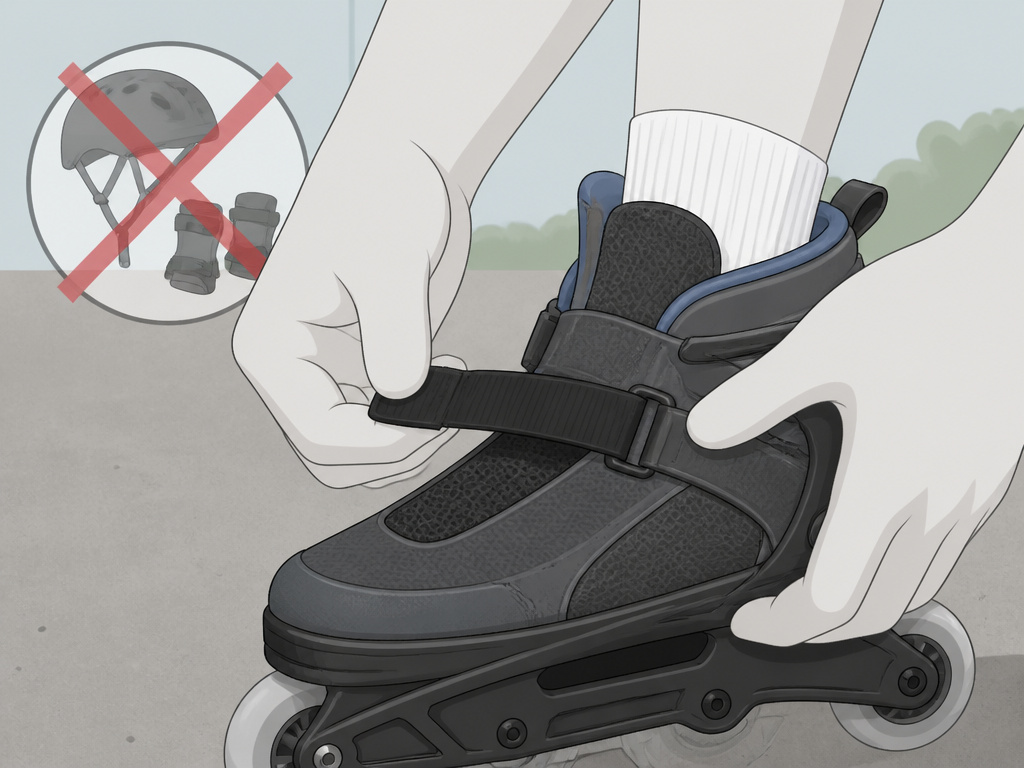
This isn’t a product for everyone. It’s for a specific type of person.
Buy JMK Free Skates if:
- You enjoy the process of learning a physical skill and aren’t frustrated by repeated failure.
- You have access to smooth, flat pavement.
- You want a highly portable, unique form of locomotion.
- You value build quality and want a skate that will last and has available replacement parts.
Avoid JMK Free Skates if:
- You are not willing to wear wrist guards and a helmet every single session.
- You expect to master it in a weekend or want a money-back guarantee if you don’t.
For those seeking a lower-risk entry, JMKRIDE itself sells the Tudex Intro Freeskates. The financial risk is lower, and if you click with the sport, you’ll know exactly why upgrading to the full JMK build is worth it. If you don’t, you’re out less money and haven’t tangled with a strict return policy.
How do JMK Free Skates compare to cheaper Amazon skates?
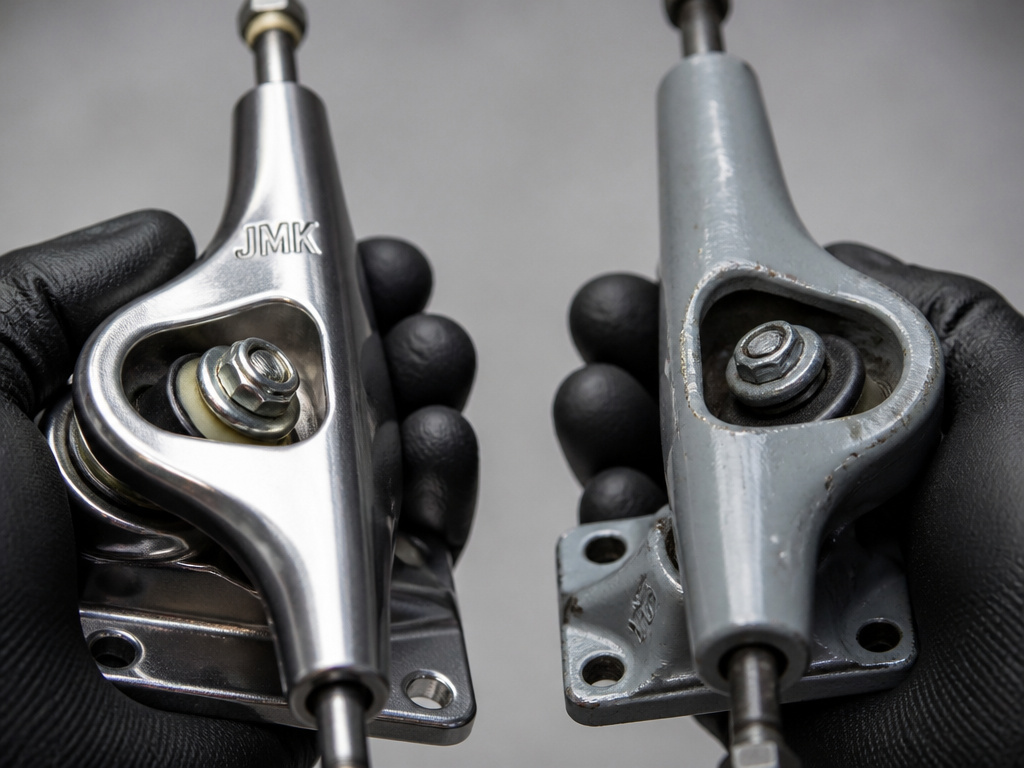
The main difference is in the materials. JMK skates use an aircraft-grade aluminum deck and trucks made from painted high-strength steel, which are built for durability and precise control. Cheaper alternatives often use softer metals or plastic composites, which can flex or warp under stress. The components on JMK skates, like the ABEC-7 bearings and 78a wheels, are also specified as higher quality. While budget skates get you rolling, JMK’s construction supports a wider range of replacement parts directly from the manufacturer.
Frequently Asked Questions
What is the best free skate company?
For quality, community support, and available parts, JMKRIDE is currently the leading brand. They evolved from the original Freeline company and maintain tutorial and community support.
Are free skates hard to ride?
Yes, initially they are very difficult. The learning curve is steep and non-intuitive, comparable to learning to ride a bicycle for the first time. It requires consistent practice over days or weeks to achieve basic control.
How fast do free skates go?
On flat ground, a proficient rider can reach and maintain speeds similar to a comfortable running pace.
Are Chaya skates a good brand?
They do not manufacture freeskates. When searching for “Chaya free skates,” you are likely seeing either incorrect listings or unrelated products. For the strapless, two-platform freeskate design, JMKRIDE and its Tudex line are dedicated options.
The Bottom Line
JMK Free Skates are a well-built, premium product for a niche sport. The aircraft-grade aluminum and steel construction justifies the price if you’re committed to learning. The advertised 5-hour learning timeline is a best-case scenario; plan for 8-10 hours of focused practice over 1-2 weeks just to find your balance and move forward with any control.
The “no returns for learning difficulty” policy makes this a high-commitment purchase. Protect yourself two ways: buy the Tudex Intro Freeskates first to test your interest, and never, ever skip the wrist guards and helmet during the learning phase. This isn’t a toy; it’s a skill. And like any good skill, it rewards patience and punishes shortcuts.
