Kistp 450W Electric Scooter Review: Key Specs and Findings
This post contains affiliate links. As an Amazon Associate, we earn from qualifying purchases.
The Kistp 450W electric scooter is a 35-pound commuter model with a 15.5 mph top speed and a manufacturer-claimed range of up to 21 miles on its 36V-7.5Ah battery. Its 450W motor supports a 265-pound load, and it includes a seat, basket, and dual disc brakes. Independent tests, however, show manufacturer range claims are often 40–60% optimistic, and Consumer Reports no longer recommends any e-scooters due to injury risks and a lack of federal safety standards.
That gap between the advertised 21-mile promise and the likely 12-mile reality is the whole game. You are not buying a spec sheet. You are buying a physical machine that has to navigate potholes, carry your weight up a slight incline, and stop when you need it to. The numbers on the page tell you what the company wants you to hear. The data from owners and testers tells you what happens when the rubber meets the road.
What follows is a breakdown of the Kistp 450W’s official specs, the independent test data that contradicts them, and the safety context most budget scooter reviews skip, forming the core of this Kistp 450W electric scooter review. This review explains where the scooter fits among other budget scooters, who should consider it, and the essential checks to make when it arrives.
Key Takeaways
- The Kistp’s 15.5 mph top speed is below the 20 mph that Consumer Reports states is most common, making it slower but potentially more stable for new riders.
- ERideHero states manufacturer claimed range is often 40–60% higher than actual real-world range, which suggests planning for a range lower than the advertised 21 miles.
- Riders above 220 lbs should consider a 500W motor for reliable hill power, as the Kistp’s 450W motor may struggle despite its 265-pound capacity rating.
- Check for a UL 2272 certification on the battery and electrical system; this independent safety standard is crucial for fire risk, yet many budget models lack it.
- Be prepared for potential missing assembly parts, as multiple owners report an inability to inflate the tires due to a missing, unspecified “special part” in the kit.
Kistp 450W Electric Scooter: Key Specifications
The Kistp 450W is built as a seated commuter. Its 36V-7.5Ah battery, 450W motor, and 12-inch pneumatic tires are standard for the under-$500 category. The manufacturer lists a 5-hour charge time, a 265-pound max load, and a net weight of 35 pounds. The recommended tire pressure is 2.5 bar, or about 36 psi.
A 2022 EU Safety Gate recall of Kaabo Mantis scooters cited “inadequate electrical insulation” and fire risks from water ingress, highlighting why independent electrical safety certifications matter for any scooter you bring indoors.
The included seat and front basket expand its potential uses. The dual disc brakes are a feature at this price point. But specs are a starting point. The seat adds a higher center of gravity, which can affect stability. A standing scooter rider can step off; a seated rider is more committed to the physics of the tumble if things go wrong.
What’s In The Box (And What’s Often Missing)
You should receive the scooter, the seat assembly, the battery charger, a basic tool kit, and the front basket. The manual is typically included, but clarity varies.
Where this goes sideways: The tire inflation process. The 12-inch tires are not pre-inflated. Multiple purchasers report being unable to inflate tires due to a missing, unspecified ‘special part’ in the kit. This isn’t a minor inconvenience; it’s a show-stopper before the first ride.
Your first task is verifying you can actually assemble it. Lay out all parts against the manual’s list. If the mysterious inflation adapter is missing, you are facing an immediate return or a trip to a bike shop before you even test the motor. This kind of quality control lapse, a common note in a Kistp 450W electric scooter review, has been reported with brands like Kistp.
The 15.5 mph vs. 20 mph Top Speed Reality
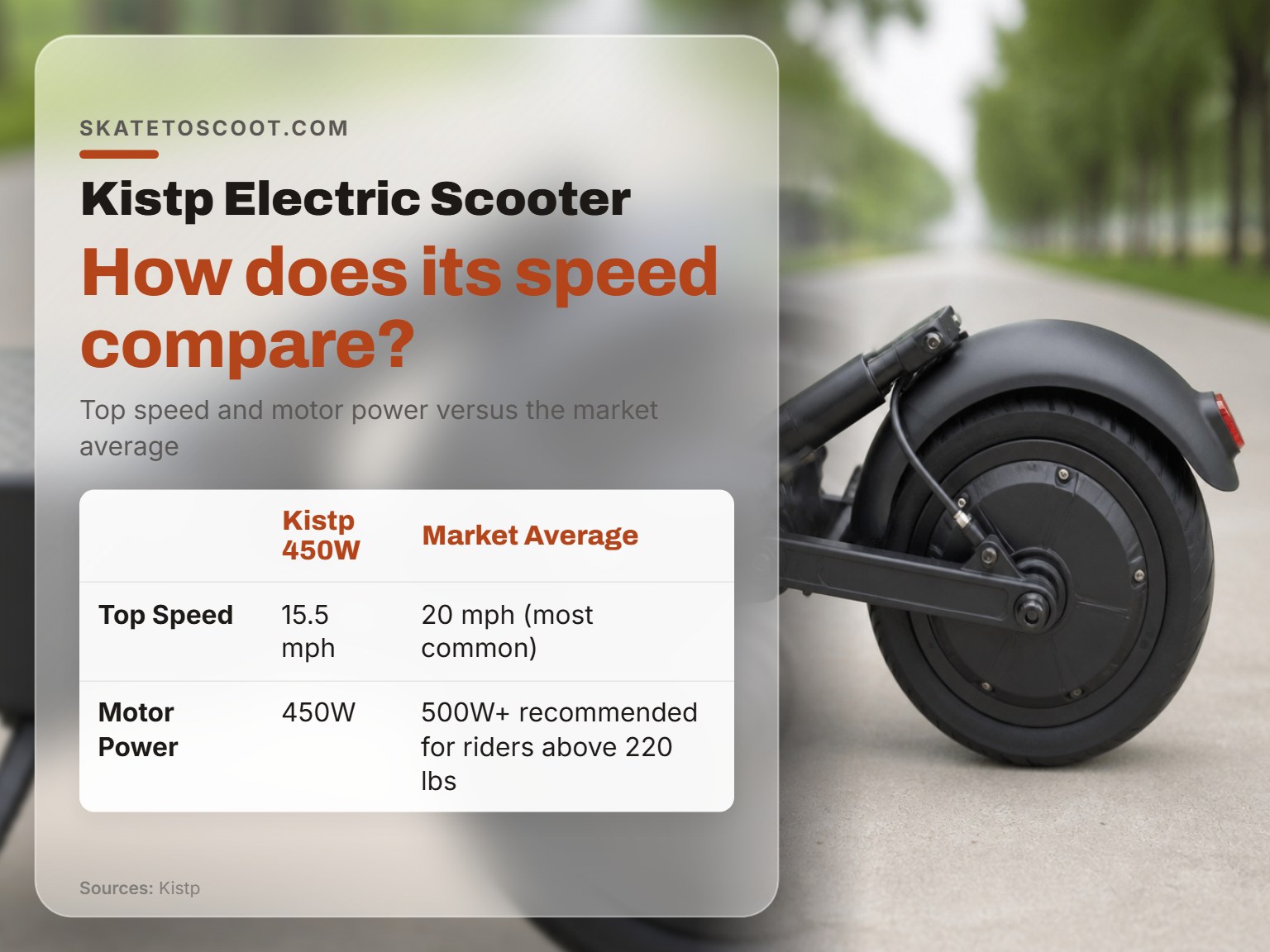
The Kistp’s top speed is listed at 15.5 mph. For context, Consumer Reports states the most common top speed for e-scooters now is 20 mph. This puts the Kistp a solid 4-5 mph slower than the current average.
Is that a bad thing? For a new rider or someone using it for relaxed errands, possibly not. Lower speed means more time to react and less force in a potential fall. But for a commuter trying to keep pace in a bike lane, that deficit matters. It also affects hill-climbing ability. A 450W motor straining against a grade at 15.5 mph will drain the battery faster than a more powerful motor maintaining the same speed with less effort.
| Speed Context | Kistp 450W | Market Average (per CR) | Performance Scooter |
|---|---|---|---|
| Top Speed | 15.5 mph | 20 mph | 45 mph (UT5 Ultra X) |
| Motor Power | 450W | 500W+ common | 2000W+ |
| Best For | Leisurely rides, flat paths | General commuting | Enthusiasts, long-range |
| Rider Experience | Beginner-friendly | Balanced for most | Requires high skill |
The takeaway is simple: the Kistp is not a performance machine. It is a budget adult scooter for flat, smooth terrain. If your route has hills or you need to merge with 20 mph traffic, you will feel underpowered. For comparison, a tested Gotrax GXL V2—another budget model—hit 14 mph, showing the Kistp is in the same performance band, not an outlier.
Real-World Range: Expect 40–60% Less Than Claimed
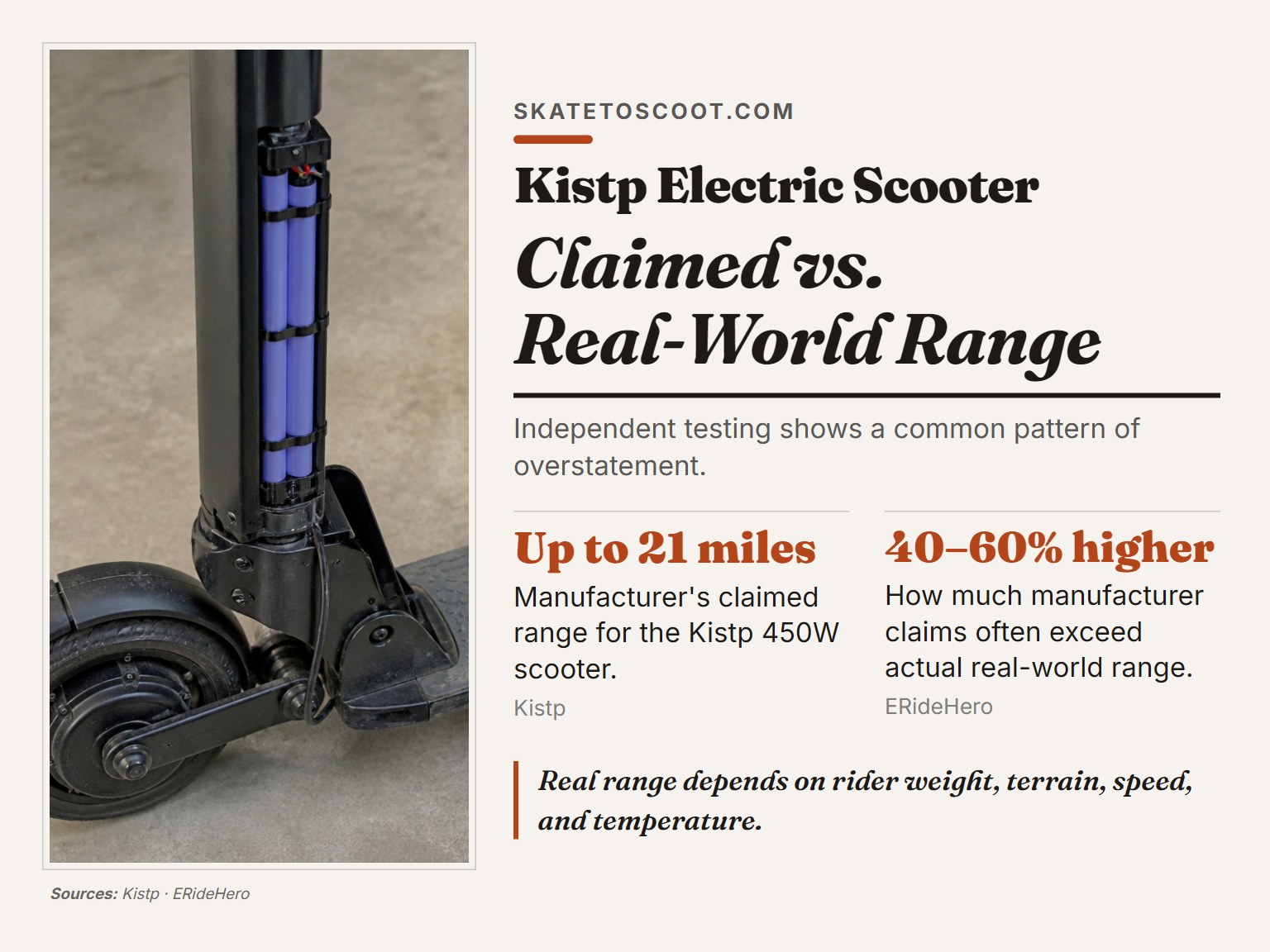
The manufacturer claims “up to 21 miles” of range. Independent tester ERideHero states manufacturer claimed range is often 40–60% higher than actual real-world range. Applying ERideHero’s observation suggests a realistic range significantly lower than the claimed 21 miles.
This is a documented pattern. ERideHero’s own testing of a GT3 Pro scooter with a 48V system yielded 23.3 miles of real-world range against a higher claim. Another test of a KQi Air scooter yielded 24.2 miles. These are scooters with more advanced battery tech (48V systems, 21700 cells) than the Kistp’s 36V-7.5Ah setup. The Kistp’s range will be less.
What murders range:
- Rider weight: The 265-pound max load isn’t a performance guarantee. Heavier riders draw more power.
- Terrain: Any incline forces the 450W motor to work harder, spiking energy use.
- Temperature: Cold weather reduces battery efficiency.
- Speed: Riding at the full 15.5 mph consumes more energy than a steady 12 mph.
Your actual range is the first thing you should test with a full charge on your regular route. Trust that number, not the one on the website.
Weight Capacity, Motor Power, and Hill Climbing
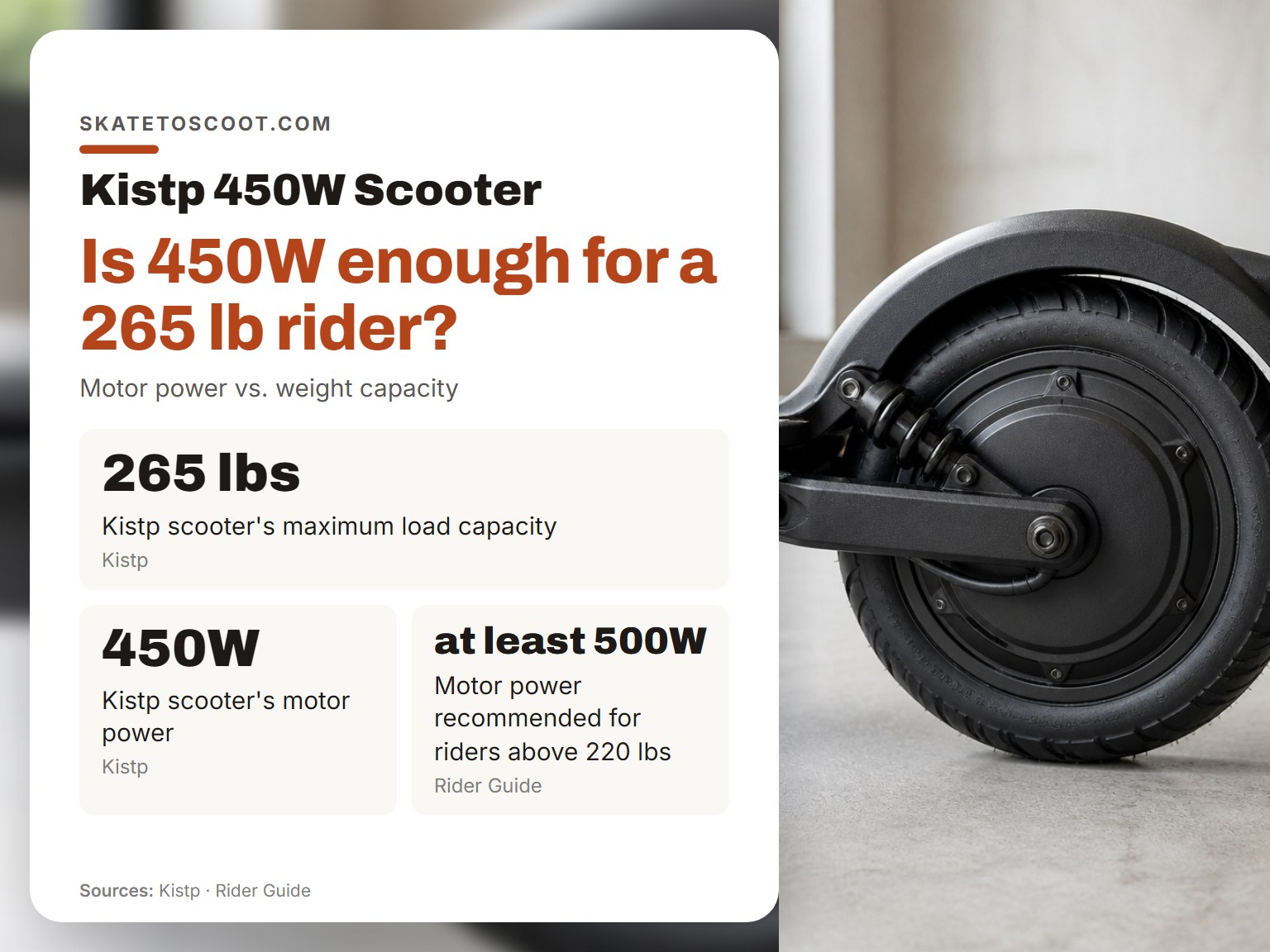
The scooter supports a maximum load of 265 pounds. Rider Guide states riders above 220 lbs should find a scooter with at least a 500-watt motor, which contrasts with the Kistp’s 450W motor despite its 265-pound capacity rating.
The frame may hold you, but the 450W motor may not propel you up a hill with any urgency. You’ll move, but slowly, and the strain will heat the motor and drain the battery rapidly. For heavier riders or those with hilly commutes, stepping up to one of the best 500W electric scooters is a wiser investment. A more powerful motor can provide better torque and help preserve range.
| Rider Weight | Kistp 450W Suitability | Recommended Alternative |
|---|---|---|
| Under 180 lbs | Likely adequate for flat terrain. | Kistp is a candidate. |
| 180–220 lbs | Performance will diminish on hills. | Consider 500W models. |
| Over 220 lbs | Motor will struggle; range will suffer. | 500W+ motor required. |
If your commute is flat, the Kistp might suffice even if you’re near the max weight. But “flat” is key. Even slight inclines can significantly reduce the speed and range of an underpowered scooter.
Safety, Regulations, and the Missing Standards
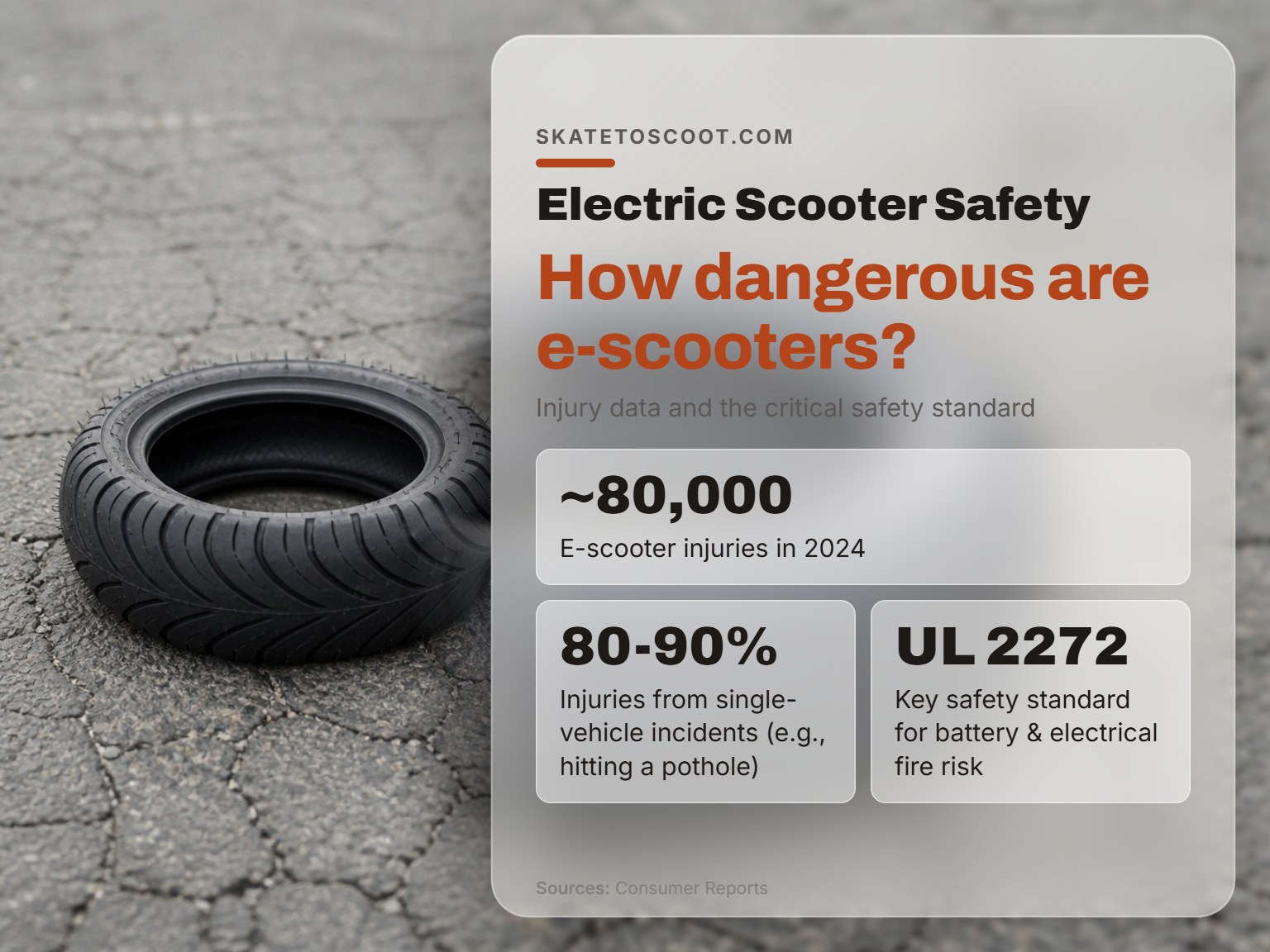
This is the most critical section. Consumer Reports no longer recommends any electric scooters due to injury data. They note nearly 80,000 e-scooter injuries in 2024, with 80-90% being single-vehicle incidents (like hitting a pothole). A 2022 review cited by Wikipedia found e-scooter injury rates were more like those of motorcycles than bicycles.
Before you start: You need a proper bike helmet. Consumer Reports states electric scooter riders are more likely than motorcycle riders to suffer a traumatic brain injury in an accident. The standing posture means you often fall headfirst. Wrist guards are also crucial, as the instinct to catch your fall leads to fractures.
The regulatory landscape is a patchwork. The EU has the Machinery Directive, which led to the Kaabo Mantis recall for electric shock and fire risks. The U.S. Lacks a federal safety standard for adult consumer e-scooters. The only independent standard is UL 2272, which covers the battery, charger, and electrical system for fire risk. CR encourages consumers to choose a UL 2272-compliant model. The Kistp’s compliance with UL 2272 is not confirmed in the provided sources. You must look for the UL mark on the scooter or charger itself; if it’s not there, assume it’s absent.
The small wheels, which Wikipedia notes are usually between 8 and 11 inches, make them vulnerable to pavement cracks and potholes. The combination of a high center of gravity (especially with the seat), small wheels, and a standing rider is inherently less stable than a bicycle. Your safety depends almost entirely on your protective gear, your speed, and your route choice.
Assembly, Ownership, and Long-Term Reliability
Assembly is straightforward if all parts are present. The main frame is pre-assembled; you attach the handlebar, seat, and basket. The electrical connections are typically plug-and-play. The real test comes in the first 100 miles.
Long-term reliability for brands like Kistp is the biggest unknown. Owner reports suggest Kistp is one of several brand names used for white-label scooters. This means parts support and warranty service can be ambiguous.
- Warranty: Rider Guide states electric scooter warranties typically range from 6 months to 2 years. Some brands, like NIU Scooters, offer a strong 2-year warranty covering the battery and controllers. The Kistp’s warranty terms should be verified before purchase.
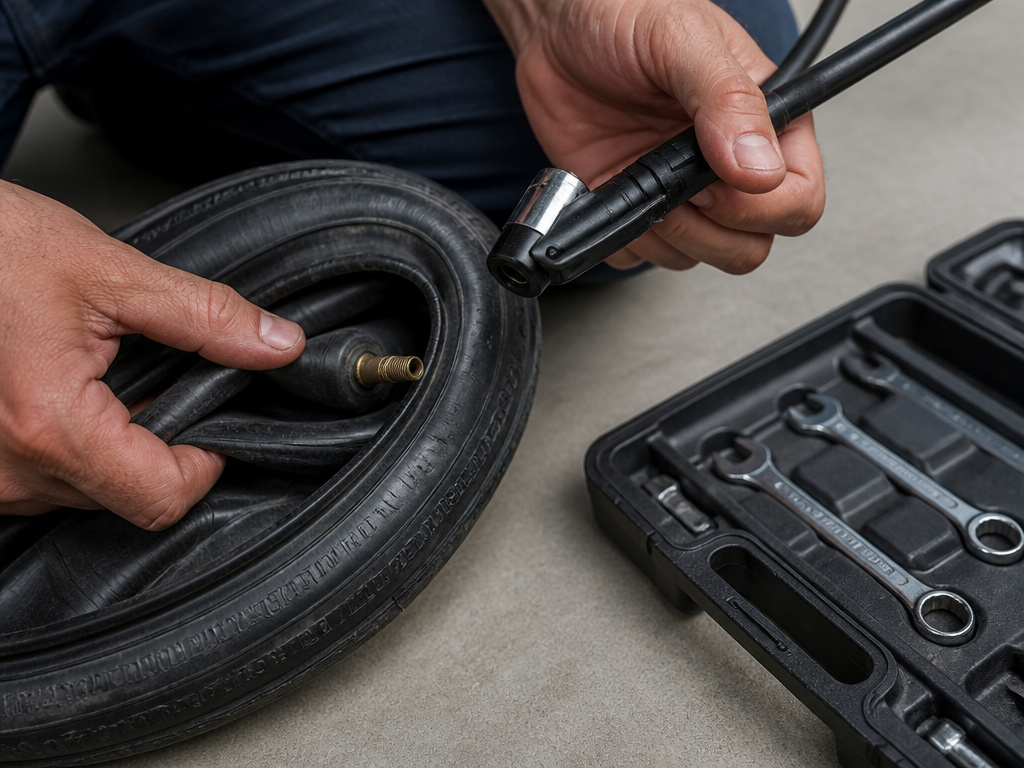
- Parts Availability: The 12-inch pneumatic tires are standard size, but the inner tube valve type must match. If you have a flat, finding a replacement tube is easy, but installing it requires tools and mechanical comfort.
- Battery Lifespan: The 36V-7.5Ah lithium battery will degrade over 2-3 years of regular use. Replacement cost and availability are important considerations.
Ownership is a bet on your own mechanical willingness. If you can handle basic tire changes and electrical diagnosis, a budget scooter is manageable. If you need full service support, you may be better off with a brand that has a known service network.
Kistp vs. Other Budget Scooters
How does the Kistp stack up against other budget scooters?
The Kistp’s key differentiator is the included seat and basket, which moves it from “last-mile” to “errand-runner.” Other budget models often focus on portability and folding design, sacrificing comfort for weight. Other models might offer similar specs without the seat, potentially at a lower price. The choice isn’t about raw power—they’re all in the 450-500W range—but about form factor and intended use.
The seat changes everything. It invites longer rides but also changes the riding dynamics and safety profile. If you don’t need the seat, you might find a better pure-standing scooter for the same money. If you want the seat, the Kistp is one of the few packaged this way at this price point.
How much does the Kistp 450W cost?
Official pricing and promotional offers for the Kistp 450W can shift frequently. The best way to find the current price is to check the retailer listed on the manufacturer’s official product page. For any scooter purchase, it’s wise to compare the final cost, including any shipping fees, against other models with similar specifications. Sometimes, a slightly higher upfront cost for a model from a brand with a longer warranty or better-documented customer service can represent a better overall value than a deep discount on an unknown quantity.
Frequently Asked Questions
What is the real-world range of the Kistp 450W electric scooter?
Plan for 12-13 miles under ideal conditions (flat terrain, moderate speed, lighter rider). Independent testing consistently shows real-world range is 40-60% lower than manufacturer claims. Hills, wind, rider weight, and colder temperatures will reduce this further.
Is the Kistp 450W scooter good for adults?
It is designed for adults, with a 265-pound load capacity and an adjustable seat. However, its 450W motor may feel underpowered for heavier adults or those with hilly commutes. Adults over 220 lbs should strongly consider a 500W electric scooter for adequate performance.
How fast does the Kistp 450W electric scooter go?
Its top speed is 15.5 mph (25 km/h). This is below the current market average of 20 mph for adult scooters. It provides a more stable, beginner-friendly speed but will feel slow if you need to keep pace in bike lanes.
What safety certification should I look for?
Look for the UL 2272 certification mark on the scooter or its charger. This independent standard tests the battery, charger, and electrical system for fire risk. Many budget scooters lack this certification, which is a significant safety consideration, especially if you charge indoors.
Who makes Kistp electric scooters?
Owner reports on forums like r/ElectricScooters suggest Kistp is one of several brand names used for white-label scooters manufactured by companies such as Gyroor. Other names under the same umbrella reportedly include Urbanmax, Phantom, and Mihover. This can complicate warranty claims and parts sourcing.
The Bottom Line
The Kistp 450W is a packaged solution for a specific user: someone who wants a seated scooter for short, flat trips and values the included basket over top-tier performance. Its specs are real, but their real-world translation is poor. Expect 12 miles of range, not 21. Expect leisurely speed, not commuting pace.
The trigger for walking away is weight. If you weigh over 220 lbs or have any hills on your route, the 450W motor is the wrong tool. Spend your budget on a confirmed 500W scooter instead. The extra power isn’t a luxury; it’s what makes the scooter usable.
Finally, treat the safety warnings as essential. The injury statistics are not theoretical. A helmet, wrist guards, and a careful route selection are the actual price of admission. The scooter’s cost is just the first part of the equation.
