Madd Gear Scooter Review: Warranty & Model Breakdown
This post contains affiliate links. As an Amazon Associate, we earn from qualifying purchases.
Madd Gear scooters are built for different riders: pro stunt models use heat-treated 6061 aluminum decks with short, component-specific warranties, while everyday commuter models carry a standard 2-year defect warranty. The brand’s strength lies in a clear size guide and robust construction, but understanding the warranty fine print, like the 7-day defect reporting window and exclusions for grinding wear, is critical before you buy.
That distinction between a pro model and a commuter isn’t just marketing. It dictates everything from the material specs on the box to the length of time the company will stand behind each bolt. Our madd gear scooter review examines this critical difference. Get it wrong, and you might expect coverage that vanished months ago.
What follows: a breakdown of the four main scooter lines by rider size, a detailed look at the warranty fine print most reviews miss, the assembly quirks you’ll actually encounter, and where Madd Gear stands against the competition for beginners and seasoned riders.
Key Takeaways
- Madd Gear pro scooters use heat-treated 6061 aluminum decks, which are strong but will wear down from grinding on concrete, a specific exclusion from warranty coverage.
- Warranty coverage is highly component-specific: decks are covered for 6 months, chromoly bars for 90 days, and aluminum bars for just 30 days against manufacturing defects.
- Use the brand’s official rider size matrix to pick a model: the MGX E1/MGO EXTREME line fits riders 5’6″ and taller, while the MGX S1/MGO SHREDDER line starts at 3’7″.
- Report any defects within 7 days of delivery for the best chance at a straightforward replacement part from Madd Gear’s customer service.
- For tight clamp installation, the manual notes you may need to use “a little force,” and the correct tightening sequence alternates between the two bolts for even pressure.
Is Madd Gear a Good Scooter Brand?
Madd Gear has been in the action sports game since 2002. That longevity counts for something in a market flooded with fly-by-night Amazon completes. They manufacture a full ecosystem, from pro-level street scooters down to beginner kick models, which means their engineering experience trickles across price points.
The brand’s reputation hinges on this split identity. For everyday commuting and casual riding, their Metro and Urban Glide lines are generally regarded as solid, with a straightforward 2-year warranty backing them up, while pro scooters have shorter, component-specific warranties. For the skatepark, their pro lines (MGX, MGO, KICK, CARVE) use legitimate materials like 6061 aluminum and offer geometry that works for learning. You’re not getting a custom-built, rider-tuned machine, but you are getting a competent complete scooter that won’t hold a dedicated beginner back.
Common mistake: Assuming all “Madd Gear” warranties are the same. A pro scooter deck is covered for 6 months; the bars on that same scooter might only be covered for 30 days. Reading the component-specific terms prevents post-purchase frustration.
Where they falter, according to owner discussions, is in the granularity of their warranty and some quality control on bearings and grips out of the box. These are common gripes with mass-produced completes, not unique to Madd Gear. The brand’s real test is how they handle those issues, and their policy dictates a tight 7-day window to report them.
The Madd Gear Model Lineup & Size Guide
The most common point of confusion is the alphabet soup of model names: MGX, MGO, KICK, CARVE. These aren’t different brands; they’re parallel product lines grouped by rider size. Picking the wrong size is the fastest way to make a scooter feel terrible.
Madd Gear provides a clear, official size matrix. It’s non-commodity because it’s specific, measurable, and directly from the source. Ignoring it because your tall 8-year-old “wants the cool one” is a classic parent error.
| Scooter Series | Example Models | Rider Height | Rider Age | Rider Weight |
|---|---|---|---|---|
| MGX E1 / MGO EXTREME | MGX E1, MGO EXTREME, KICK KAOS, CARVE ULTIMATE | 5’6″ (167cm) + | 12+ | 36-100kg (80-220lbs) |
| MGX T1 / MGO TEAM | MGX T1, MGO TEAM, KICK EXTREME, CARVE ELITE | 4’8″ (142cm) + | 8+ | 36-100kg (80-220lbs) |
| MGX P1 / MGO PRO | MGX P1, MGO PRO, KICK PRO, CARVE PRO | 4’5″ (134cm) + | 6+ | 36-100kg (80-220lbs) |
| MGX S1 / MGO SHREDDER | MGX S1, MGO SHREDDER, KICK RASCAL, CARVE ROOKIE | 3’7″ (112cm) + | 4+ | Max 60kg (132lbs) |
Here’s the thing: This chart isn’t a suggestion. The MGX E1 line is built with geometry and bar height for a teen or adult. Putting a small child on it compromises control and safety. Conversely, a large rider on an MGX S1 will stress the components beyond their design limits. The weight limit on the S1 series, 60kg (132lbs), is a hard ceiling, not a gentle guideline.
When comparing other Madd Gear models, this size framework is your first filter. A “better” scooter is useless if it doesn’t fit the rider.
The Madd Gear Warranty Breakdown (By Component)
This is the section that separates a quick unboxing review from a useful long-term ownership guide. Madd Gear’s warranty is not monolithic. It’s a patchwork of time periods, each tied to a specific part and a specific type of failure. Missing these details in a Madd Gear scooter review is how people end up feeling burned.
The core principle is that “manufacturing defects” are covered. Normal wear and tear, misuse, modifications, or damage from impacts are not. Grinding the deck on concrete or stone? That’s explicitly called out as excluded wear. The aluminum is softer than the skating surface, so it will wear away. That’s physics, not a defect.
The Madd Gear Manufacturer’s Warranty covers manufacturing defects, faults in the construction or materials of your product. It does not cover damage from misuse, modifications, impacts, or normal wear and tear (for example scratches, fading, or wear from grinding). Coverage duration depends on the product type.
For pro/stunt scooters, here is the exact coverage, verbatim from their 2026 policy:
| Component | Warranty Period | What’s Covered | What’s Not Covered |
|---|---|---|---|
| Deck | 6 months | Cracks or snapping in the deck or welds. | Misuse, scratches, fading, modifications, wear from grinding. |
| Chromoly/Titanium Bars | 90 days | Bending or breaking. | Modified/cut bars, scratches, impact marks. |
| Aluminum Bars | 30 days | Cracks in welds or finish defects. | Bars with less than 2″ of fork steer tube inside them, modified bars, impact damage. |
| Forks & Clamps | 90 days | Bending or breaking. | Stripped bolts from incorrect tools or misuse. |
| Wheels | 90 days | Dehubbing (PU separating from the hub). | Chunking, flat spots from skidding, worn bearings. |
| Brake | 30 days | Cracks or snapping. | Wear from use, improper installation. |
Where this goes sideways: The 30-day window for aluminum bars. These are lightweight for performance, not brute strength. The policy even states that “impacts from dropping and losing control of the scooter will cause damage… And this will not be covered.” If you’re learning and crashing is frequent, the math on aluminum bars might not work in your favor.
For everyday/commuter scooters (like the Metro Glide or Urban Glide), the warranty is a straightforward 2 years for manufacturing defects on the whole unit. Electric scooter batteries have a 12-month warranty, but it’s voided if the battery is damaged by being left uncharged for long periods, a crucial storage note.
One critical procedural note: To claim a replacement for faulty or missing parts, you must report the issue to Madd Gear within 7 days of the scooter arriving at your doorstep. After that, issues like a punctured tube become a “wear and tear” debate. Have your proof of purchase ready.
Build Quality & Long-Term Durability
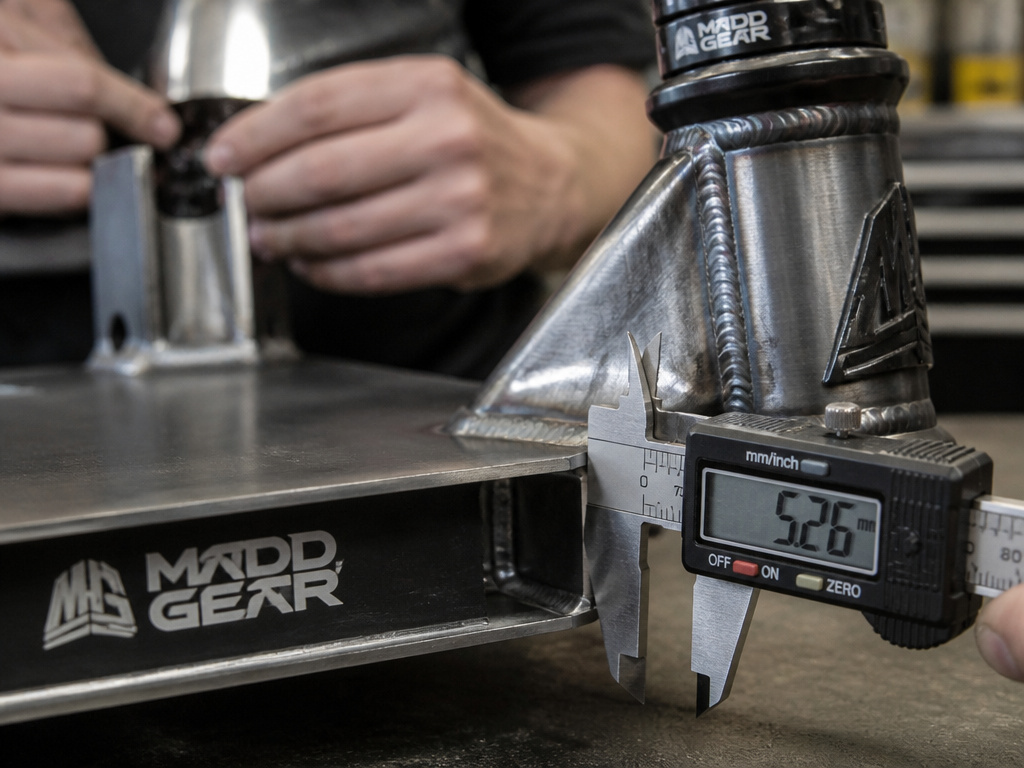
The pro scooter decks are extruded from 6061 Aluminum and then Heat Treated. This is a standard aerospace-grade alloy, and the heat treatment increases its strength. It’s a legitimate material choice for a complete scooter at this price point. You’re not getting mystery metal.
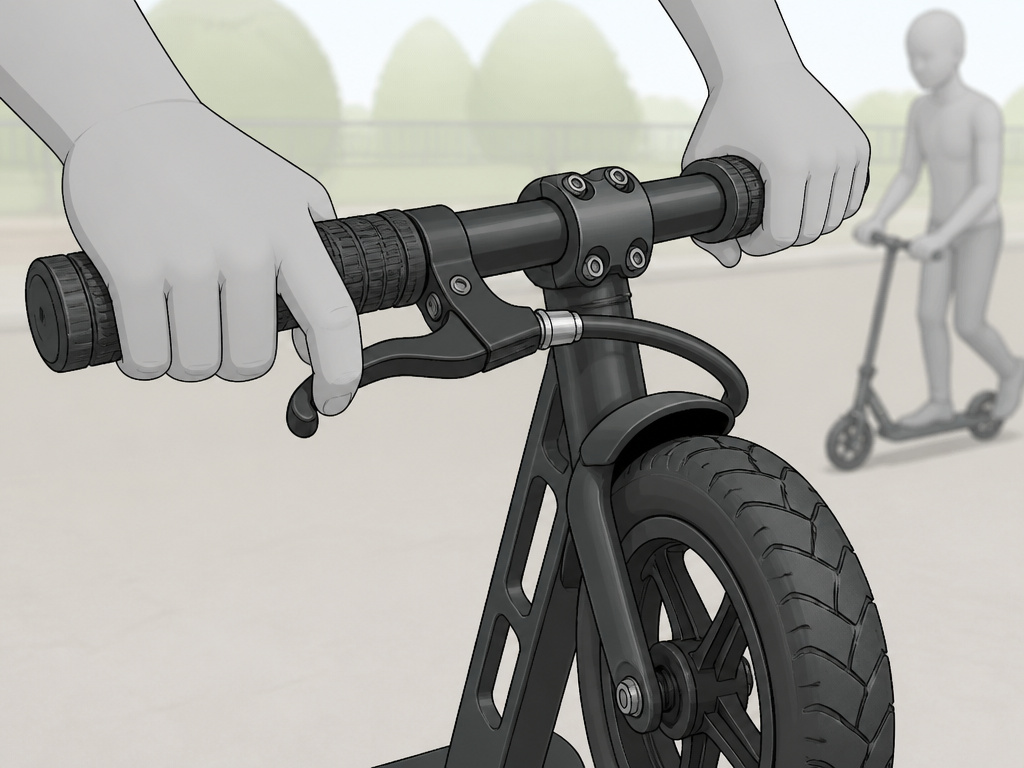
The longevity question in a Madd Gear scooter review has two answers. For a commuter scooter used on pavement, the frames and welds on models like the Urban Glide hold up well. The air tires (requiring 35psi) smooth out bumps, and the rear handbrake is effective. These are workhorses.
For a pro scooter at the skatepark, durability is a function of riding style and maintenance. The decks can take a beating, but the components under the most stress, bars, clamps, wheels, have specific, shorter warranties for a reason. Owners on forums note that stock bearings and grips are often the first things to upgrade. The bearings can feel sluggish out of the box, and the grip tape wears quicker than premium brands.
I used to think buying the cheapest complete was fine for a beginner. What I see now is that a poorly built scooter makes learning harder. A flexy deck or gritty bearings teach the wrong muscle memory. Madd Gear’s pro models avoid that bottom-tier pitfall, they’re a legitimate starting platform.
A common point of comparison is the Razor A5. The Razor is a classic kick scooter, often lighter and cheaper. For pure commuting, it’s a viable alternative. For anything approaching tricks or aggressive riding, the Madd Gear pro line’s solid construction and IHC (Integrated Headset Compression) system are in a different category. They’re built for impacts that commuter scooters are not designed to handle.
Assembly, Setup & Common Quirks
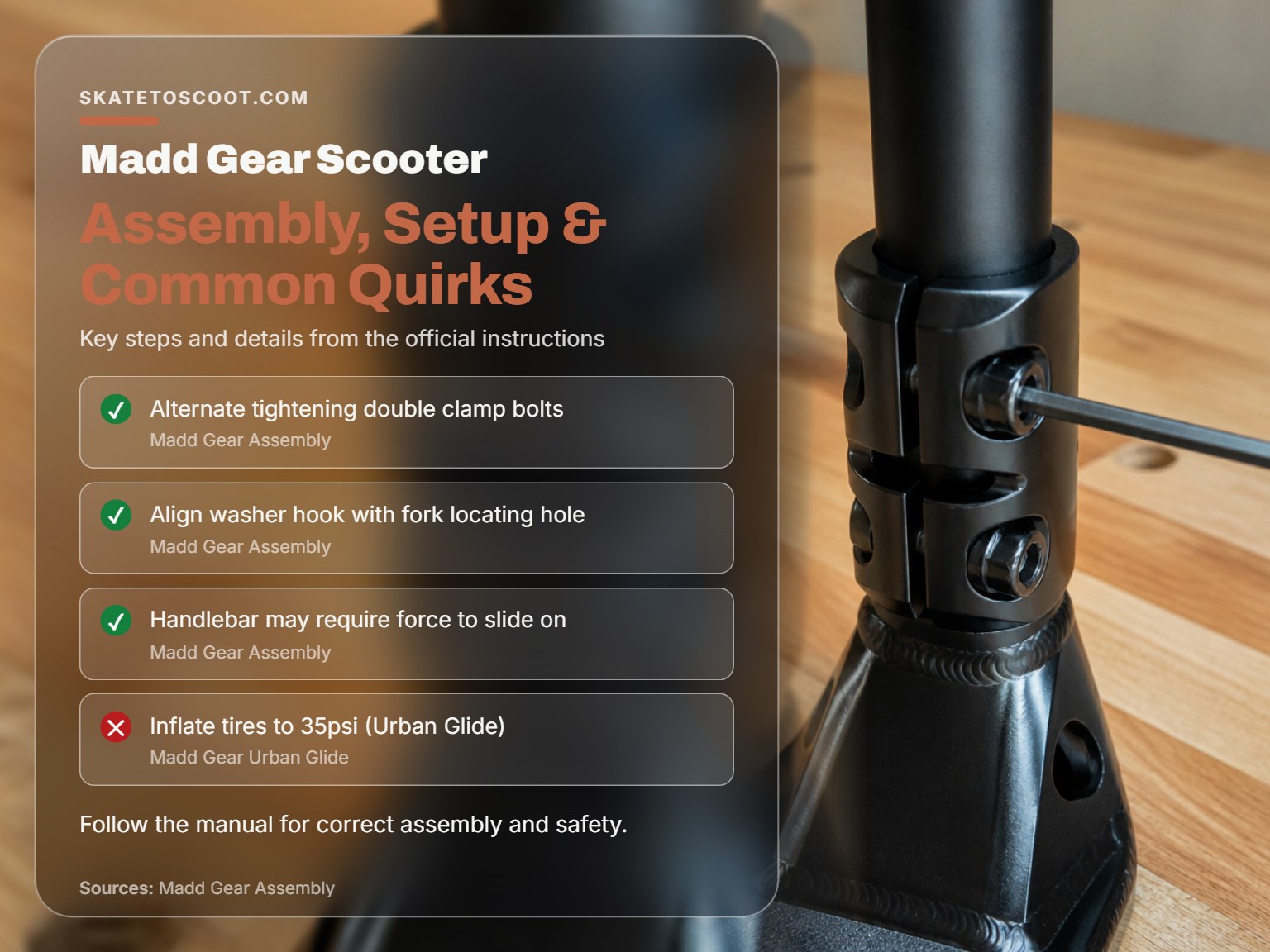
Most Madd Gear scooters arrive mostly assembled. The final steps usually involve installing the handlebar and wheels. This is where the official instructions reveal useful, non-obvious details.
For the Urban Glide, the manual states: “the fitting will be tight so you may need to use a little force to slide the handlebar down.” That’s permission. Don’t assume it should glide on effortlessly. Loosen the clamp bolts first.
The correct process to tighten a double clamp is specific: alternate tightening between the two bolts. Snug one, then the other, then go back to the first. Repeat until both are evenly tight. This ensures the fork stays aligned with your handlebars and prevents a subtle twist that can affect steering.
When installing wheels, note the washer with a hook. This isn’t a generic spacer; it’s a safety feature. The hook must align with a locating hole in the fork or frame. If you miss this and just crank the axle nut down, the wheel isn’t secured as intended. It’s a small visual cue with big implications.
After assembly, don’t forget the tire pressure. The Madd Gear Urban Glide scooter requires tires inflated to 35psi. Under-inflated tires create drag and make the scooter feel sluggish. Over-inflated ones reduce traction and ride comfort.
Madd Gear vs. Other Brands & Who It’s For
For a dedicated beginner at the skatepark: Madd Gear pro models compete directly with brands like Envy in the complete scooter market. Forum feedback suggests Madd Gear’s geometry can be more forgiving for learning, while some riders prefer other brands. It’s a preference split.
For commuting and casual use: Models like the Urban Glide compete with Razor’s adult kick scooters. The Madd Gear option often has larger air-filled tires and a standard rear handbrake, which can offer a smoother, more controlled ride.
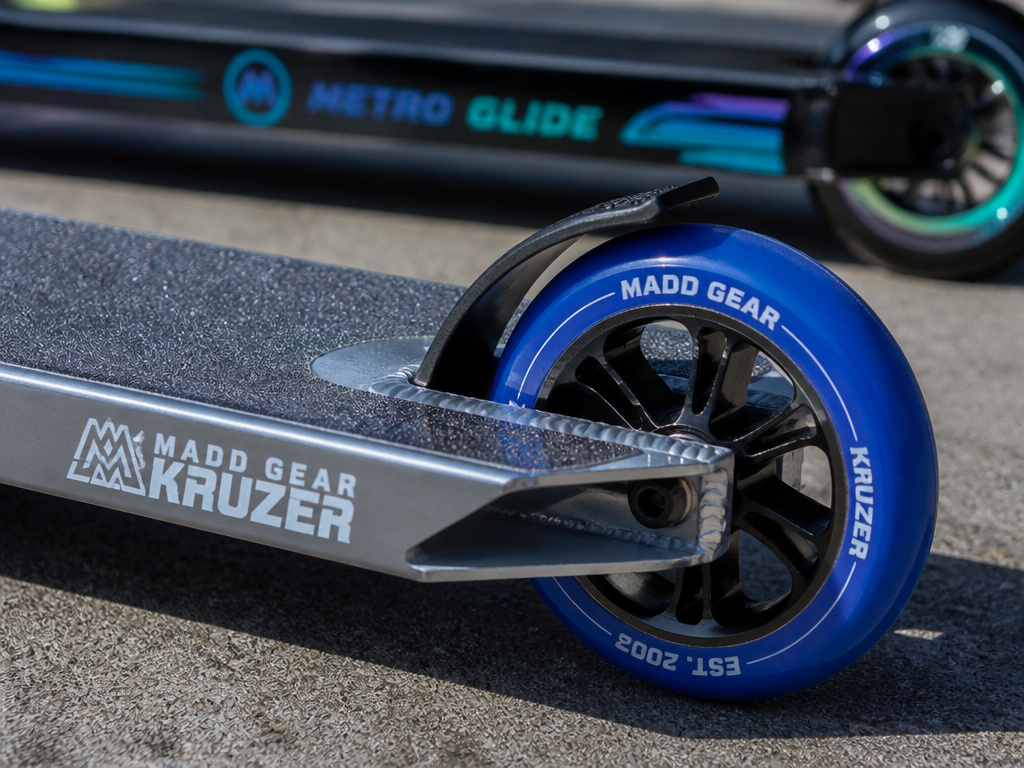
Madd Gear Kruzer, Metro Glide, and Other Model Reviews
Frequently Asked Questions
Is Madd Gear a legit website?
Yes, https://maddgear.com and its regional variants (like https://us.maddgear.com) are the official online stores for Madd Gear. They also sell through major retailers like Walmart and Amazon. Always ensure you’re buying from an authorized seller to guarantee warranty validity.
Are Madd Gear scooters good for beginners?
Yes, specifically their pro models sized correctly using the official chart. They provide a platform to learn basic tricks. Their commuter models are also straightforward for learning to ride.
What is the warranty on a Madd Gear scooter?
It depends. Everyday/commuter scooters have a 2-year warranty. Pro/stunt scooters have a component-specific warranty: decks (6 months), chromoly bars (90 days), aluminum bars (30 days), forks/clamps/wheels (90 days), brakes (30 days). Always refer to the latest official policy.
How do I make a warranty claim with Madd Gear?
Contact Madd Gear or your original retailer immediately, ideally within 7 days of delivery for defects or missing parts. You will need clear photos of the issue and your proof of purchase. Claims are assessed case-by-case.
Where are Madd Gear scooters made?
Madd Gear is a global brand headquartered in Australia. Their products are designed in-house and manufactured in various international facilities. The company oversees the design, quality control, and material specifications.
The Bottom Line
Madd Gear fills a clear niche: competent complete scooters for both park and pavement. Their strength is a structured model lineup and the use of proper materials like 6061 aluminum. Their weakness is a warranty that requires close reading, pro component coverage is measured in months, not years.
Your purchase decision hinges on matching the scooter line to the rider’s size and accepting the maintenance reality. Pro models need bearing upgrades and grip tape changes as part of normal ownership. Commuter models need tire pressure checks and brake adjustments.
If you can align expectations with that reality, a Madd Gear scooter is a solid choice that won’t let a dedicated rider down. If you expect a bulletproof, zero-maintenance toy with a blanket warranty, you’re looking at the wrong category altogether. For the right rider, with the right expectations, it’s a legit starting point.
