Massimo Watt Electric Fat Tire Scooter Review
This post contains affiliate links. As an Amazon Associate, we earn from qualifying purchases.
The Massimo 2000 watt electric fat tire scooter is a 60V battery-powered scooter, built on a steel frame with 8-inch fat tires and dual hydraulic brakes. Its high weight capacity and removable battery make it a contender for heavier riders, but real-world performance depends heavily on terrain, rider weight, and maintenance.
Advertised top speeds vary by model and are claims made under ideal conditions, a point often clarified in a Massimo 2000 watt electric fat tire scooter review. On a real street with a 200 lb rider, you’ll likely see 16-17 mph on flat ground before hills or headwinds cut into it. Advertised ranges are best-case scenarios that assume perfect battery health, moderate speed, and no elevation gain.
What follows is a breakdown of the specs you can trust, the performance you’ll actually get, and the critical questions about assembly, legality, and long-term ownership that most product listings skip, serving as a practical Massimo 2000 watt electric fat tire scooter review. This isn’t about selling you a scooter; it’s about showing you what you’re really buying.
Key Takeaways
- Advertised specs are best-case. Top speed and range figures are for a light rider on flat, smooth pavement. Expect less in normal use.
- Weight capacity claims vary wildly. The Massimo ES2K lists 440 lbs, but the nearly identical Massimo 2000W from 360Powersports lists 300 lbs. This discrepancy matters for safety and warranty.
- Assembly is not “fully assembled.” You will need to attach the handlebars, front wheel, and possibly the seat, requiring basic tools and about 30-60 minutes.
- Check your local laws. A 2000W scooter capable of 19+ mph may exceed local low-speed electric vehicle (LSEV) or electric scooter laws, which often cap power at 750W-1500W and speed at 20 mph.
- Battery replacement is a major future cost. A replacement lithium battery pack can cost several hundred dollars. Plan for this expense within 2-3 years of regular use.
Key Specifications and Conflicting Claims
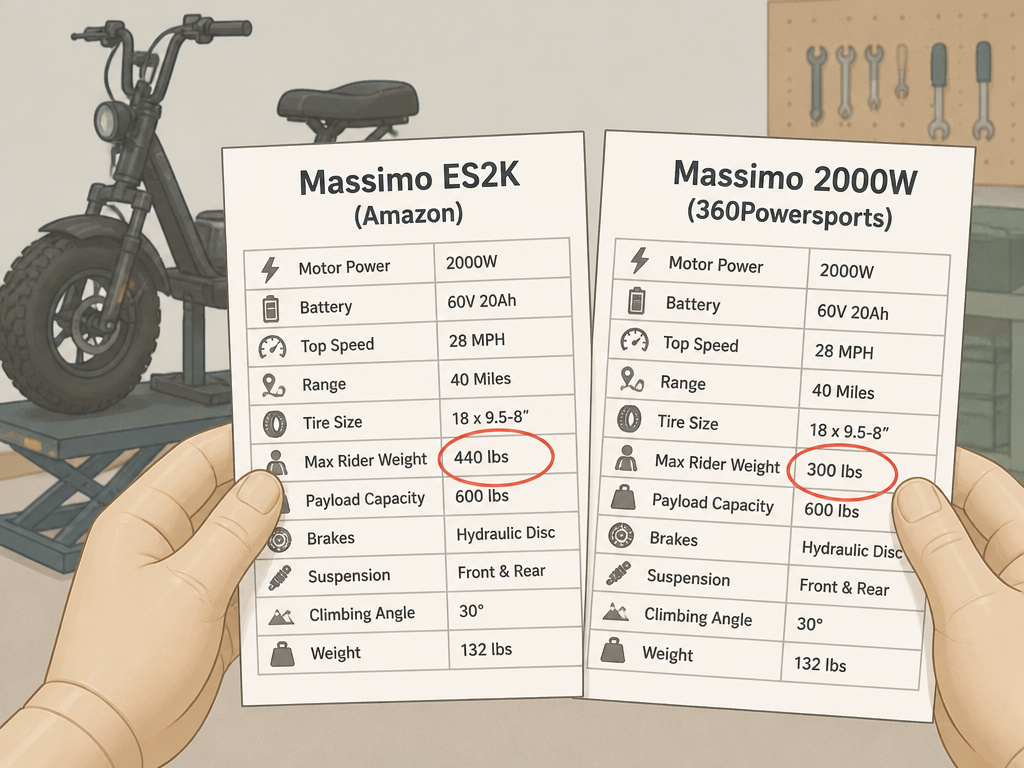
You’ll find different numbers depending on where you look. The Massimo ES2K listing on Amazon and the Massimo 2000W page on 360Powersports describe what appears to be the same scooter, but the specs don’t match. Let’s lay them out side-by-side with a third, very similar model—the MotoTec Fat Tire—to show where the confusion starts.
| Specification | Massimo ES2K (Amazon) | Massimo 2000W (360Powersports) | MotoTec Fat Tire (WackyHippo) |
|---|---|---|---|
| Motor Power | 2000W | 2000W “High Torque Waterproof Motor” | 2000W Rear Hub Motor |
| Battery | Not specified | Not specified (likely similar) | 60V 18Ah Lithium-ion |
| Top Speed | 19 mph | Not specified | 32 mph* |
| Range | 25 miles | Not specified | 20+ miles |
| Max Rider Weight | 440 lbs | 300 lbs | 300 lbs |
| Tires | 8″ Super-wide fat tires | 225/55-8 tubeless | 225/55-8 |
| Brakes | Dual hydraulic disc | Hydraulic (implied) | Hydraulic Front and Rear |
| Scooter Weight | Not specified | 170 lbs | 123 lbs |
| Charge Time | Not specified | 60V 2A “Fast Charging System” (time not specified) | 4-8 hours |
*Dependent on rider weight and terrain.
Where this goes sideways: Trusting the highest number you see. If you buy based on the ES2K’s 440 lb capacity but receive a scooter with a 300 lb rating sticker, you’re riding outside its engineered safety margin. The frame or motor could fail prematurely, and any warranty claim would be denied.
The core issue is branding. “Massimo” is often a badge used by various importers and dealers on generic Chinese-made scooters. The ES2K and the 360Powersports model might come from the same factory with minor component variations, leading to different spec sheets. The MotoTec, while visually similar, uses a larger 18Ah battery, which may explain its longer claimed range. Its top speed is listed as 32 mph by its seller, though other sources report different maximum speeds.
When you’re comparing, you’re often comparing resellers, not distinct engineering products. Your first step is to decide which set of specs you’re actually buying. If you need a 400+ lb capacity, you must confirm that specific model number with the seller before purchasing.
Real-World Performance & What to Expect
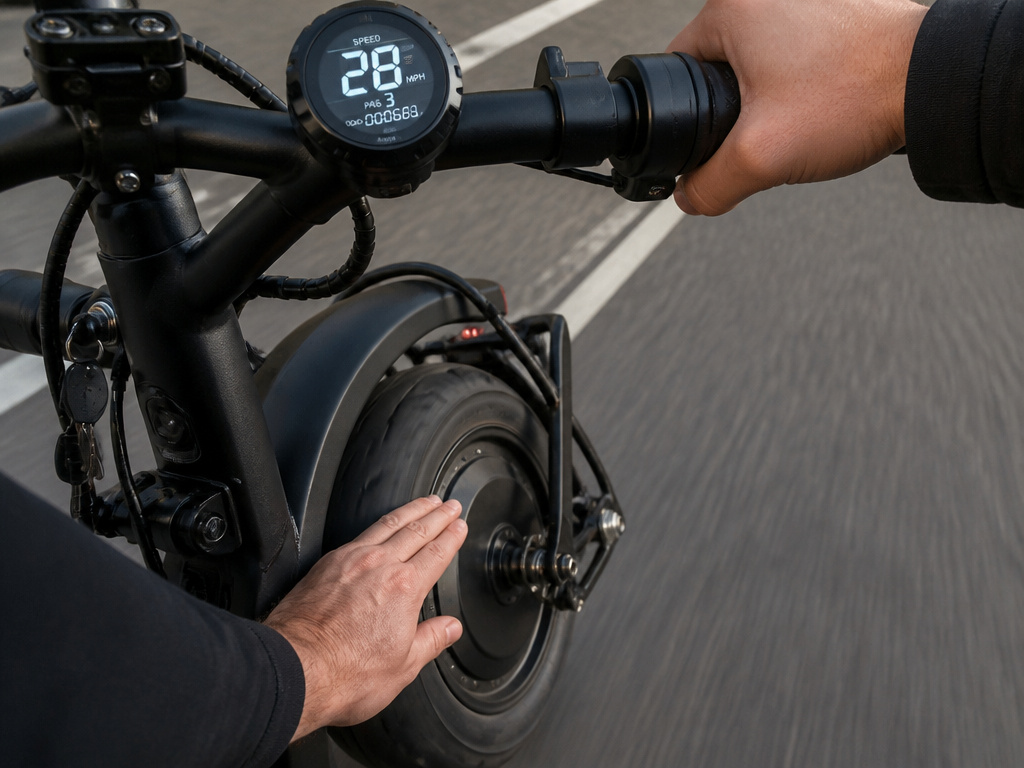
How fast can a 2000W electric scooter go? On paper, 19-32 mph. On asphalt, with you on it, the answer is different.
The 2000W motor has the power, but the scooter’s weight and aerodynamics work against it. The Massimo models weigh between 123 and 170 lbs empty. Add a 200-250 lb rider, and you’re moving 350-400+ lbs of mass. The initial acceleration feels strong and torquey, thanks to the fat tires gripping the pavement. The top speed, however, plateaus quickly.
On a flat road, top speed will be lower than advertised claims due to rider weight and other factors, a key finding in any thorough Massimo 2000 watt electric fat tire scooter review. The motor will have a distinct, high-pitched whine when pushed to its limit. Going up even a mild hill, that speed can drop to 12-14 mph, and the motor will get noticeably warm to the touch after a few minutes of climb. This is the reality of a single hub motor moving this much weight.
A YouTube reviewer noted a similar fat tire scooter with a 2000W motor reached a top speed of 28 mph, while another source claims 32 mph, but both emphasize that was under ideal test conditions.
Range suffers the same fate. Claimed ranges assume you’re cruising at a steady speed on level ground. In a suburban setting with stops, starts, and slight inclines, real-world range will be lower than the advertised maximum. If your route has hills, budget for significantly less range. The battery gauge on the display is not linear; the last bar disappears much faster than the first.
What most people get wrong: They see “20+ mile range” and plan a 10-mile commute each way. On day one, with a fresh charge, they might make it home with 10% left. By month six, as the battery naturally degrades, that same trip could leave them walking the last mile. Always derate the range by 25% for real-world planning.
The Sensory Reality Check
- Sound: A healthy 2000W motor under load has a smooth, electric whirr. If you hear a grinding, clicking, or rattling from the rear hub, the motor bearings or internal gears are failing.
- Feel: The hydraulic brakes should offer a firm, progressive lever feel. If the lever goes spongy or to the handlebar, there’s air in the line or a leak, and stopping power plummets.
- Visual Cue: After a ride, feel the motor hub cover. It should be warm, not hot enough to burn you. If it’s too hot to touch for more than a second, the motor is overheating, likely from being overworked on hills or with excessive rider weight.
Assembly, Maintenance, and the “Fully Assembled” Myth
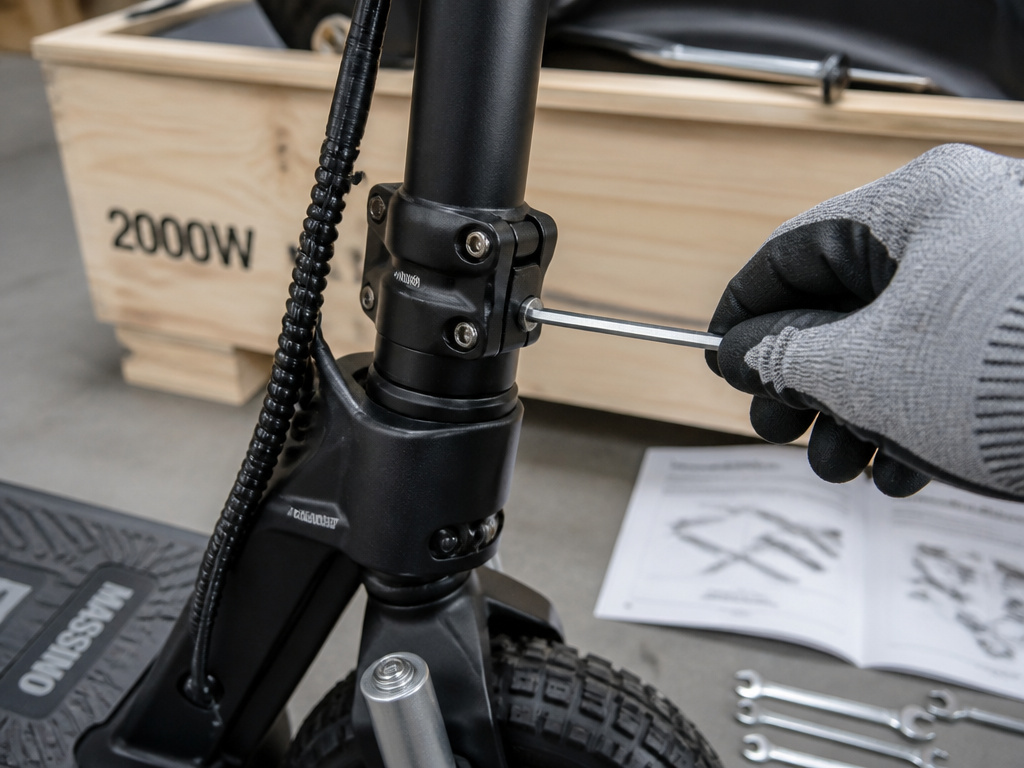
The product pages often say “fully assembled” or “comes 95% assembled.” This is technically true—the frame is welded, the wiring is run. What they don’t tell you is the 5-10% left is critical and can take an hour.
Out of the crate, you’ll typically need to:
- Attach the handlebars to the steering column (4-8 bolts).
- Mount the front wheel (a quick-release or bolt-on axle).
- Install the seat (usually 4 bolts underneath).
- Connect the brake cables and throttle/display wiring (often simple plugs).
- Inflate the tires to the correct PSI (printed on the tire sidewall).
You’ll need a set of hex keys, wrenches (often metric), and a tire pump. The instructions are usually minimal, with poor English translations and blurry diagrams. It’s not complex, but it’s not plug-and-play. A missing or cross-threaded bolt in the steering assembly is a direct safety hazard.
Common mistake: Overtightening the handlebar clamp bolts. Cranking them down with excessive force can crack the aluminum clamp or strip the threads. Snug is sufficient; you shouldn’t need a breaker bar.
Ongoing maintenance is essential for a machine this heavy and fast.
- Tire Pressure: Check weekly. Under-inflated fat tires increase rolling resistance, murdering your range and risking pinch flats.
- Brakes: Test before every ride. Hydraulic brakes need occasional fluid bleeds; if you see brake fluid leaking near the caliper or lever, don’t ride it.
- Bolts and Fasteners: Go over every visible bolt (especially on the stem, handlebars, and wheels) with a wrench once a month. Vibration from the fat tires on rough surfaces can and will loosen them.
- Battery Care: Never store the scooter with a fully depleted battery. If not using it for weeks, store it with a 50-70% charge in a cool, dry place.
Weight Capacity, Legality, and Safety
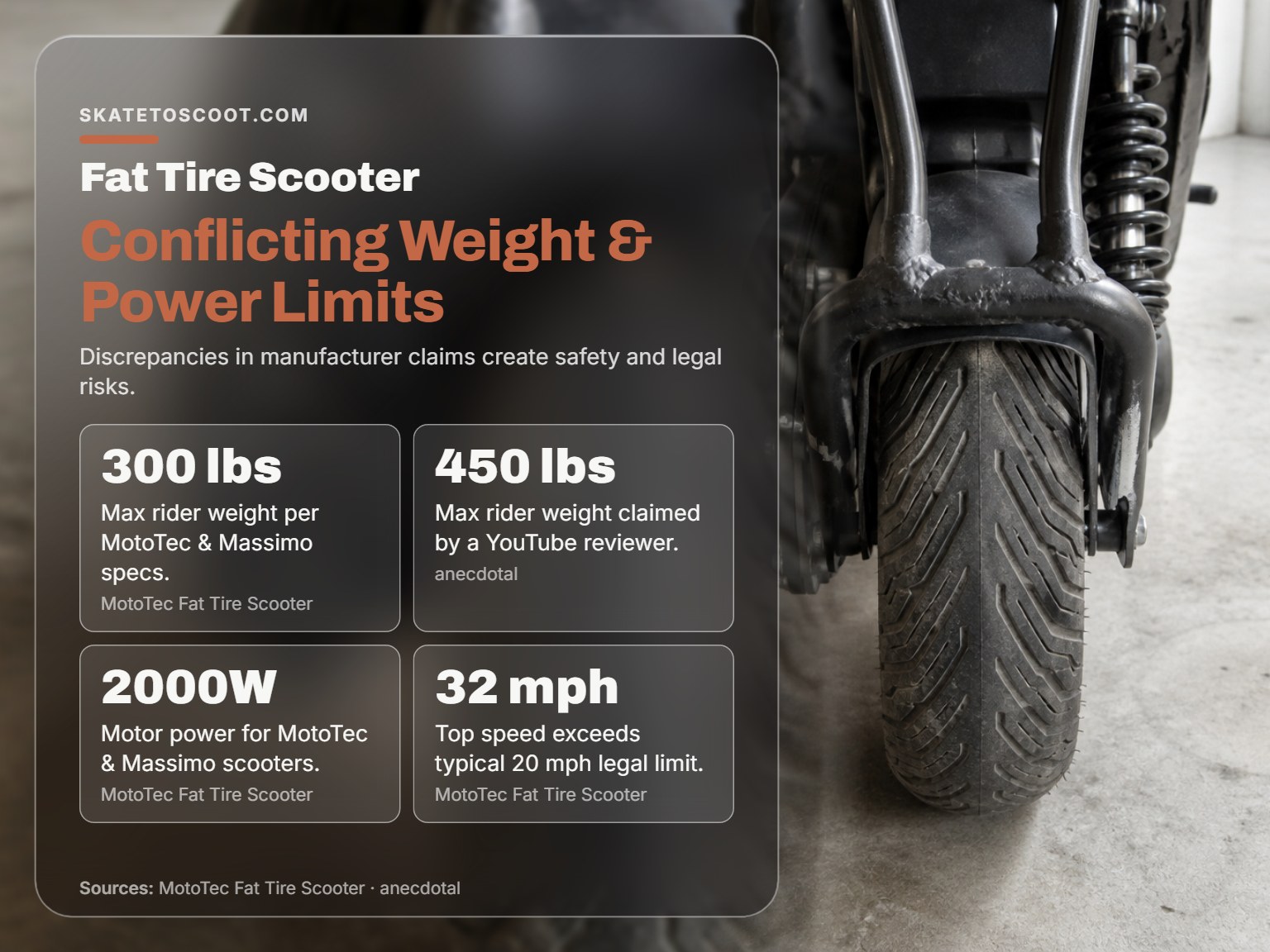
This is where the rubber meets the road, legally and physically. The massive discrepancy between the ES2K’s 440 lb claim and the 360Powersports’ 300 lb claim isn’t a typo. It’s a liability red flag.
If the frame, forks, and wheels are only tested and certified for 300 lbs, selling it as a 440 lb-capacity vehicle is dangerous. Exceeding the true weight limit stresses every component: motor windings overheat, spokes fatigue, and weld points can crack. A failure at 19 mph can be catastrophic.
The MotoTec manual for a nearly identical scooter specifies a max rider weight of 150 kg (330 lbs). This third data point suggests the true engineering limit for this scooter platform is likely in the 300-330 lb range. A 440 lb rating is an outlier.
Then there’s the law. In the United States, electric scooter regulations are a patchwork of state and local laws. Many jurisdictions follow a simple rule: if it has a motor under 750W or 1500W and a max speed under 20 mph, it’s a “low-speed electric bicycle” or “electric scooter” allowed on bike paths and roads. A 2000W motor immediately exceeds those power limits in most areas.
What does this mean for you?
- You may be riding an unregisterable vehicle that is technically illegal on public roads, bike paths, and sidewalks.
- Law enforcement may not care until there’s an incident. In an accident, riding an illegal vehicle can complicate or void insurance claims and assign you fault.
- Some homeowner’s or renter’s insurance policies may not cover vehicles that don’t meet local legal definitions.
Before you start: Check your state’s Department of Motor Vehicles (DMV) or transportation website for “low-speed electric vehicle” or “electric scooter” laws. Look for power (wattage) and maximum speed limits. When in doubt, assume a 2000W scooter is for private property use only.
Battery Life, Replacement Costs, and Long-Term Value
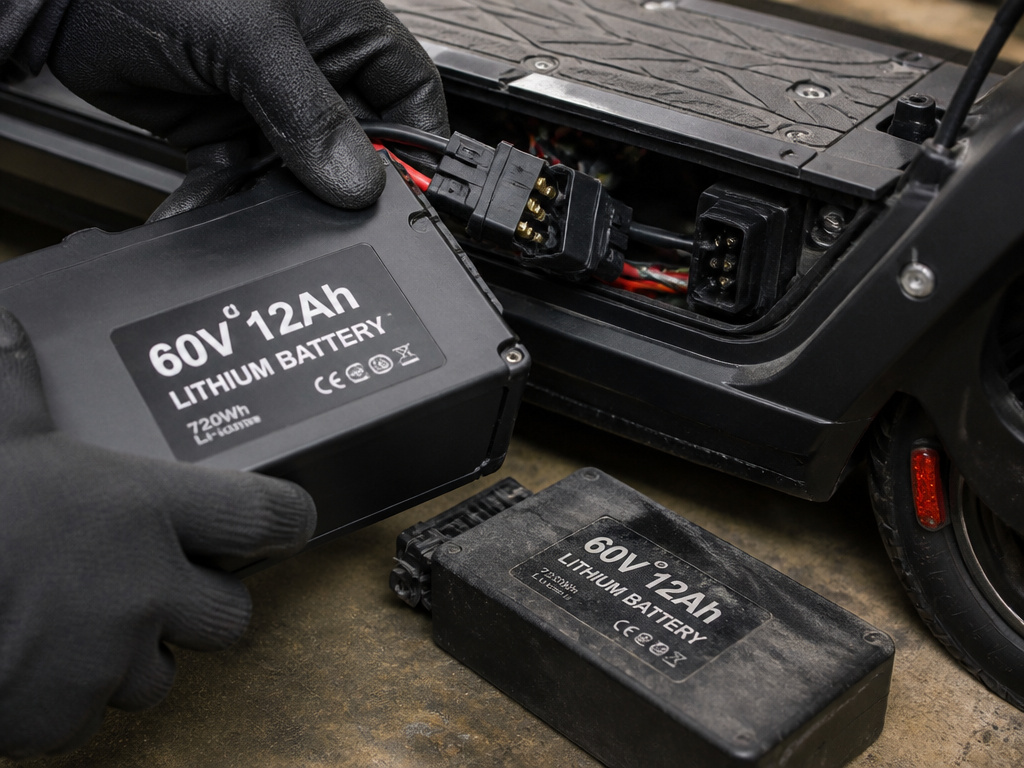
The 60V 12Ah lithium battery is the scooter’s heart and its most expensive consumable. Like all lithium-ion batteries, its capacity will degrade with each charge cycle, time, and exposure to temperature extremes.
Lithium-ion batteries lose capacity over time and with charge cycles. In practice, with regular use, battery capacity will degrade over time. A battery’s range will decrease significantly as it ages.
Replacing it isn’t like swapping AA cells. A new lithium battery pack is a specialized component.
- Cost: Several hundred dollars. It can approach a significant fraction of the scooter’s original purchase price.
- Sourcing: You must find a compatible pack with the correct voltage (60V), capacity (12Ah or higher), physical dimensions, and connector type. Generic listings are risky.
- Installation: It involves opening the battery compartment, disconnecting the old pack (often with multiple connectors), and carefully connecting the new one. A wiring mistake can damage the controller or cause a short.
This is the hidden long-term cost of ownership most buyers don’t see coming. When evaluating the scooter’s value, factor in a potential battery replacement cost within a few years. A cheaper scooter with a costly, proprietary battery can become a money pit.
The part nobody mentions: Storing the scooter over winter. If you leave it in an unheated garage with a fully charged or fully dead battery through freezing temperatures, you can permanently damage the battery cells, cutting its lifespan in half. The ideal storage charge is around 60% in a cool (but not freezing), dry place.
Massimo vs. MotoTec: Which Platform Is Worth It?
Since “Massimo” often refers to a generic platform, it’s useful to compare it to a named competitor using similar parts: the MotoTec Fat Tire. This isn’t brand vs. Brand; it’s spec sheet vs. Spec sheet for near-identical machines.
| Decision Factor | Massimo ES2K Platform | MotoTec Fat Tire Platform | Verdict |
|---|---|---|---|
| Battery Capacity | 12Ah (advertised) | 18Ah (advertised) | MotoTec wins. More Ah means more range, period. |
| Weight Capacity | 440 lbs (ES2K) vs. 300 lbs (360Powersports) | 300 lbs | Massimo’s claim is suspicious. MotoTec’s is consistent. |
| Top Speed Claim | Not specified (sources vary) | 32 mph (seller claim; other sources report 28 mph) | Claims vary; all are best-case. |
| Documented Manual | Rarely provided | Product manual available online (MotoTec) | MotoTec wins. A manual means support and part diagrams exist. |
| Warranty | Typically 30-90 days parts | 60 days parts replacement (WackyHippo) | Tie. Both are minimal, industry-standard short warranties. |
The MotoTec’s larger 18Ah battery is a tangible advantage if the claims are honest. However, you must buy from a dealer that provides that specific battery. Many listings swap components.
Here is the thing: You’re not choosing between a Ford and a Chevy. You’re choosing between different resellers of the same basic Chinese scooter. Your priority should be the dealer’s reputation for customer service and honesty, not the badge on the frame.
Where to buy and what to look for in a seller
When purchasing a scooter this size, the seller’s reliability is as crucial as the scooter’s specs. Check for clear shipping details, including estimated delivery times and who handles the freight, as the packaged scooter is heavy. A trustworthy seller will have a visible and understandable warranty policy; some models come with a limited parts replacement period. Look for sellers that offer service information or support contacts. While specific financing options weren’t listed, reputable dealers often provide them. Always verify the seller’s return policy and read customer reviews about their post-purchase support before buying.
Frequently Asked Questions
How fast can a 2000W electric scooter go?
2000W electric scooter can achieve advertised speeds between 19 mph and 32 mph under ideal, laboratory-style conditions with a light rider. In the real world, with a rider on typical pavement, expect speeds lower than advertised claims, with hills significantly reducing speed.
What is the most reliable brand of electric scooter?
There is no single “most reliable” brand, especially in the fat tire scooter category which uses many generic components. Reliability comes from build quality, dealer support, and parts availability. Established brands with a physical presence and good customer service, like those sold through reputable power sports dealers, tend to have better long-term reliability than no-name brands sold solely on Amazon or Walmart.com.
Which fat tire electric scooter is the best?
The “best” depends on your primary need. For maximum range per charge, prioritize the largest battery capacity (measured in Amp-hours, or Ah). For higher top speed, ensure the motor is genuinely 2000W or more and the controller can support it. For heavy riders, prioritize models with a verified, consistent weight capacity rating from multiple sources, not just the highest number on one listing.
Can I ride a 2000W scooter on the road?
It depends entirely on your local and state laws. Many jurisdictions limit electric scooters or low-speed vehicles to motors of 750W or 1500W and speeds of 20 mph. A 2000W scooter likely exceeds these limits, making it illegal for use on public roads, bike paths, and sidewalks. Always check with your local Department of Motor Vehicles before riding on public property.
The Bottom Line
The Massimo 2000 watt electric fat tire scooter platform offers a lot of machine for the money: big tires, a powerful motor, and a sturdy frame. But buying one is an exercise in managing expectations and reading the fine print.
Trust the lower number. If one listing says 440 lbs and another says 300 lbs, plan your purchase around 300 lbs. If range is advertised as 25 miles, plan your commute for 18. This conservative approach keeps you safe and prevents frustration.
Your first call shouldn’t be to your credit card company. It should be to your local DMV or police non-emergency line to ask about the legality of a 2000W scooter on your intended routes. The second call should be to the seller, asking specific questions about warranty, parts availability, and whether they provide an English service manual.
These scooters are fun, capable tools for private property or areas with lax regulations. But they are not toys, and they are not maintenance-free appliances. Buy with your eyes open, budget for the hidden costs, and always, always wear a helmet. The pavement doesn’t forgive spec sheet optimism.
