Maxshot V1 Electric Scooter Review: Is It Worth It?
This post contains affiliate links. As an Amazon Associate, we earn from qualifying purchases.
The Maxshot V1 electric scooter delivers a measured 17.5 mph top speed and 18.2 miles of range from its 350W motor and 375Wh battery, making it a strong value under $300 for flat, short commutes. Its main trade-offs are a harsh ride from solid tires and slow hill climbing, dropping to 5 mph on a 10% grade.
That gap between the advertised “up to 21 miles” and the real 18.2 miles is where your actual experience starts. Most budget scooters talk a big game on paper, but the numbers that matter are the ones an independent lab measures after a week of pavement pounding, as seen in our Maxshot V1 electric scooter review.
What follows: a breakdown of where the Maxshot V1 actually shines, where it falls short, and the specific, often-overlooked details—like motor heat and cold-weather range drop—that decide whether it’s a bargain or a headache. We’ll compare it to its pricier V1SPRO sibling and lay out exactly who should buy it and who should keep looking.
Key Takeaways
- Expect 18.2 miles of real range, not the advertised 21. Independent testing by TechGearLab measured this effective distance.
- Solid tires cause a harsh, fatiguing ride on anything but smooth pavement. One reviewer described vibration so severe it made their “eyes literally blurry.”
- Hill performance is weak. The 350W motor slows to 5 mph on a 10% grade, barely faster than walking.
- The V1SPRO upgrade is not recommended by testers. It costs more, has a shorter range, and the added suspension doesn’t improve handling enough to justify the price.
- Cold weather (40°F) cuts range by 10-30%, and the battery management system may shut off in extreme cold to prevent damage.
Real-World Speed, Range, and Hill Performance
Forget the sticker specs. The numbers that matter come from the test track, as detailed in a Maxshot V1 electric scooter review. TechGearLab’s measured results give you a baseline you can plan a commute around.
The Maxshot V1’s 350W motor hits a peak of 500W and propels the scooter to a measured 17.5 mph. That acceleration from zero to 18 mph takes about five seconds. For a budget scooter, that’s respectable.
A 350W motor with a 500W peak delivers a measured top speed of 17.5 mph and accelerates to 18 mph in approximately five seconds. Independent testing recorded an effective range of 18.2 miles from the 375Wh battery pack under controlled conditions.
Range is where expectations need the biggest adjustment. The manufacturer claims “up to 21 miles.” TechGearLab’s real-world test, which includes stops, starts, and varied terrain, measured 18.2 miles as the effective range. That’s still a concrete figure of 18.2 miles to use for a budget scooter, not an optimistic guess. Your actual mileage will depend heavily on your weight, riding style, and terrain.
Hill climbing is the V1’s weakest performance metric, a key point in any Maxshot V1 electric scooter review. That same 350W motor that feels peppy on the flats runs out of steam on an incline. On a standardized 10% grade test hill, the scooter slowed to 5 mph. One tester noted it was “not faster than my walking pace.” If your commute has any meaningful hills, you’ll be helping with a kick or planning for a slow crawl.
The part nobody mentions: motor heating. One review source noted a report of “significant motor heating under sustained use.” A specific case involved a 5-mile ride with a combined load around 180 lb causing the motor area to get “very hot and uncomfortable underfoot.” This isn’t a universal failure, but it’s a known edge case under heavy, continuous load.
Ride Quality and Comfort: The Solid Tire Trade-Off
The V1’s ride experience is defined by one component: its 8.5-inch honeycomb solid tires. Manufacturers tout them as “maintenance-free,” which is true. You’ll never get a flat. The trade-off is a ride that transmits every crack, seam, and pebble directly into your feet and legs.
On smooth, new pavement, it’s fine. The moment you hit broken concrete, brick paths, or even rough asphalt, the scooter becomes a vibration machine. TechGearLab testers felt “fatigued after a while on poor pavement.” Another reviewer from vmax-escooter.us was more blunt, stating the vibration from solid tires with no suspension made their “eyes literally blurry” and caused traction loss in corners. This isn’t about a little bumpiness; it’s about ride quality that limits how far and how often you’ll want to use the scooter.
Where this goes sideways: Assuming solid tires are just a bit bumpy. On poor pavement, the high-frequency vibration travels through the deck and handlebars, causing hand and foot fatigue within a couple of miles. For heavier riders, the effect can be magnified.
The alternative is a model with pneumatic (air-filled) tires. A Reddit user who bought a Maxshot with pneumatic tires noted the improvement was immediate, especially for a 220 lb rider. Pneumatic tires absorb impacts, providing a smoother, quieter, and often safer ride with better traction.
| Tire Type | Pros | Cons | Best For |
|---|---|---|---|
| Solid Honeycomb | No flats, no maintenance | Harsh ride, poor traction, fatiguing | Perfectly smooth paths, very short trips |
| Pneumatic (Air-Filled) | Smooth ride, better shock absorption, superior traction | Risk of punctures, requires pressure checks | Real-world commutes, uneven pavement, heavier riders |
Portability, Build Quality, and Daily Use
At 27.5 lbs (per TechGearLab’s measurement), the V1 is on the lighter end for an electric scooter. Its folding mechanism works simply, letting you collapse and carry it in one motion. Testers converted it from ride mode to folded for storage in about 5 seconds.
Build quality is the big question mark. The long-term durability stories from owners are mixed, which is critical data most reviews miss.
On one hand, a Reddit user reported putting over 400 miles on a V1 over about a year before encountering a charging issue. On the other, another Reddit user reported a Maxshot V1SPRO frame split in half while riding after just a few months, with no collision. A Reddit user reported a Maxshot V1SPRO frame split in half while riding after just a few months, with no collision. This highlights a key risk with budget brands: the product might work, but if it breaks, you could be on your own.
| Component | Build / Performance Note | Owner-Reported Issue |
|---|---|---|
| Frame & Folding Joint | Aluminum, 27.5 lb weight, fast folding | Frame cracking at stem/deck joint (V1SPRO specific report) |
| Braking System | Dual braking (drum + EABS), 17 ft test track stop | Adequate for the speed; no widespread failure reports |
| Deck & Stance | Non-slip surface, adequate for foot placement | Motor heat can make deck warm under sustained heavy load |
| Warranty & Support | Listed as 1 year (365 days) on Amazon | Multiple reports of difficult or non-existent customer service |
For daily use, the V1 works well for short, flat commutes on decent pavement.
Maxshot V1 vs. V1SPRO: Is the Upgrade Worth It?
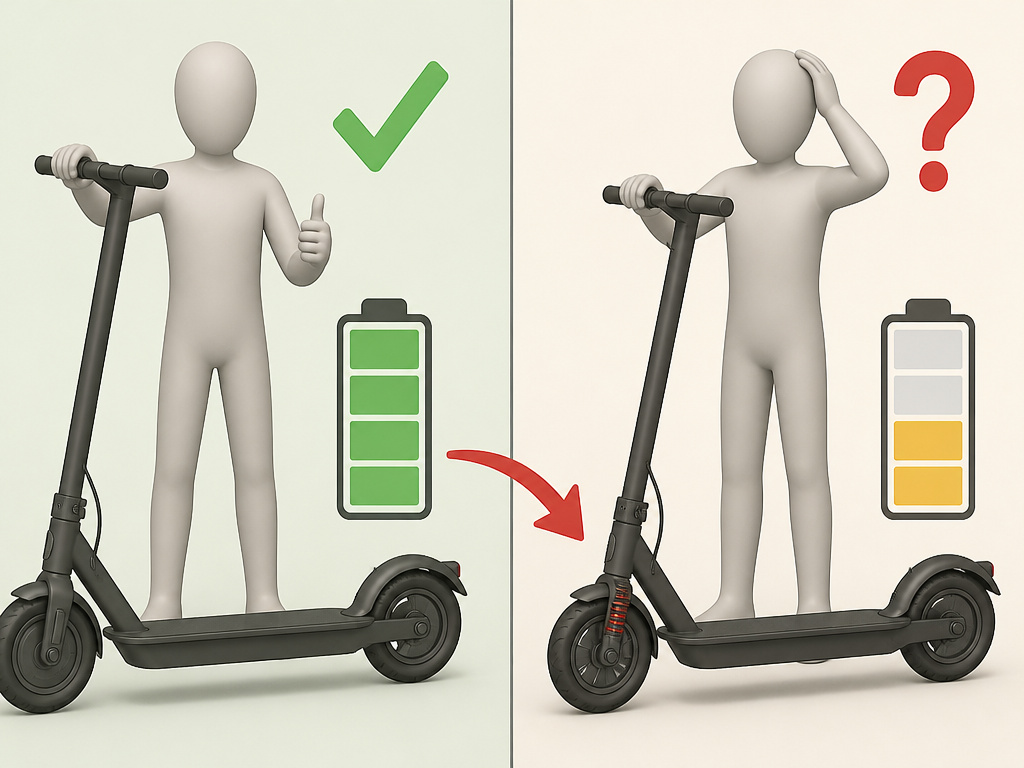
Maxshot offers a more expensive model called the V1SPRO. The differences seem appealing on paper: dual suspension, a digital display, and sometimes a larger motor. The real-world data, however, suggests you should save your money.
TechGearLab tested the V1SPRO and explicitly does not recommend it. Their verdict: the “Pro is more expensive, has a shorter range, and does handle that much better despite having a shock.” The added suspension, often just a basic spring in the front and maybe the rear, does little to mitigate the fundamental harshness of the solid tires. It might take the edge off a large bump, but it doesn’t improve the ride quality much.
Furthermore, the V1SPRO often comes with a smaller battery to accommodate the suspension hardware, resulting in that shorter range. You’re paying more for a scooter that has a shorter range and offers minimal comfort gains.
Common mistake: Buying the “Pro” model assuming it’s a strictly better version. In this case, the upgrade sacrifices range for minimal comfort gains and introduces more potential failure points with the suspension components.
The V1SPRO is a lateral move with a higher price tag.
Battery Care, Charging, and Cold Weather Effects
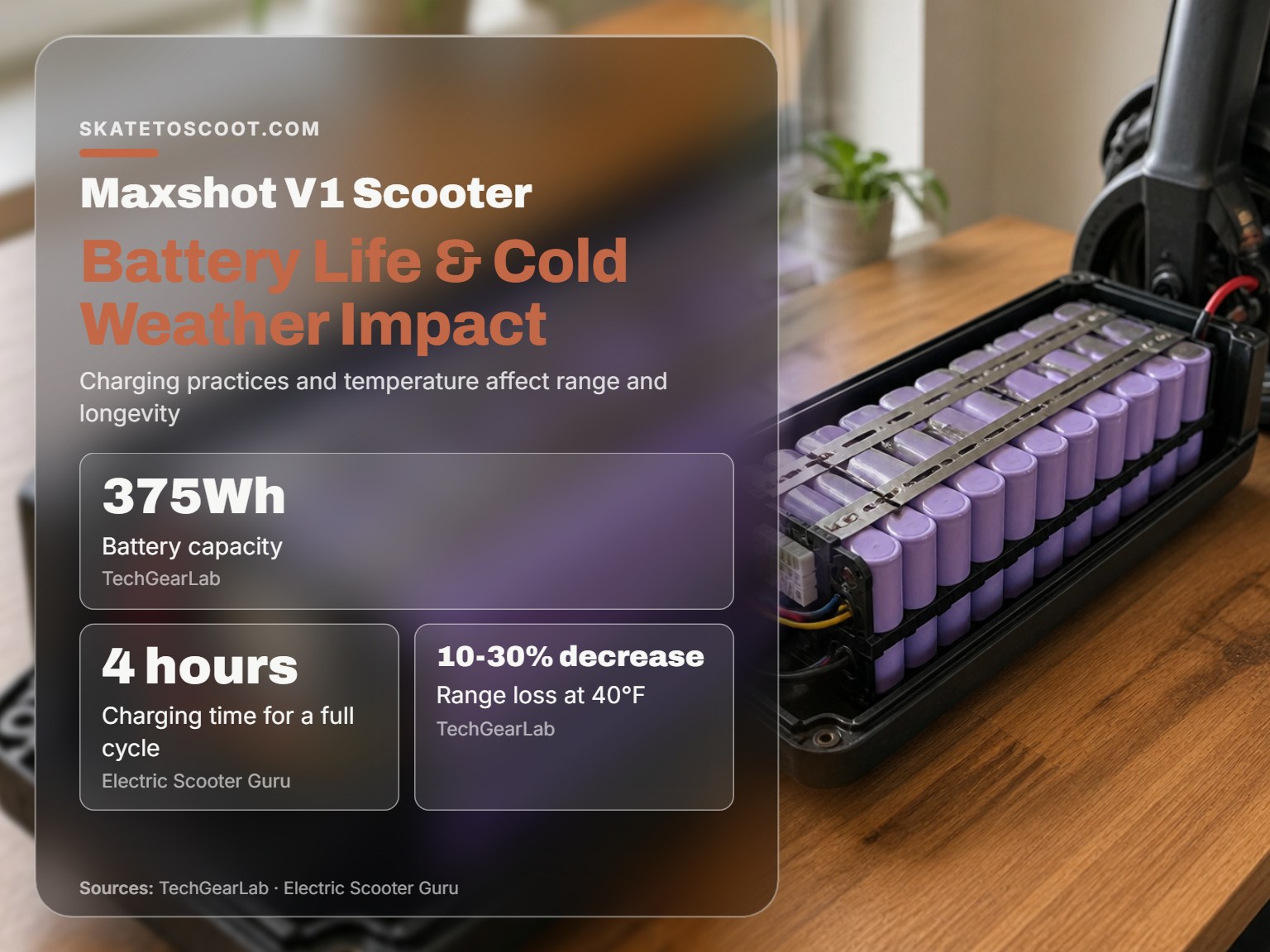
The 375Wh battery pack is the V1’s star component, providing its class-leading range. How you treat it dictates how long it will last. The advice here is a mix of manufacturer guidelines and real-world owner wisdom.
Official guidance from Electric Scooter Guru suggests a first charge of 6 hours, with subsequent charges kept under 5 hours. They also warn against charging in unventilated or flammable spaces—basic but important advice. The total charging time is around 4 hours for a full cycle.
Owners on Reddit advocate for a more modern approach to maximize long-term battery health: the 20-80% rule. This means not routinely draining the battery to zero and not leaving it plugged in to charge to 100% for extended periods. Monitoring the battery level can help you manage this. This practice reduces stress on the lithium cells and can significantly prolong the overall lifespan of the pack.
Cold weather is a major range factor. TechGearLab observed a 10-30% decrease in range at 40°F compared to warm-weather tests. Lithium batteries “dislike extremely cold weather,” and the battery management system (BMS) may shut off the battery in extreme cold to prevent damage. If you live in a cold climate, your usable range will be significantly reduced.
Who Should (and Shouldn’t) Buy the Maxshot V1
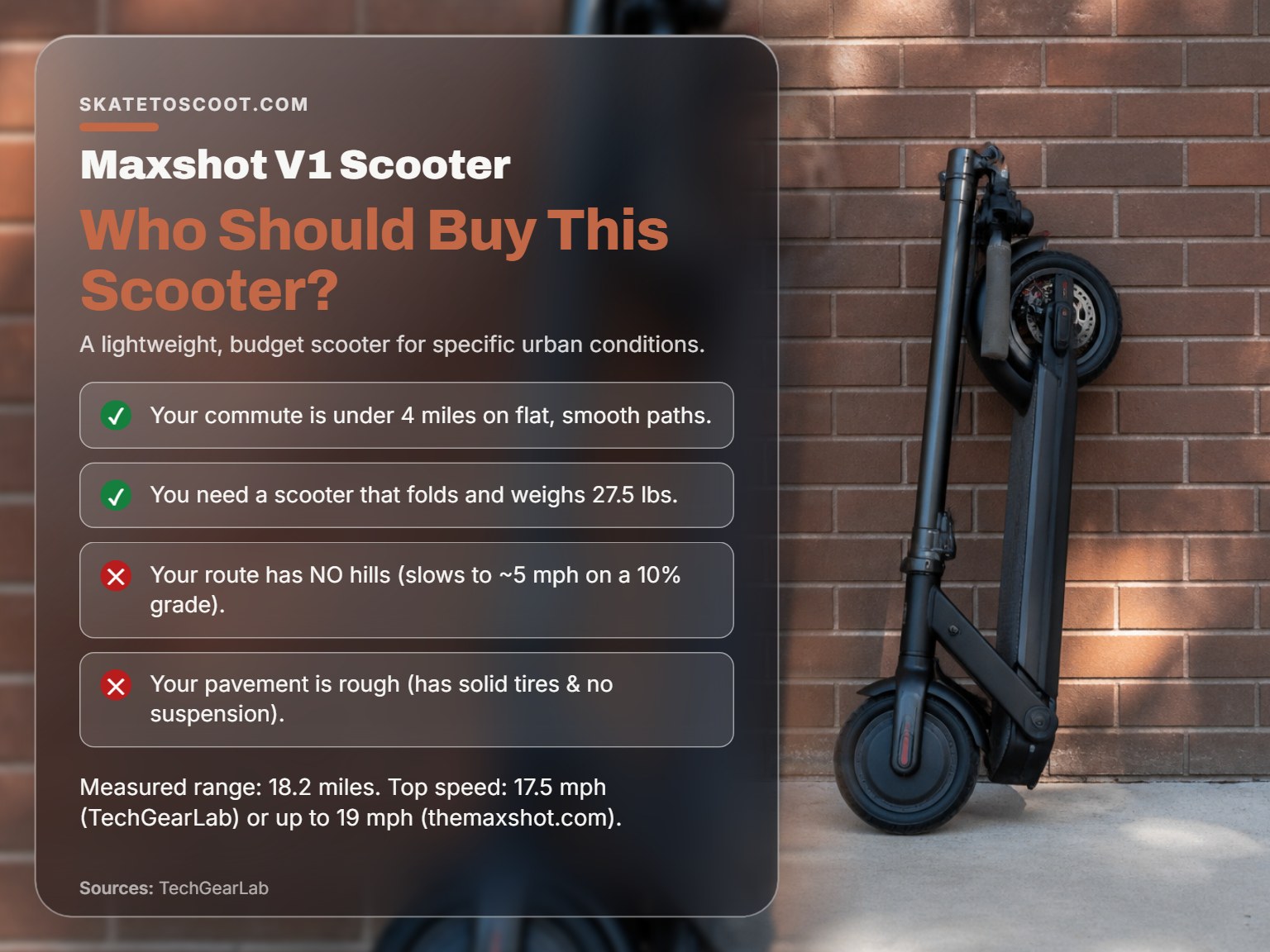
This isn’t a scooter for everyone. Its value is tied to a very specific use case.
Buy the Maxshot V1 if:
- Your daily commute is under 4 miles one-way on relatively smooth, flat terrain.
- You need a lightweight, foldable scooter for last-mile trips or multi-modal travel.
- Your budget is firmly under $300 and you prioritize range and speed over comfort.
- You are a lighter rider (under 180 lbs) and can tolerate a firm ride.
- You understand it may be a disposable product if it breaks after the warranty period.
Avoid the Maxshot V1 if:
- Your route includes hills steeper than a mild incline.
- You have rough roads, brick, or cracked pavement on your regular path.
- You are a heavier rider (over 200 lbs) concerned about motor heat or durability.
- You need a comfortable ride for trips longer than 20 minutes.
- You expect reliable customer service and easy access to replacement parts.
For those in the “avoid” category, consider stretching your budget slightly. For around $400-$500, you can find scooters from established brands like the NIU KQi2 Pro or Segway Ninebot E2 that offer pneumatic tires, better water resistance, more consistent build quality, and actual customer support networks. These best electric scooter models provide a significantly better ownership experience for not much more money.
Maxshot V1 Specifications
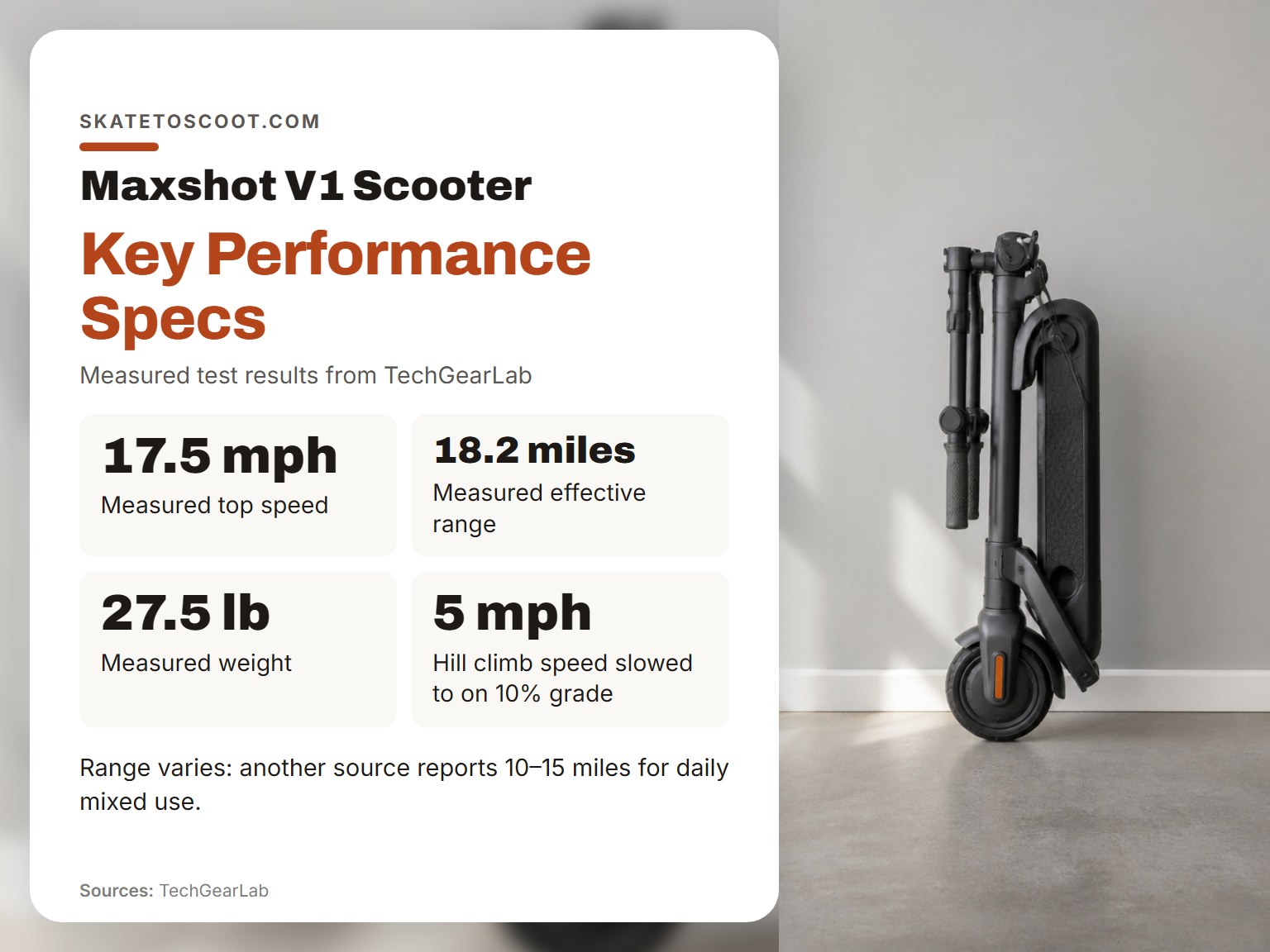
The Maxshot V1’s core specs define its capability. Its 350W motor can peak at 500W, delivering a measured top speed of 17.5 mph and accelerating to that speed in about five seconds. The scooter carries a 375Wh battery, which provided an effective range of 18.2 miles in one controlled test. The scooter itself weighs 27.5 pounds, making it manageable to carry when folded. On a 10% grade hill, its speed dropped to 5mph, and it needed 17 feet to come to a stop from its top speed during braking tests. These numbers paint a picture of a light-duty commuter for relatively flat terrain.
Does The Maxshot V1 Have An App?
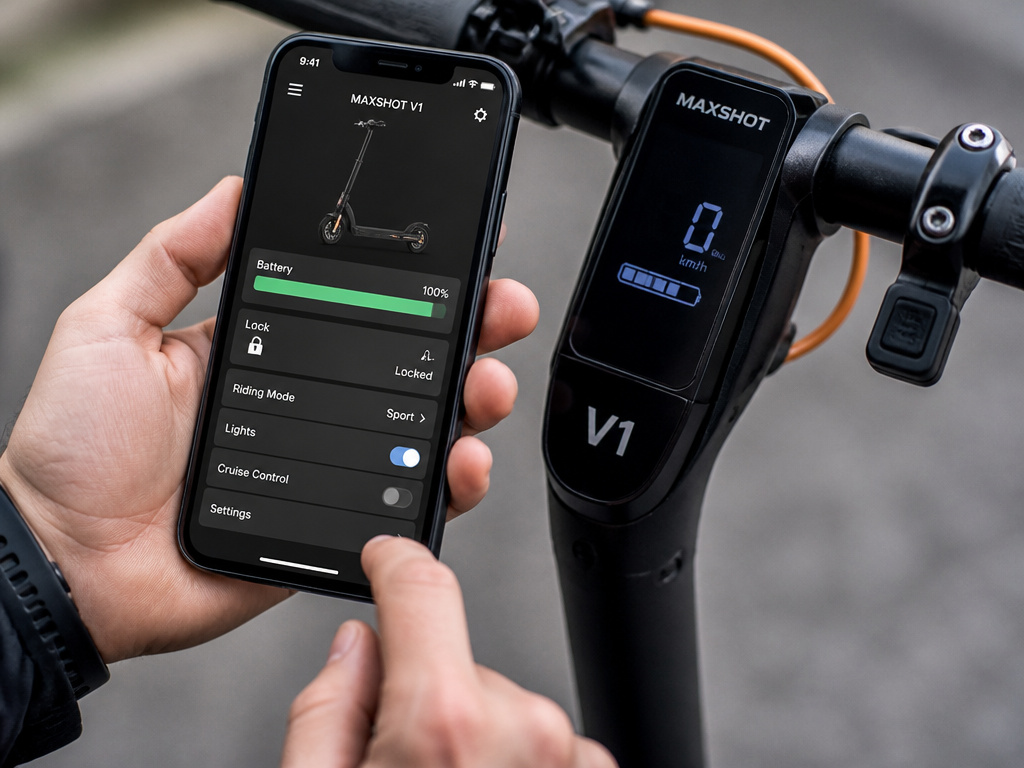
While some listings mention app connectivity, the available test data and user reports focus on the physical scooter’s performance. For models that do pair with a companion app, you can typically expect basic functions like locking the scooter, checking battery level, and adjusting speed modes. Without confirmation of a specific app’s reliability for the V1, it’s wise to consider the scooter fully functional from its handlebar controls. Always check the manufacturer’s latest information to see if app features are officially supported for your specific model, as firmware and compatibility can change.
Frequently Asked Questions
Are Maxshot scooters any good?
For a specific, budget-focused purpose, they can be. The Maxshot V1 offers verified speed and range that beat many scooters at its price point. However, “good” depends on your tolerance for a very firm ride, weak hill climbing, and the risk of poor customer support if something breaks. They are good value, not necessarily good products in a broader sense.
How fast does the Maxshot V1 electric scooter go?
Independent testing measured a maximum speed of 17.5 mph. It can accelerate to around 18 mph in about five seconds. Some versions or under ideal conditions with a very light rider may touch 19 mph, but 17.5 mph is the reliable, verified figure.
How long does the Maxshot electric scooter last on a single charge?
The effective real-world range is 18.2 miles as measured by TechGearLab. This will vary: a 115 lb rider on full throttle might drain the battery in about 3 hours, while a 220 lb rider on mixed terrain reported getting roughly 18 miles. Cold weather can reduce this range by 10-30%.
What is the difference between the Maxshot V1 and V1SPRO?
The V1SPRO typically adds basic front and sometimes rear suspension, a digital display, and occasionally a larger motor. However, professional testers found the upgrade negligible, noting the V1SPRO has a shorter range and isn’t worth the extra cost. The suspension does not adequately compensate for the solid tires’ harshness.
Is the Maxshot V1 safe?
It has passed UL2272 certification for its electrical system, which is a crucial safety standard that reduces fire risk. Mechanically, its braking performance is adequate for its speed. The primary safety concerns are the rough ride potentially causing loss of control on bumps and the reported durability issues with some frames.
The Bottom Line
The Maxshot V1 is a spreadsheet champion. Its specs per dollar are impressive. You get a measured 17.5 mph and 18.2 miles of range for a price that often dips below $250. That’s a compelling argument if your needs are narrow and your expectations are managed.
But a scooter isn’t a spreadsheet; it’s a physical thing you stand on. You get solid tires that punish your joints, a motor that groans on hills, and a build quality that has left some owners with a frame in two pieces and no recourse. It’s the definition of “you get what you pay for.”
Here’s my take: if your commute is a flat, two-mile stretch of smooth bike path and you need a folding carry-on, the V1 is a rational choice. For anyone else—especially if you’re eyeing the V1SPRO—the smarter move is to put that money toward a used or entry-level model from a brand with a reputation to protect. The comfort and reliability jump is worth the extra $100. Start slow, then earn the speed. Buying a scooter that makes you not want to ride defeats the whole point.
